
Review · MUMBAI
Group Guided Walking Tour in Fort and Colaba
Mumbai’s story comes into focus on this 2½-hour walk from Town Hall to the Gateway of India. You move through Fort and Colaba, two districts packed with colonial buildings, churches, civic monuments, cricket grounds, art spaces, and reminders of communities that once shaped the city. I like the small maximum of 12 people, and I like that the route explains how Mumbai grew from fishing and farming villages into a major city.
The price, $16.73 per person, is fair for a guided introduction to central Mumbai, especially if this is your first visit. The main drawback is the pace: nine stops in 150 minutes means some visits are brief, and the walk requires good weather. You’ll get a strong overview, not a slow architectural study.
Key points to know before you book

- The route connects nine major sights: Begin at the Asiatic Society Library and finish beside the Gateway of India and Taj Mahal Palace Hotel.
- The group is limited to 12 people: That gives you a better chance to hear the guide and ask questions than on a large coach tour.
- Mumbai’s story runs through the whole walk: Portuguese and British rule, Indian cricket, Jewish life, education, and independence-era memory all appear along the way.
- The tour ends at an ideal sightseeing hub: After the walk, you are at the Gateway of India in Colaba, one of Mumbai’s best-known areas.
- Guide-led context is the main value: The buildings can be easy to pass without noticing, but the stories give them meaning.
- Plan for outdoor walking: The tour needs good weather, and the itinerary includes open spaces such as Horniman Circle Garden and Oval Maidan.
Why Fort and Colaba make a smart first walk
Fort is Mumbai’s historic core, and the route uses its streets as an open-air lesson. The buildings are not presented as isolated photo stops. Instead, the guide links them to the city’s growth, from early settlement and colonial rule to modern Mumbai.
That approach matters because central Mumbai can seem visually confusing at first. Gothic towers, Victorian offices, churches, gardens, roads, and public squares sit close together. A guide helps you see how these pieces fit together.
Colaba gives the walk a strong finish. The Gateway of India is one of the city’s signature sights, while the Taj Mahal Palace Hotel adds another famous landmark beside it. Ending here also leaves you in a useful part of Mumbai for further sightseeing.
The route is especially helpful if you want orientation early in a visit. You learn where several important areas are and receive local recommendations and tips from the guide. Those suggestions can be as useful as the formal history, since they help you decide what to see next.
More Guided Walks in India:
- Private Guided Walking Tour in Fort & Colaba
★ 5.0 · 895 reviews - Private Guided Walking Tour in Bandra Queen of Suburbs
★ 5.0 · 383 reviews - Private Guided Spiritual Walk in Banganga Hindu Temples
★ 5.0 · 271 reviews
Town Hall and the city’s beginnings
The meeting point is the Asiatic Society at Town Hall, on Shahid Bhagat Singh Road in Fort. This is a fitting place to start because the opening story looks at how Mumbai came into being after Portuguese and British colonization.
You spend about 20 minutes here. That gives the guide enough time to set the main historical framework before the walk moves into individual buildings and public spaces.
The value of this first stop is the broad picture. Mumbai did not appear fully formed as a modern port city. The explanation connects the early fishing and farming settlements with the later colonial city, helping you understand why the historic center looks and feels so different from newer parts of Mumbai.
Because the tour begins with history rather than a quick photo, listen for the timeline. It will make the later stops easier to follow. Town Hall is also a practical starting point because it places you directly in Fort, close to the next sights.
Horniman Circle Garden and St. Thomas Cathedral
Horniman Circle Garden is the second stop, with about 15 minutes to look at Mumbai’s oldest garden and the Victorian buildings around it. The guide also explains activities that once took place here.
This is a short visit, but the setting helps show how public space functioned in the colonial city. The surrounding architecture gives you plenty to photograph, while the garden offers a change from the dense streets of Fort.
Next comes St. Thomas Cathedral, Mumbai’s oldest Anglican church. You spend about 15 minutes inside, looking at the memorials and grand altar.
This stop adds a quieter note to the route. The cathedral is not just another old building. Its memorials show how personal stories, religious life, and colonial administration became tied to the city. If you enjoy architecture, take a moment to look beyond the main altar. The memorials are part of what makes the visit worthwhile.
The limitation here is time. Fifteen minutes allows a look inside and a short explanation, but not a long period for quiet reflection or close study. If the church interests you greatly, you may want to return independently later.
Flora Fountain and Mumbai’s public memory
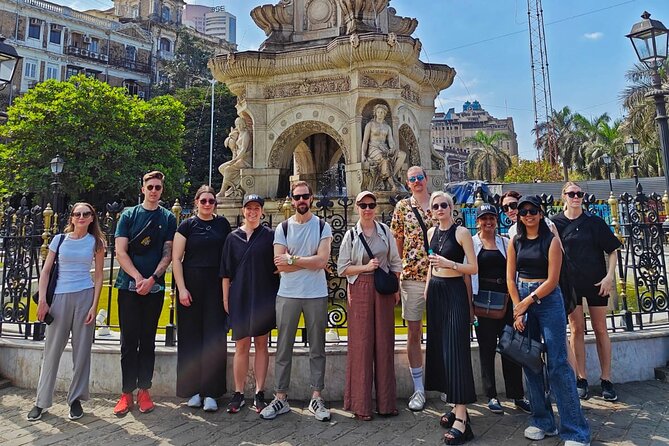
At Flora Fountain, the tour shifts back outdoors. You see the city’s answer to Piccadilly Circus and the Martyrs’ Memorial in what was once the main town square.
The stop works well because it combines architecture with modern Indian memory. The fountain and surrounding buildings tell one part of Mumbai’s colonial story, while the memorial points to later political history.
This is the kind of place that can become background scenery if you walk alone. With the guide’s explanation, you get a reason to pause and notice how the square has changed meaning over time.
The stop lasts about 15 minutes. That should be enough for photographs and an overview, but not for every detail in the surrounding buildings. Keep your expectations realistic: this is a guided introduction, not an expert-led examination of every façade.
More Walking Tours in India:
- Fontainhas Heritage Walk by Make It Happen
★ 5.0 · 2,834 reviews - The Great Indian Food Tour: Old Delhi Food and Heritage Walk
★ 5.0 · 1,698 reviews - Old Goa Heritage Walk by Make It Happen
★ 5.0 · 797 reviews - Old Delhi Food, Heritage&Cultural Walk with Rickshaw ride to Masterji Kee Haveli
★ 5.0 · 742 reviews
Oval Maidan and the birthplace of Indian cricket
Oval Maidan is one of the route’s most distinctive stops. The open ground is surrounded by grand buildings and is described as the birthplace of Indian cricket. The area is also part of a UNESCO World Heritage site.
You spend roughly 20 minutes here, one of the longer stops on the walk. That makes sense. The open view lets you take in the contrast between the playing field and the surrounding architecture.
This is a strong example of the tour’s wider appeal. You are not only looking at old buildings. You are also hearing how public spaces became part of Indian social and sporting life.
If you like cricket, this stop may be a highlight. If you do not follow the sport, the setting still helps explain how an imported game became connected with Indian identity. The guide’s historical framing is what gives the maidan more weight than a quick photo from the roadside.
Because this is an open area, weather matters here. The tour requires good weather, and this stop gives you little shelter if conditions turn poor.
Rajabai Clock Tower and Mumbai’s university story
The Rajabai Clock Tower is Mumbai’s answer to Big Ben, at least in the comparison used on the tour. The guide tells the story of the University of Mumbai and how education evolved in the city.
You spend about 15 minutes at this stop. The tower gives you another striking architectural subject, but the university story adds the reason to care about it.
This part of the walk is useful for readers who want more than a list of famous façades. Education helped shape the city’s institutions and public life, and the clock tower represents that side of Mumbai’s development.
The stop is viewed from the route rather than presented as a long interior visit. If you want to study the tower in detail, use the time for photographs and listen closely to the explanation. The short format keeps the walk moving toward Kala Ghoda.
Kala Ghoda’s art district and architectural mix
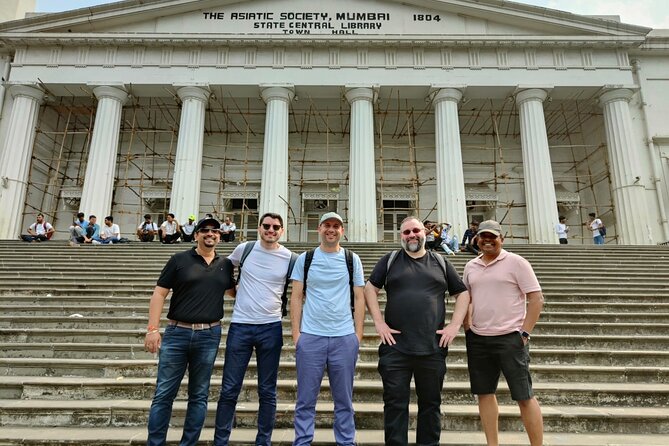
Kala Ghoda is Mumbai’s premier art district and one of the more varied parts of the route. You see different architectural styles and hear the secrets attached to the buildings.
This is a good place to slow your eye down. Rather than seeing the district as a collection of old structures, you begin to notice how its buildings differ in shape, purpose, and design.
The walk spends about 15 minutes here. That is enough for an introduction, though the district could easily occupy much longer if you wanted to explore its art spaces and streets at your own pace.
I like this stop because it broadens the tour beyond colonial government buildings and formal monuments. Kala Ghoda connects architecture with the city’s cultural life. It also gives the route a more modern feel before the group moves to the quieter story of Mumbai’s Jewish community.
Keneseth Eliyahoo Synagogue and a nearly vanished community
The Keneseth Eliyahoo Synagogue introduces Mumbai’s Jewish enclave. The guide points out signs of Jewish life that is now almost extinct in the city.
This is one of the route’s most unusual stops. Many first-time visitors expect colonial landmarks, but fewer expect to learn about the communities that once lived and worshipped in central Mumbai.
You spend around 15 minutes here. The stop is valuable because it shows that Mumbai’s story includes smaller communities as well as the major political powers usually associated with the city’s past.
The wording about Jewish life being almost extinct also gives this visit a sense of loss. You are seeing more than a religious building. You are hearing about a community whose presence has greatly diminished.
As with the cathedral, the time is limited. The stop provides context and a chance to see the synagogue, but it does not promise an extended religious or architectural tour. Treat it as a meaningful introduction.
The Gateway of India and Taj Mahal Palace Hotel
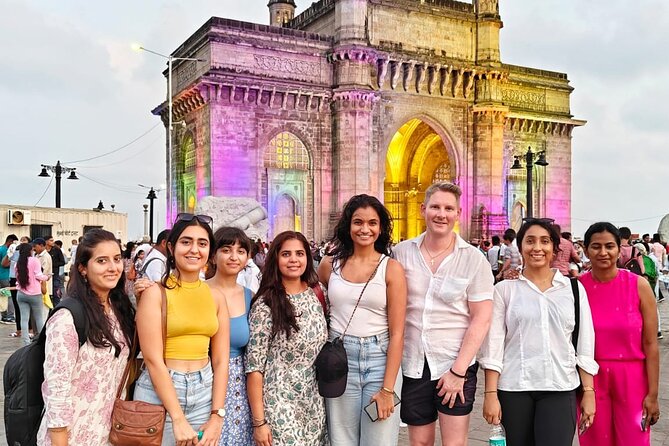
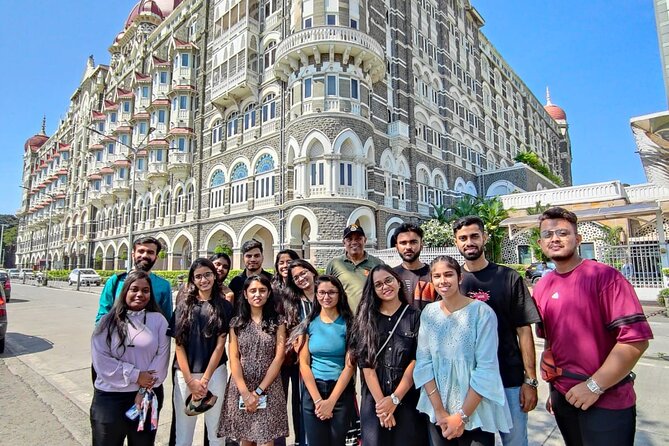
The walk ends at the Gateway of India, with the Taj Mahal Palace Hotel beside it. You spend about 20 minutes at the final stop, giving you time for photographs and a closing explanation.
This is a satisfying finish because both landmarks are instantly recognizable symbols of Mumbai. The Gateway is also a natural place to pause after walking through Fort and Colaba. You can connect the final view with the earlier stories of empire, trade, public life, and the growth of the city.
The end point is useful for planning the rest of your day. You finish in Colaba, one of Mumbai’s best-known areas, rather than being returned to the starting point. That means you can continue exploring from there, though the tour does not include transportation back to Town Hall.
For photography, the Gateway is the obvious prize. Still, do not overlook the Taj Mahal Palace Hotel. Seeing the two together gives you a strong visual ending and makes clear how much of Mumbai’s identity is tied to this waterfront area.
What $16.73 buys you
At $16.73 per person, this is priced as an accessible introduction rather than a luxury experience. You are paying mainly for the guide’s interpretation, the compact route, and the chance to ask questions in a group capped at 12.
The admission cost at each listed stop is free. That keeps the price easy to understand, but it also means the tour’s value depends on the quality of the explanations and how much historical context you want.
I consider the price good if you are new to Mumbai and want a clear first look at Fort and Colaba. It is also useful for people who enjoy architecture but do not want to research every building before arrival.
The value is weaker if you prefer to walk alone, spend a long time inside each site, or stop often for food and photographs. Nine stops in 150 minutes creates a steady pace. You will see a lot, but you will not linger everywhere.
A complimentary coffee break may be included, as it was during a tour led by Palak. It is a pleasant touch, but I would treat it as a possible extra rather than the main reason to book.
Group size, timing, and practical comfort
The maximum group size is 12. That is small enough for a more personal format, and it should make it easier to hear the guide in busy city streets. It also gives you a better chance to ask for local recommendations.
The tour lasts approximately two hours and 30 minutes. With nine stops, the timing is fairly structured. Most stops last 15 minutes, while Town Hall, Oval Maidan, and the Gateway of India receive about 20 minutes.
The route is near public transportation, and the meeting point is the Asiatic Society at Town Hall. The endpoint is the Gateway of India in Apollo Bandar, Colaba. You should pay attention to the start and finish because they are different locations.
Mobile tickets make entry and meeting details simple to carry. Confirmation is provided when you book. Most people can participate, but the supplied information does not give a specific accessibility assessment, so ask the provider if you have mobility concerns.
Free cancellation is available when you cancel at least 24 hours before the start time. Changes or cancellations inside that window are not refunded. Poor weather can also lead to a new date or a full refund, since the experience requires good conditions.
Who will get the most from this walk
I would choose this tour for a first visit to Mumbai, especially if you want history, architecture, and orientation in one compact outing. It also suits anyone who prefers a small group and wants direct local suggestions from a guide.
It is a good match for:
- First-time visitors who want a clear introduction to Fort and Colaba
- People interested in colonial architecture and public monuments
- Travelers who want to understand Mumbai’s growth over roughly 500 years
- Visitors who like seeing less obvious stories, including the synagogue and university
- Anyone who prefers a guided walk to researching landmarks alone
I would think twice if you need shade, shelter, or a slow pace. The tour includes outdoor squares and open ground, and the good-weather requirement is important. I would also choose a private or longer tour if your main interest is detailed architecture, religious interiors, or photography.
The experience receives a 5 rating from 1,073 reviews, with 100 percent recommending it. The strongest praise centers on the clear overview of Old Mumbai, the history and architecture, and the personal manner of guides such as Palak. Those are precisely the areas where this tour makes sense.
Should you book the Fort and Colaba walk?
Book it if you want an efficient, affordable introduction to Mumbai’s historic center. The route covers major symbols such as the Gateway of India, but it also includes places you might miss alone, including Horniman Circle Garden, the university area, and Keneseth Eliyahoo Synagogue.
You should see it as a foundation. It will help you understand the city and decide where to return, but the quick stop times leave room for deeper independent visits later.
At $16.73, a small group of no more than 12, and a strong mix of famous and less expected sights, this is a sensible first-day choice in Mumbai. Just allow for outdoor walking, a steady pace, and weather that cooperates.
FAQ
How long does the walking tour last?
The tour lasts approximately 2 hours and 30 minutes.
How much does the tour cost?
The listed price is $16.73 per person.
Where does the tour begin?
It begins at the Asiatic Society, also called Town Hall, on Shahid Bhagat Singh Road in Fort, Mumbai.
Where does the tour end?
The walk ends at the Gateway of India in Apollo Bandar, Colaba, beside the Taj Mahal Palace Hotel.
How many people can join the group?
The maximum group size is 12 travelers.
What sights are included?
The route includes Town Hall, Horniman Circle Garden, St. Thomas Cathedral, Flora Fountain, Oval Maidan, Rajabai Clock Tower, Kala Ghoda, Keneseth Eliyahoo Synagogue, and the Gateway of India.
Are admission tickets included?
Admission is listed as free at each stop.
Is the tour near public transportation?
Yes. The additional information says the experience is near public transportation.
Can most people participate?
Yes. The tour information says most travelers can participate. It does not provide a specific accessibility assessment.
What is the cancellation policy?
You can cancel at least 24 hours before the start time for a full refund. Cancellations or changes made less than 24 hours before the start time are not refunded or accepted. If poor weather cancels the tour, you can receive a different date or a full refund.
New routes in India
- Agra Walking Tour★ 5.0 · 109 reviews
- Amritsar Heritage Walking Tour★ 5.0 · 112 reviews
- The Great Indian Food Tour: Old Delhi Food and Heritage Walk★ 5.0 · 106 reviews
- Spiritual Walking tour with Puja Ceremony -The Pushkar Route★ 5.0 · 101 reviews
- Spiritual Walk Tour Trivandrum (Guided Walking Experience)★ 4.6 · 87 reviews
- Panaji: Heritage Walk through Goa’s Latin Quarter★ 4.8 · 291 reviews
- Old Goa: Walking Tour of Heritage Churches★ 4.9 · 81 reviews
- Old Delhi: Spices, Heritage and Bazaars Walking Tour★ 5.0 · 173 reviews
Mumbai Walking Tours, compared.

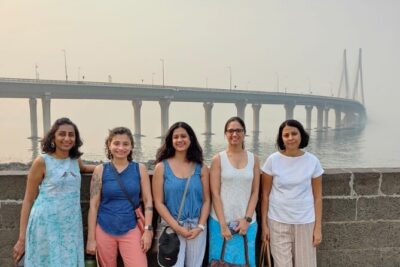
Private Guided Walking Tour in Bandra Queen of Suburbs
Read our review →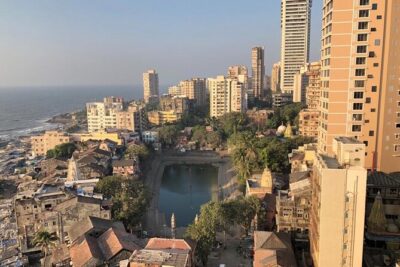
Private Guided Spiritual Walk in Banganga Hindu Temples
Read our review →
Dharavi Slum Walking Tour by First Female Tour Guide
Read our review →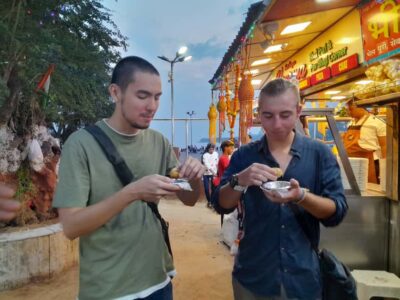
Mumbai Street Food Tour with Evening Bazaar Walk
Read our review →Browse the lists this tour appears in