
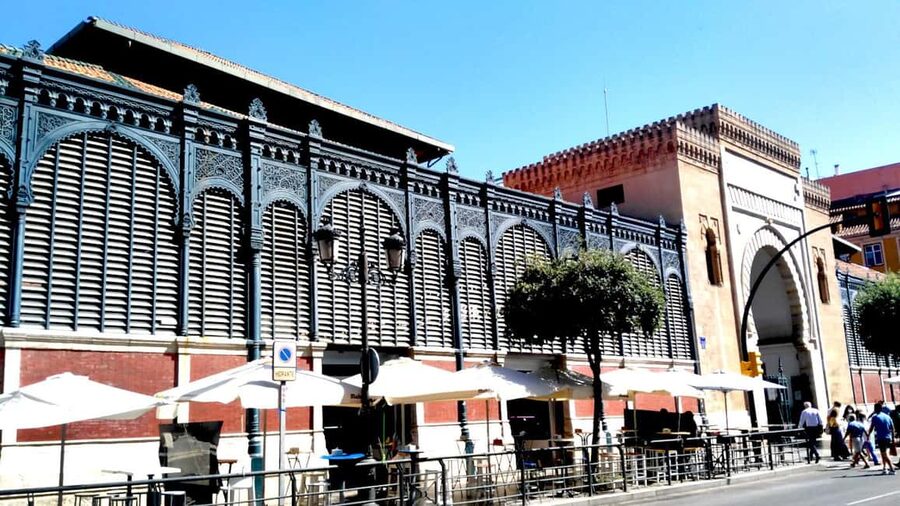
Review · SPAIN
Málaga: 2h Walking Historical Tour–Art, Culture and Legends
Málaga’s old center is compact, but its story reaches from Phoenician traders to Picasso. This walk brings that story together through the Roman Theatre, La Manquita cathedral, narrow lanes, food stops and the city’s best-known squares. Igor Francisco Martínez, an art historian and local guide, leads the way with humor and plenty of local detail.
I like two things here: the mix of major sights and small local touches, and the way the walk helps you get your bearings early in a Málaga visit. Candied almonds, artisanal nougat, local wine and a final surprise stop give the tour a taste beyond monuments. The main consideration is timing. It is sold as a 1.5-hour experience, but you should keep extra space in your day because some walks have lasted two to three hours.
Key points to know before booking
- Phoenician origins at Puerta Oscura: Begin near the place where ancient Malaka was founded in the 6th century BC.
- Major sights in one short walk: See the Roman Theatre, Picasso-related sites, Málaga Cathedral, Constitution Square and Atarazanas Market.
- A guide with a lively style: Igor combines art history, local stories, humor and practical recommendations.
- Food is part of the experience: Expect traditional sweets and a final stop with local food or drinks, though extra drinks and food are not included.
- Useful for a first visit: The route covers central landmarks and helps you find restaurants, bars and places to return to later.
- Allow more than 90 minutes: The advertised duration is 1.5 hours, but the pace may stretch when tastings, questions and the final surprise are included.
Starting where ancient Malaka began
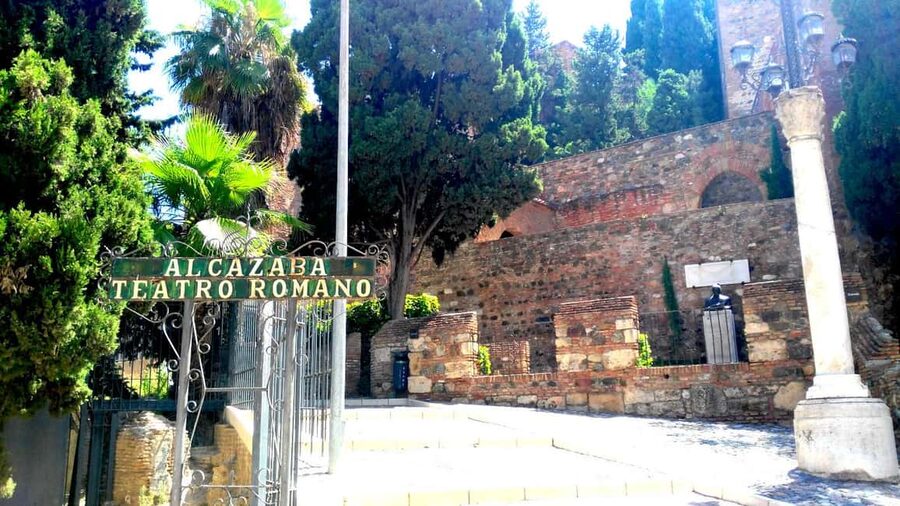
Meet beside the white tourist information kiosk in Plaza de la Aduana, next to the Alcazaba. This is a practical starting point in the center, and you can reach it on foot from Málaga Centro-Alameda station or from the Muelle Heredia bus station.
The opening stop is Puerta Oscura Garden, a calm corner with an important past. In the 6th century BC, Phoenician settlers chose this area to establish Malaka. That gives the tour a useful starting point: before you look at grand churches or museums, you learn why Málaga began here at all.
I like this kind of introduction because it gives the city a clear shape. Málaga is not simply a collection of pretty streets. Its position by the coast made it useful to different peoples, and the guide explains how that early choice shaped the city that followed.
The meeting point is easy to identify, but check your messages before setting out. The final starting time is confirmed by email or WhatsApp, and Igor contacts you shortly before the walk. He carries an identification card.
More Crime and Mystery Walking Tours in Spain:
- Barcelona: Gothic Quarter Ghosts and Legends Walking Tour
★ 4.7 · 1,443 reviews - Madrid: Spanish Inquisition and Legends Evening Walking Tour
★ 4.7 · 1,396 reviews - Seville: Paranormal and Legends Guided Walking Tour
★ 4.7 · 336 reviews
Roman Theatre and the layers beneath the city
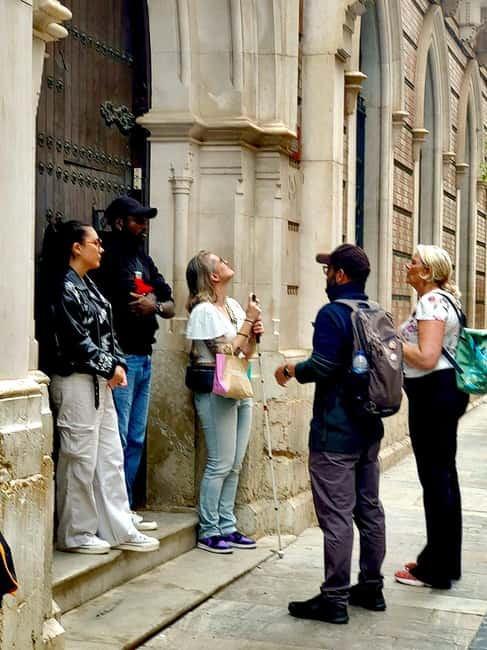
From Plaza de la Aduana, the group walks to the Roman Theatre. The route is short, with about five minutes of walking between several stops, so you are not spending the tour marching from one end of town to another.
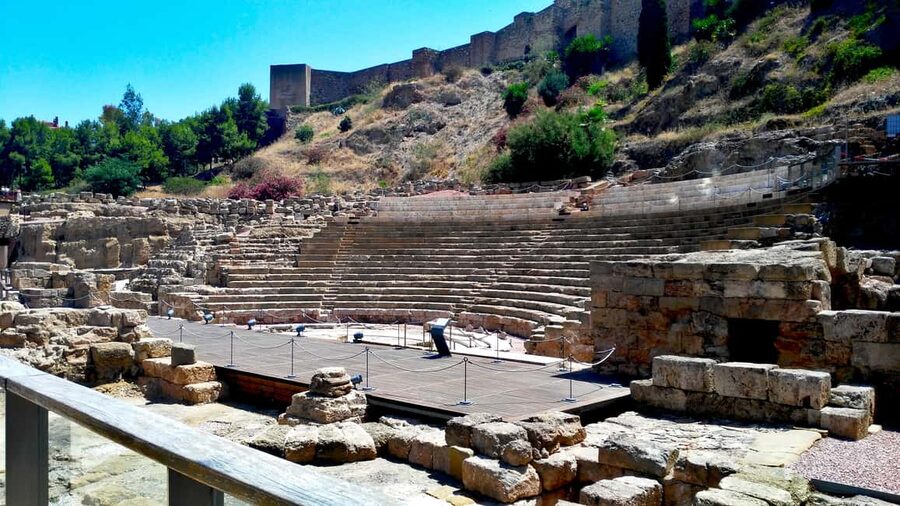
The theatre dates to the 1st century and is described as Málaga’s oldest visible structure. The visit focuses on how Roman entertainment worked, what happened in the theatre, and why the remains were hidden for so long. You get a sense of the building from its seating and setting rather than simply stopping for a photograph.
This is one of the strongest history sections of the walk. The Roman Theatre sits close to later monuments, so you can see how Málaga’s past is layered in a remarkably small area. Igor’s art-history background is useful here because he can connect the structure itself with the wider story of the city.
The itinerary also refers to the Alcazaba fortress as part of the historic-center exploration. The listed route does not include a separate extended fortress visit, so you should not expect a full Alcazaba tour with admission and interior rooms. Instead, the emphasis is on the central sights and the historical setting around them.
Picasso’s Málaga on Plaza de la Merced
The walk continues toward Plaza de la Merced, one of the city’s familiar meeting places. Here, Igor explains the obelisk dedicated to General Torrijos and points out the birthplace of Pablo Picasso.
Picasso is not treated as an isolated museum subject. You see the place where he was born, then later pass the Picasso Museum Málaga and the Church of Santiago, where he was baptized. That sequence helps you understand Picasso as a figure rooted in this city, not just an artist whose name appears on a gallery sign.
The itinerary gives the Picasso Museum about 15 minutes of guided attention. This is an orientation rather than a full museum visit, so plan a separate return if you want to study the collection. The same advice applies to anyone hoping to enter every monument along the route. This tour introduces the city’s main cultural sites, but it does not replace a dedicated museum or cathedral visit.
Calle Granada adds another layer. It marks the route associated with the Catholic Monarchs’ victorious march into Málaga in 1487. Today, it is a pleasant old-town street lined with places to stop, including El Pimpi winery and the museum district. Igor uses the street to connect political history with present-day city life.
La Manquita and the unfinished cathedral
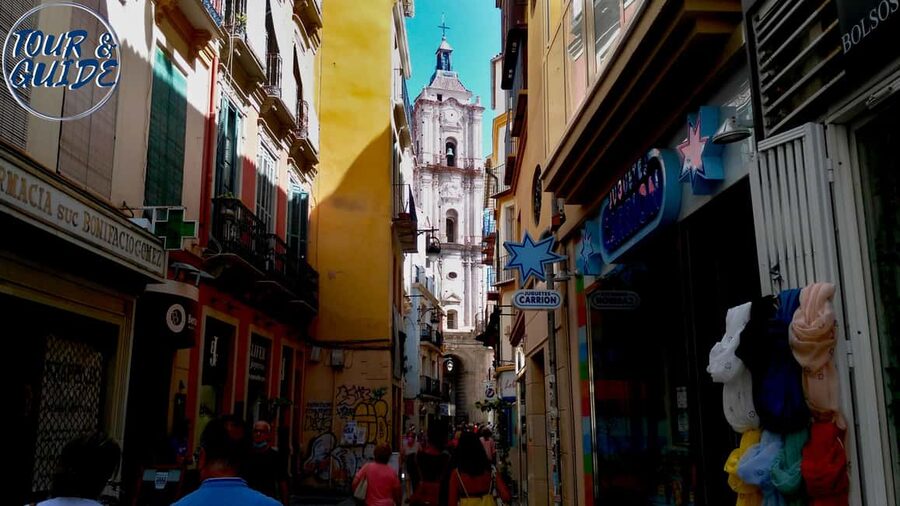
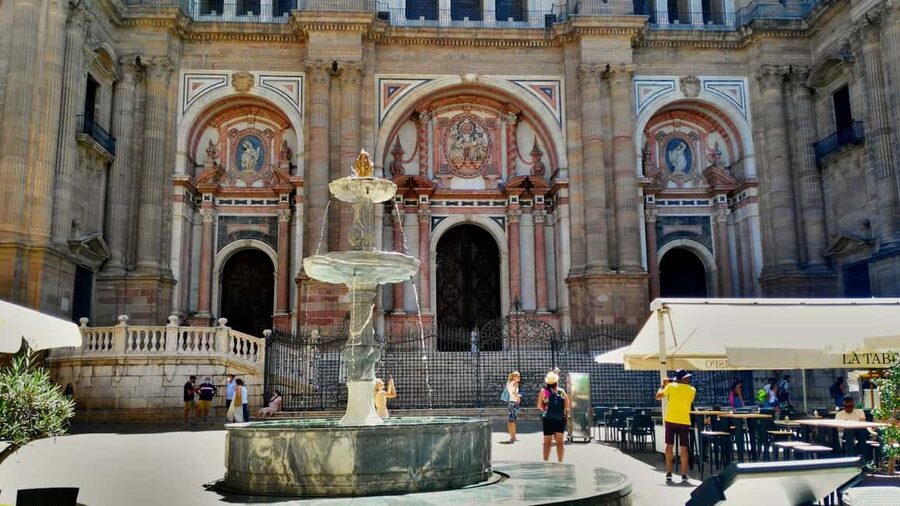
Málaga Cathedral is the grandest architectural stop on the walk. Its formal name is Catedral de la Encarnación, and its Renaissance design gives the center a strong visual anchor.
Locals call it La Manquita, or the one-armed lady, because one of its towers was never completed. That unfinished feature is not just a quirky nickname. It opens the door to questions about funding, changing plans and the long process of building major religious structures.
The visit allows around 15 minutes. That is enough for an explanation of the cathedral’s main story and the details most easily missed from the street. It is not enough for a slow architectural study, so I would return later if you care about interiors, chapels or close inspection of the building.
This stop also shows the value of having a guide who works with art and architecture. A large cathedral can be hard to read without context. Igor’s approach focuses on the details and legends that make the building easier to remember.
More History Walking Tours in Spain:
- Barcelona: Tapas Walking Tour with Food, Wine, and History
★ 4.8 · 4,261 reviews - Barcelona Tapas Walking Tour: Food, Wine & History
★ 4.5 · 1,928 reviews - Madrid Historic Centre Food Tour with Authentic Tapas & Wines
★ 5.0 · 814 reviews - Seville: Tapas, Taverns, and History Walking Tour
★ 4.9 · 676 reviews
The squares and streets where Málaga meets itself

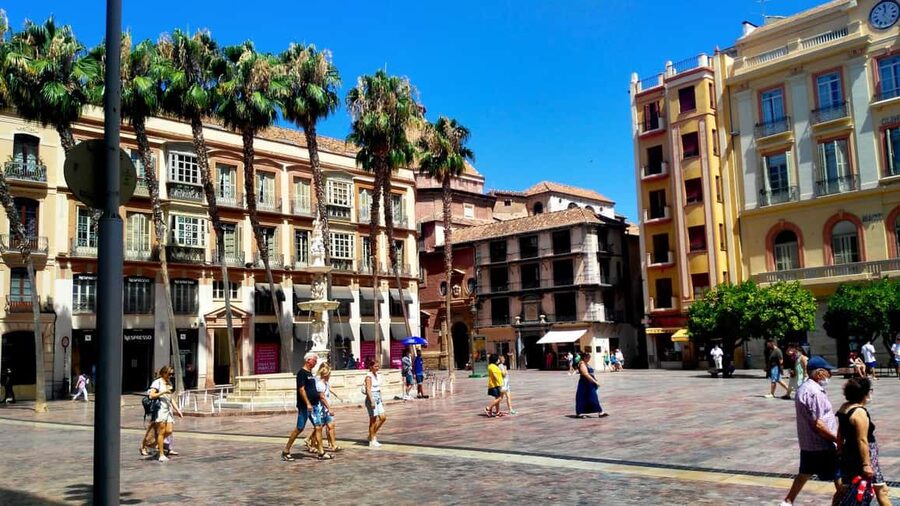
From the cathedral, the route moves through Plaza de la Constitución, the social center of Málaga. This is a useful place to understand the city as a living place rather than a museum. The tour points out how the square functions and why it matters to local life.
You then continue toward Plaza de las Flores and the Church of San Juan. These stops bring in popular devotion, local traditions and the smaller-scale character of the old town. The lanes here are easy to explore independently later, and a guided first pass can save you from walking past details without noticing them.
The pace is generally manageable. Past groups have included couples and small parties, and one booking resulted in a private walk because only two people had reserved. Group size can change, so do not count on a private tour, but the format allows for questions when the group is small.
Summer heat matters. The walk is outdoors, and past departures have used shady spots for explanations and offered evening timing as a way to avoid the strongest daytime sun. Wear comfortable shoes, carry water, and bring a hat and sunscreen. Málaga’s central streets are friendly for a walking tour, but the warm season can make even short distances tiring.
Atarazanas Market and Málaga on a plate
The food element is more than a quick snack added at the end. Atarazanas Market occupies a former shipyard and now serves as one of the city’s main food markets. The building and its purpose provide another example of Málaga changing over time while keeping traces of its working past.
Inside, the focus is on aromas, colors and local products. The market stop lasts about 15 minutes in the planned schedule, so expect an introduction rather than a long shopping visit. You will have time to understand why the market matters and to note places you may want to revisit for a fuller look.
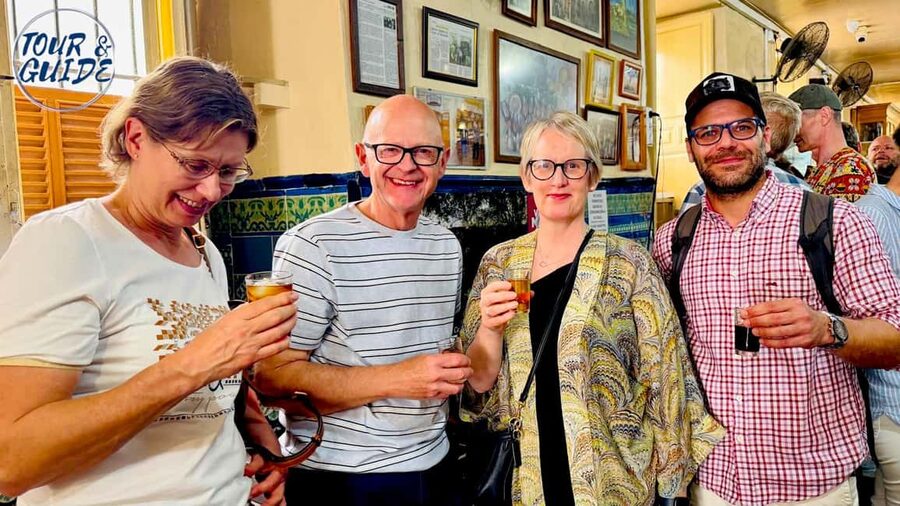
The included tasting may feature candied almonds and artisanal nougat. These small samples are useful because they show a sweeter side of Andalusian food, and they break up the history without turning the tour into a formal food walk.
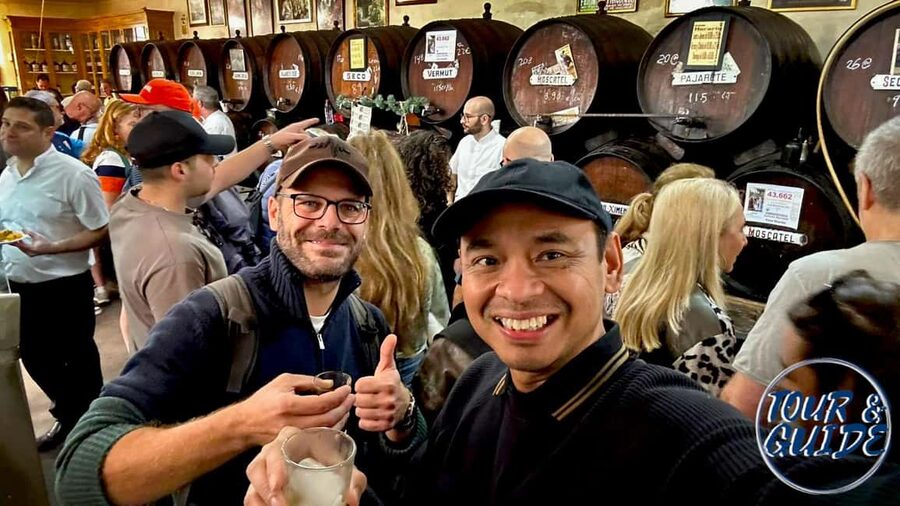
The final surprise may include local food and drinks, with past experiences involving wine and tapas or a stop at a local shop, café or wine bar. The exact surprise is not specified in advance. That uncertainty is part of the fun, but you should budget for any additional drinks or food, since those are not included.
If you want a detailed market tour or a full meal, book a separate food experience. Here, food works as a window into local life and a pleasant ending to the walking route.
What Igor adds to the route
Igor’s style is a major part of the experience. He explains history and architecture in plain language, adds humor, asks questions and shares recommendations for restaurants, bars and shops. The tone is lively without turning the monuments into background scenery.
You should expect a strong focus on stories. The tour covers ancient Malaka, Roman entertainment, the Catholic Monarchs, Picasso, the cathedral’s unfinished tower and local customs. The humor helps keep the information moving, especially for people who might usually find architectural explanations dry.
His recommendations can also shape the rest of your stay. Several stops, including El Pimpi and the market area, are places you can revisit. The practical benefit is that you leave not only knowing what you saw, but also with ideas for where to eat and what to explore next.
The guide speaks English, Spanish and French. That makes the tour suitable for a mixed-language group, though the exact language of your departure should be confirmed when you arrange the start time.
How much value do you get for $26?
At $26 per person, the tour offers good value if you want a broad introduction to central Málaga. You get a live guide, a compact route through major sights, historical explanation, food samples and a final stop. The price is especially reasonable for first-time visitors who would otherwise spend part of their first day simply finding the old center’s main landmarks.
The value depends on what you want. If you prefer a slow museum visit, a private architecture lesson or a full meal, this walk will feel too brief at each individual site. If you want a clear overview with stories and local advice, it covers a lot for the price.
The advertised duration is 1.5 hours, but the real time can be longer. Some outings have stretched to nearly three hours because of tastings, conversation and the final food or drink stop. That can be a bonus, but it may disrupt a tightly planned day. I would schedule it at the beginning of a flexible morning or afternoon rather than immediately before a train, restaurant reservation or museum entry.
Free cancellation up to 24 hours before the tour and a reserve-now, pay-later option make booking less risky. The activity is also wheelchair accessible, though the provider should still be contacted about the specific route and any individual needs.
Who will enjoy this Málaga walk
I would choose this tour for a first visit, especially if you want to understand how the city fits together before exploring on your own. It suits history fans, art lovers, couples, families with older children and anyone who enjoys hearing the story behind a building rather than just seeing it.
It is also a good match for a short stay. In one central route, you get the Roman period, the cathedral, Picasso connections, city squares and a food market. That makes it easier to decide where you want to return for a longer visit.
You may want something else if you dislike group walking tours, need long uninterrupted museum time or prefer an exact end time. The guide encourages questions and conversation, and the final stop can extend the experience beyond the published schedule.
Should you book it?
Book this Málaga walk if you want history with personality, practical local suggestions and a taste of the city’s food culture. Igor’s mix of art history, jokes, legends and neighborhood advice gives the route more life than a simple checklist of monuments.
Skip it if your main goal is to spend an hour inside the cathedral or Picasso Museum, since both receive short guided attention rather than full visits. For most first-time visitors, though, the $26 price is fair, the route is well chosen, and the mix of Roman ruins, Picasso, architecture, markets and tastings makes it a smart way to get your bearings.
FAQ
Where does the Málaga walking tour start?
It starts beside the white tourist information kiosk in Plaza de la Aduana, next to the Alcazaba in Málaga.
How long does the tour last?
The advertised duration is 1.5 hours. You should allow extra time because some tours have continued for two to three hours, especially when tastings, questions and the final stop are included.
Which languages are available?
The tour is offered in English, Spanish and French.
What sights are included?
The route includes the Roman Theatre, Picasso-related sites including his birthplace and the Picasso Museum area, Málaga Cathedral, Constitution Square, the old town and Atarazanas Market. The experience also includes exploration of the Alcazaba area.
Is food included?
Traditional tastings such as candied almonds and artisanal nougat are included. The final surprise may involve local food or drinks, but additional drinks and food are not included.
What should I bring?
Wear comfortable shoes and bring water, a sun hat and sunscreen. The walk takes place outdoors in Málaga’s historic center.
More Two-Hour Walks in Spain
- Barcelona: Jewish Quarter 2-Hour Walking Tour
★ 4.8 · 333 reviews - Barcelona 2-Hour Gothic Walking Tour
★ 4.7 · 317 reviews - Ronda: 2-Hour Private Walking Tour
★ 4.6 · 87 reviews - Berlin’s Best: 2 Hour Walking Tour Third Reich and the Cold War
★ 5.0 · 5,486 reviews
More Cultural Walking Tours in Spain
- Cultural Walking Tour of Seville Monumental
★ 5.0 · 861 reviews - Savannah First Squares Culinary & Cultural Walking Food Tour
★ 5.0 · 3,229 reviews - Tokyo Tsukiji Fish Market Food and Culture Walking Tour
★ 5.0 · 3,184 reviews - New Orleans French Quarter, Voodoo and Culture Walking Tour
★ 4.5 · 2,961 reviews
New routes in Spain
- Toledo: Guided Walking Tour with Cathedral Ticket and Tour★ 4.2 · 98 reviews
- Toledo: Guided Monument Walking Tour with Wristband Pass★ 4.5 · 487 reviews
- Valencia: Fallas Festival Walking Tour with Entry Ticket★ 4.6 · 86 reviews
- Barcelona: “The Shadow of the Wind” Literary Walking Tour★ 4.5 · 176 reviews
- Tenerife: Underwater Walk – Sea Trek Experience★ 5.0 · 237 reviews
- Tarragona: Roman Heritage Guided Walking Tour★ 4.7 · 261 reviews
- Seville: Sunset Roof Top Walking Tour★ 4.2 · 131 reviews
- Seville: Paranormal and Legends Guided Walking Tour★ 4.7 · 336 reviews
Spain Walking Tours, compared.
Barcelona Tapas and Wine Experience Small-Group Walking Tour
Read our review →
Tapas Walking Tour with Food, Wine, and History
Read our review →
Madrid Tapas & Wine Tasting Walking Tour – Small Group Local Bars
Read our review →
Albaicín and Sacromonte Guided Sunset Walking Tour
Read our review →
Toledo Tour & Vineyard Walk with Wine Tasting from Madrid
Read our review →
Browse the lists this tour appears in