
Review · SPAIN
Ronda: 2-Hour Private Walking Tour
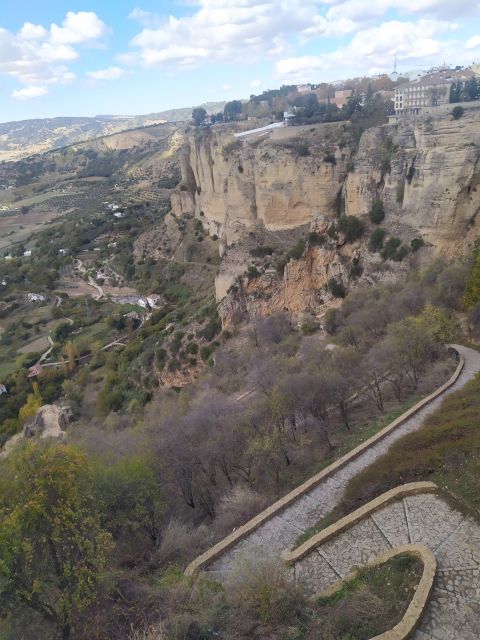
Ronda’s great drama is visible almost at once: the town sits above a deep gorge, with the Puente Nuevo joining its old and newer sides. This private walk takes you from La Merced Church through the park, past Spain’s historic bullring, and into the old town, giving you the main sights without a large group slowing things down.
I like the private format, since you can ask questions about whatever catches your eye instead of following a fixed script. I also like the local touch: guides including Gema, Tanya, Ramon, and Susanna have helped visitors with photo spots, restaurant ideas, and practical advice for a short stay.
The main drawback is the pace. Two hours covers a lot of ground, but this is an outdoor walking tour rather than an in-depth visit inside every monument. Ronda has steep streets and uneven surfaces, and the experience is not suitable for people with mobility impairments.
Key points at a glance
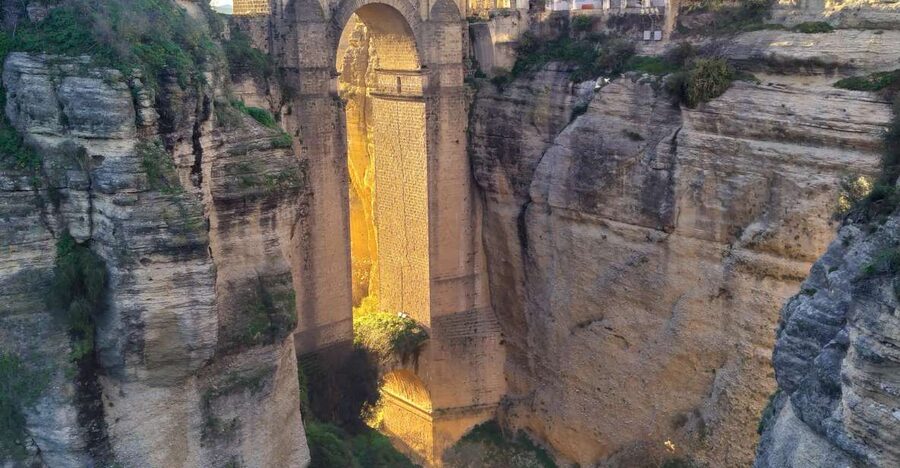
- Puente Nuevo views: See Ronda’s famous bridge and the gorge from several useful viewpoints.
- Local guides: Tours are offered in English, Spanish, and French, with guides such as Gema, Tanya, Ramon, and Susanna praised for clear explanations and warmth.
- Private group: The listed price is $141 for up to 10 people, so the cost can be good value when shared by a family or small group.
- Old and new Ronda: Connect Roman, Moorish, Celtic, Phoenician, and modern literary stories during one compact walk.
- Bullfighting context: Visit the outside of one of Spain’s oldest bullrings and hear why Ronda matters to the tradition.
- Practical limitation: Bring comfortable shoes and expect a fair amount of walking, with no access for people with mobility impairments.
Starting at La Merced Church
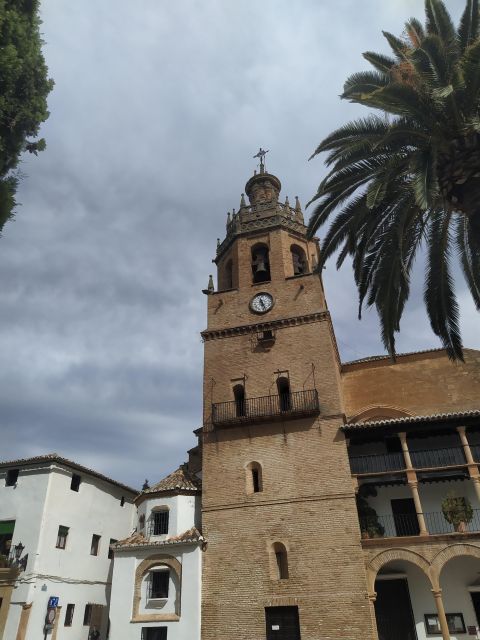
The tour begins at La Merced Church, beside Plaza de la Merced. This is a useful meeting point because the walk quickly moves toward Alameda del Tajo, Ronda’s main park, rather than spending the opening minutes on a long transfer.
Your guide is the biggest variable in the experience. The strongest reports describe guides who explain the city with ease and adjust to the group. Gema is praised for excellent English, a good sense of humor, and clear historical detail. Tanya is noted for local knowledge, photo suggestions, and restaurant advice. Ramon brings an easygoing approach, while Susanna has been praised for her history and architectural explanations.
The private setup matters here. If you are traveling with family, you can pause to ask about a church, a building, or a local custom. If your group has children, the guide can keep the talk moving. One family said their children considered this their best tour in Spain, which says something about the value of a personal guide in a town that can otherwise feel like a string of viewpoints.
More Private Walking Tours in Spain
- Barcelona Helicopter, Sailboat & Old Town Private Walking Tour
★ 5.0 · 1,395 reviews - Barcelona: Sagrada Familia, Park Guell & Tapas Private Tour
★ 5.0 · 903 reviews - Bilbao: Private Walking Tour with a Local
★ 4.7 · 332 reviews
Alameda del Tajo and the first mountain views
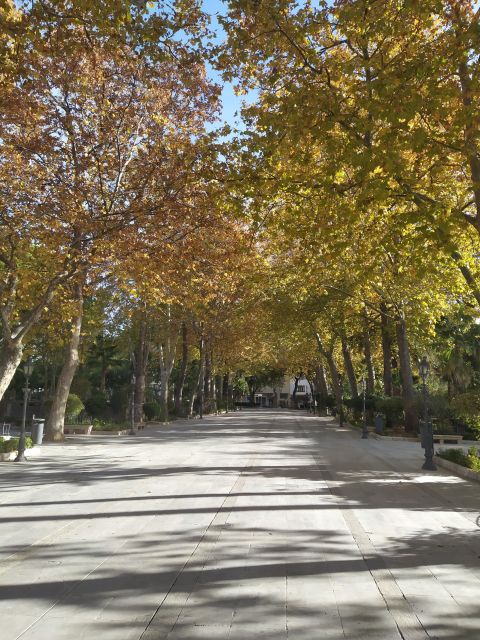
The first major stop is Alameda del Tajo, a park on the edge of Ronda. The setting gives you an early look at the mountains and the open space around the town. It also gives the guide a natural place to explain bullfighting before you reach the arena itself.
That order is helpful. Instead of seeing the bullring as an isolated attraction, you get some context about its place in Ronda’s culture. The subject can be uncomfortable for some people, so you should expect an explanation of the tradition rather than a simple celebration of it.
The park is also one of the better places to get your bearings. Ronda’s geography can be confusing on a first visit, especially with the gorge separating parts of the town. From here, you begin to understand how the public spaces, old quarter, and bridge relate to one another.
Do not expect a long stop with plenty of free time. The tour lasts two hours, and the guide needs to keep the route moving. If you want leisurely park photography, you may need to return on your own later.
Hemingway, the bullring, and Ronda’s literary links
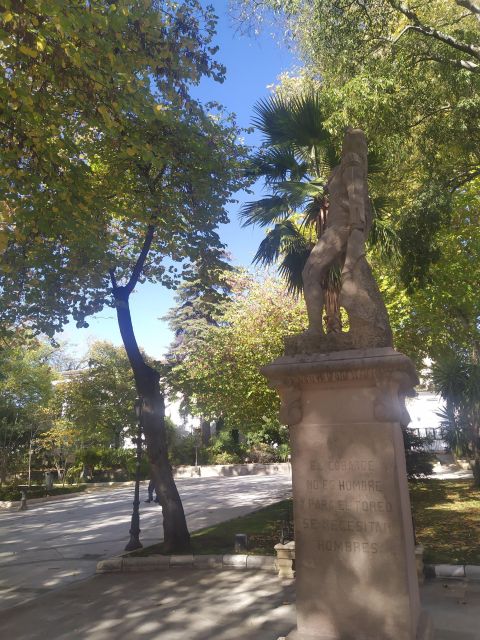
From Alameda del Tajo, the walk continues along Paseo de Ernest Hemingway. The name points to one of Ronda’s strongest links with international literature, and your guide explains why a statue honors the American author here.
The literary connection adds a different layer to the town. Ronda is not only a place of bridges and old stones. It has also attracted writers and artists, and the guide can connect those figures to the places you are seeing. One detailed account praised the discussion of visiting artists and novelists, so this part may appeal to you if you enjoy cultural stories as much as dates and buildings.
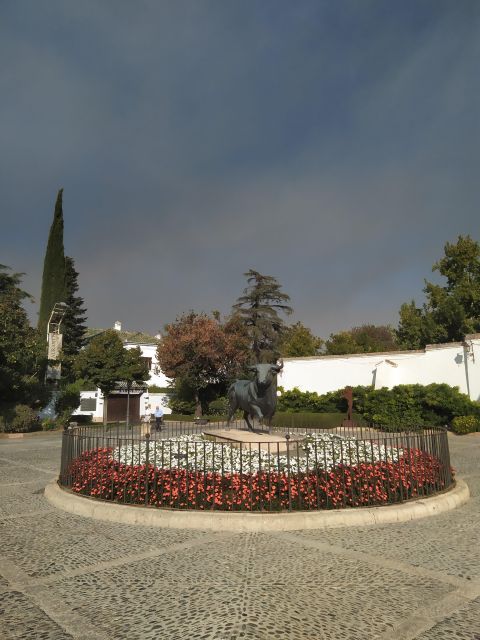
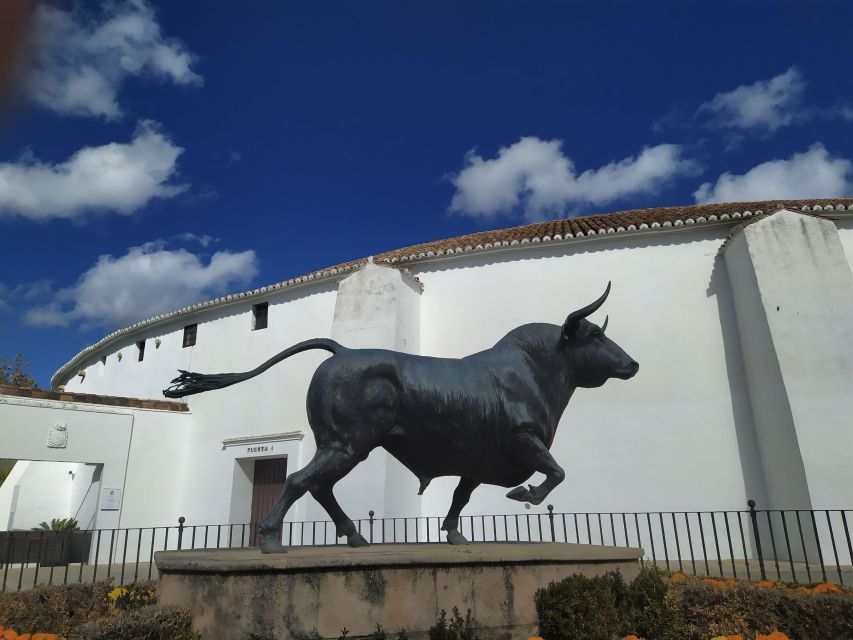
The route then reaches the outside of Ronda’s bullring, described as one of the oldest in Spain and as a birthplace of traditional bullfighting. The tour does not list admission to the arena, so plan on seeing it from outside during this experience. If the bullring is a priority, check separately whether you want to buy an entry ticket before or after the walk.
This is a good example of what the tour does well. It provides a compact introduction to a major part of Ronda’s identity without requiring you to spend the whole morning at one site. It also leaves you free to decide later if you want a closer look.
Puente Nuevo and the gorge
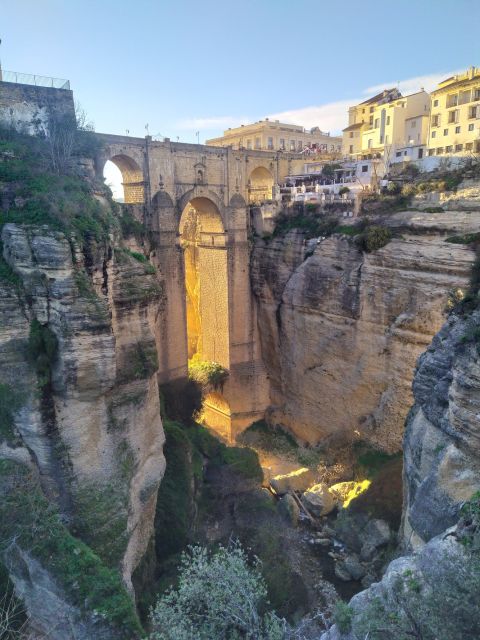
Puente Nuevo is the visual center of the walk. The bridge crosses Ronda’s gorge and offers the views that draw many people to the town. You will see the gorge, the bridge structure, and the balconies of houses that appear to hang over the ravine.
Your guide can help you find the right angles and explain why the bridge is so important to Ronda. Several guides have been praised for showing excellent photo spots, and that is especially useful here. A quick stop at the first viewpoint may not give you the best picture, so local direction can save time.
The bridge area can also be the busiest part of the route. An early start may help you see the main viewpoints before they fill up. A guide can move you through the most crowded spots efficiently, but you should not expect a quiet private view of the bridge at all times.
The gorge gives the tour its strongest sense of place. You are not simply checking off a famous monument. You are seeing how the town was shaped by a dramatic natural divide, and why Ronda’s streets, balconies, and bridges feel so different from those in flatter Andalusian cities.
Same streets, a different guide:
- Barcelona Tapas and Wine Experience Small-Group Walking Tour
★ 5.0 · 5,804 reviews - Barcelona: Tapas Walking Tour with Food, Wine, and History
★ 4.8 · 4,261 reviews - Madrid Tapas & Wine Tasting Walking Tour – Small Group Local Bars
★ 5.0 · 3,644 reviews - Granada: Albaicín and Sacromonte Guided Sunset Walking Tour
★ 4.9 · 2,962 reviews
Old-town streets and the many layers of Ronda
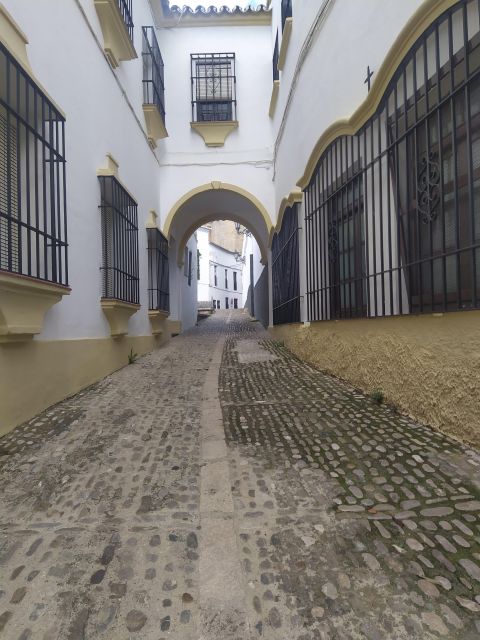
After Puente Nuevo, the route moves through Ronda’s old town. This is where the tour’s broad historical approach becomes most useful. The guide points out traces associated with the Celts, Phoenicians, Romans, and Moors, showing how different periods left their mark on the same compact town.
The value is not only in memorizing a list of civilizations. You are learning to read the streets and buildings as a mixture of periods. Ronda’s appeal comes from that overlap, and a local guide can point out details you might otherwise walk past.
The old town is also where the private format pays off most. You can ask why a street is laid out in a certain way, how a building was used, or which places deserve a return visit. One private group appreciated being taken away from the main crowds and through the quieter labyrinth of the old quarter.
Still, keep your expectations realistic. The route is described as a guided visit of about an hour and a half within a two-hour experience, but it does not include a full interior tour of every historic building. Think of it as a strong orientation walk with selected stops.
Mondragón Palace and the town’s civic center
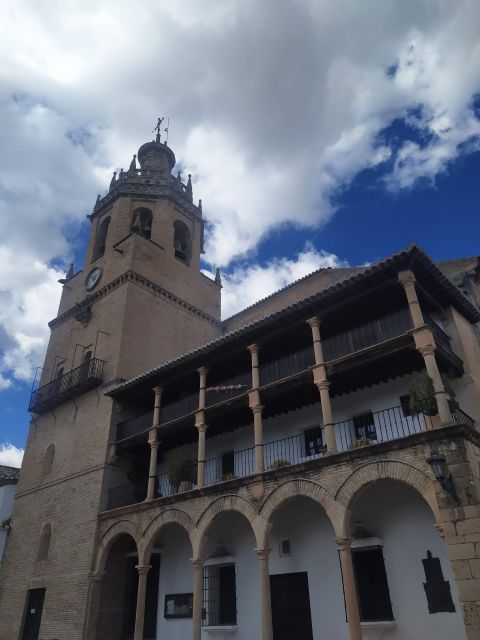
The walk passes Mondragón Palace, one of Ronda’s most visited buildings and the home of the Local Museum. The palace gives the guide a chance to explain more about the town’s past through an important architectural site.
Because the tour does not list museum admission, you should treat this as an exterior stop unless your guide tells you otherwise. If you want to visit the Local Museum, ask about fitting it in after the tour. The guide’s explanation can help you decide if it deserves extra time.
The route also reaches Plaza de la Duquesa de Parcent. This square is known for Ronda’s largest church and for the town hall. It is a useful stop because it shifts the focus from dramatic scenery to civic and religious life.
I like this balance. Puente Nuevo supplies the big view, but places such as Mondragón Palace and Plaza de la Duquesa de Parcent help explain how Ronda functions as a lived-in town. You get architecture, public life, religion, and local history in the same short walk.
The final stop and an important local Virgin
Near the end, the guide makes an additional stop connected with a Virgin who is important to people in Ronda. The description does not name her, so you will need to ask your guide directly. That small mystery is part of the local character of the tour, but do not book it expecting a detailed religious itinerary.
The walk finishes in the central area of Ronda. The description names Spain Square, while the itinerary gives Plaza del Socorro as the endpoint, so confirm the final meeting or drop-off location when you book. Both are central, but the difference matters if you have a train, timed attraction, or restaurant reservation immediately afterward.
A central finish is convenient. You can continue exploring, stop for lunch, visit a museum, or return to the bridge for more photographs. The guide’s restaurant advice can also be useful here. Multiple guides have been praised for recommending places to eat, though you should still choose based on your own plans and budget.
What $141 means for your group
The listed price is $141 per group of up to 10 people. For one or two people, that is a significant price for a two-hour walk. For a family or group of friends, the per-person cost becomes much more reasonable, especially when you value privacy and the ability to ask questions.
A private tour also saves you from paying for a longer group experience when you only have one day in Ronda. One visitor with a single day in town found that the walk helped make the limited time count. That is the strongest case for booking: you receive a quick, guided introduction and can then choose where to spend the rest of your visit.
The price does not appear to include entry to the bullring or Mondragón Palace. It is best understood as payment for the guide’s time and the private route, not as an admission package.
The guide quality appears strong overall, but language ability can vary by person. English, Spanish, and French are offered, and several guides are praised for excellent English. One account noted that a guide’s English was limited, while the Spanish version worked very well. If fluent English is important to you, confirm the language and guide details in advance.
Who should book this Ronda walking tour?
I would choose this tour if you have only a day in Ronda, want the main sights explained in a logical order, or are traveling with a small group that prefers privacy. It also suits families, since the guide can adjust the pace and answer questions without a large group waiting.
It is a good fit for visitors who want more than photographs. The route gives you context for the gorge, the bullring, Hemingway, the old town, the palace, and the main square. It is especially useful early in your stay because the guide can suggest places to eat and other sites to visit.
I would hesitate if you dislike walking, have mobility limitations, or want long interior visits. The tour is short and active, and the listed conditions specifically say it is not suitable for people with mobility impairments. Comfortable shoes are essential.
You may also prefer a self-guided visit if you mainly want to linger at Puente Nuevo or spend a long time inside the bullring and museum. This experience favors coverage, explanation, and personal attention over extended time at one attraction.
Practical details before you go
The tour lasts two hours and is led live in English, Spanish, or French. You meet at La Merced Church, with the walk passing through Alameda del Tajo, Paseo de Ernest Hemingway, the bullring area, Puente Nuevo, the old town, Mondragón Palace, Plaza de la Duquesa de Parcent, and the final central area.
Wear comfortable shoes. Ronda’s streets and viewpoints require walking, and the route is not designed for people with mobility impairments. Since much of the experience happens outdoors, weather can affect the pace, though one guide was praised for adapting well when conditions became difficult.
You can cancel up to 24 hours before the start for a full refund, and you can reserve now and pay later. Those terms help if your Andalusian route is still changing.
Should you book it?
Book this private Ronda tour if you want a well-paced introduction to the town and can share the $141 cost with a family or group. The best reasons are the gorge views, the local stories, and the chance to ask questions without a crowd.
Skip it if you need a fully accessible route, want extensive time inside monuments, or prefer to explore at your own slow pace. For most first-time visitors with limited time, this is a sensible way to get oriented before choosing what deserves a longer visit.
FAQ
How long is the Ronda private walking tour?
The tour lasts two hours. The guided visit through Ronda is listed as about one and a half hours within the overall experience.
What is the price of the private tour?
The price is $141 per group of up to 10 people. The cost is shared by the group rather than charged separately to each person.
Where does the tour meet?
The meeting point is La Merced Church at Plaza de la Merced.
Which languages are available?
The live tour is available in English, Spanish, and French.
What sights are included in the walking route?
The route includes Alameda del Tajo, Paseo de Ernest Hemingway, the outside of Ronda’s bullring, Puente Nuevo, the old town, Mondragón Palace, Plaza de la Duquesa de Parcent, and a stop connected with an important local Virgin.
Is the tour suitable for people with mobility impairments?
No. The experience is listed as unsuitable for people with mobility impairments. You should also bring comfortable shoes for the walk.
More Two-Hour Walks in Spain
- Málaga: 2h Walking Historical Tour–Art, Culture and Legends
★ 4.9 · 341 reviews - Barcelona: Jewish Quarter 2-Hour Walking Tour
★ 4.8 · 333 reviews - Barcelona 2-Hour Gothic Walking Tour
★ 4.7 · 317 reviews - Berlin’s Best: 2 Hour Walking Tour Third Reich and the Cold War
★ 5.0 · 5,486 reviews
New routes in Spain
- Toledo: Guided Walking Tour with Cathedral Ticket and Tour★ 4.2 · 98 reviews
- Toledo: Guided Monument Walking Tour with Wristband Pass★ 4.5 · 487 reviews
- Valencia: Fallas Festival Walking Tour with Entry Ticket★ 4.6 · 86 reviews
- Barcelona: “The Shadow of the Wind” Literary Walking Tour★ 4.5 · 176 reviews
- Tenerife: Underwater Walk – Sea Trek Experience★ 5.0 · 237 reviews
- Tarragona: Roman Heritage Guided Walking Tour★ 4.7 · 261 reviews
- Seville: Sunset Roof Top Walking Tour★ 4.2 · 131 reviews
- Seville: Paranormal and Legends Guided Walking Tour★ 4.7 · 336 reviews
Spain Walking Tours, compared.
Barcelona Tapas and Wine Experience Small-Group Walking Tour
Read our review →
Tapas Walking Tour with Food, Wine, and History
Read our review →
Madrid Tapas & Wine Tasting Walking Tour – Small Group Local Bars
Read our review →
Albaicín and Sacromonte Guided Sunset Walking Tour
Read our review →
Toledo Tour & Vineyard Walk with Wine Tasting from Madrid
Read our review →
Browse the lists this tour appears in