
Review · GLASGOW
Glasgow: The streets with a Glaswegian guide: Walking Tour
Glasgow’s story comes alive through performance and local storytelling, not just dates recited beside a monument. Starting near George Square, the two-hour walk moves through grand civic buildings, old merchant streets, Glasgow’s medieval centre, and the grim setting of Mercat Cross, where public executions once took place. I especially like the mix of architecture and social history, plus the way guides such as Ian, Martin, Luke, and Gordon use humour, poetry, and personal flair to keep the past moving.
I also like that the route gives you useful next steps, including free museums and galleries, food suggestions, and possible detours to Glasgow Cathedral or the Police Museum. The main consideration is pace and coverage: two hours is enough for a lively introduction, not a full city tour, and the Scottish accent or performance style may occasionally require extra concentration.
Key points at a glance
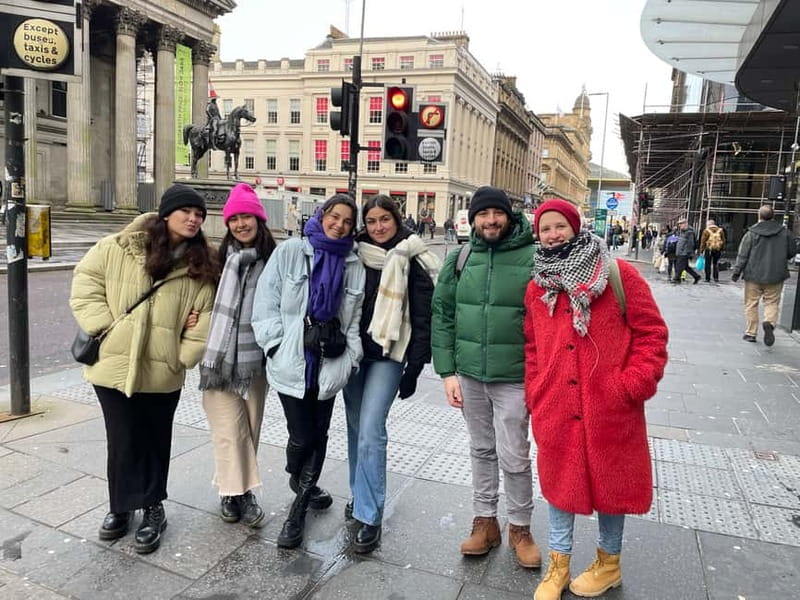
- George Square sets the stage: Learn how this grand civic space gained its name and how Glasgow presents its public face.
- Merchant City connects local streets to world events: Tobacco, trade, rebellion, and capitalism all enter the story.
- A professional actor leads the walk: Guides including Ian, Martin, Luke, and Gordon bring dramatic timing, poetry, and humour.
- Glasgow’s medieval centre is still part of the route: The walk reaches old lanes, Candleriggs, and Mercat Cross.
- The route is flat and wheelchair accessible: Wear comfortable shoes and dress for rain or shine.
- The $20 price is good value: You receive two hours of guided history plus practical ideas for the rest of your Glasgow stay.
Why this Glasgow walk is more than a list of dates
I like this tour because it gives Glasgow a strong storyline. You begin with the city’s polished public face, then move into the streets where merchants, immigrants, workers, politicians, and criminals shaped its character. The route is not built around entering a long list of attractions. Instead, your guide uses the streets themselves as the setting.
That matters in Glasgow. Many of the city’s most useful stories happen outside museum walls. A street corner can explain the growth of global trade. A grand building can open a discussion about power and wealth. A medieval crossing can lead to stories of punishment, public spectacle, and changing ideas about justice.
The guide’s acting background is central to the experience. Martin, Ian, Luke, and Gordon have all received especially strong praise for clear delivery, humour, and the ability to make historical material feel personal. Gordon is known for using poetry and imaginative storytelling, while Martin’s dramatic training helps him project to a larger group. Ian is often praised for answering questions and offering suggestions for food and later sightseeing.
This is not a silent, academic walk. You can expect anecdotes about Glasgow life, amusing asides, and stories that may include murder, ghosts, grave robbing, rebellion, and social change. The tone is lively, but the subject matter can turn serious when the walk reaches poverty, immigration, executions, and the consequences of industrial growth.
More Guided Walks in the UK:
- Magical London: Harry Potter Guided Walking Tour
★ 4.7 · 22,044 reviews - Edinburgh: Harry Potter Magical Guided Walking Tour
★ 4.8 · 11,944 reviews - Edinburgh Castle: Guided Walking Tour with Entry Ticket
★ 4.7 · 11,699 reviews
George Square and Glasgow’s public face
The meeting point is currently at the corner of Cochrane Street and George Square because of refurbishment work in the square, planned through August 2026. If major disruption affects that spot, the backup meeting place is the Piper Whisky Bar at the corner of Cochrane Street and George Square. Check the exact instructions before setting out.
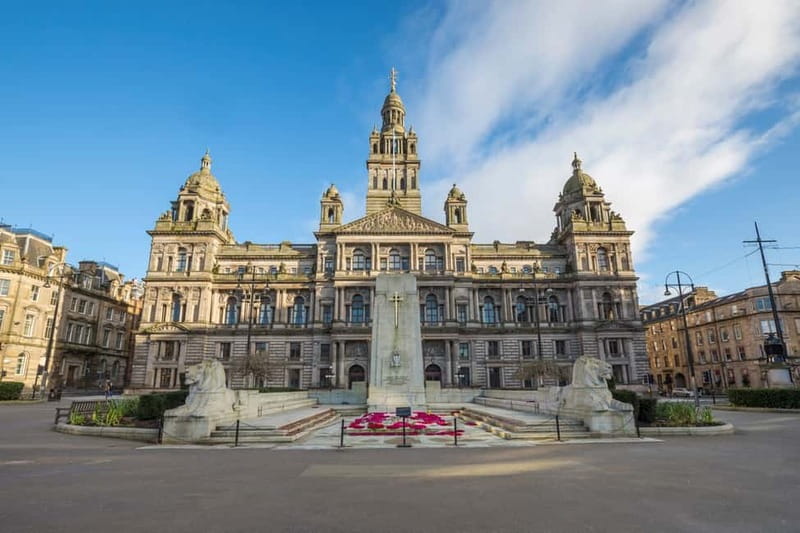
George Square is a sensible starting point. It gives you a quick visual lesson in Glasgow’s civic ambition, with the City Chambers and Merchants’ House framing the space. Your guide spends about ten minutes introducing the square, then continues with another short guided walk and photo stop.
Pay attention to the contrast here. The architecture is formal and confident, but the guide uses the square to ask who had power, who profited, and how Glasgow wanted to be seen. You also hear how the square came to carry the name of an English king, an early reminder that Glasgow’s identity has never been simple or isolated from wider British politics.
This first section is useful for orientation. If you have just arrived in Glasgow, it helps you understand where the city centre sits and how its grand buildings relate to the older streets nearby. The photo stop is brief, so bring your camera ready rather than expecting a long pause.
From Christian beginnings to a trading city
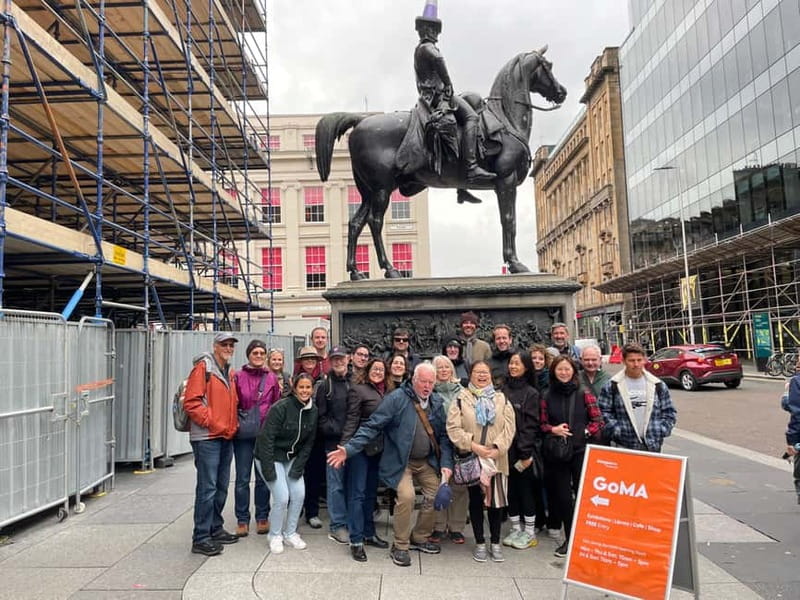
The route then moves through the city centre, with about 20 minutes of walking and storytelling. This is where the guide links Glasgow’s early Christian and Roman past to its later growth as a major trading city.
The value here is not simply hearing that Glasgow became wealthy. You get a sense of the forces behind that wealth and the arguments surrounding it. Trade created opportunity, but it also tied the city to empire, exploitation, political conflict, and sharp differences between social classes.
The story reaches tobacco, merchant fortunes, and the city’s part in global events. You may hear the suggestion that Glaswegians helped spark the American War of Independence, a lively example of how local business interests could connect to distant political change.
A good guide makes these connections without turning the walk into a lecture. Gordon’s storytelling style, for example, has been praised for presenting Glasgow and Scottish history as a sequence of memorable stories rather than a pile of facts. That approach suits this route because the streets are compact, yet the subjects range widely.
You should expect some standing while the guide talks. The walk itself is not described as strenuous, and the terrain is flat, but the experience works best if you are comfortable listening outdoors for several minutes at a time.
Gallery of Modern Art and the city’s changing identity
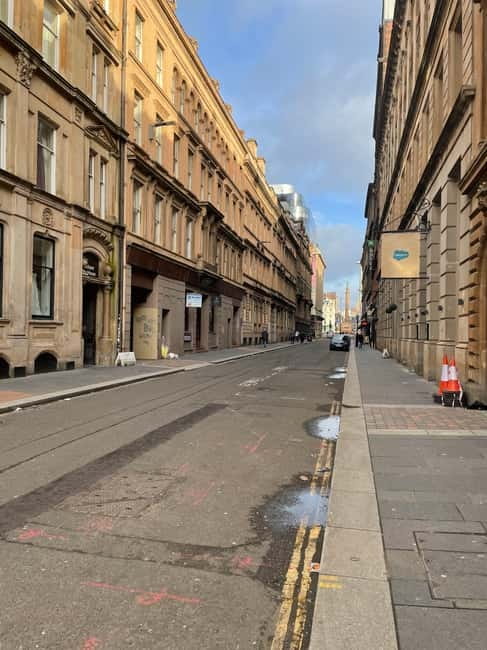
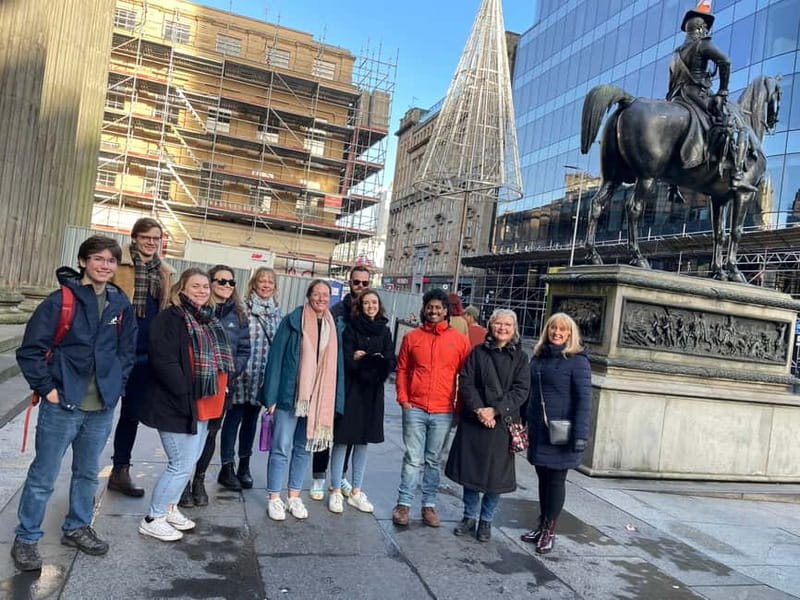
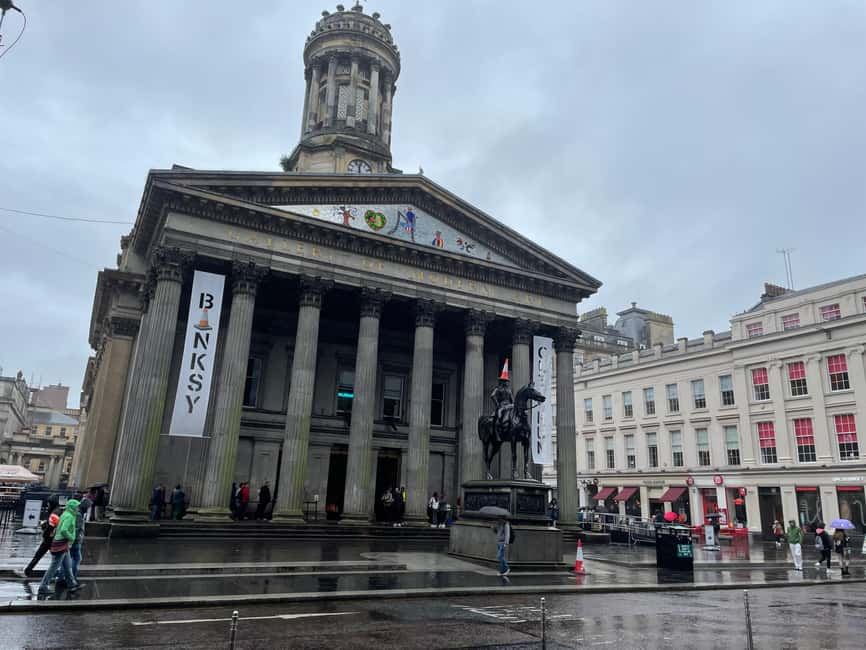
The route includes the Gallery of Modern Art, with about 20 minutes of walking and guided commentary. The gallery is one of the city’s cultural landmarks, but this tour is not designed as a full gallery visit. There is not enough time to explore Glasgow’s museums and galleries in depth during the walk.
That limitation is worth understanding before you book. The guide points out places you can return to later, and Glasgow’s museums and galleries are free to visit. So the gallery stop works as an introduction and planning aid rather than a museum tour.
I like this arrangement. You get the street-level context first, then you can return on your own when you have time to look at exhibitions properly. The same applies to other places on or near the route. The guide may point you toward Glasgow Cathedral or the Police Museum if you want more architecture, crime history, or civic detail after the walk.
The Gallery of Modern Art also helps broaden the tour beyond old stones and dark tales. Glasgow is not presented as a frozen medieval or Victorian set. You see a city that keeps changing, with culture and public art forming part of its modern identity.
More Walking Tours in the UK:
- Underground Vaults Walking Tour in Edinburgh Old Town
★ 4.5 · 8,506 reviews - London: The Original Jack the Ripper Walking Tour
★ 4.7 · 7,833 reviews - Oxford University Walking Tour With University Alumni Guide
★ 5.0 · 6,905 reviews - Edinburgh Castle: Guided Walking Tour with Entry Ticket
★ 5.0 · 5,540 reviews
Merchant City, hidden lanes, and the business of Glasgow
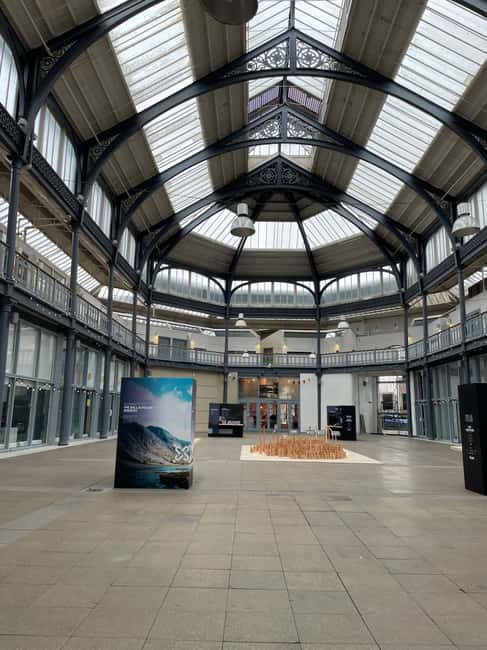
The longest part of the route is a roughly 30-minute walk through Merchant City. This is the heart of the tour for anyone interested in Glasgow’s commercial past.
Merchant City is a good place to connect architecture with individual ambition. The streets reflect the money made by merchants, but the guide also explains the wider systems behind that money. Tobacco, shipping, rebellion, capitalism, and the rise of socialism all enter the story.
The word merchant can sound harmless. On this walk, it becomes more complicated. Wealth brought elegant buildings and civic pride, but it also raised questions about labour, inequality, and the sources of commercial profit. That balance is one of the tour’s strengths. You are not asked to admire Glasgow’s grand architecture without asking how it was funded.
The route also uses alleys and lanes to show a less polished side of the centre. These smaller spaces help you picture how people moved through the old city and how different Glasgow must have felt before modern traffic and redevelopment changed its streets.
Do not expect every lane to be a major sight in itself. Their value comes from the explanation. Without a guide, you could easily walk past them. With one, they become part of a story about business, class, migration, and urban growth.
Irish immigration and the people who built the city
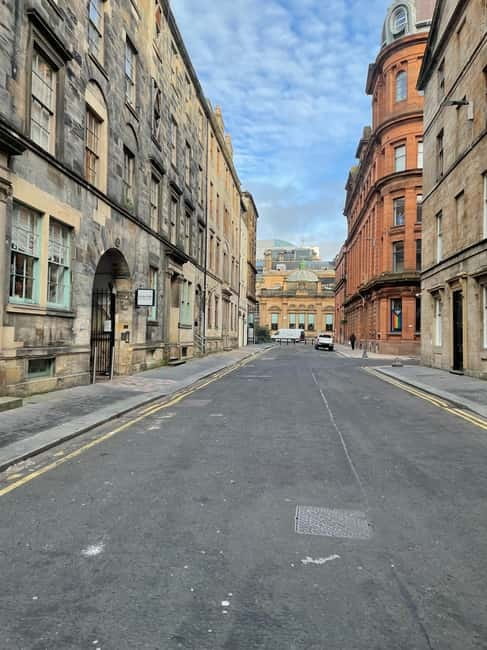
One of the more important subjects is the role of Irish immigrants in Glasgow’s expansion. This gives the walk a human scale that grand buildings alone cannot provide.
You hear about the people who came to the city and helped fuel its growth, along with the tensions and pressures that accompanied migration. The tour places Glasgow’s development in a wider British and Irish setting rather than treating the city as a story created only by wealthy merchants and civic leaders.
This section is especially useful if you want to understand Glasgow beyond its famous architecture. It explains how a city changes through movement, work, religion, politics, and family life. The guide’s anecdotes make the subject approachable, while the social history keeps the tour from becoming a simple parade of impressive façades.
The tone can shift quickly here. A funny story may sit beside a difficult subject, and the actor-guide format allows the guide to move between humour and seriousness. That variety is part of the appeal, though anyone looking for a quiet, strictly chronological lecture may prefer a more formal history tour.
Candleriggs and Glasgow’s older centre
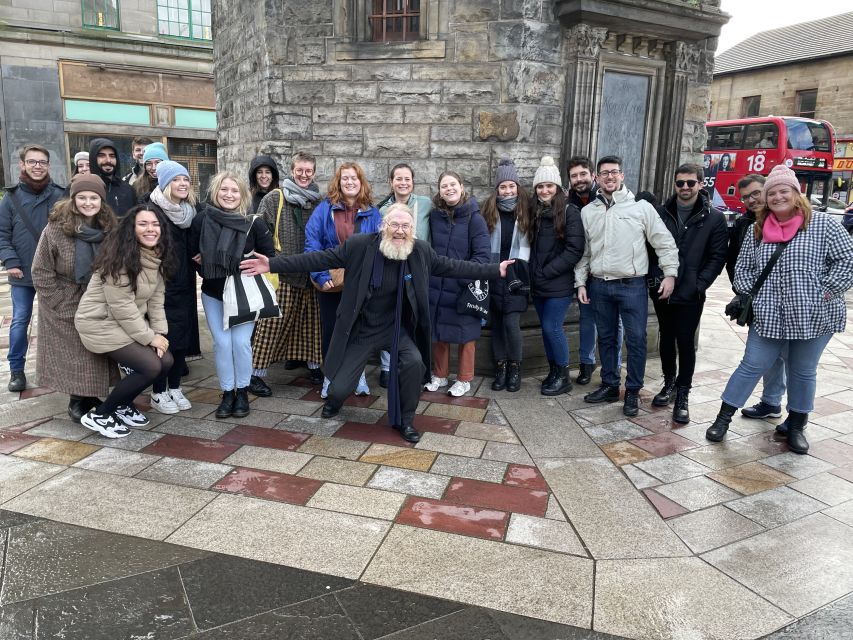
The walk reaches Candleriggs for a brief five-minute photo stop. This is one of the points where the old city centre becomes easier to picture.
The stop is short, so do not expect an extended visit. Its purpose is to give you another view of Glasgow’s earlier street pattern and to anchor the stories you have heard in a real place. The guide uses the surrounding area to explain how the city grew outward from its older core.
This is also a practical point in the route. You are nearing the finish, so you can begin thinking about what to do next. Ask your guide for suggestions if you want a museum, gallery, meal, or further walk. Several guides, including Ian, have been praised for giving useful advice after the formal tour ends.
Mercat Cross and the darker ending
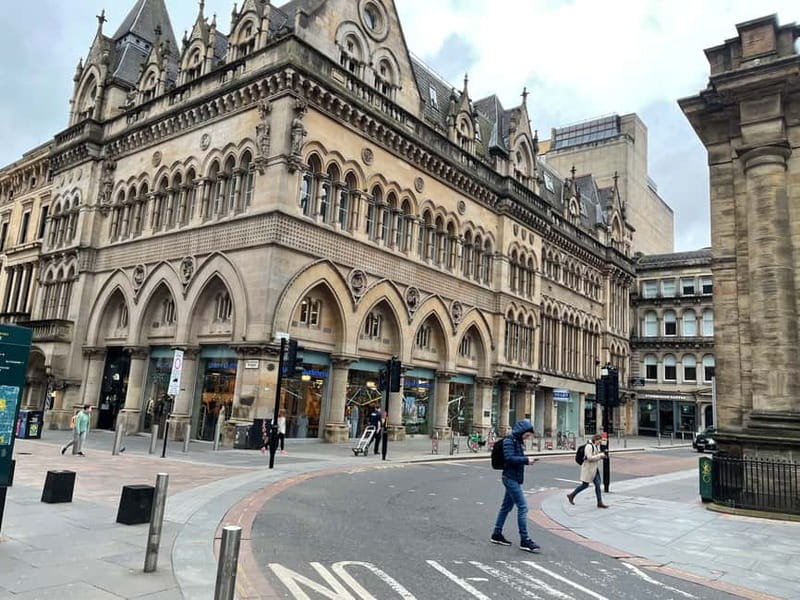
The walk finishes at Mercat Cross, a fitting place for Glasgow’s history to turn darker. This area was once associated with public executions, so the final stop brings the themes of justice, punishment, and public spectacle into the open.
It is not a cheerful ending, but it is memorable. Glasgow’s past was not only about trade and civic pride. The city also had harsh public rituals and difficult social conditions. Ending here leaves you with a more honest picture of urban life in earlier centuries.
Mercat Cross is also a practical endpoint. You are in the historic centre, with plenty of options for continuing your day, though the supplied details do not specify particular restaurants or onward transport. Your guide can point out places to eat and other sights based on your interests.
How the actor-guide style changes the experience
The guide is the biggest variable from one departure to another. The tour uses professionally trained actor-guides who live in the city, so you are not getting exactly the same performance every time.
Ian is praised for warmth, humour, answers to questions, and practical recommendations. Martin is known for dramatic delivery, strong historical content, and an ability to connect with a group. Luke is described as funny, clear, and easy to listen to. Gordon brings poetry, wit, visual aids, and a strong sense of affection for Glasgow.
That range is a strength, but it also means the tone can vary. One guide may lean harder into performance, another into social history, and another into personal anecdotes. If you enjoy a lively guide with a distinctive voice, this is a good match. If you want a fixed script with identical content each time, the format may feel less predictable.
Several accounts also point to the guide’s ability to project clearly, even with a fairly large group. One group included about 35 people, and the guide still managed to engage individuals. Even so, stay close enough to hear, especially on busy streets or in poor weather.
Is two hours enough for $20?
At $20 per person, I consider this a strong-value introduction to central Glasgow. The price covers two hours of live guiding across several historic areas, with a professional actor providing the interpretation. You are paying less for entry tickets and more for context, connections, and a well-shaped route.
The free museums and galleries improve the value. The tour does not have time to visit them properly, but it points them out so you can return later without paying admission. That makes the walk a useful first activity, especially if you have only a weekend and want to decide how to spend the rest of your time.
The main tradeoff is limited coverage. You will not see every major Glasgow attraction, and the walk does not include hotel pickup, food, or drinks. It is best viewed as a city-centre orientation with strong storytelling, not as a complete sightseeing package.
Who should book this Glasgow walking tour?
I would choose this tour if you want history delivered with humour and human detail. It suits first-time visitors, couples, solo visitors, families with older children, and anyone who wants a clear introduction before exploring Glasgow independently.
It is also a good choice for people who normally lose interest during standard guided tours. The acting background, poetry, visual aids, and anecdotes keep the format moving. The route covers enough architecture, politics, trade, immigration, and darker history to give you several ways into the city.
You may want a different experience if your priority is entering major attractions, spending long periods inside museums, or covering a very large area. The walk stays focused on the historic centre and gives you pointers for later visits rather than replacing them.
Wear comfortable shoes and weather-appropriate clothes. The tour runs rain or shine, but the flat route and wheelchair accessibility make it easier to manage than a steep or uneven city walk. Bring a camera, and keep some time afterward for a free museum or gallery.
Should you book it?
Book this tour if you want Glasgow explained by a local actor-guide who can connect grand buildings with merchants, immigrants, rebels, workers, and the city’s darker past. The two-hour length is manageable, the $20 price is fair, and the free attractions pointed out along the way add useful value.
I would book it early in your Glasgow stay, ideally on your first morning, so the route gives you a map of the centre and your guide can suggest what to eat and see next. Just remember that the experience depends on the guide’s style and that two hours offers a lively beginning, not the final word on Glasgow.
FAQ
How long is the Glasgow walking tour?
The tour lasts two hours.
How much does the tour cost?
The listed price is $20 per person.
Where does the tour meet?
Until August 2026, the meeting point is at the corner of Cochrane Street and George Square because of refurbishment work in George Square.
Is there an alternative meeting point?
If a major disruption affects the square, the meeting point is the Piper Whisky Bar at the corner of Cochrane Street and George Square.
Where does the tour finish?
The walk finishes at Mercat Cross.
What language is the tour in?
The tour is conducted in English.
Is the route wheelchair accessible?
Yes. The tour takes place on flat terrain and is wheelchair accessible.
Does the tour run in bad weather?
Yes. The tour takes place rain or shine, so bring weather-appropriate clothing.
Are museums and galleries included?
The tour points out Glasgow museums and galleries, which are free to visit, but there is not enough time to visit them during the two-hour walk.
What should I bring?
Bring comfortable shoes, comfortable clothing, a camera, and clothing suitable for the weather. Food and drinks are not included.
New routes in the UK
- Aberdeen City Centre Walking Tour (2pm)★ 5.0 · 217 reviews
- German London : The Ultimate Walking tour★ 4.8 · 400 reviews
- London: Medieval History Walking Tour from The Tower★ 4.9 · 318 reviews
- Oxford: Official University and City Walking Tour★ 4.7 · 618 reviews
- The Beatles London Walking Tour★ 4.2 · 147 reviews
- Stratford-Upon-Avon’s Town Walking Tour (10:30am & 2pm)★ 4.8 · 143 reviews
- The Sinister Side of Shakespeare’s Stratford Walking Tour★ 4.8 · 547 reviews
- Stratford-Upon-Avon: The Famous Walk Talk Show★ 4.9 · 342 reviews
Glasgow Walking Tours, compared.
Glasgow City Centre Walking Tour with Local Guide
Read our review →
Ghouls, Ghosts & Gruesome Tales Guided Walking Tour
Read our review →
Glencoe, Scenic Walk & Scottish Highlands Tour
Read our review →
Browse the lists this tour appears in