
Review · UK
Bristol: Air Raid Shelter & St. Nicholas Market Walking Tour
Bristol keeps one of its most unusual sights below street level: a wartime air raid shelter beneath the Corn Exchange and market area. This tour pairs that stark underground time capsule with old-city streets, Blitz stories, trading history and rooms connected with Bristol’s 1960s music scene.
I like the way the tour links big public history to physical places you can actually enter. I also like the guides’ strong delivery, especially Owen, Duncan and Theresa, who bring plenty of energy and clear storytelling. The main consideration is that the shelter is still being developed as a museum, so you get atmosphere and access rather than a polished exhibition.
Key points to know before booking
- The shelter is the star attraction: You enter Bristol’s largest public air raid shelter, a rare surviving space beneath the city.
- The tour begins at the Corn Exchange: Meet at the main entrance, then walk through the Old City before going underground.
- The guide makes the difference: Owen, Duncan and Theresa are praised for lively storytelling, wartime detail and strong character work.
- You see more than wartime Bristol: The route covers about 1,000 years of trading history, old streets, Blitz damage and 1960s music connections.
- St Nicholas Market finishes the outing: Food and souvenirs are available to buy, but they are not part of the $16 ticket.
- Expect uneven comfort underground: Comfortable shoes are essential, and the shelter is not suitable for people with mobility impairments, claustrophobia, a weight over 300 pounds, or an age over 95.
Why Bristol’s underground shelter changes the way you see the city
Many city walks keep you outdoors and point at buildings. This one takes you beneath them. That simple change gives the wartime section real weight, because you are not only hearing about air raids and civilian shelters. You are standing inside the kind of place where people sought safety during the Blitz.
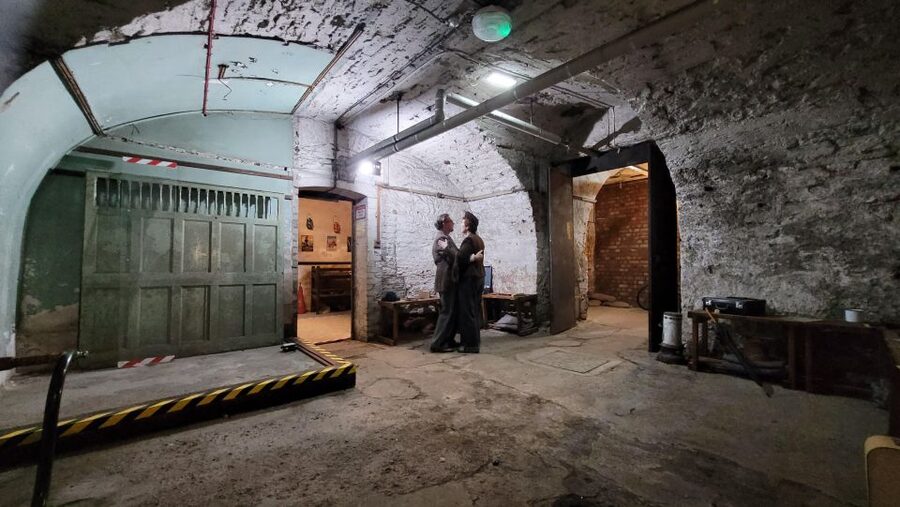
The shelter remains largely untouched. That means it may feel more like a preserved working space than a finished museum. You can see the physical conditions people had to endure, along with wartime objects and displays that are gradually being assembled. The setting does much of the work. Low ceilings, enclosed rooms and the lack of polish help you picture the shelter as a place of urgent use rather than a formal gallery.
The underground portion is also unusual because it is not generally open for casual public access. Your guide leads you into areas most people walking through Bristol will never know are there. That gives the tour a strong sense of discovery without requiring a long trip outside the city center.
The shelter is sometimes presented with the story of Margaret, a friendly ghost associated with the site. Treat this as a light supernatural thread rather than the main subject. The real value is the surviving wartime space and the stories connected to it.
More Market Walking Tours in the UK:
- London Bridge & Borough Market Food Tour with 7 Authentic Dishes
★ 5.0 · 1,972 reviews - Air Raid Shelter + St. Nicholas Market Walking Tour
★ 5.0 · 1,950 reviews - Bangkok: City Highlights Temple and Market Walking Tour
★ 4.5 · 3,990 reviews
Start at the Corn Exchange, where Bristol’s stories meet
Your meeting point is the main entrance of the Corn Exchange. This is a useful starting place because the building connects directly to Bristol’s commercial past and to the shelter below.
The guide may appear in WW2 costume, setting the tone before the walk begins. Owen, Duncan and Theresa have all led tours, and the strongest common feature is an animated delivery. The best guides do not simply recite dates. They explain how the city worked, how trading shaped its streets and how wartime damage changed familiar parts of Bristol.
You should allow for a walking tour rather than a single-site visit. The first section moves through the Old City, with stops connected to Bristol’s trading past, architecture and bombing raids. The guide points out Blitz damage and explains places such as the Temple Church, Wine Street and Corn Street in the context of the German attacks.
That outdoor section matters because it gives the shelter a setting. Before you go below ground, you see the streets that were exposed to danger above. The city’s commercial center was not an abstract wartime backdrop. It was a working place filled with shops, businesses and public buildings.
The route also reaches back much further than the Second World War. The tour traces roughly 1,000 years of Bristol’s trading history, so you get a compact introduction to the city rather than a narrow military talk. If you already know Bristol, this broader approach may still surprise you. Local residents have found plenty of new details in familiar streets.
Reading Bristol’s Blitz damage in the Old City
The outdoor walk is where the tour builds its timeline. Bristol’s story moves from medieval trade to industrial commerce, then to the violence of the Blitz and the city you see today.
The guide’s role is especially important here. Streets can look ordinary until someone explains what was destroyed, what survived and why a building matters. The tour focuses on specific parts of the old city, including the Temple Church, Wine Street and Corn Street. You will hear detailed accounts of the bombing raids and their effect on Bristol.
I like this part because it prevents the shelter from becoming an isolated attraction. You first see the city as a place shaped by trade and architecture, then learn how war interrupted that life. The result is more useful than a list of dates. You begin to read the street plan and surviving buildings with greater attention.
Do not expect a long architectural lecture. The experience lasts roughly 75 minutes to two hours overall, and the exact timing can vary. Some published sections describe about 85 minutes around the Old City and 110 minutes connected with St Nicholas Market, so check the available departure when booking if your schedule is tight.
The walk is also a good reason to wear proper shoes. You will be outside before entering the shelter, and comfortable footwear is specifically recommended. The route is not designed for people with mobility impairments.
Going below ground into the air raid shelter
The transition underground is the high point. After the Old City walk, the guide takes you into Bristol’s biggest public air raid shelter, located beneath the Corn Exchange and market area.
This is not a replica. It is a surviving shelter with a plain, functional character. The rooms show the conditions people had to face during air raids, and the guide explains how the space fitted into wartime Bristol. Owen has been praised for bringing that experience to life, while Duncan has built much of the project and speaks with particular commitment about preserving it.
The site is still developing. You may see a fledgling museum area with wartime objects, articles and other material waiting to be better displayed. That is both a strength and a limitation. The shelter feels authentic because it has not been turned into a slick attraction, but you may want more time to study the items than the tour allows.
A few visitors have wished for a larger museum space, extra renovation and more time for questions. That is fair. The attraction has plenty of potential, but the current experience depends heavily on the guide. If your ideal museum visit means detailed labels, spacious galleries and lots of time alone with exhibits, this may feel basic.
If you value atmosphere and personal explanation, the unfinished quality works in its favor. You see a place that is still being cared for and developed. Your ticket also helps maintain public access to a site that could otherwise remain shut.
The underground rooms are not suitable for people with claustrophobia. The operator also lists a weight limit of 300 pounds, or 136 kilograms, and an upper age limit of 95. Those restrictions are unusual, but they reflect the enclosed nature of the space and the physical demands of the visit.
More Walking Tours in the UK:
- Magical London: Harry Potter Guided Walking Tour
★ 4.7 · 22,044 reviews - Edinburgh: Harry Potter Magical Guided Walking Tour
★ 4.8 · 11,944 reviews - Edinburgh Castle: Guided Walking Tour with Entry Ticket
★ 4.7 · 11,699 reviews - Underground Vaults Walking Tour in Edinburgh Old Town
★ 4.5 · 8,506 reviews
The Corn Exchange’s unexpected music connection
The tour is not only about war. Exclusive access to parts of the Corn Exchange includes rooms connected with Bristol’s 1960s music scene. These spaces once hosted major bands, including the Rolling Stones.
This detail gives the building a second life. Above and below ground, the Corn Exchange carries very different memories: wartime sheltering beneath the streets and loud live music in the decades that followed. The contrast makes the site more interesting than a standard military attraction.
The music connection is presented as part of the wider walk rather than as a full concert-history tour. If you are especially interested in 1960s bands, treat it as an extra layer rather than the reason to book. The main focus remains Bristol’s old city and wartime experience.
Still, it is a clever addition. It keeps the tour from becoming too solemn and shows how one building can hold several chapters of local life.
Finishing at St Nicholas Market
The tour ends at St Nicholas Market, with drop-off options listed at both the market and the Corn Exchange. The market is a practical finish because you can continue exploring, stop for lunch or buy something small to take home.
Food and drink are not included in the $16 ticket. You can purchase sweet and savory treats from the market, along with street food and souvenirs. I would treat this as a chance to extend the visit rather than part of the guided service.
The market also gives the tour a natural closing point. You have spent time hearing about Bristol as a trading city, then finish in one of its best-known covered market spaces. The shift from shelter rooms to food stalls and everyday commerce is a useful reminder that the city’s history is still active, not sealed behind glass.
Do keep an eye on the timing. The available details describe St Nicholas Market as a substantial part of the experience, but the overall duration is given as 75 minutes to two hours. If you want to browse slowly, eat and shop, plan extra time beyond the tour itself.
Is $16 good value?
At $16 per person, this is strong value if you want something more distinctive than a basic city walk. The price includes a live English-language guide, entry to the WW2 shelter and access to exclusive Corn Exchange areas. You are paying for access to places you could not normally enter, not just for a walk past public buildings.
The value rests on two things: the shelter and the guide. The site is unusual, and the guides bring considerable energy to the stories. Owen is often praised for clear, enthusiastic delivery, while Duncan is closely linked with the shelter project. Theresa has also been described as bringing the wartime stories to life.
The ticket does not include food, drinks or souvenirs. That is reasonable for this price, but remember to budget separately if you want to sample the market. The experience can also run longer than a quick 75-minute outing, so leave space in your day.
Free cancellation up to 24 hours before the start and reserve-now, pay-later booking make it easier to fit into a changing Bristol schedule. Check the exact start time and duration before paying, especially if you have a train or another timed activity afterward.
Who should book this Bristol tour?
I would recommend it to first-time visitors who want Bristol’s past explained through real places. It also suits locals. Several people who already knew the city still learned new details about the bombing raids, trading streets and shelter network.
Families with older children may find the mix of stories, costume, underground rooms and the Margaret ghost character more engaging than a conventional museum. The subject is serious, but the guides use humor and lively delivery to keep the pace moving.
It is also a good choice for people interested in wartime Britain, urban history, architecture or unusual music venues. The combination is distinctive: you get the Blitz, 1,000 years of trade, 1960s bands and market food in one compact outing.
I would hesitate if you dislike enclosed spaces, need step-free access or prefer a polished museum with extensive written displays. The shelter is authentic and still developing. You should also choose comfortable shoes and be ready to stand and walk through old streets.
Should you book the Air Raid Shelter and St Nicholas Market tour?
Book it if you want Bristol history told through places with real physical character. The shelter is the clear reason to go, but the Old City walk and Corn Exchange music connections make the experience broader and more worthwhile.
The $16 price is sensible, the route fits well into a day in central Bristol, and the guides give the tour much of its appeal. Just set the right expectations: this is a passionate, developing historical attraction, not a large finished museum. For most visitors interested in wartime Bristol and unusual city stories, that rough edge is part of the appeal.
FAQ
Where does the tour begin?
Meet at the main entrance of the Corn Exchange in Bristol.
Where does the tour finish?
The listed drop-off points are St Nicholas Market and the Corn Exchange.
How long does the tour last?
The stated duration is 75 minutes to two hours. Check the available start time because the exact length may vary.
What language is the tour in?
The tour is conducted in English with a live guide.
Is entry to the air raid shelter included?
Yes. Entry to the WW2 air raid shelter is included in the ticket.
Is entry to the Corn Exchange areas included?
Yes. The tour includes access to exclusive areas of the Corn Exchange.
Is food included?
No. Food and drink are available to purchase at St Nicholas Market.
What should I bring?
Wear comfortable shoes for the Old City walk and the underground portion.
Who should not take this tour?
The experience is not suitable for people with mobility impairments, claustrophobia, a weight over 300 pounds or 136 kilograms, or an age over 95.
New routes in the UK
- Aberdeen City Centre Walking Tour (2pm)★ 5.0 · 217 reviews
- German London : The Ultimate Walking tour★ 4.8 · 400 reviews
- London: Medieval History Walking Tour from The Tower★ 4.9 · 318 reviews
- Oxford: Official University and City Walking Tour★ 4.7 · 618 reviews
- The Beatles London Walking Tour★ 4.2 · 147 reviews
- Stratford-Upon-Avon’s Town Walking Tour (10:30am & 2pm)★ 4.8 · 143 reviews
- The Sinister Side of Shakespeare’s Stratford Walking Tour★ 4.8 · 547 reviews
- Stratford-Upon-Avon: The Famous Walk Talk Show★ 4.9 · 342 reviews
UK Walking Tours, compared.

Magical London: Harry Potter Guided Walking Tour
Read our review →

Edinburgh Castle: Guided Walking Tour with Entry Ticket
Read our review →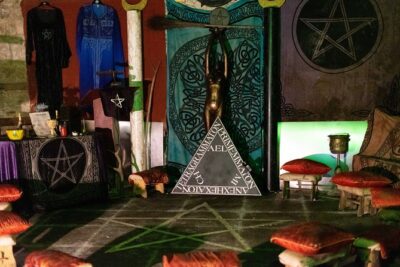
Underground Vaults Walking Tour in Edinburgh Old Town
Read our review →
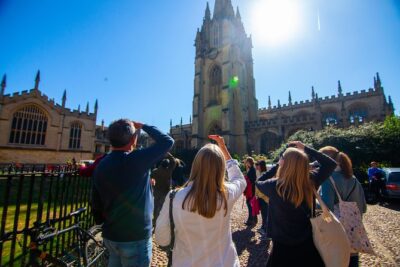
Oxford University Walking Tour With University Alumni Guide
Read our review →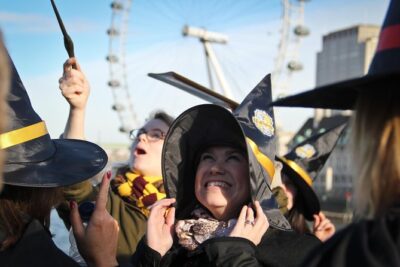
Tour for Muggles The Ultimate Harry Potter Walking Tour in London
Read our review →
Edinburgh Darkside Walking Tour: Mysteries, Murder and Legends
Read our review →Browse the lists this tour appears in