
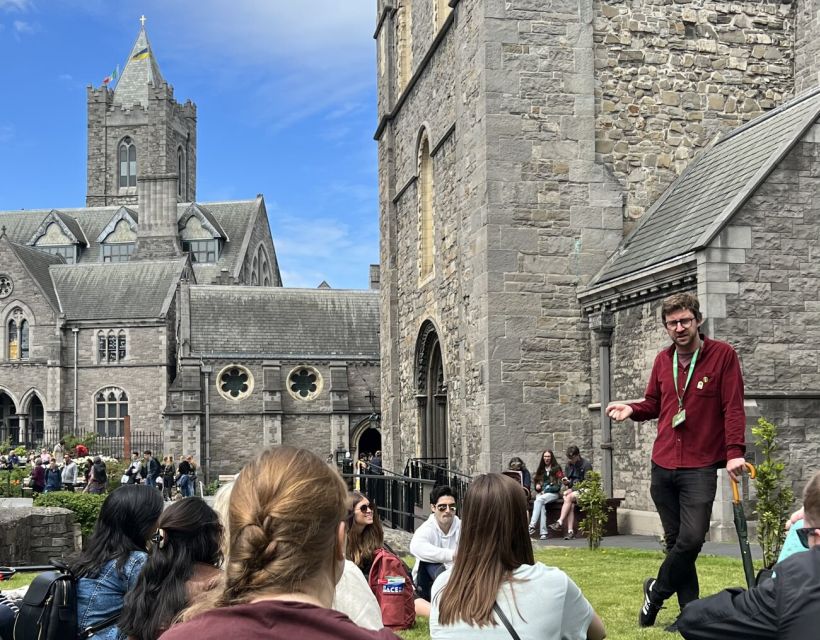
Review · DUBLIN
Dublin: Mythology, Folklore and Legends Walking Tour
Dublin’s streets hold more than pubs, stone buildings, and literary statues. This two-hour walk uses myths, legends, and folklore to explain how Irish identity was shaped, from Celtic origin stories and fairy beliefs to rebellions, grave robbing, and the revival of the Gaelic language. Guides such as Helena, Emily, Dave, and Lee bring the material to life with humor and strong storytelling.
I like the way the tour moves beyond the usual Temple Bar circuit and takes you into lesser-known corners of the Georgian Quarter. I also like its gentle pace, with several stops where you can rest while listening. The main consideration is that this is a story-led walk, not a grand monument tour, so it suits you best if you enjoy history and oral tradition more than formal sightseeing.
Key points to know before you book
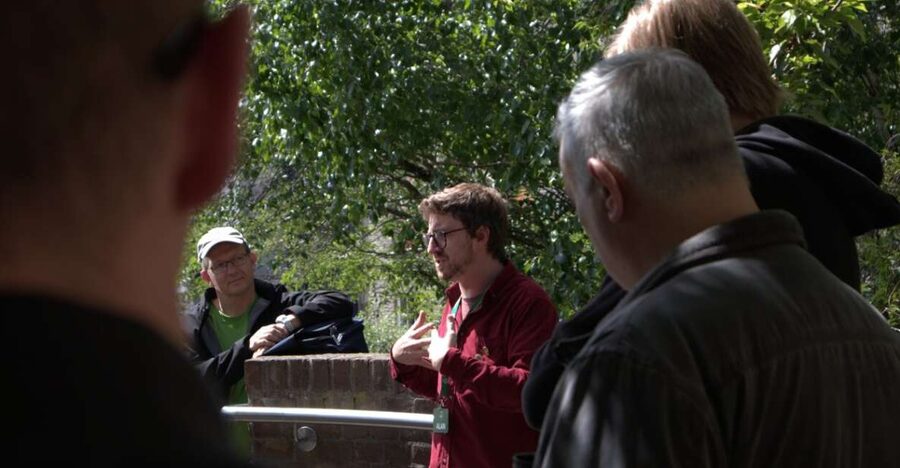
- Irish folklore takes center stage: Learn about the banshee, púca, leprechaun, fairies, Celtic beliefs, and legendary warriors.
- The route begins in Temple Bar: Meet outside The Old Storehouse pub under the green umbrella.
- Dublin’s darker side gets attention: Hear about rebellions, grave robbing, revolutions, and the tragic story of the Abbey Theatre.
- The tour ends on O’Connell Street: Finish with the Gaelic revival and modern Dublin street characters.
- Storytelling is the main event: Guides including Helena, Emily, Dave, and Lee are praised for humor, warmth, and engaging delivery.
- It is easy to fit into a city break: The tour lasts two hours, costs $27 per person, and ends back at the meeting point.
Why Dublin’s myths make a good first walk
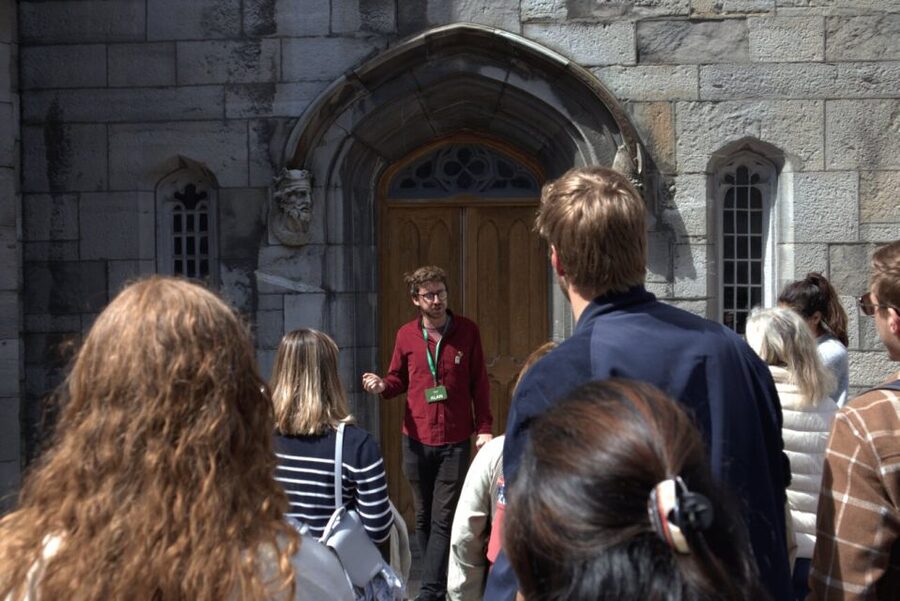
Irish folklore can look like a collection of strange creatures and old tales when you meet it in a book. On this walk, the stories are tied to real streets and familiar parts of Dublin, which makes them easier to understand and remember.
You begin with Ireland’s mythical origins and Celtic traditions. This gives you a useful frame for the rest of the tour. Instead of hearing isolated stories about fairies or warriors, you learn how these beliefs connect with ideas of place, identity, danger, luck, and community.
The guide’s role matters here. Helena is known for an energetic style and a sharp sense of humor. Emily is praised for making complex stories accessible while also showing how folklore still influences Irish life. Dave brings jokes and practical Dublin advice into the walk, while Lee has been described as warm, entertaining, and easy to chat with.
The exact guide depends on the departure you book, so you should not assume you will meet a particular person. Still, the experience clearly depends on a live guide rather than an audio recording or a fixed script. That is a benefit if you like asking questions or responding to the guide’s humor.
More Crime and Mystery Walking Tours in Dublin:
- Prague: Ghost Walking Tour Where Legends Come To Life
★ 4.4 · 5,253 reviews - Edinburgh Darkside Walking Tour: Mysteries, Murder and Legends
★ 5.0 · 3,862 reviews - Historical Walking Tour: Legends of Bruges
★ 5.0 · 2,541 reviews
Starting under the green umbrella in Temple Bar
The meeting point is outside The Old Storehouse pub in Temple Bar. Look for the green umbrella, which is the useful landmark to remember in this busy part of central Dublin.
Temple Bar is an obvious place to begin, but the tour does not treat it as just a nightlife district. Here, the focus turns to Ireland’s mythical beginnings and the customs connected with Celtic culture. You get the familiar Dublin setting with a less familiar explanation of what Irish storytelling has carried through the centuries.
This opening section is helpful if you are new to Irish mythology. The guide introduces the broader world before moving into individual creatures and legends. You can expect stories about fairies, the banshee, the púca, and the leprechaun, along with tales of Ireland’s old warriors.
The tone is likely to be lively rather than academic. That makes the tour approachable for families and casual sightseers, but it may feel less satisfying if you want a detailed scholarly study of Celtic texts. The value here is in hearing the stories clearly, seeing where they fit into Dublin, and understanding why they remain part of Irish culture.
Banshees, púca, leprechauns, and the power of belief
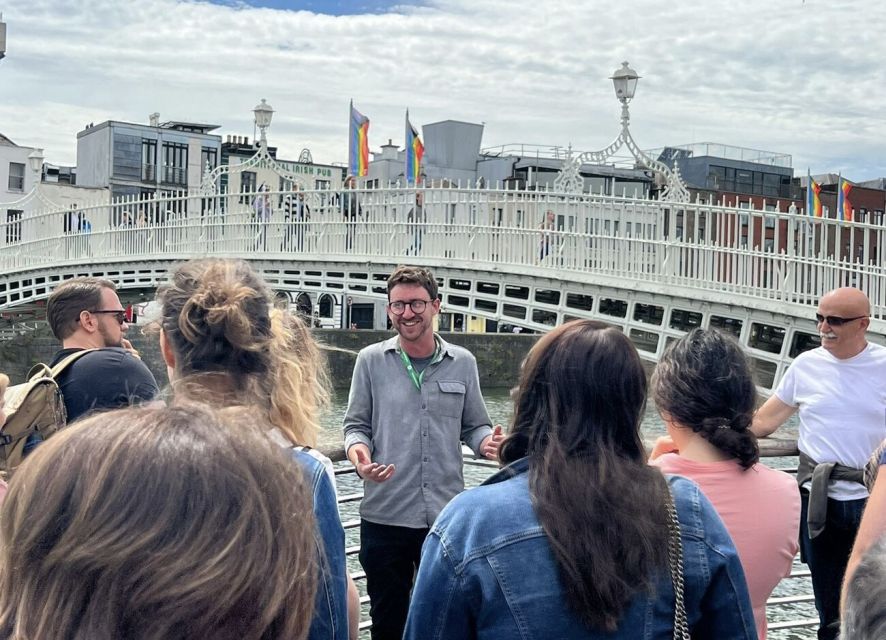
The mythical creatures are among the most accessible parts of the walk. Most people arrive with a basic idea of the leprechaun, but Irish folklore offers a much wider range of beings and warnings.
The banshee and púca allow the guide to move beyond the cheerful tourist version of Irish folklore. These figures belong to a tradition that can be eerie, funny, unsettling, or all three at once. You are not simply collecting names. You are hearing how stories explain danger, death, mischief, and the unknown.
The treatment of fairies is also important. In popular culture, fairies are often reduced to tiny, friendly characters. Irish folklore gives them a more complicated place. The guide uses these beliefs to show why storytelling mattered in Gaelic culture and how old ideas could shape everyday behavior.
I especially like this part for families and for anyone who already knows the basic Irish stereotypes. It adds texture to familiar symbols. Children can follow the creatures and dramatic tales, while adults can pay attention to the ideas behind them.
The best way to enjoy this section is to listen for the connection between story and place. The walk does not ask you to treat every legend as literal fact. Instead, it shows how a society can preserve its values and fears through stories passed from one generation to the next.
The Georgian Quarter’s darker stories
The route then moves away from the most obvious tourist path and into the Georgian Quarter. Here, the mood changes. The tour takes up rebellions, revolutions, grave robbing, and other macabre episodes connected with Dublin’s past.
This is where the experience becomes more than a mythology walk. The guide places folklore beside documented history, showing how legends and real events can sit close together in the city’s memory. The darker material also gives the walk a welcome change of pace after the fairy stories and heroic figures.
You should expect this section to be atmospheric rather than a stop-by-stop architectural tour. The Georgian Quarter provides the setting, but the focus stays on the stories linked to the area. If you want a complete guide to Georgian buildings, this will not replace a dedicated architecture walk. If you want to hear about the city’s unsettling side, it adds something different.
The subject matter may not suit very young children who are sensitive to stories about death or grave robbing. For older children and adults, the macabre details can make the past feel immediate without turning the tour into a grim history lecture.
The pace helps. Several long stops give you time to stand or rest while the guide speaks, and the walk is not designed as a strenuous march. That makes it easier to stay focused on the story instead of worrying about tired feet.
More Walking Tours in Dublin:
- Dublin Highlights and Hidden Gems Guided Walking Tour
★ 5.0 · 6,020 reviews - Dublin: Highlights and Hidden Gems Walking Tour
★ 4.9 · 2,140 reviews - Dublin Historical Centre Food Tour with 8 Food Tastings & Drinks
★ 5.0 · 1,718 reviews - 1916 Rebellion Walking Tour
★ 5.0 · 1,605 reviews
The Abbey Theatre and tragedy in Dublin’s cultural life
The Abbey Theatre section adds another layer to the route. Rather than presenting Irish culture only through ancient myths, the guide turns to the theater’s tragic history and its place in the country’s cultural story.
This is a useful transition. You move from oral folklore and legendary creatures to the modern use of drama and storytelling. Ireland’s identity was shaped not only by old tales, but also by people who retold national stories on stage and in public life.
The Abbey Theatre is familiar to many people interested in Irish literature, but the tour approaches it through its troubled past rather than through a standard arts introduction. That makes the stop distinctive. You get a compact story about culture, conflict, and loss while standing in the city where those events mattered.
Do not expect a performance or entry into a theater as part of the walk. The guide discusses the history from the route, so the value comes from the explanation and the link to the wider theme of storytelling.
Finishing on O’Connell Street with the Gaelic revival
The final stretch leads to O’Connell Street, where the subject turns to the revival of the Gaelic language and Irish culture. This gives the tour a clear ending: you begin with ancient beliefs and finish by considering how Irish identity was reclaimed and expressed in more recent times.
That structure is one of the tour’s strongest features. You are not left with the impression that mythology belongs only to a distant past. The guide connects old stories with the continuing importance of language, memory, and national culture.
The mention of contemporary street characters also keeps the ending grounded in present-day Dublin. The city is not treated as a museum of ancient tales. Instead, you see how storytelling and character still form part of its public life.
Emily has been praised for linking past and present examples of folklore, including stories connected with Gay Pride and HIV awareness. Those subjects suggest that the tour can use folklore in a broad way, showing how communities create meaning and identity around shared experiences.
The walk ends back at the meeting point rather than at a separate destination. That makes the route convenient if you have plans in central Dublin afterward. It also means you can return easily to Temple Bar or continue exploring on your own.
What the $27 price gets you
At $27 per person, this is a fair price for a two-hour guided walk in central Dublin. You are paying for a live, fully accredited local folklore guide and a route that combines several parts of the city with material you would be unlikely to get from simply wandering between major sights.
The value is strongest if you want interpretation. Temple Bar, the Georgian Quarter, and O’Connell Street are all easy to reach independently, but finding the same mix of Celtic beliefs, mythical creatures, theatrical history, and Gaelic revival on your own would take research.
The price is less compelling if you are mainly looking for entrance tickets or major monuments. The tour includes the guide and walking tour only. Hotel pickup and drop-off are not included, and no attraction entry is listed as part of the experience.
You can reserve now and pay later, which helps if your Dublin schedule is still changing. Free cancellation is available up to 24 hours before the activity for a full refund. Check the available starting times before booking, since the duration is fixed at two hours but the departure time can vary.
Who will enjoy this walk most
I would choose this tour for a first or second day in Dublin if you want a different way to get your bearings. The stories can give later sightseeing more meaning, especially when you pass places connected with Irish language, literature, politics, and public memory.
It is a strong match for:
- People curious about Irish mythology beyond leprechaun souvenirs
- Families who enjoy dramatic stories and a manageable walking pace
- Visitors who have already taken a standard Dublin history tour
- Anyone interested in Gaelic culture and the revival of the Irish language
- Travelers who prefer a guide with humor and personality
- Visitors looking for lesser-known corners of central Dublin
It may not be the right pick if you want a highly detailed architectural tour, a museum visit, or a long list of major landmarks. It is also not a pub crawl, despite beginning outside a pub in Temple Bar.
The tour is wheelchair accessible, but you should still consider that it takes place outdoors on city streets and lasts two hours. The published language is English, and no other language option is provided.
Practical details that make the walk easier
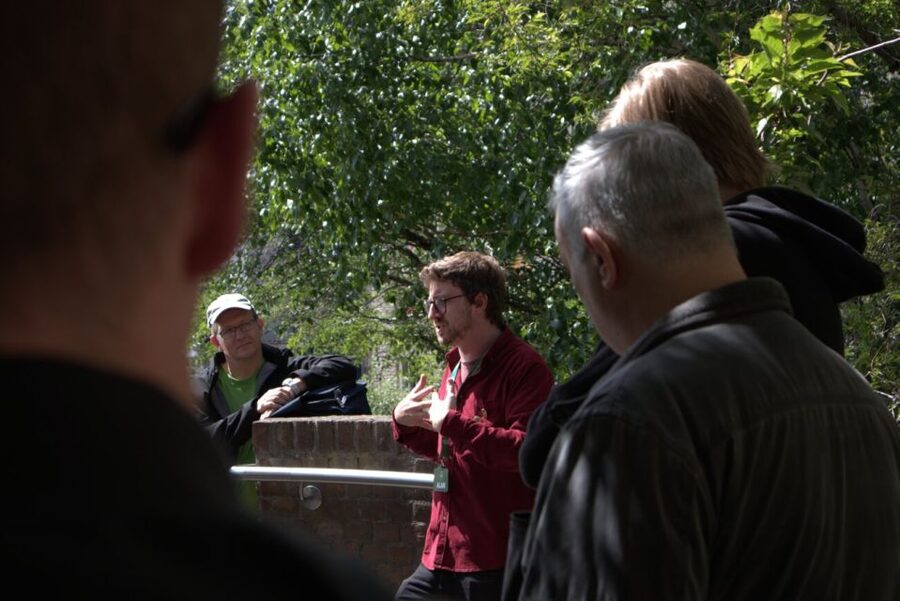
Arrive at The Old Storehouse and look for the green umbrella outside. Since Temple Bar can be crowded, allow enough time to locate the meeting point without rushing.
Wear comfortable shoes and dress for Dublin weather. The tour includes outdoor walking and standing, even though the pace includes several longer stops. A rain jacket is a sensible choice. Emily has even kept a group engaged through rainy conditions, but dry clothing will still improve your experience.
The group size can vary. A smaller group makes it easier to ask questions and stay close to the guide, while a larger group may require you to stand where you can hear clearly. Guides have been praised for keeping groups engaged and for adjusting stops to suit different energy levels.
If you are visiting with children, the lively stories and creatures can work well. Keep in mind that the Georgian Quarter section includes darker subjects such as death and grave robbing.
Should you book the Dublin mythology walk?
Book it if you want Dublin explained through story, belief, and cultural memory, rather than through a standard list of buildings. The strongest parts are the personal guides, the unusual route, the mix of ancient and modern material, and the clear link between folklore and Irish identity.
At $27, it offers good value for a two-hour introduction, especially early in your stay. Choose it with realistic expectations: you are buying a guided storytelling experience, not monument entry or a full academic course in mythology.
If Helena, Emily, Dave, or Lee is leading your departure, you can expect a guide-led experience with humor and plenty of personality, though the assigned guide is not guaranteed. For most people who enjoy legends, history, and a good Dublin story, this is an easy tour to recommend.
FAQ
How long does the Dublin mythology and folklore tour last?
The walking tour lasts two hours.
Where does the tour begin?
Meet outside The Old Storehouse pub in Temple Bar. Look for the green umbrella.
Where does the tour end?
The activity ends back at the meeting point.
How much does the tour cost?
The listed price is $27 per person.
What language is the tour offered in?
The live tour guide speaks English.
Which mythical creatures are discussed?
The tour covers creatures and figures including the banshee, púca, leprechaun, and Irish fairies.
Is hotel pickup included?
No. Hotel pickup and drop-off are not included.
Is the walking tour wheelchair accessible?
Yes, the activity is listed as wheelchair accessible.
Can I cancel the booking for a refund?
Yes. You can cancel up to 24 hours in advance for a full refund. You can also reserve now and pay later.
New routes in Dublin
- Dublin: North Quay Guided Ghost Walk★ 4.2 · 144 reviews
- Dublin: Traditional Pub Walking Tour★ 4.6 · 295 reviews
- Dublin: Traditional Pubs Walking Tour with Local Guide★ 4.9 · 112 reviews
- Dublin: Irish Music Walking Tour with Live Performance★ 4.8 · 137 reviews
- Dublin: Highlights and Hidden Corners Walking Tour★ 4.8 · 79 reviews
- Dublin: Macabre History Walking Tour★ 4.9 · 95 reviews
- Dublin: Delicious Walking Food Tour★ 4.9 · 137 reviews
- Dublin: Sightseeing Walking Tour in German★ 4.7 · 231 reviews
Dublin Walking Tours, compared.
Dublin Highlights and Hidden Gems Guided Walking Tour
Read our review →
Dublin Historical Centre Food Tour with 8 Food Tastings & Drinks
Read our review →

90 Minute Dublin Walking tour and Sightseeing tips
Read our review →
Dublin Highlights: 2.45-Hour Walking Tour in Italian
Read our review →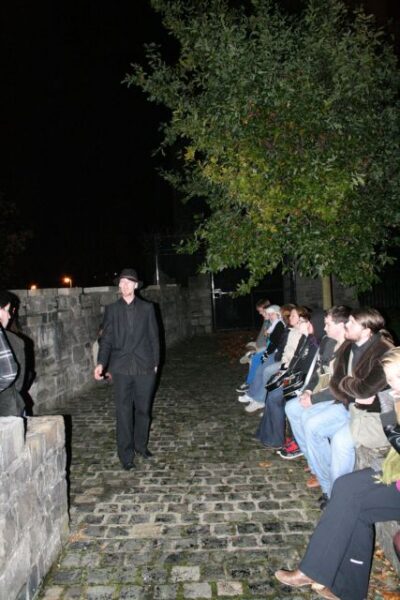

Browse the lists this tour appears in