
Review · DRESDEN
Dresden: Private Guided Walking Tour
Dresden’s old town is a compact lesson in power, art, war, and rebuilding. This private walk takes you from Neumarkt past the Frauenkirche, Semperoper, Zwinger, and Dresden Castle, then threads through the old royal center toward the Elbe.
I like the private format, especially for families or groups with different interests. I also like the broad time span, from the Middle Ages and Renaissance to the Baroque court and the Peaceful Revolution of 1989. The main consideration is time: two hours gives you a strong introduction, but not enough for lengthy interior visits.
- A focused route through Dresden’s historic core: Neumarkt, Frauenkirche, Zwinger, Castle, Brühl’s Terrace, and more fit into two hours.
- Private group pricing: The $212 rate covers up to 25 people, which can be good value for a larger family or organized group.
- English or German guiding: You can request the language that suits your group.
- History beyond royal decoration: The walk also covers East and West Germany and the 1989 Peaceful Revolution.
- Named guides with strong praise: Frau Schulz and Idiko are singled out for lively, adaptable tours.
- Useful local advice: Restaurant and event tips are included, not just monument facts.
Dresden’s Baroque center in two useful hours
Dresden can feel confusing at first. Its old town is full of grand buildings, but the story behind them is not always obvious. A guide helps you connect the pieces: the royal court, the Catholic and Protestant traditions, the destruction of war, and the careful rebuilding that followed.
This tour begins at Dresden Information at Neumarkt 2, inside the QF Passage on the basement level. That location puts you beside the Frauenkirche, so you start in one of the city’s most important squares rather than spending your first minutes walking in from a distant meeting point.
The route is a walking loop through the historic center. You will pass the main sights from the outside while your guide explains what you are seeing. The tour is designed around storytelling, anecdotes, and orientation, not around long museum stops.
That distinction matters. If you want to climb a tower, tour the Semperoper interior, or spend time inside the Zwinger museums, plan those visits separately. If you want a clear first look at Dresden and a useful list of places to return to, the two-hour format makes sense.
Neumarkt and the Frauenkirche: Dresden’s visual starting point
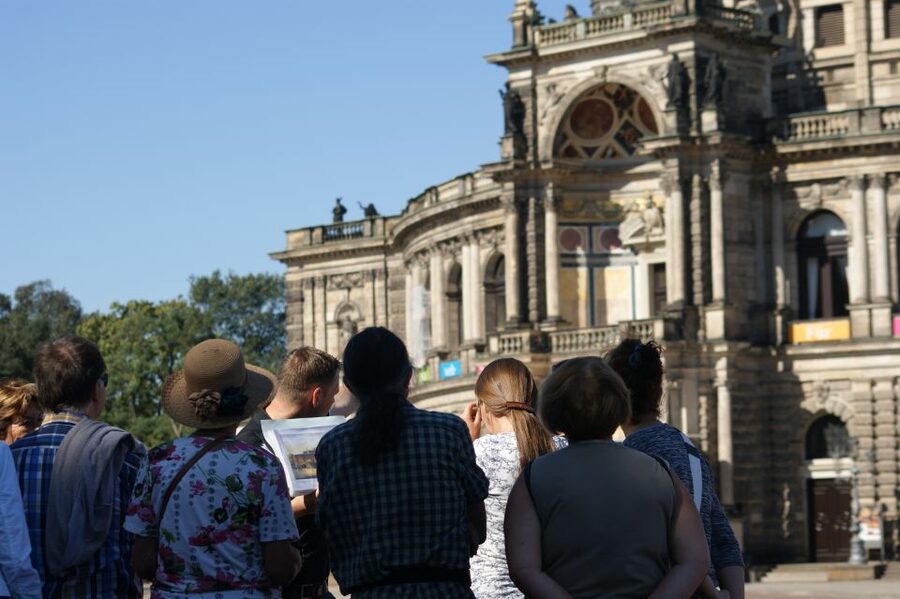
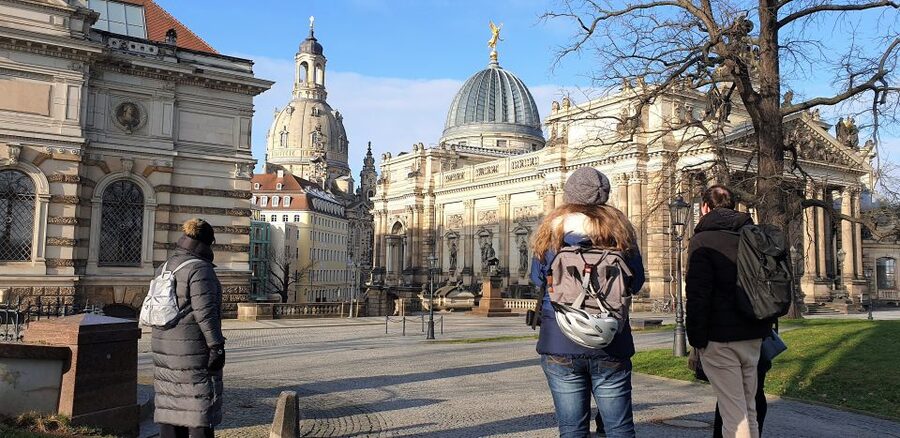
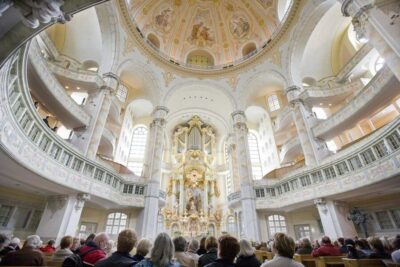
Neumarkt is the natural place to begin. The square is dominated by the Frauenkirche, Dresden’s famous domed church and one of the clearest symbols of the city’s wartime destruction and postwar reconstruction.
Your guide can help you read the square as more than a pretty Baroque setting. Dresden’s center was shaped by rulers who wanted a grand royal capital, and the buildings around you reflect that ambition. The Frauenkirche also opens the door to the modern part of the story, since Dresden’s past is tied closely to the damage of World War II and the rebuilding that followed.
A private guide is useful here because you can ask direct questions. You might want to know how the old town was restored, how Dresden changed during the East German period, or how the church fits into the city’s religious history. The guide can adjust the level of detail instead of delivering the same script to a large crowd.
You should also use the opening minutes to mention your interests. If your group cares most about architecture, modern German history, music, or restaurant advice, say so early. The guide is expected to adapt to the group, and the private format gives you a better chance of getting the kind of explanation you want.
More Private Walking Tours in Germany
- Berlin Private Complete History All Day Walking Tour
★ 5.0 · 474 reviews - Private Walking Tour Berlin Third Reich Hitler and World War II
★ 5.0 · 360 reviews - Private Berlin: Iconic Sights and Hidden Gems Walking Tour
★ 5.0 · 292 reviews
Semperoper and the Baroque Zwinger
From Neumarkt, the walk reaches two of Dresden’s biggest cultural landmarks: the Semperoper and the Zwinger.
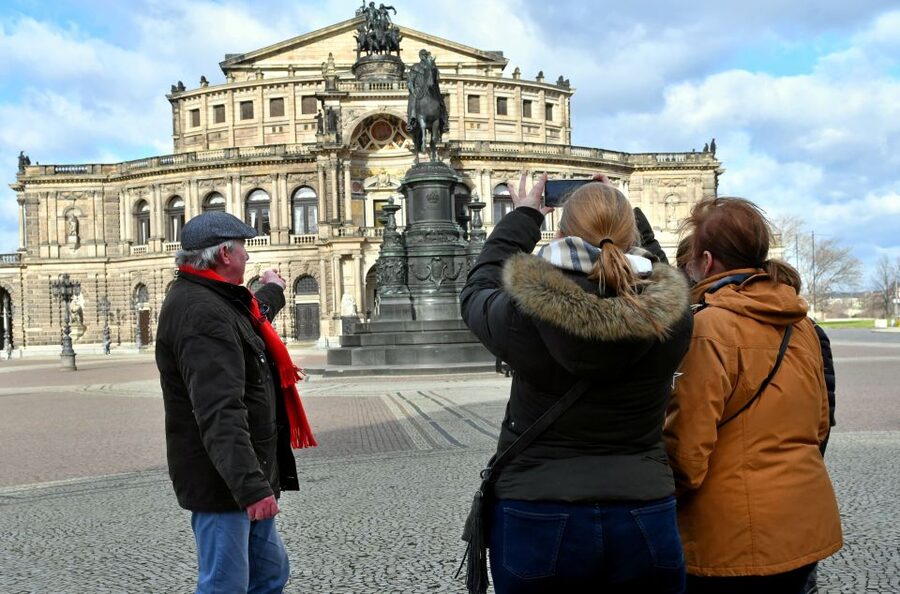
The Semperoper is Dresden’s grand opera house, tied to the city’s long artistic and courtly tradition. Even if you do not attend a performance, the exterior helps explain Dresden’s image as a center of music and royal culture. Your guide can place the building within the wider story of the city’s Baroque ambition.
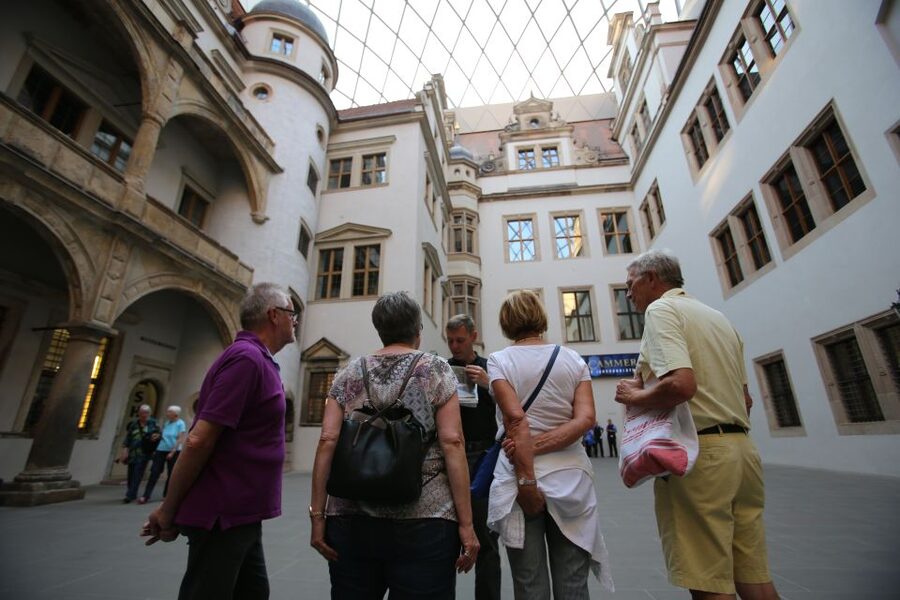
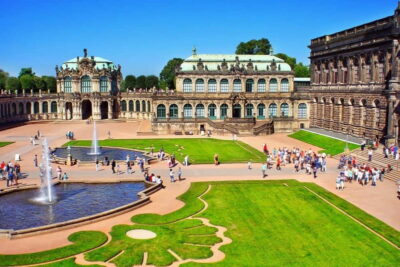
The Zwinger gives you another view of that ambition. Its ornate courtyards and dramatic decoration were created for the Saxon court, and the complex is one of the best places to see how architecture was used to display wealth and status.
This is one of the strongest parts of the route for first-time visitors. You get several major sights close together, and a guide can point out how their scale and decoration relate to the rulers who commissioned them. You will likely hear less about individual museum collections because the experience is a walking tour, not an art tour.
That is both a strength and a limit. The Zwinger contains more than you can absorb from the outside, so consider returning later if you want its museums. The walking tour gives you the framework first, then you can decide where your own time is best spent.
Dresden Castle and the royal heart of the city
The route continues to Dresden Castle, another major piece of the old court district. The castle helps connect the separate monuments into one story. Dresden was not simply decorated with isolated grand buildings. The palace, churches, courtyards, opera house, and ceremonial spaces worked together as the center of political life.
The guide’s role here is to explain how the city functioned. You can expect stories about rulers, court life, and the changing fortunes of Dresden across more than 1,000 years. The tour description also promises attention to the Middle Ages, Renaissance, and Baroque period, so the castle is an important point for seeing those layers in one place.
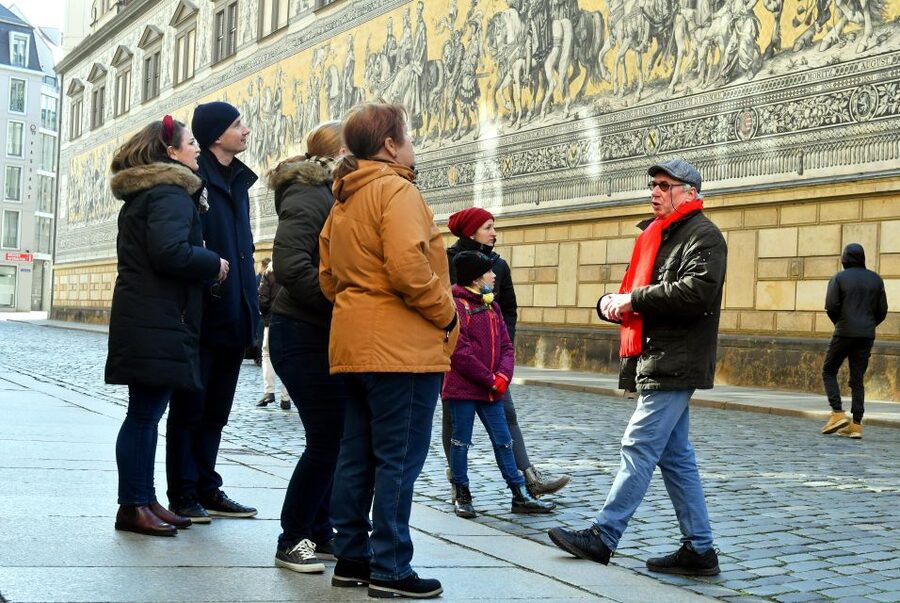
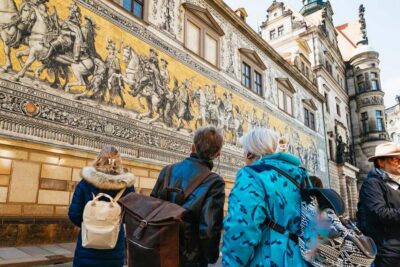
You will pass the Procession of Princes, a long exterior mural showing Saxon rulers. It is one of Dresden’s most memorable public-history displays because you can stand close to it and follow the sequence of rulers across the wall. This is a good spot for a guide’s anecdotes, since a simple line of portraits can otherwise become a blur of names.
Nearby, Stallhof adds another piece of the old court setting. Its name refers to the former stable yard, and its position beside the castle shows how royal life included not only grand reception rooms but also working spaces for horses, servants, and ceremonies.
The route is compact, but do not rush these stops. If your guide is especially good at storytelling, the castle district may take more time than you expect. That is worthwhile, but it also means the final part of the walk may move at a faster pace.
Brühl’s Terrace and the Elbe outlook

From the court district, the walk heads toward Brühl’s Terrace. This elevated promenade gives you a different feel from the tightly packed royal center. Here, the connection to the Elbe becomes more apparent, and you get a wider view of Dresden’s setting.
Brühl’s Terrace is sometimes called the Balcony of Europe. The name reflects its long role as a place for enjoying the river and the city. Your guide can explain how this area changed from a defensive part of the city into a public promenade.
I like this section because it gives your eyes a break from façades and courtyards. After seeing the concentrated Baroque center, the open river setting helps you understand why Dresden developed where it did. It also makes a useful photo stop, although the tour is not built around extended photography time.
If you use a wheelchair, the activity is listed as wheelchair accessible. Dresden’s historic center includes older paving and changing surfaces, so it is still sensible to ask about the exact route when booking, especially if someone in your group has particular mobility needs. The meeting point itself is in the QF Passage basement.
Same streets, a different guide:
- Discover Berlin Half-Day Walking Tour
★ 5.0 · 9,624 reviews - Berlin City walk Government District and Places of Democracy
★ 4.7 · 8,467 reviews - Berlin: Third Reich & Cold War Guided Walking Tour
★ 4.9 · 8,378 reviews - Munich: Third Reich & WWII Walking Tour
★ 4.6 · 6,181 reviews
Augustus Bridge and Dresden Cathedral
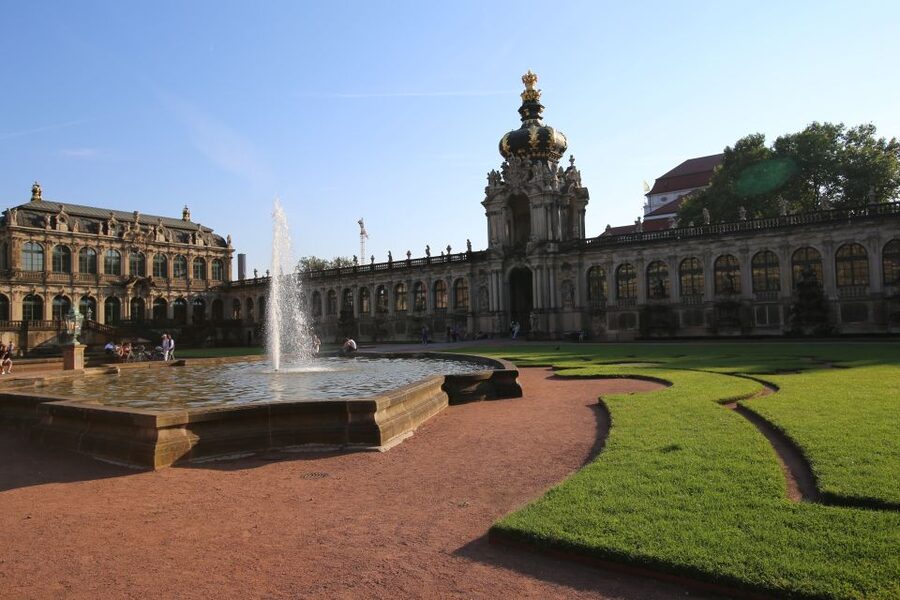
The route includes Augustus Bridge, one of the key crossings over the Elbe. From here, Dresden’s old town can be viewed as a connected group rather than a string of separate attractions.
The bridge also helps set up the tour’s modern history. The city’s identity was shaped by the relationship between the historic center and the wider urban area, including the divisions of the East German period. Your guide is expected to cover the Peaceful Revolution of 1989 and explain what life felt like for people in former East and West Germany.
That subject gives the tour welcome breadth. Dresden is often presented only as a Baroque showpiece, but its recent political history is just as important to understanding the city today. A good guide can connect the grand buildings to ordinary people who lived through dictatorship, division, and peaceful change.
Dresden Cathedral is another major stop on the route. Its history adds a religious and dynastic layer to the tour, especially alongside the Frauenkirche and the royal buildings. You will see how different religious traditions and court interests shaped the city’s appearance.
The cathedral and bridge also make clear why a local guide can be more useful than a printed route. The buildings are close together, but their roles are different. A guide can explain those connections while you are standing in the right place, instead of asking you to reconstruct the story later.
Taschenbergpalais and the final walk back
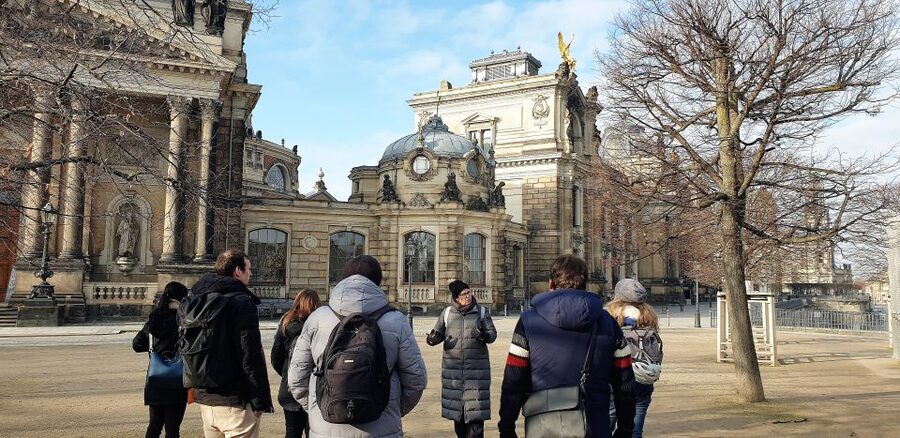
Taschenbergpalais is included as the route turns back through the old town. Its location near the castle district helps complete the picture of Dresden as a planned court city.
By this point, you will have seen the city from several angles: the public square at Neumarkt, the cultural landmarks around the Zwinger, the royal center, the river promenade, and the cathedral district. The walk concludes near the Frauenkirche, which makes the ending practical. You are left close to the starting point, with restaurants, events, and other old-town sights nearby.
This is a useful place to ask for recommendations. The tour includes insider tips about restaurants and events, and the final minutes are a good time to get advice for the rest of your stay. Be specific. Ask for a meal near Neumarkt, an evening performance, or a place to continue exploring on foot.
The tour is offered in English or German. The guides praised by name include Frau Schulz, described as appealing to both younger and older members of a group, and Idiko, who received particularly strong personal praise. You cannot assume which guide you will receive, but these names suggest the provider has several experienced guides who bring different personalities to the route.
What $212 means for your group
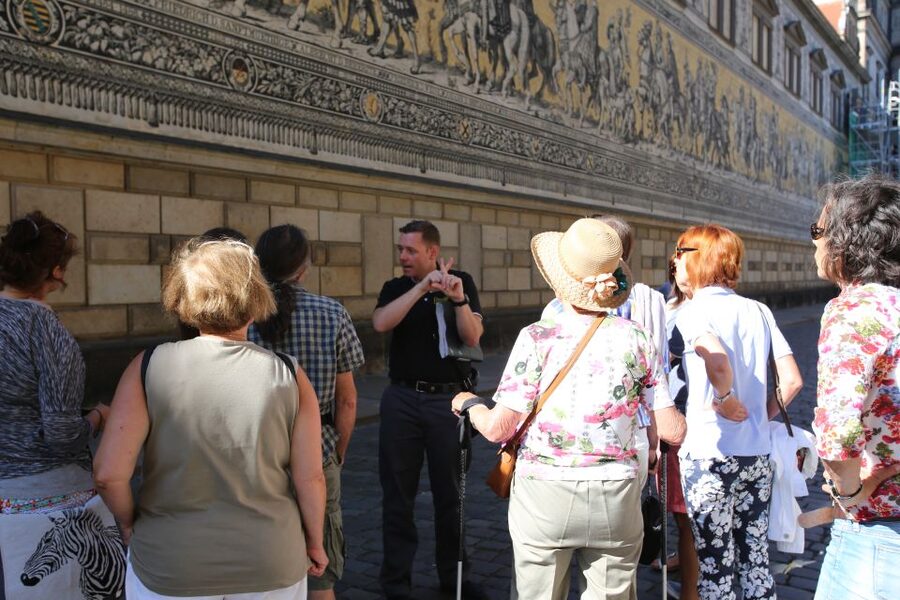
The price is $212 per private group of up to 25 people, with a two-hour duration. For one or two people, that is a significant expense compared with joining a standard group walk. For a family, wedding party, school group, or organized delegation, the calculation changes quickly.
At the full group limit, the cost works out to roughly $8.50 per person. Even with a smaller group, you are paying for privacy and flexibility rather than simply a seat in a larger tour. You can ask questions without holding up strangers, request more explanation about a particular period, and receive restaurant or event advice suited to your plans.
The value is strongest if you are traveling with several people. It is also useful if you have only a short stay and want to understand the old town before choosing which interiors to visit.
The value is weaker if you prefer a slow museum visit or a low-cost audio guide. The price does not include a deep visit inside every monument, and the two-hour route cannot cover every corner of Dresden.
The activity allows cancellation up to 24 hours before the start for a full refund, and you can reserve now and pay later. One booking problem has been reported, involving a guide who did not arrive and a delayed refund. That appears to be an exception among otherwise positive feedback, but I would keep your booking confirmation and meeting details handy, and contact the provider promptly if anything changes.
Who will get the most from this walk
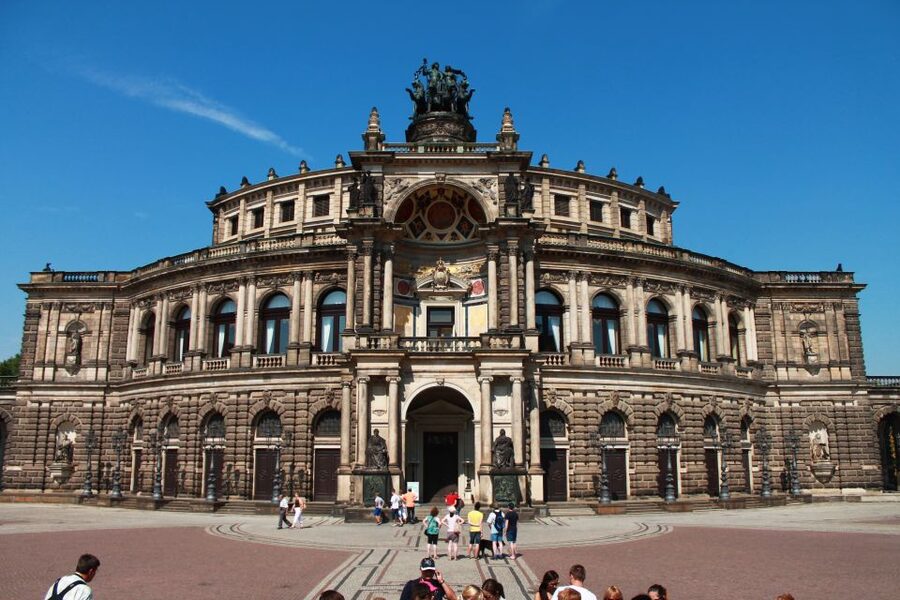
I would choose this tour for a first visit to Dresden, especially if you want the main old-town sights explained in a logical order. It suits families because the guide can adjust the pace and mix large stories with short anecdotes.
It also fits groups that want history beyond architecture. The coverage of the Peaceful Revolution and life in former East and West Germany gives the walk more substance than a simple Baroque photo tour.
You should consider it if:
- You are visiting Dresden for the first time.
- Your group has several people and can share the private fee.
- You want English or German guiding.
- You prefer local stories and orientation over a formal museum visit.
- You want restaurant and event suggestions for the rest of your stay.
- You need a wheelchair-accessible activity and can confirm route details in advance.
You may want something else if you mainly want interior access, extensive art commentary, or a tour in a language other than English or German. The route is also brisk enough that visitors who like to linger at every monument may feel pressed for time.
Should you book the Dresden private walking tour?
Book it if you want a well-paced introduction to Dresden’s old town, particularly with a group large enough to make the $212 fee reasonable. The route covers the city’s essential Baroque sights, but it also explains war, division, and the peaceful changes of 1989.
I especially like the combination of famous stops and practical advice. You see the Frauenkirche, Semperoper, Zwinger, castle district, Brühl’s Terrace, and cathedral, then finish near the same central area where you began. Just remember that this is an orientation walk, not a full interior tour. Use it to understand Dresden first, then return to the places that deserve more of your time.
FAQ
Where does the Dresden walking tour meet?
Meet your guide at Dresden Information, Neumarkt 2, 01067 Dresden, Germany. The meeting point is in the basement floor of the QF Passage.
How long does the tour last?
The walking tour lasts two hours.
What languages are available?
The tour is offered in English and German only. You can send a request if you need another language or a different meeting point.
What sights are included?
The route includes Neumarkt, Frauenkirche, Semperoper, the Baroque Zwinger, Dresden Castle, Brühl’s Terrace, the Procession of Princes, Stallhof, Dresden Cathedral, Taschenbergpalais, and Augustus Bridge.
How many people can join the private group?
The maximum group size is 25 people.
Is the tour wheelchair accessible?
Yes, the activity is listed as wheelchair accessible.
New routes in Germany
- Munich: Walking Tour Old Town and Viktualienmarkt★ 4.7 · 839 reviews
- Stuttgart: Guided Ghost Walking Tour★ 4.5 · 867 reviews
- Stuttgart: Private Guided Circular City Walk★ 4.7 · 129 reviews
- Stuttgart: Old Town Highlights Guided Walking Tour★ 4.2 · 101 reviews
- Stuttgart: City Highlights – Guided Walking Tour★ 4.7 · 189 reviews
- Hamburg: Private Tour Red Light District Walking Tour★ 4.7 · 227 reviews
- Small Group Walking Tour: “Wild Kreuzberg”★ 4.8 · 199 reviews
- Sachsenhausen Memorial: Walking Tour from Berlin★ 4.7 · 132 reviews
Dresden Walking Tours, compared.
Walking Tour with a Night Watchman including a Meal
Read our review →
Guided Walking Tour and Chocolate Museum Ticket
Read our review →

Neustadt District Street Art Guided Walking Tour
Read our review →
Browse the lists this tour appears in