
Review · VIENNA
Vienna: World War II Historical Walking Tour
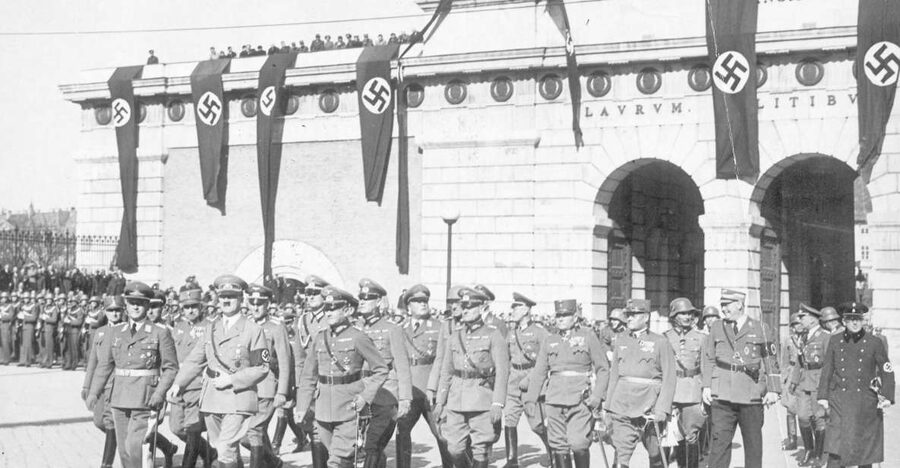
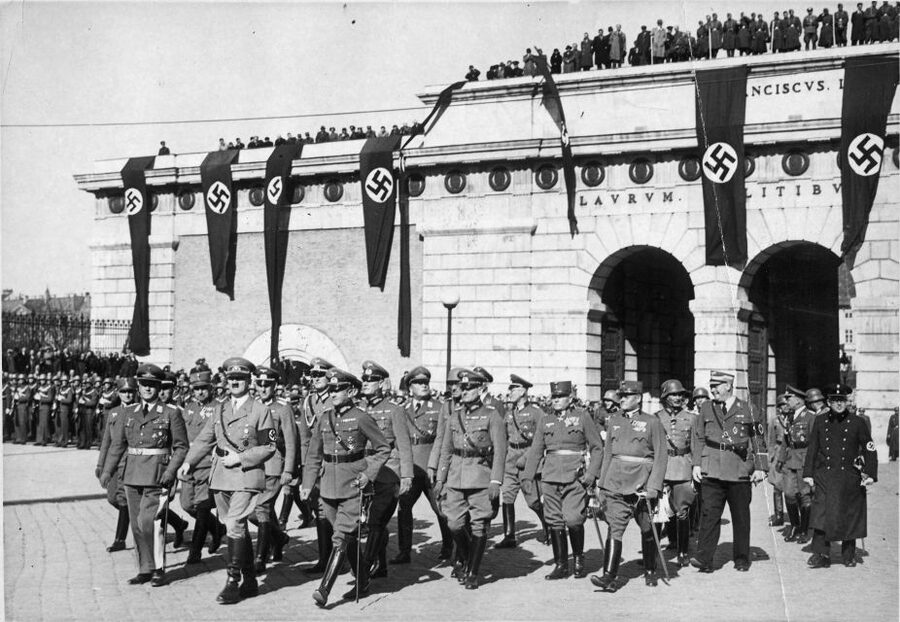
Vienna’s grand center carries painful reminders beneath its imperial polish. This 2.5-hour walking tour connects Hitler’s early years in the city with the Nazi annexation, the destruction of Vienna’s Jewish community, the bombing of the city, and the postwar Allied occupation. It is history told on the streets, not behind glass.
I like two things in particular: the guide puts events into local context instead of simply reciting dates, and the route includes the only synagogue in Vienna said to have survived the Nazi regime along with the city’s Holocaust memorial. The small headsets are another smart touch, especially when the group grows or traffic gets noisy.
The main drawback is the subject itself. This is a serious tour, with long periods of standing and difficult material. You walk roughly 4 kilometers, and the route does not return to the Albertina starting point, so wear comfortable shoes and plan your next stop near public transport.
Key points to know before you go
- A local view of Hitler’s Vienna: Learn how the city’s social and political climate shaped the young Adolf Hitler and later responded to the annexation.
- A rare surviving synagogue: See the only synagogue described as surviving the Nazi regime, an important stop in Vienna’s Jewish history.
- A quiet Holocaust memorial: Pause at Vienna’s somber memorial and consider the scale of what happened to the city’s Jewish community.
- War damage in the city center: Hear how more than 100,000 bombs affected Vienna and look for physical traces of the war.
- A 4-kilometer route: The walk balances moving through the city with frequent stops, sitting breaks, and occasional shelter.
- Strong guide delivery: Dieter, Stefan, Wolfgang, Michael, Charles, Florian, and Siggi are among the guides praised for clear explanations, good storytelling, and sensitivity.
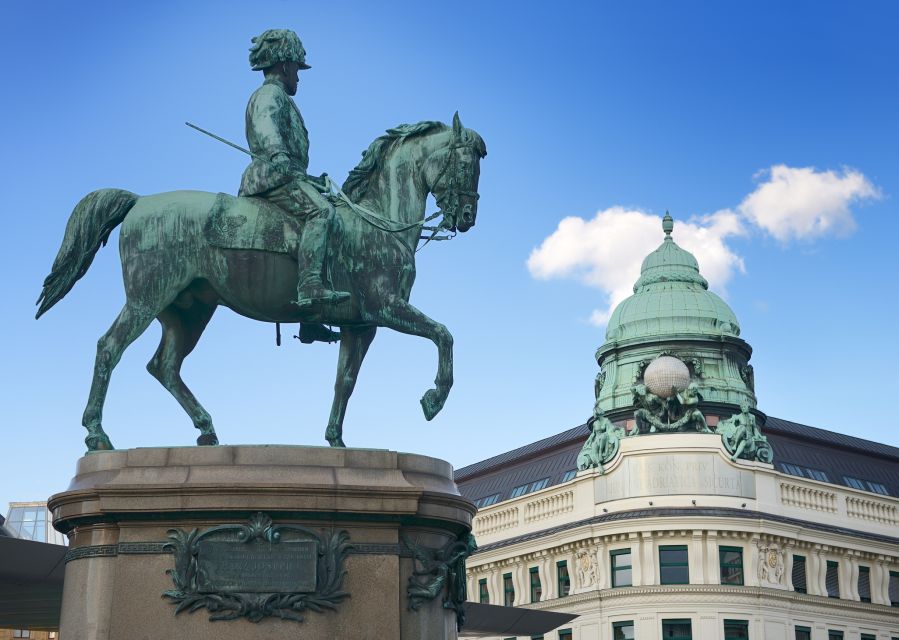
Starting beneath the Albertina, beside the Opera House
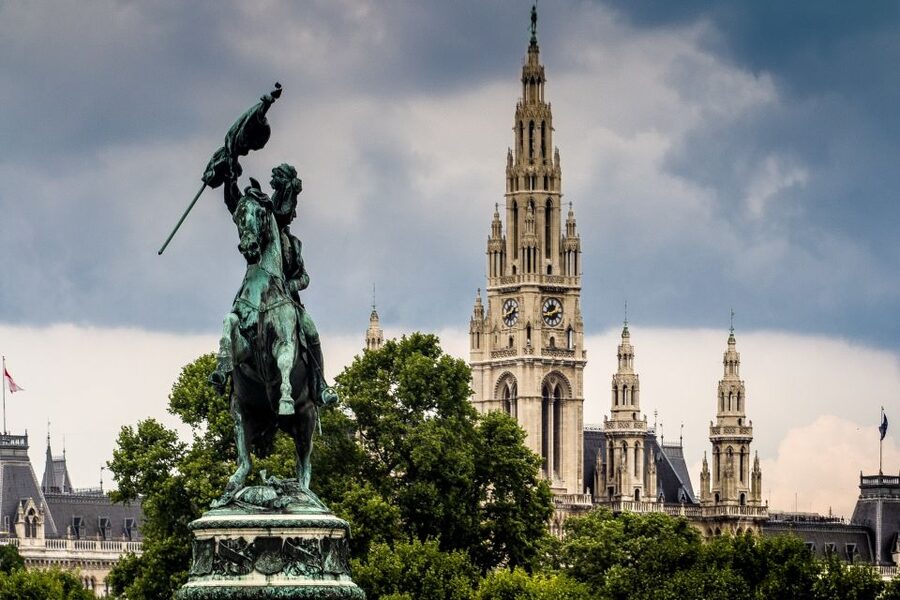
The meeting point is easy to find if you know what to look for. Go to the green umbrella in front of Albrechtsbrunnen, the fountain below the Albertina Museum, next to the Vienna State Opera. Karlsplatz/Oper is the nearest subway stop.
This is a useful place to begin because Vienna’s polished center immediately sets up the tour’s central question: how could a city of imperial buildings, music, art, and public ceremony become part of Hitler’s dictatorship? The guide starts with Vienna itself, then connects the setting to Hitler’s early years as an aspiring art student.
Do not expect a tour focused only on Hitler’s biography. The point is to understand the setting around him: the political mood, ethnic rivalry, social tensions, and fear that helped make extreme ideas possible. The best guides, including Dieter and Stefan, are reported to connect personal ambition with wider forces rather than suggest that one city alone explains the later dictator.
That distinction matters. You get a more useful account when the guide separates personal responsibility from historical background. The tour presents Hitler’s development and ideology directly, while also asking how ordinary institutions and communities responded to the pressures around them.
More History Walking Tours in Austria
- Vienna Historic Center Small Group Walking Tour
★ 5.0 · 1,746 reviews - Historical Hitler Walking Tour of Vienna
★ 5.0 · 887 reviews - Vienna: Essential History Walking Tour
★ 4.9 · 633 reviews
Hitler’s early Vienna years and the road to annexation
The opening part gives you a framework for the rest of the walk. You hear about Hitler’s time in Vienna, his hopes as an art student, and the ideas he encountered before he became Germany’s dictator. The guide then follows those early influences toward the later annexation of Austria.
This portion will suit you if you already know the broad outline of the Second World War but want to understand Austria’s particular position. Vienna was not simply a passive city caught between larger powers. The tour examines the local political and social climate and explains how the annexation affected the city.
Several guides use photographs and other visual material to make the story easier to follow. Siggi, in particular, has been praised for bringing printed images to the stops. That is helpful when the modern streets look calm and restored, while the event being discussed took place decades ago in a very different city.
The presentation also leaves room for questions. Dieter is noted for answering detailed questions patiently, while Wolfgang and Charles are praised for adding interpretation rather than just listing facts. If you have read about the period before, you are likely to get more from the discussion of cause, responsibility, and public response than from a basic timeline.
Vienna’s Jewish community and the surviving synagogue
The section on Vienna’s Jewish community is among the most important parts of the walk. You hear what happened when fear, ethnic rivalry, and Nazi persecution took hold, then visit the only synagogue identified in the tour as having survived the Nazi regime.
This stop is valuable because it makes the city’s Jewish history concrete. Instead of treating persecution as an abstract chapter in a textbook, the guide places it within Vienna’s streets and buildings. The synagogue is not presented as proof that Vienna escaped destruction. It is a reminder of what survived amid the devastation, and of how much was lost.
The subject requires care, and the strongest guiding style here is sober rather than theatrical. Charles has been praised for handling difficult history with sensitivity, while several guides are described as passionate without losing balance. That tone matters. A good tour should leave you thinking about people and choices, not simply collecting grim facts for the next stop.
The tour does not include entry fees to attractions, so you should understand this as an outdoor historical walk rather than a synagogue interior visit. The value comes from the setting and the explanation provided at each point. If you want extended museum time or interior access, plan those separately.
The Holocaust memorial and Vienna’s missing voices
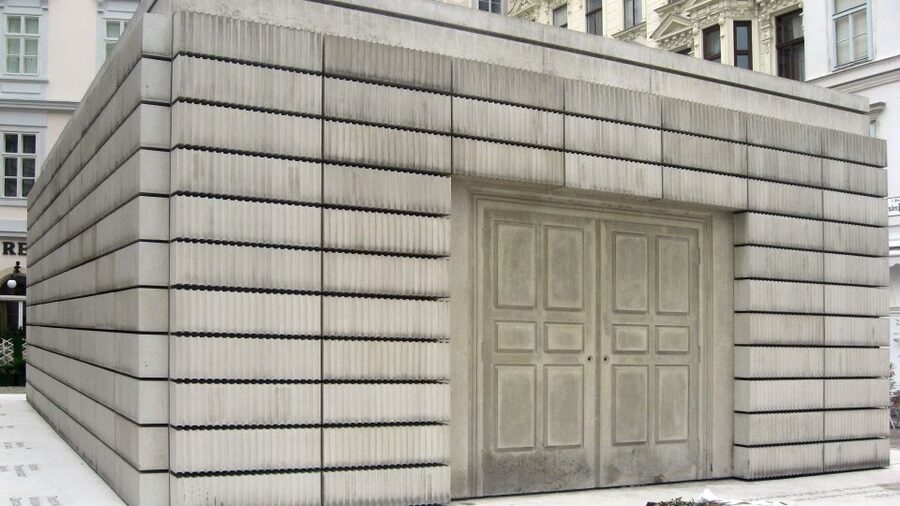
The Holocaust memorial is a quiet counterpoint to the city’s grand architecture. The stop gives the tour a place to pause and remember the people who were murdered, rather than treating the war as a sequence of military events.
You can expect the guide to place the memorial within Vienna’s story of persecution and loss. The focus is not only on what Nazi Germany did from above, but also on the effects felt in the city and on the disappearance of a major Jewish community.
This part may feel brief compared with a museum visit, but that is also its strength. The memorial is encountered as part of the city rather than isolated from daily life. You stand in a public place where history and the present share the same ground.
I would give this section your full attention. The walk continues, but the memorial benefits from a quiet pause. You do not need prior expertise to understand its importance, and the guides make room for questions when the subject raises them.
More History Walking Tours in Vienna:
- History and Hauntings of Salem Guided Walking Tour
★ 5.0 · 14,564 reviews - Lisbon: History, Stories and Lifestyle Walking Tour
★ 4.8 · 10,902 reviews - Boston: Freedom Trail History Small Group Walking Tour
★ 5.0 · 6,450 reviews - Historic Charleston Guided Sightseeing Walking Tour
★ 5.0 · 6,216 reviews
More than 100,000 bombs and the physical scars of war
The tour then turns to the war’s damage to Vienna. You learn about the effect of more than 100,000 bombs on the city and see reminders of the destruction and rebuilding that followed.
Vienna’s center can look remarkably complete, which makes this section especially useful. A guide can point out what is easy to miss when you are focused on palaces, churches, and elegant streets. The walk shows how a familiar city can contain traces of violence that are not obvious at first glance.
The route is not a ruin tour, and you should not expect a long series of preserved bomb sites. Its purpose is to explain the scale of the damage and connect visible remains with the broader history of the war. You learn how the city changed, what was destroyed, and how the postwar period shaped what you see now.
This is also where the walk benefits from careful pacing. You keep moving through the center, but the stops break up the distance. Guides have added indoor pauses, seating, snack or bathroom breaks, and shelter during bad weather when possible. Those details make a difference during a cold or rainy afternoon.
Liberation, occupation, and Vienna’s divided postwar years
The final historical movement is Vienna after the war. The city was divided among the Allied powers, and Vienna was the only city in the world where the four Allied powers managed a zone together. That unusual arrangement gives the tour a strong ending because the story does not stop with liberation.
You learn how the city was divided and how the postwar occupation shaped Vienna. The remains of that division help explain why the war’s impact lasted well beyond 1945. This section also prevents the tour from becoming only a story about Nazi crimes and military defeat. It shows how Vienna had to rebuild its political and physical life afterward.
The postwar material is particularly useful if you are planning to explore more of Vienna on your own. It gives you a clearer sense of why certain city spaces matter and why the capital’s twentieth-century story cannot be separated from its earlier imperial image.
The route ends away from the Albertina, but a subway stop is nearby. That is convenient for continuing your day, though you should not assume you will finish exactly where you began.
A 150-minute walk that feels carefully paced
The tour lasts 150 minutes and covers about 4 kilometers, based on the distances described during the walk. That is a moderate amount of walking, but the route includes standing at stops and listening outdoors, so comfortable shoes remain essential.
The pacing receives unusually strong praise. Judy describes a smooth route with plenty of breaks, while Vicki notes that the distance was manageable even for someone with mobility issues. That does not make the tour fully accessible for every visitor, since conditions vary across city streets, but it suggests that the walk is not designed as a forced march.
The balance of walking, standing, and sitting is one of the tour’s practical strengths. You may stop indoors for shelter, find toilets along the way, and pause during heavy rain. These arrangements depend on the guide and the conditions, so dress for the weather rather than counting on every stop being indoors.
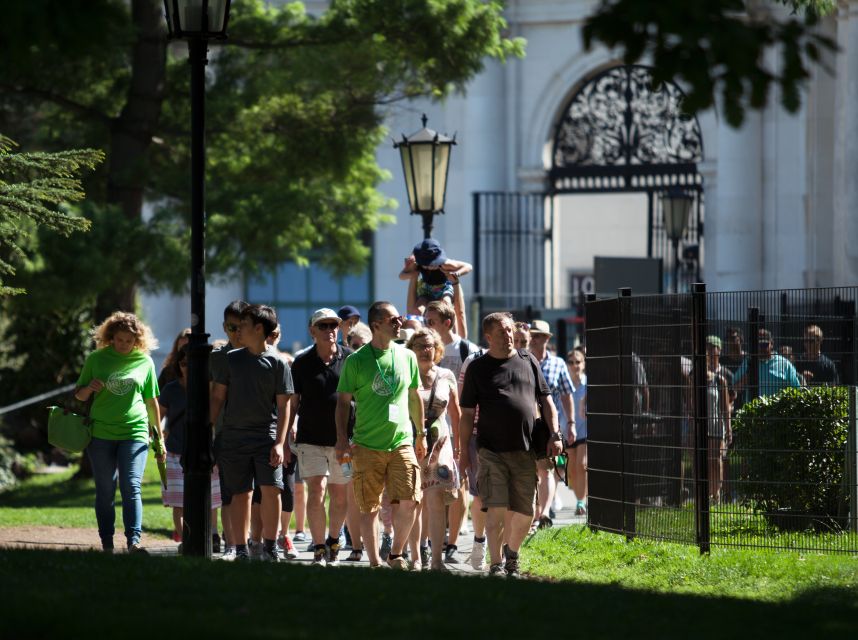
Large groups are easier to handle because headsets are provided. The guide speaks into a microphone, and you listen through an earpiece instead of crowding within a few feet of the speaker. In a busy city center, this means you can look at the building or memorial being discussed without losing the explanation.
The tour is offered in English with a live guide. Different departures may be led by Dieter, Stefan, Wolfgang, Michael, Charles, Florian, Siggi, or other members of the guiding team. Their styles may vary, but the strongest pattern is clear speech, strong command of the subject, and a willingness to answer questions.
Is $31 a fair price?
At $31 per person, this is a reasonable price for a 2.5-hour guided city walk, particularly if you value interpretation more than attraction entry. You are paying for a structured route, a live English-speaking guide, historical context, and the convenience of moving between relevant sites without planning the sequence yourself.
The price does not include entrance tickets. That keeps the cost simple, since the tour is built around public spaces and exterior stops, but you should budget separately if you want to visit museums or other attractions afterward.
I see the best value here in the connections between places. You could pass the Albertina, synagogue, memorial, and wartime traces on your own, but the guide explains how they fit into one story. For a visitor with limited time in Vienna, that can be more useful than wandering without context.
The tour is also a good early-trip choice. Tyla specifically recommends taking it near the start of a Vienna visit because it helps you understand the city and gives later sightseeing more meaning. I agree with that approach, especially if you plan to visit museums or memorial sites afterward.
Flexible booking adds practical value. You can cancel up to 24 hours before the tour for a full refund, and the reserve-now, pay-later option lets you hold a place without paying immediately. Those policies are useful, but the real question is still fit: you need to want a serious history walk, not a general introduction to Vienna.
Who will appreciate this walk most?
I would choose this tour if you want to understand Vienna through the years from Hitler’s early life to the postwar occupation. It suits adults, history students, teachers, and anyone who prefers a thoughtful explanation at real locations.
It is also useful if your knowledge is already solid. Tracey, who teaches this period, still found a new perspective in the way the guide linked events and evaluated their importance. That suggests the tour can add value beyond basic dates and famous names.
You should think twice if you want a light sightseeing stroll. Vienna’s beautiful streets are part of the route, but the focus remains on persecution, war, political responsibility, and memory. The subject is not softened for comfort.
You should also plan carefully if walking or standing is difficult. The roughly 4-kilometer distance is manageable for many people, and guides build in breaks, but this is still a moving outdoor tour rather than a seated lecture.
Should you book the Vienna World War II Historical Walking Tour?
Book it if you want a clear, local account of Vienna’s role in the Nazi period, with the Holocaust memorial, surviving synagogue, bomb damage, and postwar division tied into one route. The guides are the main reason to choose it. Dieter, Stefan, Wolfgang, Michael, Charles, Florian, and Siggi are all described as clear, engaging, and serious about the subject.
I especially recommend it near the beginning of your stay. You will see central Vienna differently afterward, and the historical background can sharpen later visits to museums and memorials.
Skip it if your time in Vienna is very short and you want only imperial architecture, music, or art. Also skip it if you prefer a casual tour with little discussion of painful events.
For $31, a live English guide, a careful 150-minute route, and a rare chance to connect Hitler’s Vienna with the city’s Jewish history and postwar division make this a strong choice for the right audience. Wear good shoes, bring weather-appropriate clothing, meet under the green umbrella, and allow time to continue from the route’s final stop rather than returning to the Albertina.
FAQ
How long does the Vienna World War II Historical Walking Tour last?
The tour lasts 150 minutes, or 2.5 hours.
Where does the tour meet?
Meet at the green umbrella in front of Albrechtsbrunnen, the fountain below the Albertina Museum beside the Opera House. Karlsplatz/Oper is the nearest subway stop.
What language is the tour offered in?
The live guided tour is offered in English.
Does the tour include attraction entrance fees?
No. Entrance fees are not included. The experience is a guided walking tour with outdoor historical stops.
How far do you walk?
The route covers about 4 kilometers according to the walking details provided during the tour. It includes stops and breaks.
Can I cancel the booking?
Yes. You can cancel up to 24 hours in advance for a full refund. You can also reserve now and pay later.
New routes in Vienna
- The unknown Vienna City- a guided walking tour in 3 hours★ 4.7 · 137 reviews
- Hungry in Vienna? A Food Lover’s Coffee & Market Walk★ 4.9 · 276 reviews
- 3-Hour Walking Tour of Vienna Central Cemetery★ 4.7 · 71 reviews
- Vienna: City Center Guided Walking Tour★ 4.8 · 99 reviews
- Private Hidden Vienna Walk — Stories Behind Quiet Corners★ 5.0 · 137 reviews
- Vienna Private Walking Tour with a Local★ 4.5 · 131 reviews
- Vienna: Essential History Walking Tour★ 4.9 · 633 reviews
- Historical Hitler Walking Tour of Vienna★ 5.0 · 887 reviews
Vienna Walking Tours, compared.

Guided Walking Tour of City Center Highlights
Read our review →
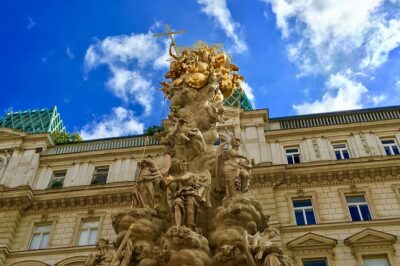
Vienna Historic Center Small Group Walking Tour
Read our review →
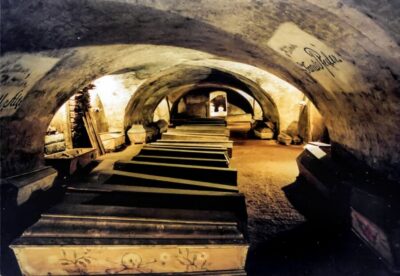
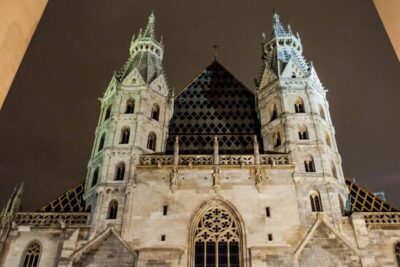
Ghosts and Legends Guided Nighttime Walking Tour
Read our review →
Vienna for Food Lovers: Cafés, Markets & Austrian Cuisine
Read our review →Browse the lists this tour appears in