
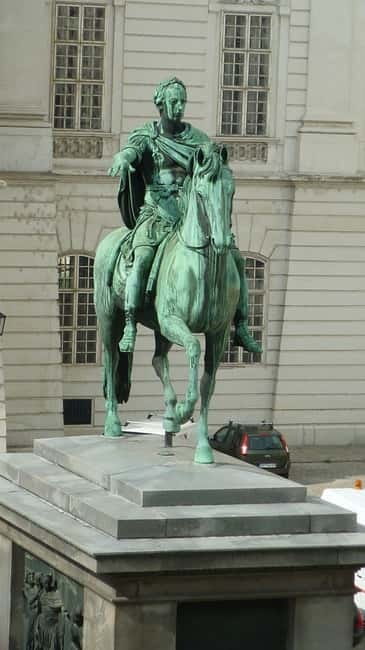
Review · VIENNA
Vienna: Essential History Walking Tour
Vienna’s grand center makes far more sense once someone explains the people and events behind its stone facades. This two-hour walk moves from Roman remains and the Hofburg to Habsburg weddings, wartime destruction, the Albertina, and St. Stephen’s Cathedral, with plenty of odd court customs along the way. Herbert is often the guide, though Wolfgang and Dorothy have also led tours.
I like the small-group format, which gives you room to ask questions instead of standing at the back of a crowd. I also like the useful local advice, from museums and food stops to trying Gemischter Satz wine and checking the Lipizzaner schedule before you plan your visit.
The main drawback is focus. Much of the walk stays in the Habsburg quarter, so if you expect a broad tour of all Vienna, you may find the imperial center receives most of the attention. The pace is manageable, but the tour is not suitable for children under 12 or people with mobility impairments.
Key points to know before you book
- Roman beginnings at Michaelerplatz: Start with excavations and the reason this particular spot mattered before Vienna became an imperial capital.
- The Hofburg in human terms: Learn what the vast 555,000-square-meter complex meant for rulers, servants, ceremonies, and power.
- Small groups and lively guides: Herbert is known for dry humor, historical detail, and showing old photographs on an iPad.
- Royal weddings and strange customs: Visit the church used for Habsburg weddings and hear why some grooms were not present.
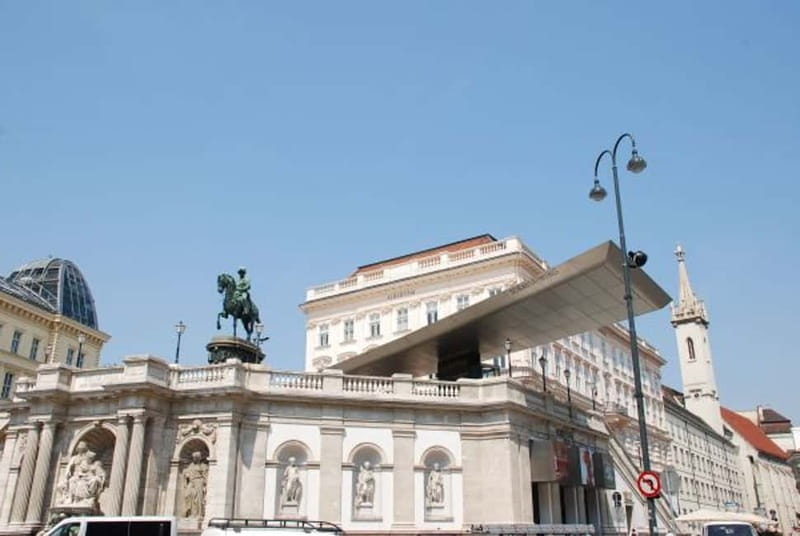
- War damage in the city center: The Albertina and Monument Against War and Fascism provide a sober break from imperial spectacle.
- A useful first-day orientation: Finish at St. Stephen’s Cathedral with ideas for museums, food, wine, and later sightseeing.
Start at Michaelerplatz with Vienna below your feet
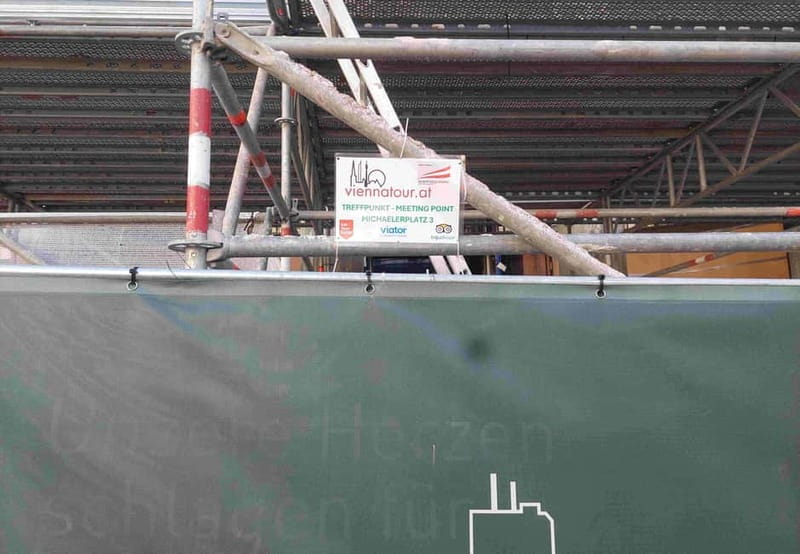
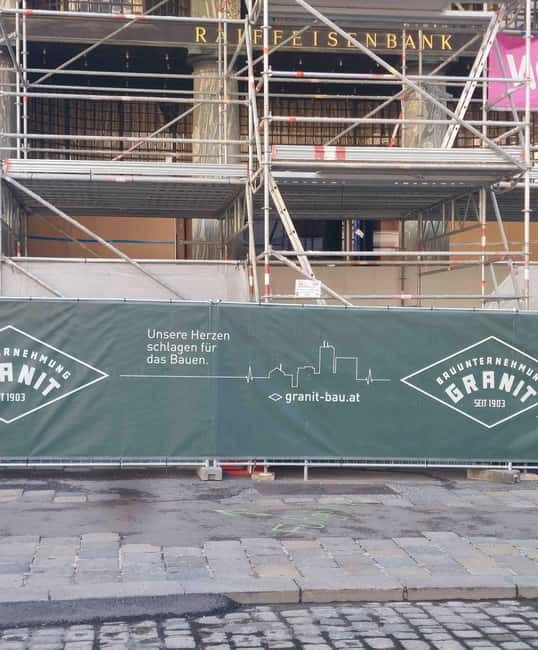
Meet in front of the Loos Haus at Michaelerplatz 3, between Kohlmarkt and Herrengasse. Look for the Raiffeisenbank name on the facade. The meeting point is about a three-minute walk from Herrengasse station on the U3 line, so it is easy to reach by public transport.
The first stop is the Michaelerplatz excavations. This is a smart place to begin because it makes Vienna feel older than its imperial image. Before the grand palace wings and formal squares, this area had Roman roots and practical military importance.
Your guide starts with Roman Vienna and the question of why a castle was built here. That framing matters. Instead of receiving a list of dates, you begin to see how location, defense, trade, and political power shaped the city.
The tour then moves to St. Michael’s Church, described as Vienna’s third-oldest church. Its unusual appeal is architectural: three different styles appear in one building. You get a quick lesson in how Vienna changed over time, rather than seeing the church as just another ornate stop.
The church may be closed on Sundays and public holidays. The walk can still cover its role and appearance from outside, but you should not assume an interior visit on those days.
More History Walking Tours in Austria
- Vienna: World War II Historical Walking Tour
★ 4.8 · 1,772 reviews - Vienna Historic Center Small Group Walking Tour
★ 5.0 · 1,746 reviews - Historical Hitler Walking Tour of Vienna
★ 5.0 · 887 reviews
The Hofburg explains how the Habsburgs ruled
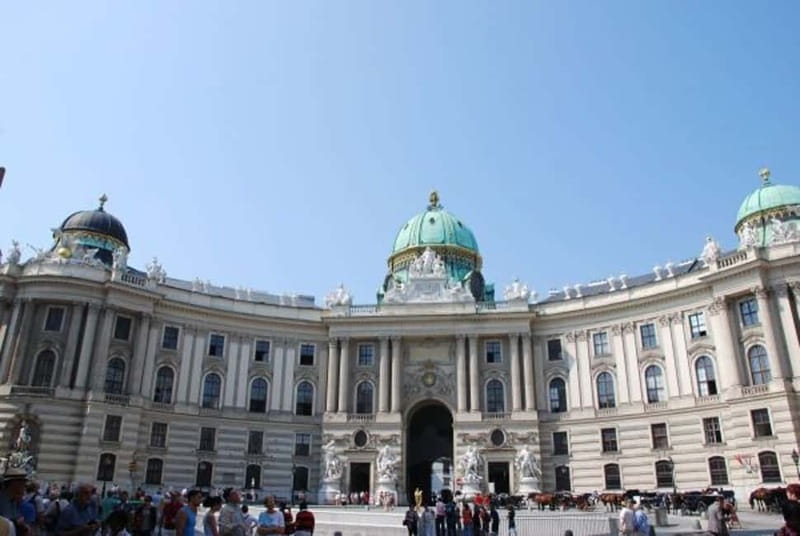
The Hofburg is the center of the tour, both physically and in terms of historical weight. Its grounds cover about 555,000 square meters, a figure that helps you grasp the scale of the former court. This was not a single palace in the simple sense. It was a working seat of power with ceremonial spaces, residences, offices, churches, collections, and courtyards.
I find this part most useful when you stop looking only at facades. Your guide connects the buildings to the rulers who used them and explains what happened inside. The effect is to turn a polished imperial district into a place shaped by ambition, family politics, ceremony, and routine.
At Heldenplatz, or Heroes’ Square, the scale becomes even clearer. The broad open space was designed to impress. Your guide points out what lies behind the facades and explains why the square mattered to the Habsburg court and later Austrian history.
This is also where a lively guide makes a real difference. Herbert’s approach, based on past tour accounts, mixes serious historical material with dry humor. He has also used an iPad to show images of important figures and buildings as they looked after the Second World War. That kind of visual aid can help you understand damage and reconstruction that is difficult to read from a restored facade.
The tradeoff is time. One past assessment found that about an hour and a half of the two-hour walk focused on the Habsburg area. If you want equal attention for every central district, you may prefer a broader city tour. If imperial Vienna is your priority, this concentration is a strength.
The Imperial Treasury is an important next stop, not an included visit
The route takes you past the Imperial Treasury, with an explanation of why it matters and what you can see inside. The entrance fee is not included, so the tour itself is an introduction rather than a museum visit.
That distinction is useful. The Treasury can be hard to place if you enter without context. Here, you hear why the collection mattered to the Habsburgs and why it belongs on a Vienna sightseeing plan. You can then decide if it deserves a separate visit during your stay.
One useful tip is to treat this tour as a planning tool. Several people used the information from the walk to choose museums and other sights later in the day. The guide helps you sort Vienna’s many options instead of trying to see every imperial room simply because it is famous.
The Austrian National Library and Joseph II Square
As you pass the Austrian National Library, the guide points out its State Hall, one of the city’s grandest library interiors. The tour does not include admission, but the outside explanation helps you decide if you want to return for a proper visit.
You also learn about the symbol on the roof and why the square is named for Emperor Joseph II. These details are easy to miss when you walk through the center alone. That is one of the best reasons to book a guided walk in Vienna: the city often rewards attention to small symbols, inscriptions, sculptures, and architectural details.
The route is compact, with many sights close together. That makes it a practical choice if you do not want a long city march. It also means the guide can spend time explaining places rather than rushing from one distant neighborhood to another.
More History Walking Tours in Vienna:
- History and Hauntings of Salem Guided Walking Tour
★ 5.0 · 14,564 reviews - Lisbon: History, Stories and Lifestyle Walking Tour
★ 4.8 · 10,902 reviews - Boston: Freedom Trail History Small Group Walking Tour
★ 5.0 · 6,450 reviews - Historic Charleston Guided Sightseeing Walking Tour
★ 5.0 · 6,216 reviews
Habsburg weddings, absent grooms, and court ritual
The wedding church is one of the tour’s more unusual stops. All Habsburg weddings were held there, and the guide explains why some grooms were not physically present for the ceremony.
This is the kind of story that gives court history a human shape. Royal marriages were often political arrangements, and the ceremony could be handled through a proxy. You come away with a better sense of how family alliances worked in a dynasty that ruled much of Central Europe.
The church is closed on Sundays and public holidays, so plan your expectations accordingly. Even when you cannot enter, the story remains part of the route, but the stop will naturally be less substantial from outside.
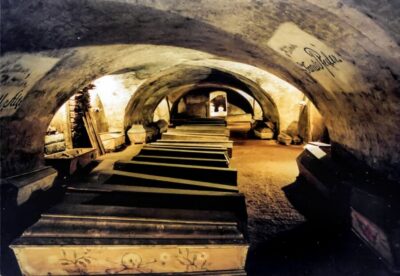
The tour also covers the Habsburg burial ritual in the Imperial Crypt. This is another revealing custom. The ceremony tells you how the dynasty separated the burial of the body, heart, and internal organs among different locations, a practice tied closely to Habsburg identity and ceremony.
The Imperial Crypt is listed as a guided stop, but entrance fees are extra. If you want to go inside, confirm the current opening arrangements and admission cost when you book your wider sightseeing plans.
The Albertina and a clear look at wartime Vienna
The Albertina brings art and modern history into a route otherwise dominated by palaces. You learn that it houses the world’s largest graphical collection, an important point if you are deciding which museums deserve your time.
The tour does not include museum admission, so you will see the building and hear why it matters. That brief introduction may be enough for some visitors, while art lovers may want to return for a longer visit.
Nearby, the Monument Against War and Fascism changes the mood. Vienna’s center can sometimes feel like a polished imperial stage, but this monument forces attention onto the city’s darker years and the horrors of the Second World War.
This is one of the walk’s strongest features. It does not present Vienna as only palaces, music, coffeehouses, and handsome squares. The guide also explains destruction, memory, and what was rebuilt. Old images shown on an iPad can make that history easier to picture, especially when the modern city looks so intact.
The State Opera, Hotel Sacher, and the vanished gate theatre
The walk continues to the State Opera and the site of the former Carinthian Gate Theatre. The guide explains why the Hotel Sacher now occupies the location.
This is a small but telling piece of urban history. A city changes by replacement as much as by preservation. Buildings vanish, new uses take over, and a famous hotel can conceal what once stood there. You learn to read the modern center as a series of layers rather than a single frozen period.
The tour’s anecdotes are often what make these stops memorable. Instead of treating the State Opera as a photo opportunity, the guide connects it to the changing city around it. That approach suits you if you enjoy stories about how places evolved, not just the usual list of architectural facts.
Neuer Markt and the Imperial Crypt’s stranger stories
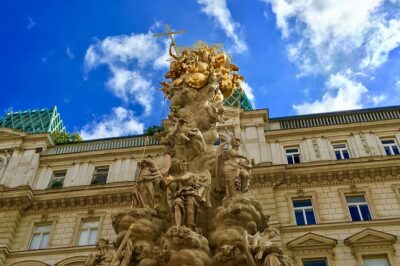
At Neuer Markt, the Providentia Fountain provides another pause for detail. Your guide shares the story behind the fountain, giving you something to look for beyond the obvious monument.
This section helps break up the palace-heavy route. You move through a public square and hear how symbolism, religion, and imperial imagery appear in everyday city spaces. Vienna often hides its best talking points in plain sight, and a local guide can point them out quickly.
The Imperial Crypt adds a more intimate look at the Habsburgs. The burial ritual is memorable because it reveals the dynasty’s concern with titles, bodies, ceremony, and place. It is also a good reminder that imperial history was not only about grand buildings. It was shaped by personal belief, family tradition, and carefully managed public image.
Finish at St. Stephen’s Cathedral
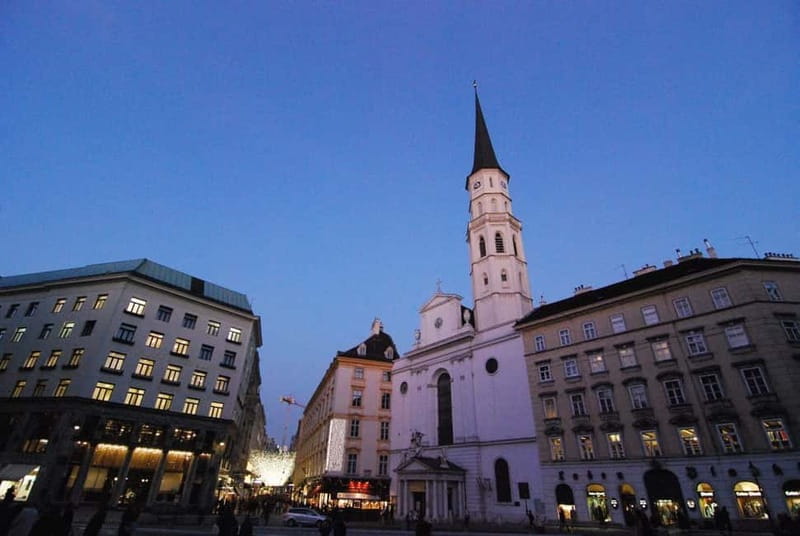
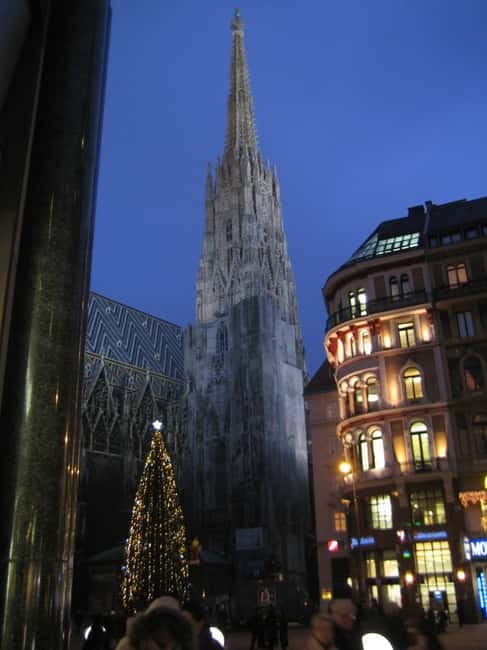
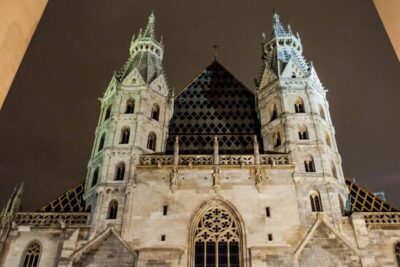
The tour ends at St. Stephen’s Cathedral on Stephansplatz. This is Vienna’s landmark and a sensible finishing point, since you can continue exploring the square and central streets on your own.
The guide discusses the cathedral’s partial destruction during the Second World War and challenges at least one version of the story commonly taught in school. That final note fits the tour’s larger purpose: look closely, question easy explanations, and connect the famous sight to the events around it.
The end point is also useful for planning. By then, you have heard about museums, the Imperial Treasury, the Albertina, the library, food options, wine, and other places to visit. You can use the rest of your day more wisely than if you simply wandered from monument to monument.
What the $34 price buys you
At $34 per person, the value depends on how much context you want. You are paying for two hours with a live English or German guide, not for museum admissions. The price is fair if you plan to visit several sights afterward and want to know which ones deserve your time.
The tour is particularly good value for a first visit. It covers many major central sights without requiring a full-day commitment, and past groups have sometimes been as small as six or seven people. A small group makes it easier to hear, ask questions, and adjust the conversation to your interests.
The guide quality is the biggest variable. Herbert is repeatedly praised for his humor, warmth, and command of Vienna’s past. Wolfgang and Dorothy have also received strong praise for clear explanations and an engaging manner. Since the guide may vary, expect the same route and subject matter, but not an identical personality or storytelling style.
You should also allow for weather. The walk runs in all weather, so bring suitable clothing and shoes. Large bags and luggage are not allowed, and video or audio recording is prohibited.
Who should take this Vienna walk?
I would choose this tour during the first day or two of a Vienna visit. It gives you a working map of the imperial center and helps you avoid wasting time on museums that do not match your interests.
It suits adults and older teenagers who enjoy history, architecture, royal family stories, and political change. It is less suitable for young children, people who need step-free access, or anyone looking for a relaxed café-and-neighborhood stroll.
You should also book it if you like asking questions. Several past groups valued the chance to discuss food, museums, local customs, and later plans with the guide. If you prefer to move silently from sight to sight and take photos, a self-guided walk may serve you better.
Should you book the Essential History Walking Tour?
Book it if you want Vienna’s center explained rather than merely photographed. The strongest parts are the Habsburg stories, the small-group setting, the wartime context, and the practical advice that helps you plan the rest of your stay.
Skip it if you want broad coverage beyond the imperial district, interior access to museums, or a tour designed for children under 12. For most first-time visitors who can manage a two-hour walk, $34 is a sensible price for a focused introduction, especially if you are lucky enough to get Herbert or another guide with the same mix of facts, anecdotes, and humor.
FAQ
Where does the tour start?
The meeting point is in front of Loos Haus at Michaelerplatz 3, 1010 Vienna. It is between Kohlmarkt and Herrengasse, and the facade shows the name Raiffeisenbank. The meeting point is about a three-minute walk from Herrengasse station on the U3 metro line.
Where does the tour finish?
The walk finishes at St. Stephen’s Cathedral, at Stephansplatz 8A in central Vienna.
How long does the tour last?
The walking tour lasts two hours. Starting times vary, so you need to check availability for the date you want.
Which languages are available?
The tour is offered in English and German with a live guide.
Are museum and attraction entrance fees included?
No. Entrance fees are not included in the $34 price. The route includes guided explanations at places such as the Imperial Treasury, Austrian National Library, Albertina, and Imperial Crypt, but admission is extra.
Can children join the tour?
Children under 12 are not permitted. The tour is also not suitable for people with mobility impairments.
What happens if it rains?
The tour operates in all weather conditions. Bring clothing and shoes suitable for walking outdoors. Large bags and luggage are not allowed, and video or audio recording is prohibited.
New routes in Vienna
- The unknown Vienna City- a guided walking tour in 3 hours★ 4.7 · 137 reviews
- Hungry in Vienna? A Food Lover’s Coffee & Market Walk★ 4.9 · 276 reviews
- 3-Hour Walking Tour of Vienna Central Cemetery★ 4.7 · 71 reviews
- Vienna: City Center Guided Walking Tour★ 4.8 · 99 reviews
- Private Hidden Vienna Walk — Stories Behind Quiet Corners★ 5.0 · 137 reviews
- Vienna Private Walking Tour with a Local★ 4.5 · 131 reviews
- Historical Hitler Walking Tour of Vienna★ 5.0 · 887 reviews
- Vienna: Small Group Guided Walking Tour of City Highlights★ 5.0 · 540 reviews
Vienna Walking Tours, compared.

Guided Walking Tour of City Center Highlights
Read our review →
Vienna Historic Center Small Group Walking Tour
Read our review →
Ghosts and Legends Guided Nighttime Walking Tour
Read our review →Browse the lists this tour appears in