
Review · MUNICH
Third Reich Walking Tour Munich
Munich’s Nazi past comes into sharper focus when you see the actual squares, beer halls, and streets used by Hitler’s movement. This 2.5-hour walking tour connects the party’s early meetings with its later power, showing how Munich became central to the rise of the Third Reich.
I like the way the tour joins political history to ordinary city sights, especially the Hofbräuhaus and Old Town Hall. I also like the guides’ use of old photographs and their willingness to handle difficult questions plainly. The main drawback is that it is almost entirely outdoors, so cold, rain, or strong sun can make the walk less comfortable.
Key points to know before you book
- See Munich’s Nazi landmarks on foot: The route includes Königsplatz, Odeonsplatz, the Hofbräuhaus, Old Town Hall, and Marienplatz.
- Get context, not just dates: Guides explain propaganda, political organizing, social conditions, and the road to World War II.
- Expect a serious subject with a human tone: Guides such as Jake, Michael, Nicola, and Aileen are praised for clarity, warmth, and thoughtful answers.
- Plan for outdoor conditions: You will spend the tour walking and standing outside, so dress for the forecast and wear comfortable shoes.
- Finish in central Munich: The tour ends at Marienplatz, making it easy to continue sightseeing afterward.
- Small enough for questions: The group can include up to 25 people, and confirmation is provided when you book.
Why this Munich history walk matters
This is not a general Munich city tour with a few Nazi-era facts added at the end. The route focuses on how Adolf Hitler and the Nazi Party gained a foothold in Munich, how propaganda turned political anger into organized power, and how that power led to persecution and war.
The value comes from seeing the locations in sequence. A lecture can explain the Nazi movement, but a walk shows how political speeches, marches, memorials, beer-hall meetings, and public buildings fit into the city itself. You begin to understand that this history did not happen in some distant setting. It unfolded in the same central Munich streets you use today.
The subject is grim, and the tour does not treat it as casual sightseeing. It also does not appear to rely only on horror or shock. Guides explain political and social forces, then connect them to the people who suffered and those who resisted. That balance makes the experience useful for first-time students of the period and for people who have already read a good deal about World War II.
More Walking Tours in Munich:
- Munich: Third Reich & WWII Walking Tour
★ 4.6 · 6,181 reviews - Munich: Old Town & Viktualienmarkt City Walk in German
★ 4.7 · 2,304 reviews - Munich: Night Watchman Walking Tour
★ 4.7 · 2,092 reviews
Starting at Dachauer Strasse with Radius Tours
The meeting point is Radius Tours at Dachauer Strasse 4, close to central Munich and public transportation. Allow a few extra minutes to find the office and check in. The starting stop itself takes about five minutes, but arriving early helps you begin calmly rather than rushing into a serious subject already trying to catch up.
The tour is offered in English, with a mobile ticket. The maximum group size is 25 people. That is not a private walk, but it is small enough for the guide to address questions and keep the group together through city streets.
The guide makes a large difference here. Different departures may be led by different people. Guides named in the available feedback include Jake, Michael, Nicola, Aileen, Alex, Scott, Steve, Paul, Sarah, Michelle, Daniel, and Nick. Their approaches vary, but the strongest pattern is clear speech, strong command of the subject, and a willingness to answer uncomfortable questions directly.
Königsplatz and the public face of Nazi power
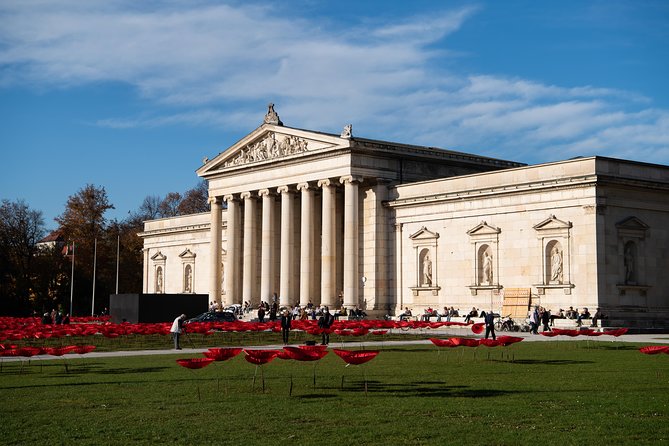
Königsplatz is one of the tour’s key stops because the Nazi Party used it as an important public stage. The broad square helped create the kind of setting political movements want: large, formal, and suited to marches, ceremonies, and mass displays.
You will spend about 15 minutes here. That may sound brief, but the point is not to linger over architecture alone. Your guide explains how the square functioned within Nazi propaganda and why public space mattered to a movement that wanted to project order, unity, and power.
This is also a good place to pay attention to scale. Munich’s central spaces can look peaceful now, filled with normal city activity. The guide’s explanation and historic photographs help you picture how the same setting could be used to stage political theater.
If you know the broad outline of Nazi history but have never studied Munich’s role, this stop gives you an important starting point. It shows how architecture and public ceremony were used to shape political feeling.
Odeonsplatz and Hitler’s fight for power
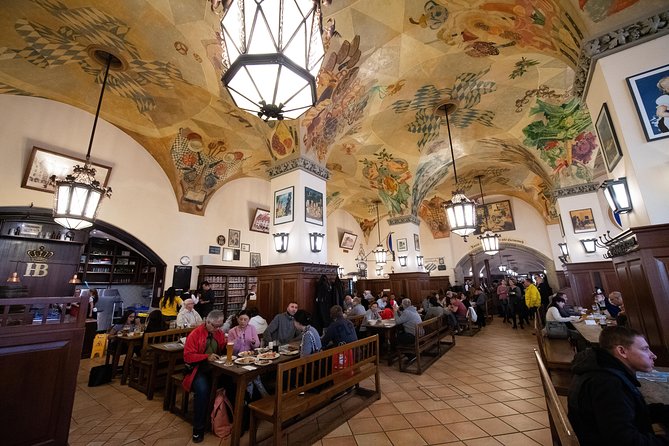
The tour then reaches Odeonsplatz, where you spend roughly 30 minutes. This is one of the longer stops, and for good reason. The square was used by the Nazi Party for marches and memorial events, and it is tied to the movement’s attempt to force its way into political power.
Here, the story moves beyond slogans and ceremonies. You learn about the confrontation between the Nazi movement and its opponents, along with the tactics used to gain attention, build loyalty, and present political violence as a path to national renewal.
I find this part especially useful because it places the rise of Hitler in a real civic setting rather than treating it as a sudden historical accident. Your guide can explain the build-up, the choices made by political leaders, and the way public events helped the Nazis attract support.
The stop also allows time for questions. Guides such as Michael, Jake, and Scott have been praised for going beyond basic dates and explaining politics, society, and culture. That broader setting matters. You get a clearer sense of how propaganda worked because it was tied to real fears, public frustration, and organized political action.
Same streets, a different guide:
- Munich Ghosts and Spirits Evening Walking Tour
★ 5.0 · 1,900 reviews - Munich Old Town Walking Tour
★ 4.5 · 1,287 reviews - Munich: Walking Tour Old Town and Viktualienmarkt
★ 4.7 · 839 reviews - Munich: Birthplace of the Third Reich Guided Walking Tour
★ 4.6 · 771 reviews
The Hofbräuhaus and beer halls as political meeting places
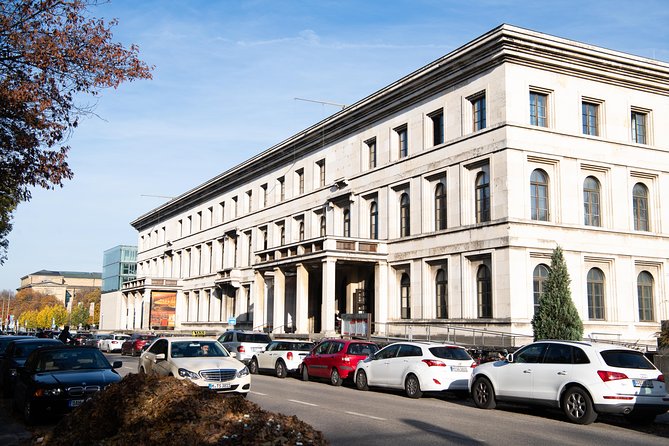
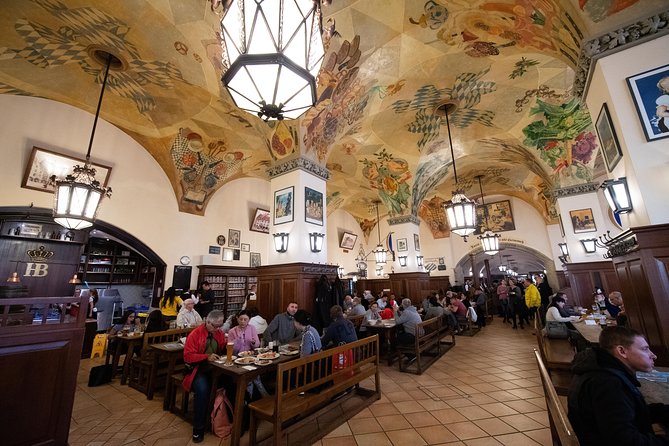
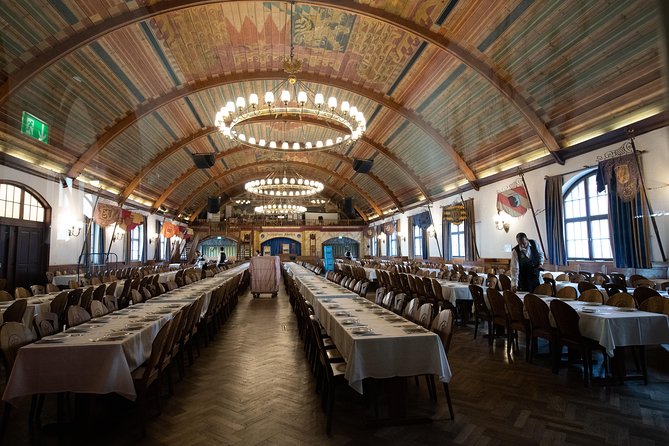
The Hofbräuhaus stop lasts about 20 minutes and adds a very different setting to the route. Munich’s beer halls were not only places for food and drink. They also served as gathering points for political speeches, arguments, party organizing, and the spread of ideas.
The tour helps you see how the Nazis used familiar social spaces to reach people. A movement could gain attention in a formal square, but it also needed rooms where people met regularly, listened to speakers, and built personal ties.
This stop is interesting precisely because the building is still associated with Munich’s everyday identity. You are not being asked to treat it as a museum of Nazism. Instead, you learn how an ordinary civic and social space became part of a political story.
Do not expect a long indoor visit or a meal here. The Hofbräuhaus is a stop on a walking route, not a dining experience. If you want to eat there, plan that separately after the tour.
Old Town Hall and the use of familiar civic spaces
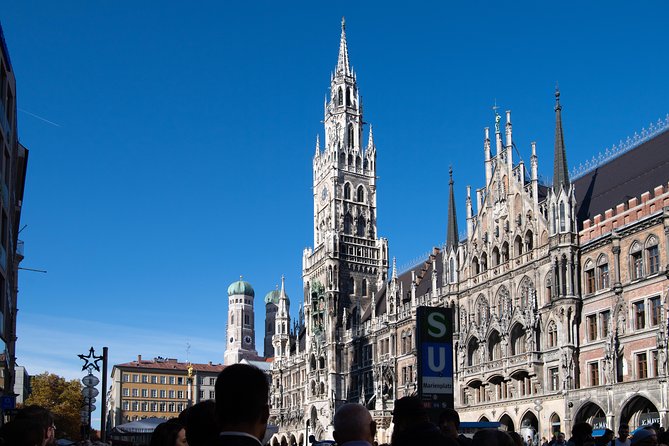
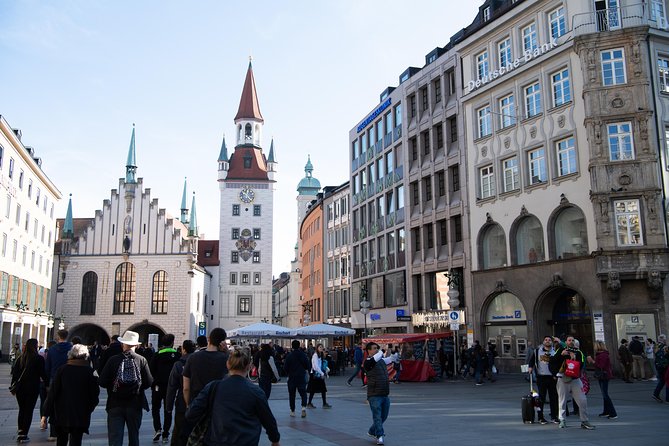
The Old Town Hall receives about 15 minutes. Along with the Hofbräuhaus, it shows how the Nazi movement operated in spaces that already mattered to Munich residents.
The guide connects the building to the wider story of Nazi political activity and explains how familiar city institutions could become linked to the regime’s public image. This is one of the tour’s strengths: you do not spend the entire time looking at purpose-built monuments. You see how political history ran through the ordinary center of town.
Because the stop is relatively short, listen for the main points and ask questions while the group is there. One practical weakness of a 2.5-hour route is that it cannot give every location the attention it deserves. You may leave wanting more detail, especially if you already have a strong background in the period.
Marienplatz and the close of the route
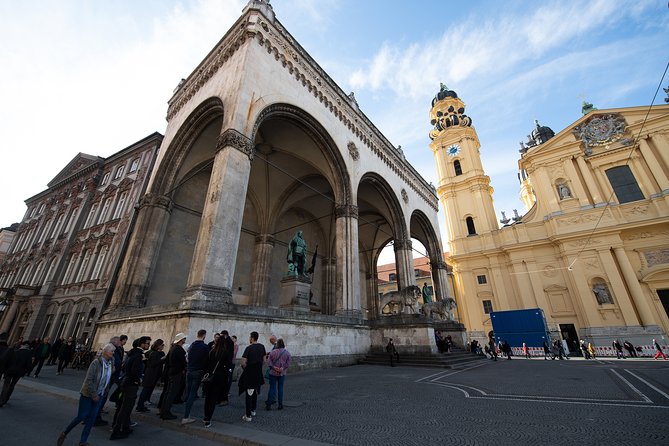
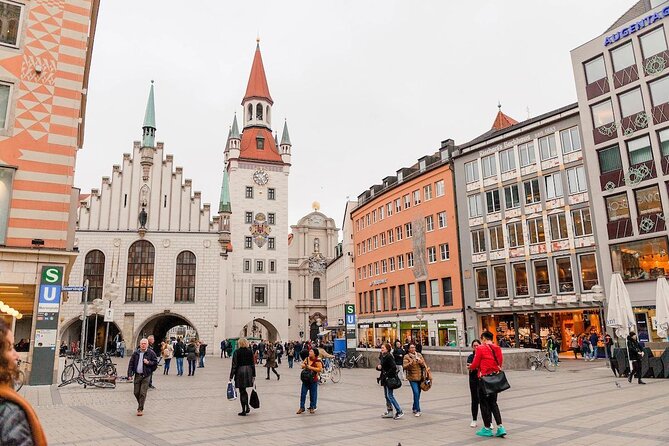
The final stop is Marienplatz, Munich’s central square, where the tour ends after about 20 minutes. This makes for a convenient finish. You are not left on the edge of town or required to find transportation back to the center.
Marienplatz also gives the guide a chance to tie the route together. The earlier stops have shown political meetings, marches, public ceremonies, and civic spaces. Here, the story returns to the modern city and the continuing need to remember what happened.
The tour includes memorials to people who opposed Nazi ideology and those who suffered under the regime. The emphasis is not only on Hitler’s rise, but also on the people who resisted and the lives destroyed by persecution and war. That wider focus keeps the walk from becoming a study of Nazi leaders alone.
Afterward, you can continue with Munich sightseeing, visit nearby attractions, or retrace part of the route at your own pace. If you want more photographs or time to think through the material, the central ending gives you flexibility.
What the 2.5-hour format does well
Two and a half hours is long enough to build a clear narrative but short enough to fit into a full day in Munich. You cover several important locations without committing to a full-day history program.
The pace includes walking between stops, short talks, and time for questions. One guide has also built in a bathroom and coffee break after asking the group what it needed. That may not happen on every departure, but it shows why a responsive guide matters during an outdoor walk.
The tradeoff is depth. You receive a strong overview of Munich’s role in the rise of the Third Reich, but you cannot cover every building, victim group, resistance movement, or wartime event in detail. People with a serious academic interest may wish the tour lasted several more hours.
I would treat this as a foundation. It gives you a map of the subject and points you toward places such as the White Rose museum for further study. It is especially effective at making later reading easier because you can connect names and events to actual locations.
Price, group size, and practical value
At $45.95 per person, the tour is not the cheapest way to walk through Munich. The price pays for an English-speaking local guide and a focused route through several historically important sites. There are no separate admission fees listed for the stops, so you are paying mainly for interpretation and organization.
That is a fair value if you want more than a self-guided walk. You could pass Königsplatz, Odeonsplatz, the Hofbräuhaus, the Old Town Hall, and Marienplatz on your own, but the buildings and squares will not explain themselves. The guide supplies the connections, old photographs, political background, and human context.
A group of up to 25 people keeps the price below a private tour, though it can mean standing near the edge of the group or waiting for others at crossings. If you want a very personal pace, ask about smaller options before booking. If you value questions and a live explanation, this group size is a reasonable compromise.
The tour is free to cancel up to 24 hours before the start time. Cancellations inside that window are not refunded. Since the experience depends on good weather and a minimum number of participants, a cancellation by the operator may result in another date, another experience, or a full refund.
Who should take this walk
I recommend it most for first-time visitors who want to understand Munich beyond its palaces, churches, and beer culture. It also suits history students, teachers, and readers who already know the major events but want to place them in the city.
The tour is a good match for you if:
- You want an English-language explanation rather than a printed route
- You can walk and stand outside for about 2.5 hours
- You are comfortable with a serious subject
- You like asking questions during a group tour
- You want to continue sightseeing from Marienplatz afterward
It may not suit you if you need a seated experience, dislike outdoor walking, or want an exhaustive study of the Third Reich. The tour is also not designed as a museum visit, since the listed route centers on streets, squares, buildings, and memorials.
Wear comfortable shoes and dress warmly on cold days. One departure took place in bitter weather, and another visitor specifically warned that the walk is entirely outside. A coat, water, and protection from rain or sun will make the experience much easier.
Should you book the Third Reich Walking Tour?
Book it if you want a clear, human explanation of how Munich helped nurture Hitler’s movement and how that history remains visible in the city center. The strongest part is the guide-led connection between locations that might otherwise seem unrelated.
I would choose this tour early in a Munich visit. It gives you context for the city and leaves you at Marienplatz with time to explore. If you already have advanced knowledge, book it only if you value place-based interpretation and live discussion. You may want to add a museum visit afterward for more detail.
For most visitors, the mix of serious history, central locations, experienced English-speaking guides, and a manageable half-day schedule makes the $45.95 price worthwhile. Just bring good shoes, suitable clothing, and enough attention for a subject that deserves care.
FAQ
How long is the Third Reich Walking Tour in Munich?
The tour lasts approximately 2 hours and 30 minutes.
Where does the tour begin?
It begins at Radius Tours, Dachauer Strasse 4, 80335 Munich, Germany.
Where does the tour end?
The walk ends at Marienplatz in central Munich.
Is the tour offered in English?
Yes. The tour is offered in English and includes a local guide.
What locations are included?
The route includes Königsplatz, Odeonsplatz, the Hofbräuhaus, Old Town Hall, and Marienplatz, along with other historically important points along the walk.
Can I cancel for a full refund?
Yes. You can cancel at least 24 hours before the start time for a full refund. Cancellations or changes made less than 24 hours before the start time are not refunded or accepted.
New routes in Munich
- Munich: Walking Tour Old Town and Viktualienmarkt★ 4.7 · 839 reviews
- Munich: Raven Black Witches and Executioners Walking Tour★ 4.7 · 294 reviews
- Munich Old Town – Guided Walking Tour in English★ 4.7 · 153 reviews
- Munich : Private Walking Tour with A Guide (Private tour)★ 4.5 · 85 reviews
- Munich: Birthplace of the Third Reich Guided Walking Tour★ 4.6 · 771 reviews
- Munich: Old Town Guided Walking Tour★ 4.6 · 479 reviews
- Munich: Guided Food Walking Tour with Beer Tasting★ 4.7 · 183 reviews
- Munich: Old Town Walking Tour★ 4.7 · 589 reviews
Munich Walking Tours, compared.
Old Town & Viktualienmarkt City Walk in German
Read our review →
Munich Ghosts and Spirits Evening Walking Tour
Read our review →

Birthplace of the Third Reich Guided Walking Tour
Read our review →
Discover Munich 2-Hour Small Group Walking Tour
Read our review →
Raven Black Witches and Executioners Walking Tour
Read our review →Browse the lists this tour appears in