
Review · MUNICH
Munich Old Town – Guided Walking Tour in English
Munich’s Old Town packs royal power, beer culture, grand churches, and Germany’s darkest political chapter into a walk of about two and a half hours. This tour moves from Marienplatz and Hofbräuhaus to the former Bavarian royal quarter, while explaining how Bavaria became so distinct from the rest of Germany.
I like the way the tour joins big sights with small local details, such as the Munich child found on city emblems, the Aloisius figure associated with Hofbräuhaus, and the food worth trying at Viktualienmarkt. I also like the guides’ clear handling of the Nazi period, though this subject takes a noticeable share of the walk and may feel heavier than some visitors expect.
Key points at a glance
- A strong first look at Munich: See Marienplatz, both town halls, Hofbräuhaus, Odeonsplatz, the opera, and the royal residence area in one route.
- History with local color: Learn about beer customs, Bavarian identity, Munich symbols, food, and the city’s royal family.
- A serious look at Nazism: Visit places linked to the Beer Hall Putsch and the rise of the Nazi movement.
- A guide-led experience: English and German tours are available, with guides such as Jean, Alex, Patrick, Noel, and Lima assigned according to the departure.
- Good value at $29: The price covers the guide’s payment and reservation, with no extra amount due on the day.
- Simple meeting point: Find the guide at the main gate of St. Peter’s Church by looking for a yellow Walkative umbrella.
Why this Munich walk works as a first introduction
Munich can look almost too polished at first. Cream-colored facades, Catholic churches, ornate squares, beer halls, and royal buildings create an easygoing picture of Bavaria. Yet the city also played a central role in the rise of Adolf Hitler and the Nazi Party.
This walking tour puts both sides on the same map. You get the cheerful Munich of beer gardens, sausages, football, and local pride, but you also visit places tied to the Beer Hall Putsch of 1923 and the early Nazi movement. That balance matters. Without it, Munich’s old center can feel like a pretty stage set rather than a place shaped by difficult choices.
I would take this tour near the start of a Munich stay. The route helps you understand what you are seeing later, and the guides often add useful suggestions for food and further sightseeing. Patrick, Jean, Alex, Noel, and Lima are among the guides praised for clear storytelling, humor, and practical local advice, though your guide will depend on the departure you choose.
The tour lasts 150 minutes. That is long enough to cover the main center without turning the day into a march. You should still expect to spend much of the time standing outdoors, so comfortable shoes and weather protection make sense.
More Old Town Walking Tours in Germany
- Munich: Old Town & Viktualienmarkt City Walk in German
★ 4.7 · 2,304 reviews - Munich Old Town Walking Tour
★ 4.5 · 1,287 reviews - Munich: Walking Tour Old Town and Viktualienmarkt
★ 4.7 · 839 reviews
Starting at St. Peter’s Church and Marienplatz
The meeting point is the main gate of St. Peter’s Church. Look for the yellow Walkative umbrella, an important detail in a busy city center where several groups may gather at once.
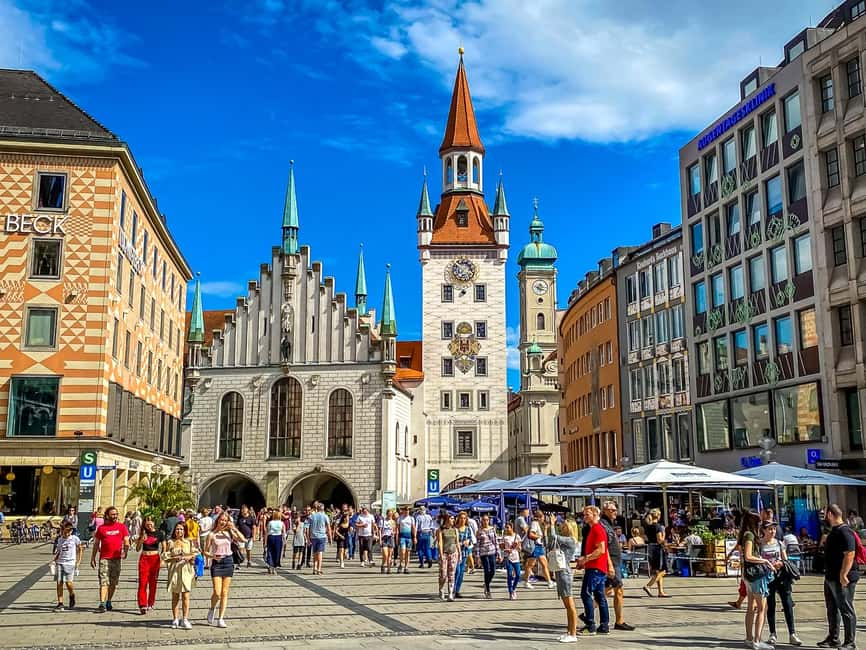
From here, the walk reaches Marienplatz, Munich’s central square. This is the right place to begin because the square connects the city’s medieval roots, civic government, religious power, and modern tourist life.
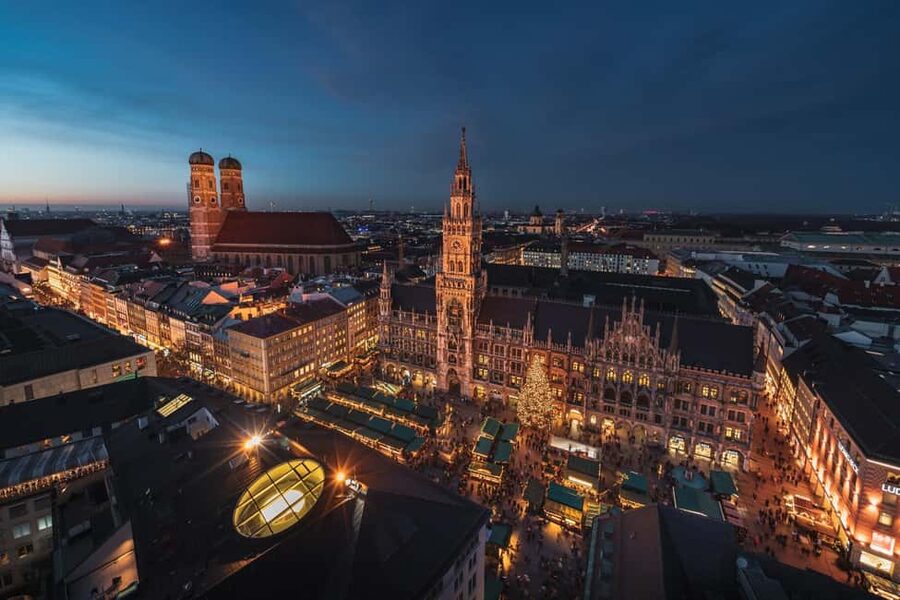
You will see the New Town Hall, a grand Gothic Revival building with its famous carillon, as well as the Old Town Hall. The tour explains the role these buildings played in Munich’s civic life rather than treating them as photo stops alone.
The carillon receives a more skeptical look. Its knightly figure show is described as one of the city’s most disappointing attractions, which is a useful reminder that a famous sight does not have to become your favorite sight. The figures reenact episodes from Munich’s past, but the performance may strike you as stiff or underwhelming.
The guides also point out local symbols that are easy to miss when you are focused on the large buildings. One example is the Munich child, a figure that appears on city flags, logos, and emblems. Details like this help you read the city after the tour instead of simply collecting photographs.
Hofbräuhaus and the Bavarian beer story
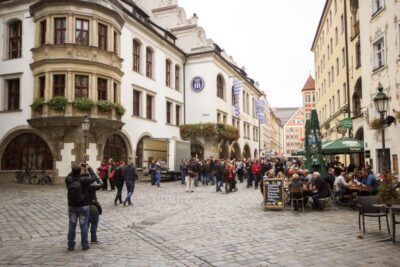
Hofbräuhaus is the best-known stop on the route, but the useful part is not only seeing the famous beer hall from the outside. The guide explains how beer became tied to Bavarian identity and why Munich’s drinking culture is such a large part of its public image.
The story also pushes back against the idea that the Bavarian costume and beer-hall image represent all of Germany. Lederhosen, Oktoberfest, litre mugs, and Alpine scenery belong especially to Bavaria. Munich is the capital of that state, and the city has exported this image around the world.
You will hear about Aloisius, the familiar figure associated with Hofbräuhaus. This kind of local reference gives the beer hall a more human setting than a simple explanation of opening hours or brewing traditions.
The tour does not include a drink or meal, so plan your own stop after the walk if you want to sit inside. The route may also point you toward local food choices, including Leberkäse sandwiches at Viktualienmarkt. That practical advice is one reason I would schedule the tour early in your stay. You can use it to decide where to eat later instead of guessing from the most crowded menu board.
Hofbräuhaus can be noisy and packed, especially at popular times. The walking tour gives you the cultural background without requiring you to commit your whole evening to the beer hall.
Royal Munich around Max Joseph Platz
The route then moves into the part of town shaped by the Wittelsbach family, who ruled Bavaria for about 700 years. Their long control explains why Munich has so many palaces, churches, ceremonial squares, and grand state buildings.
Max Joseph Platz is one of the key stops. Here you see the National Theater and the Bavarian State Opera, along with the area connected to the former residence of the Bavarian kings.
This is where the tour gives Munich a wider frame. The city was not built only by brewers and merchants. It was also a seat of dynastic power, Catholic devotion, music, theater, and court ceremony.
You should not expect an extended interior visit to the royal residence. The experience is a guided outdoor walk, and the included features are the guide and the prepared narration. If you want to tour the residence rooms, you will need to arrange that separately.
The guide’s role is especially useful here because a series of ornate facades can blur together. A good explanation helps you see which building served royal life, which supported the arts, and how the square expressed Bavarian power.
More Old Town Walking Tours in Munich:
- Munich: Old Town Walking Tour
★ 4.7 · 589 reviews - Munich: Old Town Guided Walking Tour
★ 4.6 · 479 reviews - Underground Vaults Walking Tour in Edinburgh Old Town
★ 4.5 · 8,506 reviews - Prague: 3-Hour Walking Tour of Old Town & Prague Castle
★ 4.7 · 5,696 reviews
Odeonsplatz and the difficult political story
Odeonsplatz brings the tour into the darker part of Munich’s past. The city was where Hitler tried to seize power by force during the Beer Hall Putsch in 1923. After the failed attempt, he went to prison and wrote Mein Kampf, the book that set out the ideas behind the criminal Nazi ideology.
The tour connects these events to the places where the Nazi Party first grew. You do not get a detached lecture separated from the city around you. Instead, the guide shows how ordinary squares and public buildings became stages for political pressure and violence.
This section requires attention and maturity. It is not presented as a quick footnote between beer facts and royal architecture. Several people who enjoyed the tour particularly valued the guides’ careful treatment of difficult events, while one person wanted less emphasis on war-related subjects. That is a fair consideration when choosing this experience.
I think the serious material improves the tour, especially for a first visit. Munich’s cheerful public image can hide the fact that the Nazi movement began here. A responsible walk should explain that plainly, without turning the subject into spectacle or allowing the beer-hall image to dominate.
The tour also touches on Joseph Ratzinger, later Pope Benedict XVI, who worked in Munich while he was still an archbishop. This adds another layer to the city’s modern religious and political story.
Churches, symbols, and the everyday city
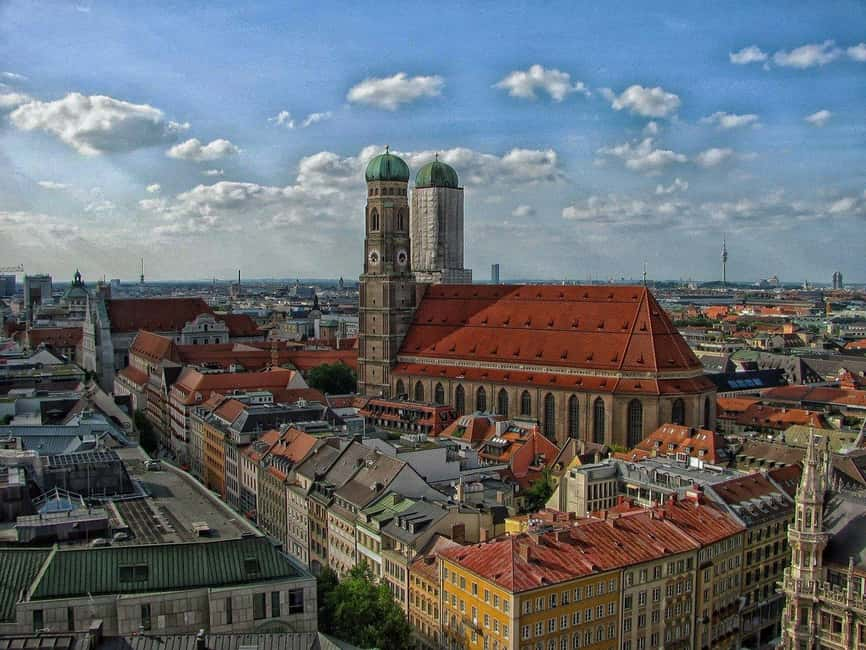
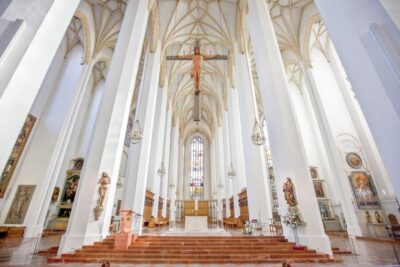
Munich’s Catholic identity is visible throughout the Old Town. Churches are not just attractive buildings on the route. They help explain the influence of religion on Bavarian art, public life, and the city’s sense of itself.
You will have opportunities to look at churches and take photographs, although this is not a church-interior tour. The exact amount of time at each stop may depend on the group and the guide.
The walk also links large themes with everyday life. Munich’s automobile industry, football culture, brewing tradition, and local confidence all appear in the wider story. The result is a city that can seem formal and relaxed at the same time: imperial in its buildings, practical in its habits, and proud of its own way of doing things.
That local confidence is part of the appeal. Bavaria is wealthy and distinctive, and Munich often feels aware of its own importance. The guide’s job is to explain that attitude without turning it into a stereotype.
The guides make the difference
The route is fixed in broad terms, but the feel of the tour depends heavily on the person holding the umbrella. Jean is noted for his multilingual ability, speaking French, German, English, and Spanish, and for making history easy to follow. Alex is praised for patient explanations, good English, humor, and a balanced treatment of Munich’s role in the Third Reich.
Patrick is a strong choice for practical city advice. His approach includes restaurant suggestions and ideas for enjoying Munich after the walk, while Noel is known for Irish humor, local cultural insight, and follow-up recommendations. Lima brings energy to the route, and other guides may lead the same experience on different dates.
You cannot select a particular guide from the information provided, so book this for the route and subject matter rather than for a guaranteed personality. Still, the repeated praise for storytelling, patience, pacing, and useful suggestions is encouraging.
The best guides do more than recite dates. They answer questions, keep the group together, explain local customs, and adjust the pace. One guide was especially praised for making sure everyone stayed together and safe, while another was appreciated for handling a large group without losing patience.
Pace, group setting, and practical value
At $29 per person, this is a reasonable price for a 150-minute introduction to Munich. You are not paying for admission to a palace or museum. You are paying for a local guide, a planned route, and the context that turns a list of buildings into a readable story.
The tour joins a general pay-as-you-wish walking tour. Your booking fee covers the reservation and the guide’s payment in advance, so you do not owe another payment on the spot. If you want a smaller private outing, the supplier can help arrange one before booking.
That group format is worth considering. It can bring energy and questions, but a larger crowd may make it harder to hear or take photographs at the busiest stops. The guides have experience handling groups, yet the experience will not feel as personal as a private walk.
The duration is a good middle ground. A shorter tour might leave out the political and royal context. A much longer outing could become tiring, especially in cold weather or light rain. The walk has gone ahead in a sprinkle, but you should dress for Munich’s changeable conditions.
Free cancellation is available up to 24 hours before the start, and you can reserve now and pay later. Hotel pickup and drop-off are not included, so you need to reach St. Peter’s Church on your own.
Who should book this tour?
I would recommend it most strongly to first-time visitors who want a firm sense of Munich before choosing restaurants, museums, or later excursions. It also suits you if you like history explained through places rather than delivered as a classroom lecture.
The tour works well for people interested in:
- Bavarian identity and beer culture
- The Wittelsbach rulers and Munich’s royal buildings
- Catholic churches and city symbols
- The origins of Nazism in Munich
- Local food suggestions and first-day orientation
- A guided walk in English
You may want something else if you prefer a small private group, long interior visits, or a tour focused only on beer and cheerful folklore. The Nazi-era discussion is a real part of the route, not a passing mention, so consider that before booking.
Should you book the Munich Old Town walk?
Yes, if you want an affordable first look at Munich that treats the city as more than beer halls and pretty squares. The best reason to book is the combination of major sights and useful context: Marienplatz, Hofbräuhaus, the royal quarter, Odeonsplatz, local symbols, food tips, and the origins of the Nazi movement all fit into one clearly timed walk.
Book it early in your visit, arrive at St. Peter’s Church with comfortable shoes, and bring questions. At $29, the tour offers good value when you want a guide to help you understand Munich before exploring it on your own.
FAQ
Where does the Munich Old Town tour meet?
The meeting point is at the main gate of St. Peter’s Church. Look for the guide carrying the yellow Walkative umbrella.
How long does the walking tour last?
The tour lasts 150 minutes, or two and a half hours.
What language is the tour in?
The tour is available in English and German. English-speaking guides include Jean, Alex, Patrick, Noel, Lima, and others depending on the departure.
What sights are included?
The route includes Marienplatz, the New Town Hall, the Old Town Hall, Hofbräuhaus, Odeonsplatz, the National Theater, the State Opera, Max Joseph Platz, the former residence area of the Bavarian kings, and other Old Town sights.
Does the tour include Hofbräuhaus?
Yes. Hofbräuhaus is included as a stop, along with an explanation of Bavarian beer culture. A drink or meal is not listed as included.
Does the tour discuss Nazi history?
Yes. The guide discusses Munich’s role in the Beer Hall Putsch, the early Nazi movement, and the city’s place in the rise of Nazism.
Does the tour include royal residences?
The walk visits the area around the residence of the Bavarian kings and explains the Wittelsbach dynasty. An interior admission to the residence is not included in the tour details.
Is hotel pickup included?
No. You must make your own way to the meeting point at St. Peter’s Church.
Is another payment required during the tour?
No. The reservation fee covers the guide’s payment in advance, so no further payment is required on the spot.
Can I cancel the booking?
Yes. You can cancel up to 24 hours in advance for a full refund. You can also reserve now and pay later.
New routes in Munich
- Munich: Walking Tour Old Town and Viktualienmarkt★ 4.7 · 839 reviews
- Munich: Raven Black Witches and Executioners Walking Tour★ 4.7 · 294 reviews
- Munich: Birthplace of the Third Reich Guided Walking Tour★ 4.6 · 771 reviews
- Munich: Old Town Guided Walking Tour★ 4.6 · 479 reviews
- Munich : Private Walking Tour with A Guide (Private tour)★ 4.5 · 85 reviews
- Munich: Guided Food Walking Tour with Beer Tasting★ 4.7 · 183 reviews
- Munich: Old Town Walking Tour★ 4.7 · 589 reviews
- Discover Munich 2-Hour Small Group Walking Tour★ 4.6 · 491 reviews
Munich Walking Tours, compared.
Old Town & Viktualienmarkt City Walk in German
Read our review →
Munich Ghosts and Spirits Evening Walking Tour
Read our review →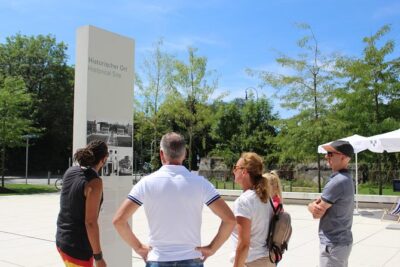

Birthplace of the Third Reich Guided Walking Tour
Read our review →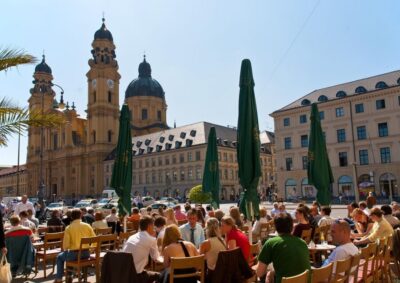
Discover Munich 2-Hour Small Group Walking Tour
Read our review →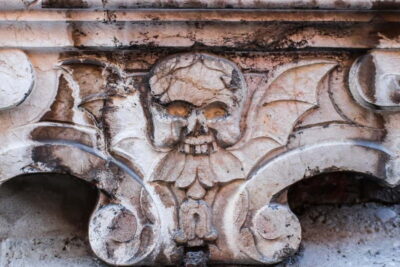
Raven Black Witches and Executioners Walking Tour
Read our review →Browse the lists this tour appears in