
Review · MUNICH
Munich: Night Watchman Walking Tour
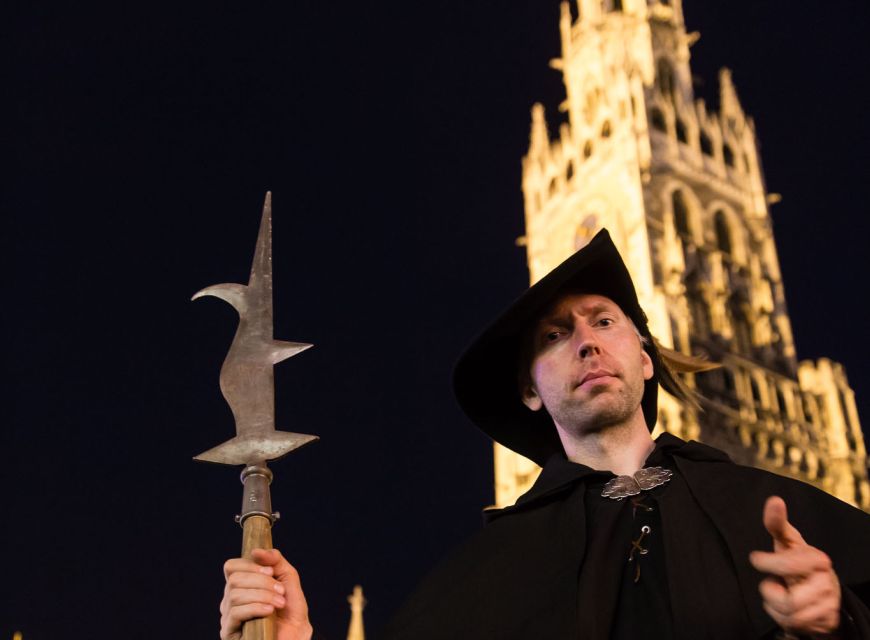
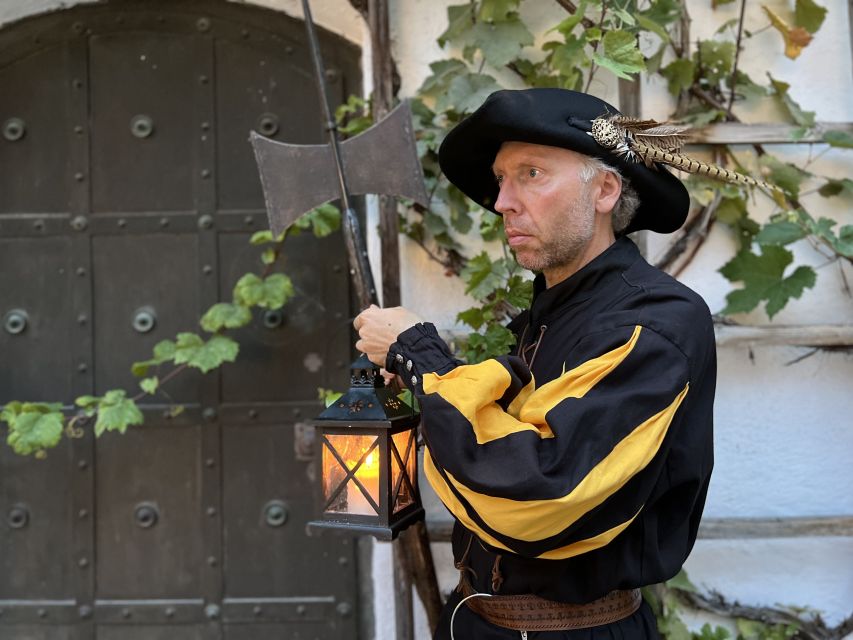
Munich’s old town takes on a different character after dark. On this 1.5-hour night walk, a costumed watchman leads you through narrow lanes, churchyards, old gates, and royal courtyards while speaking as if medieval Munich never quite ended.
I like the theatrical guide, especially when Alois or Elsbeth turns a simple street corner into a story about torture, saints, beer, or a doomed noblewoman. I also like the route’s variety: this is not just a stroll around Marienplatz, but a circuit through quieter corners of the old center. The main consideration is the price: $530 per group of up to 30 makes sense for a large private party, but it is a serious expense for a couple or small family.
Key points to know before you book
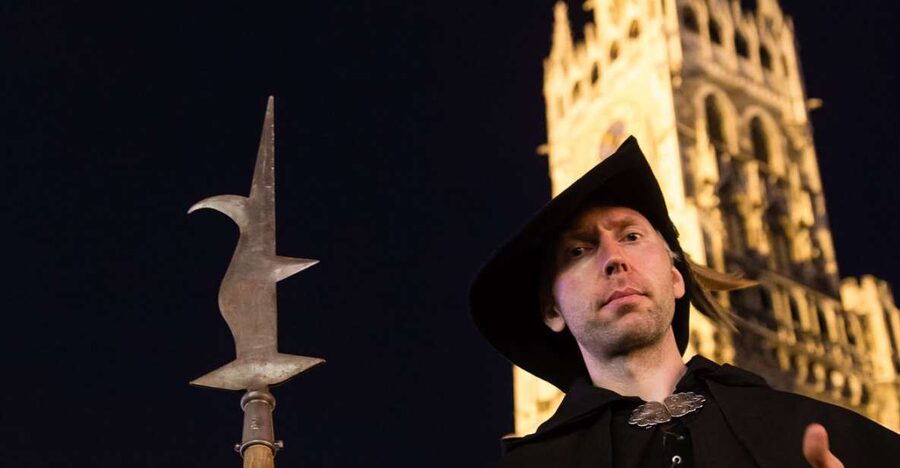
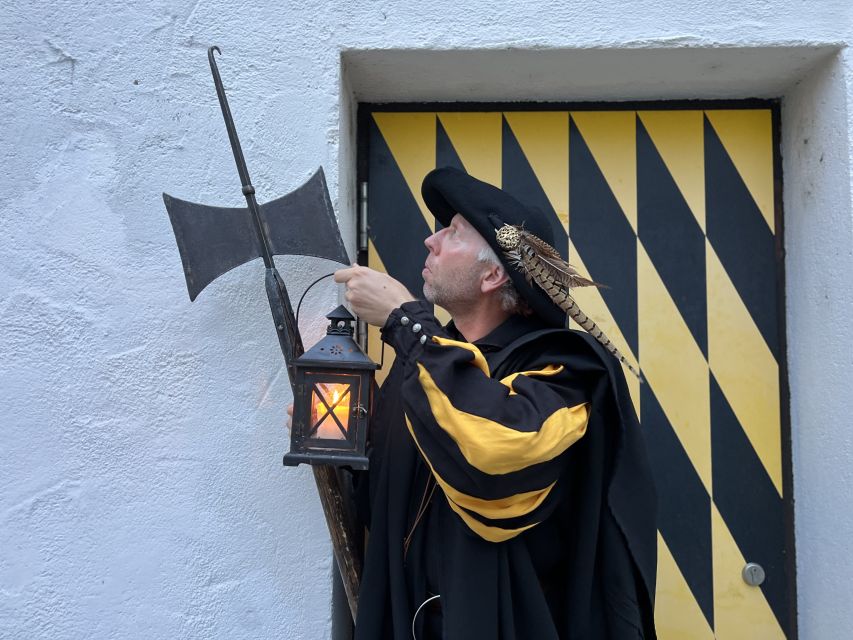
- A medieval character leads the walk: The guide carries the role of Munich’s night watchman, complete with period clothing, a lantern, stern opinions, and a store of dark tales.
- The route covers more than the main square: You visit St. Peter’s Church, the Alter Hof, old city-wall areas, Frauenkirche, Promenadeplatz, and the Theatine Church.
- The stories are often spooky: Expect graveyard customs, torture chambers, executions, sudden death, a golden ring, and a tragic fall from a church tower.
- The humor is part of the experience: The watchman scolds modern nightlife, questions your knowledge of patron saints, and has a ready answer about Munich’s many beer taps.
- A private group can change the value: The fixed group price is costly for two people but can work well when shared among a larger party.
- English and German are offered: The tour is wheelchair accessible, though the meeting point depends on the option you book.
Why Munich looks better after the shops close
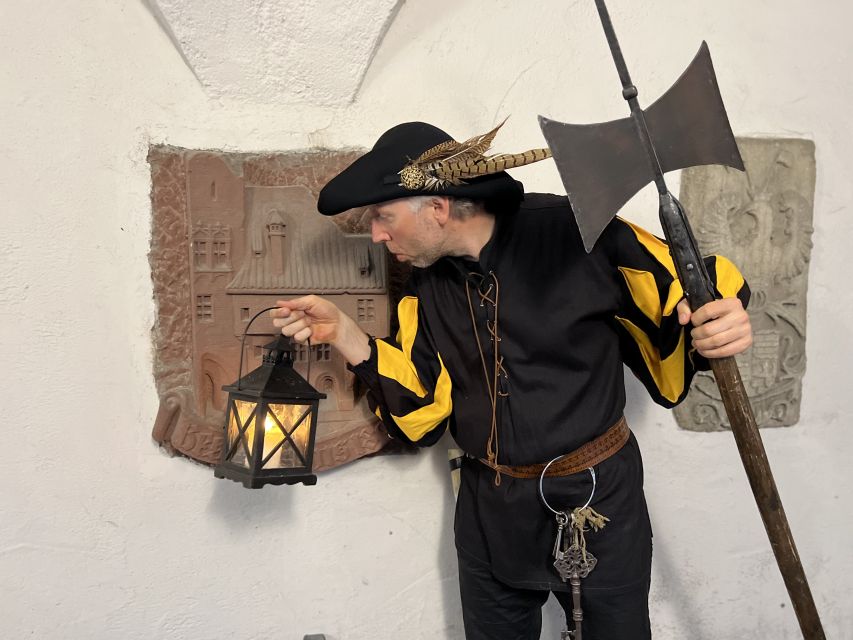
The clever idea here is simple: you see familiar Munich sights through the eyes of someone responsible for the city after sunset. The night watchman is not presented as a neutral history lecturer. He is a character with duties, prejudices, and a low opinion of people who stay out past bedtime.
That point of view gives the walk its humor. Law-abiding citizens, in his world, are already asleep after 9 p.m. The lively evening crowd gathering around the old town is treated as a nuisance. You may also receive a playful scolding if you cannot name Munich’s patron saints.
I like this approach because it gives the old center a human voice. The buildings are still important, but the guide’s stories make them easier to remember. You are not simply told that a church is old. You hear about funeral habits, missing pews, churchyard inscriptions, royal ambitions, and suspicious deaths.
The route is also a good fit if you have already seen Munich by day. Marienplatz and the Frauenkirche can feel familiar in daylight. At night, the lanes and courtyards provide a darker setting, and the guide directs your attention to details you might otherwise walk past.
More Night Walking Tours in Munich:
- Munich Ghosts and Spirits Evening Walking Tour
★ 5.0 · 1,900 reviews - Private Street Food Evening Walking Tour in Ho Chi Minh City
★ 5.0 · 3,175 reviews - Granada: Albaicín and Sacromonte Guided Sunset Walking Tour
★ 4.9 · 2,962 reviews
Marktplatz and St. Peter’s: a city under watch
The walk begins at Marktplatz, where the night watchman gathers his flock before heading into the old town. The character is central from the start. You are not simply following a guide with a lantern. You are joining a patrol.
The watchman’s job, as the tour presents it, was to keep peace in the dark lanes and watch over the sleeping population. He knows the maze of the city and carries its unpleasant stories. That makes the opening useful: it explains why the tour moves into side streets instead of staying on Munich’s grandest squares.
At St. Peter’s Church, look up toward the tops of the towers. The watchman explains why they stand askew, giving you a reason to study a feature you might otherwise overlook.
The south side of the church brings a change of mood. Here, the old churchyard becomes the setting for stories about gravestones, epitaphs, funeral customs, decomposing bodies, and missing church pews. This part is not polished or sentimental. It presents the old city as a place where death was part of everyday public life.
If you prefer light sightseeing with no macabre material, this section may feel too grim. If you enjoy old customs and unsettling folklore, it helps define the tour.
The Altes Rathaus and the old Salzstraße
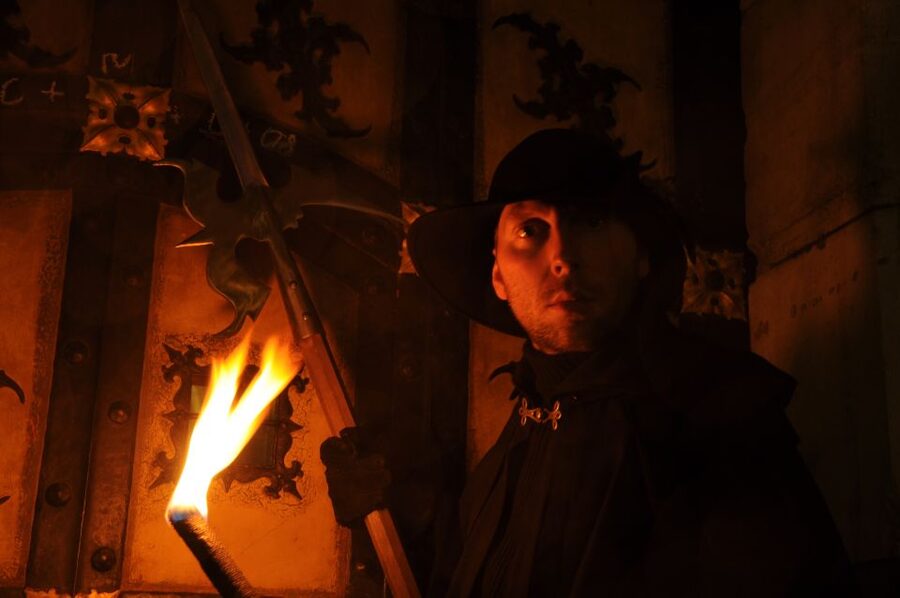
At the tower of the Altes Rathaus, the route reaches the historic Salzstraße. The old city gate, or Stadttor, is treated almost like another character. In the watchman’s telling, it complains about its rebuilding in the 1970s.
That joke points to a real tension in historic cities: old buildings are repaired, altered, and sometimes reconstructed, while residents argue about what should be preserved. The tour does not approach the subject as a dry architecture lesson. Instead, the gate itself seems to object.
The watchman also questions the group’s piety at this point. Saints Onuphrius and Henry the Lion enter the story, along with the belief that they could protect people from sudden death.
This is one of the tour’s strengths. Religious symbols are not treated as decoration. They are tied to fear, hope, public life, and the way people once understood danger. You get a taste of how saints functioned in medieval Munich, not just their names on a church wall.
The humor keeps the material from becoming heavy. The character can be stern one moment and sly the next, which is why the guide’s delivery matters so much. Elsbeth, in particular, brings an authentic, experience-focused style, along with plenty of useful information.
Prisons, torture, and the Alter Hof
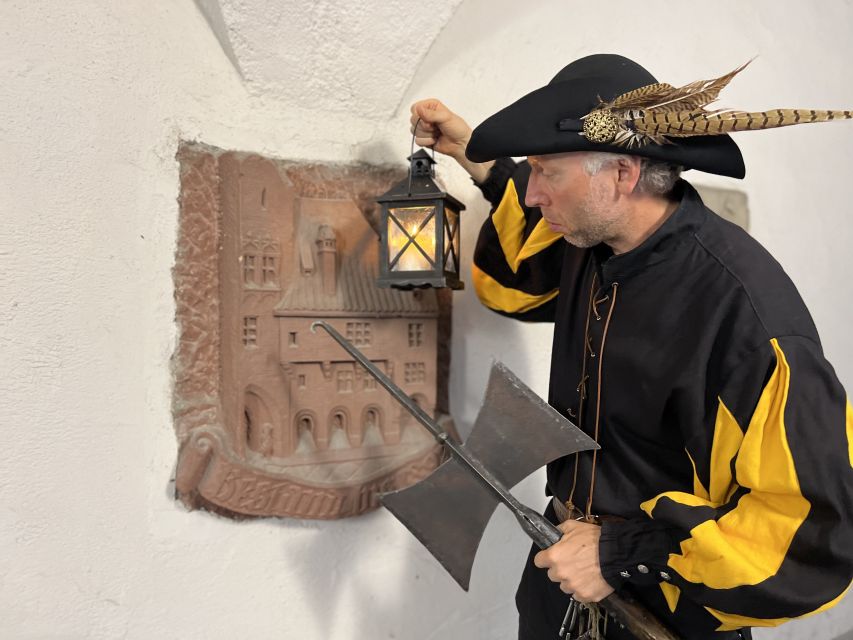
The route continues past the torture chamber and prison before reaching the Alter Hof, a former residence connected with Louis II. This is where Munich’s political history enters the walk.
You learn why this ruler was considered harsh, how the Wittelsbach family came to Munich, and where the name Zwingerstock came from. These details work best as short stories rather than as a full lesson in Bavarian dynastic history.
I would not book this tour expecting a complete account of the Wittelsbachs. The guide selects vivid episodes that fit the nighttime setting. You get just enough royal power, punishment, and family ambition to understand the atmosphere of the old city.
The stop at the Alter Hof also shows how close together Munich’s stories are. Within a short walk, the route moves from churchyard customs to civic authority, then to prisons and rulers. You keep changing subjects without leaving the compact old center.
That variety helps the 90 minutes pass quickly. The drawback is that anyone wanting detailed architectural commentary may find the stories more memorable than the building explanations.
More Walking Tours in Munich:
- Munich: Third Reich & WWII Walking Tour
★ 4.6 · 6,181 reviews - Third Reich Walking Tour Munich
★ 4.5 · 4,291 reviews - Munich: Old Town & Viktualienmarkt City Walk in German
★ 4.7 · 2,304 reviews - Munich Old Town Walking Tour
★ 4.5 · 1,287 reviews
City walls, Gruftgasse, and a golden ring
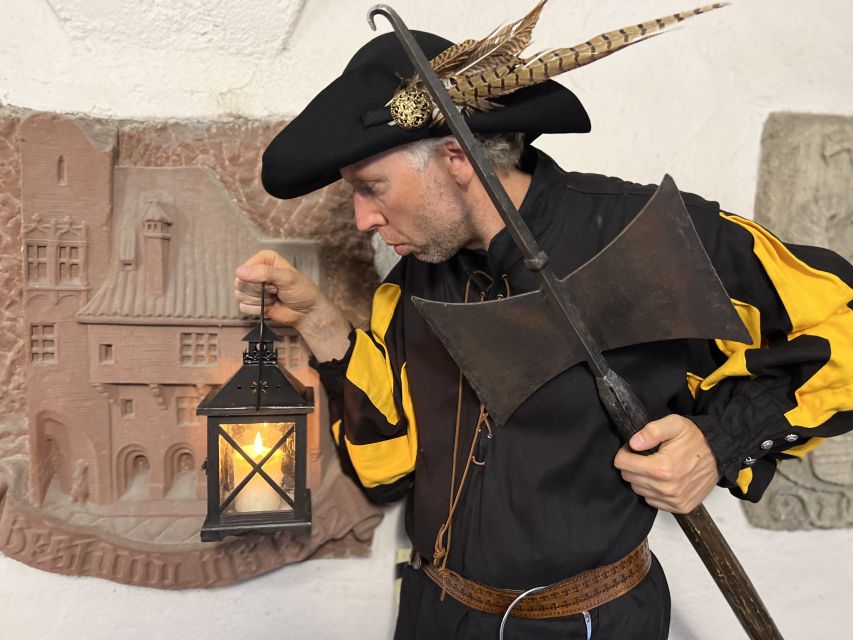
From the Alter Hof, the route follows sections of the 12th-century city walls and heads west from Wasserburg. These remnants help you picture Munich as a fortified settlement rather than only the elegant center you see today.
At Gruftgasse, the watchman tells the spooky story of Waller in Walchensee, a young woman, and her golden ring. The tale adds folklore to the walk and gives the lane its own identity.
I like this sort of stop because it rewards attention to small streets. You may not remember every date or name, but you will remember that an ordinary-looking passage carried a story about a young woman and a valuable ring.
The mood changes again in Schäfflergasse, where you learn why wine, rather than beer, was the preferred drink in the Middle Ages. That detail is especially useful in Munich, a city now strongly associated with beer. The old preference reminds you that local food and drink habits are not fixed forever.
The watchman’s answer to the question of Munich’s many taps is simple: beer. It is a small joke, but it captures the character of the tour. The material is historical, yet it is delivered with a wink.
Frauenkirche and the stories above the street
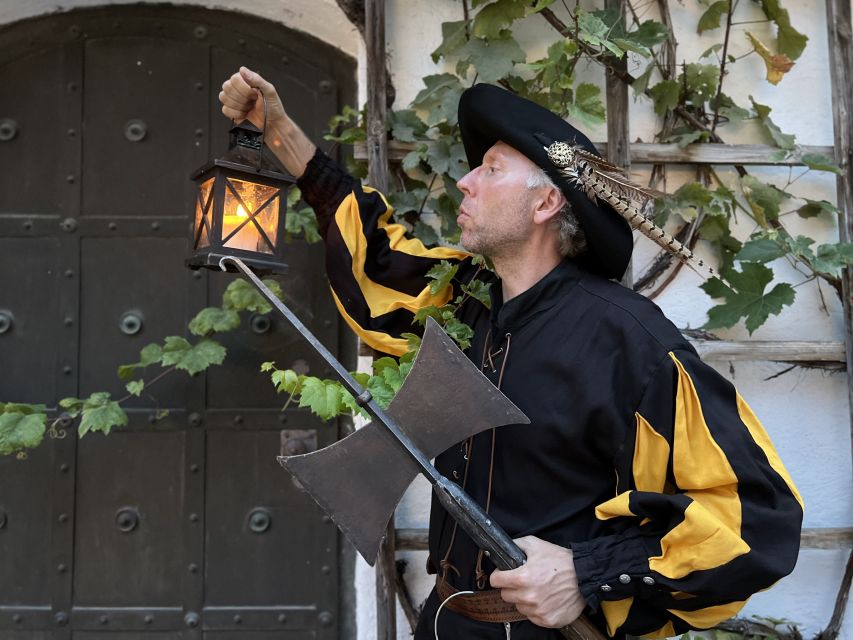
At the cathedral, look up toward the two towers, symbols of Munich. The route uses the Frauenkirche not only as a major landmark but also as a stage for personal stories.
You hear about the epitaph of a wealthy widow and the unlucky fall of Fanny von Ickstatt from the north tower. These accounts bring scale to the cathedral. Its towers are not just city symbols. They are places connected with individual lives, accidents, memorials, and grief.
The Fanny von Ickstatt story is particularly suited to a night walk because it changes the way you look at the tower. Instead of seeing only a grand church facade, you are asked to consider the human danger and drama attached to it.
This is also a good point to judge your own interest in the tour’s tone. The stories can be funny, but many involve death, fear, punishment, or misfortune. The guide uses charm and theatrical delivery, yet the subject matter is not always gentle.
Promenadeplatz, royal palaces, and a mistress
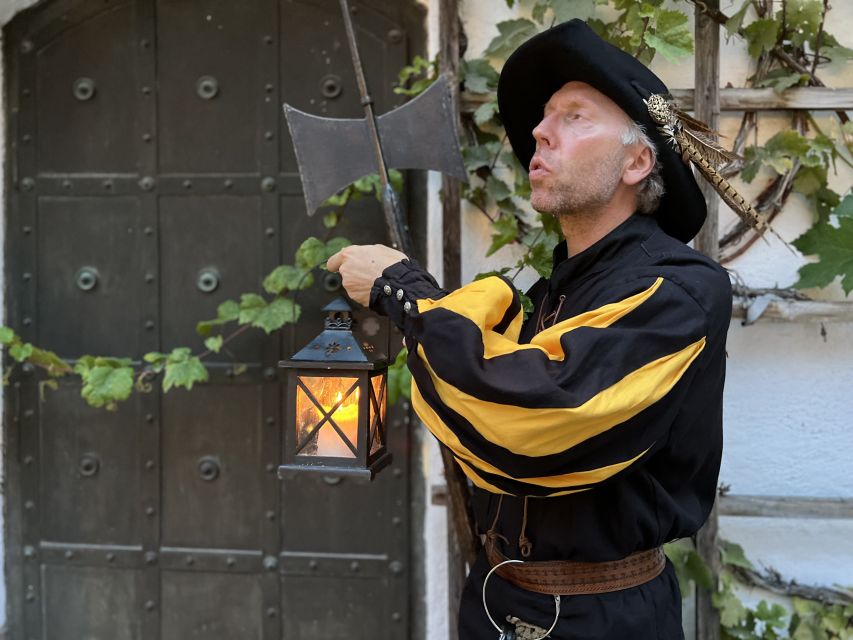
As the inner-city portion draws toward its close, the night watchman continues to Promenadeplatz and the old Salzstadel. The route passes Palais Porcia and Palais Holstein, adding court life and royal scandal to the evening.
Here you hear about the sovereign Karl Albrecht and the palaces built for his mistress. This is exactly the sort of story that works well on a walking tour. You are standing beside grand buildings, then learning about the private ambitions and relationships that shaped them.
The palace section gives the tour a broader social range. Earlier, you heard about prisoners, saints, churchyards, and city gates. Now the focus shifts to rulers and their lavish surroundings. Munich’s old town begins to look less like a collection of monuments and more like a place where power, religion, trade, and personal drama all occupied the same few streets.
I would pay attention to the guide’s style here. The facts are useful, but the presentation makes the difference. The best moments come when the watchman lets the building speak, scolds the modern age, or treats an old scandal as fresh news.
Salvatorkirche and the Theatine Church
The final section moves to the Salvatorkirche, where the watchman tells the story of a major host desecration. This is sensitive religious material, and the tone may feel darker than the earlier beer jokes and city-gate complaints.
The walk then turns to the love story of Henriette Adelaide and Ferdinand Maria, the electoral prince. Their long wait for an heir becomes the reason behind the Theatine Church. After 10 years, the desired heir was born, and the church was built to mark the event.
This ending gives the tour a fitting shift from anxiety to relief. The evening has included sudden death, dangerous towers, prison, torture, and grim churchyard customs. The Theatine story closes the route with dynastic hope and a major piece of Munich’s religious architecture.
The night watchman finally releases his herd into the night and returns to his rounds. It is a theatrical finish, but it also keeps the central idea intact: the city belongs to the watchman after dark.
What the price means for your group
The listed price is $530 for a group of up to 30 people. That is not a low-cost individual tour, so I would calculate the cost based on your party size.
For two people, the price is difficult to justify unless you place a high value on a private, character-led experience. For a family group, wedding party, school group, or reunion, the calculation improves considerably. At the full group limit, the cost works out to less than $18 per person before any booking fees or other charges.
The fixed group price also means the experience may feel more personal than a large public tour, depending on the option you choose. A private group allows your party to share the same jokes and stories without being mixed with strangers. The tour also offers free cancellation up to 24 hours before the start and a reserve-now, pay-later option, which can help when your Munich plans are still moving.
Food, drinks, and transport are not included. That is not a major problem because this is a walking tour through the old center, but you should plan your route to and from the meeting point. The meeting point can vary by booking option, so check it carefully before setting out.
Who will enjoy this night walk?
I would recommend the tour to you if you like history delivered through character and storytelling rather than a formal lecture. It suits adults, older children who can handle spooky themes, and groups looking for an evening activity beyond a restaurant or beer hall.
It is particularly useful on a repeat visit to Munich. You can use a daytime visit for museums and major interiors, then return at night for lanes, legends, and overlooked details.
You should think twice if you want a quiet walk with little performance. The night watchman may chastise the group, exaggerate his medieval identity, and speak in a deliberately old-fashioned manner. That is the point, but it will not suit everyone.
The tour is wheelchair accessible, and live guiding is available in German and English. Since no transport is included and the route moves through the old town, confirm the meeting point and accessibility details for the exact option you book.
Should you book Munich’s Night Watchman Tour?
Book it if you want Munich’s old center to feel like a place of watchmen, saints, royal quarrels, grim churchyards, and whispered legends. The strongest parts are the guide’s personality, the varied route, and the way familiar landmarks gain new meaning after dark.
The main question is value. At $530, this is best for a larger private group rather than a couple traveling on a tight budget. If your group can share the cost, the lively delivery from guides such as Alois or Elsbeth makes the price easier to accept. If you prefer dates, architecture, and calm explanation without theatrical touches, choose a more conventional city walk instead.
FAQ
How long does the Munich Night Watchman Tour last?
The tour lasts 1.5 hours.
How much does the tour cost?
The price is $530 per group of up to 30 people.
Is the tour private?
A private group option is available.
Which languages are offered?
Live guiding is available in German and English.
Is the tour wheelchair accessible?
Yes, the activity is listed as wheelchair accessible.
Are food, drinks, or transport included?
No. Food, drinks, and transport are not included.
Can I cancel the tour for a full refund?
Yes. You can cancel up to 24 hours in advance for a full refund.
New routes in Munich
- Munich: Walking Tour Old Town and Viktualienmarkt★ 4.7 · 839 reviews
- Munich: Raven Black Witches and Executioners Walking Tour★ 4.7 · 294 reviews
- Munich Old Town – Guided Walking Tour in English★ 4.7 · 153 reviews
- Munich: Old Town Guided Walking Tour★ 4.6 · 479 reviews
- Munich : Private Walking Tour with A Guide (Private tour)★ 4.5 · 85 reviews
- Munich: Birthplace of the Third Reich Guided Walking Tour★ 4.6 · 771 reviews
- Munich: Guided Food Walking Tour with Beer Tasting★ 4.7 · 183 reviews
- Munich: Old Town Walking Tour★ 4.7 · 589 reviews
Munich Walking Tours, compared.
Old Town & Viktualienmarkt City Walk in German
Read our review →
Munich Ghosts and Spirits Evening Walking Tour
Read our review →

Birthplace of the Third Reich Guided Walking Tour
Read our review →
Discover Munich 2-Hour Small Group Walking Tour
Read our review →
Raven Black Witches and Executioners Walking Tour
Read our review →
Browse the lists this tour appears in