
Review · LIVERPOOL
A Walk Through Time: History of Liverpool Walking Tour
Liverpool’s story makes more sense when you walk it in sequence. This tour links the Three Graces, medieval Liverpool, the old cotton trade, Liverpool Castle, the world’s first commercial wet dock, and Royal Albert Dock in one compact route. You are not just ticking off landmarks. You are following the rise of a small port into a global trading city.
I like the way the walk puts Liverpool’s docks and commerce at the center, rather than treating the city as only a Beatles destination. I also like the low price of $27.74, especially with guides such as John and Julio offering detailed local storytelling. The main drawback is pace: almost two hours of history, often outdoors and near the river, can feel fast in cold or windy weather.
Key points to know before you book
- Liverpool’s growth is the main story: The walk connects medieval origins, Atlantic trade, cotton, docks, commerce, and modern redevelopment.
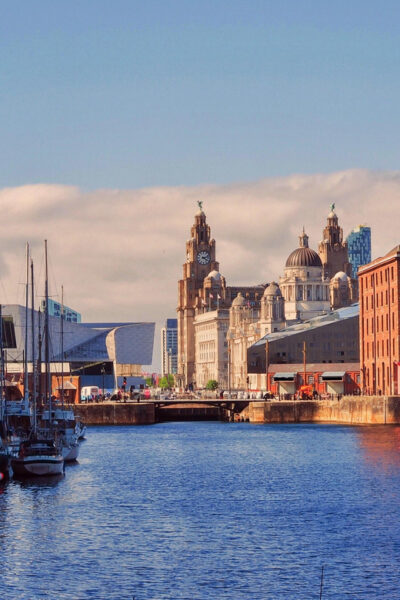
- The Three Graces frame the experience: You begin at the Royal Liver Building and return to Liverpool’s waterfront story at the end.
- John is a passionate local guide: His talks cover a large amount of material, with humor and clear explanations, though he can speak quickly.
- The route includes the Old Dock: This 1715 site marks a major change in Liverpool’s success as a port.
- You stay outdoors for nearly two hours: Wear comfortable shoes and bring a warm coat, especially when wind comes off the Mersey.
- It is a strong first-day orientation: The route gives you a useful map of central Liverpool before you explore individual museums and landmarks.
Why this Liverpool walk is more than a landmark checklist
At $27.74 per person, this is priced as an affordable orientation walk rather than a premium private tour. You get nearly two hours with a historian guide and see a wide spread of central sights without paying separate entry fees along the way.
That value depends on what you want. If you prefer museum interiors, long stops, or time for photographs, this route may feel too brisk. If you want the story that links Liverpool’s buildings together, I think the cost is fair. The city’s waterfront can look like a series of handsome facades until someone explains how docks, warehouses, cotton, shipping, war, and trade fit together.
The tour is offered in English with a mobile ticket. Groups can reach 40 people, so the experience may not always feel intimate. Guides are expected to speak clearly, and John is praised for being heard even with traffic nearby, but one recorded experience found the pace difficult to follow. Stay close to the guide and ask questions when needed.
More History Walking Tours in the UK
- A History of Terror – Belfast City Centre Walking Tour
★ 5.0 · 2,883 reviews - Edinburgh: Old Town History and Tales Walking Tour
★ 4.8 · 2,361 reviews - Old Town Walking Tour History and Tales in Edinburgh
★ 5.0 · 2,168 reviews
Starting beneath the Royal Liver Building
The walk begins at the Liver Building on Pier Head, one of the Three Graces. This is an excellent starting point because the waterfront immediately gives you Liverpool’s visual identity: grand commercial buildings facing the river and the historic port beyond.
The opening section introduces the Three Graces and sets up the central question of the tour: how did Liverpool grow from a medieval settlement into a major port city? The guide uses the buildings as a doorway into that story rather than treating them as isolated photo stops.
You spend about 10 minutes here. Admission to the Royal Liver Building is not included, so this is an exterior introduction rather than a tower visit. If you want to go inside or visit another attraction later, plan that separately.
The waterfront can be windy, even when the rest of central Liverpool feels mild. I would arrive with your coat already on, not folded into your bag. The meeting point is the Liver Building, Pier Head, Liverpool L3 1HU.
Finding Liverpool’s medieval beginning
From Pier Head, the route crosses the Strand toward Liverpool Parish Church Gardens. Here, the focus shifts sharply from grand port architecture to the city’s earliest foundations.
The site was once known as St. Nicholas’ Church, named for the patron saint of the sea. That name fits the tour’s wider theme, since Liverpool’s identity has long been tied to ocean trade and international shipping. This stop is also used to explain Liverpool’s creation in the 13th century, beginning around 1207.
You spend about 15 minutes here, and admission is free. The value of this stop comes from seeing primary physical evidence of the city’s medieval origins rather than hearing only a broad date in a lecture. You start to understand that today’s commercial center grew from a much smaller settlement.
Do not expect a large medieval district preserved around you. The point is to identify what remains and understand its place in the modern city. The guide’s explanation matters more here than the visual scale of the site.
Old Hall Street and the hard story of trade
Old Hall Street brings the tour into Liverpool’s commercial rise. The street dates from the 13th century and is linked with the old town hall after Liverpool received its town charter. You then pass Grade I listed buildings and reach the Cotton Exchange, a place tied to trade from across the world.
This is one of the most important parts of the walk because it deals with Liverpool’s prosperity in a direct way. By the late 18th century, Liverpool had overtaken London in the cotton trade. The guide also addresses the city’s role in Atlantic trade, including its involvement in the transatlantic slave trade.
That discussion is essential. A history walk about Liverpool’s port should not present commercial success as a simple tale of clever merchants and fine buildings. The money behind the city’s growth was connected to exploitation, forced labor, and global systems that caused immense suffering.
The stop lasts about 10 minutes, which means the guide has to cover a lot in a short time. John’s style is reported as detailed and fast-moving. If you want more time on this subject, note the location and return later for a slower look at Liverpool’s museums and historic sites.
Same streets, a different guide:
- Magical London: Harry Potter Guided Walking Tour
★ 4.7 · 22,044 reviews - Edinburgh: Harry Potter Magical Guided Walking Tour
★ 4.8 · 11,944 reviews - Edinburgh Castle: Guided Walking Tour with Entry Ticket
★ 4.7 · 11,699 reviews - Underground Vaults Walking Tour in Edinburgh Old Town
★ 4.5 · 8,506 reviews
Liverpool Town Hall and Georgian power
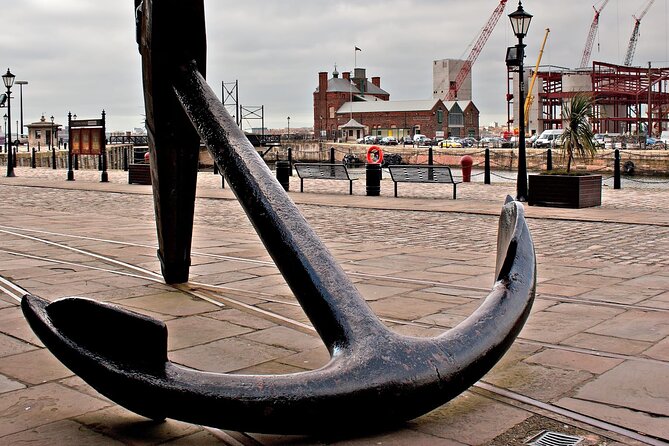
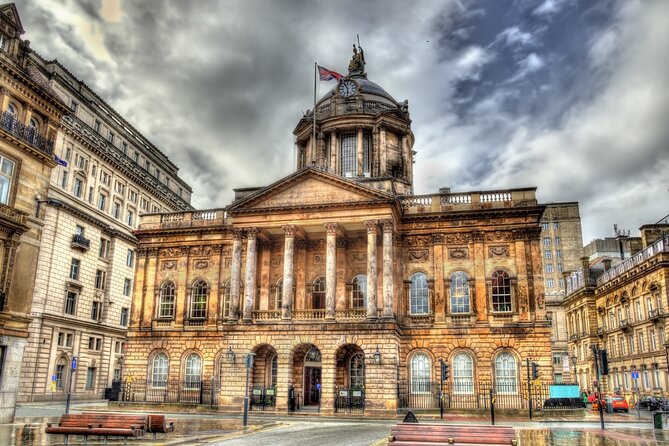
The next stop is Liverpool Town Hall, built in 1749. It is described as the finest surviving Georgian building in the United Kingdom, and the tour uses it to explain Liverpool’s development as a global port and center of commerce.
You spend about 10 minutes here. Admission is not included, so the focus is on the outside and on the building’s role in the city’s civic life. This makes a useful contrast with the docks. Liverpool’s wealth did not only create warehouses and shipping facilities. It also funded civic buildings that expressed confidence, status, and ambition.
The guide gives an academic account of the building, but the tone is not strictly formal. John is also praised for humor and for making difficult subjects accessible. That combination should suit you if you like facts delivered as a story rather than as a list of dates.
Castle Street, Liverpool Castle, and the city’s expansion
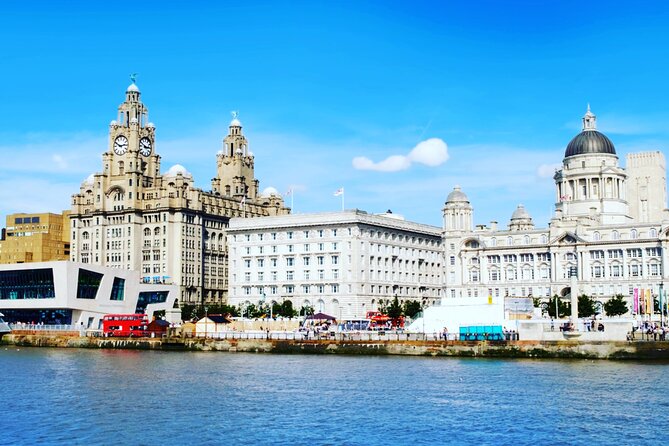
Castle Street offers one of the clearest visual examples of Liverpool changing over time. Its buildings show the city’s development through the 18th century, while the name points back to Liverpool Castle and an earlier period of defense and civic power.
The walk spends around 15 minutes here. You hear why Castle Street mattered and how the former castle fits into Liverpool’s rise. The architecture becomes a kind of timeline, with later buildings occupying spaces shaped by earlier uses.
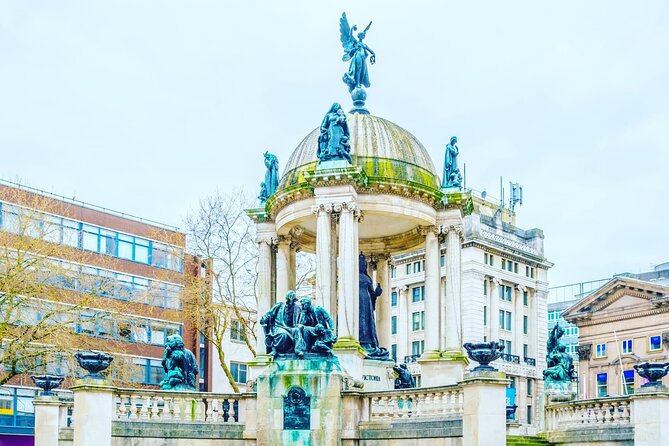
At the Queen Victoria Monument, the guide continues the story of Liverpool’s growth. This section connects the castle site with the city’s rise as one of the world’s largest ports for global trade by 1800.
The published route gives 10 minutes at the monument. The supplied meeting details also identify the Queen Victoria Monument at One Derby Square as the end point, while the route description continues on to Liverpool ONE, the Old Dock, and Royal Albert Dock before describing a final return to the Three Graces. Because those details do not fully match, confirm the exact end point and route timing before setting out.
Liverpool ONE and the modern city
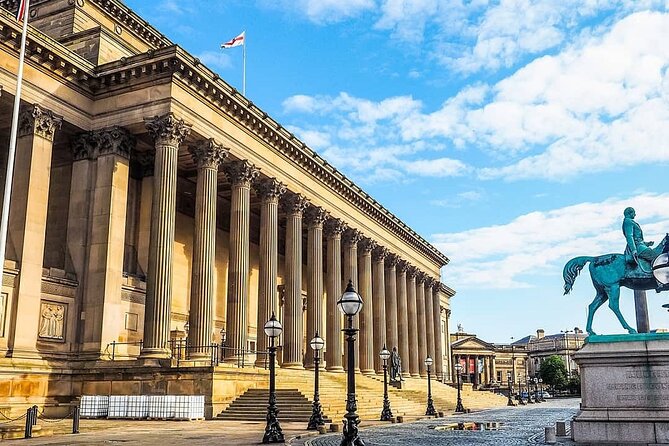
The walk then moves through Liverpool ONE, the modern shopping and leisure district. This is not an ancient monument, but it has a place in the city’s timeline. Here, you see how central Liverpool has been reshaped for modern retail, entertainment, and public use.
The guided section lasts about 10 minutes. You can expect an overview of the destination, its shops, and its attractions rather than time to browse. That is important: this is a history walk, not a shopping tour. If you want to buy something or stop for coffee, do it after the walk unless the guide allows extra time.
I like this modern stop because it prevents the tour from ending in the 19th century. Liverpool is not only a preserved port. It is also a living city that has reused and rebuilt parts of its center.
The Old Dock and Liverpool’s commercial breakthrough
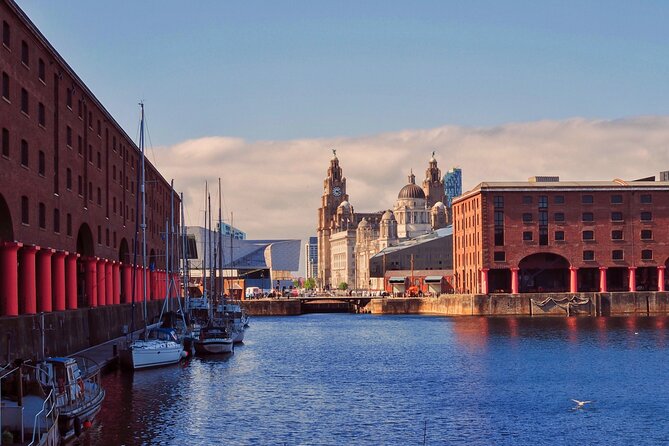
The Old Dock is the tour’s strongest single historical stop. Built in 1715, it was the first commercial wet dock on the planet. The guide explains how this dock helped Liverpool become a more efficient port and changed the scale of its trade.
A wet dock allowed ships to remain afloat regardless of the tide. That practical advantage mattered. It helped Liverpool handle goods and ships with greater control, supporting its growth into a major international port.
The stop lasts about 10 minutes and admission is free. Since the dock is a historic site within a modern city setting, the guide’s explanation gives you the context that may not be obvious from the remains alone.
This is also where the tour’s economic story becomes easiest to follow. Medieval origins, cotton exchange, Atlantic commerce, civic wealth, and dock engineering are not separate topics. They are stages in the same transformation.
Royal Albert Dock and the 19th-century port
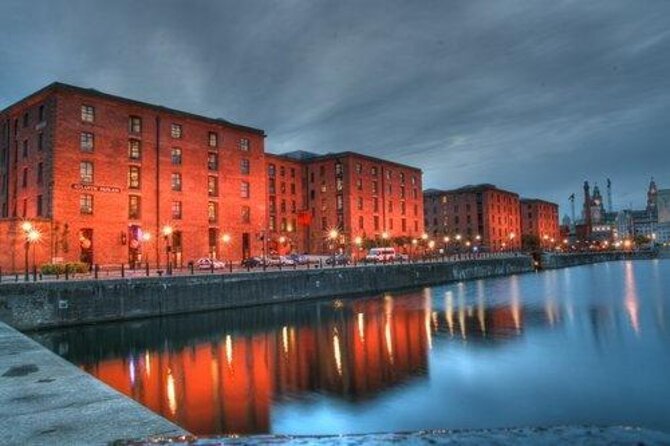
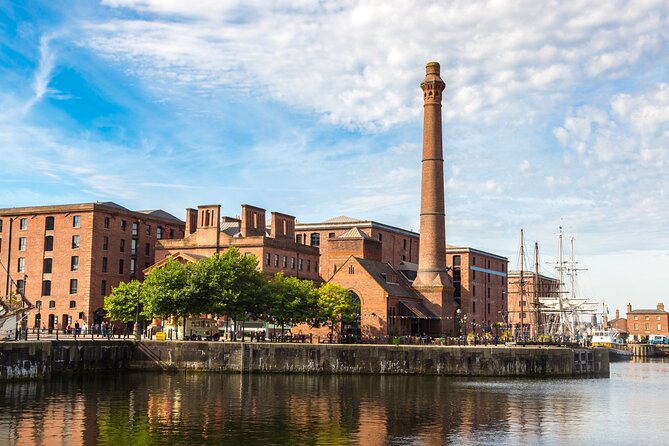
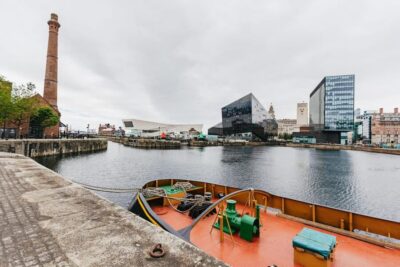
Royal Albert Dock takes you into the 1800s. Built in 1846, it became a major center of Liverpool’s commerce during the 19th century. The guide also covers the city’s significant involvement in the First and Second World Wars.
The stop lasts about 10 minutes and is free to visit. The dock is one of the most rewarding places on the route for photographs, but the tour is not designed as a museum visit. You will get a guided historical explanation, then continue.
This part of the walk shows how Liverpool’s waterfront changed as shipping and trade expanded. It also reminds you that docks are not just attractive buildings. They were working places tied to cargo, industry, military supply, and global conflict.
If you later visit the museums around Royal Albert Dock, the earlier tour stops should help you place what you see. You will have a clearer sense of why the dock was built and how it fit into Liverpool’s wider commercial system.
Ending with the Three Graces
The route description returns to the Three Graces for a final look at Liverpool’s waterfront. The closing section lasts about five minutes and brings the story back to the Royal Liver Building, the Cunard Building, and the Port of Liverpool Building area.
That circular structure works well. You begin with Liverpool’s grand waterfront, move backward to medieval origins, follow the city’s commercial growth, and return to the buildings that symbolize its port-era confidence.
The exact endpoint needs checking because the meeting information separately names the Queen Victoria Monument at the bottom of Castle Street. Either way, both locations are central and useful for continuing your day. Ask the guide at the start where the group will finish.
The guide makes or breaks this walk
The clearest strength of the experience is the guide-led storytelling. John is repeatedly described as passionate about Liverpool and able to connect the city’s past with its present. He has enough material to keep local residents learning, which suggests that the walk is not limited to basic facts.
Julio is also identified as an engaging and well-informed guide who provides a strong introduction to the city. If your guide is John or Julio, expect a talk with plenty of detail and room for questions.
There is a tradeoff. The amount of information can be heavy for a short walk, and one person found the guide spoke too quickly. Traffic, wind, and outdoor acoustics can also affect how easy it is to hear. Stand near the guide, avoid drifting to the rear, and ask for a point to be repeated.
The guide’s treatment of Liverpool’s less comfortable past is another strength. You hear about Atlantic trade and the slave trade alongside the city’s commercial achievements. That balance gives you a more honest understanding of Liverpool.
Price, timing, and who will enjoy it
The $27.74 price is good value if you want a broad introduction to Liverpool’s central history. You see many key sites, pay no separate admission for the walk itself, and receive nearly two hours of guided explanation.
The tour is booked about 19 days ahead on average, so popular dates may fill well before your visit. Confirmation is provided at booking, and the mobile ticket is convenient for a day of sightseeing.
You should allow for a full 1 hour 50 minutes, even though individual stops are short. The route includes walking between locations, and some sections may feel fast. Comfortable shoes matter more than smart clothes.
This walk suits:
- First-time visitors who want a clear introduction to central Liverpool
- History fans interested in ports, trade, commerce, and urban growth
- Visitors who want context before exploring Royal Albert Dock or city museums
- Local residents who want a fuller account of their own city
- People who prefer a guide with plenty of facts and local stories
It may not suit you if you need frequent seating, want extended time inside buildings, or prefer a small private group. Groups can reach 40 people, although some departures may be smaller.
Most people can take part, and service animals are allowed. The experience is near public transportation. Because the route depends on good weather, poor conditions can lead to a different date or a full refund.
Should you book A Walk Through Time?
Book this walk if you want Liverpool’s waterfront to make sense. The strongest parts are the links between the medieval settlement, the Old Dock, cotton and Atlantic trade, civic wealth, and the later waterfront buildings.
I would choose it early in a Liverpool visit, ideally before spending time at Royal Albert Dock or the Three Graces. You will get more from those places after hearing how they fit into the city’s growth.
Skip it if you want a gentle stroll with long photo breaks or an indoor museum experience. The material is dense, the pace can be quick, and river weather can be unpleasant. For most visitors interested in the real forces behind Liverpool’s rise, though, the price is reasonable and the coverage is unusually broad.
FAQ
How long does the history walking tour last?
The tour lasts approximately 1 hour and 50 minutes.
Where does the tour begin?
The meeting point is the Liver Building at Pier Head, Liverpool L3 1HU, United Kingdom.
Where does the tour end?
The meeting information gives the Queen Victoria Monument at One Derby Square, James Street, Liverpool L2 1AB, as the end point. The route description also refers to a final return to the Three Graces, so confirm the endpoint with the guide at the start.
What language is the tour offered in?
The tour is offered in English.
How much does the tour cost?
The listed price is $27.74 per person.
Is admission to the buildings included?
Admission is not included for the Royal Liver Building or Liverpool Town Hall. The other listed stops have free admission.
What group size should I expect?
The tour can have a maximum of 40 people.
Is the tour suitable for most people?
Most people can participate. The tour is near public transportation, and service animals are allowed.
What happens if the weather is poor?
The experience requires good weather. If it is canceled because of poor weather, you will be offered another date or a full refund. You can also cancel for a full refund up to 24 hours before the start time.
New routes in the UK
- Aberdeen City Centre Walking Tour (2pm)★ 5.0 · 217 reviews
- German London : The Ultimate Walking tour★ 4.8 · 400 reviews
- London: Medieval History Walking Tour from The Tower★ 4.9 · 318 reviews
- Oxford: Official University and City Walking Tour★ 4.7 · 618 reviews
- The Beatles London Walking Tour★ 4.2 · 147 reviews
- Stratford-Upon-Avon’s Town Walking Tour (10:30am & 2pm)★ 4.8 · 143 reviews
- The Sinister Side of Shakespeare’s Stratford Walking Tour★ 4.8 · 547 reviews
- Stratford-Upon-Avon: The Famous Walk Talk Show★ 4.9 · 342 reviews
Liverpool Walking Tours, compared.
Beatles Famous Walking Tour Of Liverpool- Fully Guided
Read our review →
Browse the lists this tour appears in