Review · BOSTON
Boston: Freedom Trail History Small Group Walking Tour
Boston’s Freedom Trail is best understood on foot, one story and one brick-lined street at a time. This small-group tour follows the trail from Boston Common through the historic center and into the North End, linking the American Revolution to the ordinary people who had to choose between loyalty and rebellion.
I like the manageable group size, capped at 15, and the guide-led storytelling. I also like the useful midway pause at Quincy Market, where you can use the restroom or grab a drink. The main drawback is simple: you will walk about 2 miles outdoors, and Boston weather can be rough. Winter tours have continued through freezing temperatures and snow, but you need proper shoes and clothing.
Key points at a glance
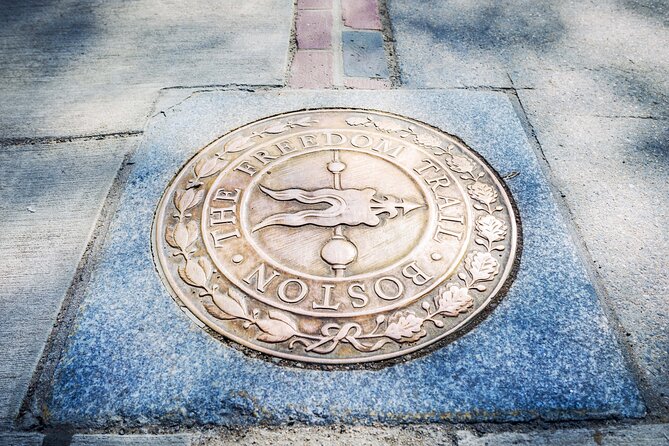
- Sixteen official Freedom Trail landmarks: See the full official route, from Boston Common to Copp’s Hill Terrace.
- A compact group of 15 or fewer: You can hear the guide more easily than with a large flag-following crowd.
- Strong storytelling rather than a list of dates: Guides including Maura, Nick, Cyrus, Alejandro, and others bring competing viewpoints and Revolutionary myths into the discussion.
- A useful North End finish: End near Old North Church, Italian restaurants, the USS Constitution views, and Bunker Hill Monument views.
- About 2 miles and up to 3 hours: The advertised duration is 150 minutes, though the actual pace may vary.
- Good value at $35: You get a guided walk through Boston’s core historic district, but museum admissions and gratuity are extra.
Why this Freedom Trail walk works so well
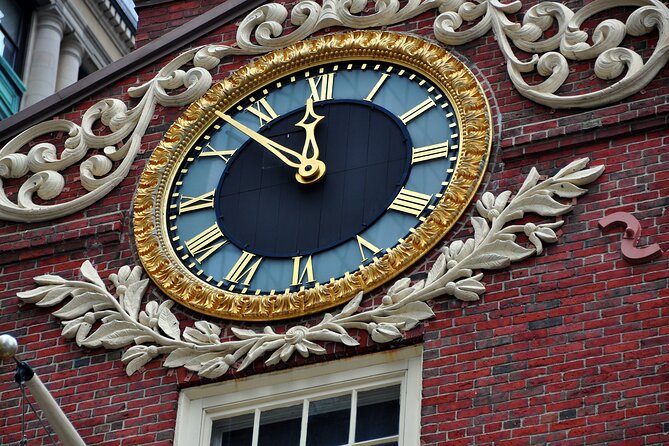
The Freedom Trail is easy to follow on your own. A red line runs through Boston, and most major sites are close together. The challenge is understanding what you are seeing. A burying ground can look like a quiet patch of old stones, while a meeting house can seem like another handsome colonial building. A good guide gives each place a role in the larger argument that led to revolution.
That is the useful part of this tour. The guide frames Boston’s story around a tense 15-year period, when colonists argued about taxes, royal authority, public protest, and armed resistance. You hear about famous names, but you also get the local setting that made their choices matter.
The strongest praise for the tour centers on the guides’ delivery. Maura is repeatedly singled out for combining history, personal stories, humor, and a warm manner. Nick is praised for presenting the period with balance and for separating popular legends from the record. Cyrus, Alejandro, Zoe, Jon, Maz, and several other guides are also described as energetic and clear.
That variety matters because the experience depends heavily on the person leading it. The route is fixed, but the emphasis can change. You may get extra details about Paul Revere, a closer look at the Boston Massacre story, or a lively explanation of how Boston’s neighborhoods changed over time.
More History Walking Tours in Boston
- Boston: Freedom Trail History Small Group Walking Tour
★ 5.0 · 6,450 reviews - Boston Pizza Lovers Food and History Walking Food Tour
★ 4.5 · 1,082 reviews - Boston History Tour: Scenic Walk Through Time & Landmarks
★ 5.0 · 627 reviews
From Boston Common to Granary Burying Ground
Meet inside Boston Common at the Boston Foundation Monument, on the park’s northern edge opposite 50 Beacon Street. The granite memorial shows two men shaking hands, tied to the arrival of the Puritans in 1630. It is a quieter meeting point than a busy street corner, though you should allow time to locate the monument inside the park.
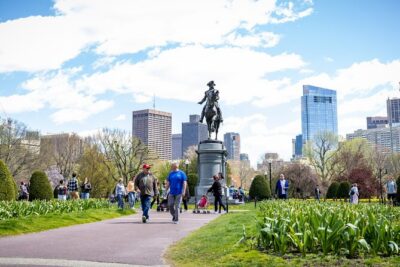
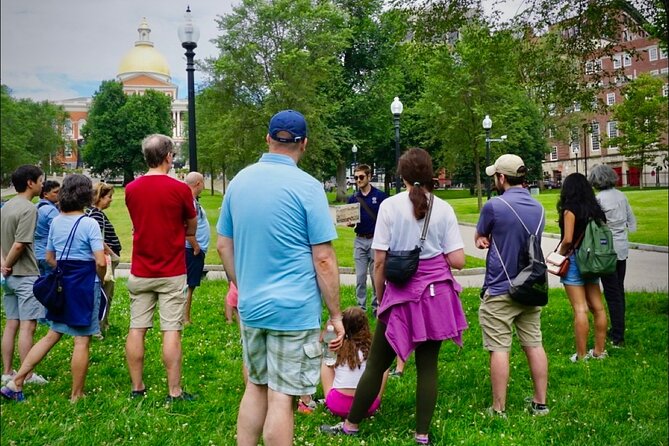
Boston Common is where the Freedom Trail begins. You spend about 15 minutes here, learning how this open space fit into colonial Boston and how the trail connects the city’s public places. The park also gives you an early sense of scale. Boston’s historic core is compact, but it is full of overlapping stories.
From there, the route passes the Massachusetts State House and Park Street Church. The State House is one of the city’s most recognizable buildings, while Park Street Church helps place the walk in the religious and civic world of early Boston. These are guided stops rather than interior visits, so the value comes from what your guide points out and explains from the street.
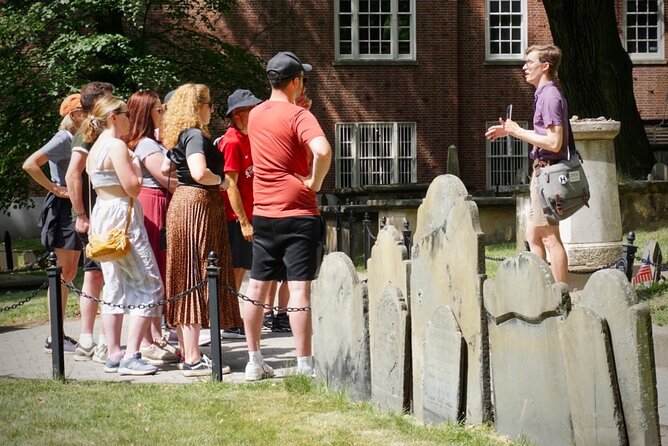
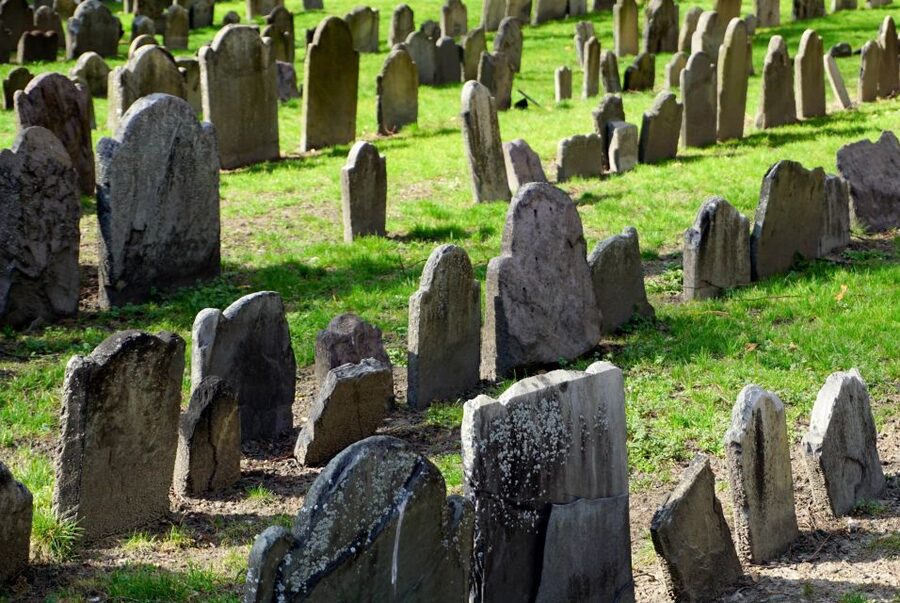
Granary Burying Ground receives about 25 minutes, one of the longer stops. This is where you find the final resting places of Samuel Adams, Paul Revere, John Hancock, and other important figures. You will get more from the cemetery if you look closely at the carved stones and listen for the connections between the people buried there.
The setting also provides a useful reminder: the Revolution was not only a story of generals and famous speeches. Boston was a close, argumentative town, and its political life played out in churches, meeting halls, streets, and family businesses.
Churches, schools, and the making of public opinion
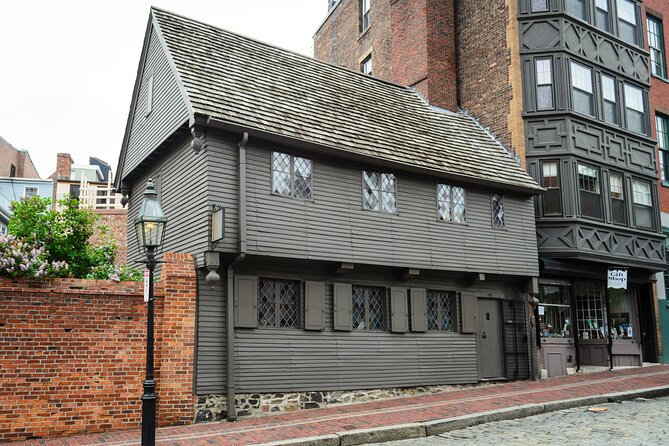
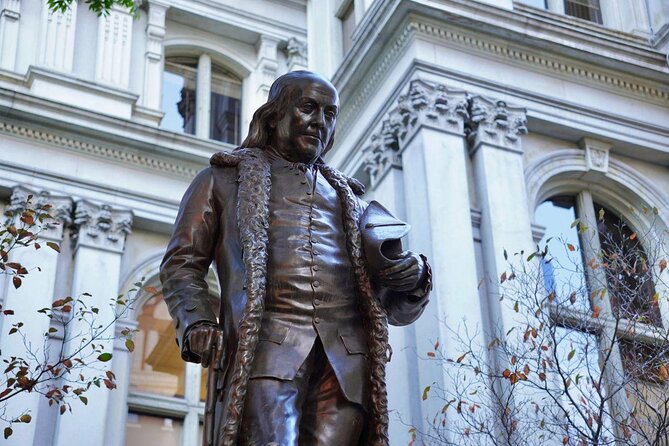
King’s Chapel comes next, followed by the site of Boston Latin School and the Benjamin Franklin statue. The school stop lasts about 10 minutes and links the colonial city to education and civic life. Franklin’s connection to Boston gives the guide another chance to explain how a local figure became part of the wider American story.
You then pass Old City Hall and the Old Corner Book Store. These stops are brief, but they help you read downtown Boston as a layered place rather than a collection of isolated monuments. Modern streets and offices surround buildings tied to colonial politics, publishing, and public debate.
At Old South Meeting House, you spend about 10 minutes. This is one of the most important places on the route because it served as a gathering point for colonists protesting British policy. The building helps explain how crowds formed, how news spread, and how public meetings could turn political frustration into direct action.
The tour focuses on the setting and exterior route. Admission inside museums is not included, so you should not expect a museum visit at every stop. That keeps the walk within its 150-minute target, but it also means you may want to return later if a particular building catches your interest.
The Old State House and the Boston Massacre Site
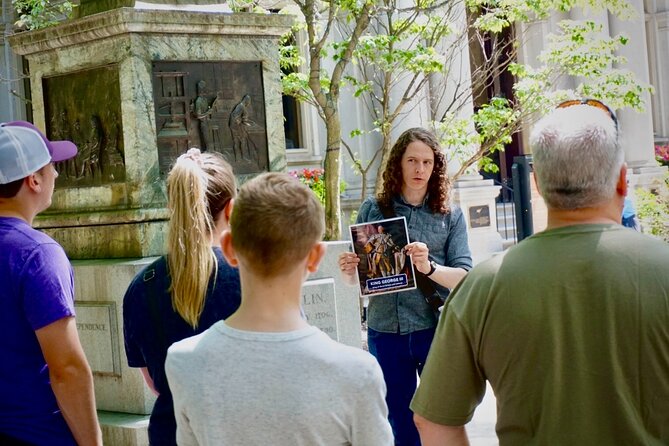
The Old State House is one of the emotional centers of the walk. Your guide explains its place in colonial government and then brings you to the Boston Massacre Site nearby. Here, the story becomes less tidy than the familiar schoolbook version.
The term Boston Massacre itself was part of a political battle. Different sides described the shooting in different ways, and the event became powerful propaganda for those opposing British rule. One of the best features of the guiding style here is the willingness to discuss those competing interpretations instead of handing you a simple hero-and-villain story.
A British history teacher on one tour particularly valued this balanced treatment, especially the effort to test popular myths and put the shooting into context. You should still expect the subject to be presented within the larger story of colonial resistance, but the stop is handled as history, not just patriotic pageantry.
The Boston Massacre stop lasts about 15 minutes. It is a good place to ask questions, though the sidewalks and traffic in this part of downtown can make it harder to gather around the guide. The small group helps, especially compared with the much larger groups that often move along the Freedom Trail.
More History Walking Tours in the USA
- Boston: 2-Hour Historic Walking Tour
★ 4.7 · 88 reviews - History and Hauntings of Salem Guided Walking Tour
★ 5.0 · 14,564 reviews - Historic Charleston Guided Sightseeing Walking Tour
★ 5.0 · 6,216 reviews - Savannah History and Haunts Candlelit Ghost Walking Tour
★ 5.0 · 3,235 reviews
Faneuil Hall, Quincy Market, and the route into the North End
Faneuil Hall gets a shorter stop of about five minutes. Its importance is out of proportion to the time spent there, since the building became a key place for public meetings and political speech. The quick visit keeps the walk moving through the busy center of Boston.
Quincy Market is the halfway break, listed at about 10 minutes. This is practical rather than ceremonial. You can use the restroom and buy a drink before the second half, which matters on a long walking tour. You can also grab food later, but do not count on this short pause as a full meal break.
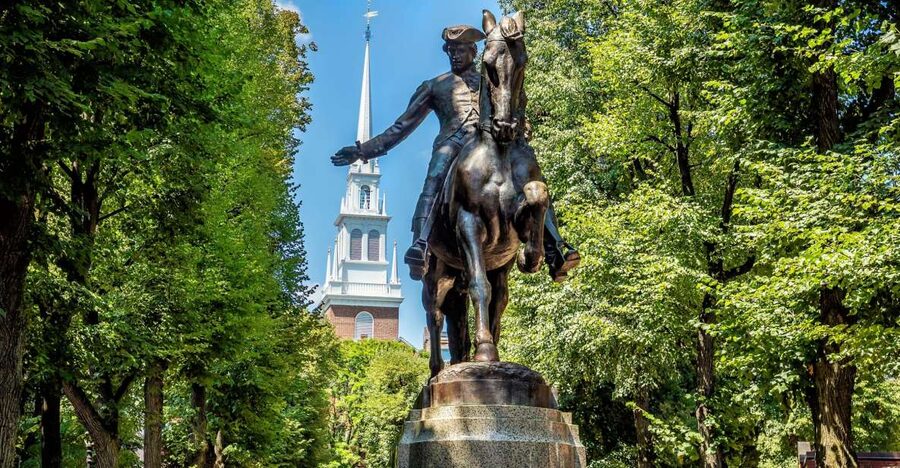
From here, the route enters the North End, where the streets feel narrower and the history becomes more personal. Paul Revere House is the oldest building on the Freedom Trail and an important stop in the story of the Revolution. The tour gives you about 15 minutes here, enough to place Revere in his neighborhood and discuss his role without turning the entire walk into a biography.
The guide then leads you along Hanover Street, the North End’s best-known restaurant street, before reaching the Paul Revere Statue. This is a natural moment to consider how much of Revere’s fame rests on the midnight ride and how much of the popular story has been simplified over time. Several guides have used small corrections, such as explaining that Revere did not complete the entire ride, to show how legends grow.
Old North Church, Copp’s Hill, and the final view
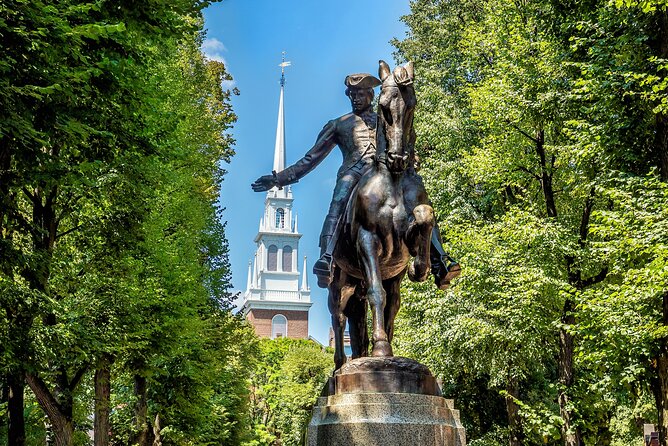
Old North Church receives about 10 minutes. The church is closely tied to the warning lantern signal and the events that sent Revere into the night. You see the place in relation to the North End streets, rather than treating the signal as a detached anecdote.
Copp’s Hill Burying Ground provides another look at early Boston’s people and institutions. The route then offers scenic views toward the USS Constitution and Bunker Hill Monument in Charlestown. Charlestown itself is not included, so you see those landmarks from a distance rather than crossing over to visit them.
The tour ends at Copp’s Hill Terrace, close to Old North Church and the North End’s Italian restaurants. This is a useful finish because you can continue with lunch or dinner without retracing your steps. The view also gives the full route a sense of place: the historic downtown behind you, the harbor and USS Constitution nearby, and Bunker Hill Monument across the water.
The final viewpoint is one of the tour’s practical strengths. You finish near food, further sightseeing, and public streets rather than being dropped in an unfamiliar part of the city. If your guide has a favorite restaurant, this is the time to ask. Several guides have also given specific local food recommendations, including North End pizza and bakeries.
What $35 gets you
At $35 per person, this is a good buy if you want a clear introduction to Boston’s history. You are paying for a live English-speaking guide, a route covering all 16 official Freedom Trail landmarks, and the convenience of having the city’s major sites explained in order.
The price does not cover entry into museums or historic interiors. That is not a major problem for a first walk, since paying for every building would add cost and time. Still, if your main goal is to explore Old South Meeting House, Paul Revere House, or another interior at length, plan a return visit and budget separately.
The group limit is important. The Freedom Trail can attract very large groups, especially around the Old State House and Faneuil Hall. A group of 15 or fewer makes it easier to hear the guide and ask questions. It also gives the experience a more personal feel without making it a private tour.
You can cancel up to 24 hours before the start for a full refund, and you can reserve without paying immediately. Those terms are useful if your Boston schedule depends on weather or changing plans.
Walking conditions, weather, and accessibility
Bring comfortable shoes. The route covers roughly 2 miles, or 3.2 kilometers, with frequent stops and city sidewalks. The tour is listed as lasting 150 minutes, but the full experience can take up to three hours depending on the guide, questions, street conditions, and group pace.
Boston weather deserves respect. Winter bookings have gone ahead in snow and freezing temperatures, and one tour continued through a strong rainstorm. That shows the walk is not built around perfect weather, but it also tells you to dress for the day rather than assume the guide will shorten the route.
The activity is described as wheelchair accessible, while the same information says it is not suitable for people with mobility impairments or a low level of fitness. That is a meaningful contradiction. If you use a wheelchair or have trouble with long walks, contact the provider before booking and confirm the exact route, surfaces, stopping points, and restroom access.
Large luggage and large bags are not allowed, and video recording is not permitted. Bring only what you need for the walk.
Who should book this tour
I would choose this walk for a first visit to Boston, especially if you want history explained without spending a full day inside museums. It also suits families with older children, couples, solo visitors, and anyone who wants a strong orientation before exploring the city independently.
Children under six are not suitable for the tour. Younger children may also find the 2.5-hour pace and repeated historical stops difficult, even if they enjoy the outdoor setting.
History fans should appreciate the effort to question familiar stories. Visitors from outside the United States may find the chronological structure helpful, since the guide connects each site to the growing conflict instead of assuming you already know every name.
I would be more cautious if you dislike walking, need frequent indoor shelter, or want extensive time inside each landmark. This is a guided overview with depth in the storytelling, not a series of long museum visits.
Should you book it?
Yes, if you want to see the complete Freedom Trail in a compact group and understand why each stop matters. The strongest reason to book is the combination of route coverage and guide quality. Maura, Nick, Cyrus, Alejandro, Zoe, and other named guides have been praised for clear delivery, humor, balanced context, and real enthusiasm for Boston.
Book for the morning or early in your visit if possible, since the walk gives you a useful map of the historic center and ends in the North End. Wear shoes you can walk in for three hours, check the forecast, and keep the Quincy Market pause in mind as a drink and restroom stop rather than a full lunch.
Skip it if you want a slow, indoor tour or a private experience. At $35, though, this is an efficient and well-priced way to meet Boston’s major Revolutionary sites, hear the stories behind them, and finish with a good sense of where to continue on your own.
FAQ
Where does the Freedom Trail walking tour begin?
It begins inside Boston Common at the Boston Foundation Monument, on the northern boundary of the park opposite 50 Beacon Street, Boston, Massachusetts 02108.
Where does the tour end?
The tour ends at Copp’s Hill Terrace in Boston’s North End, near Old North Church and the area’s Italian restaurants.
How long does the tour last?
The stated duration is 150 minutes, or 2.5 hours. The tour can vary in length but will not exceed three hours.
How far do you walk?
The accessible route covers approximately 2 miles, or 3.2 kilometers.
How many people are in each group?
Groups are limited to a maximum of 15 guests.
Are all 16 Freedom Trail landmarks included?
Yes. The route covers all 16 official Freedom Trail landmarks, though some are viewed from outside and the tour does not include admission to museums.
Is admission to historic buildings included?
No. Admission inside museums and historic buildings is not included in the $35 tour price.
Is the tour wheelchair accessible?
The activity is described as wheelchair accessible, but it is also listed as unsuitable for people with mobility impairments. Contact the provider before booking to confirm that the route meets your needs.
What should you bring?
Bring comfortable shoes and clothing suited to the weather. Large bags and luggage are not allowed, and video recording is prohibited.
More Small-Group Walking Tours in Boston
- Amsterdam Anne Frank: Small-Group Walking Tour & Local Guide
★ 4.8 · 12,789 reviews - Barcelona Tapas and Wine Experience Small-Group Walking Tour
★ 5.0 · 5,804 reviews - Reykjavík Small group Walking Tour – by CityWalk
★ 5.0 · 5,076 reviews - Best of Lisbon Small-Group Guided Walking Tour
★ 5.0 · 4,869 reviews
More Small-Group Walking Tours in the USA
- The Full Revolutionary Story Epic Small Group Boston Walking Tour
★ 5.0 · 2,356 reviews - Boston: Full Revolution Story Epic Small Group Walking Tour
★ 4.9 · 132 reviews - New Orleans Food Walking Tour of the French Quarter with Small-Group Option
★ 5.0 · 6,118 reviews - Hidden Alleyways and Historic Sites Small-Group Walking Tour
★ 5.0 · 2,335 reviews
New routes in Boston
- Cambridge, Massachusetts: MIT and Harvard Walking Tour★ 4.7 · 486 reviews
- Boston: Full Revolution Story Epic Small Group Walking Tour★ 4.9 · 132 reviews
- Boston: Salem by Boat – Witch Trials & Walking Tour★ 4.3 · 263 reviews
- Boston: 2-Hour Historic Walking Tour★ 4.7 · 88 reviews
- Boston: North End Pizza Walking Tour with 3 Slices & Cannoli★ 4.8 · 162 reviews
- Boston: Freedom Trail Guided Walking Tour in French★ 4.9 · 106 reviews
- Self Guided Classic Freedom Trail Location Aware (GPS) Walking Audio Tour★ 4.5 · 258 reviews
- Boston History Tour: Scenic Walk Through Time & Landmarks★ 5.0 · 627 reviews
Boston Walking Tours, compared.
Freedom Trail History Small Group Walking Tour
Read our review →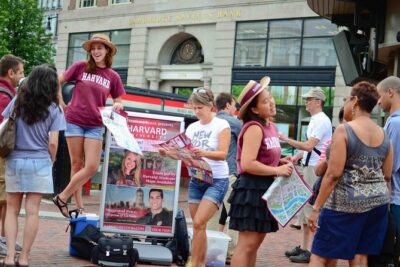
Harvard University Campus Guided Walking Tour
Read our review →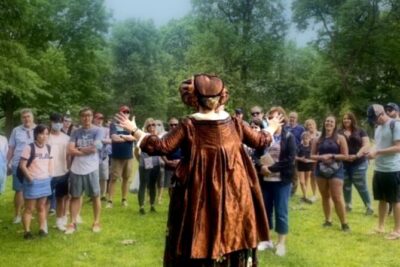
Boston Freedom Trail Walking Tour with Costumed Guide
Read our review →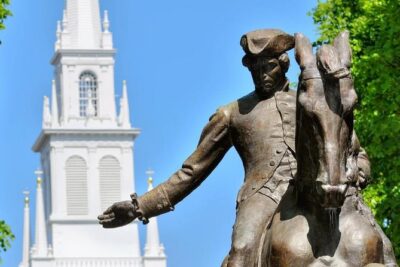
The Full Revolutionary Story Epic Small Group Boston Walking Tour
Read our review →
Boston North End Food Tour of 6+ Tastings, Cannoli, Lobster Roll
Read our review →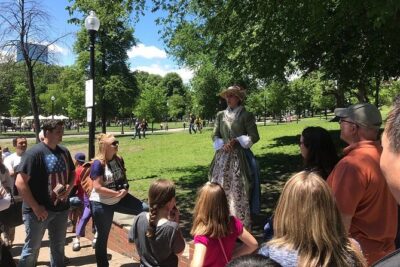

Boston Pizza Lovers Food and History Walking Food Tour
Read our review →