
Review · BOSTON
Boston’s Freedom Trail: A Revolutionary Walking Tour
Boston’s Freedom Trail is at its best when the city becomes your history book. This 2.5-hour walking tour links the Old State House, Paul Revere’s neighborhood, the Old North Church, the USS Constitution, and Bunker Hill in one steady route. You hear about famous rebels, but also women, African Americans, immigrants, and the lesser-known people who helped shape Boston.
I like the way the guides turn a long list of monuments into a connected story, and I like the value: $31 covers a live guide and the full walking tour, while many of the historic sites can be viewed from outside without extra tickets. The main drawback is the pace and distance. You cover a lot of ground, and one guide may speak quickly, which can be hard to follow if English is not your first language.
Key points at a glance
- All 16 official Freedom Trail sites: See the major landmarks in one outing, from the State House to Bunker Hill Monument.
- Strong storytelling: Guides including Rob, Kenneth, Alissa, Matthew, Charlie R, and Stewart are praised for humor, clear explanations, and lively delivery.
- Important Boston burial grounds: Visit Granary Burying Ground and Copp’s Hill Burying Ground, with connections to John Hancock, Paul Revere, and Samuel Adams.
- Revolutionary flashpoints: Stand near the Boston Massacre Site, Old South Meeting House, Old North Church, and Faneuil Hall.
- Useful first-day orientation: The route introduces central Boston and can help you decide which sites deserve a return visit.
- Bring walking shoes: This is an active city walk, not a seated sightseeing tour, and attraction entry is not included.
Starting at The Embrace on Boston Common
Meet your guide at The Embrace statue, beside the Boston Common Visitor’s Center at 139 Tremont Street. The statue is easy to use as a landmark, but give yourself a few minutes to find the exact meeting spot inside the Common. Your guide will carry a Boston History Company flag and will not be dressed in period costume.
That practical detail matters. Costumed guides can be fun, but they are not always easy to identify in a crowded city park. A company flag gives you a clear visual marker, especially if several walking tours are gathering nearby.
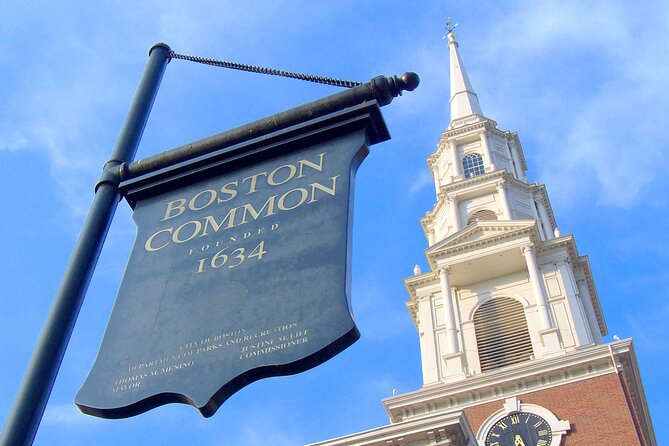
The opening on Boston Common also sets up Boston’s story well. You are not being rushed straight into a single building. Instead, the tour begins in the public space at the heart of the city, then moves through the streets where political protest, trade, religion, and daily life overlapped.
The group then heads toward the Massachusetts State House, recognizable by its famous golden dome. You may not enter every building, so think of this tour as a guided walk through the city’s historic core rather than a series of indoor museum visits.
More Walking Tours in Boston:
- Boston: Freedom Trail History Small Group Walking Tour
★ 5.0 · 6,450 reviews - Harvard University Campus Guided Walking Tour
★ 4.5 · 3,632 reviews - Boston Freedom Trail Walking Tour with Costumed Guide
★ 4.5 · 2,531 reviews
Park Street Church and the first Boston landmarks
Park Street Church is one of the early landmarks on the route. From here, the guide begins placing Boston’s religious and civic buildings into the larger story of the city.
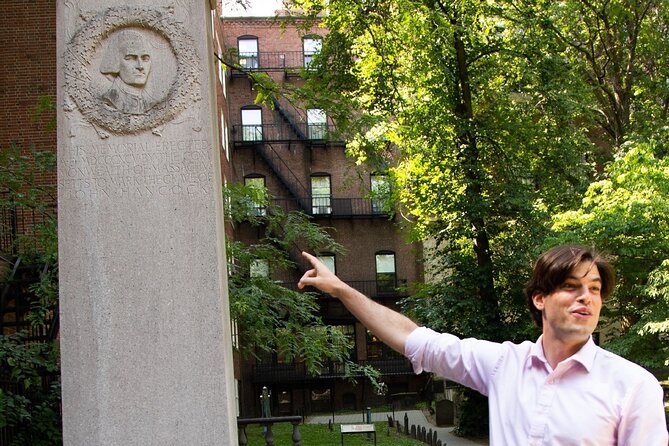
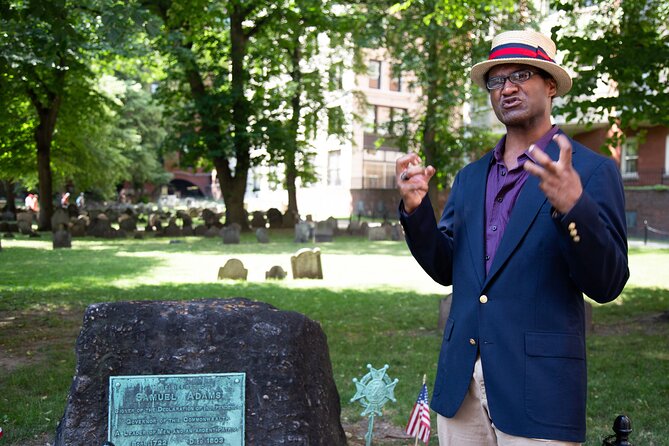
The nearby Granary Burying Ground is one of the most important stops. Its gravestones connect the revolutionary era to people you have likely heard about, including John Hancock and Samuel Adams. Paul Revere is also remembered along the route through Boston’s burial grounds and North End landmarks.
A guide adds value here because a cemetery can otherwise become a quick photo stop. You get names, connections, and a sense of how close Boston’s major political figures lived, worked, worshiped, and were buried.
The tour also reaches King’s Chapel, another reminder that Boston’s early story was not shaped by one political view or one religious group. The buildings along this part of the route are close together, but the stories are not always simple. Your guide helps separate the famous names from the broader changes taking place around them.
The Franklin statue and Boston’s publishing quarter
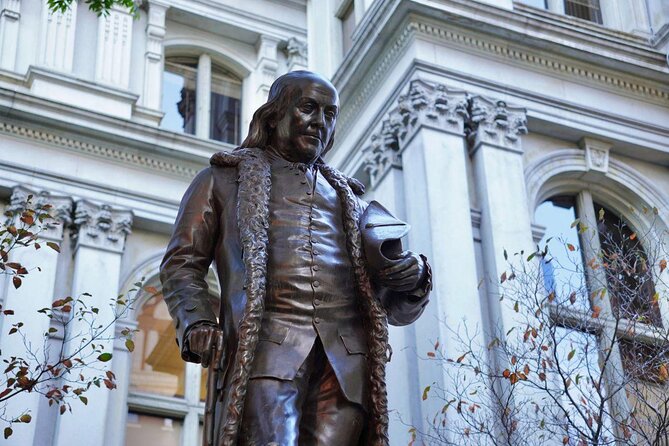
The Benjamin Franklin Statue offers a useful pause in the walk. Franklin was born in Boston and became one of the best-known American thinkers, printers, and political figures of the revolutionary period.
Near it, the Old Corner Bookstore helps shift the story from politics to printing and public debate. Boston’s revolutionary arguments spread through meetings, pamphlets, newspapers, and speeches. The city’s book and printing trades helped turn local disputes into ideas that could travel far beyond one street.
This is one of the tour’s better features: it does not treat the Revolution as a string of battles alone. You hear about the communication networks and public spaces that allowed people to argue, organize, and persuade.
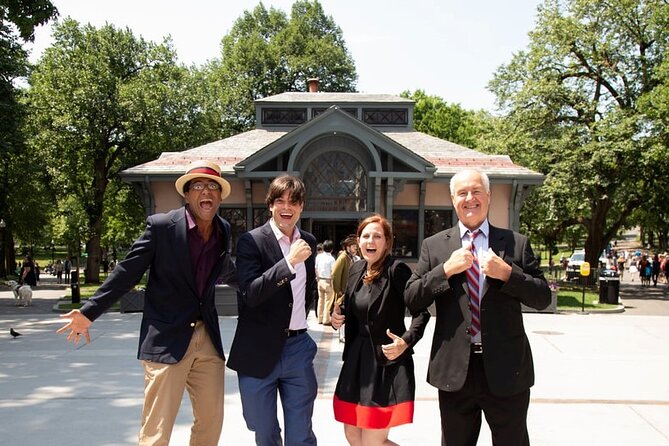
The guide’s delivery makes a real difference here. Rob, Kenneth, Alissa, Matthew, Charlie R, and Stewart are among the guides praised for using humor and personal energy to keep the route moving. You may get a few dad jokes along the way, but they serve a purpose. Two and a half hours of dates and names can become tiring, and a light touch helps the information stick.
Old South Meeting House and the road to protest
At the Old South Meeting House, the tour reaches one of the key settings for the Boston Tea Party story. This was a place where large public meetings could gather, debate, and make decisions.
You learn how public anger over British taxation built toward direct action. The building is valuable even from the outside because the guide explains how its size and public role made it central to Boston’s political life.
Entry tickets are not included, so you should not assume the walking tour takes you inside every attraction. If the interior interests you, treat the tour as an introduction and plan a separate visit if time and opening hours allow.
Next comes the Old State House, one of Boston’s most striking historic buildings. It represents the colonial government and later became linked to the new American political order. The contrast between the Old State House and the newer Massachusetts State House helps you see how Boston’s civic center changed over time.
Same streets, a different guide:
- The Full Revolutionary Story Epic Small Group Boston Walking Tour
★ 5.0 · 2,356 reviews - Boston: Freedom Trail History Small Group Walking Tour
★ 4.9 · 1,590 reviews - Boston North End Food Tour of 6+ Tastings, Cannoli, Lobster Roll
★ 5.0 · 1,404 reviews - Boston’s Freedom Trail: A Revolutionary Walking Tour
★ 5.0 · 1,343 reviews
The Boston Massacre Site and Old State House

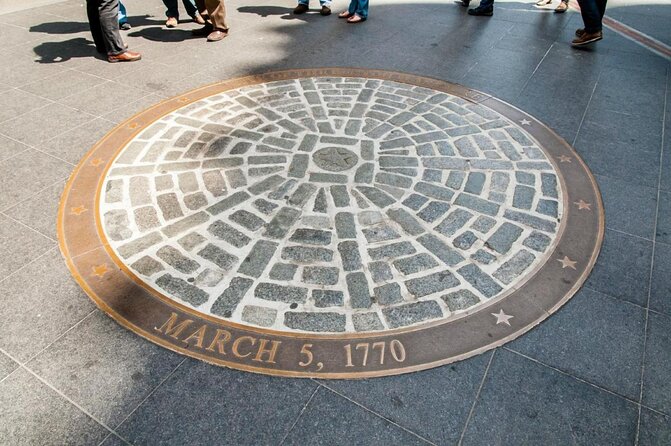
The Boston Massacre Site is marked in the street near the Old State House. This is where the tour’s storytelling becomes especially useful, since the location itself is not a large monument.
The guide explains the confrontation between British soldiers and Boston residents, and how the deaths were used in political arguments on both sides. The word massacre carried enormous force in colonial propaganda. Standing at the site helps you understand why the incident became a major step toward open conflict.
This stop also shows why a guided walk is worth considering. You could pass the marker on your own without realizing how much political work was done through images, speeches, and printed accounts of the event.
The guide will likely encourage questions throughout the walk. Kenneth is noted for answering detailed questions and for offering suggestions about other Boston neighborhoods, restaurants, and bars. That sort of conversation can make the tour useful beyond the formal route, especially if you are still planning the rest of your stay.
Faneuil Hall and the voices of the city
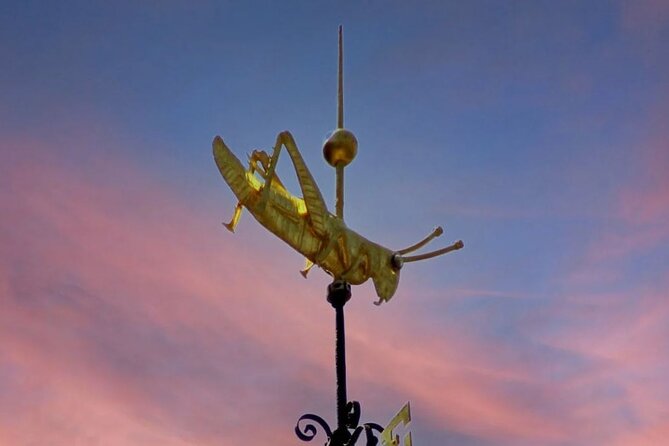
The route continues to Faneuil Hall, often called the Cradle of Liberty. It was a meeting place where Boston’s political arguments became public and forceful.
The hall is also a good place to widen the story beyond the best-known white male leaders. The tour includes women, African Americans, immigrants, and lesser-known patriots and pioneers. That broader framing matters because the Revolution and Boston’s later reform movements involved more people than the names on the standard schoolbook list.
The tour also touches on Boston’s role in abolition, American education, and immigration. These subjects help connect the revolutionary period to the city’s later identity. You are not only hearing about 1775. You are seeing how Boston continued to shape national debates.
Faneuil Hall can be crowded, and the surrounding area is active with pedestrians. Stay close to your guide and listen for the Boston History Company flag when the group moves on.
Paul Revere House and the North End
The Paul Revere House brings the story into Boston’s North End. Revere is one of the most famous figures on the Freedom Trail, but the tour places him in a real neighborhood rather than leaving him as a single dramatic name.
The building and surrounding streets show that revolutionary Boston was a lived-in place. Families, craftsmen, merchants, sailors, and immigrants occupied the same compact part of the city. You get a better sense of the crowded urban setting that shaped the movement of information and people.
This is also a section where the city itself becomes part of the tour. The North End has a different feel from Boston Common and the government district, and walking between those areas lets you watch the city change around you.
The Paul Revere House has its own admission charge, so the tour price does not cover entry. If you want to go inside, ask the guide about timing. The full route is already tightly planned, and a separate visit may be the better choice.
Old North Church and the two lanterns
The Old North Church is one of the most recognizable Freedom Trail stops. Its steeple is associated with the signal that used two lanterns to indicate the British army’s route by sea.
The familiar phrase about one lantern by land and two by sea is often presented as a neat moment of suspense. Your guide can add the people and circumstances behind that signal, making the story less like a slogan and more like a risky act carried out in a tense city.
This stop is especially memorable because the building has a strong visual presence. You can see the steeple from nearby streets, and the tour explains why it mattered to the Midnight Riders and the wider network of colonial resistance.
As with other major attractions, entry is not included. The walking tour gives you the setting and the story. A separate interior visit is possible only if your schedule allows.
Copp’s Hill Burying Ground and the city’s divided loyalties
At Copp’s Hill Burying Ground, the route returns to the subject of memory and burial. Paul Revere is connected with this part of the Freedom Trail, and the cemetery provides another view of Boston’s early population.
The stop is not just about famous graves. Burial grounds reveal who lived in the city, how people marked status, and how much of Boston’s early story survives in names carved into stone.
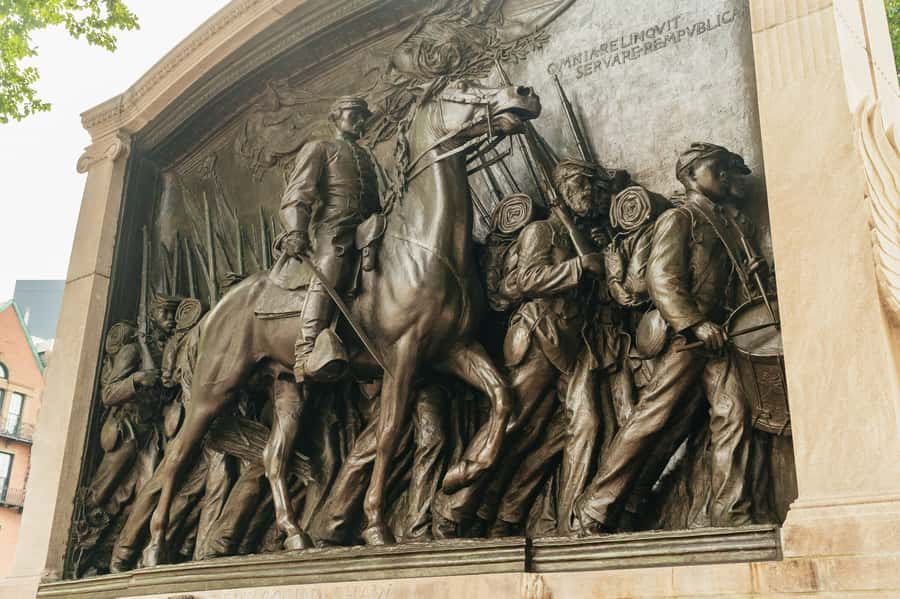
The tour also gives room for stories about people who do not appear as often in standard Freedom Trail summaries. That includes women, African Americans, immigrant communities, and people whose work supported Boston’s political and commercial life without earning them a statue.
If you have mobility concerns, take the walking conditions seriously. The activity is described as wheelchair accessible, but it is also marked as not suitable for people with mobility impairments. The safest approach is to confirm current route conditions before booking and to wear supportive shoes.
Charlestown, the USS Constitution, and Bunker Hill

The final stretch reaches Charlestown and the USS Constitution, often called Old Ironsides. The ship connects the revolutionary era to the early United States and later American naval history.
The route also includes Bunker Hill Monument, one of the clearest reminders that the Revolution was fought in and around Boston, not only debated in meeting halls. The monument marks the Battle of Bunker Hill, a major early clash in the war.
The tour promises the full set of official Freedom Trail sites in one outing, but do not expect an extended indoor visit aboard the USS Constitution or a long climb inside Bunker Hill Monument. Attraction admission is not part of the $31 price, and the schedule is designed to connect the sites in 2.5 hours.
This final section may be the most demanding physically. You have already crossed much of central Boston, and the route continues into Charlestown. That distance is part of the value, since you see how the sites relate to one another, but it also explains why comfortable clothes, water, and good walking shoes are essential.
The activity information says the tour ends back at the starting point. That is useful if you are arranging transport or need to return to Boston Common. Still, ask your guide about the exact return timing if you have a tight connection or dinner reservation.
What the $31 price really covers
At $31 per person, this is a reasonable choice if you want structure, context, and a guide who can turn scattered landmarks into one story.
You are paying for a live English-speaking guide and a route covering all 16 official sites. You are not paying for admission to the Old State House, Paul Revere House, Old North Church, USS Constitution, or other attractions. That keeps the initial cost down, but you need a separate budget if interiors are important to you.
The price is especially fair for a first visit or a short stay. One strong guide can save you from spending hours reading plaques or stopping constantly to check a map. It also helps you recognize which places deserve a longer return visit.
The main variable is the guide. Alissa is praised for keeping a group engaged, Rob for combining history with humor, Kenneth for answering questions, and Charlie R for detailed and lively presentation. Other guides named in the feedback include Matthew, Malcolm, Noah, Jim, Sam, Jules, Megan, Stewart, and Julia.
You cannot choose your guide in advance from the information provided. That means you should book this for the route and format, not for one specific person. The consistently positive comments about many different guides are encouraging, but the experience still depends on delivery style and group dynamics.
Who should book this Freedom Trail walk?
I would choose this tour if you are visiting Boston for the first time, have limited time, or want a clear introduction before exploring on your own.
It also suits history fans who prefer stories to silent plaques. The route includes well-known events such as the Boston Tea Party and Boston Massacre, but it also makes room for abolition, education, immigration, and people left out of the usual patriotic version of the story.
It is a good fit for families and mixed-age groups if everyone can manage a long city walk. The guides use humor, questions, and anecdotes, which can help younger visitors stay focused.
I would think twice if you want long indoor visits, a slow photography walk, or a highly specialized military history tour. You also need to be comfortable with English, since the tour is offered in English only and one guide is specifically noted as speaking quickly.
Free cancellation up to 24 hours before the tour and the option to reserve now and pay later make the booking less risky. Still, check the exact starting time before committing, since the available times vary.
Should you book Boston’s Freedom Trail tour?
Book it if you want to see all 16 official sites in one guided walk and understand how the Boston Massacre, Tea Party, Paul Revere’s ride, the Old North Church, and Bunker Hill fit together.
The best reason to go is not simply the number of landmarks. It is the guide’s ability to make those landmarks talk to one another. At $31, that is a strong deal, provided you are ready for a brisk 2.5-hour walk and understand that attraction entry is extra.
Skip it if you already know Boston well and want to explore at your own pace. For most first-time visitors, though, this is an efficient and entertaining way to get your bearings, hear the human stories behind the famous names, and leave with a better plan for the rest of Boston.
FAQ
Where does the tour begin?
The tour begins at The Embrace statue beside the Visitor’s Center on Boston Common at 139 Tremont Street.
How do I identify the guide?
Your guide will carry a flag with the Boston History Company name. The guide will not be wearing a costume.
How long does the tour last?
The walking tour lasts 2.5 hours.
What language is the tour offered in?
The live tour is offered in English.
What does the $31 price include?
The price includes a live guide and the walking tour.
Are attraction entry tickets included?
No. Entry tickets to attractions are not included.
Which Freedom Trail sites are covered?
The route includes Park Street Church, Granary Burying Ground, King’s Chapel, the Benjamin Franklin Statue, Old Corner Bookstore, Old South Meeting House, Old State House, Boston Massacre Site, Faneuil Hall, Paul Revere House, Old North Church, Copp’s Hill Burying Ground, the USS Constitution, and Bunker Hill Monument. It also includes the Massachusetts State House and Boston Common area.
What should I bring?
Bring comfortable shoes, water, and comfortable clothing.
Is the tour wheelchair accessible?
The activity is described as wheelchair accessible, but it is also marked as not suitable for people with mobility impairments. Confirm the current route conditions before booking if accessibility is important for you.
Can I cancel for a full refund?
You can cancel up to 24 hours in advance for a full refund.
New routes in Boston
- Cambridge, Massachusetts: MIT and Harvard Walking Tour★ 4.7 · 486 reviews
- Boston: Full Revolution Story Epic Small Group Walking Tour★ 4.9 · 132 reviews
- Boston: Salem by Boat – Witch Trials & Walking Tour★ 4.3 · 263 reviews
- Boston: 2-Hour Historic Walking Tour★ 4.7 · 88 reviews
- Boston: North End Pizza Walking Tour with 3 Slices & Cannoli★ 4.8 · 162 reviews
- Boston: Freedom Trail Guided Walking Tour in French★ 4.9 · 106 reviews
- Self Guided Classic Freedom Trail Location Aware (GPS) Walking Audio Tour★ 4.5 · 258 reviews
- Boston History Tour: Scenic Walk Through Time & Landmarks★ 5.0 · 627 reviews
Boston Walking Tours, compared.
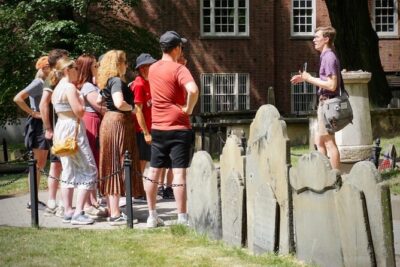
Freedom Trail History Small Group Walking Tour
Read our review →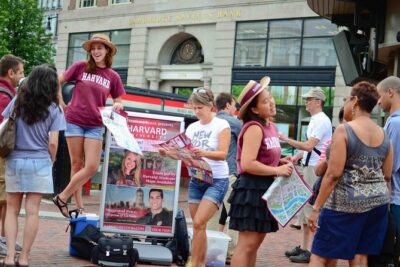
Harvard University Campus Guided Walking Tour
Read our review →
Boston Freedom Trail Walking Tour with Costumed Guide
Read our review →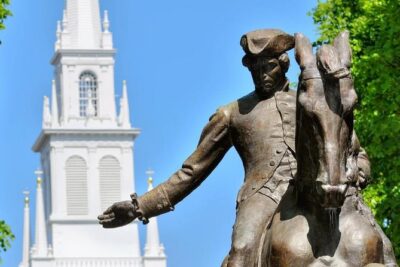
The Full Revolutionary Story Epic Small Group Boston Walking Tour
Read our review →
Boston North End Food Tour of 6+ Tastings, Cannoli, Lobster Roll
Read our review →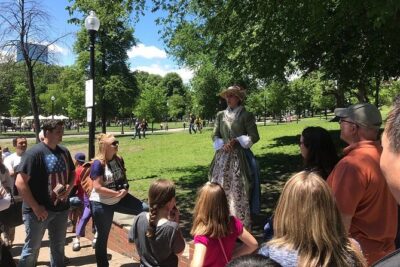

Boston Pizza Lovers Food and History Walking Food Tour
Read our review →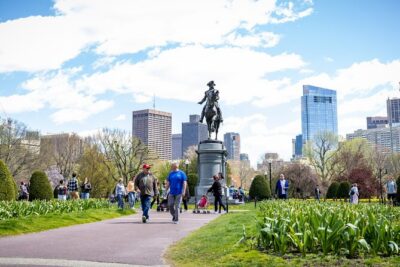
Boston History Tour: Scenic Walk Through Time & Landmarks
Read our review →Browse the lists this tour appears in