
Review · ITALY
Private St. Francis Basilica of Assisi and City Walking Tour
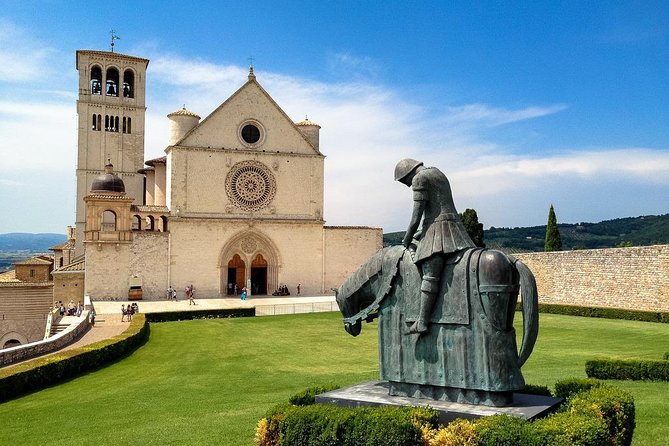
Assisi’s greatest sights tell one connected story: two young saints, Francis and Clare, reshaped medieval Christianity, and the town still preserves the places tied to their lives. This private walk brings that story together, ending with Giotto’s famous fresco cycle inside the Basilica of St. Francis.
I like the personal format and the range of stops. You see Clare’s church, Francis’ presumed birthplace, an ancient Roman temple, and both basilica churches in one morning. Guides such as Michele, Barbara, Marica, and Antonella are also able to adjust the pace and answer questions about art, Roman Assisi, food, or other churches.
The main drawback is time. Two and a half hours passes quickly, and the route includes moderate inclines. Guided access inside the Basilica of St. Francis is also restricted on Sundays, major Catholic holidays, national holidays, and from February 15 to April 6, 2026.
Key points to know before booking
- A private walk through Assisi’s religious heart: Only your group takes part, so the guide can shape the conversation around your interests.
- Five major stops in about 2.5 hours: The route covers Santa Chiara, Chiesa Nuova, the Temple of Minerva, and both the Lower and Upper Basilica of St. Francis.
- The frescoes get proper context: Your guide explains the art and the story behind Giotto’s cycle rather than leaving you with a quick look and a guidebook summary.
- Expect hills and stone streets: The walk includes moderate inclines, so comfortable shoes matter.
- Dress rules are strict: Knees and shoulders must be covered, with no shorts or sleeveless tops inside places of worship.
- Best for a focused first visit: At $145.12 per person, the tour makes most sense for couples, families, or small groups who value a private guide and efficient sightseeing.
Why this short Assisi tour works
Assisi is not a place where the major sights sit in one flat, tidy row. The town climbs the slope of Mount Subasio, and its churches, medieval lanes, Roman remains, and saintly landmarks can blur together if you are walking without context.
This tour gives you a clear thread. You begin with St. Clare, move to St. Francis’ family home, pause at the Roman Temple of Minerva, and then finish with the basilica built to honor Francis. The order helps you understand Assisi as a living religious town, not simply a collection of churches.
The private setup is important here. With only your own group, you can ask why Clare left her wealthy family, how Francis’ message developed, or what you are looking at in a particular fresco. Guides including Barbara, Marica Luciani, Michele, Patricia, and Antonella have been praised for explaining the religious, artistic, and local details in a clear way.
You should still think of this as a concentrated introduction, not a full-day exploration. The official length is about 2 hours and 30 minutes, and the scheduled visits give roughly 20 to 30 minutes to each major stop. That is enough for orientation and explanation, but not enough for a slow, silent look at every chapel.
More Private Walking Tours in Italy
- Private 3 hrs Venice Tour: St Mark’s, Walking tour & Boat tour
★ 4.0 · 3,372 reviews - Private Best of Venice Walking Tour with St Mark’s Basilica
★ 4.0 · 1,063 reviews - Venice: Private Walking Tour with a Local
★ 4.6 · 761 reviews
Starting at Santa Chiara with the story of St. Clare
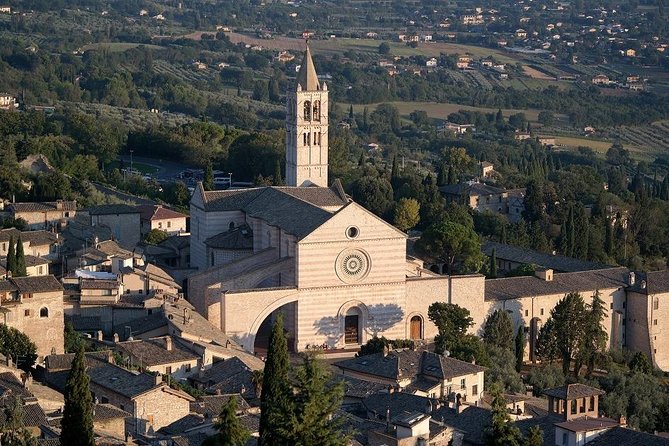
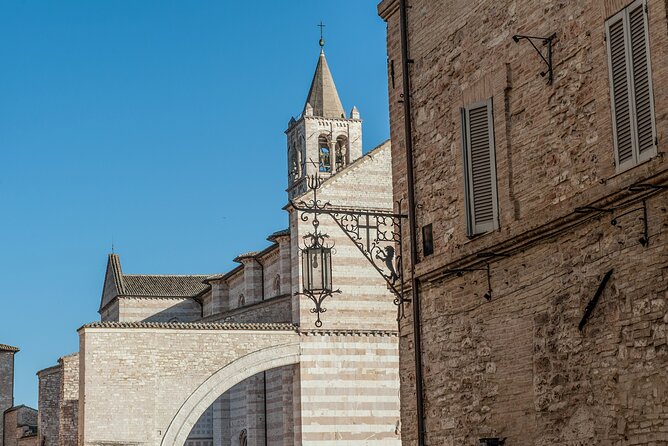
The meeting point is Piazza Santa Chiara at 10:30 in the morning. This is a sensible place to begin because the Basilica of Santa Chiara introduces one half of Assisi’s spiritual story before you turn to Francis.
The basilica holds the remains of St. Clare, Francis’ follower and the founder of the Order of Poor Ladies, now known as the Order of Saint Clare. Your guide can help connect Clare’s choices to the wider Franciscan movement, rather than treating her church as a brief stop on the way to the more famous basilica.
You have about 20 minutes here, with admission included. That is a short visit, but it gives the tour a useful balance. Assisi is often presented mainly through Francis, while Clare’s life and influence deserve equal attention.
The church is also a good reminder that this is a religious visit, not only an art walk. Dress appropriately from the start. Knees and shoulders must be covered for men and women, and shorts or sleeveless tops can lead to refused entry at places of worship.
Chiesa Nuova and Francis’ family home
The next stop is Chiesa Nuova, built in 1615 on the site traditionally identified as the birthplace of St. Francis. The location was once the home of Pietro di Bernardone, Francis’ father.
This stop gives the saint a more human setting. Before he became a religious figure, Francis was born into a prosperous merchant family. Seeing the church built over that presumed home helps you place his later rejection of wealth against the world he came from.
You spend around 20 minutes here, and admission is free. The church itself is not as famous as the Basilica of St. Francis, so the guide’s explanation matters. Without context, you could easily walk past it and miss why the site carries such weight.
I like this part of the route because it moves beyond grand monuments. The tour is not only about relics and painted walls. It also points to the streets and buildings connected with the early life of the town’s best-known saint.
The Roman Temple of Minerva in Piazza del Comune
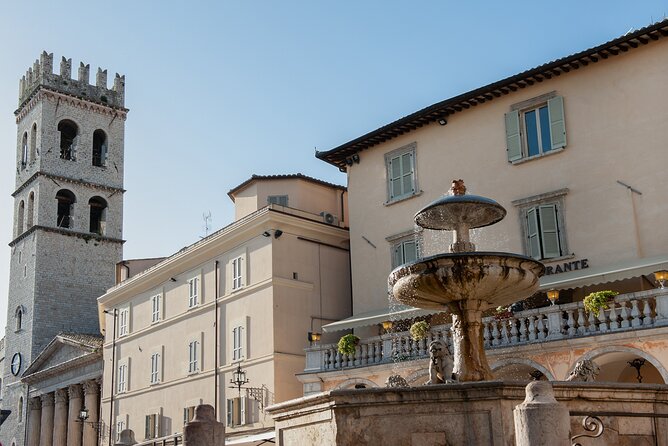
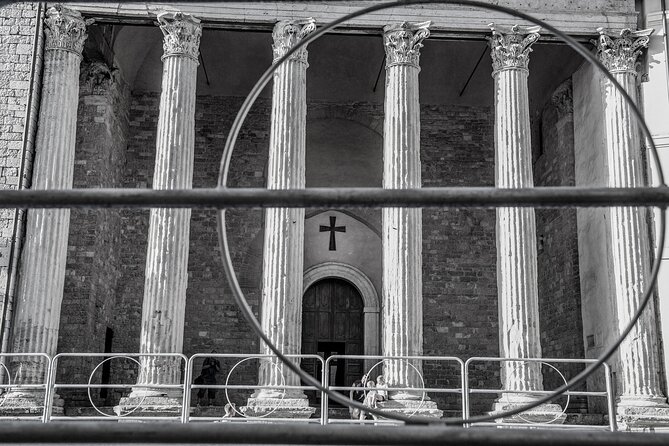
In Assisi’s main square, Piazza del Comune, you stop at the ancient Temple of Minerva. The Roman structure now contains the church of Santa Maria sopra Minerva, first built in 1539 and later renovated in Baroque style.
The contrast is the point. Within a few minutes, you move from Roman Assisi to a Christian church and then back into the medieval story of Francis and Clare. This layered use of the same urban space is one of the most interesting parts of Assisi.
You get about 20 minutes here, with no separate admission charge. Your guide can explain the surviving Roman form and the later church within it, helping you notice the difference between the ancient exterior and the religious interior.
This is also a useful pause in the walk. The square gives you a chance to take in Assisi as a town rather than viewing each church in isolation. If Roman history interests you, say so early. One guide was able to answer detailed questions about the Roman period, so the private format can work well for people with a specific interest.
Same streets, a different guide:
- Venice: Doge’s Palace and St Mark’s Basilica Walking Tour
★ 4.4 · 6,291 reviews - Milan: Guided Walking Tour & Last Supper Visit with Ticket
★ 4.7 · 5,409 reviews - Naples: Street Food Walking Tour with Local Guide
★ 4.9 · 4,976 reviews - Florence: Highlights Walking Tour with Expert Guide
★ 4.6 · 4,662 reviews
Entering the Lower Basilica of St. Francis
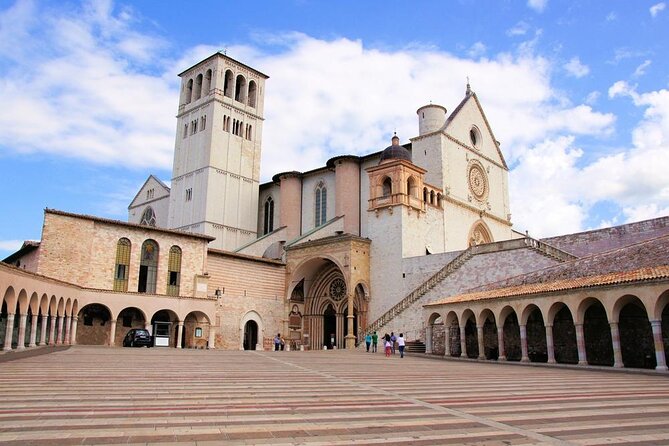
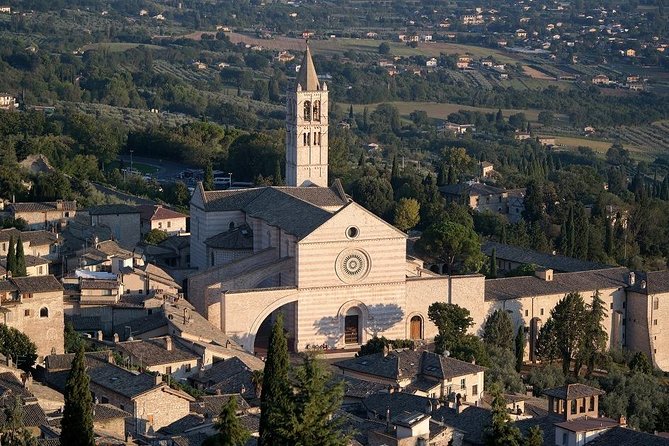
The final major complex is the Basilica of St. Francis, a UNESCO World Heritage site built beginning in 1228, only two years after Francis died. It was designed to receive his remains, and the basilica remains the emotional center of a visit to Assisi.
The Lower Basilica is solemn and dark compared with the church above it. Its atmosphere encourages quiet attention, and your guide explains the structure, the art, and the role of the site in Franciscan devotion. The scheduled visit lasts about 30 minutes, with admission included.
This is where the tour’s religious and historical threads come together. You have already seen Clare’s remains and Francis’ presumed birthplace. Now you enter the church built around Francis’ final resting place.
Expect the guide to point out details you might miss on your own. The goal is not simply to identify a famous painting. It is to explain how the basilica uses architecture and images to tell Francis’ story and to communicate ideas about humility, suffering, and faith.
The basilica is an active place of worship, so the tone can change quickly. Keep your voice low and follow any instructions from staff. Photography rules and access may vary inside sacred spaces, so rely on the guide and church staff rather than assuming you can photograph everything.
The Upper Basilica and Giotto’s fresco cycle
The Upper Basilica offers a sharp change in mood. It is brighter, airier, and more vertical, with Gothic design, French influences, cross vaulting, four bays, and a polygonal transept and apse.
This is the artistic high point of the tour for many people. Your guide provides commentary on Giotto’s fresco cycle, helping you understand what the scenes show and why they matter. If you have only a general idea of Giotto, the explanation makes the paintings easier to read as a sequence rather than a wall of medieval color.
You have another 30 minutes here. That is enough for a guided introduction and a close look at the main areas, but art lovers may want to return later for more time. The tour ends at Piazza Inferiore di San Francesco, so you can remain in the basilica area afterward if your plans allow.
The difference between the two churches is worth noticing. The Lower Basilica feels inward and serious. The Upper Basilica reaches upward with light, height, and a more expansive visual program. A guide can make that contrast clear in a way that a quick solo visit may not.
What the private guide adds
The strongest feature of this experience is not simply admission to the basilica. It is the conversation that ties the places together.
Michele has been praised for thoughtful stories and for tailoring the route. Barbara brings particular passion for Francis, art, architecture, and the town. Marica Luciani has helped groups manage a sudden rainstorm, adjusted plans, arranged a lunch reservation, and organized a taxi back to a parking area. Antonella has been noted for clear explanations and a warm approach.
Those details matter because a private tour is only good if the guide listens. The format gives you room to ask for more on St. Clare, more on Roman Assisi, more on the artwork, or practical help with lunch and other churches. Guides have also offered suggestions for restaurants and less familiar parts of town.
You should not assume you will receive the same guide on every date. The useful point is that the experience is designed around a private English-speaking guide, and the strongest feedback repeatedly centers on flexibility, clear explanations, and genuine interest in Assisi.
Price, pace, and who gets the best value
The cost is $145.12 per person. That is not a budget walking tour, especially for one or two people, but it includes a private guide and admission to the Basilica of St. Francis. Group discounts are available, which can improve the value when several people share the experience.
I would compare the price with what you want from Assisi. If you are content to walk through the town independently and read signs, you can spend less. If you want a focused explanation of the saints, the art, the Roman remains, and the basilica in one compact visit, the private format is easier to justify.
The tour is best suited to:
- Couples who want a quiet, tailored introduction
- Families who need a guide to keep different ages engaged
- First-time visitors with only a morning in Assisi
- Pilgrims who want the religious meaning explained carefully
- Art lovers who want help reading Giotto’s frescoes
- Small groups who can benefit from the private rate and possible group discount
The pace may be less suitable if you want long periods of prayer, detailed art study, or plenty of free time in each church. You will cover a lot of ground, and the inclines are moderate but real. Wear comfortable shoes and avoid overloading the schedule before or after the tour.
The activity is offered in English and uses a mobile ticket. It is near public transportation, and most people can participate, though the hills and stone streets may require more effort for anyone with limited mobility.
Important date and entry restrictions
The Basilica of St. Francis has special rules that can change the experience. On Sundays, major Catholic holidays, and national holidays, guided tours inside the basilica are forbidden. The guide explains the church from outside, and you enter alone in silence.
From February 15 through April 6, 2026, guided tours inside the basilica are also suspended because the remains of St. Francis are being displayed. You still receive an explanation outside and can enter on your own, but this is not the same as having the guide beside you inside.
Check your date before paying, especially if the basilica is the main reason you are booking. The tour can still be worthwhile on restricted dates, but you should know that the central indoor commentary will be limited.
Free cancellation is available if you cancel at least 24 hours before the local start time. Changes or cancellations inside that window are not accepted for a refund.
Should you book this Assisi walking tour?
Book it if you want a private, efficient introduction to Assisi and care about understanding what you see. The route covers the key Francis and Clare sites, adds a Roman monument, and gives you guided time in both levels of the Basilica of St. Francis.
I would especially choose it for a first visit, a family trip, or a short stay when you do not want to spend half a day piecing the town together yourself. The guides can also help with restaurant ideas, other churches, and questions that fall outside the basic route.
Skip it if you prefer to explore slowly on your own, plan to spend hours with the frescoes, or are visiting on a date when guided basilica access is restricted. At $145.12 per person, the value depends on using the guide’s attention. For a small group that wants history, art, and faith explained in plain terms, this is a strong way to get your bearings in Assisi.
FAQ
How long does the private Assisi tour last?
The tour lasts approximately 2 hours and 30 minutes. It begins at 10:30am and includes five planned stops.
Where does the tour begin and end?
The meeting point is Piazza Santa Chiara in Assisi. The tour ends at Piazza Inferiore di San Francesco, beside the Basilica of St. Francis.
What places are included?
The route includes the Basilica of Santa Chiara, Chiesa Nuova, Santa Maria sopra Minerva in the ancient Temple of Minerva, and the Lower and Upper Basilica of St. Francis.
Is admission to the Basilica of St. Francis included?
Yes. Admission tickets to the Basilica of St. Francis are included. Admission to Santa Chiara is also included in the scheduled stop details.
Is the tour private?
Yes. Only your group participates in the activity. Group discounts are available.
What should I wear?
You must cover your knees and shoulders to enter places of worship and selected museums. Shorts and sleeveless tops are not allowed for men or women, and you may be refused entry if you do not follow the dress code.
Can the guide lead the basilica visit on Sundays and holidays?
No. Guided tours inside the Basilica of St. Francis are forbidden on Sundays, major Catholic holidays, and national holidays. The guide explains the church from outside, and you enter alone in silence. The same restriction applies to guided entry from February 15 through April 6, 2026, due to the display of St. Francis’ remains.
New routes in Italy
- Assisi Private Walking Tour including St. Francis Basilica★ 5.0 · 124 reviews
- Milan: City Highlights Walking Tour with The Last Supper★ 4.9 · 195 reviews
- Florence: Heart of Florence Guided Walking Tour★ 4.0 · 81 reviews
- Milan: Private or Shared Essential Walking Tour★ 4.7 · 84 reviews
- Taormina: Shared or Private Food & Wine Walking Tour★ 4.6 · 167 reviews
- Syracuse: Ortigia Private Walking Tour★ 4.8 · 181 reviews
- Syracuse: Highlights of Ortigia Guided Walking Tour★ 4.2 · 136 reviews
- Syracuse: Ortigia Classic Walking Tour★ 4.7 · 167 reviews
Italy Walking Tours, compared.
Doge’s Palace and St Mark’s Basilica Walking Tour
Read our review →
Guided Walking Tour & Last Supper Visit with Ticket
Read our review →
San Marco to Rialto Walk & Spritz Like a Local
Read our review →
Uffizi & Accademia Timed Entry: Small Group Duomo Walking Tour
Read our review →
Browse the lists this tour appears in