
Review · INDIA
Spiritual Walking tour with Puja Ceremony -The Pushkar Route
Pushkar makes more sense when you walk it slowly, and this tour connects its temples, ghats, and back lanes into one clear story. You’ll visit the rare Brahma Temple, see places tied to Hindu ritual, and finish with a puja ceremony by the lake. I like the no-shopping policy and the chance to try malpua, a local pancake, with masala tea rather than being steered toward a shop.
I also like that guide Vishwanath Parashar, usually called Manish, adjusts the pace for questions and photographs. The main drawback is that three hours can feel tight if you want long temple visits, quiet time at the ghats, and plenty of food stops. Dress for temple visits, wear easy sandals, and leave large bags behind.
Key Points Before You Book
- A shopping-free walking route: Your time is spent on temples, ghats, rituals, local streets, and food rather than commercial stops.
- The rare Brahma Temple: Pushkar is home to a temple dedicated to Brahma, making this one of the tour’s most important visits.
- A guided lake puja: Manish explains the ritual and helps you take part respectfully at Brahma Ghat or another lake ghat.
- A useful introduction to Pushkar: In three hours, you cover major religious and historical sites that are easy to miss alone.
- Local tastes with a view: Malpua, lemon tea, masala tea, and water are included according to the tour details.
- A very low price: At $6 per person, the tour offers strong value if the stated inclusions and walking format suit you.
Why Walking Is the Right Way to Meet Pushkar
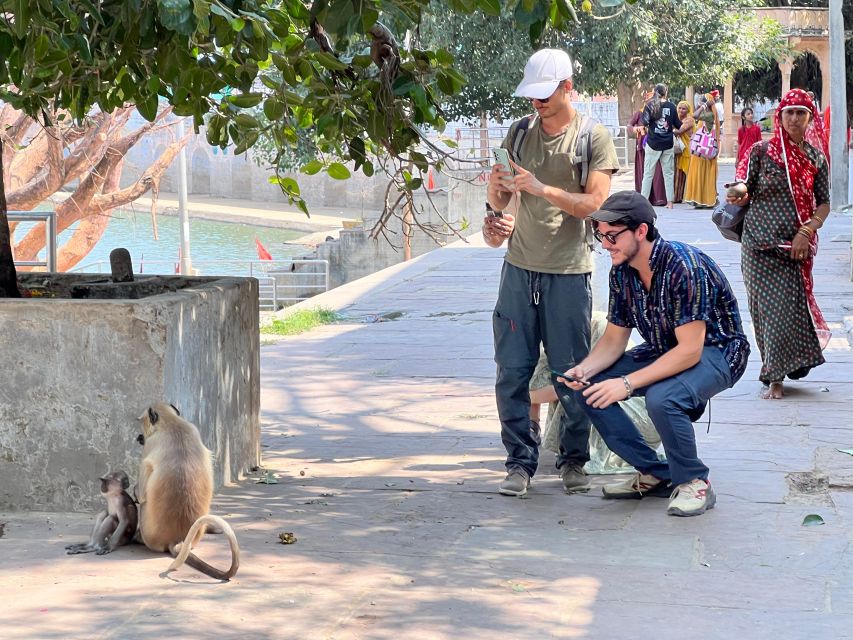
Pushkar is compact enough to explore on foot, but its meaning is not always easy to read from the street. A painted shrine, a temple doorway, or a set of steps leading to the lake can look like a simple photo stop unless someone explains its religious role.
This is where the tour earns its keep. You move through lanes and ghats while Manish explains Hindu beliefs, local customs, temple traditions, and the place of Pushkar in Indian religious life. His explanations also cover connections between different religions and communities, including the Sikh presence in town.
I would not book this as a fast sightseeing checklist. The value comes from context. You see more than buildings, and you learn how ceremonies, sacred water, temples, and daily routines fit together.
The pace also appears to be personal rather than rigid. Manish has been praised for stopping for photographs, answering questions, and helping people understand what they are seeing. That matters in Pushkar, where a short pause can reveal far more than a hurried march between famous sites.
More Walking Tours in India:
- Fontainhas Heritage Walk by Make It Happen
★ 5.0 · 2,834 reviews - The Great Indian Food Tour: Old Delhi Food and Heritage Walk
★ 5.0 · 1,698 reviews - Group Guided Walking Tour in Fort and Colaba
★ 5.0 · 1,073 reviews
Starting at the Sikh Temple and Varaha Temple
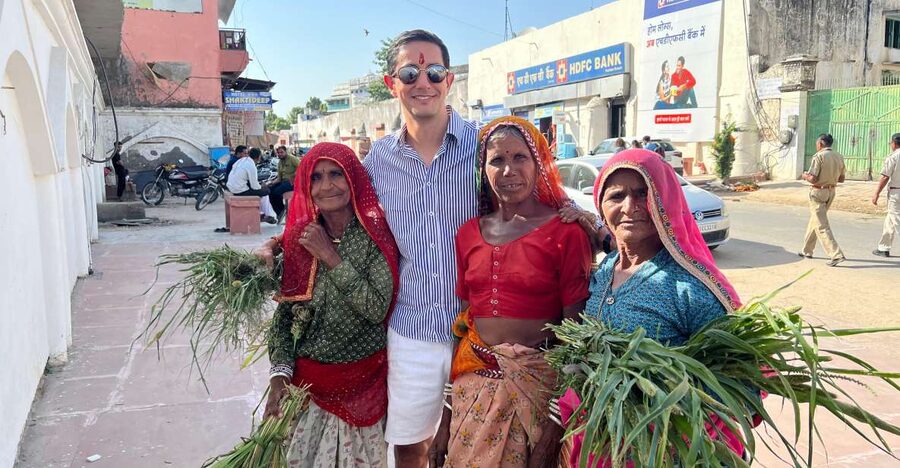
The route starts at the Sikh Temple, then continues to the Varaha Temple. Beginning with Sikh history gives the tour a wider frame than a visit focused only on Hindu shrines. You get an early reminder that Pushkar is shaped by more than one religious community.
The Varaha Temple is one of the major stops. It is described as an 11th-century temple and is dedicated to Varaha, the boar incarnation of Vishnu. The building gives you a chance to discuss both religious belief and temple architecture before the tour moves toward the lake.
Temple visits in India work best when you arrive prepared. Wear clothing that is easy and comfortable, with shoulders and legs covered in a respectful way. Sandals or slippers are suggested, and large bags are not allowed. The tour provides lockers for luggage and cameras, which can make the temple visits simpler.
The practical benefit of having Manish with you is that you do not have to guess when to remove shoes, where to leave belongings, or how to behave at a sacred site. The exact routine can vary, so follow his instructions and ask before taking photographs.
The Old Vishnu Temple and Pushkar’s Architecture
The Old Vishnu Temple is included for its architecture. This is a useful stop for anyone who wants more than the best-known religious sites, since Pushkar’s smaller or older buildings can be easy to pass without understanding their importance.
The tour treats architecture as part of the town’s religious story. You are not just looking at decorative details. Manish explains how the temple fits into Pushkar’s traditions and helps you notice features you might otherwise walk past.
This portion may appeal most to people who enjoy questions. Ask about the building, the deity, the rituals, or how the temple relates to other sites on the route. Past participants have particularly valued the guide’s clear English and willingness to explain Hinduism in a way that makes the relationships between gods, stories, and customs easier to follow.
The route is not designed as a formal architecture lecture. Instead, it gives you enough background to make the town more readable during the rest of your visit.
Jaipur Ghat and the Best Photo Breaks
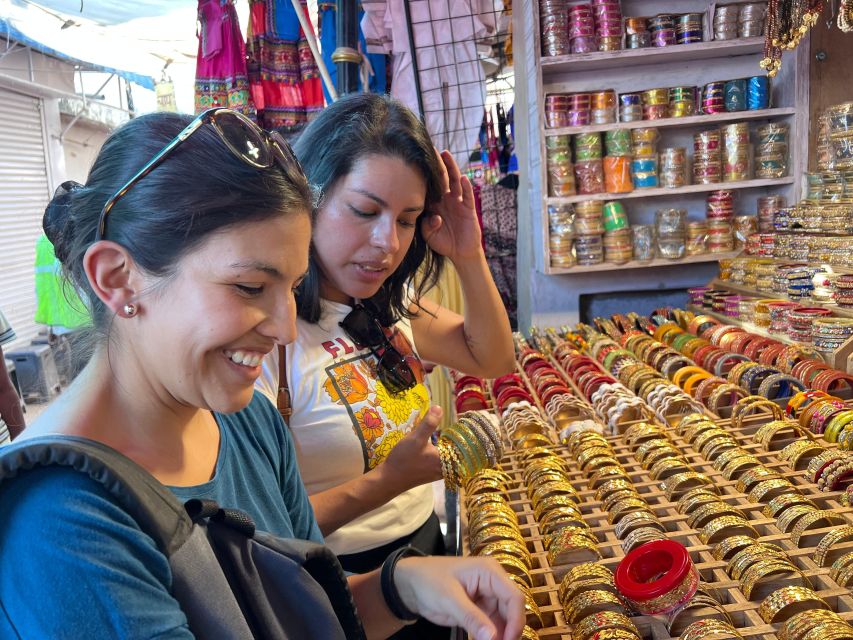
Jaipur Ghat is included as a photography stop. The ghats are the stone steps and platforms around Pushkar Lake, and they offer changing views of water, temples, pilgrims, local activity, and surrounding buildings.
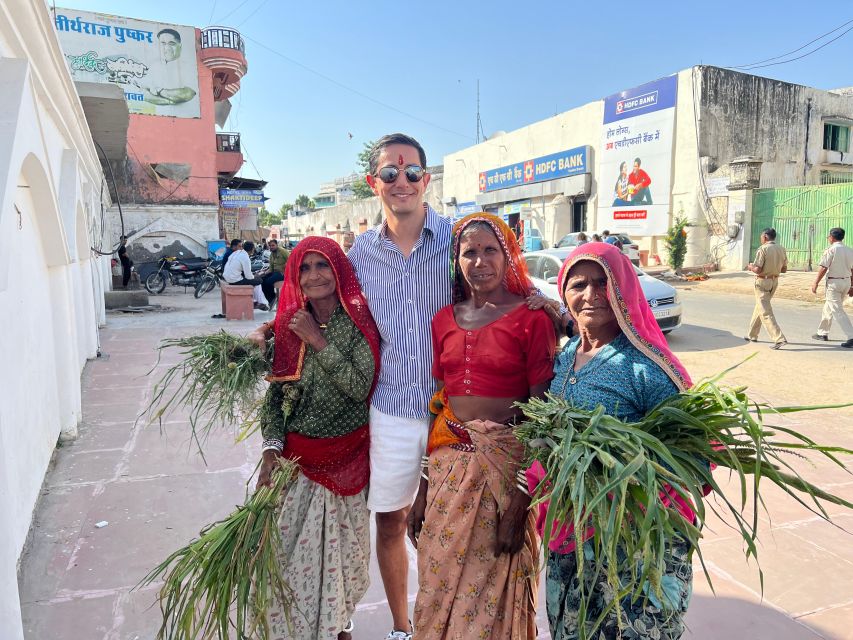
This is a good place to slow down. Manish has been praised for allowing generous time for photos and for suggesting useful viewpoints. If you are taking portraits, ask before photographing people, and let the guide help you approach respectfully.
The lake area is also where the tour’s spiritual focus becomes clearest. Pushkar is not just a town with temples. The ghats remain active religious places, so the mood can shift quickly from sightseeing to prayer and ceremony.
There is a small trade-off. A photography stop depends on the light, the number of people at the ghats, and the activity taking place that day. You should expect real daily life rather than a carefully staged picture.
Same streets, a different guide:
- Private Guided Walking Tour in Fort & Colaba
★ 5.0 · 895 reviews - Old Goa Heritage Walk by Make It Happen
★ 5.0 · 797 reviews - Old Delhi Food, Heritage&Cultural Walk with Rickshaw ride to Masterji Kee Haveli
★ 5.0 · 742 reviews - Breakfast Walk in Old Delhi
★ 5.0 · 449 reviews
Brahma Temple, the Centerpiece of the Route
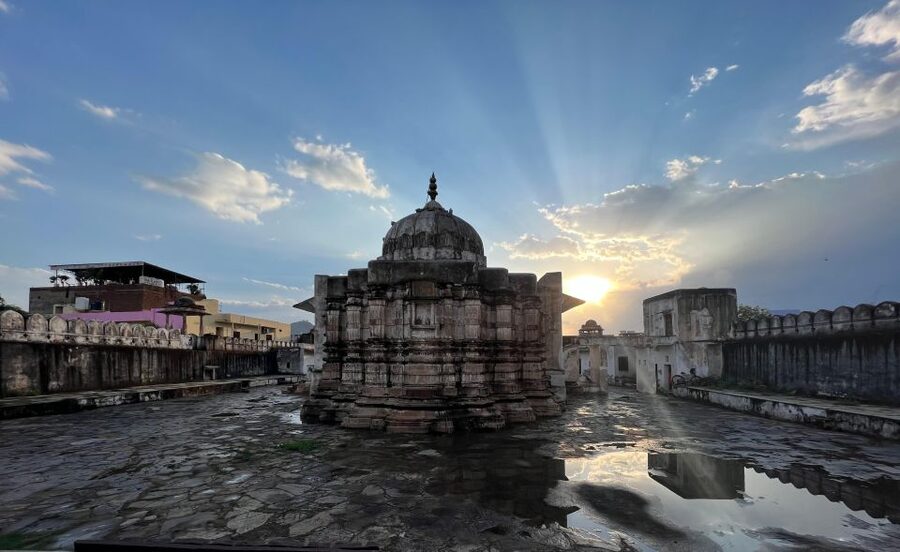
The Brahma Temple is the headline stop. Brahma is one of the best-known figures in Hinduism, yet temples dedicated to him are uncommon. The tour presents Pushkar’s Brahma Temple as the only one of its kind in the world, a claim commonly associated with the site and central to Pushkar’s identity.
You visit the temple with an explanation of its religious importance, traditions, and rituals. This is where a guide adds real value. Without context, the temple can be visually interesting but confusing. With an explanation of the stories and practices connected to it, the visit becomes easier to understand.
Some people will find the temple visit deeply meaningful. Others may prefer to observe rather than participate. Both approaches are reasonable. If you do not want a ritual or blessing, make that clear. If you are interested, Manish can explain what is happening and help you take part respectfully.
One practical point deserves attention. Some sacred sites attract people who approach visitors with offers of blessings or ceremonies. A guide can help you understand which activities are part of your arranged experience and which are not. Keep your belongings secure and ask questions before handing over money.
Brahma Ghat, Gau Ghat, and the Lake Puja
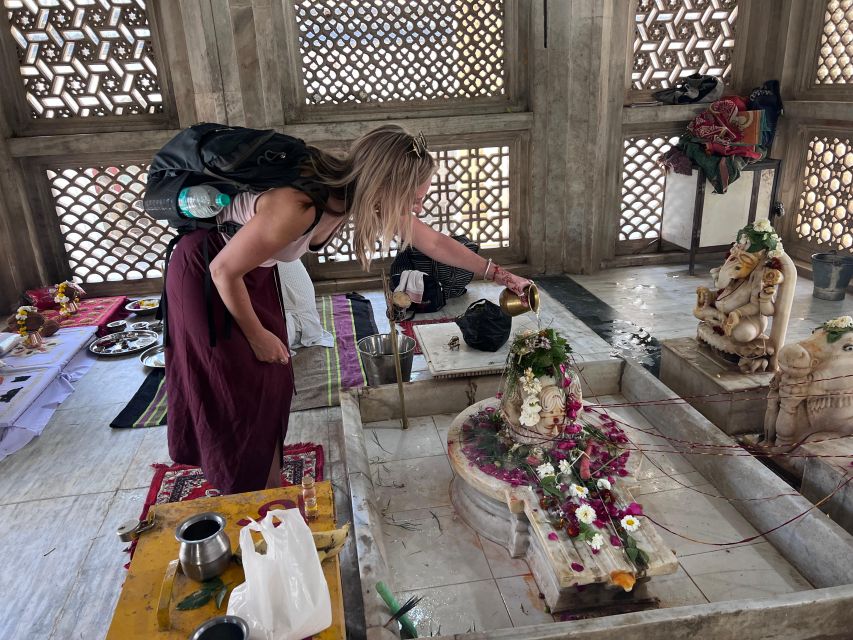
Brahma Ghat and Gau Ghat are included as places connected with ritual. The tour uses these lakefront stops to explain how Pushkar’s water, ghats, prayers, and offerings relate to Hindu practice.
The puja ceremony is the emotional center of the experience for many people. Manish guides you through the ritual and explains its meaning instead of asking you to copy movements without context. Some participants have described the ceremony as peaceful and moving, while others have valued it as a way to understand Hindu practice from within a respectful setting.
You should treat this part with care. This is not a performance arranged only for photographs. Listen to the instructions, dress modestly, ask before taking pictures, and remember that the lake and ghats are sacred places for local people.
The ceremony can also be personal. Some people may wish to offer prayers for themselves or family members, including those who have died. Others may simply watch. You do not need to force an emotional response or take part in every step to benefit from the explanation.
Food Stops: Malpua, Lemon Tea, and Masala Chai
The tour includes local food and drinks, which gives the walk a welcome change of pace. Malpua is a sweet pancake, and it offers a simple taste of a familiar Pushkar treat. Water and tea are also included, with the route mentioning lemon tea with a lake view and masala tea.
These stops are small, but they help connect the temples with ordinary life. Pushkar is a living town, not an open-air museum. A snack in a local setting lets you watch people move through their day while you continue talking about the places you have visited.
Food is also one reason the tour feels less formal than a series of temple entrances. You can ask Manish about local habits, ingredients, and customs while taking a break.
Do not expect a full meal. The included food is a snack and refreshment, not a substitute for lunch. If you have dietary restrictions, the supplied information does not specify alternatives, so ask before booking.
What the Three Hours Really Cover
The advertised duration is three hours, though some participants have spent longer with Manish when the pace and questions called for it. You should plan around three hours rather than assume the tour will run over.
The route covers a lot:
- Sikh Temple
- Varaha Temple
- Old Vishnu Temple
- Jaipur Ghat
- Brahma Temple
- Brahma Ghat
- Gau Ghat
- Local lanes and markets
- A puja ceremony
- A snack and tea stop
That is a full morning or afternoon on foot. Comfortable footwear matters more than fashion, and you should bring only what you need. Oversize luggage is not allowed, but locker facilities are listed for luggage and cameras.
Hotel pickup and drop-off are offered. If you do not use that option, the guide suggests a meeting point suited to your location. Confirm the exact arrangement before setting out, especially if you are staying in a smaller guesthouse or hostel.
The tour is offered in English with a live guide. There is no group size given, so ask if the size matters to you.
The Value of Six Dollars
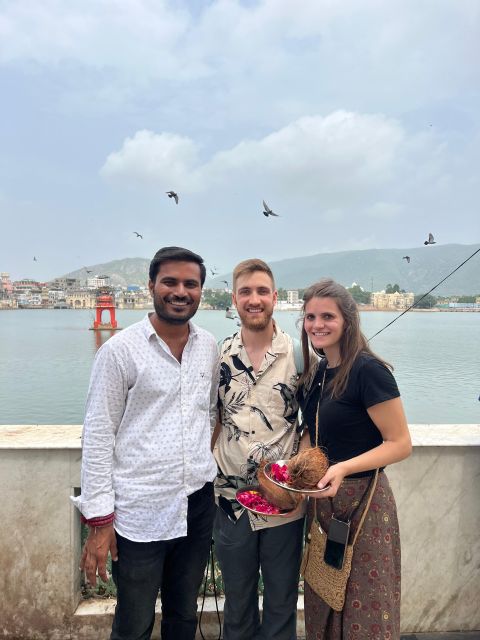
At $6 per person, this is unusually inexpensive for a three-hour guided walk that includes hotel pickup and drop-off, temple and palace entry fees, lockers, water, food, and tea. Even if you set aside the refreshments, the price is low for having a local guide explain the town’s religious sites and customs.
The value is strongest if you are visiting Pushkar for the first time. You get a structure for the town, help with temple etiquette, and a way to connect the lake, ghats, and shrines.
The low price also means you should keep expectations realistic. This is a walking experience, not a private luxury tour with extensive transport or long periods at every site. The route covers many places, so some stops may be brief.
Free cancellation up to 24 hours before the activity and reserve-now, pay-later booking make it easy to fit into a changing India itinerary. Check the available start times before booking, since the tour’s atmosphere may differ in the morning and later in the day.
Who Will Like This Tour Most
I would recommend it to you if you want to understand Pushkar rather than simply photograph it. It suits first-time visitors, people curious about Hinduism, photographers who appreciate time for pictures, and anyone who prefers a local walking route to a shopping-heavy sightseeing trip.
It is also a good choice if you are unsure how to approach a puja ceremony. Manish explains the steps and helps you take part without treating the ritual as a souvenir.
You may want another type of outing if you dislike walking, prefer a private vehicle, or want to spend most of your time inside one temple. The route is active and covers several sites in a short period. It also involves sacred spaces, local crowds, uneven walking conditions, and the normal distractions of a working town.
Should You Book the Pushkar Route?
Book this tour if you want a low-cost, guided introduction to Pushkar’s religious life, with a real emphasis on temples, ghats, local streets, and customs. The no-shopping policy is a major plus, and the combination of the Brahma Temple, lake puja, malpua, and tea gives the outing a good mix of learning and everyday life.
Before booking, make sure you are comfortable with a three-hour walk and with the possibility of taking part in a ceremony at the lake. Wear modest, easy clothing, bring a small bag, and tell Manish what interests you most, especially if you want extra time for photographs or questions.
For $6, the tour offers excellent value. Its main strength is not the number of stops, but the explanation that links them. If you want Pushkar to feel less puzzling and more personal, this is a sensible first step.
FAQ
How long does the Pushkar Route walking tour last?
The stated duration is three hours. Some participants have spent longer with the guide when the pace, questions, or visits required extra time, but you should plan for a three-hour activity.
Who leads the tour?
The experience is led by Vishwanath Parashar, who is commonly called Manish. The tour is conducted in English.
Is hotel pickup available?
Yes. Hotel pickup and drop-off are offered. If you do not use hotel pickup, the guide recommends a suitable meeting point before the activity begins.
What places does the walking route include?
The route includes the Sikh Temple, Varaha Temple, Old Vishnu Temple, Jaipur Ghat, Brahma Temple, Brahma Ghat, and Gau Ghat, along with local lanes, markets, and lakefront areas.
Is the puja ceremony included?
The experience is described as including a guided puja ceremony at Pushkar Lake, with ritual activity connected to the ghats. Manish explains the ceremony and helps you participate respectfully.
What should I wear and bring?
Wear comfortable, modest clothing suitable for temple visits, along with sandals or slippers. Oversize luggage is not allowed. Locker facilities are available for luggage and cameras, and water is provided.
New routes in India
- Agra Walking Tour★ 5.0 · 109 reviews
- Amritsar Heritage Walking Tour★ 5.0 · 112 reviews
- The Great Indian Food Tour: Old Delhi Food and Heritage Walk★ 5.0 · 106 reviews
- Spiritual Walk Tour Trivandrum (Guided Walking Experience)★ 4.6 · 87 reviews
- Panaji: Heritage Walk through Goa’s Latin Quarter★ 4.8 · 291 reviews
- Old Goa: Walking Tour of Heritage Churches★ 4.9 · 81 reviews
- Old Delhi: Spices, Heritage and Bazaars Walking Tour★ 5.0 · 173 reviews
- 3-Hour Old Delhi Heritage Walking tour with Rickshaw ride★ 4.6 · 158 reviews
India Walking Tours, compared.

The Great Indian Food Tour: Old Delhi Food and Heritage Walk
Read our review →
Old Delhi Food, Heritage&Cultural Walk with Rickshaw ride to Masterji Kee Haveli
Read our review →
Delhi Food Walk: Rickshaw Ride, Street Eats & Market Tour
Read our review →
Private Guided Walking Tour in Bandra Queen of Suburbs
Read our review →Browse the lists this tour appears in