
Review · NUREMBERG
“Rotes Bier” and “Blaue Zipfel”. A historical-culinary walk
Nuremberg’s food tells a surprisingly good story. On this two-hour walk, you move through the old town with stops for red beer, tiny bratwurst, and gingerbread, while your guide explains the odd customs and old recipes behind them. It is part tasting and part urban history lesson.
I like the short, walkable route and the way it links food to real places, from the Old Town Hall to St. Sebaldus Church and the Altstadthof Brewery. I also like the questions at the heart of the tour, including why Nuremberg sausage is so small and how much meat local citizens once ate. The main drawback is that the tour is held in German, and some of the between-stop snacks may feel modest if you arrive hungry.
Key points to know before booking
- Red beer finishes the walk: You end at Hausbrauerei Altstadthof, where the tasting focuses on Nuremberg’s distinctive dark red beer.
- The sausage has a reason for its size: Nuremberg Bratwurst is not simply a miniature version of a larger sausage, and the tour explains why.
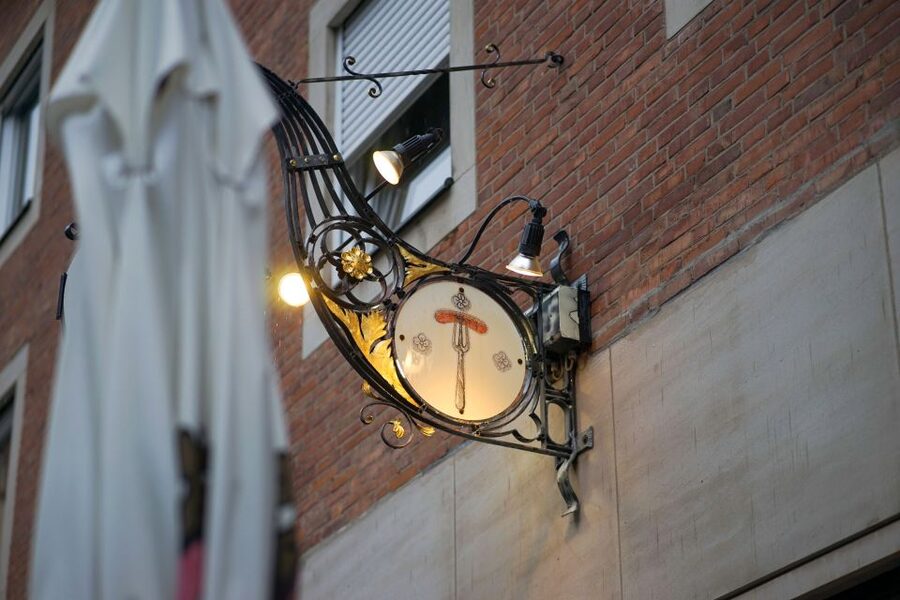
- Food and old-town sights stay connected: The route uses the Altes Rathaus, Hauptmarkt, Trödelmarkt, Unschlitthaus, and St. Sebaldus Church as lesson points.
- German is the only listed tour language: You need enough German to follow explanations and ask questions.
- Expect samples, not a full meal: Bratwurst, gingerbread, beer, and other small tastings are included, but you may want lunch or dinner afterward.
- The walk works in any weather: Bring suitable clothing and comfortable shoes because it runs rain or shine.
Why Nuremberg food makes a good history lesson

Food is a useful way to get past a city’s postcard image. Buildings can tell you who had power, but kitchens show how ordinary people lived, traded, celebrated, and stretched what they had. This tour uses that everyday angle to make Nuremberg’s old town easier to understand.
You will hear why bratwurst is called bratwurst, what makes Nuremberg gingerbread different, and how cooks in the city knew dishes resembling ravioli. The guide also tackles a less cheerful but revealing question: how much meat did Nuremberg citizens actually eat?
That mix is the tour’s strength. It does not treat food as a string of unrelated bites. Instead, each sample gives you a reason to think about local work, customs, trade, or social life. Even the playful reference to the Devil’s Kitchen has a place in the story.
The tour is led by a live German-speaking guide from Geschichte Für Alle e.V., a local historical organization. Sonja has been praised for explaining things with humor, fluency, and clear knowledge of the subject. Guides also allow time for questions, which matters here because the subjects are unusual and easy to discuss as you walk.
More History Walking Tours in Germany
- Leipzig: 1.5-Hour Historical Walking Tour in German
★ 4.7 · 2,217 reviews - Berlin: History of the Third Reich Guided Walking Tour
★ 4.7 · 791 reviews - Trier: Guided Old Town Highlights and History Walking Tour
★ 4.7 · 687 reviews
Starting at the Altes Rathaus
Meet at the main entrance of the Alte Rathaus, or Old Town Hall. Your guide will have a picture folder and the green Geschichte Für Alle e.V. logo, so you have a clear way to identify the group.
This is a sensible meeting point. The Rathausplatz puts you in the old center immediately, rather than making you begin in a transport hub or outside the main sights. You should arrive in comfortable shoes and weather-ready clothing. The route is on foot, and the organizers state that it is wheelchair accessible.
The opening section is a guided look at the Old Town Hall and its setting. It gives the guide a chance to explain the city before the tastings begin. Do not expect a long architectural lecture. The food theme remains the focus, but the buildings provide the setting for understanding how civic life and cooking developed side by side.
One practical point: the tour lasts about two hours, but the information comes in several short stages. If you prefer a long sit-down meal or a single major museum visit, this will feel different. If you like a moving tour with regular changes of subject, the pace should suit you.
Bratwurst Röslein and the small sausage question
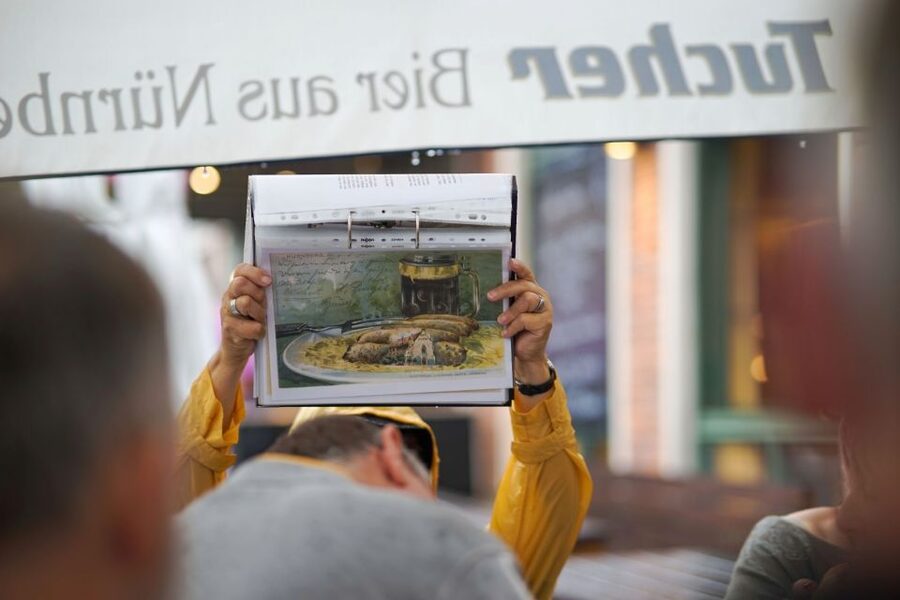
After roughly five minutes on foot, the group reaches Bratwurst Röslein. Here the tour turns directly to Nuremberg’s famous sausage, with a guided explanation and food tasting.
The important question is not just how the sausage tastes. It is why the Nuremberg version is so small. The tour uses that detail as a doorway into local food customs, names, and history. You will get to try a real Nuremberg Bratwurst rather than simply hear a description of one.
This is one of the most useful stops for first-time visitors because the sausage is easy to find all over town, but its story is not always obvious. The tasting also gives you a reference point for later meals. After trying the local style, you can judge other sausage plates with a little more context.
Still, keep your expectations in check. The included food is served as a series of samples. This stop is meant to introduce the dish, not replace a full restaurant meal. If you have skipped breakfast, plan to eat separately before or after the walk.
Hauptmarkt: gingerbread and the city’s food culture
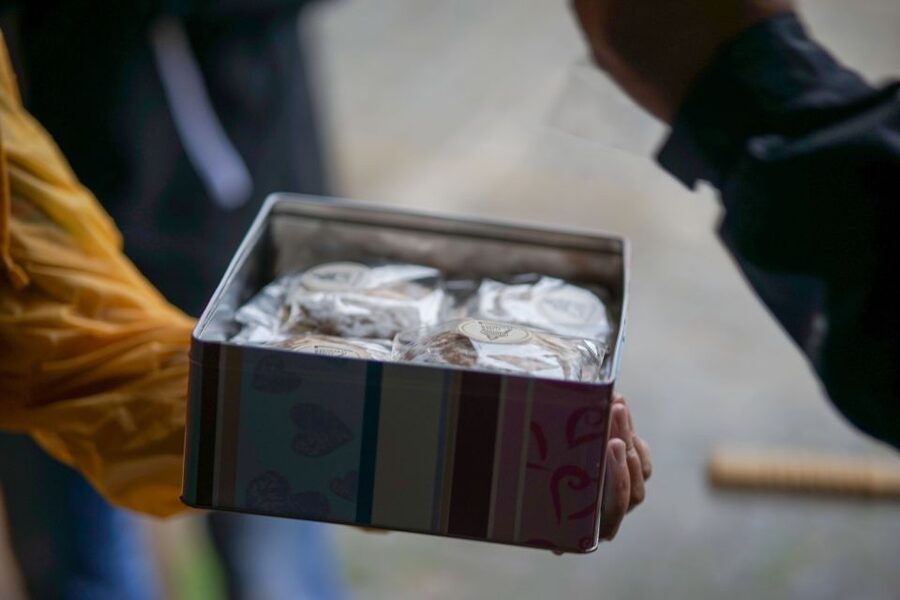
A three-minute walk brings you to Hauptmarkt, Nuremberg’s central market square. This is where the tour adds more food tasting and turns to gingerbread.
Nuremberg gingerbread, or Lebkuchen, is treated as one of the city’s signature foods. The tour explains what makes it special and why it has such a strong place in local identity. You get to taste it rather than compare labels from a shop window, which makes the explanation more useful.
The square also gives the food story a public setting. Markets connect producers, cooks, buyers, and visitors, and Hauptmarkt remains one of the clearest places to see how central commerce is to Nuremberg’s old town. The tour does not require you to know the city in advance. The guide supplies the context while you move between sights.
There are two Hauptmarkt-related stops in the route, with another guided tasting at Hauptmarkt 2. That repeated use of the square is practical rather than confusing. It lets the guide cover different food subjects without forcing a long walk between them.
For your own planning, do not assume every tasting is a large serving of premium food. The strongest food moments are the recognizable local specialties: bratwurst, gingerbread, and beer. Smaller snack portions help keep the tour moving, but you may find them less impressive if you are expecting a progressive meal.
More Food Walking Tours in Germany:
- Berlin Center Food Tour with 8+ Authentic Local Tastings
★ 5.0 · 1,227 reviews - Trier: Guided City Walk with Wine Tasting
★ 4.8 · 979 reviews - Cologne: Südstadt Guided Foodie Walking Tour
★ 4.6 · 624 reviews - Dresden: Taste of Dresden Food Walk
★ 4.6 · 397 reviews
From Trödelmarkt to Unschlitthaus
The walk continues with five-minute stretches through the old town, first to Trödelmarkt 13 and then to the Unschlitthaus. Both stops include guided commentary and food tasting.
Trödelmarkt brings the route away from the main market square and into a different part of the historic center. That change is useful. You get a better sense of Nuremberg as a network of streets and small urban spaces, not just a collection of headline sights.
At Unschlitthaus, the food story takes on a more practical side. The name itself points toward the old handling and use of animal fat, making it a fitting place for a tour that asks what people ate and how food was prepared. The guide’s larger questions about meat consumption and cooking traditions gain weight here because the setting connects them to working life.
The tour also raises the subject of ravioli known to Nuremberg cooks. That may sound surprising, and it is precisely the kind of detail that makes the walk worthwhile. You are not only collecting local dishes. You are learning that historic foodways were shaped by contact, exchange, and adaptation.
The walks between stops are short, generally three to five minutes at this stage. That keeps the tasting schedule comfortable and limits the strain for anyone who dislikes long city walks. The entire experience remains active, though, so sturdy shoes are still a good idea.
St. Sebaldus Church and the stories behind the recipes
After about ten minutes on foot, the group reaches St. Sebaldus Church. The church stop includes more guided discussion and a tasting, keeping the food theme in view even in a religious setting.
This is where the tour’s structure works particularly well. A church is not a kitchen or market, yet churches shaped the rhythm of urban life, charitable food practices, festivals, and public identity. The guide can use the site to show how food belonged to more than private meals.
You will also hear about the Devil’s Kitchen, one of the tour’s more memorable story points. It gives the walk a bit of humor and a vivid phrase to carry with you. The overall approach is not solemn for its own sake. The guide uses stories, questions, and local oddities to make the setting easier to remember.
The experience is best for people who enjoy listening while walking. It is not designed as a silent tasting session, and it is not a formal cooking class. You will not prepare the food yourself. Instead, the guide explains the background and lets you experience the topic through small bites and drinks.
Finishing at Altstadthof Brewery with red beer
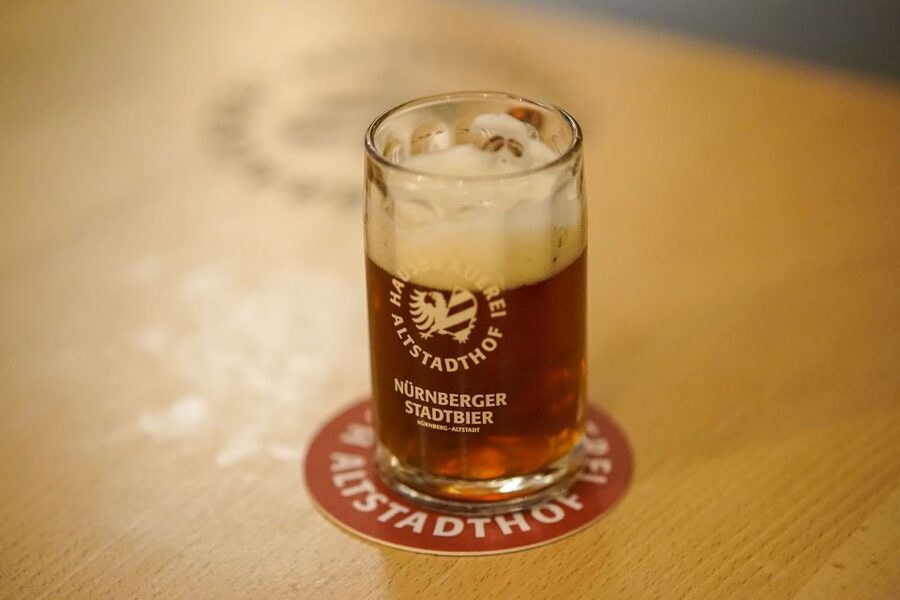
The final ten-minute walk leads to Hausbrauerei Altstadthof, ending at the Rotbierstüberl, brewery, and whisky distillery. This is the most natural finish for a culinary history walk because the last major tasting is beer.
Altstadthof is associated with Nuremberg’s red beer, a distinctive local style with a darker color and malty character. The tour includes beer, so you get to taste the subject rather than leave with only a description. It is a fitting close after the earlier discussions of sausage, gingerbread, and old cooking traditions.
The brewery stop also gives you a chance to review the tour’s main theme. Nuremberg’s food identity is not just one famous dish. It includes bread and sweets, meat and beer, public markets, old recipes, and the stories people attach to them.
The activity finishes here rather than returning to the Rathaus. That matters for your plans. You will need to arrange your own way to the meeting point, but you should also think about what comes next from the brewery. The walk ends in a place connected to food and drink, so continuing with a meal or another drink may be convenient.
Is $29 a fair price?
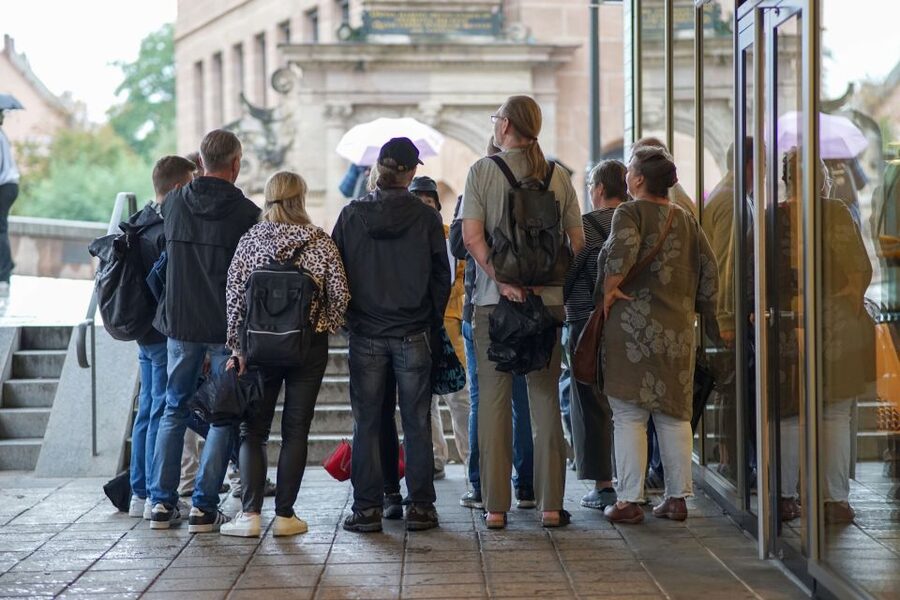
At $29 per person, this is a reasonable buy if you value a guided introduction and plan to eat the included samples. You are paying for two hours of live commentary, a series of tastings, and a route through several central sights. The price is harder to justify if you want a large meal or speak little German.
The value comes from the connection between stops. You could buy bratwurst, gingerbread, and beer on your own, but you would not automatically learn why the sausage is small, how Nuremberg cooks knew ravioli, or what local food says about civic life.
The food portions are the main value question. Some snacks between the headline tastings may feel basic rather than special. That criticism is fair, but it does not erase the value of the main samples. Think of the tour as a guided tasting with historical context, not a two-hour lunch.
The free-cancellation rule also gives you some flexibility: you can cancel up to 24 hours before the start for a full refund. A reserve-now-pay-later option is available, and the booking confirmation serves as proof of payment because invoices are not issued for bookings made through GetYourGuide.
Who will enjoy this Nuremberg walk?
I would choose this tour for anyone who wants a first introduction to Nuremberg through local dishes rather than a standard sightseeing circuit. It suits food-minded visitors, curious history fans, and people who enjoy asking questions along the way.
It is also a good fit for someone who has already seen the main old-town sights and wants a different angle. A local resident could still find new material here. One attendee from Nuremberg said the tour added plenty of information even for someone who already knew the city, which suggests the subject matter goes beyond basic orientation.
Families and mixed-age groups may like the changing format, though the German-only commentary is important. If only one person in your group understands German, that person may get most of the benefit.
I would not choose it as your main meal, as a substitute for an English-language tour, or as a relaxed brewery tasting where you sit in one place. The route involves walking, listening, and moving through the city in rain or shine.
Should you book it?
Book this walk if you want local food with a story attached. The strongest reasons are the clear old-town route, the unusual questions about Nuremberg cooking, the chance to try authentic bratwurst and gingerbread, and the red beer finish at Altstadthof.
Skip it if you need English commentary, want generous food portions, or prefer a tour built around one long tasting. For German speakers who enjoy history, food, and a little humor, $29 buys a useful introduction to Nuremberg that you can carry into the rest of your visit.
FAQ
Is the tour conducted in English?
No. The listed tour language is German, and the live guide conducts the experience in German.
How long does the historical-culinary walk last?
The tour lasts about two hours. Start times vary, so you should check availability for the date you want.
Where does the tour begin?
It begins in front of the main entrance of the Alte Rathaus at Rathausplatz 5 in Nuremberg. Look for the guide with a picture folder and the green Geschichte Für Alle e.V. logo.
Where does the tour finish?
The tour finishes at Hausbrauerei Altstadthof, specifically the Rotbierstüberl, brewery, and whisky distillery.
What food and drink are included?
Included tastings feature Nuremberg bratwurst, gingerbread, beer, and other snacks served along the route. The experience is not described as a full meal.
Does the tour run in bad weather?
Yes. It takes place rain or shine, so bring weather-appropriate clothing and comfortable shoes. The tour is listed as wheelchair accessible.
New routes in Germany
- Munich: Walking Tour Old Town and Viktualienmarkt★ 4.7 · 839 reviews
- Stuttgart: Guided Ghost Walking Tour★ 4.5 · 867 reviews
- Stuttgart: Private Guided Circular City Walk★ 4.7 · 129 reviews
- Stuttgart: Old Town Highlights Guided Walking Tour★ 4.2 · 101 reviews
- Stuttgart: City Highlights – Guided Walking Tour★ 4.7 · 189 reviews
- Hamburg: Private Tour Red Light District Walking Tour★ 4.7 · 227 reviews
- Small Group Walking Tour: “Wild Kreuzberg”★ 4.8 · 199 reviews
- Sachsenhausen Memorial: Walking Tour from Berlin★ 4.7 · 132 reviews
Nuremberg Walking Tours, compared.
Walking Tour of Former Nazi Party Rally Grounds
Read our review →
Nuremberg Old Town and Nazi Party Rally Grounds Walking Tour in English
Read our review →
Nürnberg kennenlernen: Highlights in der Altstadt
Read our review →
Nuremberg 2-Hour Old Town Highlights Walking Tour in English
Read our review →
Browse the lists this tour appears in