

Review · OXFORD
Oxford: University and City Walking Tour with Alumni Guide
Oxford is easiest to understand when someone explains how the colleges work. This walking tour takes you past grand stone courts, old libraries, and famous university buildings, while an alumni guide such as Sam Day, Saga, Jacob, or Tom adds the student view that a standard sightseeing walk often misses.
I like the mix of architecture and daily university life, and I like the way the tour connects Oxford to Harry Potter, C.S. Lewis, J.R.R. Tolkien, Alice’s Adventures in Wonderland, and the city’s religious conflicts. The main caution is that access to interiors can change, especially at the Divinity School during June through August.
Key points to know before booking

- Student insight: Guides draw on their own experience of studying at Oxford, explaining admissions, traditions, ceremonies, and college life.
- Historic college access: The tour includes entry to a college, with the exact college depending on the day and option booked.
- Major sights: Expect the Bodleian Library, Radcliffe Camera, University Church of St. Mary, Trinity College, and views of several historic colleges.
- Film connections: You visit a Harry Potter location and hear about other Oxford links to famous books and films.
- Strong storytelling: Guides such as Saga, Sam Day, Will, Jacob, and Oscar are praised for mixing facts with humor and personal stories.
- Summer warning: The Divinity School may be closed or unavailable during peak season, so do not book solely for guaranteed access to that room.
Why an alumni guide changes the Oxford walk

Oxford can look like one grand university from the outside. In reality, it is a collection of colleges with their own buildings, customs, dining halls, teaching systems, and student communities. That structure is not always obvious when you are simply walking past stone gates.
An alumni guide gives you a useful key to the place. You hear not only when buildings were built, but how students use them, how ceremonies work, and what daily life feels like inside the colleges. Guides have answered questions about admissions, academic requirements, university culture, and the difference between Oxford’s colleges.
That personal angle is the tour’s biggest strength. Sam Day is praised for combining university facts with funny stories. Saga, described as a history student at Oxford, has explained both the institution’s past and her own life there. Tom’s recent student experience brought current university life into the conversation, while Will was noted for giving practical suggestions about places to eat and things to see after the walk.
The guide quality can vary, as it does on any live tour. Most of the named guides receive strong praise for warmth, humor, clear explanations, and enthusiasm. One booking described a host as slightly unsure at first, though still full of good stories and historical detail. If you want a polished lecture delivered in exactly the same way every time, this may feel informal. If you prefer a human guide who can answer questions and adapt to the group, that is part of the appeal.
More Guided Walks in the UK:
- Magical London: Harry Potter Guided Walking Tour
★ 4.7 · 22,044 reviews - Edinburgh: Harry Potter Magical Guided Walking Tour
★ 4.8 · 11,944 reviews - Edinburgh Castle: Guided Walking Tour with Entry Ticket
★ 4.7 · 11,699 reviews
Starting in Oxford’s historic center
The meeting point changes according to the option you book, so check your confirmation rather than assuming every departure starts in the same place. The walking route stays concentrated in central Oxford, which makes the tour easy to combine with independent sightseeing before or after.
The advertised duration can range from two to ten hours, depending on the chosen option. The commonly described university and city walk takes about two hours, and that length works well as an introduction. It is long enough to cover several important buildings without turning the day into a march.
A two-hour route will not let you study every college or enter every room. That is worth understanding before you arrive. The tour gives you a framework for Oxford, then points you toward places you may want to revisit on your own.
The walk is described as easy, but you should still expect to be on your feet throughout. Oxford’s central streets can be busy, and groups need to stay together around college entrances and narrow city streets. Comfortable shoes make sense, even though this is not presented as a strenuous outing.
Entering an Oxford college

One of the most valuable parts of the tour is entry to a college. The exact college may vary, but the route can include places such as All Souls College, Trinity College, Oriel College, Hertford College, and Merton College. Some guides have also taken groups into Magdalen College, a particularly memorable stop for people interested in literature and university figures.
A college visit helps you see the difference between Oxford as a picture-postcard city and Oxford as a working institution. You may notice courtyards, entrances, stone details, and spaces connected to student routines. Your guide explains how the colleges fit into the wider university and how traditions shape student life.
The colleges are not simply museums. They remain active academic communities, so access can be limited by ceremonies, private events, term schedules, or other university business. That is why the exact interior experience can vary. One group may see more rooms than another, and some stops may be explained from outside.
Magdalen College has a special literary appeal. One guide included a visit connected with C.S. Lewis, along with Addison’s Walk, where Lewis and Tolkien are associated with walking and talking. These details are especially rewarding if you already know the authors, but the guide’s storytelling gives the setting meaning even if you do not.
The tour can also coincide with an Oxford event. One group walked through the city on Matriculation Day and enjoyed the extra sense of ceremony and student activity. That atmosphere is not guaranteed, but it shows why Oxford can feel different from one date to the next.
The Bodleian Library and the Divinity School

The Bodleian Library is one of the tour’s central sights. Even from the outside, its architecture and role in university life make it an important stop. Your guide places the library within Oxford’s academic system and explains why the university’s libraries matter to students and scholars.
The nearby Divinity School is one of Oxford’s most famous medieval interiors and a major reason many people want this tour. It is also the part of the experience that requires the clearest warning. From June through August, access can be extremely limited because of frequent closures and high demand.
Do not treat Divinity School entry as certain during the summer. It may not be included on the day, even if you have seen it featured in promotional material. The tour is still worthwhile without it, but you should book for the wider Oxford experience, not for one guaranteed room.
When access is available, the Divinity School adds an impressive indoor chapter to the walk. When it is not, you still have the college interiors, university buildings, city stories, and architectural details. This is a sensible example of why flexible expectations matter when touring active historic institutions.
More Walking Tours in the UK:
- Underground Vaults Walking Tour in Edinburgh Old Town
★ 4.5 · 8,506 reviews - London: The Original Jack the Ripper Walking Tour
★ 4.7 · 7,833 reviews - Oxford University Walking Tour With University Alumni Guide
★ 5.0 · 6,905 reviews - Edinburgh Castle: Guided Walking Tour with Entry Ticket
★ 5.0 · 5,540 reviews
Radcliffe Camera and the great Oxford views
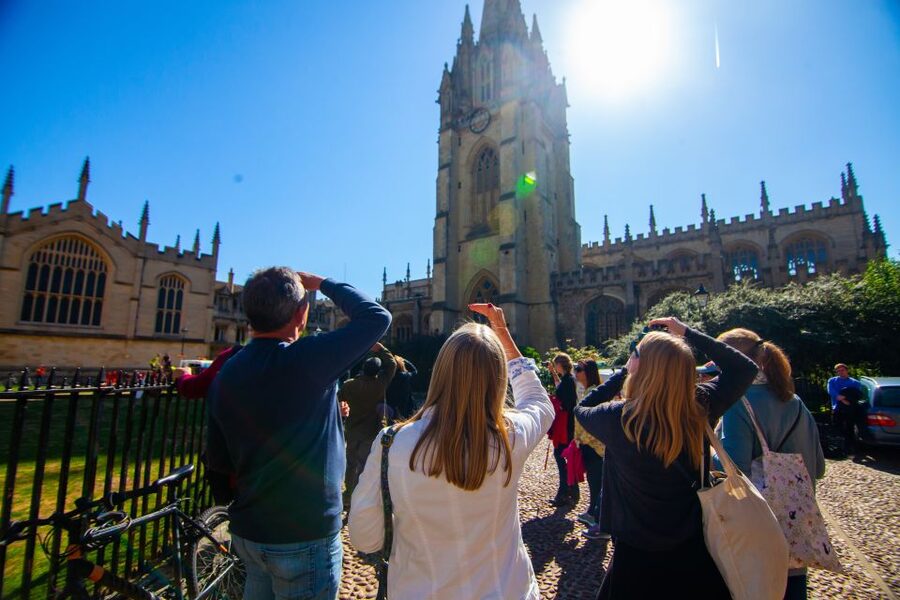
The Radcliffe Camera is one of Oxford’s most recognizable buildings. Its rounded form and pale stone make it a natural photo stop, but the guide gives you more than a quick picture. You learn how it relates to the Bodleian Library and the surrounding university buildings.
The name can confuse first-time visitors. Camera refers to a room or chamber, not a photographic device. A guide can explain these small details while showing you how Oxford’s buildings sit close together in the center.
The University Church of St. Mary is another important stop. It links the university to the city and to Oxford’s religious and political past. From this area, the tour can move easily between academic buildings and the streets where major public events took place.
The architecture is impressive, but it is the contrast between formal stonework and ordinary student activity that makes the area interesting. You might see academic gowns, college entrances, bicycles, shops, and modern city life sharing the same few streets. The guide helps you read those scenes rather than simply pass them by.
Oxford stories beyond the buildings
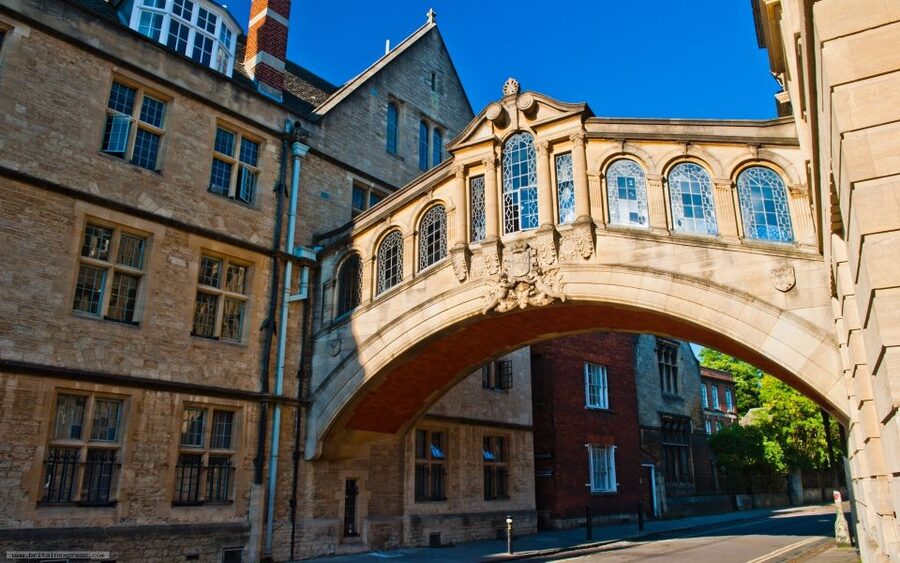
The walk is not only a succession of landmarks. It also covers the customs and personalities that give Oxford its character.
You hear about university ceremonies, including the traditions that surround formal academic life. These customs can seem mysterious from the outside, especially when you see students and faculty wearing formal dress. A student guide can explain what is practical, what is ceremonial, and what is simply an old habit that Oxford has kept.
The route also touches on the darker side of the city’s past. You hear how Thomas Cranmer, one of the most powerful Archbishops of Canterbury, was burned at the stake in Oxford during the religious conflicts of the sixteenth century. This is not presented as a dry date in a textbook. It helps explain the political and religious pressure that shaped the city.
Another memorable subject is Alice’s Adventures in Wonderland. Oxford’s connection to Lewis Carroll gives the city an extra layer for readers familiar with the book. The guide points out links between local people, university life, and the stories that grew from them.
Literary connections continue with C.S. Lewis and Tolkien. Several guides have included stories about where these writers lived, taught, walked, or met. Those links are handled as part of Oxford’s wider history rather than as a separate fantasy-themed tour.
Harry Potter fans also get something specific: a film location connected with the series. The tour does not turn into a movie-only walk, which is a good balance. You get the filming connection, then return to the real university, its buildings, and its traditions.
What the student perspective adds

A guide who has studied at Oxford can answer questions that a general city guide may not be able to handle. You can ask how colleges differ, what student life is like, how the academic system is organized, or what the admissions process involves.
The answers are personal rather than official policy, so you should not treat the tour as an admissions consultation. Still, the student viewpoint makes the university feel less remote. Oxford stops being only a collection of old buildings and becomes a place where people study, eat, work, attend ceremonies, and build friendships.
This is where guides such as Saga, Sam Day, Tom, Jacob, and Antonia have been especially effective. Their value comes from explaining the institution in plain language, adding anecdotes, and making room for questions. One guide was praised for speaking with almost every person in the group and helping with food and sightseeing ideas after the formal walk ended.
The experience is likely to suit parents and prospective students who want a first look at Oxford. It also works for history fans, literature readers, architecture lovers, and anyone visiting Oxford for the first time. If you already live in Oxford, the walk can still show you familiar streets from a different angle. A local attendee took the tour and found it changed the way she saw the city.
Group size, timing, and the pace of the walk
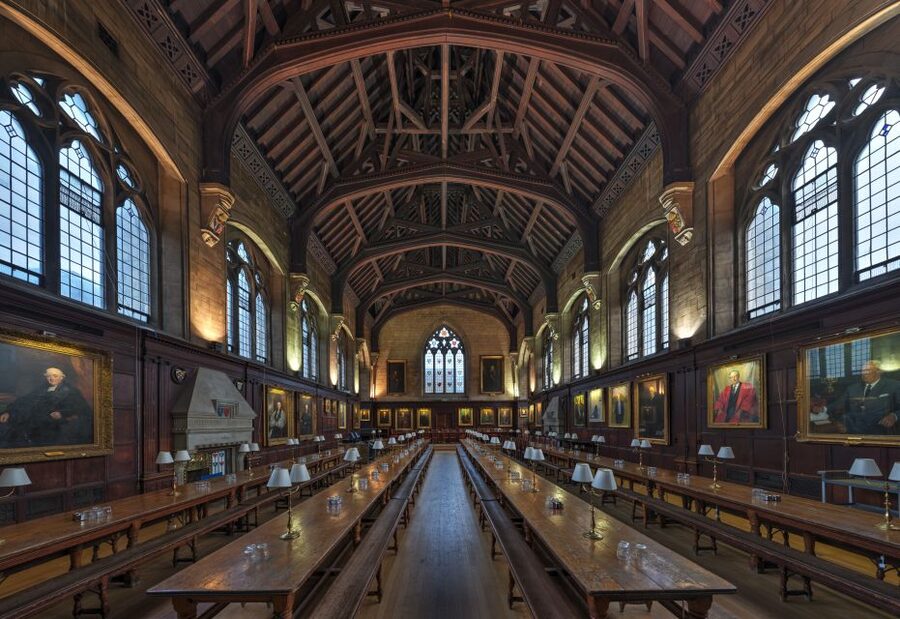
Group size can vary. Some departures are small, with only a handful of people, while others may be larger. A small group makes it easier to ask questions and hear the guide clearly. It can also make the experience feel more like a conversation.
The tour pace is generally easy, and the route is concentrated in a small part of Oxford. That is helpful if you have limited time or are arriving for a day visit. You can get a solid introduction without using transport between far-flung sights.
The tradeoff is coverage. A compact route gives you more explanation at each stop, but it will not show every major part of Oxford. If your main goal is to tour many interiors, check the exact option carefully. One recurring wish is for access to more college rooms, which may not be possible because the university is still in use.
English is the tour language. Clear delivery varies by guide and by accent, so anyone who finds spoken English difficult should keep that in mind. The tour remains accessible to many international visitors, but the amount of historical detail means you need to listen closely.
Is the $40 price good value?

At about $40 per person, the tour is reasonably priced for a guided walk that includes entrance fees and an alumni guide. The value comes less from the distance covered and more from access, explanation, and context.
You could walk through central Oxford for free, take photographs, and read signs along the way. What you cannot easily reproduce is the guide’s explanation of college structure, student traditions, admissions, ceremonies, literary connections, and local stories. Entry to a college also gives the paid tour a practical advantage over a self-guided stroll.
The price makes the most sense if this is your first visit or if you want the university explained by someone who has studied there. It is less essential if you already know Oxford well and mainly want to wander at your own pace.
The booking terms add flexibility. You can cancel up to 24 hours before the tour for a full refund, and the reserve-now, pay-later option lets you hold a place without paying immediately. The meeting point changes by option, so read the booking details carefully before setting out.
Who should book this Oxford walking tour?
I would choose this tour if you want a focused introduction to Oxford University and prefer stories to a simple list of dates. It suits first-time visitors, families with an interest in universities, literature fans, and people curious about how Oxford works from the inside.
It is also a good fit for visitors with only a few hours in the city. The route covers major sights in a compact area, and the two-hour format leaves time for a museum, meal, or independent college visit afterward.
You may want a different plan if your main goal is guaranteed access to the Divinity School, extensive indoor touring, or a completely private experience. Summer access is particularly uncertain, and college availability can change.
Should you book it?
Book this Oxford walking tour if you want the city’s university explained by someone with direct student experience. The strongest parts are the alumni perspective, the college access, the mix of famous buildings and lesser-known stories, and guides such as Sam Day, Saga, Jacob, Tom, Will, and Oscar who bring humor and warmth to the walk.
Keep your expectations practical. You are not guaranteed every interior or every college, and the Divinity School may be closed in peak season. With that understood, the tour offers a useful and entertaining way to get your bearings in Oxford, then decide which buildings, books, and stories deserve a closer look.
FAQ
How long does the Oxford University and City Walking Tour last?
The available options range from 2 to 10 hours. Check the selected option for the exact duration and starting time. The commonly described university and city walk lasts about two hours.
What language is the tour conducted in?
The live tour guide speaks English, and English is the only language listed for this activity.
Is an alumni or student guide included?
Yes. The experience includes an alumni guide. Named guides who have led departures include Sam Day, Saga, Jacob, Tom, Will, Oscar, and others.
Which Oxford sights are included?
The tour covers historic university areas and can include the Bodleian Library, Trinity College, All Souls College, Oriel College, Hertford College, Merton College, the Radcliffe Camera, and the University Church of St. Mary. The exact stops and college access can vary.
Will I visit the Divinity School?
Access to the Divinity School is not guaranteed. During June through August, closures and high demand can make entry extremely limited, and it may not be included in the tour.
Is a Harry Potter location included?
Yes. The experience includes a film site connected with Harry Potter.
Are entrance fees included?
Yes. Entrance fees and the walking tour are included in the activity price.
Can I cancel the booking?
You can cancel up to 24 hours in advance for a full refund. A reserve-now, pay-later option is also available.
New routes in the UK
- Aberdeen City Centre Walking Tour (2pm)★ 5.0 · 217 reviews
- German London : The Ultimate Walking tour★ 4.8 · 400 reviews
- London: Medieval History Walking Tour from The Tower★ 4.9 · 318 reviews
- Oxford: Official University and City Walking Tour★ 4.7 · 618 reviews
- The Beatles London Walking Tour★ 4.2 · 147 reviews
- Stratford-Upon-Avon’s Town Walking Tour (10:30am & 2pm)★ 4.8 · 143 reviews
- The Sinister Side of Shakespeare’s Stratford Walking Tour★ 4.8 · 547 reviews
- Stratford-Upon-Avon: The Famous Walk Talk Show★ 4.9 · 342 reviews
Oxford Walking Tours, compared.

Oxford University Walking Tour With University Alumni Guide
Read our review →
Oxford: Harry Potter Walking Tour Including New College
Read our review →
1.5-hour Oxford City and University Walking Tour
Read our review →
Oxford: University Walking Tour with Christ Church Visit
Read our review →
Morse, Lewis and Endeavour Walking Tour of Oxford
Read our review →
Oxford Walking Tour: Magic, University & Harry Potter Sites
Read our review →
Oxford: C.S. Lewis & J.R.R. Tolkien Guided Walking Tour
Read our review →
Oxford University: Guided Small Group Walking Tour
Read our review →Browse the lists this tour appears in