
Review · MUNICH
Munich: Third Reich & WWII Walking Tour
Munich’s darkest chapter began in ordinary-looking places. This 165-minute walking tour links beer halls, squares, memorial sites, and government buildings to explain how Hitler’s movement grew from postwar chaos into the Nazi dictatorship. You will visit the Hofbräuhaus, Feldherrnhalle, Königsplatz, and the Hofgarten, where the story includes both Nazi power and the courage of the White Rose resistance.
I like the tour’s clear route through real city locations, rather than a lecture detached from place. I also like the attention many guides give to context, local details, and questions. Guides including Michael, Steve, Alex, Josh, Danielle, Florian, and Ulrich are praised for strong delivery and serious treatment of the subject.
The main consideration is simple: this is a long outdoor walk about genocide, dictatorship, war, and destruction. Cold or wet weather can make it harder, and the meeting point may vary with the option you book. Wear good shoes and warm clothing, and be ready to give the guide your full attention.
Key points to know before booking
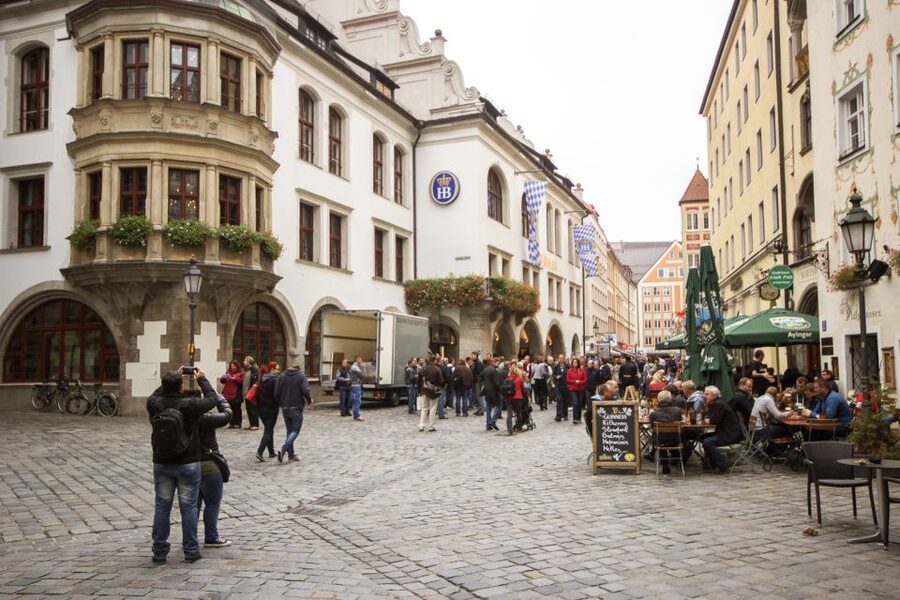
- Hofbräuhaus begins the political story: Learn how Nazi mass meetings helped turn a fringe movement into a force with a public audience.
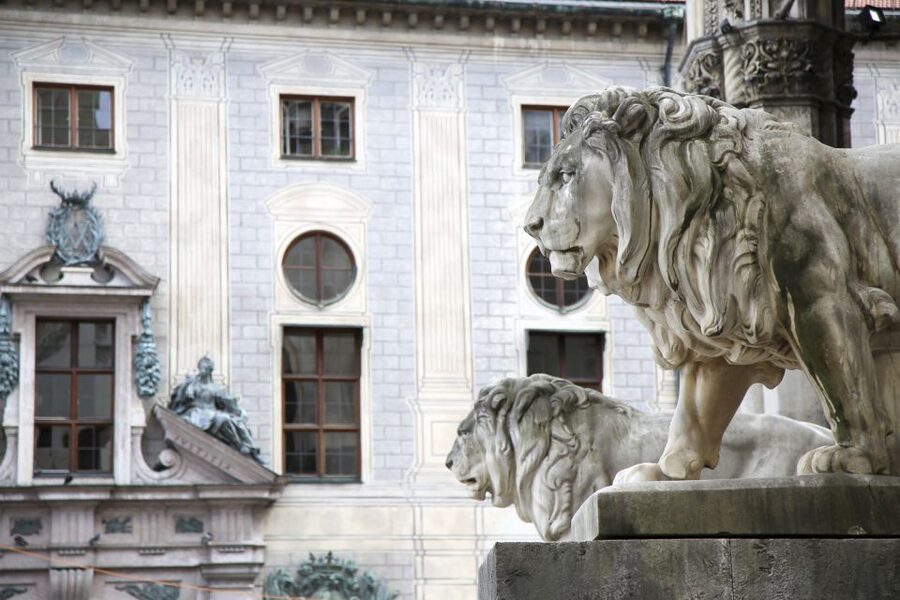
- Feldherrnhalle marks a failed power grab: The tour explains the attempted seizure of power and why this site mattered to Hitler’s movement.
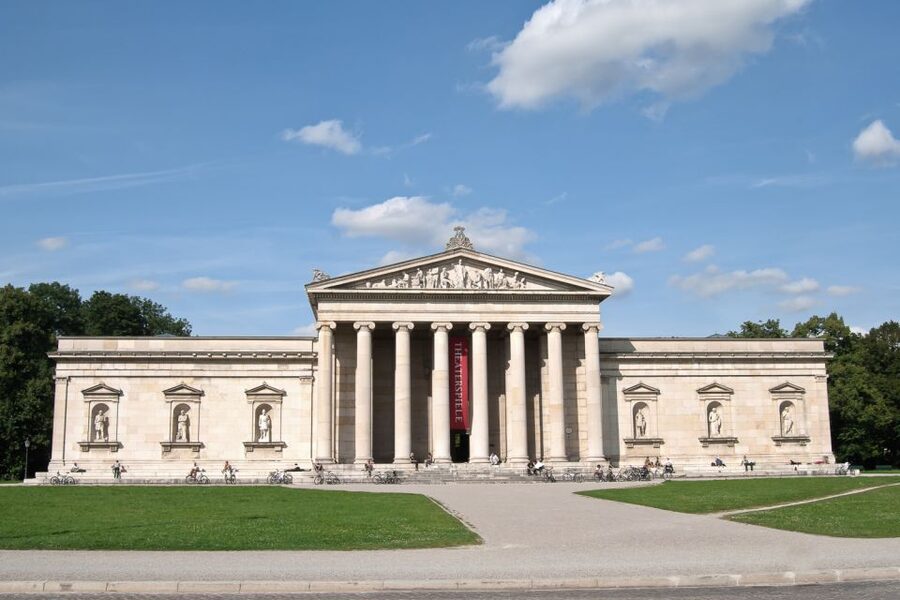
- Königsplatz shows Nazi spectacle: Former rally grounds help you understand how architecture and public ceremony served propaganda.
- The Hofgarten brings in resistance: The White Rose story adds moral courage and opposition to a tour otherwise centered on Nazi power.
- Guides make the difference: Michael, Steve, Alex, Josh, Danielle, Florian, and Ulrich are among the named guides praised for clear, engaging presentations.
- Plan for weather: The route is outdoors, lasts about two and a half hours, and calls for comfortable shoes and suitable clothing.
Why Munich is the right place for this difficult story

Munich is not just the setting for this tour. It is where the Nazi movement found early support, built its public image, and tested its ambitions. That gives the walk a useful shape: you are not simply hearing a list of events, but moving through the places where political meetings, attempted coups, rallies, and resistance took place.
The story begins in 1919, after Germany’s defeat in World War I. Bavaria was marked by revolution, political violence, assassination, inflation, and anger at the postwar settlement. The tour uses that unstable period to explain how extremist movements could attract attention and followers.
That context matters. Without it, Hitler’s rise can seem sudden or inevitable. A good guide shows instead how propaganda, public fear, economic hardship, political weakness, and organized mass meetings worked together. You also learn that Munich was not only a birthplace of Nazi power. It later became a city badly damaged by the war and a place where opposition, including the White Rose, took shape.
More Walking Tours in Munich:
- Third Reich Walking Tour Munich
★ 4.5 · 4,291 reviews - Munich: Old Town & Viktualienmarkt City Walk in German
★ 4.7 · 2,304 reviews - Munich: Night Watchman Walking Tour
★ 4.7 · 2,092 reviews
Hofbräuhaus and the birth of a mass movement
The Hofbräuhaus is one of Munich’s best-known beer halls, which makes it an effective starting point for a story about political communication. The tour discusses the first major Nazi mass meeting held there and explains how Hitler’s movement used public gatherings to gain attention.
You should not expect a museum visit or a private room set aside for the tour. The value is in standing at a living Munich landmark while the guide explains what happened there and why the location mattered. The building’s modern role as a beer hall can also make the subject feel more immediate: political history did not unfold in distant castles or remote battlefields, but in familiar civic and social spaces.
This stop is especially useful if you know the broad outline of Hitler’s rise but want to understand the mechanics behind it. The guide can connect speeches, party organization, local politics, and the mood of postwar Bavaria. The best part is the contrast between the cheerful public image of the Hofbräuhaus and the serious events discussed there.
Because the tour takes place in the city center, sound can be an issue. One participant specifically suggested that a small speaker could help when crowds are large or nearby streets are noisy. Guides such as Steve are praised for projecting their voices, but you should still stay close and avoid drifting behind the group.
Feldherrnhalle and the failed attempt to seize power
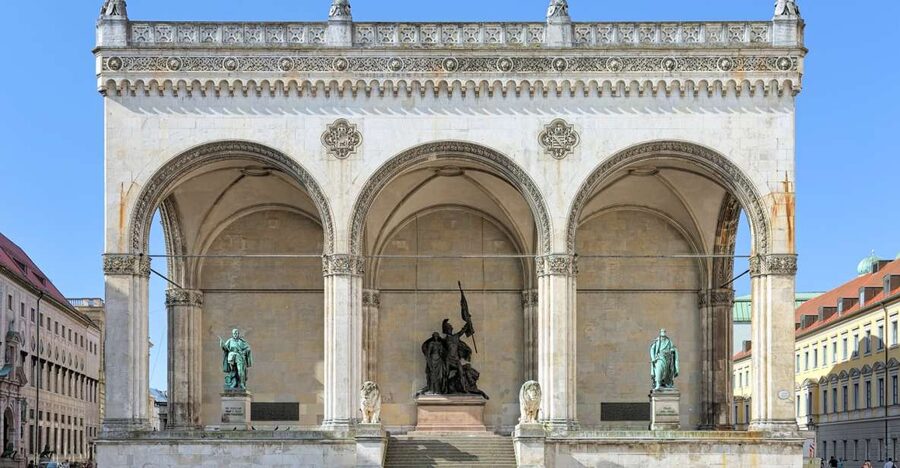
From the early meetings, the tour moves toward Feldherrnhalle, a monumental loggia near the Odeonsplatz area. Here the focus shifts from speeches and recruitment to direct action.
This is the site associated with Hitler’s failed attempt to seize power in 1923, an event often called the Beer Hall Putsch. The guide explains how the movement tried to force its way into national power, why the attempt failed, and how the aftermath shaped Hitler’s future strategy.
The stop helps correct a common misunderstanding. Hitler did not simply take power in one dramatic moment. He first tried force, failed, and then used the legal political system, propaganda, organization, and intimidation to pursue his goals. Feldherrnhalle makes that change in method easier to follow.
It is also one of the tour’s more powerful stops because the site looks formal and calm today. Your guide supplies the movement, confrontation, and political stakes that are no longer visible in the stonework. Guides are encouraged to answer questions, and this is a good place to ask about the difference between the failed coup and the later Nazi takeover.
The walking pace includes regular stops, so you are not expected to walk continuously for two and a half hours. Still, the total outing is long enough that comfortable shoes matter. If you have limited stamina, ask about the private group option or check the accessibility details before booking. The tour is listed as wheelchair accessible, but the meeting point and precise route can vary by booking option.
Königsplatz and the machinery of spectacle
Königsplatz provides the tour’s clearest look at how the Nazi regime used public space. The square became associated with party rallies, ceremonies, and carefully staged displays of power.
Here, the guide can explain how architecture and crowds were used together. A rally was never just a gathering. The setting, movement of people, banners, speeches, and repeated symbols helped create the impression of unity and authority. The square makes this easier to picture because its open scale was suited to mass events.
For me, this is one of the strongest reasons to choose a walking tour instead of reading about the subject alone. You can see how a city center might be reshaped for political theatre. The physical distance between sites also shows how the movement spread through Munich rather than existing in one isolated headquarters.
Königsplatz is also the planned end point described for the tour, and it can be a useful place to continue your visit. One booking ended near the Munich Documentation Centre, allowing the group to visit it afterward. Do not assume every departure ends in exactly the same spot, however. One participant reported that the stated end point changed, so confirm the current route if Königsplatz is important to your plans.
The Documentation Centre is not included in the guided walk. If you visit it afterward, allow separate time and admission planning. The walking tour gives you a street-level introduction; a museum visit can add displays and documents in a more formal setting.
Same streets, a different guide:
- Munich Ghosts and Spirits Evening Walking Tour
★ 5.0 · 1,900 reviews - Munich Old Town Walking Tour
★ 4.5 · 1,287 reviews - Munich: Walking Tour Old Town and Viktualienmarkt
★ 4.7 · 839 reviews - Munich: Birthplace of the Third Reich Guided Walking Tour
★ 4.6 · 771 reviews
The Hofgarten and the White Rose resistance
A tour focused on Hitler and the Third Reich can become trapped in the story of Nazi power. The stop in the Hofgarten helps broaden the picture by introducing the White Rose resistance movement.
The White Rose was a Munich-based student resistance group that opposed Nazi rule and distributed leaflets calling for moral and political resistance. The guide uses the Hofgarten to discuss their actions, their risks, and the courage required to oppose a dictatorship from within German society.
This is an important part of the route because it prevents the story from suggesting that everyone accepted or supported the regime. Resistance was dangerous, uneven, and often suppressed, but it existed. The White Rose also brings the subject closer to individual choices. Instead of focusing only on leaders, armies, and institutions, you consider what ordinary people might do when law and government become instruments of persecution.
Expect the mood to change here. The earlier stops explain organization, spectacle, and political ambition. The Hofgarten asks you to think about conscience, responsibility, and the cost of speaking out. Guides are expected to treat this material with care, and several named guides are praised for presenting difficult subjects respectfully rather than turning them into entertainment.
Guide quality shapes the whole experience
The tour has many different guides, so the tone can vary. Names repeatedly associated with strong feedback include Michael, Steve, Alex, Josh, Danielle, Florian, Ulrich, Aileen, Brigit Muller, and others. Their shared role is to make complex events easy to follow while keeping the group moving through the city.
Michael is praised for a clear voice, enthusiasm, and strong local context. Steve receives special credit for explaining complicated events plainly and looking after the group in poor weather. On cold days, he has brought hot tea, disposable cups, and mats or cushions for people sitting on wet ledges.
Alex is described as warm, approachable, and full of detail. Josh is praised for holding a large group’s attention, setting expectations early, and connecting the lessons of German history to the present. Danielle is noted for combining a friendly manner with thorough explanations, while Florian is praised for local knowledge and personal commitment to the subject.
These details matter because a walking tour succeeds or fails through its guide. The subject is serious and information-heavy. A guide who speaks clearly, keeps the pace sensible, and welcomes questions can make nearly three hours pass quickly. A less effective presentation could feel like a long outdoor lecture.
Large groups may require more discipline. One participant found the opening instructions a little strict, while another appreciated clear expectations. Stay near the guide, listen during each stop, and avoid assuming the walk will function like a casual stroll. The information comes in sustained blocks, not just quick photo stops.
A serious walk, not a sightseeing sampler
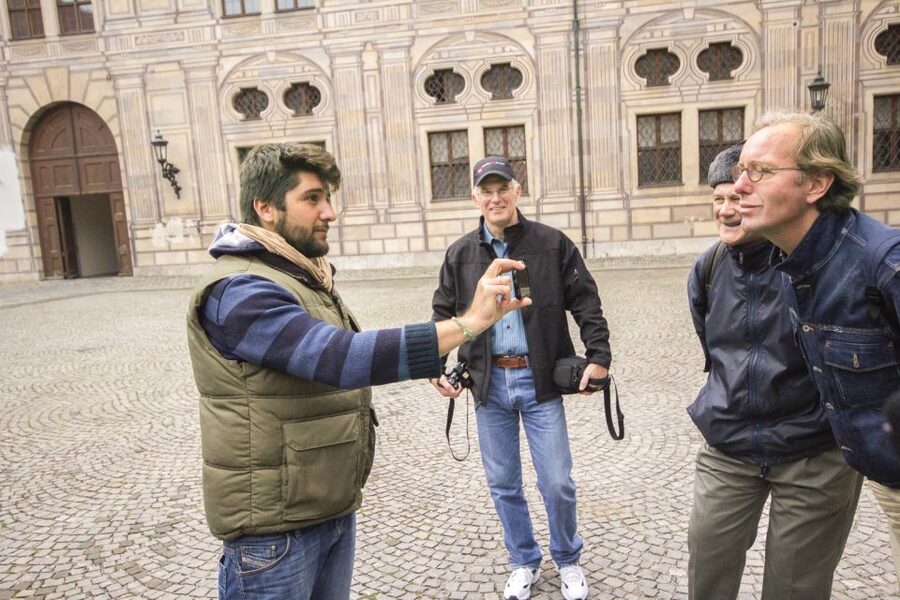
The listed duration is two and a half hours, or 165 minutes. That is enough time to build a real narrative, but it also means you should not schedule a tight museum appointment immediately afterward.
You will spend much of the time outside. Munich can be cold, snowy, rainy, or windy, especially in winter. Warm layers, waterproof clothing, and comfortable shoes are sensible. The tour description specifically asks you to bring comfortable shoes, and recent winter experiences show why. Cold weather did not stop the tour, but it affected comfort.
Frequent stops make the route easier than a nonstop march. You might sit briefly on a ledge or pause while the guide speaks, though available seating and conditions can vary. The tour is wheelchair accessible, but because the precise meeting point may depend on your booking option, check the details before arrival.
English and German tours are available. Private groups can also be booked, which may suit families, school groups, or anyone who wants more control over pace and questions. A private option may be especially useful if the subject is important to your group or if you have mobility concerns.
Is $31 a fair price?
At $31 per person, the tour offers solid value if you want a guided explanation rather than a quick look at monuments. You are paying for 165 minutes, a route through several central locations, and a connected account of Munich’s role in the rise of Nazism and the response to it.
The value is strongest for first-time visitors, people with limited time, and anyone who wants to understand why these particular sites matter. You do not need advanced knowledge of the Third Reich. Guides begin with the postwar situation and build toward the failed coup, the later Nazi system, wartime destruction, and resistance.
If you already know the subject well, the value depends more on the guide and the site-based approach. One history-minded participant still found the walk worthwhile because the locations added meaning to familiar events. You may not receive the same level of detail as in a specialist seminar, but you gain a clear route and the chance to ask questions on site.
The price does not include a museum visit, and you should not treat the walking tour as a replacement for the Munich Documentation Centre. Think of it as a strong introduction or companion experience.
Who should book this Munich walking tour?
I would choose this tour if you want a serious, place-based account of Munich’s Nazi past. It suits adults, families with older children, history students, and anyone who wants more than pretty squares and beer halls during a Munich visit.
It is also a good first or second-day activity because it helps you understand the city’s central sights. Afterward, the Hofbräuhaus, Feldherrnhalle, Königsplatz, and Hofgarten will carry more meaning than they did as isolated stops on a sightseeing route.
I would hesitate if you dislike long outdoor tours, want a light introduction to Munich, or prefer to explore at your own pace. The subject includes mass politics, dictatorship, genocide, war, and destruction. It deserves attention and a respectful attitude.
Should you book it?
Book this tour if you want Munich’s difficult past explained where it happened. The strongest reasons are the connected route, the inclusion of the White Rose, and the chance to hear the material from guides such as Michael, Steve, Alex, Josh, Danielle, or Florian.
Plan for cold or wet weather, keep three hours open, and confirm the meeting point and end point for your chosen option. At $31, it is a worthwhile introduction to the city’s role in the Third Reich, especially if you pair it with a separate visit to the Munich Documentation Centre.
FAQ
How long does the Munich Third Reich and WWII Walking Tour last?
The tour lasts 2.5 hours, or 165 minutes. Check availability for the starting times offered on your selected date.
How much does the walking tour cost?
The listed price is $31 per person.
Which languages are available?
The tour is available in English and German.
Is the tour guided?
Yes. A live tour guide leads the experience.
Which Munich sites are included?
The route includes the Hofbräuhaus, Feldherrnhalle, Königsplatz, and the Hofgarten. The tour also discusses sites connected with Hitler’s rise, Nazi party rallies, and the White Rose resistance movement.
Does the tour include the Munich Documentation Centre?
The Documentation Centre is not listed as part of the guided tour. The walk may end near it in some cases, allowing you to visit separately.
Is the tour wheelchair accessible?
The activity is listed as wheelchair accessible. The meeting point may vary depending on the option booked.
Can I book a private group?
Yes. A private group option is available.
What should I bring?
Bring comfortable shoes. Since the tour is outdoors and lasts about two and a half hours, warm or weatherproof clothing is also sensible, especially in winter.
Can I cancel for a full refund?
You can cancel up to 24 hours in advance for a full refund. The booking also offers a reserve-now-and-pay-later option, according to the activity details.
New routes in Munich
- Munich: Walking Tour Old Town and Viktualienmarkt★ 4.7 · 839 reviews
- Munich: Raven Black Witches and Executioners Walking Tour★ 4.7 · 294 reviews
- Munich Old Town – Guided Walking Tour in English★ 4.7 · 153 reviews
- Munich: Birthplace of the Third Reich Guided Walking Tour★ 4.6 · 771 reviews
- Munich: Old Town Guided Walking Tour★ 4.6 · 479 reviews
- Munich : Private Walking Tour with A Guide (Private tour)★ 4.5 · 85 reviews
- Munich: Guided Food Walking Tour with Beer Tasting★ 4.7 · 183 reviews
- Munich: Old Town Walking Tour★ 4.7 · 589 reviews
Munich Walking Tours, compared.
Old Town & Viktualienmarkt City Walk in German
Read our review →
Munich Ghosts and Spirits Evening Walking Tour
Read our review →

Birthplace of the Third Reich Guided Walking Tour
Read our review →
Discover Munich 2-Hour Small Group Walking Tour
Read our review →
Raven Black Witches and Executioners Walking Tour
Read our review →Browse the lists this tour appears in