
Review · UK
Manchester: Media City & The Quays Guided Walking Tour
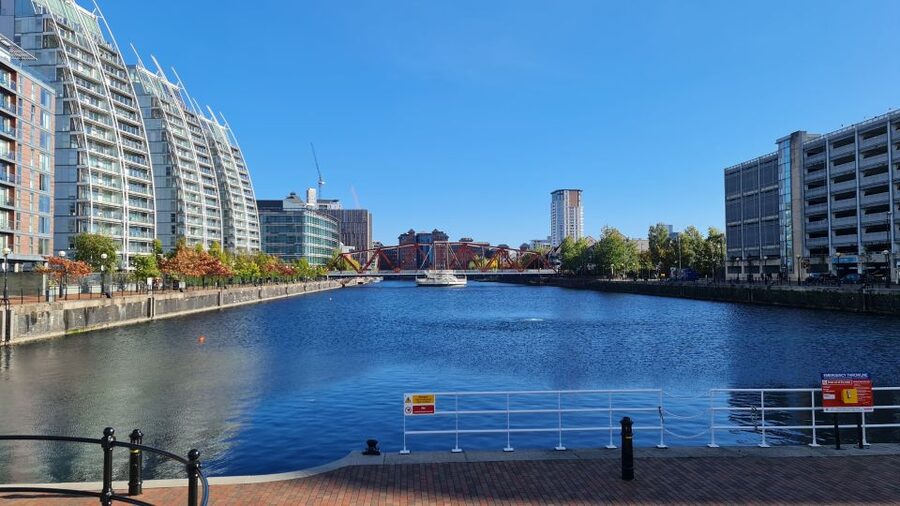
Salford Quays tells one of Manchester’s most striking stories: a working dock district that lost its purpose, then found a new life as a home for culture, broadcasting, business, and modern apartments. This two-hour walking tour connects those changes as you follow canals, bridges, and open waterfront paths.
I like the way the tour links the past to the future instead of treating the Quays as a collection of shiny buildings. I also like the practical use of headsets, which lets you hear the guide while walking, even when the group spreads out. The main consideration is the distance: about 5 kilometres, outdoors, in weather that may be wet, cold, or windy.
- A working dock story: Learn how the Manchester Ship Canal changed Manchester and Salford.
- MediaCityUK in context: See how broadcasting and creative businesses reshaped the former industrial area.
- Major cultural sights: Pass The Lowry arts centre and Imperial War Museum North.
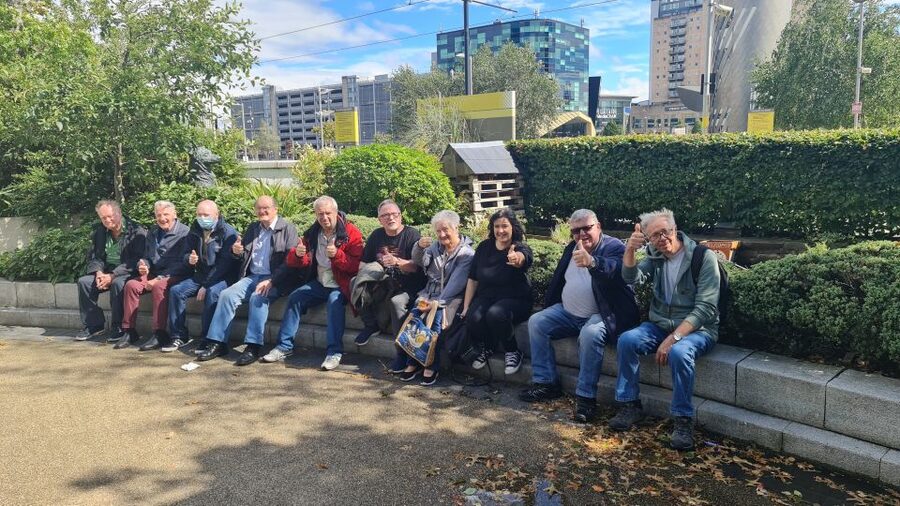
- Strong guiding: Frank is frequently praised for clear storytelling, old photographs, and detailed local knowledge. Craig has also led the walk.
- Easy to hear: Personal earpieces help you follow the commentary without crowding around the guide.
- Flexible for families: The route is suitable for all ages, and the pace can be adjusted.
Why Salford Quays makes such a good walking tour
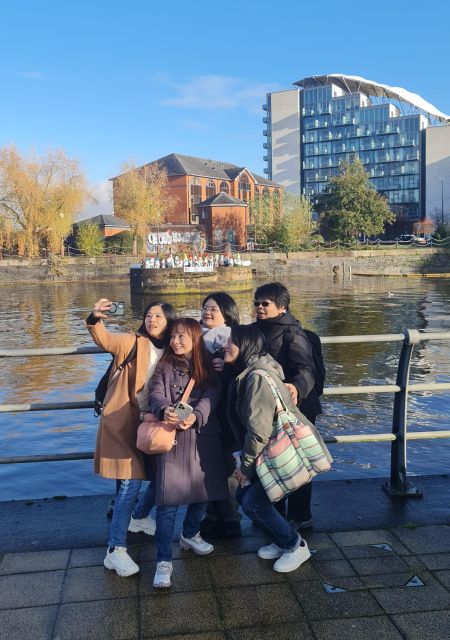
Salford Quays is not a traditional old town. You will not spend two hours moving from one medieval street to another. Instead, the interest comes from seeing an entire district change identity.
The Manchester Ship Canal opened a route for ocean-going ships to reach Manchester, turning the inland city into a major port. The docks brought trade, jobs, warehouses, and engineering. Later, changes in shipping and industry left large parts of the area underused.
Today, the same waterfront supports MediaCityUK, cultural venues, restaurants, offices, and public spaces. The contrast is the point. As you walk, you can look at modern buildings while hearing how the water once carried cargo ships and powered Manchester’s commercial ambitions.
I find this kind of tour especially useful early in a visit. It gives you a mental map of Salford Quays and explains why the district looks so different from central Manchester. You also get a clearer sense of the relationship between Manchester and Salford, two places that share the wider urban area but have their own civic identities.
Meeting under the big screen at MediaCityUK
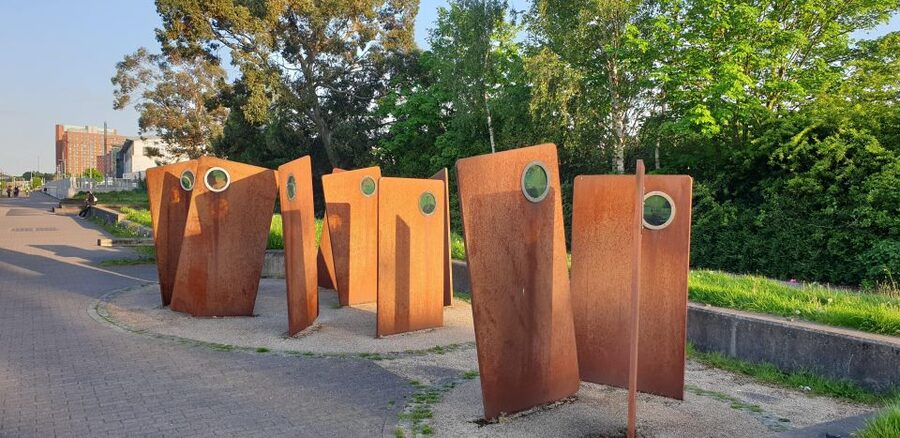
The tour begins and ends in the Media City Piazza, underneath the large digital screen. The meeting place is opposite BBC Quay House and next to the MediaCityUK Metrolink station, so it is straightforward to find if you arrive by tram.
This opening setting immediately shows you the area’s modern character. MediaCityUK is a purpose-built centre for digital and creative businesses, and the BBC presence helps explain why this waterfront became associated with broadcasting rather than docks.
Your guide introduces the route and sets out what you will see. The tour is conducted in English, with an English-speaking guide and audio equipment. You receive an earpiece so you can keep walking rather than stopping in a tight circle around the guide.
That small detail matters. Waterfront paths can be open and exposed, and groups naturally stretch out while crossing bridges or stopping for photographs. The headset means you can look around without losing the commentary.
More Guided Walks in the UK:
- Magical London: Harry Potter Guided Walking Tour
★ 4.7 · 22,044 reviews - Edinburgh: Harry Potter Magical Guided Walking Tour
★ 4.8 · 11,944 reviews - Edinburgh Castle: Guided Walking Tour with Entry Ticket
★ 4.7 · 11,699 reviews
Following the Manchester Ship Canal
The canal is the backbone of the walk. It gives the tour its physical route and its main historical question: why was a major port built so far inland?
Your guide explains the canal’s role in Manchester’s rise as an industrial centre and the effect it had on Salford Quays. The story is not just about ships. It is also about trade, engineering, employment, and the economic forces that shaped Greater Manchester.
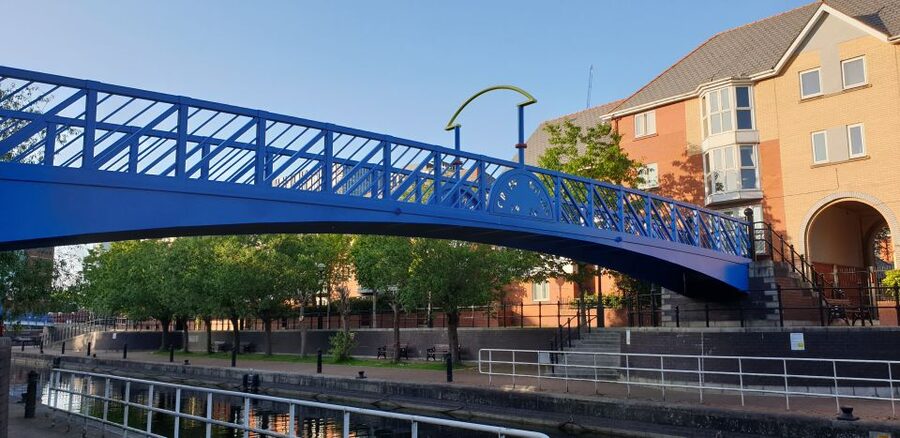
As you walk beside the water, you can connect those large themes to the surviving dock layout. Bridges and waterfront spaces make more sense once you understand their former purpose. You are not simply being shown a pleasant canal walk. You are reading the area as a record of industrial change.
The route also helps explain the decline of the docks. Once shipping patterns and industry changed, the Quays needed a new reason to exist. That leads naturally into the modern regeneration story, rather than treating the past and present as separate subjects.
The tour covers around 5 kilometres. That is manageable for most people over two hours, but it is still a proper walk. Wear comfortable shoes, avoid high heels, and bring clothing suited to the forecast. The tour operates in rain or shine, and winter visitors should take the waterfront cold seriously.
The Lowry and the cultural side of The Quays
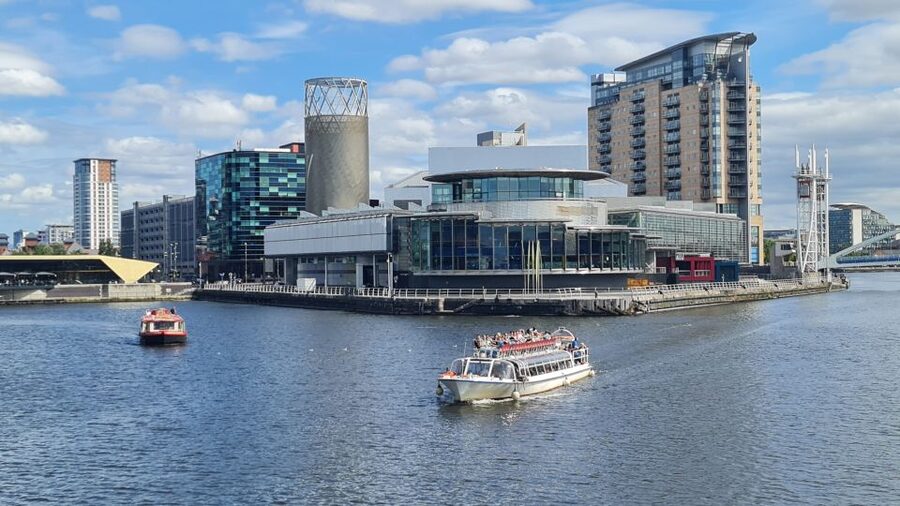
The Lowry arts centre is one of the route’s major landmarks. Its presence helps show how the Quays moved beyond offices and housing to become a cultural destination.
The building and its setting provide a useful pause in the story. Regeneration is not only about replacing old warehouses with new construction. It also involves theatres, galleries, public art, and places where people come for an evening or a weekend rather than for work.
Your guide points out the role of The Lowry within the wider district and adds local details that are easy to miss if you walk around alone. This is one of the stronger reasons to take the tour instead of simply following the waterfront on your own. You will see the building either way, but you may not understand why it matters to the Quays’ new identity.
The tour does not replace a visit inside The Lowry. Its value is the outside perspective and the connection to the district’s wider redevelopment. If you want a performance or gallery visit, you should plan that separately.
Imperial War Museum North and the changing waterfront
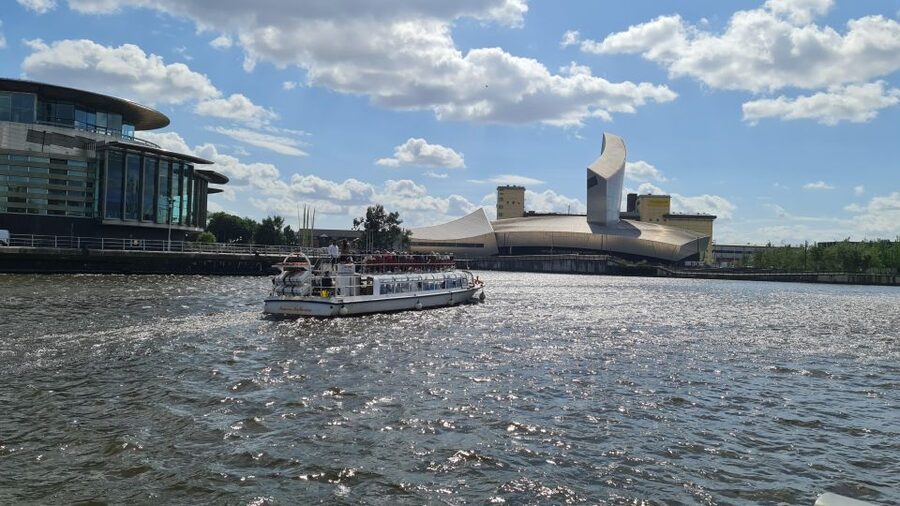
Imperial War Museum North is another key stop. Its architecture gives the tour a strong visual moment, while its subject adds another layer to the Quays’ cultural role.
The museum is not simply an attraction placed beside the canal. It reflects the area’s effort to draw people for learning, remembrance, and public culture. Your guide discusses the museum as part of the waterfront setting and helps connect it to the broader redevelopment.
You should allow extra time if you want to go inside. The walking tour takes about two hours and passes the museum, but it is not presented as a full museum visit. That distinction is important when planning your day.
The combination of The Lowry and the Imperial War Museum North gives the walk variety. One represents the performing and visual arts. The other addresses war and memory. Together, they show how the Quays has developed a cultural purpose alongside its business and residential uses.
More Walking Tours in the UK:
- Underground Vaults Walking Tour in Edinburgh Old Town
★ 4.5 · 8,506 reviews - London: The Original Jack the Ripper Walking Tour
★ 4.7 · 7,833 reviews - Oxford University Walking Tour With University Alumni Guide
★ 5.0 · 6,905 reviews - Edinburgh Castle: Guided Walking Tour with Entry Ticket
★ 5.0 · 5,540 reviews
Media, architecture, and the future of the Quays
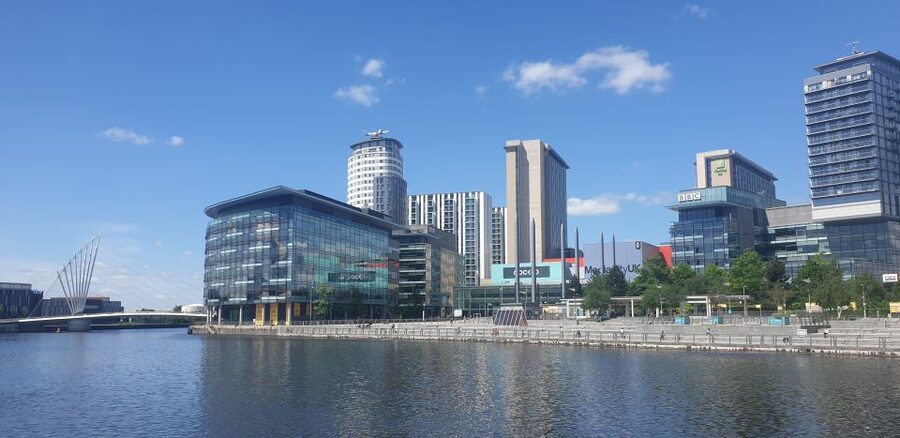
MediaCityUK is more than a backdrop for the tour. It is one of the main subjects.
You learn how the area became a centre for television, digital work, and creative businesses. The guide also discusses current and planned development, giving you a sense that the district is still being built and adjusted rather than finished once and for all.
That forward-looking element is one of the tour’s best features. Many city walks focus only on what has already happened. Here, you hear how the UK’s major urban regeneration project continues to shape the waterfront.
The guide may use photographs to compare the former docks with the present-day Quays. Frank, in particular, is often praised for carrying old images and using them to make the changes clear. A picture of the earlier dock area can do more than a long explanation, especially when you are standing in the same location.
The approach also suits people who already know Manchester. Several local participants have found that the tour reveals details they had missed despite living nearby or visiting Salford Quays for years. You do not need to be a first-time visitor to get value from it.
Frank’s guiding style and the importance of the headset
Frank is the guide most often associated with this experience, and the strongest praise focuses on his delivery. He is described as friendly, professional, humorous, and deeply familiar with the area. He answers questions rather than simply reciting a fixed speech.
That matters because Salford Quays can seem confusing at first. There are many developments, several bodies of water, and a mix of Manchester, Salford, media, art, and industrial stories. A guide who can explain how those pieces fit together makes the walk much more useful.
You may also hear stories from other guides, including Craig, so the exact style can vary by date. The consistent feature is a live English-speaking guide rather than a recorded commentary.
The earpieces receive repeated praise for a practical reason: you can hear the guide clearly. This is particularly helpful if you walk near traffic, across a bridge, or at the back of a small group. It also allows the guide to keep speaking while you look at a building or photograph.
One small point to watch is walking speed. The route is usually described as comfortable, and the pace can be adapted, but one participant noted that Frank has a long stride. If you need a slower pace, say so at the start. The tour is designed to accommodate different groups.
How much the $18 price is worth
At $18 per person, this is a modestly priced guided walk for two hours. The value depends on what you want from Salford Quays.
If your plan is simply to stroll beside the water, take photographs, and stop for food, you can do that without paying for a tour. The walking paths and major buildings are there to see independently.
The fee becomes worthwhile if you want the area explained. You are paying for a local guide, a planned route, historical context, commentary on current development, and audio equipment. The tour also helps you use your time efficiently by linking the main sights into one circuit.
The small-group experience can make the price feel particularly fair. Some departures have had only a few participants, allowing plenty of questions and a more personal pace. Group size is not specified as fixed, so you should not assume every departure will be tiny.
I would choose this before spending a full afternoon wandering without context. It is especially useful if you have only one day in Greater Manchester and want to understand why the Quays matters.
Who will enjoy this walk most

This tour suits first-time visitors who want an introduction to Salford Quays without committing to a long museum programme. It also works well for local residents, returning visitors, and anyone interested in urban renewal.
Families can join, and the route is suitable for all ages. Dogs on leads are welcome. The walk is wheelchair accessible, and the route can be altered to avoid steps. The pace can also be adjusted to suit the group.
You should still think about the 5-kilometre distance. Accessible does not mean effortless, and the walk takes place outdoors. Comfortable shoes are essential, especially if the weather is poor.
I would be more cautious about booking if you dislike guided commentary, want to spend most of the time inside museums, or have limited stamina for walking. This is a place-based history walk, not a hop-on, hop-off tour and not a full indoor sightseeing programme.
Practical planning for a rain-or-shine route
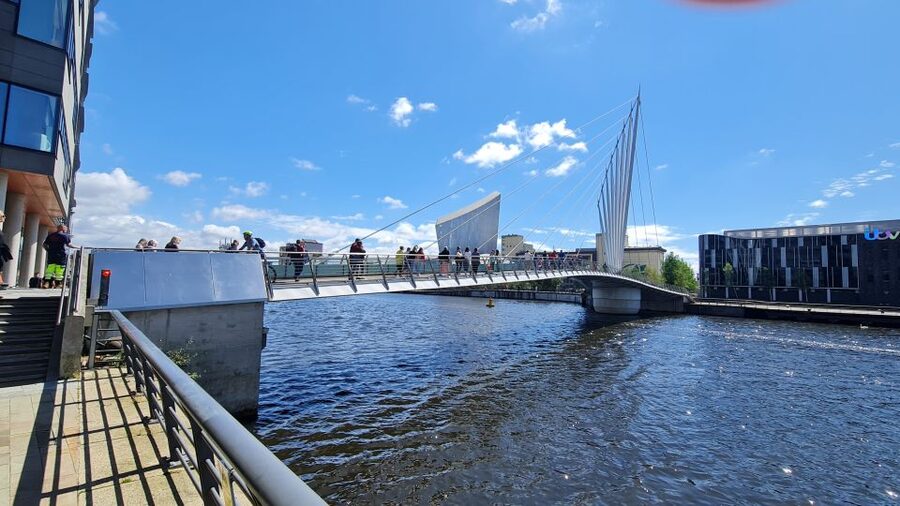
Meet beneath the large digital screen in Media City Piazza, beside the MediaCityUK Metrolink station. Arrive with enough time to locate the guide, since the piazza is a modern public space with several prominent buildings around it.
Wear walking shoes and weather-appropriate clothing. High heels are not allowed, which is sensible given the distance and outdoor paths. Bring an extra layer in cooler months, as the waterfront can feel exposed.
Keep two hours free, even if you have a tight schedule. The stated duration is two hours, and the route includes stops for views, photographs, and explanations. Booking guidance also recommends allowing the full time.
You can cancel up to 24 hours in advance for a full refund, and the reserve-now-pay-later option lets you hold a place without paying immediately. Starting times vary, so check availability for your date.
Should you book the MediaCityUK and The Quays walk?
I would book this tour if you want to understand how Manchester’s port ambitions, industrial decline, cultural venues, and media economy connect. The guide’s old photographs, live commentary, and use of earpieces give you more than a casual stroll, while the $18 price keeps the commitment low.
Book it early in your visit if you want a useful orientation to Salford Quays. Choose another activity if you mainly want indoor attractions or a very short walk.
For most people, the decision comes down to one question: do you want to see the Quays, or do you want to understand it? If the answer is the second, this is a strong choice.
FAQ
Where does the tour start and finish?
The tour starts and ends in Media City Piazza, underneath the large digital screen next to the MediaCityUK Metrolink station.
How long is the walking tour?
The tour lasts two hours and covers about 5 kilometres.
Which sights does the route include?
The route includes MediaCityUK, the Manchester Ship Canal, The Lowry arts centre, Imperial War Museum North, bridges, canals, and other parts of Salford Quays.
Is the tour suitable for children?
Yes. The tour is family-friendly and suitable for all ages.
Is the route wheelchair accessible?
Yes. The route is wheelchair accessible, can be adjusted to avoid steps, and can be paced to suit the group.
What should I bring?
Bring comfortable shoes and clothing suited to the weather. The tour runs in rain or shine, and high-heeled shoes are not allowed.
New routes in the UK
- Aberdeen City Centre Walking Tour (2pm)★ 5.0 · 217 reviews
- German London : The Ultimate Walking tour★ 4.8 · 400 reviews
- London: Medieval History Walking Tour from The Tower★ 4.9 · 318 reviews
- Oxford: Official University and City Walking Tour★ 4.7 · 618 reviews
- The Beatles London Walking Tour★ 4.2 · 147 reviews
- Stratford-Upon-Avon’s Town Walking Tour (10:30am & 2pm)★ 4.8 · 143 reviews
- The Sinister Side of Shakespeare’s Stratford Walking Tour★ 4.8 · 547 reviews
- Stratford-Upon-Avon: The Famous Walk Talk Show★ 4.9 · 342 reviews
UK Walking Tours, compared.

Magical London: Harry Potter Guided Walking Tour
Read our review →

Edinburgh Castle: Guided Walking Tour with Entry Ticket
Read our review →
Underground Vaults Walking Tour in Edinburgh Old Town
Read our review →

Oxford University Walking Tour With University Alumni Guide
Read our review →
Tour for Muggles The Ultimate Harry Potter Walking Tour in London
Read our review →
Edinburgh Darkside Walking Tour: Mysteries, Murder and Legends
Read our review →Browse the lists this tour appears in