
Review · LIVERPOOL
Liverpool: A Walk Through Time: Full History Walking Tour
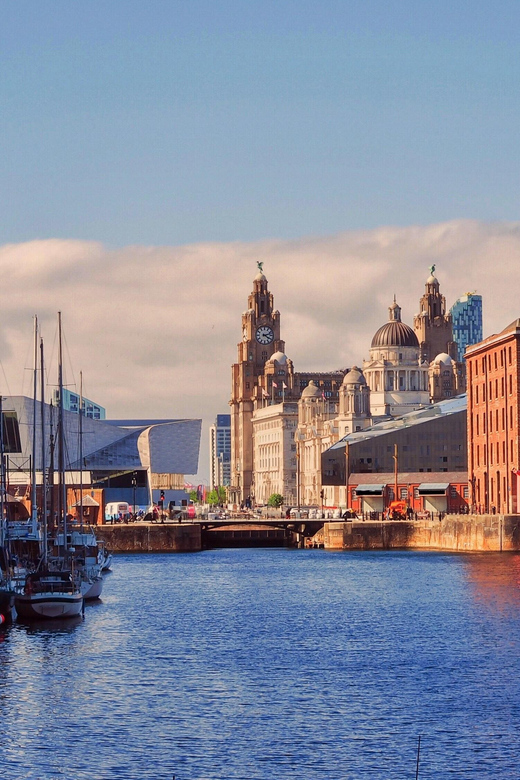
Liverpool’s story is much bigger than The Beatles. This two-hour walk shows how a medieval settlement became one of Britain’s great ports, then uses the city’s buildings and streets as pages in that story. The route takes you from the Royal Liver Building through the waterfront, Old Dock, Liverpool ONE, the parish church, Chapel Street, and Castle Street.
I like the clear historical timeline and the way the guide connects Liverpool’s growth to trade, technology, railways, and the wider north of England. I also like the friendly, question-led style, especially with guides such as John, whose academic background in imperial and maritime history adds real depth.
The main drawback is pace. Two hours covers a lot, so some stops are viewed from outside and many subjects are introduced rather than explored at length. A cold or wet day can also make it harder to stand still and listen, although the tour is designed to suit different ages and is wheelchair accessible.
Key points to know before booking
- A 1207 to present-day storyline: You follow Liverpool from medieval trading town to major port and industrial power.
- The Royal Liver Building sets the scene: The tour begins beside one of the city’s best-known waterfront landmarks.
- Maritime and imperial history get proper attention: This is not simply a Beatles-themed city walk.
- John and Dave are named guides associated with the experience: Expect a strong academic and local-history focus, depending on who leads your departure.
- The route links major central sights: You see the waterfront, Old Dock, Royal Albert Dock, Liverpool ONE, Chapel Street, and Castle Street.
- Good value at $22: For two hours with a live guide, the price is modest, especially if this is your first time in Liverpool.
Starting beside the Royal Liver Building
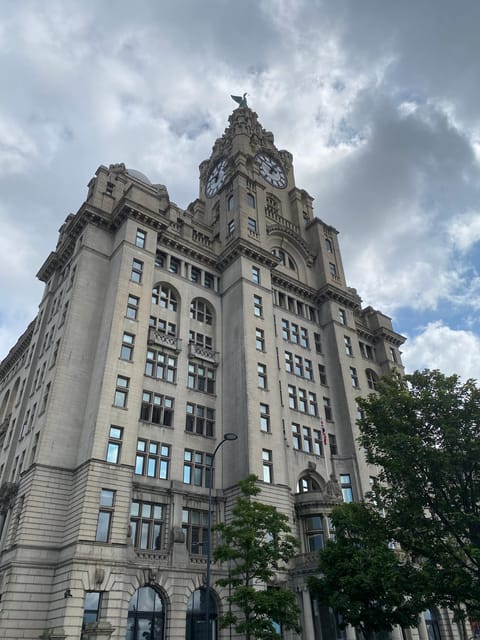
Meet outside the Royal Liver Building at the black gate facing the river. This is a sensible starting point because the building immediately puts Liverpool’s importance into view. You are not beginning with an abstract lecture. You are standing beside one of the city’s most familiar symbols, with the waterfront close by.
The opening section sets up the main idea of the tour: Liverpool grew because of its position, its access to water, and its ability to connect local trade with far wider markets. From there, the guide works backward and forward through time, showing how different periods left marks on the city.
I would arrive a little early. The meeting point is specific, but a large waterfront building can still be confusing if you are rushing. Look for the entrance facing the river and the black gate, not just the general address of the Liver Building.
The tour lasts about two hours. The stated schedule gives roughly 110 minutes to the main Liverpool walk, with additional time focused on the Royal Liver Building and waterfront areas. In practical terms, you should expect a continuous walking route with frequent stops for explanation rather than long indoor visits.
More History Walking Tours in the UK
- A History of Terror – Belfast City Centre Walking Tour
★ 5.0 · 2,883 reviews - Edinburgh: Old Town History and Tales Walking Tour
★ 4.8 · 2,361 reviews - Old Town Walking Tour History and Tales in Edinburgh
★ 5.0 · 2,168 reviews
Liverpool from medieval town to major port
The strongest feature here is the timeline. You begin with Liverpool in 1207 and follow its growth over the centuries, rather than jumping randomly from one sight to another.
That structure matters because Liverpool can otherwise feel like a collection of impressive buildings without a clear connection between them. A good guide helps you see why the town grew, how its trading role expanded, and how port activity changed the city’s wealth and influence.
John is repeatedly associated with this tour, and his background in imperial and maritime history fits the subject well. Dave is also named as a guide. You should expect a guide who can explain dates and events, but also connect them to the physical places around you.
This is especially useful if you want more than a list of facts. The guide explains how Liverpool shaped the wider north of England and why the city became important to Britain’s economy. The emphasis reaches beyond local anecdotes to trade, shipping, railways, empire, and urban development.
The approach also works well for families. One child or teenager may not care much about a long historical lecture, but a story tied to buildings, streets, and real places is easier to follow. The guide’s use of links between events helps the information stick.
The Royal Liver Building and waterfront
The Royal Liver Building is more than a photo stop here. It becomes a starting point for discussing Liverpool’s commercial rise and the importance of the waterfront.
The building is part of the group often associated with Liverpool’s famous Three Graces. You will hear how these grand waterfront structures reflect the city’s former power and ambition. The guide also points out architectural details that are easy to miss when you are looking only at the main facade.
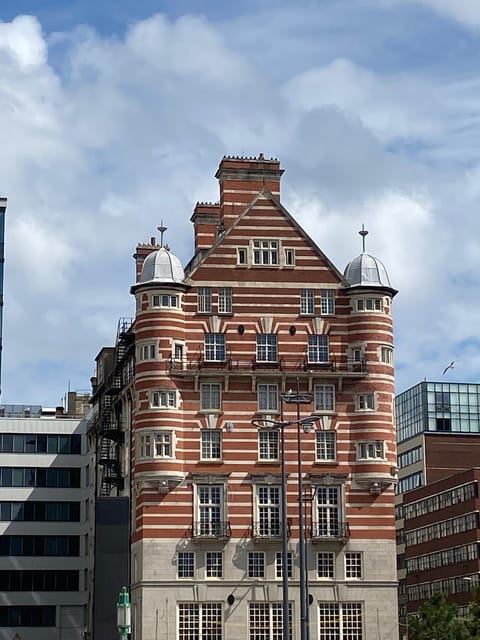
I like this kind of explanation because it changes the way you walk through the rest of the city. Instead of seeing old buildings as decoration, you start looking upward for small features, dates, symbols, and signs of who once used the building.
The waterfront section also gives the city a wider setting. Liverpool’s success was tied to movement: goods, ships, people, money, and ideas. The guide places those movements within the city’s development, giving you a clearer sense of why this stretch beside the river mattered so much.
One limitation is that the tour does not appear to include a detailed interior visit to the Royal Liver Building. Treat it as an exterior history stop and meeting point, not as a full building tour.
Old Dock and Liverpool ONE
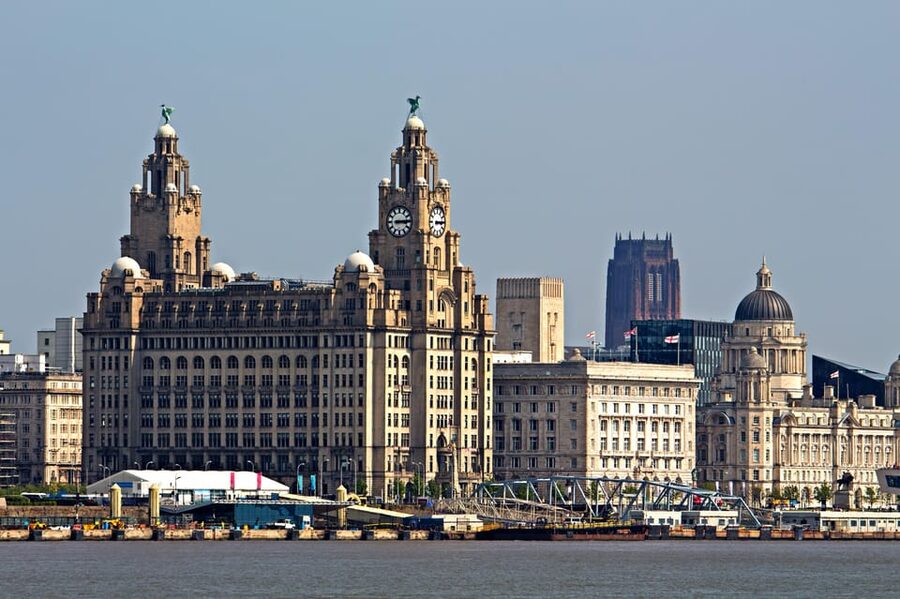
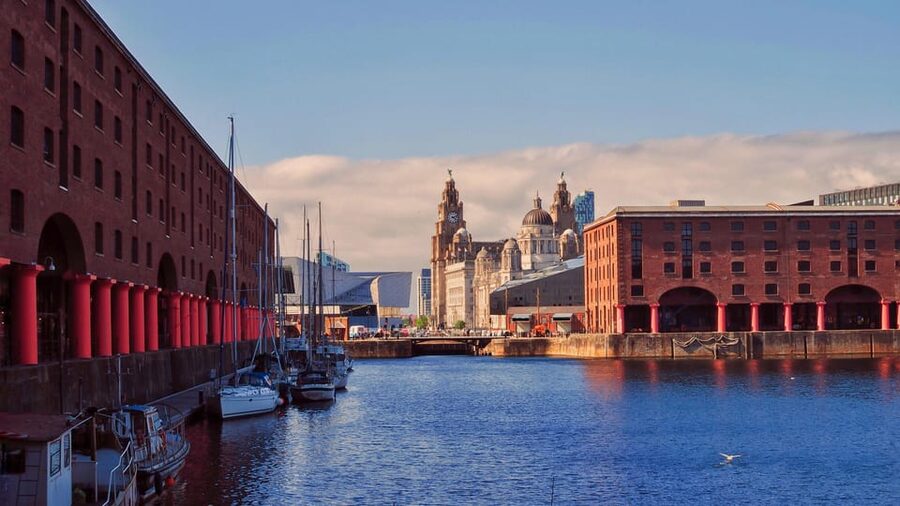
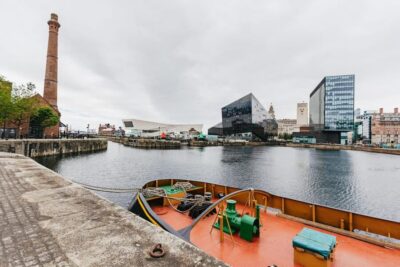
The route continues toward the Old Dock and Liverpool ONE, showing how old and new Liverpool sit close together.
The Old Dock is important because it helps explain the practical side of the port. Liverpool’s story was not only about merchants and grand buildings. It also depended on changing dock facilities, improved access for ships, and new ways to handle trade.
Liverpool ONE provides a useful contrast. It is a modern shopping and leisure area, yet the walk connects it to the older city beneath and around it. You get a sense of how Liverpool has repeatedly rebuilt and changed its central areas while keeping traces of earlier periods nearby.
This is one of the tour’s more useful lessons: city history is not confined to preserved ruins. It can survive under modern streets, in the shape of public spaces, and in the relationship between old commercial quarters and new development.
The Liverpool ONE stop is brief, listed at about 10 minutes. That is enough to explain its place in the city’s story, but not enough for an extended architectural or shopping visit. Plan to return later if you want time inside the complex.
Same streets, a different guide:
- Magical London: Harry Potter Guided Walking Tour
★ 4.7 · 22,044 reviews - Edinburgh: Harry Potter Magical Guided Walking Tour
★ 4.8 · 11,944 reviews - Edinburgh Castle: Guided Walking Tour with Entry Ticket
★ 4.7 · 11,699 reviews - Underground Vaults Walking Tour in Edinburgh Old Town
★ 4.5 · 8,506 reviews
The parish church and Liverpool’s early community
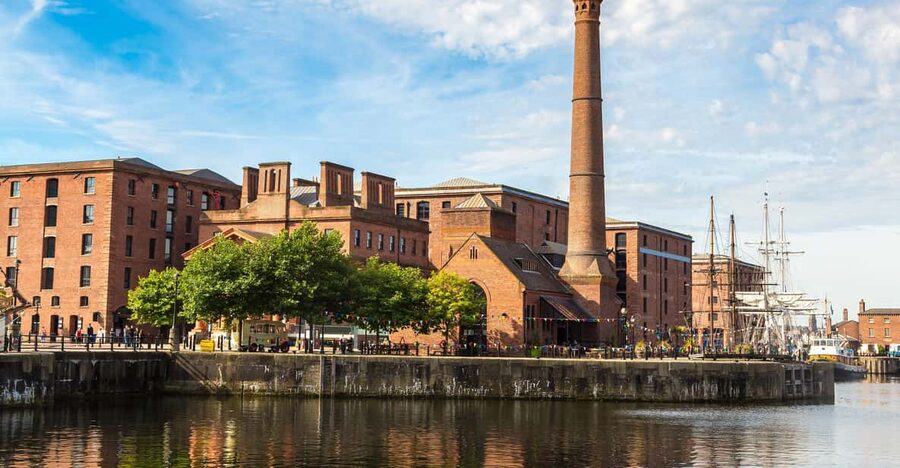
The walk then reaches Liverpool Parish Church, also known as Our Lady and Saint Nicholas, and its gardens. This stop adds a human and civic side to the port story.
The church area helps place Liverpool’s growth in the context of an established community. Ports need more than ships and warehouses. They also need places of worship, local government, homes, businesses, and services for people arriving and settling in the town.
The nearby gardens offer a pause from the main streets, although the tour remains a walking and listening experience rather than a formal garden visit. The guide uses the setting to explain how the city developed around its early centre.
Expect about 10 minutes here. That sounds short, but the compact timing keeps the full route moving. If you want to examine the church closely or go inside, you may need to return independently, since the tour’s purpose is to connect the site to Liverpool’s wider story.
Chapel Street and Castle Street
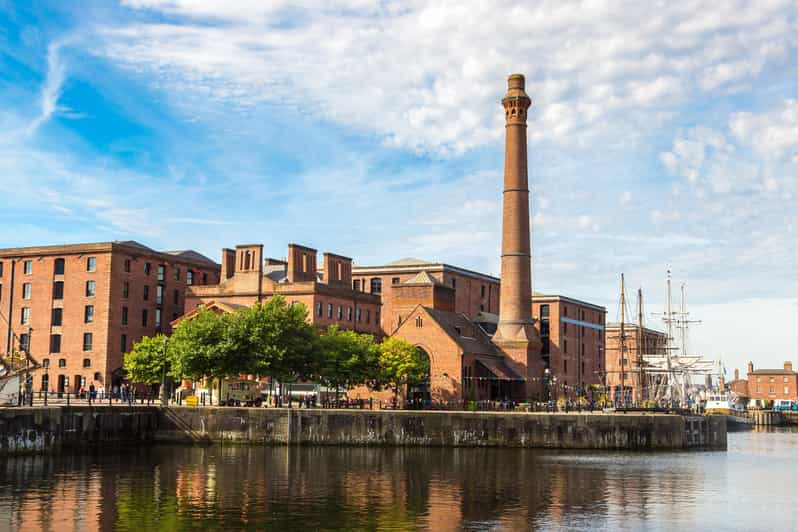
Chapel Street and Castle Street bring the tour into some of Liverpool’s most important civic and commercial surroundings.
Chapel Street helps connect the waterfront to the older heart of the city. As you walk, the guide points out how roads and buildings reflect Liverpool’s changing role. You are not simply moving between attractions. You are following the routes that tied port activity to the town behind it.
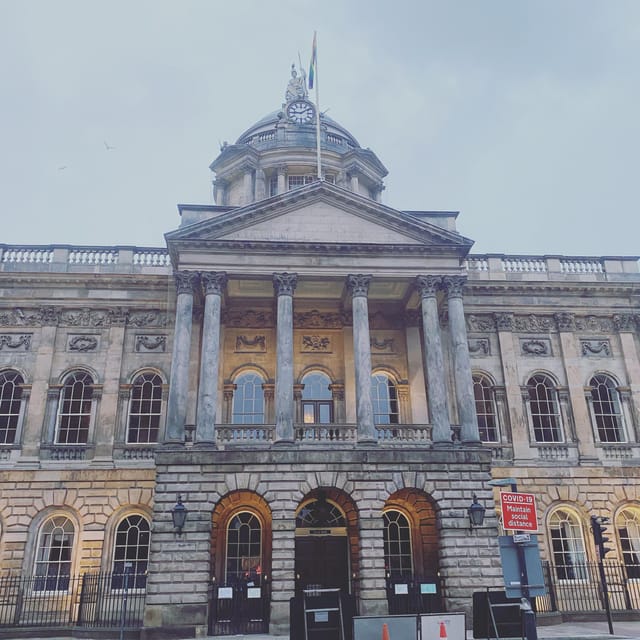
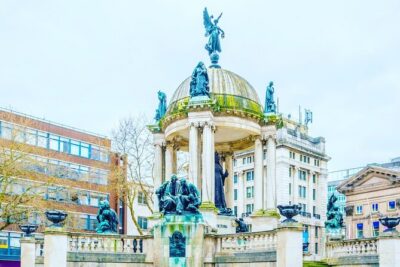
Castle Street is the finishing area and one of the most rewarding parts of the route for architecture. The street leads toward the Town Hall and the Queen Victoria Monument, and the guide uses these surroundings to explain civic pride, wealth, and public power.
The tour finishes on Castle Street rather than returning to the original meeting point. That is useful if you plan to continue into the city centre, eat nearby, or explore on your own. It also means you should not assume you will end beside the Liver Building.
The route includes the Liverpool Town Hall, Castle Street, and the Queen Victoria Monument, though the experience is a guided walk rather than a guaranteed interior tour of each site. You will hear why these places matter and see them close up, but the depth of each stop depends on the group’s pace and questions.
What the guide adds to the experience
The guide is the heart of this tour. John is frequently named, and the description of his style is consistent: he explains clearly, encourages questions, uses dry humor, and brings strong academic preparation to Liverpool’s past. Dave is another named guide, so the exact personality and emphasis may vary by departure.
The best part of this format is the chance to ask about something that catches your attention. You can ask about a building, a date, local food, Liverpool’s economic role, or the city’s connection to wider world events. The guide is expected to make room for questions rather than deliver a fixed speech without pause.
You also get practical local suggestions. John has recommended places to try scouse, Liverpool’s traditional stew, and other points of interest. That can make the walk useful beyond the history itself, especially if you take the food suggestion for lunch afterward.
The guide’s voice matters outdoors. One particularly useful feature is clear projection, since waterfront streets and city traffic can make group listening difficult. Still, stay reasonably close to the guide and avoid drifting behind when the group moves on.
Is $22 good value for two hours?
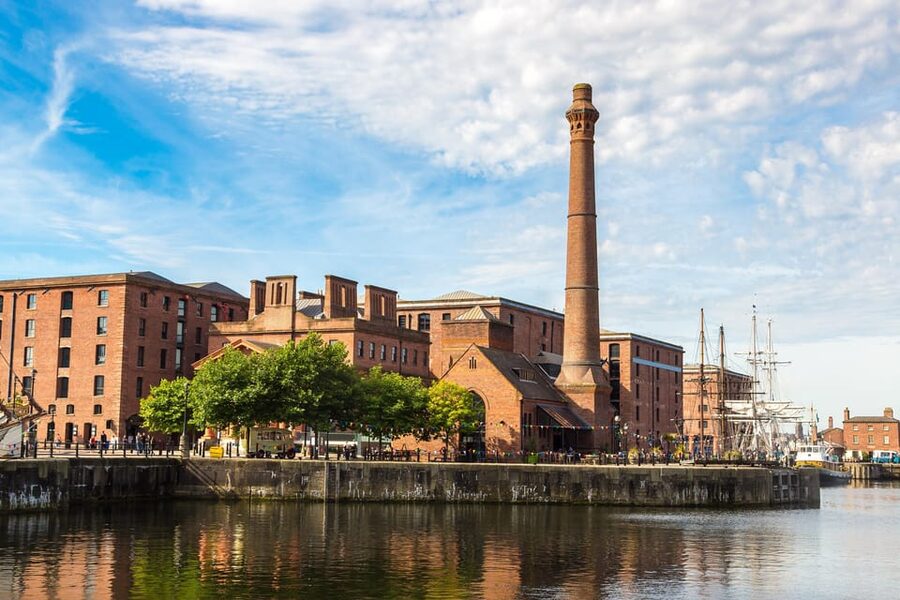
At $22 per person, I consider this good value if you want an introduction to Liverpool’s past. You are paying for a live English-speaking guide, not just a route between famous buildings. The main value comes from the connections between places.
A self-guided walk can show you the Royal Liver Building, Albert Dock, Town Hall, and Castle Street. It will not automatically explain how Liverpool changed from a medieval settlement into a major port, or how its economic influence reached far beyond Merseyside.
The price is also reasonable for visitors who have only one day in the city. You can cover several central areas in two hours, then return to the places that interest you most. It is a useful orientation walk at the beginning of a short stay.
The value is lower if you want museum admissions, long interior visits, or a narrowly focused subject. This tour is broad by design. It gives you the framework first, then leaves you to explore particular buildings and collections later.
Free cancellation up to 24 hours before the start and the option to reserve now and pay later add useful flexibility. Those details are especially handy if your Liverpool plans may shift.
Who should book this Liverpool walking tour?
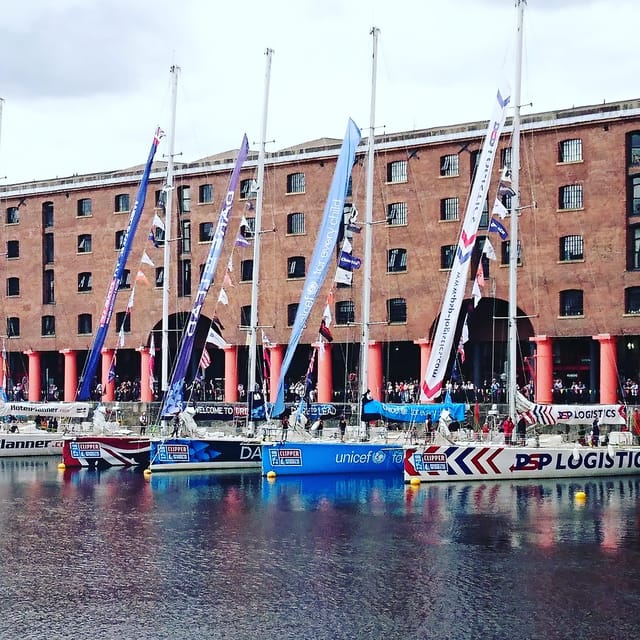
I would choose this tour for a first visit, a short city break, or anyone who wants Liverpool explained through its buildings and streets. It suits history fans, architecture lovers, families with older children, and local people who want a better grasp of the city’s development.
It is also a good match if you want a serious history walk without a stiff classroom tone. The guides combine dates and context with humor and conversation, which helps the two hours pass quickly.
You may want something else if you dislike group walking, need long breaks, or prefer one subject explored in great detail. The route covers a broad time span and several districts, so the pace is steady. Comfortable shoes and clothing suited to changing British weather are sensible, even though the tour is relatively short.
The walk is wheelchair accessible, which is important for many visitors. The route remains outdoors, so weather and street conditions can still affect comfort.
Should you book it?
Book this tour if you want to understand why Liverpool became such an important British port, not just where to take waterfront photographs. The strongest reasons are the well-organized timeline, the maritime and imperial focus, and the chance to ask a well-prepared local guide detailed questions.
I would especially recommend it at the start of your stay. By the end, you will have a clearer map of the city and a better idea of which buildings, museums, docks, and streets deserve a second look.
Skip it only if you want a Beatles-specific tour, extensive indoor access, or a slow architectural study of one district. For $22, two hours, and a route through Liverpool’s central historical sights, it is a practical and worthwhile introduction.
FAQ
How long does the Liverpool history walking tour last?
The experience lasts about two hours. The route includes several guided stops across Liverpool city centre and the waterfront.
Where does the tour begin?
Meet outside the entrance of the Royal Liver Building at the black gate facing the river.
Where does the tour finish?
The tour finishes on Castle Street.
What language is the tour in?
The live tour is conducted in English.
Who leads the tour?
The experience uses local guides. John and Dave are named guides associated with this tour, though the guide for a particular departure may vary.
What places are included on the route?
The route includes the Royal Liver Building, Liverpool waterfront, Royal Albert Dock, Liverpool ONE, Liverpool Parish Church and its gardens, Chapel Street, Castle Street, the Town Hall, and the Queen Victoria Monument.
Does the tour cover Liverpool’s early history?
Yes. The guide covers Liverpool from its origins in 1207 through its growth as a trading and port city and into the modern period.
Is the tour wheelchair accessible?
Yes, the activity is listed as wheelchair accessible.
How much does the tour cost?
The stated price is $22 per person.
Can I cancel the booking?
You can cancel up to 24 hours in advance for a full refund. You can also reserve now and pay later.
New routes in the UK
- Aberdeen City Centre Walking Tour (2pm)★ 5.0 · 217 reviews
- German London : The Ultimate Walking tour★ 4.8 · 400 reviews
- London: Medieval History Walking Tour from The Tower★ 4.9 · 318 reviews
- Oxford: Official University and City Walking Tour★ 4.7 · 618 reviews
- The Beatles London Walking Tour★ 4.2 · 147 reviews
- Stratford-Upon-Avon’s Town Walking Tour (10:30am & 2pm)★ 4.8 · 143 reviews
- The Sinister Side of Shakespeare’s Stratford Walking Tour★ 4.8 · 547 reviews
- Stratford-Upon-Avon: The Famous Walk Talk Show★ 4.9 · 342 reviews
Liverpool Walking Tours, compared.
A Walk Through Time: History of Liverpool Walking Tour
Read our review →
Beatles Famous Walking Tour Of Liverpool- Fully Guided
Read our review →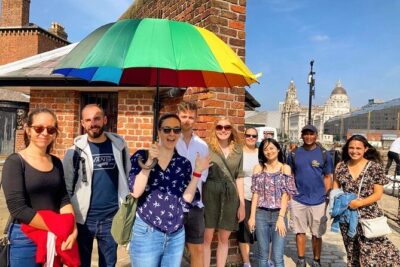
Browse the lists this tour appears in