
Review · INDIA
Heritage Walk & Street Food Tasting in Jaipur
Jaipur’s best introduction may be found in its side streets, not behind the gates of its grand palaces. This three-hour food and heritage walk moves from Golcha Cinema through Chaura Rasta, Badi Chaupar, Tripolia Bazar, and Chhoti Chaupar, pairing local snacks with stories about the Pink City.
I like the generous food stops, which can include samosa, kachori, sweets, masala chai, and many smaller tastes. I also like the way guides such as Vivek, Kumar, Raj, and Pushpendra lead people into artisan lanes, temple courtyards, and streets most visitors would miss. The one caution is simple: this is a proper walking tour, and the food can be filling, so wear good shoes and arrive hungry.
Key points to know before you book
- About 15 tastes are possible: Some tours include around six food stops and enough food to leave you very full.
- The old city is the real setting: You walk through Jaipur’s quadrants, markets, alleys, temples, and craft streets rather than simply viewing monuments from outside.
- Guides shape the experience: Vivek is often praised for his warm manner and local knowledge, while Kumar, Raj, and Pushpendra have also led highly rated walks.
- A small group keeps things personal: Numbers are limited to 10 participants, leaving room for questions and food preferences.
- The price is $21 per person: With food, water, guiding, and the heritage walk included, this is strong value for a first look at old Jaipur.
- Plan for a three-hour walk: Comfortable shoes, modest clothing for temples, sunscreen, and personal medication are sensible choices.
Why this Jaipur walk works so well
I like this experience because it treats food as a doorway into city life. A kachori is not just a fried snack, and a tea stop is not just a quick break. Along the way, your guide explains how local shops work, points out architectural details, and connects everyday food with Jaipur’s trade, religion, crafts, and royal past.
That mix matters. Jaipur can feel confusing at first, with traffic, crowded lanes, large markets, and a steady flow of people. A local guide gives you a safe way to enter that setting without spending the whole walk worrying about where to turn or what to order.
The tour also aims to avoid sales pressure. There is no stated shopping agenda, and the focus stays on local food, neighborhood life, architecture, and conversation. You may meet artisans and see handicrafts, but the experience is not built around taking you from one shop to another.
The small-group format helps. A maximum of 10 people is large enough to create a social atmosphere but small enough for a guide to answer questions and adjust food choices. Solo visitors have found the setting reassuring, and couples and families can keep a relaxed pace.
More Food Walking Tours in India
- The Great Indian Food Tour: Old Delhi Food and Heritage Walk
★ 5.0 · 1,698 reviews - Old Delhi Food, Heritage&Cultural Walk with Rickshaw ride to Masterji Kee Haveli
★ 5.0 · 742 reviews - Delhi Food Walk: Rickshaw Ride, Street Eats & Market Tour
★ 5.0 · 401 reviews
Starting at Golcha Cinema and entering the old city
The meeting point is the entry gate of Golcha Cinema. From there, the walk heads toward Chaura Rasta, one of the main routes through the old city.
This first section helps you get your bearings. Jaipur’s historic center was laid out with geometric precision, and its major roads and entry gates reflect a planned city rather than a random maze. Your guide can explain the purpose of the old quadrants and why the gates mattered to movement, trade, and protection.
You will begin to see the city’s famous pink-painted buildings, fresco details, shop fronts, and tightly packed lanes. Look up as you walk. Some of the most interesting details are above eye level, where painted facades and carved features can be easy to miss while watching traffic.
Chaura Rasta is also where the food side of the walk starts to take shape. Expect tea, street snacks, and explanations of what you are eating. Guides can help you choose and can adjust selections to suit your preferences. That is useful if you are cautious with spice, do not eat everything, or simply want to know what is on the plate before trying it.
Chaura Rasta: tea, snacks, and a first taste of Jaipur
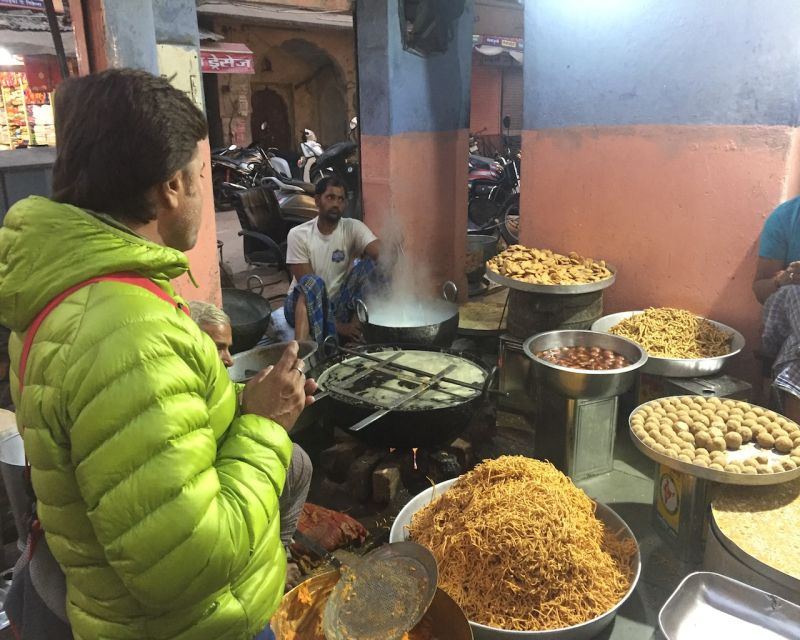
The stop around Chaura Rasta lasts about 45 minutes, though the exact pace can vary. Masala chai is part of the promised tasting, usually taken at a local tea shop, along with street food such as samosa or other regional snacks.
This is a good point to ask questions about ingredients and preparation. You may also get practical advice on how to judge busy food stalls and local shops. The guide’s role is not only to hand you a plate, but to explain why a particular place is worth stopping at.
Food safety is a common concern for visitors arriving in India. The experience is designed to use selected local vendors, and several participants with little experience of Indian food were comfortable trying the dishes. Still, you should tell the guide about allergies, dietary restrictions, spice limits, or stomach problems before eating.
One practical tip comes from the food itself: do not eat a large meal before you arrive. The portions and number of stops can add up quickly. One participant described trying roughly 15 items at six stops, while another advised arriving with plenty of room. The exact selection can change, but you should expect more than a token sample.
Badi Chaupar and the city’s main crossroads
The next section reaches Badi Chaupar, another major point in the old city. The walk continues for roughly 45 minutes, combining local snacks, tea, views along the route, and more background about Jaipur.
Badi Chaupar gives you a sense of the city’s scale and design. From here, the surrounding streets lead toward markets, historic buildings, temples, and major sights. Your guide can point out how the planned roads connect the different parts of the old center and explain the role of Jaipur’s gates.
This is also a useful place to notice the contrast between the grand idea of Jaipur and the practical life taking place below it. Shopkeepers, craftspeople, tea sellers, pedestrians, and drivers all share the same planned streets. The tour works best when you give yourself time to watch that daily rhythm instead of treating every stop as a race to the next snack.
The walk is not a substitute for visiting the City Palace or Jantar Mantar. It does, however, help you understand the setting around those major sights. Several people enjoyed the walk so much that they later arranged additional time with a guide to see those attractions. If you want palace interiors and detailed astronomical instruments, book those separately.
More History Walking Tours in India
- Fontainhas Heritage Walk by Make It Happen
★ 5.0 · 2,834 reviews - Old Goa Heritage Walk by Make It Happen
★ 5.0 · 797 reviews - Private Heritage Walking Tour in Jaisalmer Fort and Old Bazaar
★ 5.0 · 306 reviews - Panaji: Heritage Walk through Goa’s Latin Quarter
★ 4.8 · 291 reviews
Tripolia Bazar and the craft traditions of Jaipur
Tripolia Bazar brings more attention to trade, local shops, architecture, and craft. You pass through the market rather than spending the entire time inside one attraction, so the experience feels more like a guided neighborhood walk than a standard monument tour.
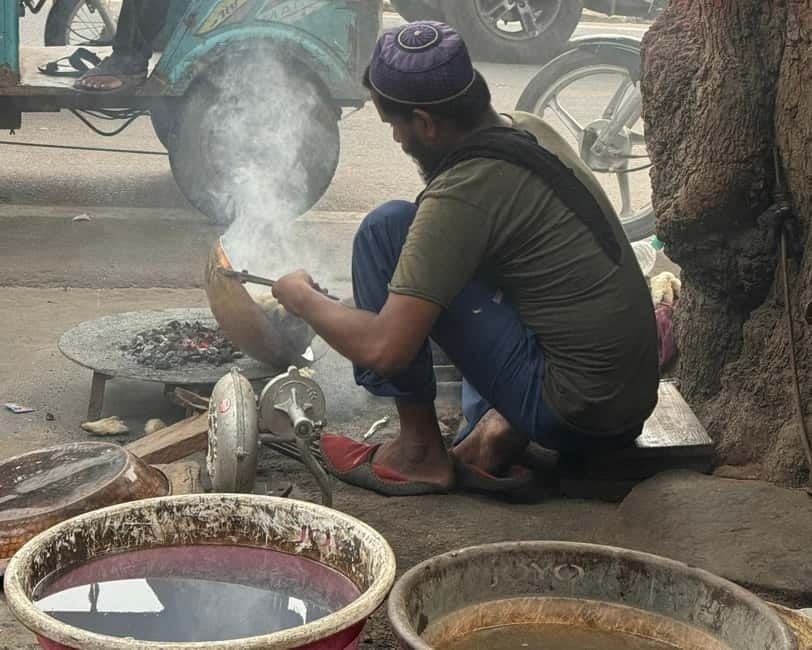
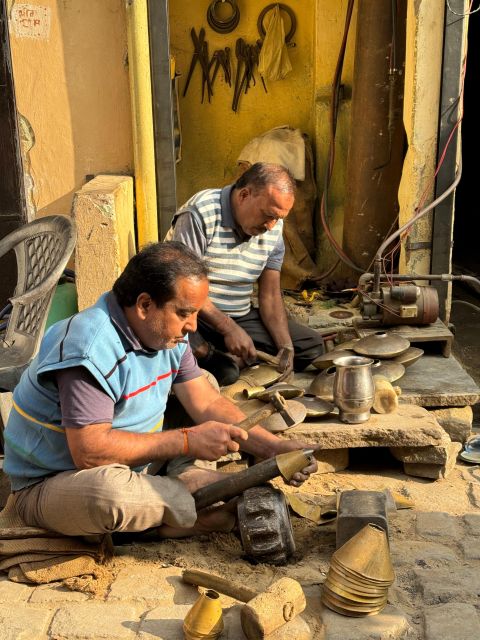
A particularly interesting part is the visit to a street associated with the Thathera community, known for metal beating. This gives you a close look at a working craft tradition and the skill behind objects that can seem ordinary when displayed in a shop.
You may also see bangle making through sealing wax. That detail is easy to overlook on a normal sightseeing route, yet it shows how much of Jaipur’s character survives in small workshops and family trades. The point is not simply to watch a demonstration. Your guide helps explain the people, methods, and local setting behind the work.
The walk can include encounters with other artisans and handicraft makers. There is no promise of a particular craft being active at every moment, so think of this as a chance to observe local work rather than a formal workshop. Bring curiosity, but do not expect to make an item yourself.
Tripolia Bazar can also be busy and crowded. That is part of its character, but it may be tiring for anyone who dislikes tight lanes or noisy streets. Stay close to the group, especially when crossing roads or moving through market traffic.
Chhoti Chaupar and the final food stops
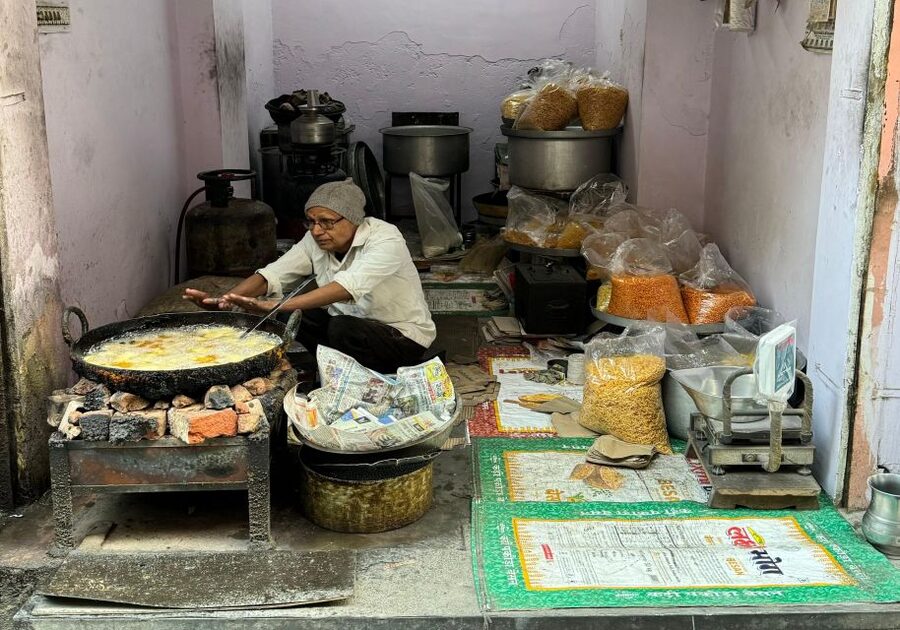
The final section takes you toward Chhoti Chaupar, with another 45 minutes of walking and food tasting. This is where local snacks and regional food round out the experience.
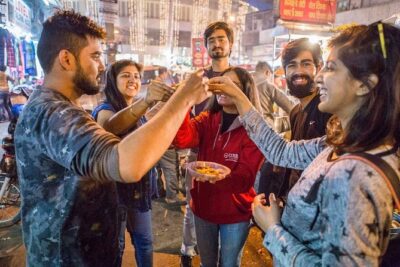
By now, you may have tasted fried snacks, sweets, tea, and other items selected by the guide. The food is plentiful enough that you should not assume you will want dinner immediately afterward. One useful piece of advice is to pace yourself, especially with sweets. If you start with too much sugar, the savory dishes later may be harder to appreciate.
The food is served at local shops and street-side stops rather than in a formal restaurant. That keeps the experience close to everyday Jaipur, but it also means you should expect standing or brief pauses rather than a long seated meal. Bring patience and let the guide manage the order of stops.
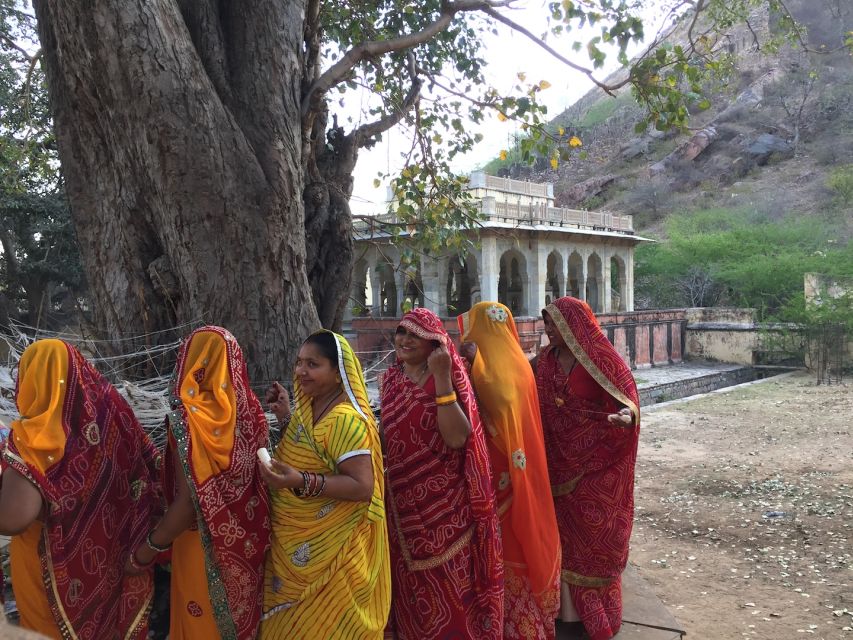
The route may also include a Hindu temple and a community well. These are valuable because they show how religion, water, neighborhood life, and architecture fit together in the old city. Dress modestly and follow local customs. Photography is allowed, but avoid flash photography inside temples.
The walk ends at Chhoti Chaupar. Hotel pickup and drop-off are not included, so arrange your own way to and from the start and finish points. Check the route before booking if you have mobility concerns, since the activity is not suitable for wheelchair users and involves a lot of walking.
What the guides add to the experience
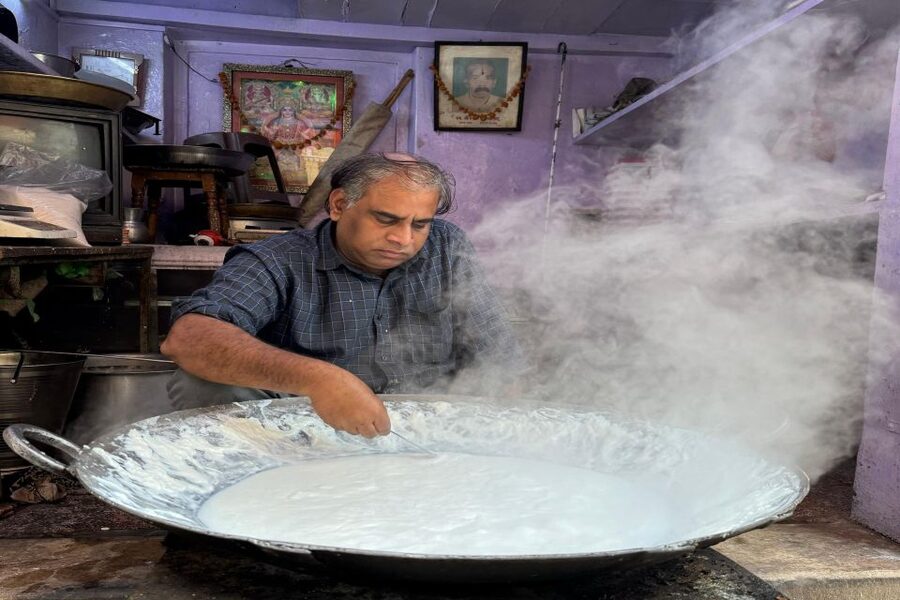
The food is a strong reason to book, but the guides are what give the route its shape. Vivek is repeatedly praised for his calm, friendly manner, clear explanations, flexibility, and care with solo visitors. He is also described as well connected with local people and able to open doors to places that are difficult to find alone.
Kumar is praised for speaking clearly and explaining both local history and food. Raj is described as warm and enthusiastic, with a strong interest in the neighborhood and its stories. Pushpendra has also led walks that combine food, monuments, and wider conversations about Indian life.
Guides may vary, so you should not book expecting one specific person unless the provider confirms it. The common strength is the personal approach. Guides have adjusted routes, slowed down for photographs, answered many questions, and helped people feel at ease in unfamiliar streets.
That flexibility is especially useful if you are a solo visitor, a first-time visitor to India, or someone who wants more than a list of dates and names. You can ask about architecture, religion, food, local customs, markets, or daily life as you walk.
Is $21 a fair price?
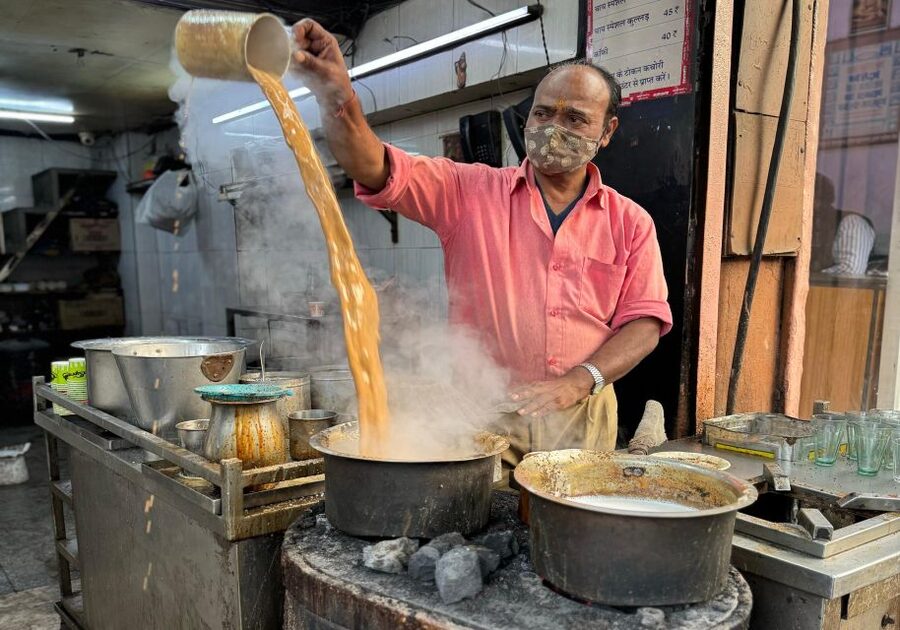
At $21 per person, this is good value if you use it as both a meal and a guided introduction to Jaipur’s old center. The price includes street food, sweets, masala chai, bottled water, an English-speaking guide, and the heritage walk.
The value improves if you are willing to try several small portions. A normal meal at one restaurant may cost less, but it will not take you through artisan lanes, explain the city gates, introduce you to metal beaters, or help you understand why a particular snack matters.
You are paying for access and context as much as for food. Without a guide, you could walk through some of these streets, but you might miss the community well, the bangle-making work, the Thathera area, or the meaning behind the buildings.
The price does not include transport, alcohol, or entry to major sights such as the City Palace and Jantar Mantar. Keep those costs separate when planning your day.
Who should book this walk?
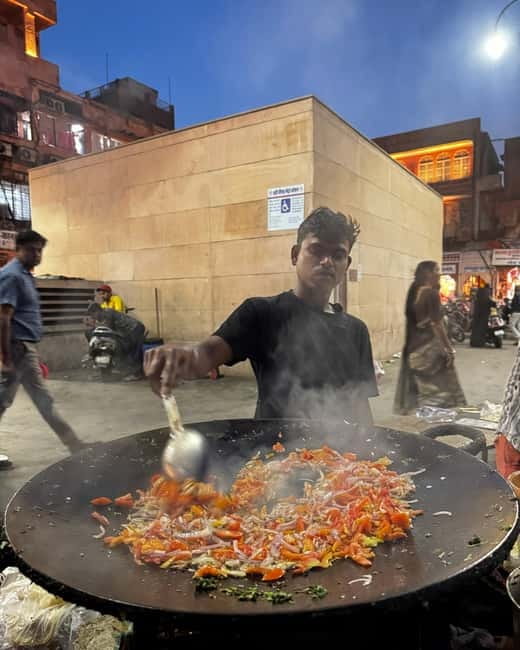
I would recommend it to food lovers, first-time visitors, solo visitors, couples, and anyone who wants to see Jaipur beyond its headline attractions. It is also a good first-day activity because it gives you a useful map of the old city and helps you decide where to return later.
It suits people who enjoy conversation and do not mind walking at street level. You should be open to standing at food stalls, entering narrow lanes, eating unfamiliar snacks, and adapting to local conditions.
It is less suitable if you need step-free access, dislike street food, want a quiet sightseeing experience, or prefer a formal sit-down meal. People with allergies, sensitive stomachs, or strict dietary rules should explain those needs before the walk begins.
Wear comfortable shoes and light, modest clothing. Carry sunscreen, a hat, water, and any personal medication. The provider supplies a bottle of water, but staying hydrated remains your responsibility, especially in warm weather.
Should you book the Jaipur Heritage Walk and Street Food Tasting?
Yes, if you want Jaipur presented through food, working neighborhoods, and local stories rather than only through palaces. The strongest part is the combination of generous tastings and access to ordinary streets where craftspeople, shopkeepers, and residents carry on with daily life.
Book it early in your Jaipur stay if possible. You will learn which foods you like, understand the old city layout, and gain a better sense of where to explore on your own. At $21, the walk offers a lot for the money.
Just arrive hungry, wear sensible shoes, and keep your expectations grounded. This is not a polished restaurant crawl or a complete tour of Jaipur’s major monuments. It is a friendly, food-led walk through the city’s working heart, and that is exactly why it is worth your time.
FAQ
How long does the Heritage Walk and Street Food Tasting in Jaipur last?
The experience lasts three hours. The route includes four main sections, each planned for about 45 minutes.
Where does the tour start?
The meeting point is at the entry gate of Golcha Cinema in Jaipur.
Where does the tour finish?
The walk finishes at Chhoti Chaupar, also written as Chhoti Chopad.
What food is included?
The included tasting features samosa, kachori, famous sweets, masala chai, and other local street foods served at local shops.
Is hotel pickup included?
No. Hotel pickup and drop-off are not included, so you need to arrange transport to Golcha Cinema and from Chhoti Chaupar.
What language is the tour conducted in?
The live tour guide speaks English.
Is the walk suitable for wheelchair users?
No. The activity is not suitable for wheelchair users and involves a significant amount of walking.
More Street Food Walking Tours in India
- Agra: Street Food Walking Tour, Spice Market, & Tuk-tuk Ride
★ 4.9 · 102 reviews - Mumbai Street Food Tour with Evening Bazaar Walk
★ 4.9 · 79 reviews - Ho Chi Minh City Street Food Tour & Sightseeing By Motorbike
★ 5.0 · 9,413 reviews - Naples: Street Food Walking Tour with Local Guide
★ 4.9 · 4,976 reviews
New routes in India
- Agra Walking Tour★ 5.0 · 109 reviews
- Amritsar Heritage Walking Tour★ 5.0 · 112 reviews
- The Great Indian Food Tour: Old Delhi Food and Heritage Walk★ 5.0 · 106 reviews
- Spiritual Walking tour with Puja Ceremony -The Pushkar Route★ 5.0 · 101 reviews
- Spiritual Walk Tour Trivandrum (Guided Walking Experience)★ 4.6 · 87 reviews
- Panaji: Heritage Walk through Goa’s Latin Quarter★ 4.8 · 291 reviews
- Old Goa: Walking Tour of Heritage Churches★ 4.9 · 81 reviews
- Old Delhi: Spices, Heritage and Bazaars Walking Tour★ 5.0 · 173 reviews
India Walking Tours, compared.


The Great Indian Food Tour: Old Delhi Food and Heritage Walk
Read our review →
Old Delhi Food, Heritage&Cultural Walk with Rickshaw ride to Masterji Kee Haveli
Read our review →
Delhi Food Walk: Rickshaw Ride, Street Eats & Market Tour
Read our review →
Private Guided Walking Tour in Bandra Queen of Suburbs
Read our review →Browse the lists this tour appears in