
Review · USA
Walking History Tour of St. Augustine’s Historic District
St. Augustine’s story is bigger than Spanish forts and palm-lined streets. This walking tour links an old cemetery, grand Gilded Age buildings, civic landmarks, and Castillo San Marcos, giving you a clear sense of how the city changed from colonial outpost to resort town. Guide Kevin is the main attraction: funny, warm, and able to turn dates into human stories.
I like the wide sweep of history, from the city’s early settlement through Henry Flagler’s late-1800s makeover and into the early 1900s. I also like the small-group format, capped at 15 people, which makes questions easier than on a large trolley ride. The main thing to plan around is time: the advertised 90 minutes often stretches past two hours, so do not schedule a tight lunch, museum visit, or departure afterward.
Key points
- Nearly two miles on foot: You cover much of central St. Augustine at a steady, manageable pace.
- Kevin’s story-first guiding: He welcomes questions, uses humor, and often keeps talking well beyond the scheduled time.
- More than the Spanish period: The route gives equal attention to Flagler’s Gilded Age city and later civic history.
- Seven useful stops: The walk connects Tolomato Cemetery, three major churches and civic sites, the city gate, and the fort.
- Good value at $25: For a small group and a long, guide-led introduction to the city, the price is modest.
- Plan for Florida weather: Bring water, wear comfortable shoes, and allow extra time if rain threatens.
Why this walk gives St. Augustine a bigger story
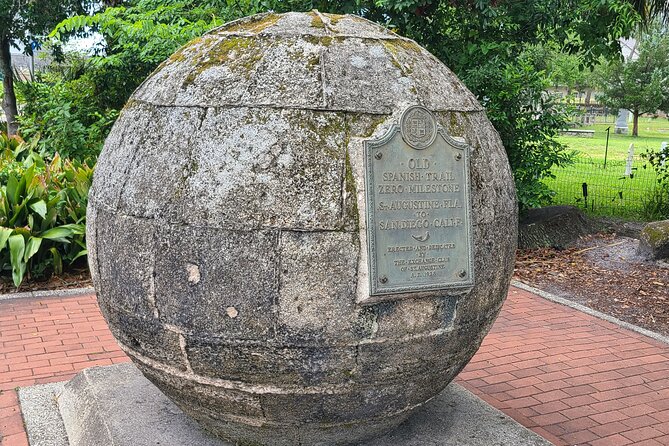
St. Augustine is easy to reduce to one famous fort and a few Spanish flags. This tour does a better job of showing how the city kept changing. You begin with old burial grounds and end at a massive coastal defense work, while the stops in between explain how churches, hotels, government offices, and city gates shaped daily life.
The route covers almost two miles. That is enough ground to help you get oriented, but it is not an exhausting march for most people with moderate fitness. You are moving through the Historic District rather than sitting behind glass, so you see how the landmarks fit together on actual streets.
I especially like the mix of grand subjects and odd details. You might hear about royal decrees and military construction, then move to a local story involving the Love Tree at Tolomato Cemetery. That contrast keeps the walk from feeling like a list of dates.
The group limit of 15 matters. Kevin can respond to questions, adjust his pace, and react to what is happening around the group. Several tour experiences have run longer because he follows questions and has more stories to tell. That is a benefit if you enjoy history, but it is a real planning issue if you need to be somewhere at a fixed hour.
More History Walking Tours in the USA
- History and Hauntings of Salem Guided Walking Tour
★ 5.0 · 14,564 reviews - Boston: Freedom Trail History Small Group Walking Tour
★ 5.0 · 6,450 reviews - Historic Charleston Guided Sightseeing Walking Tour
★ 5.0 · 6,216 reviews
Tolomato Cemetery and the city’s oldest layers

Tolomato Cemetery is the first stop, with about five minutes set aside. It is described as the oldest cemetery in the city, dating even before the arrival of the Spanish in 1562. The stop gives you an immediate reminder that St. Augustine’s past did not begin with the most familiar colonial landmarks.
You will also hear about the Love Tree, a local curiosity approached at your own risk. It is a small detail, but it helps make the opening stop feel like a place with living folklore, not just a historic sign.
The cemetery stop is brief, and admission is not included. The value here comes from the guide’s explanation rather than a long visit inside. If you want time to study graves or explore the cemetery on your own, plan to return later.
This is also a good point to notice the tour’s general rhythm. You stop, listen, ask questions, and then walk to the next part of the city. Comfortable shoes matter more than dress shoes, especially since the route totals nearly two miles.
Flagler Era churches and the cost of reinvention
The next two stops show how strongly St. Augustine changed during the late 1800s. At Grace United Methodist Church, you see one of the churches connected with the Flagler Era. Henry Flagler’s investment helped reshape the city, and churches were part of that broader civic and social transformation.
The stop lasts about five minutes and does not include admission. You are mainly using the exterior and the guide’s context to understand how the city presented itself during its resort-building period.
Memorial Presbyterian Church gets about ten minutes. The building is treated as one of the city’s most beautiful, but the important part is the human story tied to its creation. You will hear the painful reason behind the church, which gives the ornate architecture more weight than a quick photo stop would.
I like this section because it prevents the tour from treating architecture as decoration alone. The churches show ambition, faith, money, grief, and civic pride. You also get a useful counterpoint to the earlier cemetery stop: both places deal with memory, but in very different public forms.
The schedule gives Memorial Presbyterian more time than Grace United Methodist Church. That suggests a fuller explanation, though the exact amount of time can shift with questions. If you want to go inside either church, check the current access rules separately, since admission is not part of the tour.
Flagler College and the Gilded Age showpiece
Flagler College occupies the former Ponce de Leon hotel, built as a display of Gilded Age luxury. The guide explains how the hotel helped set a new standard for opulence in St. Augustine. You get about five minutes at this stop, with the focus on the building’s former role and Henry Flagler’s effect on the city.
This is one of the tour’s most useful corrections to the usual St. Augustine story. The city was not only a Spanish military settlement. It was also remade as a fashionable destination, and the former hotel represents that shift in a single dramatic building.
The short stop is enough to place the college in the city’s story, but not enough for a full interior visit. Admission is not included. If Flagler College is high on your list, treat this walk as an introduction and set aside separate time for its historic tour.
The guide’s ability to connect the old and new periods is a major strength here. You move from colonial and religious subjects to finance, tourism, architecture, and the social world of the Gilded Age. That range is what makes the $25 fee feel useful for a first look at the city.
Same streets, a different guide:
- New Orleans Premier Ghost, Voodoo and Vampire Walking Tour
★ 4.5 · 12,856 reviews - Little Havana Food and Walking Tour in Miami
★ 5.0 · 8,882 reviews - Chicago: Gangsters and Ghosts Walking Tour
★ 5.0 · 7,155 reviews - New Orleans Food Walking Tour of the French Quarter with Small-Group Option
★ 5.0 · 6,118 reviews
Plaza de la Constitución and 250 years of government
The plaza is scheduled for about ten minutes and is free to visit. It was founded in 1599 by royal decree and includes the Government House, once the seat of power in Florida for nearly 250 years.
This stop gives you political context. You learn how the plaza came to be, what happened to the governors who lived there, and how the Government House was recreated in 1933 as part of Works Progress Administration projects.
That last point matters because historic St. Augustine is not made up only of untouched colonial buildings. Some places were rebuilt, restored, or reshaped long after the original events. The plaza helps you think about preservation as an active choice, not a simple window into the past.
It is also a useful pause in the walking route. You are in an open public space, and the stop is free. Listen for the links between government, public memory, and tourism. The guide’s stories give the plaza a role beyond being a pleasant place to pass through.
Castillo San Marcos from the outside
The Castillo de San Marcos National Monument receives the longest scheduled stop, about 15 minutes. A licensed fort guide covers the history of St. Augustine’s forts, explains how the structure was built, and discusses its importance to both the city and the nation.
The tour covers the exterior rather than providing admission inside. That is the biggest limitation for anyone hoping to explore the fort’s rooms, walls, and upper levels during this booking. You will get the setting and the historical framework, but you need a separate ticket and visit if you want the full monument experience.
Still, the exterior explanation has real value. The fort makes more sense once you have heard about the city’s government, entry gates, religious buildings, and changing role. It is not an isolated monument. It is part of a wider story about defense, control, trade, and survival.
Because the fort comes late in the route, allow enough time to reach this stop. One person had to leave before the fort because the tour ran longer than expected. That is an avoidable problem if you treat the listed 90 minutes as a minimum rather than a firm finish.
The Old City Gate and the walk back
City Gate Spirits marks the traditional entrance to St. Augustine, dating from 1762. The stop takes about five minutes and is free. You hear how the gate was built and about the effort that saved it from demolition.
It is a quick stop, but it ties several themes together. Gates control movement, shape the way a city is experienced, and often become symbols of the past. Here, the story of preservation adds a practical lesson: historic places survive because someone makes the case for keeping them.
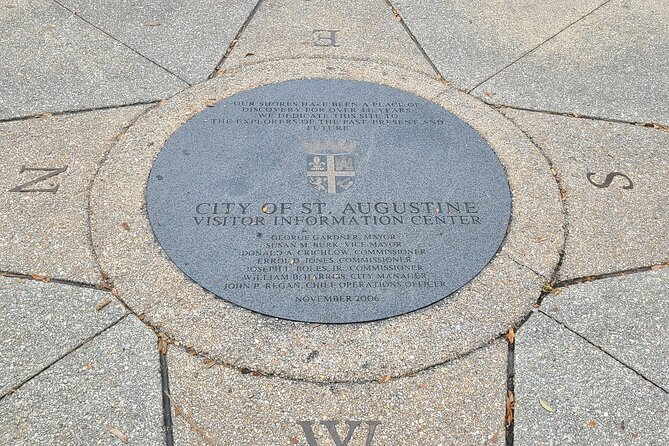
The activity ends back at the meeting point, the St. Augustine and St. Johns County Visitor Information Center at 10 S Castillo Drive. That makes the walk convenient for starting another downtown activity afterward, though you should not count on finishing exactly 90 minutes after departure.
What $25 gets you
At $25 per person, this is a solid introduction to St. Augustine. You are paying for a guide-led walk, a route that connects major landmarks, and historical explanation that moves beyond a single colonial period. The group limit of 15 improves the value because the format allows questions and personal interaction.
The strongest value comes from the guide. Kevin’s style is informal and enthusiastic. He uses humor, offers restaurant and attraction suggestions, and has even shared his phone number with people who wanted local advice. That is not a formal concierge service, but it shows how the experience can continue to be useful after the walk.
The tradeoff is that the tour does not include admission to the cemetery, churches, college, or fort. You are seeing and discussing the places from the route, not receiving entry to every attraction. Budget separately if you want interiors and longer visits.
The tour is offered in English and uses a mobile ticket. Confirmation is sent within 48 hours, subject to availability. It is booked around 16 days ahead on average, so I would reserve early if your dates are fixed.
Who will enjoy this most
I would choose this tour for a first visit, especially if you want a clear map of the Historic District before exploring on your own. It suits history fans, couples, families with older children, and anyone who prefers a real person over a recorded narration.
You should also enjoy listening. The walk is not built around quick photo stops. Kevin encourages questions, and the conversation can stretch the tour well past its planned length. That is ideal if you want stories and context, less so if you prefer a tightly timed sightseeing loop.
People with moderate fitness should manage the route, but you need to walk nearly two miles. Wear supportive shoes and carry bottled water. Service animals are allowed, and the meeting point is near public transportation.
Rain can cancel the experience. If poor weather forces a cancellation, you are offered another date or a full refund. You can cancel for a full refund up to 24 hours before the start time, but changes or cancellations inside that window are not refunded.
My call: book it if you want stories, not just sights
Book this walking tour if you want St. Augustine explained as a changing city, not just a collection of old buildings. Kevin’s humor, local perspective, and willingness to answer questions give the walk a personal feel, and the mix of cemetery, churches, Flagler College, plaza, fort, and city gate covers a lot for $25.
Skip it if you need a strict 90-minute schedule, want interior access to the main monuments, or dislike walking in uncertain weather. If you do book, keep the rest of your day loose. The extra time is usually the reward, but it can also disrupt a tightly planned itinerary.
FAQ
Where does the walking tour begin?
It begins at the St. Augustine and St. Johns County Visitor Information Center, 10 S Castillo Drive, St. Augustine, Florida 32084.
Where does the tour end?
The activity ends back at the meeting point.
How long is the tour?
The stated duration is about 1 hour and 30 minutes. It may run longer, sometimes beyond two hours, because the guide allows time for questions and additional stories.
How much does the tour cost?
The price is $25 per person.
How far do you walk?
The route covers nearly two miles through St. Augustine’s Historic District.
Is the tour offered in English?
Yes. English is the stated tour language.
Are admission tickets included?
Admission is not included for Tolomato Cemetery, Grace United Methodist Church, Memorial Presbyterian Church, Flagler College, or Castillo de San Marcos. Plaza de la Constitución and City Gate Spirits are listed as free stops.
Do you enter Castillo de San Marcos?
The tour covers the exterior of Castillo de San Marcos. It does not include admission inside the national monument.
What should you bring?
Bring comfortable walking shoes, bottled water, and an interest in history. A moderate level of physical fitness is recommended.
Can you cancel for a refund?
You can cancel at least 24 hours before the start time for a full refund. Cancellations or changes made less than 24 hours before the start time are not refunded. If bad weather or an insufficient number of bookings cancels the tour, you are offered another date or a full refund.
New routes in the USA
- Baltimore Walking Foodie Tour in Fells Point★ 5.0 · 182 reviews
- The Madam’s Curse Walking Ghost Tour★ 4.5 · 103 reviews
- Austin Small Group Morning Walk★ 5.0 · 412 reviews
- Austin Haunted Pub Crawl Walking Tour★ 4.5 · 232 reviews
- Austin Downtown Private Walking Food Tour With Secret Food Tours★ 5.0 · 71 reviews
- Austin Murder Walk★ 5.0 · 310 reviews
- The Ghosts of Austin Walking Tour★ 4.5 · 72 reviews
- Martin Luther King Jr. History Walking Tour★ 5.0 · 687 reviews
USA Walking Tours, compared.

History and Hauntings of Salem Guided Walking Tour
Read our review →
New Orleans Premier Ghost, Voodoo and Vampire Walking Tour
Read our review →

Freedom Trail History Small Group Walking Tour
Read our review →
Historic Charleston Guided Sightseeing Walking Tour
Read our review →
New Orleans Food Walking Tour of the French Quarter with Small-Group Option
Read our review →
St. Louis Cemetery No. 1 Official Walking Tour
Read our review →Browse the lists this tour appears in