
Review · USA
Martin Luther King Jr. History Walking Tour
The heart of this tour is not a museum display. It is Sweet Auburn itself, where Martin Luther King Jr. was born, preached, worked, and was laid to rest. A good guide connects the streets and buildings to the people who shaped the Civil Rights movement, so Atlanta becomes more than a collection of historical markers.
I like two things here. First, you get the city’s most striking MLK sites in one walk, including Ebenezer Baptist Church, the King Center, and the International Civil Rights Walk of Fame. Second, guides such as Zoe, Joy, Jay, Jessica, and Nic bring strong storytelling skills, with some using speech excerpts and personal details about King, Coretta Scott King, and their family. The main consideration is the walking: plan on about 1.5 miles, small hills, standing, and weather that may be hot or wet.
Key details to know before booking

- A neighborhood-based history tour: The full experience takes place in Sweet Auburn, rather than moving between distant Atlanta attractions.
- About 2.5 hours on foot: Expect roughly 1.5 miles of walking, short stops, small hills, and time spent standing.
- A small-group format: The maximum group size is 14 people, which allows room for questions and easier contact with your guide.
- Important sites, mostly viewed from outside: Ebenezer Baptist Church and the King Center are included, but interior access is not part of this tour.
- A useful bridge viewpoint: Jackson Street Bridge provides a memorable city view and a change of pace during the history walk.
- A flexible but firm weather policy: The tour runs rain or shine, though poor weather or too few bookings can lead to cancellation and a refund or alternate date.
Why Sweet Auburn is the right place to learn about King
Sweet Auburn gives this tour its sense of place. Martin Luther King Jr. was not simply connected to Atlanta by a single monument. His family, church, education, work, and final memorial are tied to this neighborhood, and you move through those connections step by step.
That matters because the Civil Rights movement can feel distant when reduced to names and dates. Here, the guide can point to the church where King and his father preached, the lodge connected with Black civic life, and the places that shaped the King family. You get a clearer idea of how personal life, faith, local organizing, and national action overlapped.
The walk also expands beyond King alone. The route brings in Coretta Scott King, Congressman John Lewis, King’s mentors, and other Civil Rights leaders. That wider focus is one of the strongest parts of the experience. It keeps the story from becoming a single-hero biography and shows the movement as a shared effort.
Guides vary by departure. Zoe has been praised for her energy, pacing, and ability to hold attention across the full 2.5 hours. Joy is known for adding personal touches about King and Coretta and for using recordings from King’s speeches at fitting points. Jay brings humor and an accessible style, while Jessica is especially strong at setting people and events in their period. Nic is another guide to watch for if you want a lively presentation with room for questions.
You should not book based on a promised individual guide, since assignments can change. Still, the range of guide strengths is encouraging. The best version of this tour depends heavily on the person leading it, and the available guide feedback points to a team that treats the subject with care without making the walk stiff or academic.
More History Walking Tours in the USA
- History and Hauntings of Salem Guided Walking Tour
★ 5.0 · 14,564 reviews - Boston: Freedom Trail History Small Group Walking Tour
★ 5.0 · 6,450 reviews - Historic Charleston Guided Sightseeing Walking Tour
★ 5.0 · 6,216 reviews
Starting at the Martin Luther King Jr. National Historical Park
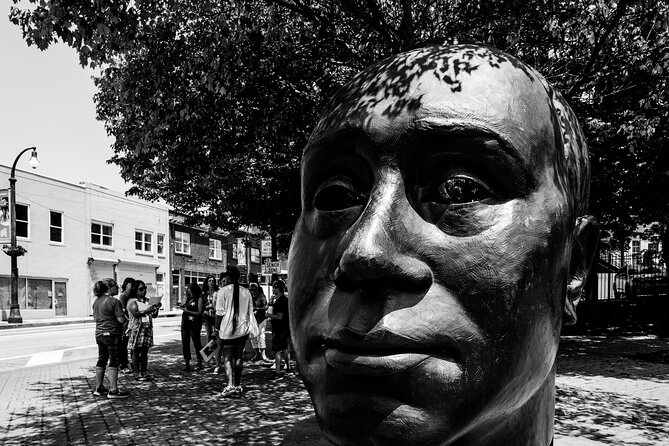
The meeting point is 450a Auburn Ave NE, at the Martin Luther King Jr. National Historical Site. The tour begins and ends there, which makes the logistics simple. You do not need to arrange a ride between stops, and the area is near public transportation.
The opening section gives you an overview of the National Historical Park and walks through parts of the site. About 25 minutes is set aside for this portion, though the exact movement through buildings can depend on National Park Service staffing. Park buildings may close without warning because of staffing shortages, so you should treat the outdoor and neighborhood material as the dependable core of the tour.
This is also where the route can feel most personal. The National Historical Park includes places tied to King’s early life and public work. The supplied information notes that the birth home tour is not included and was listed as closed until 2025. The tour also does not include the inside of Ebenezer Baptist Church’s Heritage Sanctuary.
Those limits are worth understanding before you arrive. You are paying for a guided walk through the district, not a guaranteed interior tour of every landmark. If entering historic buildings is your main goal, check their current opening status separately and allow extra time outside this experience.
Ebenezer Baptist Church from the sidewalk
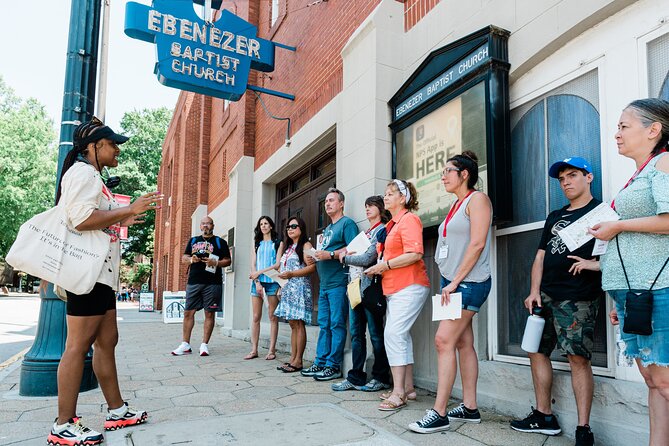
Historic Ebenezer Baptist Church is one of the essential stops, but this tour views it from the exterior only. That still gives the guide a strong point from which to explain the King family’s religious life and the church’s role in Atlanta’s Civil Rights story.
The church is meaningful because Martin Luther King Jr. and his father both preached there. A guide can place King’s public leadership within the setting that helped shape it, rather than presenting his speeches as isolated moments. You may hear about family ties, faith, and the local network that supported the movement.
Do not expect a long interior visit here. The absence of sanctuary access may disappoint you if you hoped to sit inside the church where King preached. On the other hand, the exterior stop keeps the walking route moving and leaves more time for the wider Sweet Auburn story.
Prince Hall Grand Lodge and the people behind the movement
The historic Prince Hall Grand Lodge is one of the less obvious stops, and it adds welcome depth to the route. The building was associated with offices used by Martin Luther King Jr. and Congressman John Lewis. It also connects to a historic Madam C.J. Walker Beauty Salon.
This stop helps you see that Civil Rights work depended on offices, organizations, businesses, and gathering places, not only famous speeches and marches. The lodge represents the civic infrastructure that supported Black leadership in Atlanta. The beauty salon reference also points toward the practical spaces where people built community and exchanged ideas.
The stop is exterior only, so the value comes from the explanation rather than a long building visit. Pay attention to how your guide links the site to the people already introduced. A well-told account here can make the movement feel organized and local, not like a series of disconnected national events.
Same streets, a different guide:
- New Orleans Premier Ghost, Voodoo and Vampire Walking Tour
★ 4.5 · 12,856 reviews - Little Havana Food and Walking Tour in Miami
★ 5.0 · 8,882 reviews - Chicago: Gangsters and Ghosts Walking Tour
★ 5.0 · 7,155 reviews - New Orleans Food Walking Tour of the French Quarter with Small-Group Option
★ 5.0 · 6,118 reviews
Jackson Street Bridge and Atlanta from above
The visit to Jackson Street Bridge lasts about 10 minutes and offers the clearest visual pause on the route. You get one of Atlanta’s best-known city views, a useful contrast after several close-up historic sites in Sweet Auburn.
This stop is also a practical chance to catch your breath. The walk includes small hills and about 1.5 miles overall, so the change in pace helps. Bring your phone if you want photos, and make sure it is charged. The bridge view is one of the few parts of the tour aimed less at close historical detail and more at helping you place the neighborhood within the larger city.
The view does not replace the main history, but it gives the tour visual variety. It can also help you understand why Atlanta’s geography mattered as the city grew around these older communities.
The King Center and the final chapter
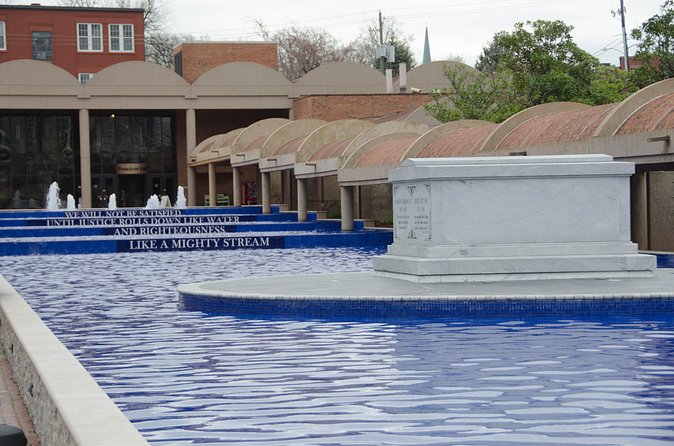
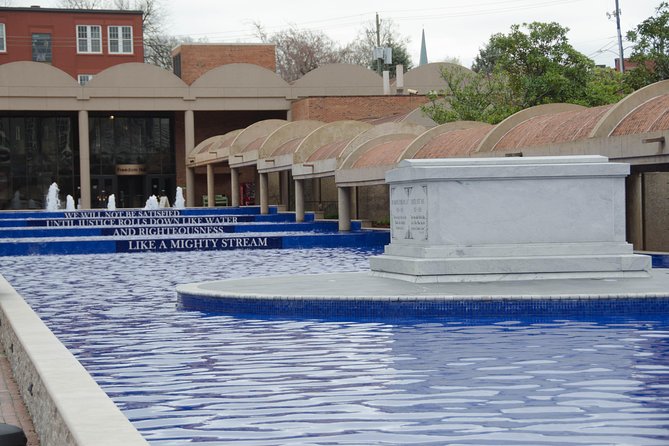
The tour includes about 10 minutes at the King Center, whose stated operating hours are seven days a week from 10 a.m. to 5 p.m. The tour includes the exterior of the King Center, not a guaranteed extended indoor visit.
The King Center is important for understanding how King’s work has been preserved and presented. The route also connects this part of the neighborhood to the place where Martin Luther King Jr. and Coretta Scott King are memorialized. Guides may discuss King’s Nobel Peace Prize, his clothing and suitcase from his final day, and other personal objects or details connected to his life.
This is where the walk can become especially emotional. The subject is serious, and the route does not avoid the weight of King’s assassination or the work that Coretta Scott King continued. At the same time, the strongest guides keep the mood human. Joy, for example, has been praised for combining moving material with humor and personal details about the King family.
If you want to explore the King Center at length, plan another visit. Ten minutes is enough for the tour’s purpose, but not enough for a slow museum visit. The same advice applies to the nearby historical buildings. Use the walking tour as a guided framework, then return on your own if a particular site deserves more time.
The International Civil Rights Walk of Fame
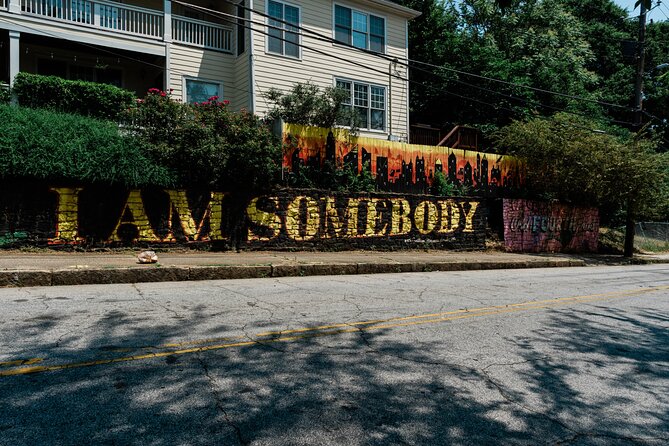
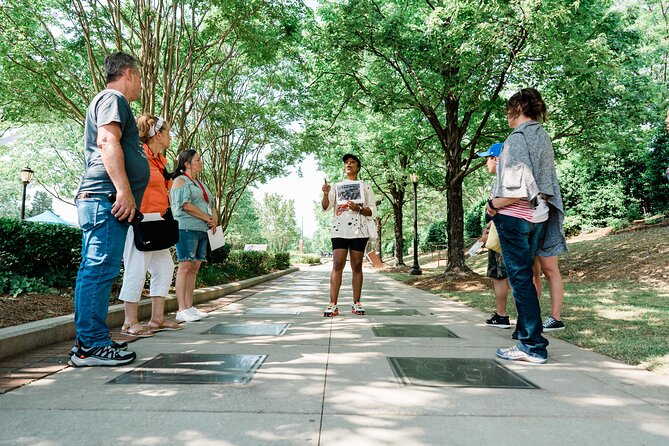
The International Civil Rights Walk of Fame provides a fitting closing stretch. You see shoe prints associated with prominent Civil Rights leaders and connect those names to the people and events discussed during the walk.
This stop works because it turns a long story into a series of human figures. After hearing about King, Lewis, Coretta Scott King, and other leaders, you can pause and place those names within a larger group. It reinforces the point that the movement was never the work of one person.
The route ends back at the original meeting point. That makes it easy to continue exploring Sweet Auburn, find food nearby, or return to a site that received only a brief visit.
How much walking and standing should you expect?

The official duration is about 2 hours and 30 minutes. A practical estimate from the route is roughly 1.5 miles, with some small hills and repeated periods of standing while the guide speaks.
You should wear comfortable shoes. The advice sounds basic, but it matters more here than it would on a short city stroll. Atlanta heat can come and go with cloud cover, and some parts of the route may offer shade while others do not. Bring water, protect yourself from the sun, and dress for the forecast.
The tour operates rain or shine. That is useful for scheduling, but it also means you need to be ready for less-than-perfect conditions. The experience is not recommended if you have difficulty walking or standing for long periods. Service animals are allowed, and most people who can manage the distance and hills can take part.
The group limit is 14. That is small enough for a more personal exchange than a large coach tour, while still giving the walk some group energy. It also means you can ask questions without needing to compete with dozens of people.
What makes the $40 price worthwhile?
At $40 per person, this is not the cheapest way to see the neighborhood. You can walk through parts of Sweet Auburn on your own for free. The real question is what you gain by having a guide.
I think the price is fair if you want context rather than a checklist of addresses. The route covers several major sites, but the value comes from the connections between them. A guide can explain why Prince Hall Grand Lodge matters, place Ebenezer Baptist Church within King’s family story, and show how local people and institutions supported a national movement.
The price is less compelling if you want long interior visits or extensive free time at each site. Since the church and King Center are viewed from outside and the birth home tour is not included, you are paying mainly for interpretation, pacing, and access to a carefully connected route.
The small group helps justify the cost. So does the guide quality. Zoe, Joy, Jay, Jessica, Nic, Kristin, Kristen, and Kirsty have each received strong praise for storytelling, warmth, humor, or historical detail. Their styles differ, but the most effective guides make the time pass quickly and invite questions rather than simply reciting facts.
The tour is often booked about 11 days ahead. That is a useful planning signal, especially if you are visiting on a fixed schedule. Book early if your Atlanta dates are tight, but remember that the experience is non-refundable and cannot be changed after booking. A cancellation caused by poor weather or too few bookings is treated differently, with an alternate date or full refund offered.
Who will get the most from this walk?
I would choose this tour if you are visiting Atlanta for the first time and want a clear introduction to the Civil Rights movement in the city. It also suits Atlanta residents who have passed these sites but never learned how they connect.
Families can do well here, especially with a guide who uses humor and stories to keep younger listeners involved. History-minded visitors will appreciate the attention to mentors, Coretta Scott King, John Lewis, and less familiar institutions. Educators may find the movement’s local setting useful for making familiar names more concrete.
The walk may be less suitable for anyone seeking a quiet, self-paced visit. You follow a set route, spend time standing, and cover serious material at the guide’s pace. People with limited mobility should think carefully about the distance and hills before booking.
English is the only offered language. You receive a mobile ticket, and transportation to or from the meeting point is not provided. Since the tour starts and ends at the National Historical Site, you can build the rest of your day around Sweet Auburn rather than solving a complicated transfer plan.
Should you book the Martin Luther King Jr. History Walking Tour?
Yes, if you want a guided explanation of why Atlanta mattered to Martin Luther King Jr. and the Civil Rights movement. The route is practical, the group is limited to 14, and the mix of major landmarks with less obvious sites gives you more than a basic monument stop.
Book it with realistic expectations. You will walk about 1.5 miles, view some major buildings only from outside, and spend much of the time listening while standing. If that suits you, the $40 fee buys a thoughtful route and a human guide who can connect church, family, civic life, public leadership, and memory.
I would especially recommend it early in an Atlanta visit. It gives you a firm sense of Sweet Auburn, and you can then return to the King Center or other National Park sites for a slower look. If you want a meaningful history experience that remains lively and personal, this is a strong choice.
FAQ
Where does the Martin Luther King Jr. History Walking Tour start?
The tour starts at 450a Auburn Ave NE, Atlanta, Georgia 30312, at the Martin Luther King Jr. National Historical Site.
Where does the tour end?
The activity ends back at the original meeting point at the Martin Luther King Jr. National Historical Site.
How long is the walking tour?
The tour lasts approximately 2 hours and 30 minutes. The route requires about 1.5 miles of walking and includes some small hills and periods of standing.
Are the historic buildings open for interior visits?
Interior access is not included for Historic Ebenezer Baptist Church or the King Center. The tour visits these sites from the outside. The birth home tour is also not included and was listed as closed until 2025.
Does the tour run in bad weather?
The tour operates rain or shine. If it is canceled because of poor weather or because the minimum number of participants is not met, you are offered another date or a full refund.
Is the tour suitable for people with limited mobility?
The tour is not recommended for people who cannot walk and stand for long periods. Service animals are allowed, and most people who can manage the walking distance and small hills can participate.
New routes in the USA
- Baltimore Walking Foodie Tour in Fells Point★ 5.0 · 182 reviews
- The Madam’s Curse Walking Ghost Tour★ 4.5 · 103 reviews
- Austin Small Group Morning Walk★ 5.0 · 412 reviews
- Austin Haunted Pub Crawl Walking Tour★ 4.5 · 232 reviews
- Austin Downtown Private Walking Food Tour With Secret Food Tours★ 5.0 · 71 reviews
- Austin Murder Walk★ 5.0 · 310 reviews
- The Ghosts of Austin Walking Tour★ 4.5 · 72 reviews
- The Walking Dead: Private Film Locations Tour of Senoia★ 4.5 · 73 reviews
USA Walking Tours, compared.

History and Hauntings of Salem Guided Walking Tour
Read our review →
New Orleans Premier Ghost, Voodoo and Vampire Walking Tour
Read our review →

Freedom Trail History Small Group Walking Tour
Read our review →
Historic Charleston Guided Sightseeing Walking Tour
Read our review →
New Orleans Food Walking Tour of the French Quarter with Small-Group Option
Read our review →
St. Louis Cemetery No. 1 Official Walking Tour
Read our review →Browse the lists this tour appears in