
Review · INDIA
Tipu Palace + Koté Vishnu + Fort + KR Market + Jain Temple = Bengaluru Pété Walk
Bengaluru’s old Pété district gives you the city at close range: a teak palace, carved temple walls, a battered fort, a flower market, and a Jain shrine, all linked by busy streets. I like the way this walk moves from grand history to ordinary working life, especially at KR Market, where flowers, bicycles, workers, cows, and shoppers share the same narrow lanes.
I also like the personal help built into the experience. Guides such as Vijay, Raghu, Vanaja, Vasuki, and Phaneesh have been praised for clear history, practical advice, coffee or tea stops, and help finding the metro afterward. The main drawback is the pace: three hours on foot through crowded streets can be tiring, and the Hindu temple may be closed on an afternoon departure.
Key points to know before booking
- Tipu Sultan’s Summer Palace: See a 230-year-old teak palace with Islamic architectural details.
- Five sharply different stops: The walk covers a palace, Hindu temple, fort, working market, and Jain temple.
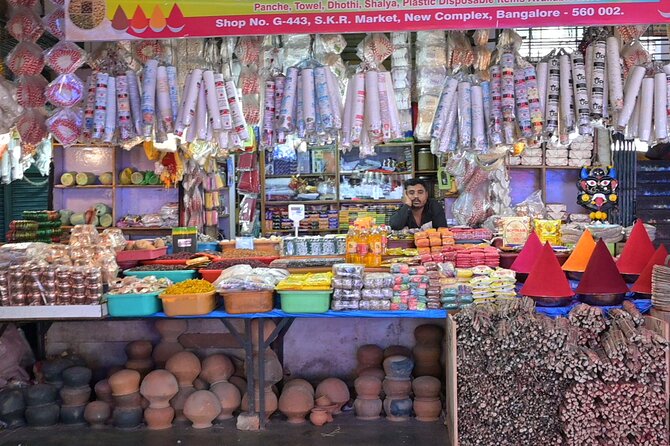
- KR Market is the sensory high point: Flower stalls, food, traffic, animals, vendors, and buyers create the most vivid part of the walk.
- Small-group format: The maximum group size is 10, which makes it easier to ask questions and stay close to the guide.
- Dress matters: Cover your shoulders and legs for the temples, and carry a scarf if you may need one.
- Good value for a short visit: At $33.55 per person, admission to the monuments is included, but transport, lunch, and tips cost extra.
Why this walk gets Bengaluru right
Many city tours keep you on the outside, pointing at monuments from a vehicle window. This one puts you into the lanes of Bengaluru’s old center, where royal history, religious life, commerce, and daily commotion sit side by side.
The Pété district is a useful introduction because it does not present one polished version of the city. You get formal architecture and sacred spaces, but you also get market work in progress. One minute you are looking at carved stone figures; the next, you are moving around flower sellers and handcarts.
The route lasts about two and a half to three hours. That is long enough to give each stop some attention without taking up an entire day. A group of no more than 10 people is another plus. In a crowded market, a small group is much easier to manage than a large tour that blocks every lane.
At $33.55 per person, I see the value in the guide rather than just the entrance fees. The palace admission is included, while the temple, fort, market, and Jain shrine do not require separate admission according to the supplied details. The real benefit is having someone explain what you are seeing, lead you through confusing streets, and help with practical questions afterward.
More Market Walking Tours in India
- Delhi Food Walk: Rickshaw Ride, Street Eats & Market Tour
★ 5.0 · 401 reviews - Private Heritage Walking Tour in Jaisalmer Fort and Old Bazaar
★ 5.0 · 306 reviews - Old Delhi Food-Spice Market-Temples Tour Soon Featured on NETFLIX
★ 5.0 · 304 reviews
Tipu Palace and its 230-year-old teakwork
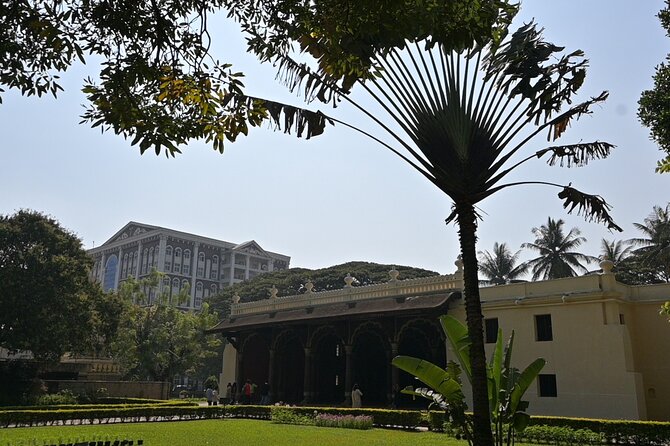
Begin at Tipu Sultan’s Summer Palace on Tippu Sultan Palace Road. The palace is about 230 years old and built mainly from teak, with an Islamic architectural style that gives the first stop a calm, formal character.
Allow about 30 minutes here. That sounds brief, but it works as an opening stop. Your guide can explain the building’s place in the story of Tipu Sultan and the former kingdom of Mysore, then point out the timber structure and design details that are easy to miss when you walk through alone.
The palace is not a vast complex, so do not expect a full morning inside. Its appeal comes from the material and setting: dark teak, open spaces, and a royal building located right beside the everyday life of the old city. The contrast becomes more striking as the walk continues.
This is also where you meet the guide. The tour is offered with a Government of India approved and licensed guide. Several guides have led the walk, including Vijay Kumar, Raghu, Vanaja, Vasuki, Ramesh, Govinda, Phaneesh, and Ramakrishna Aithal. You should not assume you will receive a particular guide unless the operator confirms it, but the range of guide names gives you an idea of the experience: expect a personal walking tour rather than an audio guide.
Kote Venkataramana Temple and its carved stone stories
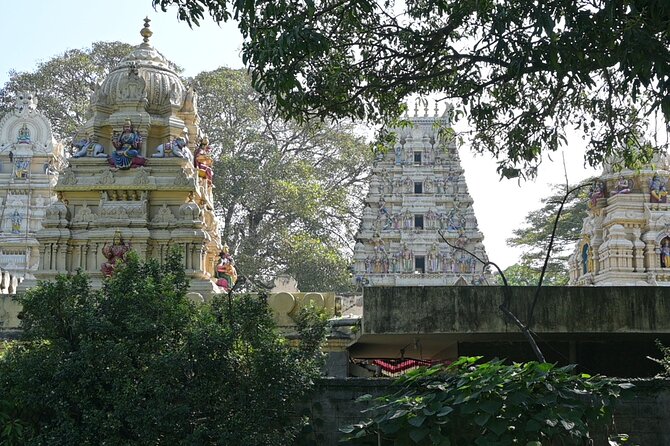
Next door is Kote Venkataramana Temple, also called the Kote Vishnu Temple in some descriptions. Chikkadevaraja Wodeyar built it in 1690, making it older than the palace beside it.
The temple is known for stone sculptures of Indian mythological figures on its walls. This is a good place to slow down and let the guide explain what the carvings represent. The stop lasts around 30 minutes, and there is no separate admission charge listed.
Temple access depends on working hours and seasonal changes. That point matters. The route may include the temple, but entry is not guaranteed at every departure time. One afternoon departure did not allow entry because the Hindu temple was closed, so I would choose a morning walk if entering the temple is important to you.
You need to dress for worship spaces. Cover your shoulders and legs, and carry a scarf if you are a woman who may need one at the Jain temple later. An extra pair of socks can be useful, since temple visits may require footwear to be removed.
Bangalore Fort and the small remains of a larger past
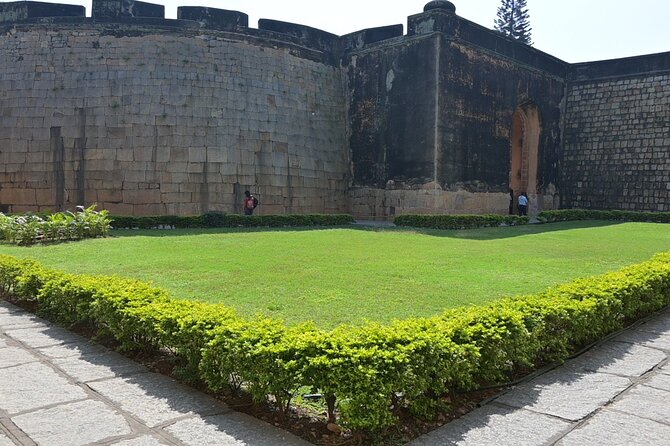
Bangalore Fort began as a mud fort built by Kempegowda, the founder of Bengaluru, in the 16th century. Hyder Ali rebuilt it in stone in the 1760s. Today, only about 5 percent of the original fort remains.
That figure changes how you should approach this stop. You are not visiting a huge defensive complex with long ramparts and many rooms. You are seeing a surviving fragment, neatly maintained and made meaningful by the explanation around it.
The fort stop takes about 30 minutes. The guide helps connect the remaining structure to the city’s earlier political and military story. Without context, the site could feel small. With context, the limited remains become a useful lesson in how much Bengaluru has changed.
This part of the walk also helps break up the religious and market stops. You are moving through several layers of the city rather than spending the entire tour inside one kind of attraction.
Same streets, a different guide:
- Fontainhas Heritage Walk by Make It Happen
★ 5.0 · 2,834 reviews - The Great Indian Food Tour: Old Delhi Food and Heritage Walk
★ 5.0 · 1,698 reviews - Group Guided Walking Tour in Fort and Colaba
★ 5.0 · 1,073 reviews - Private Guided Walking Tour in Fort & Colaba
★ 5.0 · 895 reviews
KR Market, where Bengaluru works in public
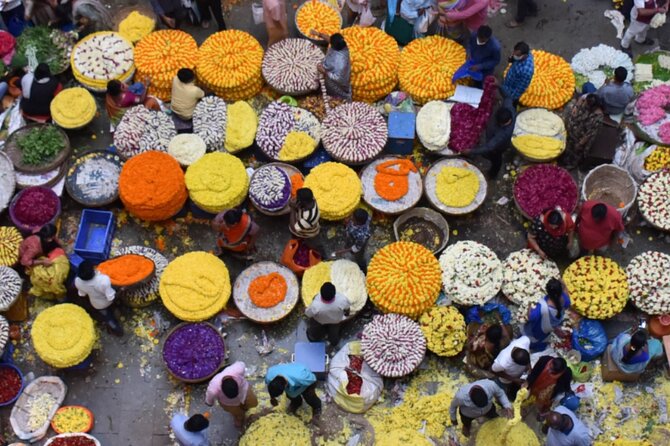
KR Market, formally Sri Krishnarajendra Market, is the most memorable stop for many people. It is not tidy, quiet, or arranged for sightseeing. That is precisely why it matters.
Expect vendors, workers, porters, hawkers, buyers, bicycles, cows, dogs, and a steady stream of movement. The flower market is a particular highlight. The colors and scents give you a quick lesson in how flowers are bought, carried, arranged, and sold as part of everyday commerce.
The market can be crowded and confusing. I would not want to find the right lanes alone on a first visit, especially while trying to watch traffic and avoid obstructing workers. A local guide makes a real difference here, not by turning the market into a performance, but by helping you pass through it with some awareness of how the place functions.
Bring patience and sensible footwear. This is a walking tour through an active market, not a controlled shopping arcade. You might encounter strong smells, wet surfaces, tight spaces, and sudden movement. One useful tip from the tour experience is to consider wearing a mask around the flower and market areas if you are sensitive to dust or heavy aromas.
The market is also where the tour feels most different from a standard heritage walk. Tipu Palace and the fort tell you about earlier power. KR Market shows you how the old center earns, trades, carries, bargains, and eats today.
The quiet change of pace at the Jain temple

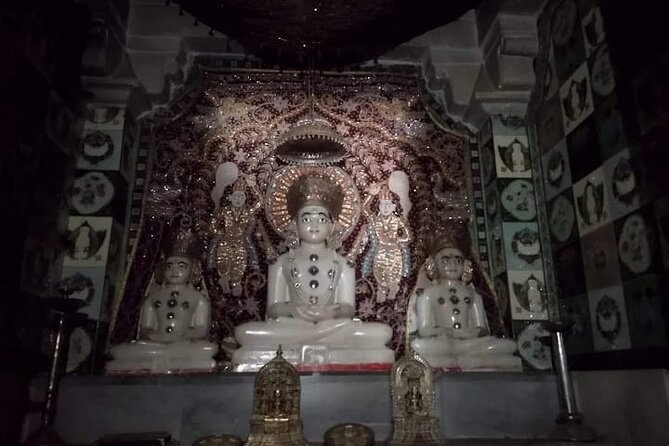
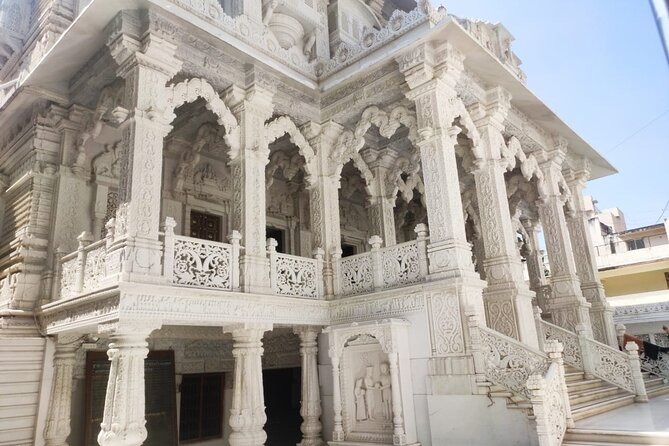
The final stop is Shri Adinath Jain Shwetamber Mandir on Chickpet Road, close to Chickpet metro station. Jainism began in India at least 2,500 years ago and developed alongside Buddhism. Its core ideas include non-violence and vegetarianism.
The Jain temple gives the walk a quieter finish after the noise of the market. Your guide can explain the basic beliefs and the role of Jain worship, helping you understand why the temple feels different from the Hindu site earlier in the route.
Temple etiquette matters here. Cover your legs and shoulders, and carry a scarf. You may need to remove your shoes, which is why an extra pair of socks can be handy. Be respectful with photography and follow any instructions given at the temple.
This is a particularly useful last stop because it broadens the religious picture of Bengaluru. You are not simply seeing one famous temple and moving on. You are being introduced to two different traditions within the same old district.
What the guides add to the walk
The guide is the main reason to choose this experience over following a map between the same five places. The most useful guides do more than recite dates. They explain local customs, answer questions, help you read the city around you, and make the busy streets feel manageable.
Vijay Kumar has been singled out for historical explanations, personal warmth, help with photographs, filtered coffee suggestions, and assistance finding the metro or an Uber after the walk. Raghu has been praised for careful pacing and for helping when someone in the group needed a break. Varun has shown flexibility with timing and communication, while Vanaja and Vasuki have been noted for clear English and consideration for the group.
Those details matter if you are a solo visitor or new to India. One solo woman found the walk comfortable and appreciated being escorted toward transport afterward. That is not a promised transfer service, but it shows the sort of practical help you can ask for.
French, Italian, and German-speaking guides may be available, subject to availability. English is the language most clearly represented in the supplied information.
Timing, transport, and physical effort
The meeting point is Tipu Sultan’s Summer Palace at 42 Tippu Sultan Palace Road in Chamrajpet. The walk ends at Shri Adinath Jain Shwetamber Mandir on Chickpet Road, near Chickpet metro station.
The start and end points are useful because you do not finish where you began. Plan your onward route from Chickpet. The guide may help you understand the metro or arrange practical advice, but transport is not included in the $33.55 price.
Hotel pickup and return may be available for a small extra charge. You need to provide your Bangalore hotel details so the operator can tell you if this option works. Lunch is not included, and tips for the guide are also separate.
You need a moderate level of fitness. The route lasts up to three hours, and the market can make the walking feel more demanding than the distance suggests. Comfortable shoes, water, modest clothing, and a scarf are sensible choices.
If you have a choice of departure time, I would favor the morning. It is reported to be less crowded and cooler, and the Hindu temple is more likely to be open than during some afternoon departures. Seasonal and working-hour changes still apply, so treat that as a practical preference, not a guarantee.
Who will get the most from this experience
This walk suits you if you want a quick, direct introduction to old Bengaluru rather than a single museum or palace visit. It is especially useful on a first visit, during a short stay, or at the beginning of a longer trip when you want local orientation.
It also works well for solo visitors who prefer company in crowded streets, couples who want history mixed with daily life, and small groups interested in architecture, religion, markets, or photography. The group limit of 10 keeps the experience more manageable.
It may not suit you if you dislike crowds, strong smells, religious etiquette, or walking on uneven and busy streets. The market is active, not staged for comfort. Also, the five-stop format gives you a broad look rather than a long, detailed visit at each location.
The tour is highly focused. You will not see every major Bengaluru attraction, and there is no lunch built into the route. Think of it as a concentrated old-city walk, not a complete city tour.
Is the Bengaluru Pété Walk worth $33.55?
I would book it if you want Bengaluru to make sense quickly. The palace and fort provide the historical frame, the two temples add religious context, and KR Market gives you the strongest look at present-day city life.
The price is fair for a licensed guide, included monument entry, a maximum group size of 10, and help navigating an area that can be difficult to read on your own. The best value comes from the explanations and local guidance, not from the admission fees alone.
Choose the morning if possible, dress for temple entry, and leave room in your schedule for a coffee, tea, metro help, or additional shopping advice after the formal walk. Skip it only if you want a quiet, spacious sightseeing experience. For a close-up introduction to Bengaluru’s old center, this is a strong choice.
FAQ
How long does the Bengaluru Pété Walk last?
The walk lasts approximately two and a half to three hours.
How much does the experience cost?
The listed price is $33.55 per person.
Where does the tour begin?
It begins at Tipu Sultan’s Summer Palace, 42 Tippu Sultan Palace Road, Kamalanagar, Chamrajpet, Bengaluru.
Where does the tour end?
It ends at Shri Adinath Jain Shwetamber Mandir on Chickpet Road, near Chickpet metro station.
What is included in the price?
Entry fees at the monuments are included.
Is transport included?
No. Lunch and transport are not included, although hotel transport may be available for a small additional fee.
Is the group limited in size?
Yes. The maximum group size is 10 people.
What should I wear?
Your clothing should cover your legs and shoulders for the temple visits. Women should also carry a scarf, and an extra pair of socks may be useful.
Is the Hindu temple always open during the tour?
No. Temple and monument entry depends on working hours and seasonal changes. The Hindu temple may be closed during some afternoon departures.
Can I cancel for a full refund?
Yes. You can cancel at least 24 hours before the experience start time for a full refund. Cancellations or changes made less than 24 hours before the start time are not accepted for a refund.
More Castle and Palace Walking Tours in India
- Bangalore: Palace, Temples, Fort & Markets Walking Tour
★ 4.9 · 97 reviews - Edinburgh Castle: Guided Walking Tour with Entry Ticket
★ 4.7 · 11,699 reviews - Venice: Doge’s Palace and St Mark’s Basilica Walking Tour
★ 4.4 · 6,291 reviews - Prague: 3-Hour Walking Tour of Old Town & Prague Castle
★ 4.7 · 5,696 reviews
New routes in India
- Street Food walking tour in Bangalore with a food evangelist★ 5.0 · 83 reviews
- Bengaluru Pete City Market Half-Day Walking Tour★ 5.0 · 163 reviews
- Agra Walking Tour★ 5.0 · 109 reviews
- Amritsar Heritage Walking Tour★ 5.0 · 112 reviews
- The Great Indian Food Tour: Old Delhi Food and Heritage Walk★ 5.0 · 106 reviews
- Spiritual Walking tour with Puja Ceremony -The Pushkar Route★ 5.0 · 101 reviews
- Spiritual Walk Tour Trivandrum (Guided Walking Experience)★ 4.6 · 87 reviews
- Panaji: Heritage Walk through Goa’s Latin Quarter★ 4.8 · 291 reviews
India Walking Tours, compared.


The Great Indian Food Tour: Old Delhi Food and Heritage Walk
Read our review →
Old Delhi Food, Heritage&Cultural Walk with Rickshaw ride to Masterji Kee Haveli
Read our review →

Delhi Food Walk: Rickshaw Ride, Street Eats & Market Tour
Read our review →
Private Guided Walking Tour in Bandra Queen of Suburbs
Read our review →Browse the lists this tour appears in