
Review · SINGAPORE
Singapore: Chinatown and Little India Guided Walking Tour
Singapore’s best introduction may be a walk through three very different neighborhoods. This three-hour tour links Little India, Kampong Glam, and Chinatown, showing you how Chinese, Indian, Malay, and Muslim communities helped shape the city. You walk some stretches and use the MRT between areas, so you see both Singapore’s street life and its famously tidy public transport system.
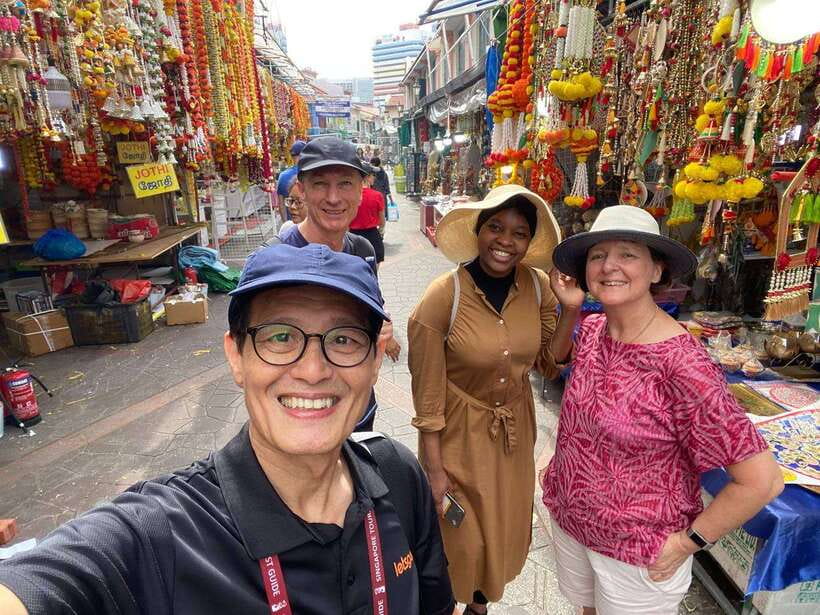
I like the way the tour connects old shophouses, temples, mosques, murals, and everyday markets instead of treating each district as a separate postcard. I also like that the guide helps with photos, food ideas, toilet breaks, water stops, and MRT basics. Guides including Yap, Yong Yuan, Cheyenne, Chan, and Jaci have been especially praised for making the history clear without turning the outing into a lecture.
The catch is simple: this is a real walking tour in a hot, humid city. Three hours on foot can feel long, especially on a crowded weekend or in rain. Wear comfortable shoes, carry water, and expect the tour to give you a useful overview rather than a long visit inside every major sight.
Key points at a glance
- Three cultural quarters in one morning or afternoon: See Little India, Kampong Glam, and Chinatown in a single route.
- MRT travel is part of the lesson: The guide may help you use Singapore’s train system like a local.
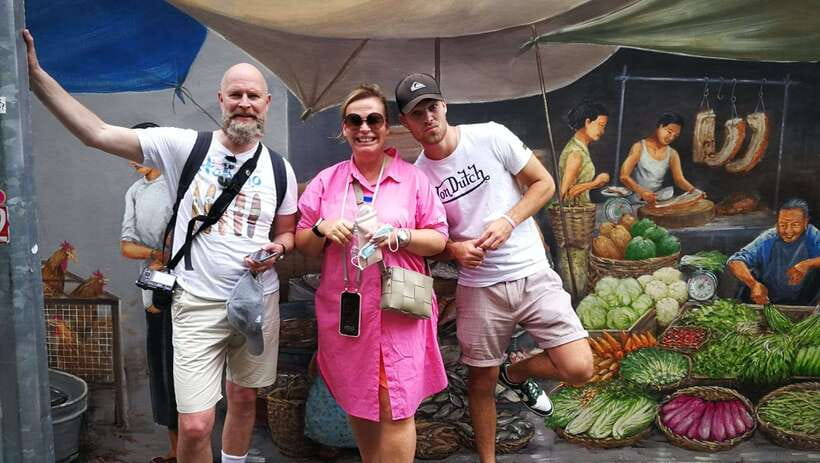
- Street details matter: Look for murals, painted shophouses, textile shops, markets, temples, and mosques.
- Local guides shape the experience: Yap, Yong Yuan, Cheyenne, Chan, Jaci, and other guides are praised for history, humor, photos, and practical help.
- Rain does not automatically cancel the walk: The tour can run in rain, but thunderstorms may cause rescheduling.
- Plan for three hours of movement: The pace is often manageable, but the heat and distance still require sensible footwear.
Why this three-hour route works so well
Singapore can feel polished to the point of being hard to read. The towers are shiny, the roads are orderly, and the public spaces are well cared for. That is pleasant, but it can hide the older city beneath the surface.
This tour gives you a way into that older Singapore. You move through three districts shaped by different communities, then hear how they changed as Singapore grew from a trading port into a modern city. The guide is the key. A good explanation turns a painted facade, a prayer hall, or a market stall into part of a larger story.
The route also works well early in a Singapore visit. You get your bearings, learn how the MRT works, collect ideas for meals, and see places you can return to later at your own speed. Several guides have adjusted their commentary to suit the group, including spending more time on Kampong Glam when a participant had already seen Chinatown.
The tour costs $78 per person. That is not a cheap stroll, especially since food, drinks, hotel pickup, and entry fees are not included. Still, the price can make sense if you want a guide to connect the districts, explain Singapore’s social history, help with photos, and introduce you to public transport. If you only want to look at buildings and take a few pictures, you can explore these areas independently for much less.
More Guided Walks in the world:
- Magical London: Harry Potter Guided Walking Tour
★ 4.7 · 22,044 reviews - History and Hauntings of Salem Guided Walking Tour
★ 5.0 · 14,564 reviews - Amsterdam Anne Frank: Small-Group Walking Tour & Local Guide
★ 4.8 · 12,789 reviews
Starting in Little India
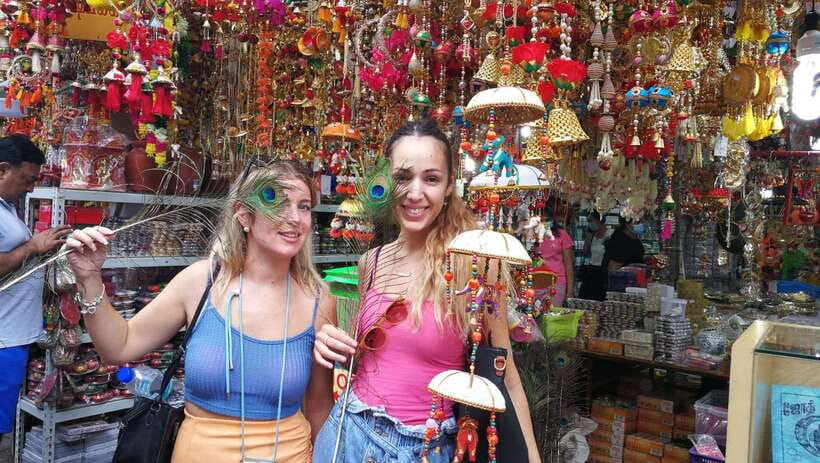
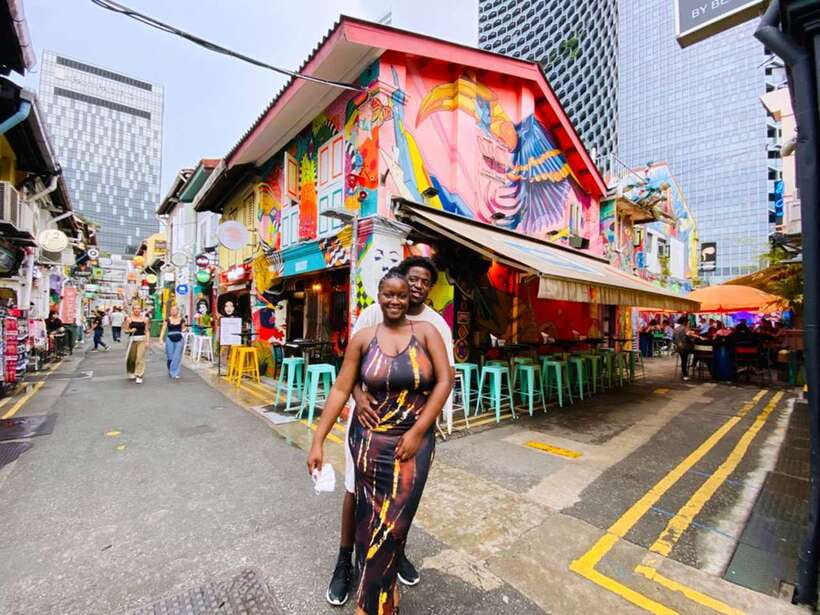
Little India is a strong opening because it gives you plenty to notice right away. The district is known for temples, mosques, street art, brightly painted shophouses, and shops filled with textiles and other goods. The color and detail make it one of the easiest parts of the tour to photograph.
Your guide can explain what you are seeing instead of leaving you to guess. That may include the role of Indian communities in Singapore, how the district developed, and how religious and commercial spaces sit close together. The value is not just in seeing a temple facade. It is in understanding why the street looks the way it does.
I would pay attention to the smaller details here. Painted upper stories, decorative entrances, shop displays, and murals often tell you more about the neighborhood than a single famous building. The guide can also point out good angles for photographs, which helps when you are trying to frame a narrow street with overhead signs, people, and colorful walls.
Little India can be busy, and the route is not designed as a slow shopping expedition. You should not expect long browsing time in every store. Instead, think of this stop as an introduction. You will see enough to decide which streets, shops, or eateries deserve a return visit.
The practical upside is that the walk includes breaks when needed. Cheyenne was praised for keeping a comfortable pace for older participants and making room for restroom stops. That matters in Singapore, where heat and humidity can make a short distance feel longer than it looks on a map.
Moving through Kampong Glam
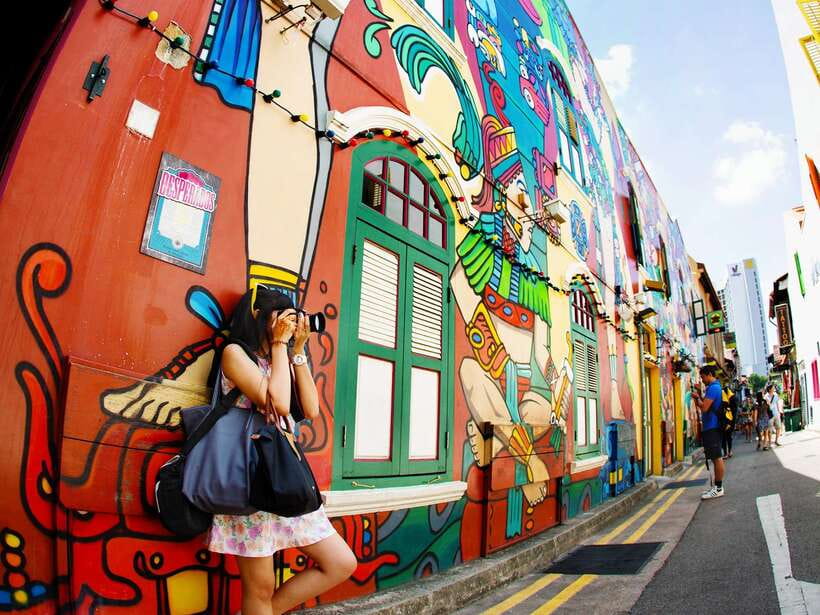
Kampong Glam gives the tour a different tone. This is Singapore’s Muslim quarter, with textile stores, colorful street art, old shophouses, and the distinctive presence of mosques and Malay cultural traditions.
I like this section because it helps prevent a common mistake: treating Singapore’s culture as only Chinese and Indian. Kampong Glam adds the Malay and Muslim story, giving the tour a broader view of how the city developed. The guide can explain how the district changed over time while still keeping its religious and commercial character.
The old shophouses are a major part of the visual appeal. Their narrow fronts and painted details create excellent photo stops, but the guide’s context makes them more than pretty backgrounds. You learn to look at how buildings were used, how shops served the community, and how the area now mixes heritage with modern cafes, art, and retail.
Some tours may include a look at a hookah center or recommendations for food in the area. Specific stops can vary, so I would treat these as possible additions rather than guaranteed features. The dependable part is the walk through the quarter, the street art, the shops, and the explanation of its place in Singapore.
Kampong Glam is also a good place to ask practical questions. Guides have offered suggestions for eating, helped with dietary needs, and pointed visitors toward places worth returning to. If you are curious about Arab Street, textiles, local drinks, or the area’s food, this is the moment to speak up.
The walking order can make the district feel like a midpoint rather than a final destination. You are still moving through the city, not settling in for a long meal or museum visit. If Kampong Glam interests you most, plan to return after the tour with more time.
Reaching Chinatown by MRT and on foot
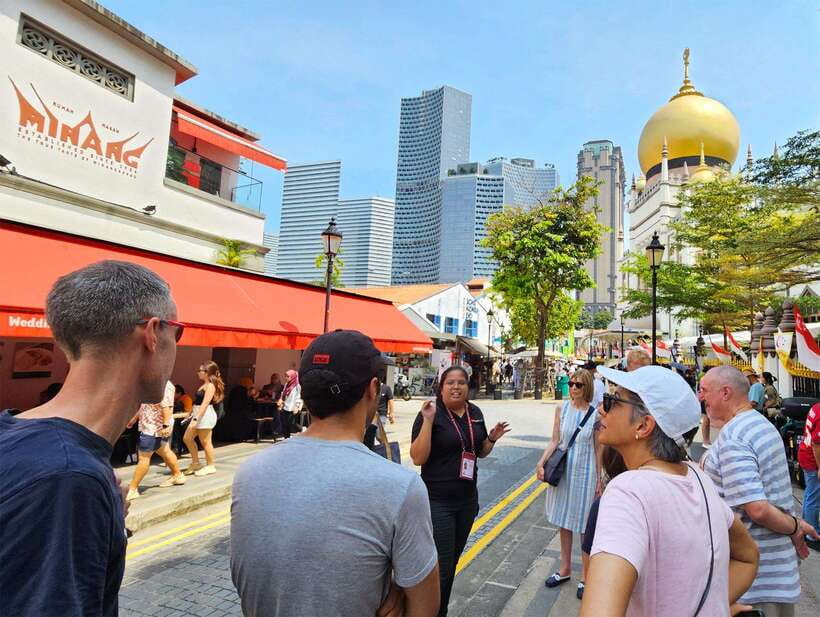
The route finishes in Chinatown, at Chinatown MRT Station. The train ride is not just a way to cover ground. It can be a small practical lesson in how Singapore works.
Several guides have helped participants use the MRT with confidence, including showing them how to move between neighborhoods as locals do. That is useful beyond this tour. Once you understand the system, you can reach more parts of Singapore without relying on taxis or organized transport.
Chinatown brings the three-part story together. Here you can expect a lively mix of older streets, shops, food areas, religious buildings, and daily local activity. The guide explains how Chinese communities shaped the city and how the district changed as Singapore modernized.
The tour ends at Chinatown MRT Station, not at your hotel. That is convenient if you want to continue exploring, have lunch, or use the train to reach another part of the city. It also means you should think about what comes next. Chinatown is a good place to continue on your own, but the guided portion does not include food or a scheduled meal.
One practical point: Chinatown can be crowded, especially on weekends. One participant wished for more time in the most tourist-focused areas, but the guide had to balance crowd levels with the schedule. I see that as a fair trade. The tour aims to show the district and explain it, not keep you in one market for half the afternoon.
If you have already seen Chinatown, tell the guide at the start. Guides have adjusted routes and commentary when people had visited one section before. That can make the time more useful, particularly for repeat visitors.
More Walking Tours in the world:
- Reykjavik Food Walk – Local Foodie Adventure in Iceland
★ 5.0 · 18,952 reviews - New Orleans Premier Ghost, Voodoo and Vampire Walking Tour
★ 4.5 · 12,856 reviews - Edinburgh: Harry Potter Magical Guided Walking Tour
★ 4.8 · 11,944 reviews - Edinburgh Castle: Guided Walking Tour with Entry Ticket
★ 4.7 · 11,699 reviews
The guides make the difference
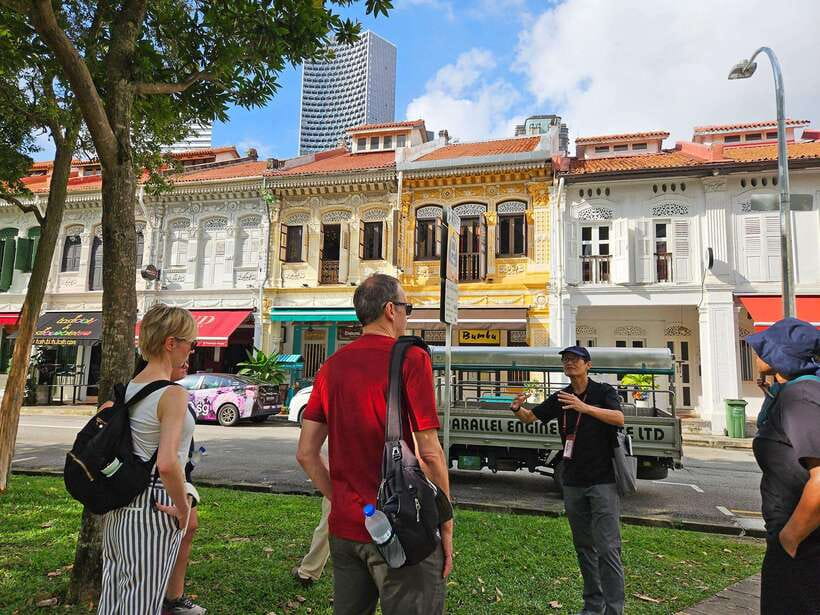
The strongest part of this experience is the guide rather than any single landmark. The guide is a licensed local professional, and the tour is conducted in English.
The most praised qualities are clear explanation, humor, flexibility, and a genuine interest in Singapore. Yap is repeatedly described as enthusiastic and easy to follow. Yong Yuan has been praised for history, photographs, and his ability to make the city feel approachable. Cheyenne is noted for thoughtful pacing and strong knowledge of the three districts. Chan is praised for giving useful information without burying the group in dates and numbers.
Other guides, including Jaci, Jackey, Colin, Kyanta, Elfie, Vidhya, Corliss, Angel, and Wadi, have also received strong marks for personal attention and practical help. This matters because the experience is not built around audio headsets or a fixed script. The quality of the conversation shapes how much you take away.
You can ask about food, local customs, public transport, history, or places to return later. Some guides have helped with photos. Others have shared suggestions for drinks and meals along the route. One guide even extended the walk to answer questions and make sure the group saw the main points, though you should not assume extra time is guaranteed.
The group size may vary. Some outings have had only two, three, or four participants, while others have included families and larger groups. A small group makes it easier to hear, ask questions, and adjust the pace. A larger group may feel less personal, particularly on crowded streets.
What the walking is really like
Three hours sounds modest until you add Singapore’s heat, humidity, street crossings, stairs, and time spent standing while the guide talks. This is not a strenuous hike, but it is more than a quick stroll between photo stops.
Comfortable footwear is essential. One participant specifically warned that the tour involves three hours of walking, and that is worth taking seriously. Choose shoes that can handle pavement and occasional uneven sections. Carry water, even though the guide may point out places to buy more.
The pace is not always fast. Several accounts describe regular breaks, shade, restroom stops, and attention to older participants. Still, comfort depends on the weather and the group. A humid afternoon can make the same route feel harder than a cooler morning.
Rain is part of the Singapore equation. The tour can operate in rainy conditions, but thunderstorms may lead to rescheduling. Bring light rain protection if the forecast looks uncertain. A sudden shower may slow the group, affect photos, and make some streets more crowded under cover.
This is also a city walk, not a private car tour. You will cross streets, move through public areas, and use public transport. That is part of the value, but it may not suit you if you want a seated sightseeing experience or a tightly controlled schedule.
What is included, and what is not
The $78 price includes the walking tour and licensed English-speaking guide. It does not include hotel pickup, hotel drop-off, food, or drinks.
That makes the tour best suited to someone paying for interpretation and orientation, not transportation or admission tickets. The guide’s advice can help you spend the rest of your day better, but you will still pay separately for lunch, snacks, and anything you buy along the way.
The meeting point is Let’s Go Tour Singapore. Look for a guide wearing a black shirt with a Let’s Go Tour logo on the front. The experience finishes at Chinatown MRT Station, listed as DT19.
You can cancel up to 24 hours before the start for a full refund, and the reserve-now, pay-later option keeps your plans flexible. The tour may be rescheduled if too few people sign up. It can also be rescheduled for thunderstorms, while ordinary rain does not automatically stop it.
Who should book this tour?
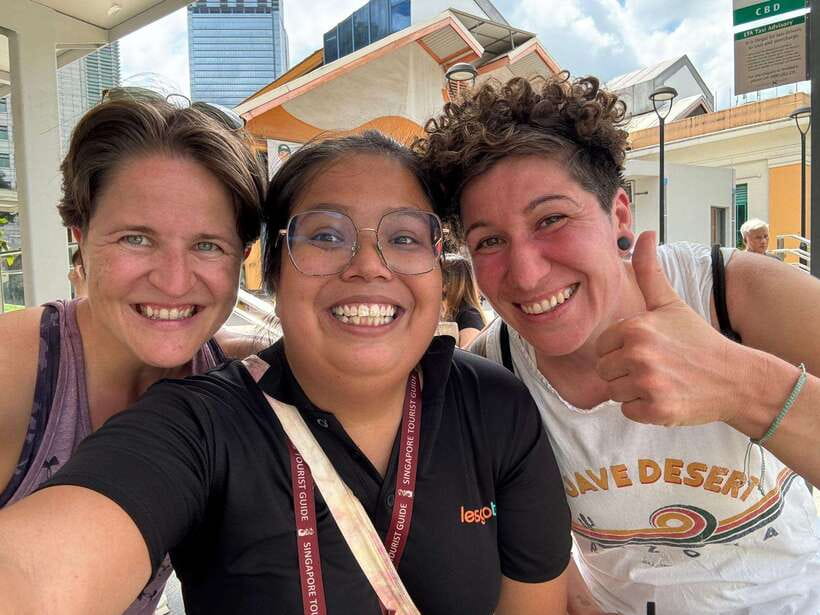
I would choose this tour if you are visiting Singapore for the first time and want cultural context quickly. It is also useful if you have a short stay and want to see three central districts without spending time planning the route yourself.
It suits curious walkers who enjoy questions, street scenes, local history, and practical tips. Families can do well if children are comfortable walking, and older participants may appreciate the breaks and measured pace. Solo visitors and couples may benefit from the social ease of having a guide and a small group.
I would hesitate if you dislike walking in heat, want long visits inside temples or mosques, or prefer to set your own pace. The tour gives you a broad introduction, not an exhaustive visit to every attraction. Food is not included, and the $78 price is significant if you are happy exploring with a guidebook and public transport map.
Final call: a smart introduction with a walking cost
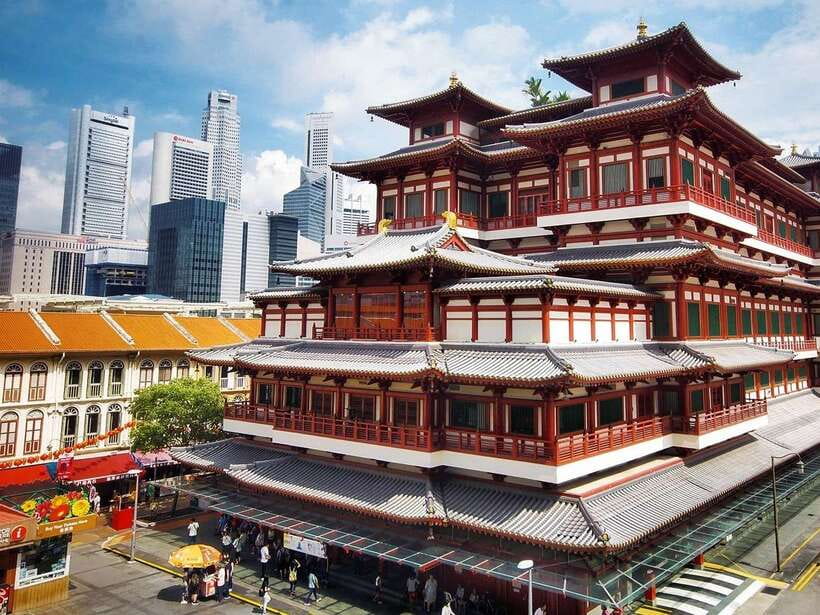
I recommend booking this tour if you want Singapore explained through its neighborhoods rather than viewed only from modern observation decks and shopping centers. Little India, Kampong Glam, and Chinatown each offer a different set of sights, and the guide connects them into one clear story.
The best reason to book is the combination of cultural explanation and practical city skills. You learn about the communities that shaped Singapore, see where to take photographs, get food suggestions, and become more comfortable using the MRT.
The main warning is physical, not cultural. Wear proper shoes, prepare for rain and humidity, and remember that three hours on city streets is the heart of the experience. If that sounds appealing, the tour offers a useful first look at Singapore and plenty of ideas for exploring on your own afterward.
FAQ
How long is the Singapore cultural walking tour?
The tour lasts three hours. The exact starting time depends on availability.
Which neighborhoods does the tour visit?
It visits Little India, Kampong Glam, and Chinatown.
Where does the tour start?
Meet at Let’s Go Tour Singapore. The guide wears a black shirt with a Let’s Go Tour logo on the front.
Where does the tour finish?
The tour finishes at Chinatown MRT Station, listed as DT19.
Is food included?
No. Food and drinks are not included, so plan to buy anything you want during or after the walk.
Does the tour run in the rain?
The tour can take place in rainy conditions. It may be rescheduled in the event of thunderstorms.
What language is the tour conducted in?
The tour is conducted in English with a live licensed guide.
New routes in the world
- Baltimore Walking Foodie Tour in Fells Point★ 5.0 · 182 reviews
- Baku Oil Heritage & Old Town Walking Tour★ 5.0 · 232 reviews
- Baku Walking Tour (Old City)★ 5.0 · 127 reviews
- The Madam’s Curse Walking Ghost Tour★ 4.5 · 103 reviews
- Austin Small Group Morning Walk★ 5.0 · 412 reviews
- Austin Haunted Pub Crawl Walking Tour★ 4.5 · 232 reviews
- Austin Downtown Private Walking Food Tour With Secret Food Tours★ 5.0 · 71 reviews
- Austin Murder Walk★ 5.0 · 310 reviews
Singapore Walking Tours, compared.
Chinatown Hawker Market Food Tour with 7 Food Tastings
Read our review →Chinatown, Little India, Arab Street Walking Tour
Read our review →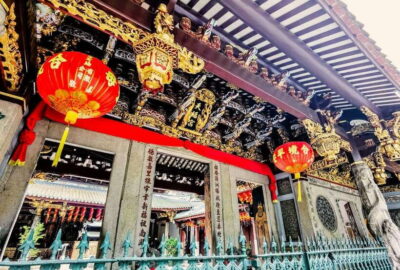
Splendour of Colonial Singapore Walking Tour with Lunch
Read our review →Browse the lists this tour appears in