
Review · SINGAPORE
Singapore: Chinatown Hawker Market Food Tour with 7 Food Tastings
Singapore’s food culture makes the most sense when you eat it where daily life happens. This three-hour Chinatown walk moves from kaya toast and Nanyang coffee to chicken rice, chwee kueh, chendol, and other local bites, with a guide explaining how Chinese, Indian, Malay, and colonial influences shaped the table.
I like the small group size, capped at 12, and the range of food. You get breakfast-style dishes, snacks, a full local staple, dessert, and beer rather than seven versions of the same meal. I also like that the walk includes temples and restored shophouses, so you see the neighborhood instead of simply sitting down to eat.
The main caution is value. At $146 per person, this is not a cheap way to grab lunch, and one person found the portions too modest for the price while others found the food plentiful. You are paying for guidance, history, and access to many tastings, not just calories.
What makes this Chinatown food walk worth considering
- Seven named tastings plus a secret dish: Expect bak kwa, kaya toast, popiah or oyster cake, chicken rice, prata or thosai, chendol, chwee kueh, local beer, and bottled water.
- A group capped at 12 people: The size should make it easier to hear the guide and ask questions than on a large coach tour.
- Several well-liked guides: Past departures have been led by Kent, Winston, Edwin, Jag, Natalie, Jeanette, Ronnie, Paul, Helen, and others.
- Food and landmarks share the same route: Restored shophouses, Sri Mariamman Temple, Buddha Tooth Relic Temple, Chinatown Complex, and Ann Siang Hill add context between tastings.
- A useful first-day orientation: The walk can help you learn what to order at hawker centers for the rest of your Singapore stay.
- A fair amount of walking: Wear comfortable shoes, and tell the operator about dietary needs before the tour.
Starting at Pagoda Street with Singapore on the plate
The meeting point is Bee Cheng Hiang at 69 Pagoda Street, right in the Chinatown area. The tour ends back at the same place, which makes the route easy to fit into a day of sightseeing. Transportation is not included, so you make your own way to and from the start.
The opening stretch sets the tone. You are not simply handed a plate and left to guess what it is. The guide explains the food, its place in Singaporean life, and the local customs around eating it. Several guides have been praised for answering questions and adjusting the pace, including Paul, who was noted for tailoring the food choices to personal tastes.
The group limit matters here. Twelve people is not private, but it is small enough for a guide to keep the walk together and make conversation possible. A private option is also available if you want a more personal pace or have a group with particular interests.
The exact order of stops and dishes can change. Weather, opening hours, and availability may affect the route, so think of the published menu as a solid guide rather than a contract. The operator may substitute popiah for oyster cake, or prata for thosai, while keeping the same general idea: a broad sample of Singaporean food.
More Food Walking Tours in the world:
- Reykjavik Food Walk – Local Foodie Adventure in Iceland
★ 5.0 · 18,952 reviews - Ho Chi Minh City Street Food Tour & Sightseeing By Motorbike
★ 5.0 · 9,413 reviews - Little Havana Food and Walking Tour in Miami
★ 5.0 · 8,882 reviews
Kaya toast, Nanyang coffee, and the local breakfast idea
One of the early tastings is kaya butter toast with Nanyang coffee. Kaya is a sweet coconut and egg spread, usually paired with butter and crisp toast. Nanyang coffee has a strong, fragrant character and is part of Singapore’s classic coffee shop breakfast.
This stop is useful because it shows how simple food can carry a lot of local meaning. You get a small breakfast, a caffeine boost, and a chance to talk about how Singaporeans eat before work. It is also a gentle opening if you are new to Southeast Asian flavors.
Do not expect a full café meal from every stop. The point is to taste many things across three hours. Save room from the start, since the menu keeps coming.
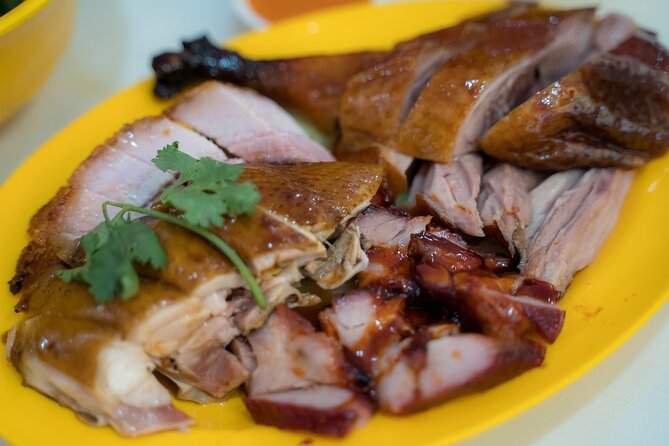
The smoky bak kwa adds a very different note. This tender barbecued meat delicacy is sweet, savory, and strongly flavored. It is commonly associated with Chinese festive food, and its intense taste makes it a memorable contrast to the mild toast and coffee.
Chinatown’s shophouses and the story behind the food
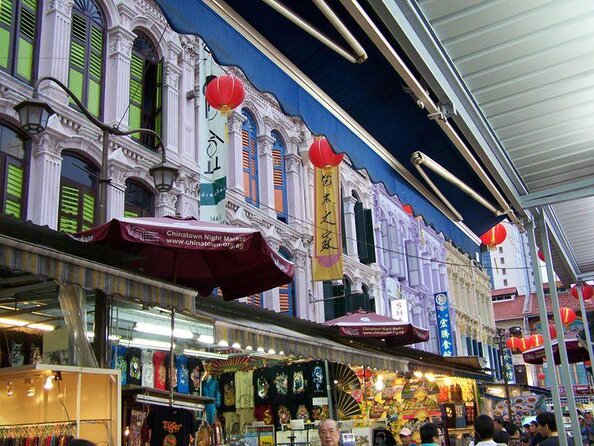
The walk passes restored shophouses that display the living spaces, furniture, and objects used by early Chinatown settlers. These buildings help explain how families lived and worked in a narrow urban district, with shops at street level and homes above.
I like this part of the tour because it gives the food a physical setting. You are not hearing a list of dishes detached from place. You are seeing the kind of neighborhood where food businesses, religious buildings, family life, and trade developed side by side.
The guide may also take you along Ann Siang Hill, a small hill and one-way road named for Chia Ann Siang, a wealthy businessman. It is a change of pace from the market lanes and gives the route a little variety.
The Red Dot Design Museum is also listed among the places visited. It sits along the Marina Bay Waterfront Promenade and presents the international Red Dot Design Award. This stop is an unusual addition to a Chinatown food walk, and the exact role it plays in the route may depend on timing and conditions. If you are booking mainly for food, treat it as an extra cultural stop rather than a central reason to choose the tour.
Sri Mariamman Temple and Buddha Tooth Relic Temple
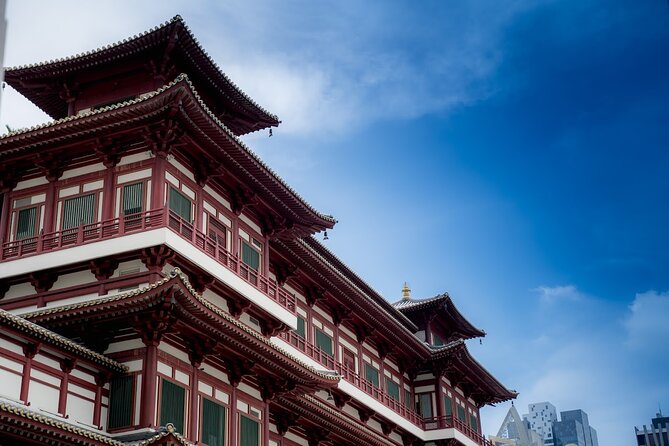
Sri Mariamman Temple was built in 1827 and is Singapore’s oldest Hindu temple. Its entrance tower is covered with figures of deities, making it one of the most visually striking buildings on the Chinatown route.
A good guide helps you notice more than the decoration. The temple shows the Indian side of Singapore’s cultural mix and explains why Chinatown is not a single-culture district. The food tastings make more sense after you see how different religious and ethnic communities share this part of the city.
The Buddha Tooth Relic Temple brings another layer. This Tang dynasty-style Buddhist temple contains religious relics, ornate rooms, and a quiet rooftop garden. Its design and atmosphere contrast sharply with the street-level food centers.
These stops are a reason to choose this experience over a food crawl done alone. You could certainly eat in Chinatown without a guide, but it is easier to miss the meaning of the temples, the background of the buildings, and the relationship between food and community.
The tradeoff is time. This is partly a cultural walking tour, not three uninterrupted hours at hawker stalls. One disappointed participant felt the experience leaned too far toward culture and did not provide enough food for the price. If your only goal is to eat as much as possible, a self-guided hawker meal may suit you better.
More Market Walking Tours in the world:
- Bangkok: City Highlights Temple and Market Walking Tour
★ 4.5 · 3,990 reviews - Tokyo Tsukiji Fish Market Food and Culture Walking Tour
★ 5.0 · 3,184 reviews - London Bridge & Borough Market Food Tour with 7 Authentic Dishes
★ 5.0 · 1,972 reviews - Air Raid Shelter + St. Nicholas Market Walking Tour
★ 5.0 · 1,950 reviews
Chinatown Complex and the main savory tastings
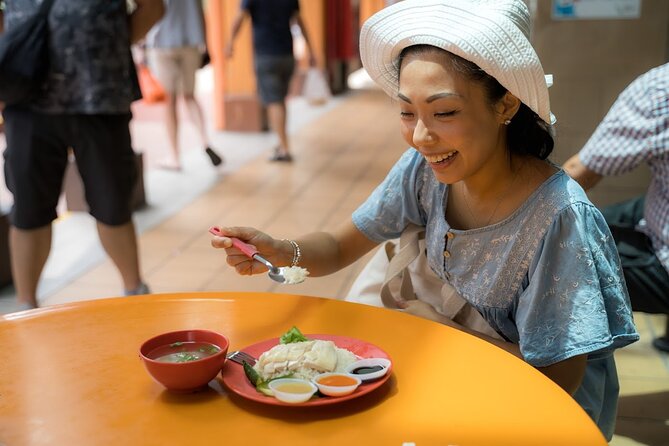
Chinatown Complex is one of Singapore’s largest food centers, and it is the heart of the hawker side of the experience. Here, the guide can point out how to approach a large food center without wasting your appetite on the first thing you see.
The chicken rice is the key savory tasting. It is one of Singapore’s signature dishes, with tender chicken and fragrant rice. The dish looks modest, but it is a useful introduction to the balance of texture, seasoning, and sauce that makes hawker food so appealing.
The tour also includes traditional chwee kueh, steamed rice cakes topped with savory preserved radish. It is a small snack with a soft texture and a salty topping. If you have never ordered it alone, tasting it with an explanation removes some of the guesswork.
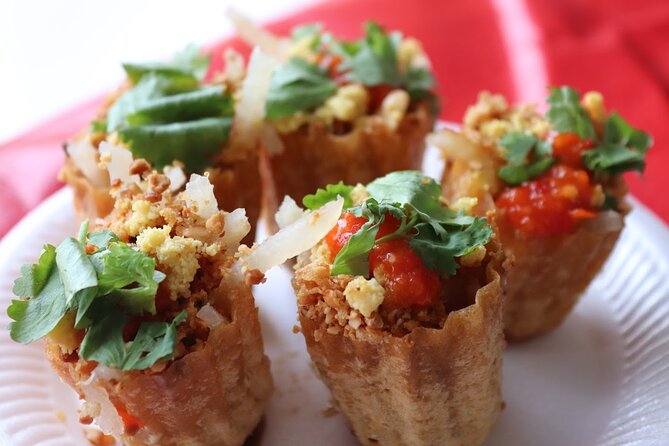
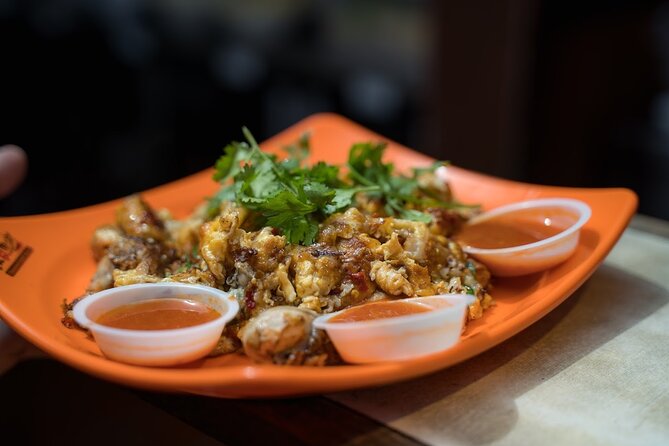
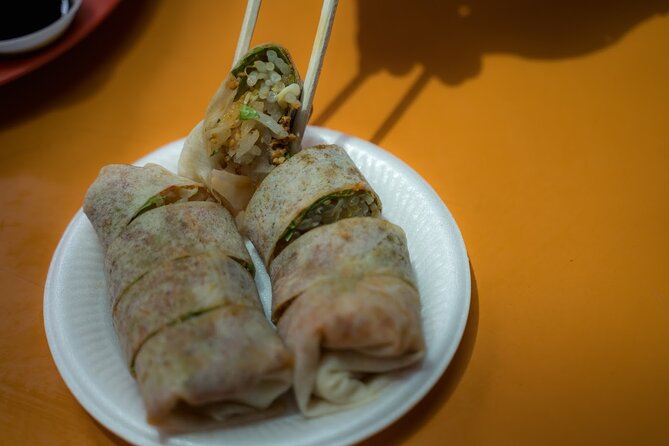
Popiah or oyster cake may appear as another snack. Popiah is a fresh roll with a soft wrapper and savory filling, while oyster cake offers a crispier, more indulgent bite. Since the menu can change, do not plan your whole day around receiving one specific item.
The secret dish is another flexible element. Its identity is not given in advance, and the operator may use it to add something outside the set menu. That uncertainty can be fun, though it makes the experience less predictable for anyone with strict dietary limits.
Several guides have been praised for helping with unfamiliar foods. Edwin has been singled out for introducing dishes people would not have ordered alone, while Paul was noted for adding alternatives to suit the group. Tell the operator about dietary requirements before the tour, not at the meeting point, so they have the best chance to plan.
Prata, thosai, and the Indian side of the menu
The choice of fluffy prata or fresh thosai brings an Indian element to the route. Both are griddle-cooked, but they offer different textures and eating styles. Prata is soft and layered, while thosai is thinner and more crepe-like.
This is one of the menu’s strengths. The tour does not treat Singaporean food as one narrow tradition. You move from Chinese-influenced snacks to Indian breads and then to a dessert built around coconut and palm sugar.
The food may come quickly at some stops, especially during a busy morning. That is another reason to let the guide control the pace. You need enough time to eat, ask questions, and keep moving without turning the tour into a rushed series of samples.
The route is best approached as a long tasting meal. Some people have found the portions generous enough to fill them completely, while one person remained hungry. Appetite, portion size on the day, and how much you eat at each stop will make a difference. I would have a light breakfast, but not arrive starving.
Chendol, local beer, and the final balance
Chendol provides the sweet finish. It combines coconut, palm sugar known as gula melaka, and chewy green rice-flour jelly. The result is cool, sweet, and creamy, with a texture that may be new to you.
A local beer and bottled water are included. The beer gives the food walk a relaxed close, while water matters in Singapore’s heat and during a route with steady walking. The menu is not limited to food, and these drinks are part of the price.
The final tasting sequence can be important. You want enough food to feel satisfied, but not so much that the later dishes become a chore. Guides have been praised for saving a favorite item for last and for giving guests time to sit at some stops. Still, the experience is active, and you should expect to walk between tastings rather than settle into one restaurant.
Three hours is long enough to cover a meaningful part of Chinatown without taking an entire day. It is also short enough to leave room for another attraction, provided you do not schedule something immediately afterward. Give yourself a little breathing room in case the group moves slowly or the meal runs long.
The guides make the difference
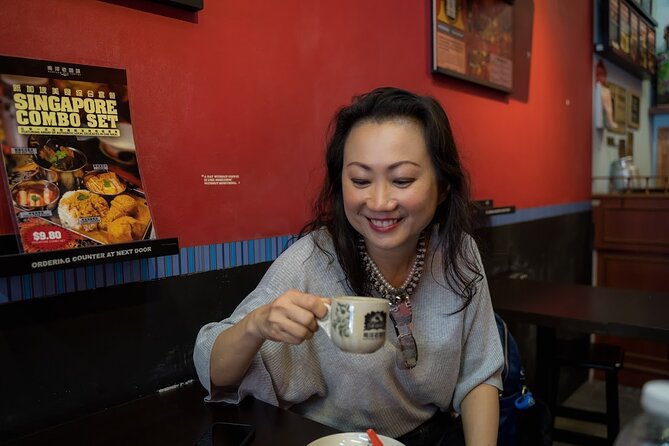
The strongest part of this experience is the guide-led connection between dishes and place. Kent, Winston, Edwin, Jag, Natalie, Jeanette, Ronnie, Paul, Helen, TC, YC, and Kuo Ai have all led departures, and the consistently positive comments about their warmth, humor, and food knowledge suggest that the human side of the tour is central.
Natalie has been praised for combining food with a clear account of Singapore’s past and for keeping the group moving during heavy rain. Ronnie has been described as especially strong on both food and national history. Jeanette was noted for covering food culture and history in equal measure, while Helen ran the tour even when only one person had booked.
That last point is worth noting, but it should not be treated as a guarantee for every date. The listed maximum is 12 people, and group size depends on bookings. Small groups generally make it easier to ask about ingredients, compare dishes, or request help with unfamiliar food.
The guide also affects the cultural balance. If you want a straight food crawl, tell your guide early that food is your main priority. If you enjoy architecture, religion, and local history alongside lunch, the usual format should suit you very well.
Is $146 a good value?
At $146 per person, this is a premium food walk. You can eat cheaply at Singapore’s hawker centers, so the price is not justified by the raw cost of the dishes alone.
You are paying for seven food tastings, a secret item, beer, water, a three-hour route, and a guide who handles the ordering and explains the setting. You are also paying for confidence. If you are unfamiliar with Singaporean food, the tour lets you sample several dishes without choosing blindly or spending time researching each stall.
The value is strongest if you are visiting Singapore for the first time, want cultural context, and prefer a planned introduction. It is weaker if you already know Chinatown, can order confidently at hawker centers, or judge a food tour mainly by how full you feel at the end.
Group discounts may be available, and private tours can be selected. The booking confirmation is sent within 48 hours, subject to availability. Free cancellation is available up to 24 hours before the start time. Changes or cancellations within 24 hours are not accepted for a refund.
Who should book this Chinatown experience?
I would choose this tour as an early Singapore activity. It gives you a sense of Chinatown’s layout, introduces dishes you can seek out later, and provides cultural background before you start exploring alone.
It suits curious eaters who want both familiar items such as chicken rice and less obvious bites such as chwee kueh. It also works well for people who prefer a guide to explain religious sites and local customs rather than simply pointing out photo stops.
Families and older adults may appreciate the several seated tasting locations mentioned in the experience details, but everyone should be ready for a fair amount of walking. Comfortable shoes are a must.
I would be more cautious if you have strict dietary restrictions, a very large appetite, or a tight budget. Contact the operator in advance about food needs, and remember that the menu can change. If $146 feels high for a meal, compare it with what you want from the day: a cheap lunch, or a guided introduction to Chinatown’s food and culture.
The bottom line
Book this if you want a guided first look at Singapore through food, temples, shophouses, and hawker culture. The small group, broad menu, and strong record of friendly guides are real advantages.
Skip it if you mainly want maximum food for minimum cost. You can eat more cheaply on your own, and the cultural stops take up part of the three-hour schedule. For most first-time visitors who value context as much as tasting, the tour offers a useful and enjoyable start to Singapore.
FAQ
How long does the Singapore Chinatown food tour last?
The tour lasts approximately three hours.
Where does the tour start?
It starts at Bee Cheng Hiang, 69 Pagoda Street, Singapore 059228.
Where does the tour end?
The activity ends back at the meeting point on Pagoda Street.
How many people can join the tour?
The maximum group size is 12 people.
Is a private tour option available?
Yes. You can choose a small-group tour or a private tour option.
What food is included?
The listed tastings include bak kwa, kaya butter toast with Nanyang coffee, popiah or oyster cake, Hainanese chicken rice, prata or thosai, chendol, chwee kueh, and a secret dish.
Are drinks included?
Yes. Local beer and bottled water are included.
Is transportation included?
No. Transportation is not included.
Can dietary requirements be accommodated?
You should contact the operator in advance with any dietary requirements so they can plan as well as possible.
Can I cancel for a full refund?
Yes. You can cancel at least 24 hours before the start time for a full refund. Cancellations or changes made within 24 hours are not accepted for a refund.
New routes in the world
- Baltimore Walking Foodie Tour in Fells Point★ 5.0 · 182 reviews
- Baku Oil Heritage & Old Town Walking Tour★ 5.0 · 232 reviews
- Baku Walking Tour (Old City)★ 5.0 · 127 reviews
- The Madam’s Curse Walking Ghost Tour★ 4.5 · 103 reviews
- Austin Small Group Morning Walk★ 5.0 · 412 reviews
- Austin Haunted Pub Crawl Walking Tour★ 4.5 · 232 reviews
- Austin Downtown Private Walking Food Tour With Secret Food Tours★ 5.0 · 71 reviews
- Austin Murder Walk★ 5.0 · 310 reviews
Singapore Walking Tours, compared.
Chinatown, Little India, Arab Street Walking Tour
Read our review →
Splendour of Colonial Singapore Walking Tour with Lunch
Read our review →Browse the lists this tour appears in