
Review · ITALY
Ravenna: Exclusive Private Walking Tour with a Local Expert
Ravenna’s greatest surprise is how much art history fits into a compact walking route. In three hours, you move from Sant’Apollinare Nuovo’s long biblical panels to the starry ceiling of Galla Placidia, then on to San Vitale’s imperial portraits and the Neoniano Baptistery’s baptism scene. The mosaics are spectacular, but the right guide helps you understand what you are actually seeing.
I like the private format, which lets you ask questions, linger over small details, and adjust the pace. I also like the guides’ art-history background. Marta, Chiara, and Giuseppe are repeatedly praised for explaining iconography, politics, and symbolism in plain language rather than simply pointing at pretty walls.
The main consideration is cost. At $141 per person, plus €12.50 for admission, this is not the budget choice for a quick look. You are paying for personal attention and interpretation, so it makes the most sense if Ravenna’s mosaics are a main reason for your visit.
Key points to know before booking
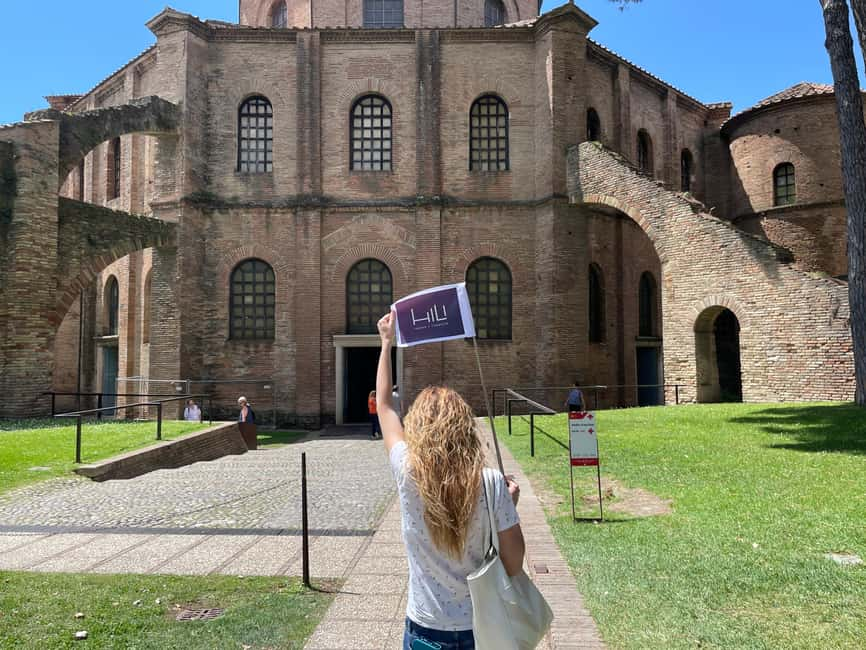
- Four major mosaic sites in three hours: Sant’Apollinare Nuovo, Galla Placidia, San Vitale, and the Neoniano Baptistery.
- A genuinely private experience: Your guide can respond to your questions instead of delivering a fixed talk to a large group.
- Strong art-history guidance: Guides such as Marta and Chiara explain symbols, rulers, religious ideas, and artistic details.
- A manageable walking route: The longest listed walk is about 15 minutes, followed by two five-minute walks.
- Tickets cost extra: Admission is €12.50 per person, with the guide helping you purchase them.
- Good for a first visit: The tour gives you a clear introduction without trying to cover every church and monument in Ravenna.
Why Ravenna’s mosaics deserve a guided visit
Ravenna can be easy to underestimate. It is not Italy’s largest or most famous art city, and its key monuments are spread through ordinary-looking streets. Then you step inside one of the churches and look up.
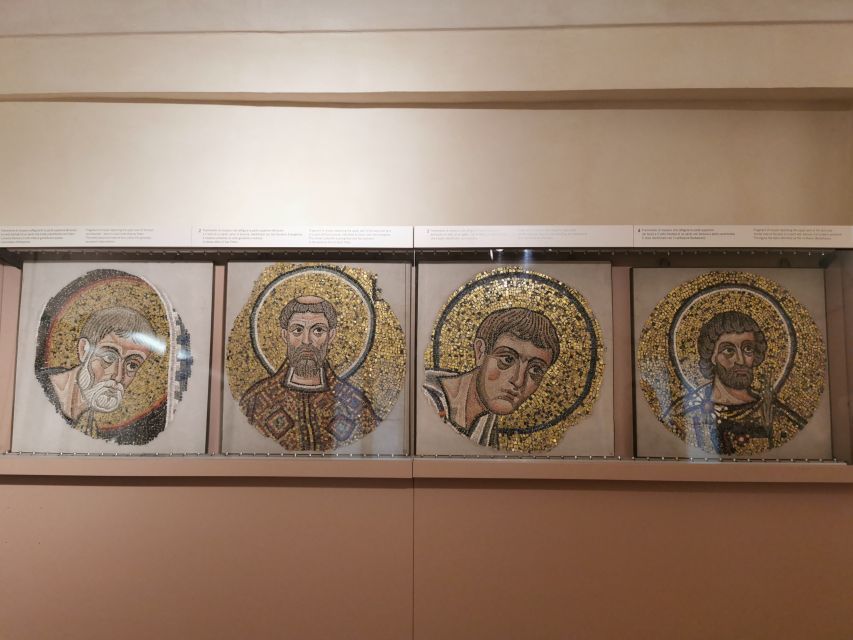
The mosaics change the scale of the experience. Tiny pieces of colored glass and stone form faces, robes, trees, jewels, architecture, and symbols that have survived for centuries. A guide helps you connect those images with the rulers, religious debates, and changing empires that shaped Ravenna.
I would not treat this as a simple church-hopping walk. The value lies in learning how to look. You may notice that one figure holds a book, that a procession follows a particular direction, or that an emperor is shown beside religious figures. Those details carry meaning, and a good guide brings them forward without drowning you in dates.
The route also works well for a first visit because it has a clear rhythm. You begin with a large basilica, move into a small and intensely decorated mausoleum, then see San Vitale’s grand architecture before ending in the compact baptistery. Each stop feels different.
More Private Walking Tours in Italy
- Private 3 hrs Venice Tour: St Mark’s, Walking tour & Boat tour
★ 4.0 · 3,372 reviews - Private Best of Venice Walking Tour with St Mark’s Basilica
★ 4.0 · 1,063 reviews - Venice: Private Walking Tour with a Local
★ 4.6 · 761 reviews
Sant’Apollinare Nuovo begins with a long visual story
The tour starts at the Basilica of Sant’Apollinare Nuovo on Via di Roma. This is a useful opening stop because its long nave gives you time to adjust to Ravenna’s art and to understand how mosaics can tell a story across an entire building.
The basilica was first built as a Palatine Chapel and later became a place of worship. Inside, mosaic panels run along the nave, showing scenes from the Old and New Testaments. Your guide can help you follow the visual sequence instead of treating the walls as a single wall of decoration.
One especially memorable image is the Procession of the Magi. The three wise men appear on their journey to meet the infant Jesus, surrounded by carefully rendered details. It is the kind of scene that rewards a slower look, especially when your guide points out clothing, gestures, and the way the figures are arranged.
This stop is also a good place to discuss how Ravenna’s buildings changed use and meaning over time. The former palace chapel was not just an art project. It was tied to power, worship, and the people who controlled the city.
The drawback is that the scale can be slightly overwhelming at first. There is a lot to see along the nave, and a three-hour tour cannot examine every panel equally. A private guide helps by choosing the details that best explain the whole building.
Galla Placidia creates the tour’s most intimate moment
After Sant’Apollinare Nuovo, you walk for about 15 minutes to the Mausoleum of Galla Placidia. This is the longest walk listed, and it gives the tour a useful break between two very different settings.
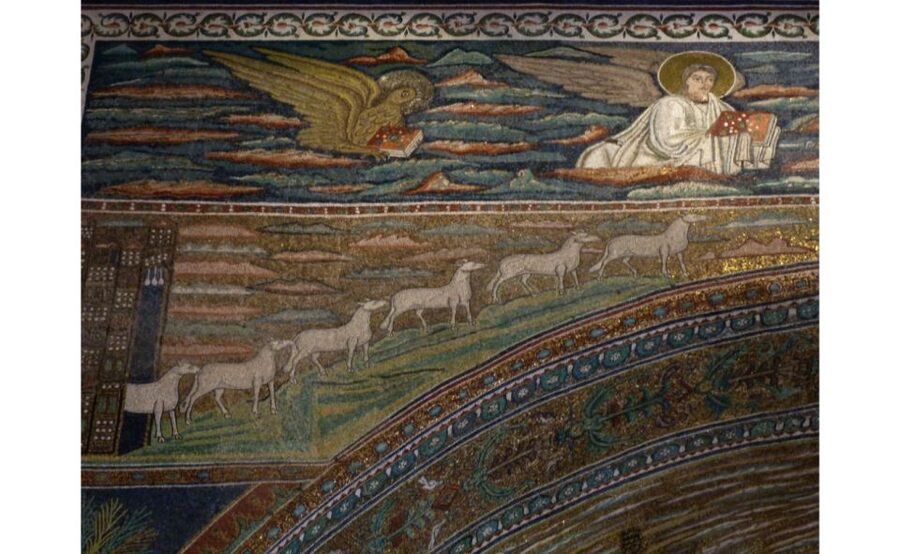
The mausoleum is small compared with San Vitale, but its interior has enormous visual force. Deep blue mosaics cover the ceiling, creating the impression of a night sky scattered with stars. The effect is quiet and enclosed, quite different from the long perspective of Sant’Apollinare Nuovo.
The Good Shepherd mosaic is one of the key images here. It offers a chance to talk about Christian symbolism and how familiar religious themes were presented in early Christian art. Your guide can also explain why the room feels so carefully designed, with the decoration working together across the walls and ceiling.
I would pay close attention to the ceiling before moving on. The space is compact, and it is tempting to take a few photographs and leave. Instead, look at how the blue field, gold details, and figures create a single visual world.
This is one place where crowd levels and entry conditions can affect how long you can comfortably look. The tour is planned for three hours, so you will not have unlimited time in every room. Still, the private format allows you to ask your guide to explain the details that matter most to you.
San Vitale combines imperial power with bold design
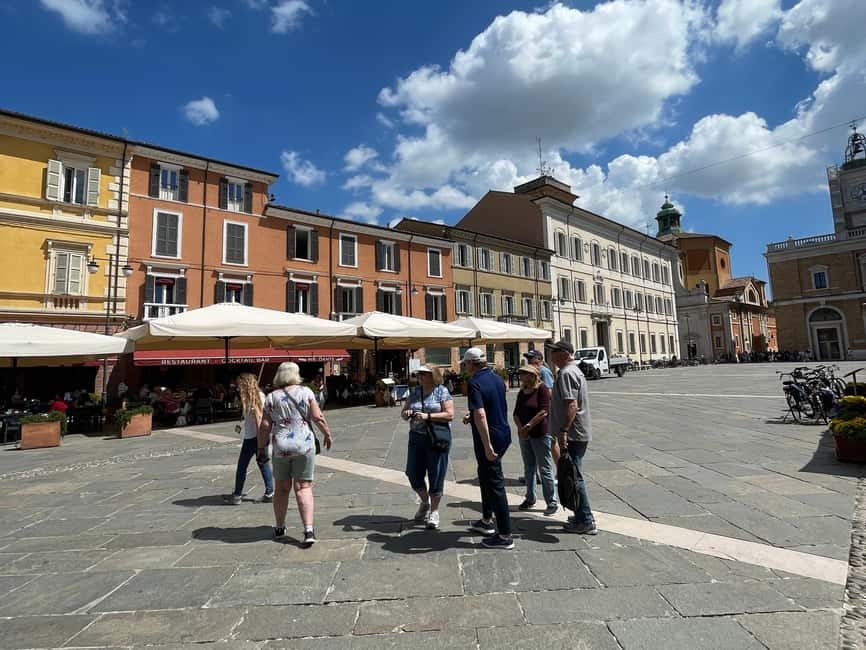
A five-minute walk brings you to the Basilica of San Vitale, often considered Ravenna’s great architectural masterpiece. The building’s octagonal shape and high dome make it feel more dramatic than the compact mausoleum.
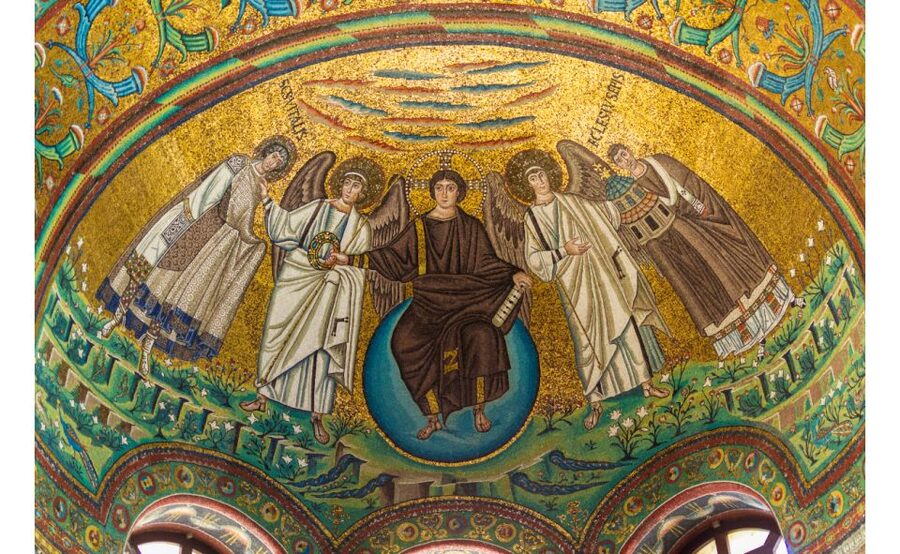
Inside, mosaics cover the apse and upper areas. The famous panels show Emperor Justinian and his court, along with Empress Theodora and her attendants. These are not casual portraits. The arrangement, clothing, objects, and placement of each person communicate rank and authority.
This is where the tour’s political context becomes especially useful. The mosaics connect religious ceremony with imperial power. Justinian and Theodora appear in a sacred setting, but they also present themselves as rulers with a direct role in the Christian world.
I like this stop because it rewards both architecture fans and art-history beginners. You can admire the dome and octagonal plan without knowing much, but a guide can help you understand why the figures look so formal and why certain objects matter.
Marta is frequently praised for explaining iconography and for bringing historical figures to life through clear storytelling. Giuseppe is also noted for connecting the churches and mosaics with the politics of the Eastern Roman Empire and early Christianity. The exact guide depends on availability, but the experience is built around this kind of interpretation.
San Vitale is also the busiest visual stop. The amount of decoration can feel like a lot after the first two sites. I suggest deciding in advance what interests you most: the architecture, Justinian and Theodora, the biblical scenes, or the technical skill of the mosaics. Your guide can shape the visit around that preference.
Same streets, a different guide:
- Venice: Doge’s Palace and St Mark’s Basilica Walking Tour
★ 4.4 · 6,291 reviews - Milan: Guided Walking Tour & Last Supper Visit with Ticket
★ 4.7 · 5,409 reviews - Naples: Street Food Walking Tour with Local Guide
★ 4.9 · 4,976 reviews - Florence: Highlights Walking Tour with Expert Guide
★ 4.6 · 4,662 reviews
The Neoniano Baptistery ends with a focused image
The final walk takes about five minutes and leads to the Battistero Neoniano, also called the Baptistery of the Orthodox. This is a smaller monument, but its central ceiling mosaic gives the tour a clear closing point.
The main image shows the baptism of Christ. It is a central Christian scene, and the round composition makes it easy to read from below. Your guide can explain the figures and the role of the baptismal image within the building.
The baptistery is useful after San Vitale because it brings the scale down again. Instead of a large basilica filled with imperial imagery, you get a more focused space built around one important religious event.
Plan to spend about 20 minutes here. That is enough time to look closely and ask questions without rushing through the final stop. The tour finishes at the baptistery, so you are free to continue exploring Ravenna afterward rather than walking back to the starting point.
The private guide is the real reason to pay more
The strongest feature here is not simply access to four famous buildings. You can enter the sites without paying for a private tour. The extra cost buys conversation, context, and flexibility.
A private guide can slow down when you are interested in a particular mosaic or move along when you have had enough. You do not need to wait while a large group gathers, and you can ask the basic questions that sometimes feel awkward in a formal lecture.
Past guide assignments have included Marta, Chiara, Giuseppe, Sabrina, and Cinzia. Marta is an art historian, and her approach is described as both academic and warm. Chiara is praised for concise explanations, local anecdotes, and her ability to make Ravenna’s long story feel like a walk through the city with a friend. Giuseppe is noted for his enthusiasm and clear explanations of history, politics, and mosaic art.
The guides also appear willing to add local color when time allows. One tour included a visit to a mosaic atelier, where a working artist demonstrated how mosaics are made. Other outings included stops at a market, food tastes, a gelato recommendation, and information about regional pasta and piadina.
These additions are not guaranteed, so do not book this expecting a food tour or craft workshop. Think of them as possible extras when the schedule and guide allow.
Pace, walking, and practical comfort
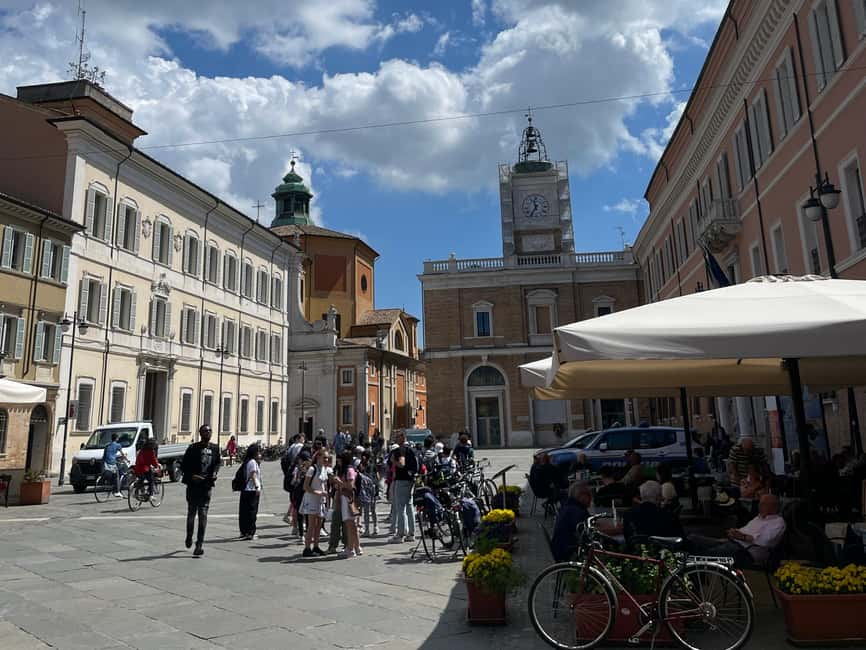
The walking is moderate rather than strenuous. The route includes a 15-minute walk between the first two sites and two shorter walks of about five minutes. Inside the monuments, you will spend much of the time standing and looking upward.
The tour lasts three hours, which is a sensible length for this group of sites. Ravenna offers more monuments than these four, but adding too much in one session could turn the art into a blur. Several guides are praised for keeping the pace relaxed and allowing time for questions.
Heat can matter in summer. One guide was specifically praised for pacing the visit well in hot weather, and another tour included short breaks for snacks. Still, wear comfortable shoes and bring water. A private group gives you more control, but it does not remove the need for sensible sightseeing habits.
The tour runs in rainy weather, so poor conditions should not automatically ruin your plans. Most of the important time is spent inside the monuments, though you will still walk between them.
The activity is wheelchair accessible. Meeting points can vary by booking option, so check the confirmed details before setting out. The usual starting point is Sant’Apollinare Nuovo, and the route finishes at the Neoniano Baptistery.
Cost and value at $141 per person
The listed price is $141 per person, and admission tickets cost an additional €12.50 per person. That makes the full cost higher than a self-guided visit, especially for couples or families.
For two people, though, the private setup can be attractive. You share the guide only with your own party, and the cost covers three hours of focused attention. If you are already making the trip to Ravenna, this can be a good use of money because the guide helps you get more from the monuments you came to see.
I would be less enthusiastic if you are only looking for a quick introduction or if you prefer to wander silently with a guidebook. The tour’s value depends on your interest in interpretation. You are paying for the explanation of why the mosaics look the way they do, not just for a route between churches.
The reserve-now-and-pay-later option adds flexibility, and cancellation is free up to 24 hours before the tour for a full refund. English and Italian are available, and the guide is live rather than audio-based.
Who should book this Ravenna walk
I would recommend it most strongly to:
- First-time visitors who want a clear introduction to Ravenna’s major mosaics
- Couples or families who prefer a private conversation to a large group
- People interested in art, architecture, early Christianity, or Byzantine politics
- Visitors coming from Bologna for a day trip who want to use their time well
- Anyone who finds religious imagery hard to interpret without background
- Repeat visitors who want a deeper explanation than they had on a previous visit
It may be less suitable if you want to cover every UNESCO site in Ravenna, spend unlimited time photographing each mosaic, or keep costs as low as possible. You also should not expect a full city tour, since the focus is firmly on four monuments.
Should you book it?
Book this tour if Ravenna’s mosaics are central to your plans and you want to understand more than their color and beauty. The guides’ strongest qualities are clear art-history explanations, patience, and enthusiasm for Ravenna itself.
The price is fair for a private three-hour guide, but the extra admission cost should be part of your budget. If you want a relaxed first look at the city’s most important early Christian monuments, with the freedom to ask questions and set the pace, this is a strong choice. If you prefer independent sightseeing, buy the tickets and explore on your own, but be prepared to miss much of the political and religious meaning hidden in the images.
FAQ
How long is the Ravenna private walking tour?
The tour lasts three hours.
Which sites are included?
The tour visits Sant’Apollinare Nuovo, the Mausoleum of Galla Placidia, the Basilica of San Vitale, and the Neoniano Baptistery.
Is the tour private?
Yes. It is offered as a private group experience with your own guide.
Which languages are available?
Live guiding is available in English and Italian.
Are admission tickets included?
No. Admission costs €12.50 per person, and the guide assists with purchasing the tickets.
Where does the tour start and finish?
The usual starting point is the Basilica of Sant’Apollinare Nuovo on Via di Roma, 53. The tour finishes at the Battistero Neoniano, also called the Baptistery of the Orthodox. The meeting point can vary by booking option.
Does the tour run in rainy weather?
Yes. The tour operates in rain, and the activity is wheelchair accessible.
New routes in Italy
- Private St. Francis Basilica of Assisi and City Walking Tour★ 5.0 · 114 reviews
- Assisi Private Walking Tour including St. Francis Basilica★ 5.0 · 124 reviews
- Milan: City Highlights Walking Tour with The Last Supper★ 4.9 · 195 reviews
- Florence: Heart of Florence Guided Walking Tour★ 4.0 · 81 reviews
- Milan: Private or Shared Essential Walking Tour★ 4.7 · 84 reviews
- Taormina: Shared or Private Food & Wine Walking Tour★ 4.6 · 167 reviews
- Syracuse: Ortigia Private Walking Tour★ 4.8 · 181 reviews
- Syracuse: Ortigia and Neapolis Guided Walking Tour★ 4.7 · 205 reviews
Italy Walking Tours, compared.
Doge’s Palace and St Mark’s Basilica Walking Tour
Read our review →
Guided Walking Tour & Last Supper Visit with Ticket
Read our review →
San Marco to Rialto Walk & Spritz Like a Local
Read our review →
Uffizi & Accademia Timed Entry: Small Group Duomo Walking Tour
Read our review →
Browse the lists this tour appears in