
Review · USA
Portland, Oregon: Soul of the City Walking Tour
Portland’s story is written into its street grid, public parks, and unusual buildings. This two-hour walk connects cast iron storefronts, museum plazas, the famously awkward Portland Building, and the enormous figure of Portlandia. It is less about ticking off landmarks than learning why the city looks and thinks the way it does.
I like the way the tour links urban planning with social history, and I like the range of subjects: architecture, public art, racial justice, activism, Oregon’s origins, and the city’s hippie influence. The main tradeoff is its focus on a fairly limited part of central Portland, with some political commentary that may feel one-sided to visitors who prefer a more neutral presentation.
Key points at a glance
- A city story told through the streets: Learn why Portland’s downtown blocks, parks, plazas, and street names were planned as they were.
- Director Park to Pioneer Courthouse Square: The roughly 2-mile route crosses the South Park Blocks and Portland’s Cultural District.
- Big architecture, odd architecture: See cast iron-fronted buildings, museum and concert-hall plazas, Portlandia, and the controversial Portland Building.
- History beyond the postcard: The guide covers Oregon’s founding, urbanism, racial justice, radical activism, and the hippies who helped shape modern Portland.
- Strong guide reputation: Nancy, Shannon, Kelly, Rachel, and other guides are praised for clear storytelling, local detail, and flexibility.
- A practical downtown introduction: At $29, the tour offers a useful first look at central Portland, especially if you want context before exploring on your own.
Start at Director Park, where downtown Portland begins to make sense
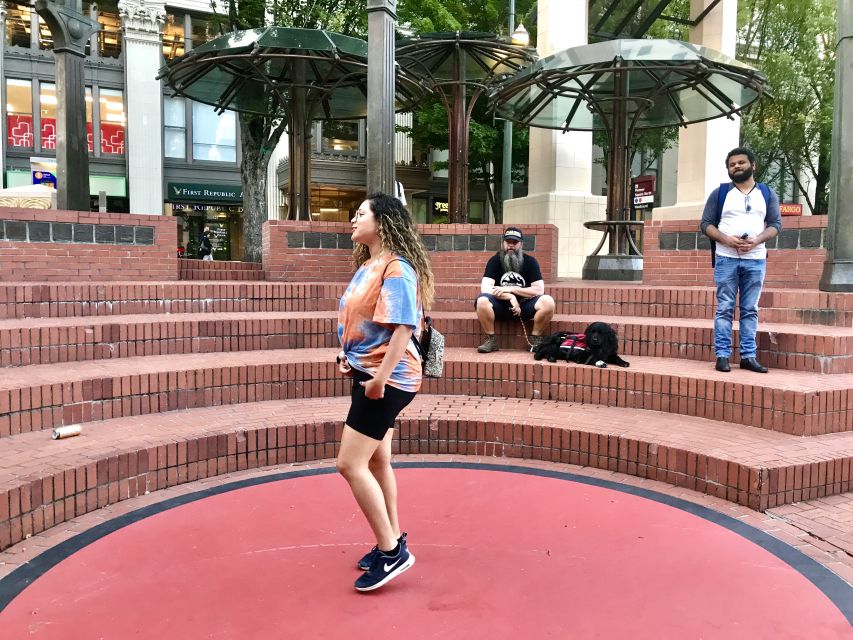
Meet at the northeast corner of Director Park, at SW Yamhill and SW Park Avenue. The spot is across from Elephants Delicatessen on the Park and beside the globe-shaped fountain, so it should be easy to identify once you are in the area.
Director Park is a fitting starting point. It sits only a block from Portland’s Cultural District, placing you close to museums, concert halls, public plazas, and the South Park Blocks. You are not beginning with an isolated monument. You are starting inside the city’s civic core, where Portland’s public life, architecture, and planning choices meet.
Your guide is certified and leads the tour in English. Guides have included Nancy, Shannon, Kelly, Rachel, and others. The strongest pattern among the guide feedback is their ability to explain a large amount of material without making the walk feel like a lecture. Nancy is particularly praised for her grasp of architecture, city government, Oregon demographics, and industry. Shannon is often singled out for local stories and an obvious affection for the city.
The group size can vary. Some departures have been very small, including one with only two people and another with six. That can make the conversation feel personal, but you should not assume every departure will be that intimate.
More Walking Tours in the USA:
- History and Hauntings of Salem Guided Walking Tour
★ 5.0 · 14,564 reviews - New Orleans Premier Ghost, Voodoo and Vampire Walking Tour
★ 4.5 · 12,856 reviews - Little Havana Food and Walking Tour in Miami
★ 5.0 · 8,882 reviews
The South Park Blocks reveal Portland’s planning habits
The South Park Blocks are one of the tour’s most useful stops because they show that Portland’s parks are not simply decorative patches of green. They are part of the city’s basic structure.
As you walk, the guide explains how early planners laid out downtown and why parks received such a strong place in the center. You will also hear how streets got their names and how Portland developed its various nicknames. These details may sound small, but they help you read the city after the tour ends.
I find this kind of explanation more useful than a list of dates. Once you understand why a park or plaza occupies a certain block, downtown stops looking accidental. You begin to notice how public space shapes movement, where people gather, and why some parts of the city feel more open than others.
The walk covers about 2 miles, or 3.5 kilometers, in two hours. That is a steady pace, not a strenuous hike, but you will be on your feet for most of the experience. There are a few hills and stairs. The stairs can be avoided, and the tour is wheelchair accessible, but tell the guide if you need the step-free option.
Museum plazas connect art, civic life, and protest
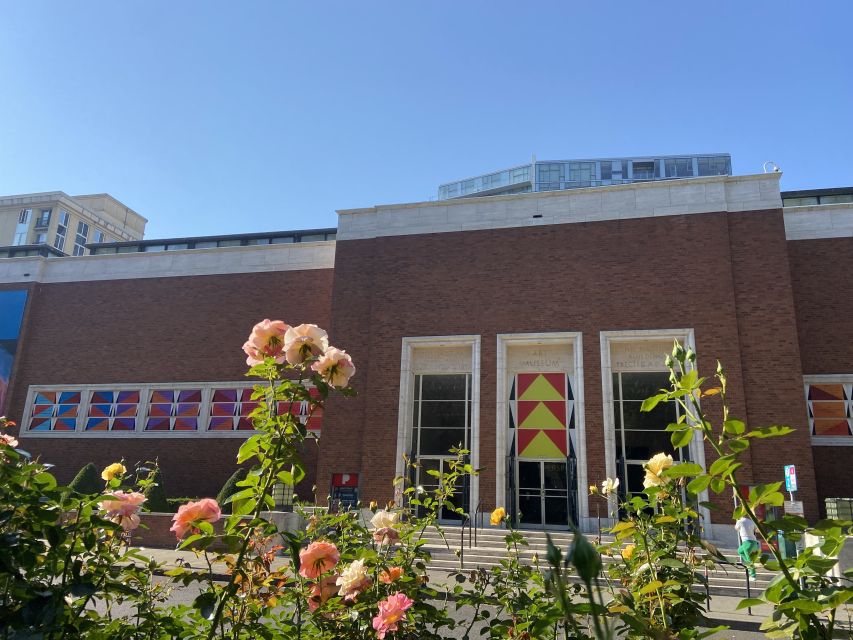
The route continues through plazas connected with the Portland Art Museum and the Oregon Historical Society, along with other cultural buildings and concert venues. On days when attractions are open, the group may briefly enter one or two buildings.
Do not expect a full museum visit. The indoor stops are short additions to the walking route, and opening conditions can change. Their value is in helping you connect the buildings to the city around them. You see how Portland uses cultural institutions as public gathering places, not just as indoor attractions.
This is also where the tour broadens into a discussion of art, architecture, and public action. The guide points out murals, sculptures, and design details that are easy to pass without a second glance. You get a sense of how Portland’s artistic identity is displayed outdoors, in places you can encounter without buying a ticket.
The route also touches on parks and plazas where activists made international headlines. The tour treats modern protests as part of a longer civic story rather than as an isolated recent event. That connection is one of its more distinctive features. You learn how present-day activism relates to Portland’s earlier debates about development, public space, race, and social change.
Portland’s architecture ranges from cast iron to post-modern trouble
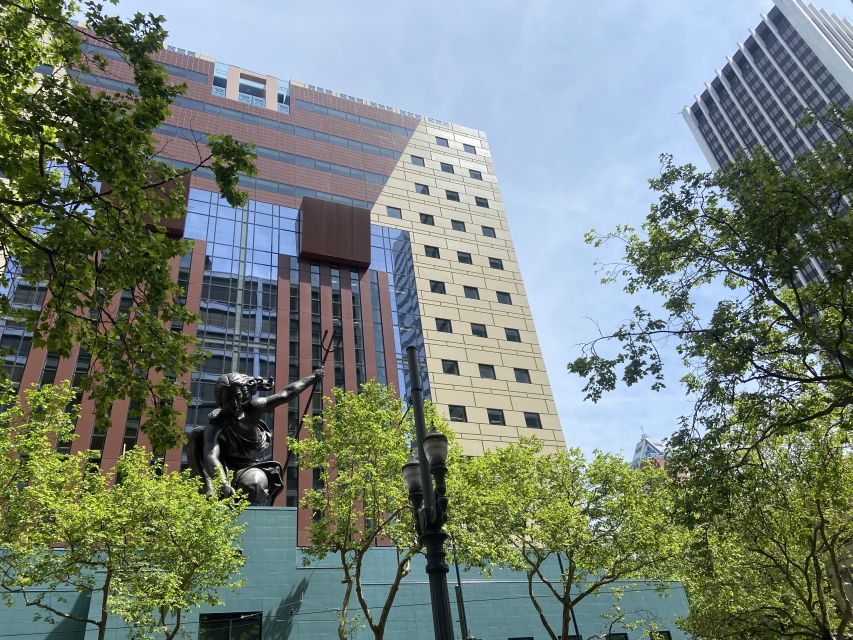
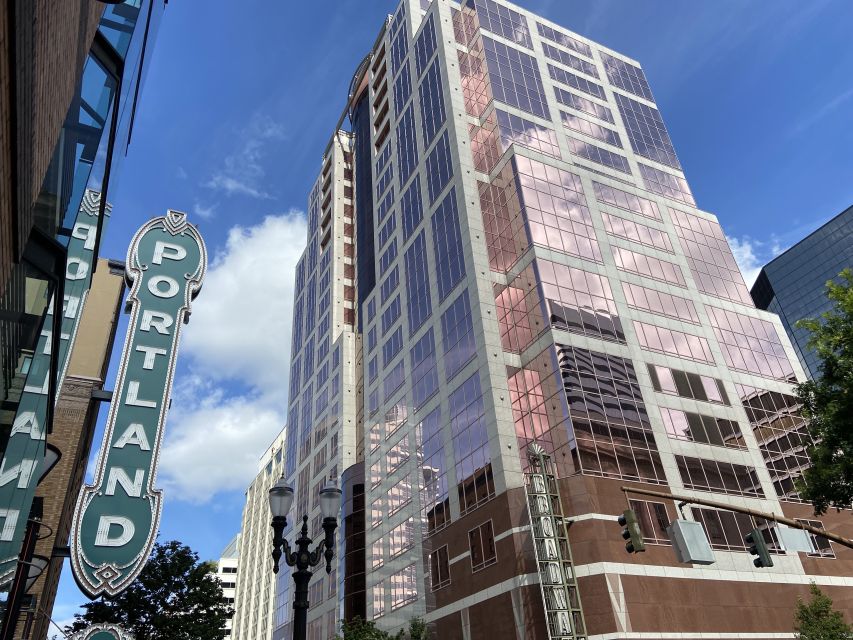
Portland’s older commercial buildings provide a sharp contrast with its later experiments. The cast iron-fronted structures show an earlier period of downtown design, when the material allowed builders to create decorative facades with repeating patterns and strong street-level detail.
Then comes the Portland Building, the grandly disastrous post-modern landmark mentioned in the tour description. Its design has long produced strong reactions, and that is precisely why it belongs on a city walk. The guide uses it to discuss how modern designers look at the past, how public buildings express civic ambitions, and how a bold idea can age in unexpected ways.
You do not need to be an architecture specialist to enjoy this section. The guide’s job is to point out what you would otherwise miss: the relationship between a facade and the sidewalk, the way a plaza handles people, or the message a public building sends about government.
This part may appeal most to you if you enjoy cities as built objects. If you prefer food stops, shopping, or scenic viewpoints, the tour may feel more academic. The reward is a better eye for Portland’s streets rather than a single dramatic sight.
Same streets, a different guide:
- Chicago: Gangsters and Ghosts Walking Tour
★ 5.0 · 7,155 reviews - Boston: Freedom Trail History Small Group Walking Tour
★ 5.0 · 6,450 reviews - Historic Charleston Guided Sightseeing Walking Tour
★ 5.0 · 6,216 reviews - New Orleans Food Walking Tour of the French Quarter with Small-Group Option
★ 5.0 · 6,118 reviews
Oregon’s origin story is more complicated than the postcard version
One of the tour’s surprises is the discussion of how Oregon was founded and why. The guide also covers the state’s population, industries, and changing identity.
The wording of the tour promises a surprise, but the key point is clear: Oregon’s origin story is not presented as a simple tale of pioneers arriving in an empty place. The walk places the state’s development beside questions of race, settlement, business, and civic ideals. That context helps explain why modern Portland often presents itself as progressive while also carrying difficult parts of its past.
The subject matter can be politically charged. One departure was praised for presenting Portland’s politics and social issues with energy, while another visitor felt the guide’s political opinions were too clear and wanted more than one side of certain debates. That is a fair point to keep in mind.
You should expect interpretation, not a detached textbook recital. If you enjoy discussing how a city became what it is, that approach adds life. If you want every issue presented in strict balance, you may find the commentary less comfortable.
Portlandia is the tour’s oversized punctuation mark
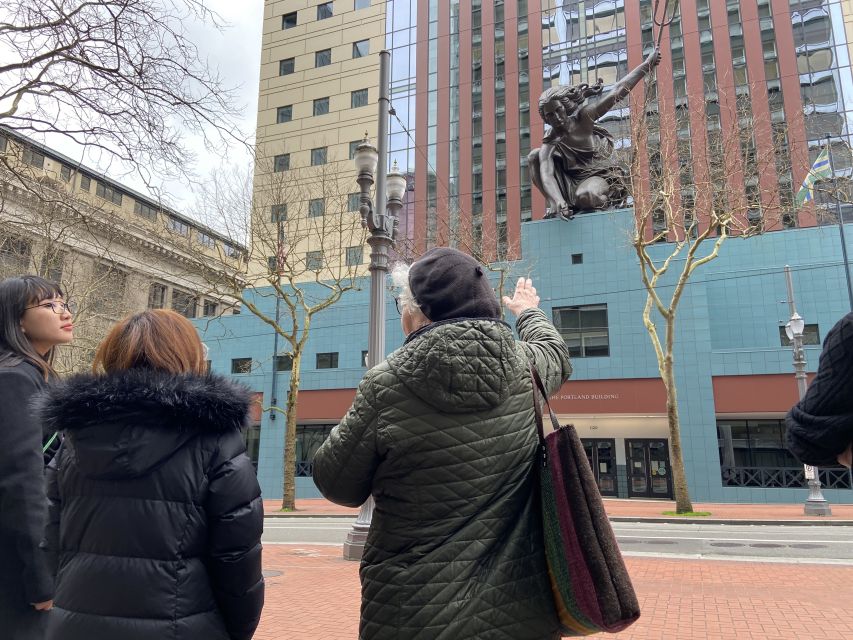
At some point, you meet Portlandia, the large sculptural figure that personifies the city. She is not a subtle work, and the tour makes good use of that fact.
The sculpture is one of Portland’s most recognizable pieces of public art, but the point is not simply to take a photograph. The guide explains how the city represents itself through art and why Portlandia has become such a useful symbol. You also learn about Portland’s most extravagant sculptural work, which sits in plain sight rather than behind a museum door.
This is the sort of stop that works well after the architecture and planning discussion. You have already heard how Portland builds public spaces and thinks about civic identity. Portlandia then gives that identity a human figure, or at least a very large metal one.
The tour also explains how much of Portland’s current cultural character owes something to its hippies. That discussion helps account for the city’s reputation for independent art, unconventional public life, and resistance to polished uniformity. It is not a complete account of Portland, but it offers a useful explanation for why the city often feels different from more conventional American downtowns.
Finish at Pioneer Courthouse Square with a clearer map in your head
The tour ends at Pioneer Courthouse Square, one of downtown Portland’s best-known public spaces. By this point, you have walked through parks, plazas, museum areas, civic architecture, and several layers of Portland’s political story.
The ending is practical. From Pioneer Courthouse Square, you are already in the center of downtown and can continue exploring on foot. The route does not return you to Director Park, so plan your next stop from the square rather than assuming you will finish at the meeting point.
The walk gives you a framework for exploring more on your own. You may not leave with every building memorized, but you should understand how the center is arranged and which details deserve another look. That is especially helpful if you are visiting Portland for the first time.
What the guides do especially well

The guide is the main reason this experience works. The strongest comments describe guides who are engaging, adaptable, and able to connect small details to larger themes.
Nancy is praised for her command of Portland buildings, architecture, government, demographics, and industry. Shannon is noted for local stories, restaurant suggestions, and a personal connection to the city. Kelly brings the perspective of someone who was not born in Portland but adopted the city and can explain it as a convert. Rachel is praised for answering questions carefully and presenting the city’s story in a personable way.
That range matters. A guide who grew up in Portland may offer family and neighborhood context. A guide who moved there may be especially good at explaining what makes the city distinctive to an outsider. You cannot choose the guide in advance from the information provided, but all named guides have received strong marks for preparation and enthusiasm.
The guides also appear to adjust to conditions. On a cold, windy departure, one guide carried hand warmers and looked for sheltered places to talk. Another adjusted the route and commentary to suit the group’s interests. That kind of flexibility is valuable on an outdoor tour, where weather can change the mood quickly.
Weather, comfort, and access
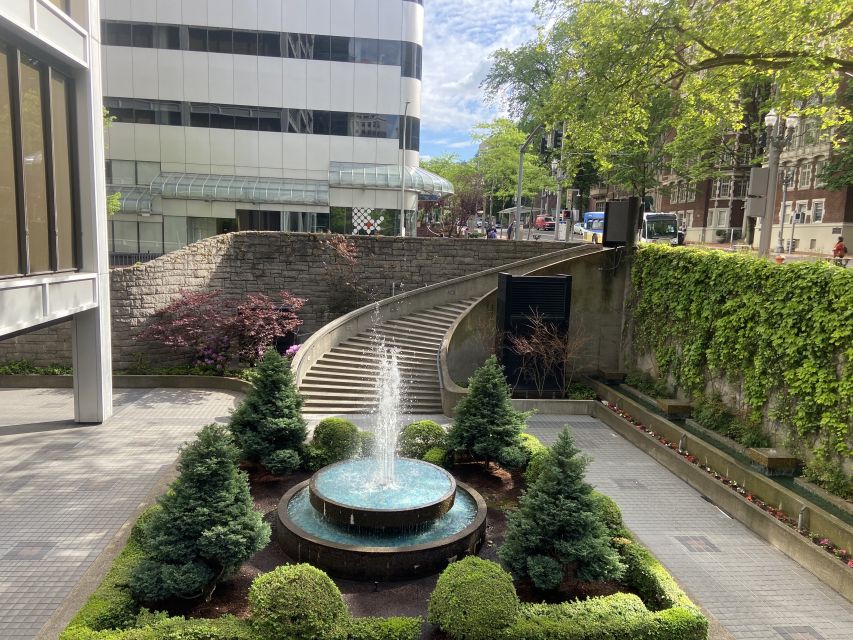
The tour runs rain or shine, so Portland’s reputation for wet weather is not just a joke. Bring comfortable shoes and clothing suited to the forecast. A light rain layer is sensible, but the supplied information does not specify equipment or shelter, so you should prepare to be outdoors for the full two hours.
The route covers about 2 miles and includes a few hills and stairs. Some stairs can be avoided, and the experience is wheelchair accessible. If you use a wheelchair or have limited mobility, arrive ready to discuss the step-free route with the guide.
Some attractions do not allow dogs. Since the walk may briefly enter one or two buildings when they are open, a dog could prevent you from joining those indoor portions. Check the arrangements before you arrive if you are traveling with a pet.
Is $29 a fair price?
At $29 per person, this is a reasonable price for a two-hour guided city walk. You are paying for more than movement between landmarks. The guide supplies a framework for understanding Portland’s street layout, public parks, architecture, art, politics, and social identity.
The value is strongest if you are new to the city or want a serious introduction before exploring on your own. A guide can point out details that would be easy to miss, then explain why they matter. The tour also saves you from piecing together downtown’s story from separate museum visits and scattered signs.
The value is weaker if you already know central Portland well or want to cover a large part of the city. The route focuses on a limited downtown area, with some discussion of the Pearl District but no promise of a broad citywide tour. It is also not a food tour, shopping tour, or major attraction pass.
Free cancellation up to 24 hours before the start gives you some flexibility, and you can reserve now and pay later. Those terms are useful if Portland is part of a longer trip with uncertain weather.
Who should book the Soul of the City walk?
I would choose this tour for a first or second day in Portland, when you want the city to make sense before you spend time exploring alone. It is also a good choice for architecture fans, public-art hunters, students of urban planning, and anyone curious about the connection between city design and politics.
It suits you if you enjoy asking why a city has a certain shape, why its parks occupy valuable downtown land, or how a public sculpture becomes a civic symbol. It also works well for visitors who want a moderate walk rather than a bus tour.
I would think twice if you dislike political discussion, want a strictly neutral presentation, or need a tour with little walking. The route is not difficult for most people, but two miles in changing weather requires basic preparation. Also, if you want to see neighborhoods far beyond central Portland, this experience will feel narrow.
Final call: book it for context, not just landmarks
Book this tour if you want to understand Portland’s personality through its streets, parks, buildings, art, and arguments. The guides bring strong local detail, and the route gives you a useful map of the city center without demanding a full day.
Skip it if your priority is a broad sightseeing circuit or a food-focused introduction. For $29, though, the tour offers solid value for a thoughtful downtown orientation, especially when you arrive with comfortable shoes, weather gear, and an interest in how cities are made.
FAQ
Where does the Portland Soul of the City Walking Tour meet?
Meet at the northeast corner of Director Park at SW Yamhill and SW Park Avenue. The meeting point is across from Elephants Delicatessen on the Park, beside the globe-shaped fountain.
How long is the tour?
The walking tour lasts two hours and covers about 2 miles, or 3.5 kilometers.
Where does the tour finish?
The tour ends at Pioneer Courthouse Square in central Portland.
Is the tour wheelchair accessible?
Yes, the tour is wheelchair accessible. There are a few hills and stairs, but some stairs can be avoided.
Does the tour operate in bad weather?
Yes. The tour operates rain or shine, so bring comfortable shoes and weather-appropriate clothing.
Is the tour offered in languages besides English?
No. The live tour guide and activity are offered in English.
New routes in the USA
- Baltimore Walking Foodie Tour in Fells Point★ 5.0 · 182 reviews
- The Madam’s Curse Walking Ghost Tour★ 4.5 · 103 reviews
- Austin Small Group Morning Walk★ 5.0 · 412 reviews
- Austin Haunted Pub Crawl Walking Tour★ 4.5 · 232 reviews
- Austin Downtown Private Walking Food Tour With Secret Food Tours★ 5.0 · 71 reviews
- Austin Murder Walk★ 5.0 · 310 reviews
- The Ghosts of Austin Walking Tour★ 4.5 · 72 reviews
- Martin Luther King Jr. History Walking Tour★ 5.0 · 687 reviews
USA Walking Tours, compared.
History and Hauntings of Salem Guided Walking Tour
Read our review →
New Orleans Premier Ghost, Voodoo and Vampire Walking Tour
Read our review →
Freedom Trail History Small Group Walking Tour
Read our review →
Historic Charleston Guided Sightseeing Walking Tour
Read our review →
New Orleans Food Walking Tour of the French Quarter with Small-Group Option
Read our review →
St. Louis Cemetery No. 1 Official Walking Tour
Read our review →Browse the lists this tour appears in