
Review · ITALY
Parma: City Walking Tour
Parma’s best introduction is on foot, and this tour connects the city’s grand cathedral, central squares, food traditions, and Giuseppe Verdi stories in one tidy two-hour walk. It begins at Piazza Garibaldi, the city’s social heart, then moves through the historic center with a local guide.
I like the food-focused storytelling, which gives Parma more meaning than a parade of façades. I also like the local angle: guides such as Alice have shared useful ideas for later sightseeing and advice on typical shops. The main drawback is that the tour is bilingual, so explanations can take longer, and groups may reach about 25 people.
Key points to know before booking
- Piazza Garibaldi start: You meet at the IAT, Strada Giuseppe Garibaldi 18, right in central Parma.
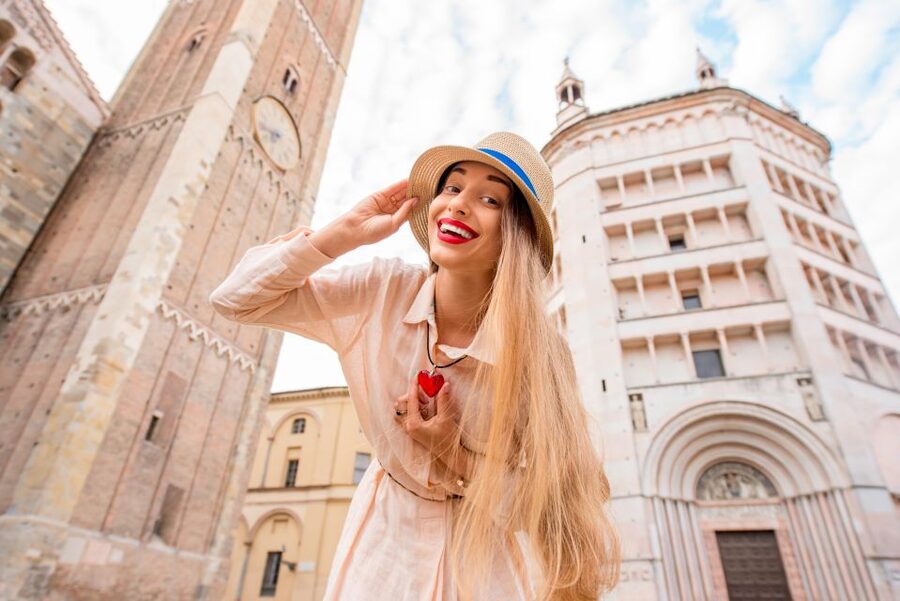
- Cathedral from outside: You admire Parma Cathedral during the walk, but monument entry is not included.
- Food and Verdi stories: The tour links Parma’s gastronomy with the city’s famous composer, Giuseppe Verdi.
- Two hours on foot: Comfortable shoes matter, and the tour is not suited to people with mobility impairments.
- Italian and English: The guide speaks both languages, which may make the pace feel slower.
- Good value at $27: It is a reasonable orientation tour if you want context before exploring alone.
Starting in Piazza Garibaldi, Parma’s central meeting place
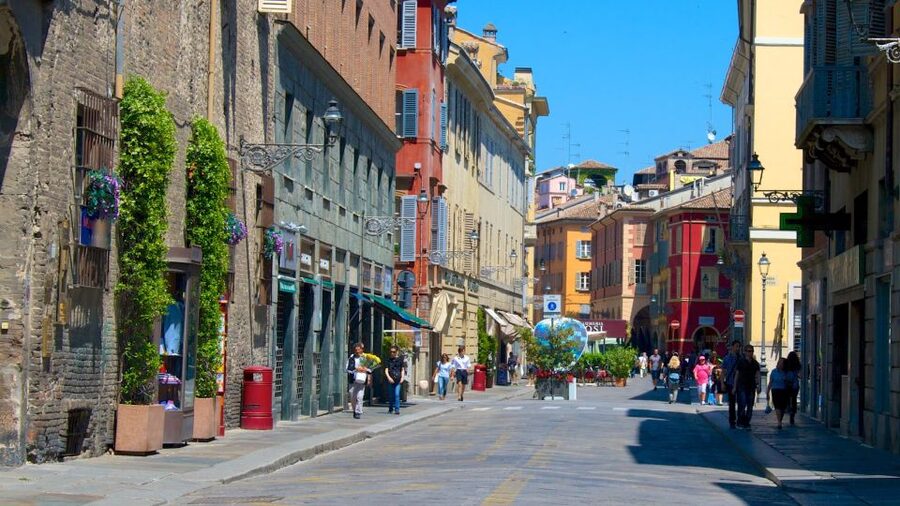
The walk begins at the IAT in Strada Giuseppe Garibaldi 18, near Piazza Garibaldi. This is a practical meeting point because you begin in the center rather than spending time on a hotel pickup or riding in from the edge of town.
Piazza Garibaldi is the right place to begin a Parma visit. It gives you a sense of how the city works, with central streets leading toward its main monuments and civic spaces. Your guide can provide the background that helps the rest of the walk make sense.
I would arrive a little early. The meeting point is an information office rather than a large coach terminal, and finding your guide is easier when you are not rushing in at 10:00. The tour returns to the same address, so you finish where you started.
That return is useful. You can continue exploring on your own, ask your guide for a nearby lunch suggestion, or use the central location to reach another part of Parma without retracing your steps.
More Walking Tours in Italy:
- Venice: Doge’s Palace and St Mark’s Basilica Walking Tour
★ 4.4 · 6,291 reviews - Milan: Guided Walking Tour & Last Supper Visit with Ticket
★ 4.7 · 5,409 reviews - Naples: Street Food Walking Tour with Local Guide
★ 4.9 · 4,976 reviews
Parma’s cathedral and the outdoor monument route
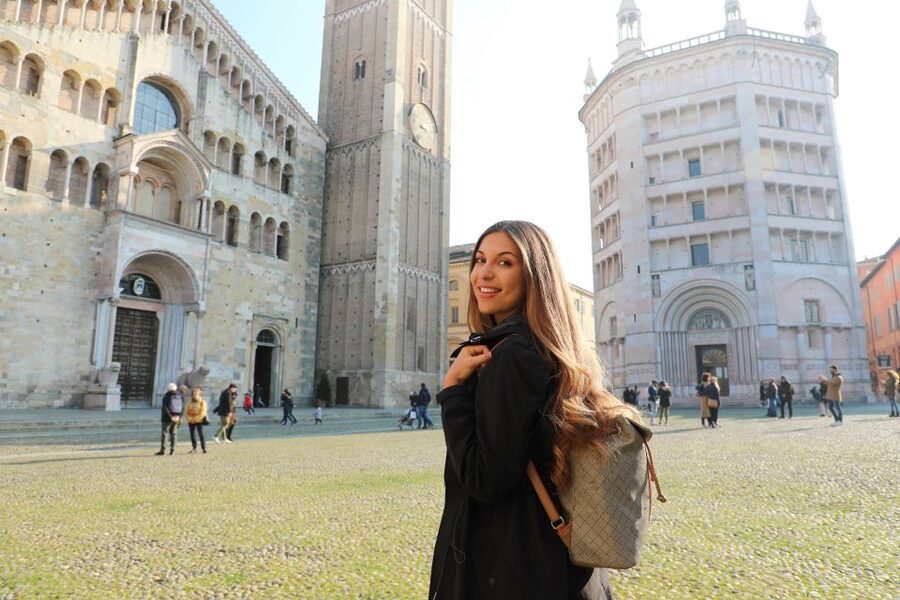
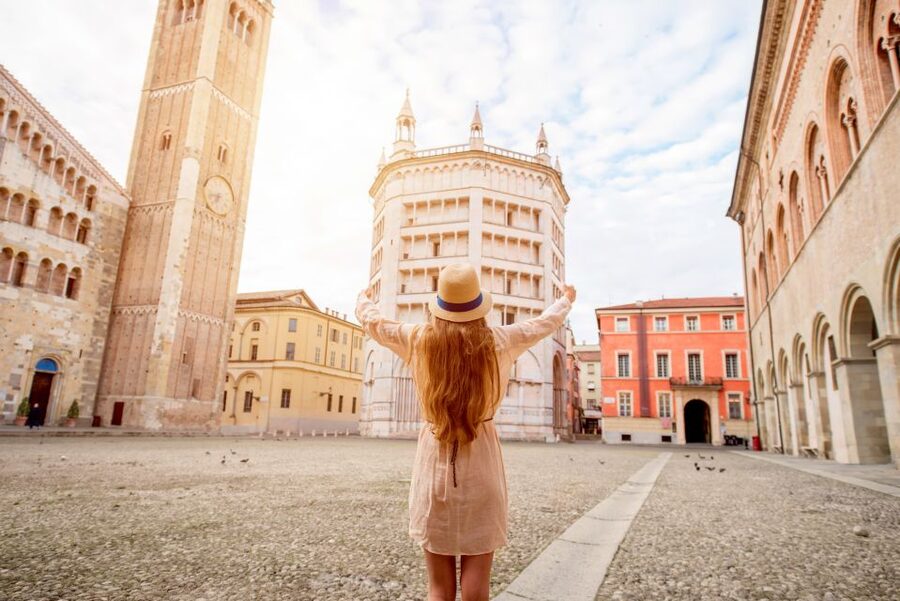
The cathedral is the visual centerpiece of the walk. You will admire it from outside, hearing about its place among Parma’s main treasures, but this experience does not include an interior visit.
That distinction matters. If you want to study the cathedral’s interior, art, or decorative details at close range, you will need to plan a separate visit. This tour is about orientation and explanation, not monument admission.
An outdoor route also keeps the two-hour schedule moving. You can see how the cathedral relates to the surrounding center, then continue through the streets instead of spending the whole tour inside one building. For a first look, I find that useful because Parma’s character comes from the connection between its squares, churches, civic buildings, and everyday streets.
You should also keep your expectations in check. This is not a full museum visit, and no entrances are included anywhere along the route. The value comes from the guide’s commentary and the way the monuments are placed in the story of the city.
One practical issue is group positioning. A four-star rating specifically noted that the guide could sometimes move closer when pointing out fountains or architectural details. In a larger group, stay near the guide and keep your attention on the detail being discussed. You may miss a small feature if you remain at the back.
Parma’s food identity, explained beyond the menu
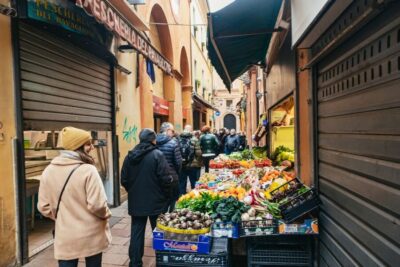
Food is one of the strongest reasons to choose this walk. Parma is known for the culinary traditions that helped earn it recognition as a creative city of gastronomy and Italian Capital of Culture in 2020.
The tour does not appear to be a food tasting, so do not book it expecting samples or a market meal. Instead, food forms part of the city’s identity and gives the guide a way to explain why Parma matters beyond its monuments.
That is valuable early in a visit. You can hear about the city’s food culture before choosing a restaurant or looking for typical shops. One guide also offered suggestions about what to see next and where to find local products, which is exactly the kind of practical advice that can improve the rest of your stay.
I like this balance between sights and daily life. A cathedral tells you about art and religion. Food tells you how Parma continues to be experienced by its residents. Together, they make the city easier to understand.
Still, keep the food section in perspective. The supplied details promise food secrets and local advice, not a tasting itinerary, producer visit, or cooking lesson. If you want to taste Parma’s specialties, use the tour as a starting point and make separate plans.
Giuseppe Verdi’s Parma, told through local anecdotes
Parma is also closely linked with Giuseppe Verdi, and the guide brings the composer into the city walk through anecdotes. This adds a personal thread to the tour and breaks up the architectural commentary.
You do not need to be a devoted opera fan to appreciate this part. Stories about a famous local figure can show how Parma sees itself and how music fits into the city’s public identity. If you already know Verdi’s work, you may enjoy hearing the local angle. If you do not, the anecdotes offer a simple introduction without turning the entire walk into an opera lecture.
The format is especially useful because you hear Verdi’s connection while moving through central Parma rather than sitting in a formal lecture. The guide can connect places, stories, and the city’s past in a way that gives the route a human voice.
The experience depends on the guide’s style. One guide, Alice, received especially warm praise for her grasp of Parma’s history and anecdotes, as well as her practical tips for the rest of the visit. Another rating praised a guide who remained accurate and friendly despite rainy conditions.
At the same time, one three-star assessment found the walk could use more conversation and interaction. That is a fair caution. Some people want a steady stream of facts, while others want questions, back-and-forth discussion, and a more active role. This tour may suit you better if you enjoy listening while walking.
Same streets, a different guide:
- Florence: Highlights Walking Tour with Expert Guide
★ 4.6 · 4,662 reviews - Venice: San Marco to Rialto Walk & Spritz Like a Local
★ 4.2 · 3,651 reviews - Uffizi & Accademia Timed Entry: Small Group Duomo Walking Tour
★ 4.5 · 3,630 reviews - Venice Walking Tour and Gondola Ride
★ 3.5 · 3,630 reviews
Why Parma’s past gives the walk more depth
Parma was once the capital of the Duchy of Parma and Piacenza, and it has been a university city since the 11th century. Those two facts help explain why the center combines political importance, learning, culture, and food.
The duchy background gives the monuments a wider setting. You are not simply looking at attractive old buildings. You are seeing a city that once held political weight in the region and developed a civic center worthy of that role.
Its long university tradition adds another layer. A university city tends to have a different rhythm from a place built only around tourism. Students, institutions, cultural life, and long-established businesses all become part of the city’s identity. The tour uses these points to move beyond a basic list of dates.
You will not receive a full academic history of Parma in two hours. That would be too much for a walking tour, especially one conducted in Italian and English. Instead, expect a compact framework that helps you notice why the center looks and feels the way it does.
I find this kind of background most useful at the start of a trip. Once you know Parma’s role as a ducal capital and university city, later walks on your own become more rewarding. You have a few ideas to carry with you instead of seeing each building as an isolated stop.
The bilingual format and group size
The tour takes place in Italian and English every day at 10:00, with an additional Saturday departure at 15:00. Check the available date and time when booking, since the schedule is limited compared with a tour that runs all day.
The bilingual format is both a strength and a limitation. You can join if you speak either Italian or English, and hearing both languages may make the tour welcoming for mixed-language groups. But each explanation has to be delivered twice, so the pace can feel slower than on a single-language walk.
That issue appeared in the ratings, with one person specifically wishing the tour were not bilingual. Another person found the guide well prepared even with about 25 people in the group, while a separate comment called the group size too large.
A group of 25 is not enormous, but it is large enough to affect the experience. You may need to stand closer to the guide, especially when the commentary concerns a fountain, carving, or small architectural feature. The included earphones are supplied for groups of six or more, which should help you hear the guide in a larger group.
If you prefer quiet, highly personal guiding, this may not be your ideal format. If you want an affordable overview and can accept a shared group setting, the arrangement is more reasonable.
What two hours feels like on this route
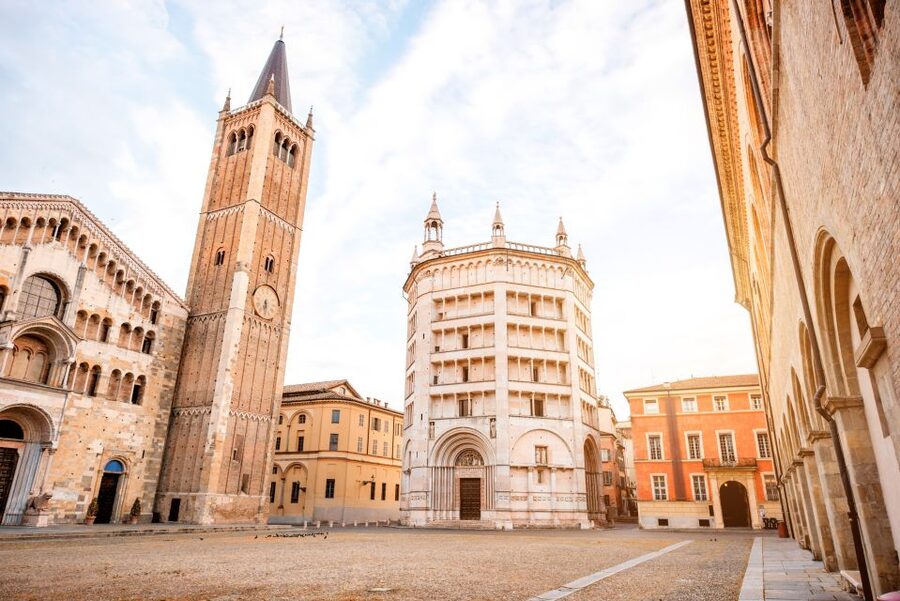
Two hours is enough for a useful introduction, but not enough for every corner of Parma. The route begins at Piazza Garibaldi, covers the main central treasures outdoors, and returns to the starting point.
The first part should help you get oriented. You learn where you are in relation to the central monuments and hear why Piazza Garibaldi matters. From there, the walk moves through the historic center, with the cathedral as one of the key sights.
The middle of the tour brings together Parma’s food identity, ducal past, university tradition, and Verdi connections. This is where the guide’s local knowledge matters most. The route becomes more than a checklist because the stories tie the city’s culture to the streets around you.
The final part brings you back to the starting address. Use that moment to ask about places you can visit next. The practical advice given by guides such as Alice may be as useful as the formal commentary, especially if Parma is only one stop on a larger Emilia-Romagna trip.
The tour is outdoors, so wear comfortable shoes and dress for the weather. A rainy day did not prevent one guide from giving a well-received tour, but you should still be prepared to walk outside for the full two hours.
Value at $27 per person
At $27 per person, this is a fair price for a local introduction to central Parma. You are paying for two hours of guiding, historical context, food-related stories, Verdi anecdotes, and a structured route that helps you get your bearings.
The value is strongest if you are visiting Parma for the first time. You can use the walk to decide which sights deserve a longer visit and which food shops or restaurants to seek out later. A local guide can also save you from spending your limited time wandering without context.
The price is less attractive if you mainly want entry inside the cathedral or another monument. No entrances are included, and the tour remains outdoors. You would need to add those visits separately, so compare the total cost with your own plans.
It is also not the best value for someone who prefers a private guide or a small, highly interactive group. The bilingual format and possible group size mean the experience is designed for shared sightseeing, not custom pacing.
Free cancellation up to 24 hours before the start and the option to reserve now and pay later make it easier to fit into a changing schedule. Hotel pickup is not included, but the central meeting point keeps the logistics simple.
Who will get the most from this Parma walk
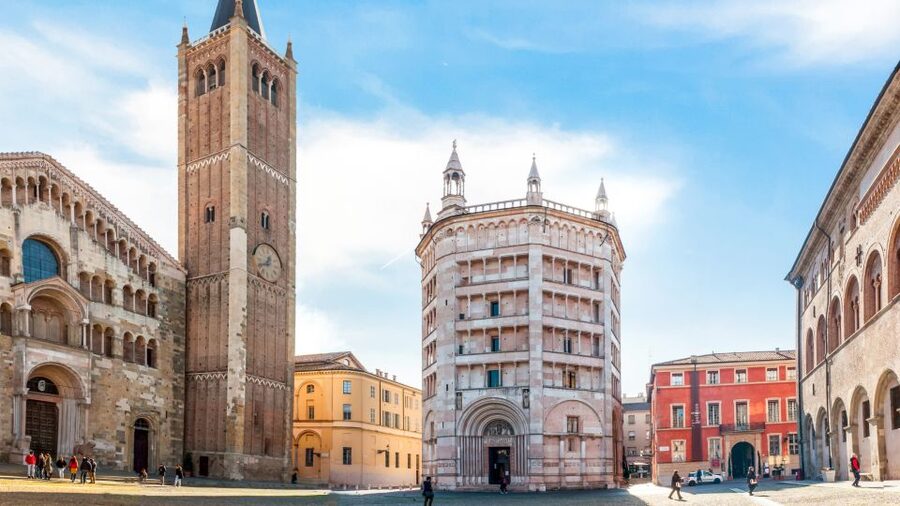
I would recommend this tour to you if you want a clear first look at Parma and enjoy learning through stories rather than reading a guidebook while walking. It is particularly useful for first-time visitors who want to understand the cathedral, central streets, food culture, and Verdi connection before exploring independently.
It also suits people who appreciate local advice. A guide may suggest what to see next and point you toward typical shops, giving you a practical plan for the rest of the day.
You should think twice if you have mobility impairments, since the activity is not considered suitable for you. You should also reconsider it if you want interior visits, tastings, or a private conversation with the guide.
For families or mixed-age groups, the two-hour length is manageable, but the amount of listening may not suit everyone. One rating asked for more interaction, so children or restless companions may find the format less engaging than a tour built around activities.
Should you book the Parma City Walking Tour?
Book it if you want an affordable, local-led orientation to Parma’s center, with the cathedral, food traditions, Verdi, and the city’s ducal and university past included in one route. The strongest part is the combination of practical local advice and cultural context.
Skip it if your priority is entering monuments, tasting food, or having a private guide. Also keep the bilingual format and possible group of around 25 in mind.
For most first visits, $27 is a sensible way to begin. Arrive at the IAT on Strada Garibaldi 18, wear comfortable shoes, stay close enough to see the details, and treat the walk as your foundation for a longer Parma day.
FAQ
Where does the Parma walking tour begin?
It begins at the IAT in Strada Giuseppe Garibaldi 18, Parma, near Piazza Garibaldi.
How long does the tour last?
The walking tour lasts two hours.
What time does the tour run?
The tour runs in Italian and English every day at 10:00. A Saturday departure is also available at 15:00.
Is the tour offered in English?
Yes. The live guide speaks Italian and English, and the tour is conducted bilingually.
Does the tour enter Parma Cathedral?
No. The route visits the main monuments from outside, and monument entrances are not included.
What does the tour cover?
It covers Parma’s main central treasures, food traditions, Giuseppe Verdi anecdotes, and the city’s background as the former capital of the Duchy of Parma and Piacenza and a university city since the 11th century.
Are hotel pickups included?
No. You need to make your own way to the meeting point at Strada Giuseppe Garibaldi 18.
What should I bring?
Bring comfortable shoes because the experience is a two-hour walking tour.
Is the tour suitable for people with mobility impairments?
No. The activity is not considered suitable for people with mobility impairments.
New routes in Italy
- Private St. Francis Basilica of Assisi and City Walking Tour★ 5.0 · 114 reviews
- Assisi Private Walking Tour including St. Francis Basilica★ 5.0 · 124 reviews
- Milan: City Highlights Walking Tour with The Last Supper★ 4.9 · 195 reviews
- Florence: Heart of Florence Guided Walking Tour★ 4.0 · 81 reviews
- Milan: Private or Shared Essential Walking Tour★ 4.7 · 84 reviews
- Taormina: Shared or Private Food & Wine Walking Tour★ 4.6 · 167 reviews
- Syracuse: Ortigia Private Walking Tour★ 4.8 · 181 reviews
- Syracuse: Highlights of Ortigia Guided Walking Tour★ 4.2 · 136 reviews
Italy Walking Tours, compared.
Doge’s Palace and St Mark’s Basilica Walking Tour
Read our review →
Guided Walking Tour & Last Supper Visit with Ticket
Read our review →
San Marco to Rialto Walk & Spritz Like a Local
Read our review →
Uffizi & Accademia Timed Entry: Small Group Duomo Walking Tour
Read our review →
Browse the lists this tour appears in