
Review · ITALY
Lucca: Renaissance City Walls Walking Tour
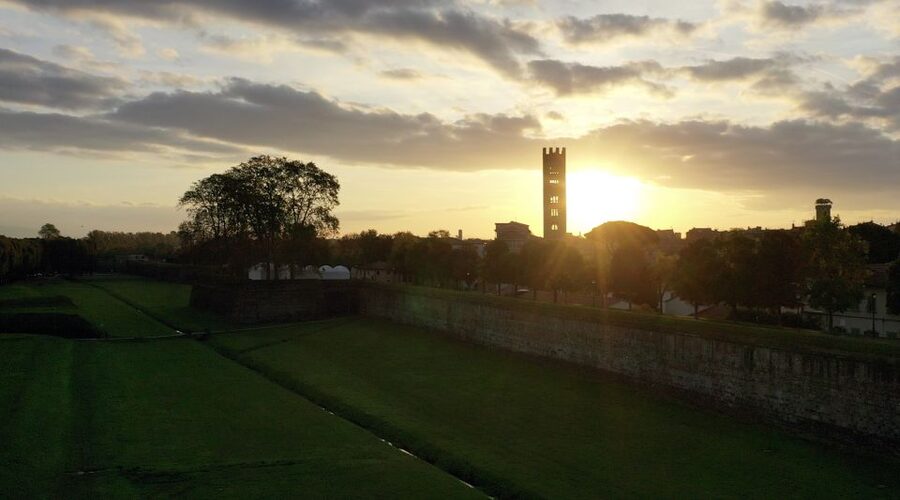
Lucca’s great surprise is not hidden inside a church or museum. It is the broad ring of Renaissance walls wrapped around the old city. This is a fortification you can walk like a park, with trees lining the route and passages leading into the brick interior.
I like two things here. First, you get the city’s military story from a local guide rather than from a signboard. Second, the tour takes you inside the bastions and galleries, where the immense brick vaults explain how the walls worked. The main consideration is language: an English and Italian tour may need to repeat each point twice, leaving less time for each language.
Key points to know before you book
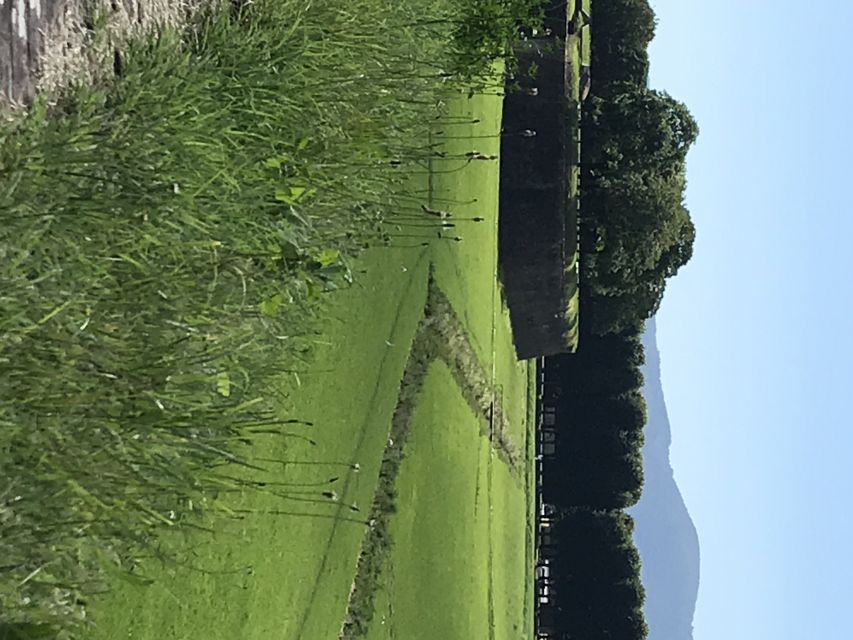
- Walk the full idea of a city wall: The fortification is also a public park surrounding Lucca’s historic center.
- Go inside the bastions: You see restored rooms and galleries that are easy to miss on a casual walk.
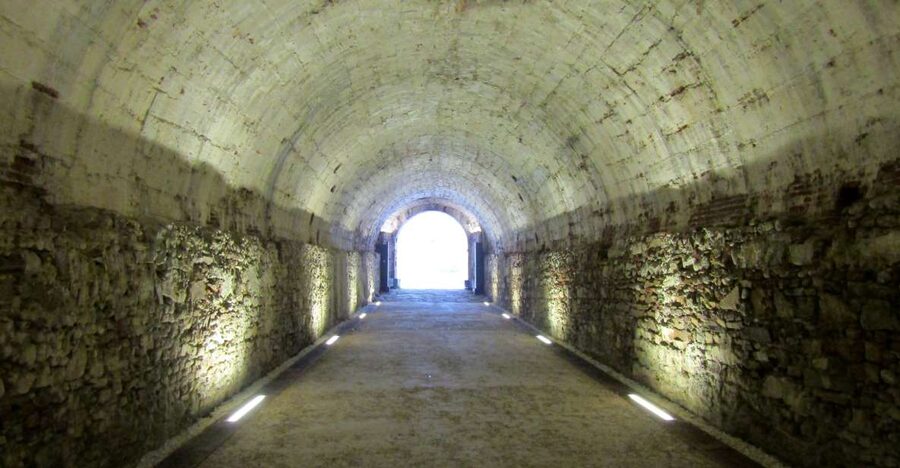
- Look for the enormous brick vaults: These spaces were built to shelter heavy bronze cannons.
- Learn how warfare changed: The guide traces Italian military engineering from the 13th through the 17th centuries.
- Allow two hours and wear good shoes: The tour takes place rain or shine and returns to the tourist information center.
- Expect bilingual guiding: English and Italian are both offered, sometimes during the same tour.
Why Lucca’s walls are worth your time
Many European cities have old walls. Lucca’s are different because the fortifications have become part of daily city life. Instead of being reduced to fragments or buried under later construction, the walls form a continuous public walkway around the historic center.
That changes how you experience Lucca. You are not simply looking at a defensive structure from below. You walk along the top, pass beneath trees, and see how the wall defines the old city. The route offers a clear sense of the city’s shape before you return to its streets and squares.
The walls were built during the Renaissance, when military planners needed thicker, stronger defenses to meet new threats from artillery. The guide connects this change to the longer story of Italian fortification, reaching back to the 13th century and forward to the 17th century.
That historical range gives the walk useful context. You learn not only when the walls were built, but why their design changed. The tour is at its best when architecture and military history meet in a physical place you can enter and examine.
More Walking Tours in Italy:
- Venice: Doge’s Palace and St Mark’s Basilica Walking Tour
★ 4.4 · 6,291 reviews - Milan: Guided Walking Tour & Last Supper Visit with Ticket
★ 4.7 · 5,409 reviews - Naples: Street Food Walking Tour with Local Guide
★ 4.9 · 4,976 reviews
Starting at the tourist information center
You meet your guide by the entrance of the tourist information center. Arrive about 10 minutes early, since the group begins from there and the activity finishes at the same point.
This is a practical meeting spot if you are already exploring Lucca’s old center. You do not need a separate transfer to reach the tour, and the return to the same location makes it easy to continue sightseeing afterward.
The guide leads in English or Italian. Several guides have received especially warm praise, including Roberta and Paola. The strongest part of their work is not simply reciting dates. They explain what the walls were built to do and how the interior spaces fit into the defensive plan.
If your booking includes both languages, pay attention to the rhythm of the explanation. Some groups have found that the guide must cover each point in English and Italian, which can make the tour feel slower at first. It can also shorten the amount of uninterrupted time in your preferred language.
Walking the tree-lined Renaissance ramparts
The first major part of the experience is the walk along the wall. This is not a narrow scramble over ruins. The fortification has been adapted into a large public park, with a broad path and different types of trees along the route.
That design is one reason the walls work so well for a city visit. You get a break from crowded streets without leaving Lucca’s historic center. The path also helps you understand the fortification as a complete ring rather than as a single gate or isolated tower.
Your guide uses the walk to explain the wall’s development and its place in Lucca’s military history. The subject is more engaging when you can see the scale of the structure beneath your feet and follow the line of the defenses as you move.
The route is also a gentle way to begin the tour. You have time to settle into the pace, listen to the guide, and notice how the wall surrounds the old city. Bring comfortable shoes, especially if you plan to keep exploring on foot after the tour.
Entering the bastions and restored rooms
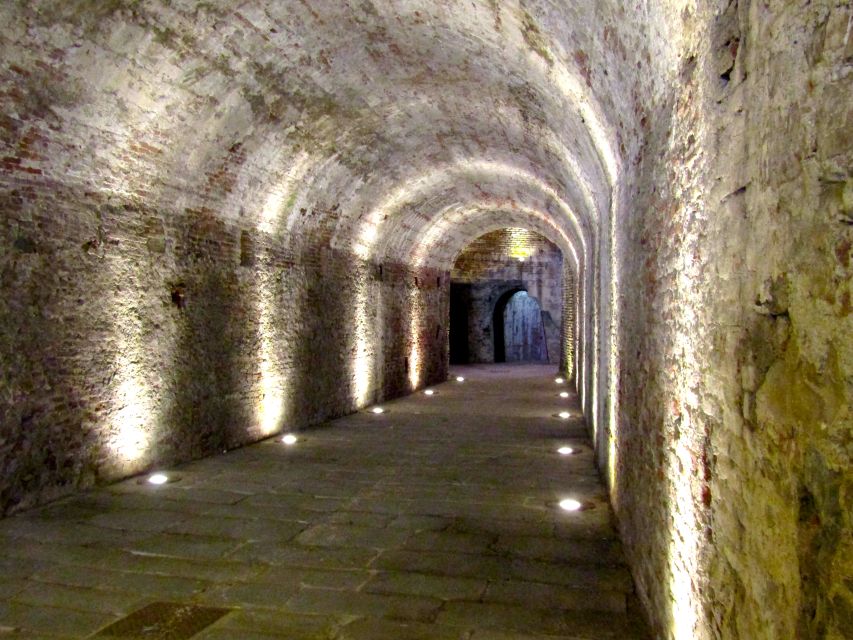
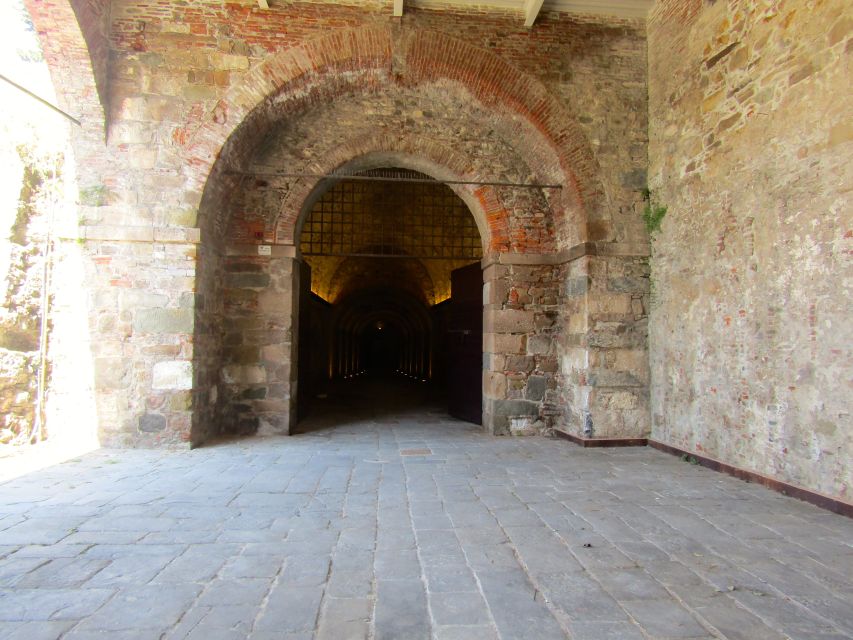
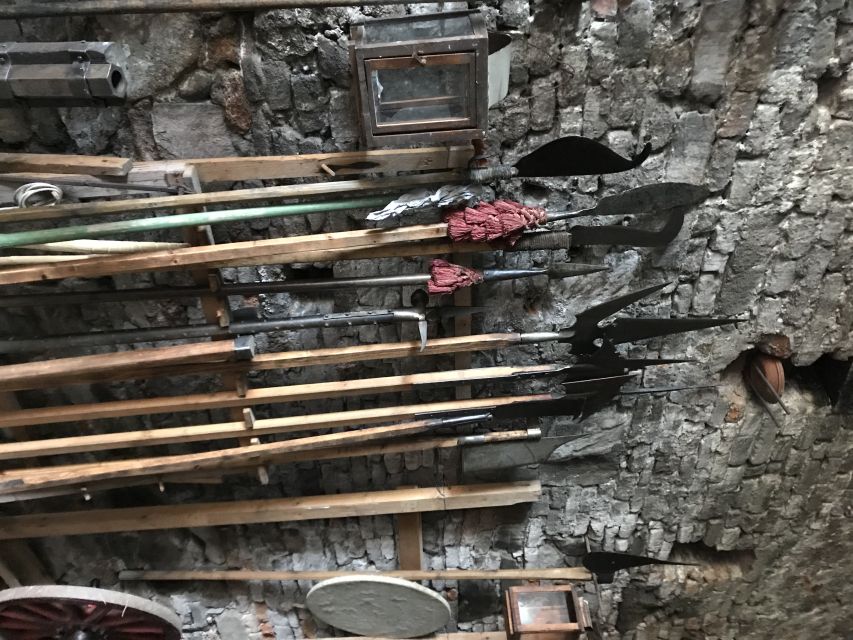
The most unusual part of this experience comes when you leave the open walkway and enter the interior of the fortification. The restored rooms and passages show a side of Lucca that a casual walk on the walls will not reveal.
The bastions were key parts of the defensive design, but these particular bastions were never used for defensive purposes. That detail makes the visit more interesting, not less. You can study the planning and construction without imagining that every room served as a battlefield.
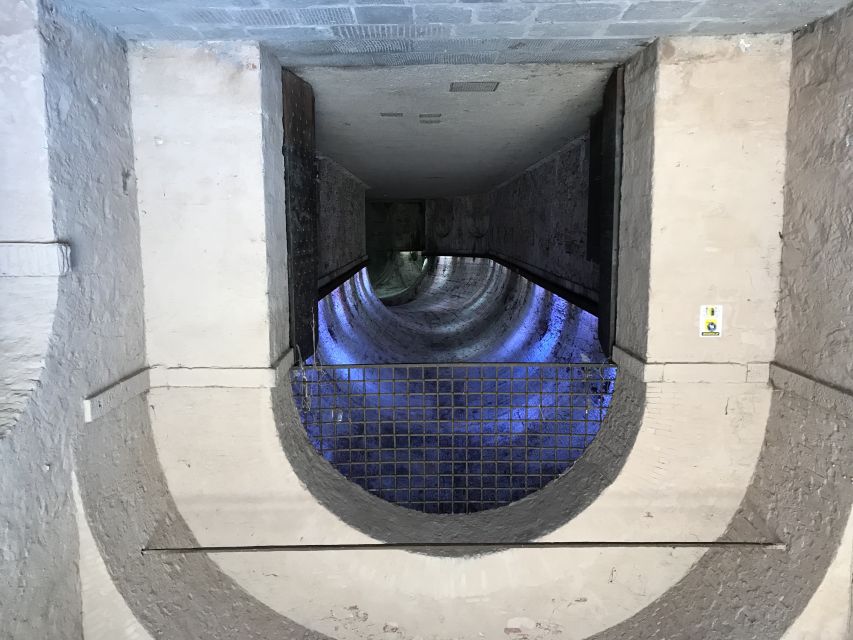
Inside, the scale changes. The open park gives way to thick masonry, enclosed corridors, and large brick-vaulted galleries. The restoration has made it possible to move between the city’s inside and outside in a way that feels both practical and atmospheric.
I would give this section your full attention. The interior is the part most likely to be missed if you walk the walls on your own, and it is where the guide’s explanation adds the most value. Look closely at the construction rather than rushing through for a quick photograph.
Same streets, a different guide:
- Florence: Highlights Walking Tour with Expert Guide
★ 4.6 · 4,662 reviews - Venice: San Marco to Rialto Walk & Spritz Like a Local
★ 4.2 · 3,651 reviews - Venice Walking Tour and Gondola Ride
★ 3.5 · 3,630 reviews - Uffizi & Accademia Timed Entry: Small Group Duomo Walking Tour
★ 4.5 · 3,630 reviews
The brick galleries and the cannon rooms
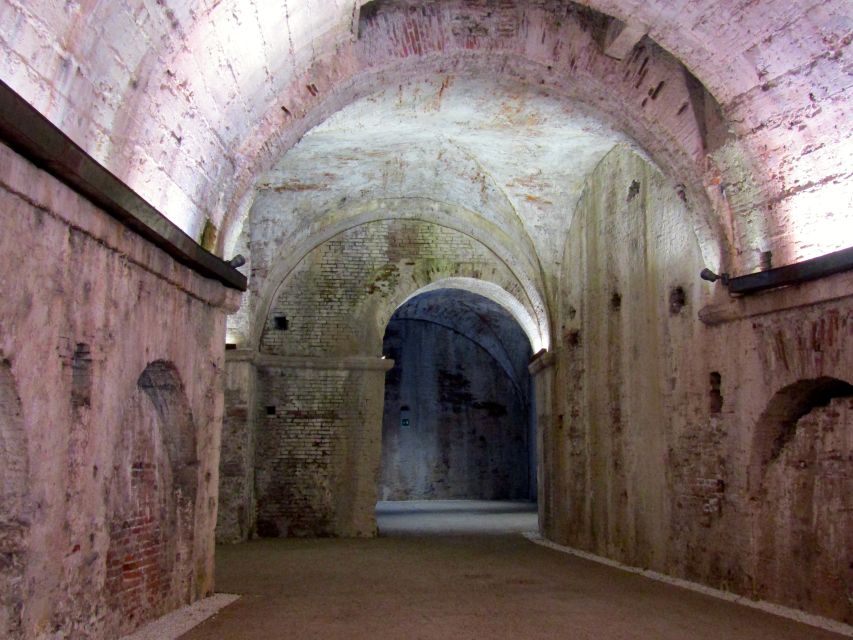
The immense brick vaults are one of the clearest physical reminders that these walls were built for artillery warfare. The galleries were designed to conceal heavy bronze cannons, so the interior was not merely storage space or a convenient passage.
Your guide explains how these rooms fit into the wider system. The thick walls, vaulted ceilings, and protected positions reflect the demands of military engineering during a period when cannon fire was changing the way cities defended themselves.
This is where the tour becomes more than a pleasant walk. You can connect the large, orderly shape of the fortification with the practical problem it was meant to solve. The wall had to shield the city, contain artillery, and give defenders controlled movement through the bastions and galleries.
The rooms have also benefited from recent restoration. That does not turn the visit into a polished museum display. Instead, it lets you see a part of the monument that had been less accessible and helps you understand why Lucca’s residents value the walls as more than a scenic walking path.
A two-hour lesson in changing military design
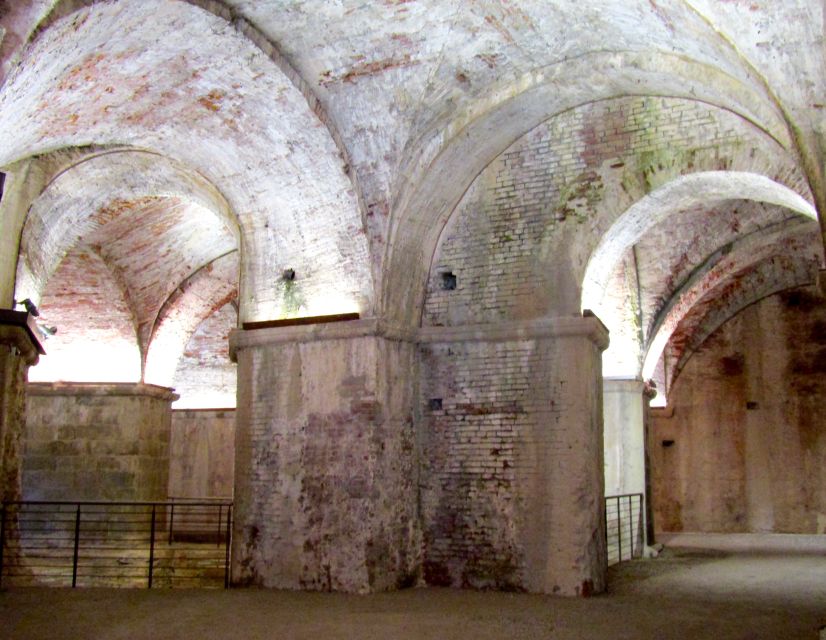
The advertised duration is two hours, which gives the guide time to cover both the walk and the interior spaces. This is longer and more useful than simply circling a short section of the wall with a few dates.
The historical story runs from the 13th to the 17th centuries. The guide explains the evolution of Italian military engineering across that span, using the walls as the central example.
For you, the value lies in the connection between periods. Medieval and Renaissance defenses did not develop in a vacuum. Changes in weapons, especially artillery, forced planners to rethink wall thickness, angles, bastions, galleries, and cannon placement.
You do not need a background in architecture to follow the tour. The setting does much of the teaching. You walk along the defensive line, enter the protected interior, and see the brick vaults that supported the military purpose of the complex.
The pace may feel a little slow at the beginning, especially if the guide is switching between English and Italian. That is a fair trade for visitors who want a proper explanation rather than a quick circuit. If you prefer to cover ground quickly, the tour may feel more detailed than necessary.
What the guides add to the experience
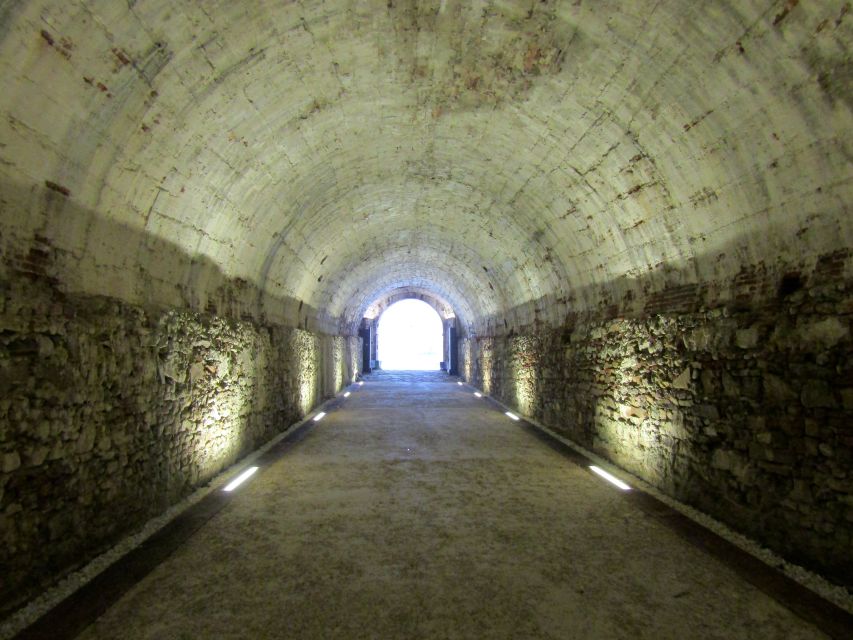
A local guide matters here because the walls are large but not always self-explanatory. From the outside, you see brick, trees, paths, and entrances. The guide turns those features into evidence of a particular period in Italian military design.
Roberta has been singled out for her enthusiasm and command of the subject. Paola has also earned praise for explaining the function and history of the walls clearly. Paula is another guide named in the feedback, so the exact guide depends on the date and language of your booking.
The best explanations cover both past and present. You learn what the walls were intended to do, then see how restoration has returned rooms and passageways to public use. The result is a balanced visit: part history lesson, part architectural walk, and part look at how an old defense system has become a civic park.
Because the tour is bilingual, ask yourself how much spoken detail you want. If you need every point delivered only in English, a single-language departure would likely be easier. If you are comfortable with both languages or do not mind a measured pace, the bilingual format can work well.
Price, timing, and practical value
At $17 per person, this is a modestly priced guided experience for a two-hour visit. The walls themselves are part of Lucca’s public life, so you can walk sections independently without paying for a tour. The fee makes sense if you want the interior access and the historical explanation that a solo walk may not provide.
The strongest value comes from the bastions and galleries. Those are the sections that turn a simple stroll into a focused visit to one of Lucca’s most unusual monuments.
The activity is wheelchair accessible, an important practical point for visitors who need step-free access. Still, because the route includes a walkway and interior areas, confirm the details of your own requirements when booking if you need specific assistance.
Wear comfortable shoes. The tour takes place rain or shine, so check the forecast and bring suitable protection. The supplied information does not promise a weather cancellation, which means you should plan for outdoor conditions even if the sky looks uncertain.
You can cancel up to 24 hours in advance for a full refund, and the reserve-now, pay-later option lets you hold a place without paying immediately. These terms are useful if your Tuscany schedule is still shifting.
Who will enjoy this Lucca tour most
I would recommend this walk to you if you want to understand how Lucca was built and protected, not just photograph its prettiest streets. It suits history fans, architecture students, families with older children, and anyone who likes seeing the working parts of a monument.
It is also a good choice for a first visit because the walls give you a clear sense of the old city’s layout. Afterward, you can explore inside the ring with a better idea of how the streets relate to the defensive boundary.
You may want to skip it if you have limited interest in military history or if you prefer unstructured wandering. The guide spends real time on engineering, artillery, and the evolution of fortifications. That detail is the point of the tour, but it will not suit every mood.
The bilingual format is the other key consideration. A two-hour tour can feel shorter in your preferred language when each explanation is repeated. On the other hand, several guides have been praised for making the material clear, informative, and entertaining even within that format.
Should you book the Renaissance City Walls Walking Tour?
Book it if you want the part of Lucca that most casual sightseeing misses: the interior of the bastions, the restored rooms, and the cannon galleries beneath the tree-lined walkway. At $17, the guide and access to those spaces offer good value.
Go with realistic expectations. This is not a fast highlights tour, and a bilingual departure may move slowly. Give it two hours, wear practical shoes, and arrive early at the tourist information center.
For most visitors interested in Lucca’s structure and past, I think it is a smart addition to a day in the city. The walls are enjoyable on their own, but the interior and the guide’s explanation show why this monument deserves more than a quick lap.
FAQ
How long does the Lucca walls tour last?
The activity lasts two hours.
Where does the tour begin?
Meet your guide by the entrance of the tourist information center. Arrive 10 minutes before the scheduled starting time.
Where does the tour finish?
The activity ends back at the meeting point.
Which languages are available?
The live guide operates in English and Italian.
Is the tour wheelchair accessible?
Yes, the activity is listed as wheelchair accessible.
What should I bring?
Wear comfortable shoes. The tour takes place rain or shine, so prepare for outdoor weather.
Does the tour enter the walls?
Yes. The experience includes the interiors of the bastions, restored rooms, and galleries with large brick vaults.
Were the bastions used for defense?
The bastions visited on the tour were never used for defensive purposes.
Can I cancel for a refund?
Yes. You can cancel up to 24 hours in advance for a full refund.
New routes in Italy
- Private St. Francis Basilica of Assisi and City Walking Tour★ 5.0 · 114 reviews
- Assisi Private Walking Tour including St. Francis Basilica★ 5.0 · 124 reviews
- Milan: City Highlights Walking Tour with The Last Supper★ 4.9 · 195 reviews
- Florence: Heart of Florence Guided Walking Tour★ 4.0 · 81 reviews
- Milan: Private or Shared Essential Walking Tour★ 4.7 · 84 reviews
- Taormina: Shared or Private Food & Wine Walking Tour★ 4.6 · 167 reviews
- Syracuse: Ortigia Private Walking Tour★ 4.8 · 181 reviews
- Syracuse: Ortigia and Neapolis Guided Walking Tour★ 4.7 · 205 reviews
Italy Walking Tours, compared.
Doge’s Palace and St Mark’s Basilica Walking Tour
Read our review →
Guided Walking Tour & Last Supper Visit with Ticket
Read our review →


San Marco to Rialto Walk & Spritz Like a Local
Read our review →
Uffizi & Accademia Timed Entry: Small Group Duomo Walking Tour
Read our review →

Browse the lists this tour appears in