
Review · LAS VEGAS
Las Vegas Downtown & Fremont Street – Guided Walking Tour
Las Vegas began downtown, long before the Strip took over the postcards. This two-hour walk follows that story from the historic Plaza and old casino blocks to the four-block Fremont Street Experience, then into Fremont East and the recycled-shipping-container shops at Downtown Container Park.
I like the strong storytelling and the way guides such as Kelly, Paul, and James use old photos, local anecdotes, and casino lore to make the streets easier to read. I also like the practical finish: you receive a restaurant tip sheet and coupons, and the guide points out places that can cost less than the Strip. The main drawback is the theatrical delivery. Most people enjoy it, but one review found the presentation too showy and sales-like.
Key points at a glance
- Old Las Vegas in two hours: Follow the city’s story from a railroad outpost to Glitter Gulch and modern downtown.
- A useful wireless headset: Hear the guide clearly while walking through casinos and busy public areas.
- Four blocks of Fremont Street: Learn why the giant video canopy was built and how it has been refurbished three times.
- More than neon: Visit casino interiors, Fremont East, and Downtown Container Park, not just the famous overhead light show.
- Optional Pawn Stars stop: Add Gold and Silver Pawn for a longer tour ending on Las Vegas Boulevard.
- Small-group format: The maximum is 20 people, which makes questions and street crossings easier to manage.
Why this walk is different from a Fremont Street stroll
You can walk Fremont Street on your own in minutes. What you cannot easily see on your own is the sequence of decisions, scandals, casino deals, mob connections, demolitions, and renewal projects that shaped it.
This tour gives you that framework. Your guide does not simply point at a casino and name it. You hear how the city moved from a modest desert settlement to a gambling center, how Fremont became known as Glitter Gulch, and how downtown later fought its way back from decline.
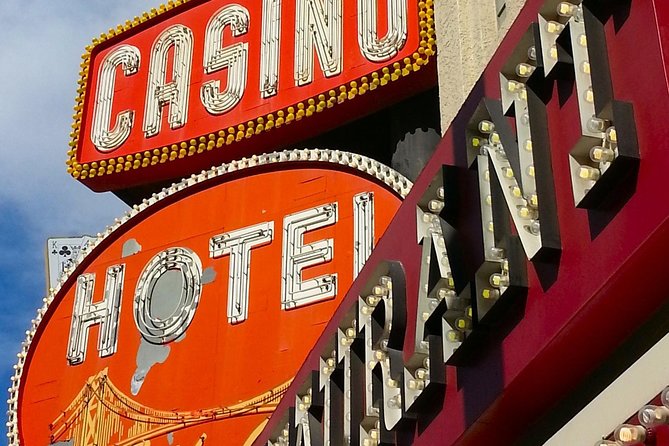
I especially like the walk through time idea. Old photographs help you compare the present street with earlier versions of Las Vegas. Neon signs and casino facades become clues instead of decoration.
The guide also fills in details that are easy to miss. A casino may look freshly remodeled, yet still contain pieces dating to the 1940s or 1950s. A new hotel may be part of a major push to bring life back downtown. That contrast between old bones and new money is the heart of this tour.
The experience is offered in English only, so conversational English is important. It is not a museum lecture. You are walking, listening, looking up at signs, moving through casino floors, and stopping often for short explanations.
More Guided Walks in the USA:
- History and Hauntings of Salem Guided Walking Tour
★ 5.0 · 14,564 reviews - Historic Charleston Guided Sightseeing Walking Tour
★ 5.0 · 6,216 reviews - Cambridge: Harvard University Student-Guided Walking Tour
★ 4.6 · 3,931 reviews
Starting at the Plaza: where downtown Las Vegas began
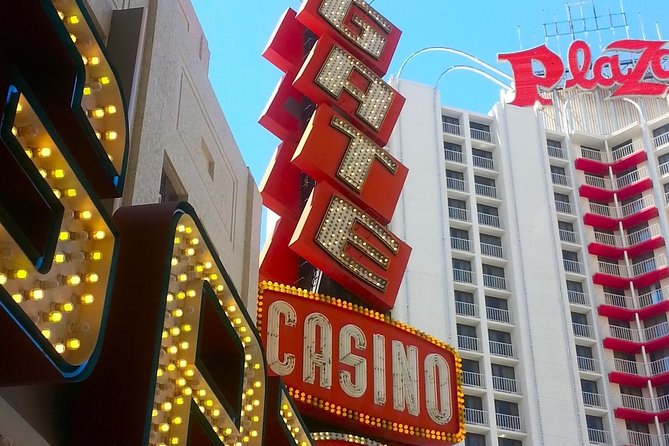
The meeting point is the Carousel Bar at 1 South Main Street, near the Plaza Hotel and Casino. This is a sensible place to begin because the Plaza sits near the original center of Las Vegas and gives the tour an immediate link to the city’s earliest days.
The first downtown segment lasts about 30 minutes. You hear how Las Vegas changed from a humble outpost into a gambling capital and then into a district that needed a fresh start. The guide uses stories, facts, and historic photographs to connect the buildings around you with earlier chapters of the city.
At the Plaza, the focus turns to the ground beneath the casino. The story of Las Vegas did not begin with flashy resorts. It began with transportation, land, water, business, and the chance to build a town in a harsh setting.
The Plaza itself also helps explain downtown’s complicated identity. It is a vintage 1970s casino that has survived while taking on renovations and new features. You get a useful reminder that old Las Vegas is not a preserved movie set. It is still operating, changing, and trying to attract a new crowd.
The casino walk: see the interiors, not just the fronts
One of the tour’s best features is that you walk through casinos instead of viewing them only from the sidewalk. That matters in downtown Las Vegas, where the interiors often reveal more than the exterior signs.
You hear about a newer downtown casino created by two brothers from Detroit, including its unusual gold display and six pools. The point is not just to admire a resort. It is to understand how new investment has altered Fremont Street while keeping the area tied to its casino past.
The tour also visits the Golden Nugget. Here, the guide connects the property with Steve Wynn and explains how its original 1946 casino foundations and mob-era associations remain part of its story. You also hear about the property’s high-profile features and see the casino from inside.
This section works well for anyone who wants context before gambling or dining. You learn which properties are old, which have been heavily refurbished, and why some casino names keep returning in the story of Las Vegas.
Binion’s Gambling Hall and Hotel brings another colorful chapter. The guide introduces Benny Binion and the first downtown carpet joint, then explains how the property remains tied to vintage casino culture. You may hear about the steakhouse, live entertainment, the rotating bar above Fremont Street, and the restored boutique hotel.
A brief stop also covers another historic casino connected with Wayne Newton and Lefty Rosenthal, along with a major renovation and expanded dining options. The supplied schedule does not assign every short stop a name, but the purpose is clear: you are tracing the people, performers, gamblers, and casino operators who made downtown famous.
Fremont Street Experience and the giant video canopy
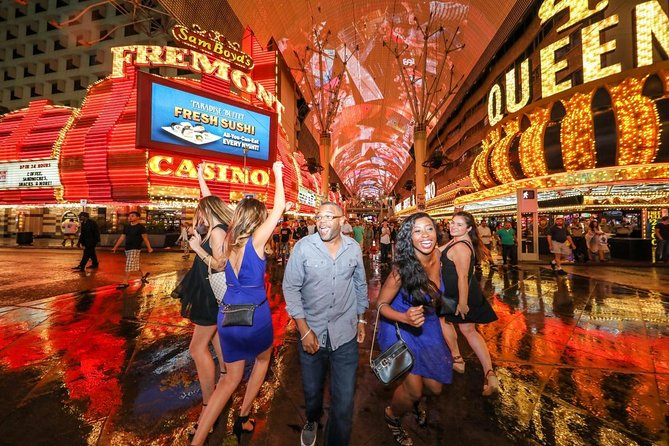
The Fremont Street Experience is the tour’s most recognizable stretch. The covered pedestrian zone runs for four blocks, and the guide walks through the full area while explaining the casinos and attractions along the way.
The overhead video canopy is the main visual draw. You learn why it was built and how it has been refurbished three times. That background changes how you watch the lights. Instead of seeing only a giant screen above the crowd, you understand it as a major urban project intended to pull foot traffic back to the old casino district.
This part can be loud and crowded, especially when the canopy show is running. The headset helps. You can keep your eyes on the signs, performers, zip lines, and passing crowds without losing the guide’s explanation.
The tour also points out the historic address at 1 Fremont Street and explains how it survived several changes in downtown fashion. This is useful because Fremont can feel like one long entertainment strip when you first arrive. The guide separates the addresses and gives each one a place in the city’s story.
You will also hear about the nearby museum that became a major downtown attraction. Its exact focus and development are discussed by the guide, along with the reasons it has become an important stop in the district. The museum is part of the area’s effort to offer more than gambling.
More Walking Tours in the USA:
- New Orleans Premier Ghost, Voodoo and Vampire Walking Tour
★ 4.5 · 12,856 reviews - Little Havana Food and Walking Tour in Miami
★ 5.0 · 8,882 reviews - Chicago: Gangsters and Ghosts Walking Tour
★ 5.0 · 7,155 reviews - Boston: Freedom Trail History Small Group Walking Tour
★ 5.0 · 6,450 reviews
Golden Nugget, Binion’s, and the surviving casino character
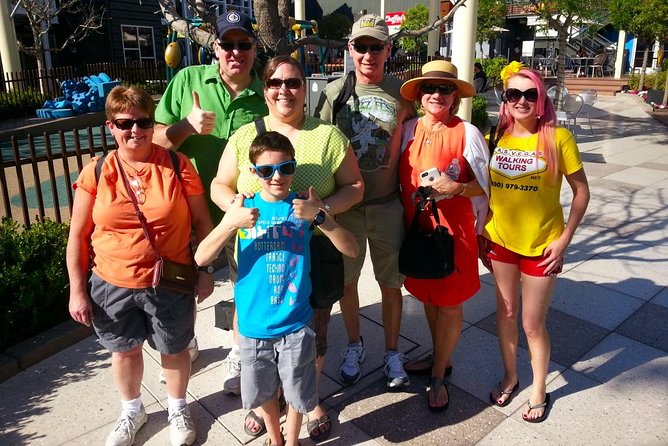
The casino portion is short, but it packs in plenty of names and connections. At the Golden Nugget, the guide covers the property’s relationship with Steve Wynn and its links to earlier Las Vegas operators. You also hear how the casino has retained older elements while adding polished features that appeal to modern visitors.
Binion’s offers a different feel. Its story centers on Benny Binion, a strong personality who helped shape downtown’s gambling culture. The building and its current uses let you see how the area can keep its old character while adding new bars, food, and entertainment.
I like this part because it helps you judge the casinos for yourself. You are not being told that everything old is automatically better. You see how each property has handled survival, renovation, and competition.
The route includes a stop connected with the SlotZilla zip line, where riders launch from the top of a giant slot machine and fly above Fremont Street. You do not have to ride it. The guide explains how the attraction fits into the district’s effort to add new thrills without abandoning its casino identity.
Fremont East: the part many people miss
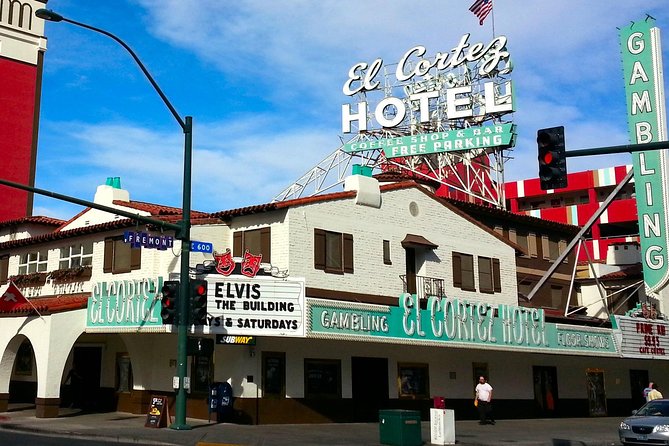
Fremont East is where the tour becomes less about famous casino names and more about city planning. This district was once overlooked and underused. The tour explains how one person’s vision and commitment to the neighborhood helped turn it into a key part of downtown’s renewal.
This is one reason I would take the tour near the start of a Las Vegas visit. The Strip can make the city seem like a collection of giant resorts. Fremont East shows another side: smaller businesses, restored streets, local gathering places, and projects meant to bring regular activity back to downtown.
You also hear about the oldest hotel-casino in Las Vegas, including its links to early mob figures and its ability to keep operating while remodeling and expanding. The property remains a local casino with an old-time character, and it helps connect Fremont East with the earliest years of Las Vegas.
The exact walking pace is described as easy by several people who took the tour, but it is still a two-hour outdoor activity. You will be on your feet, crossing streets, moving through casinos, and walking in the desert heat. Wear comfortable shoes, carry water, and bring sun protection.
One useful detail is the attention paid to mobility. A guide named Kelly was praised for helping a visitor using a four-wheel scooter take part without making the situation awkward. The route is not presented as a formal accessibility tour, so you should still ask ahead about your needs, but the guide’s awareness is encouraging.
Container Park: a practical ending in a creative district
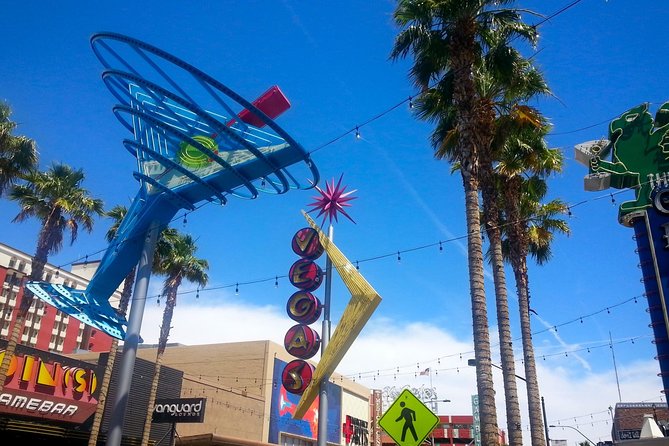
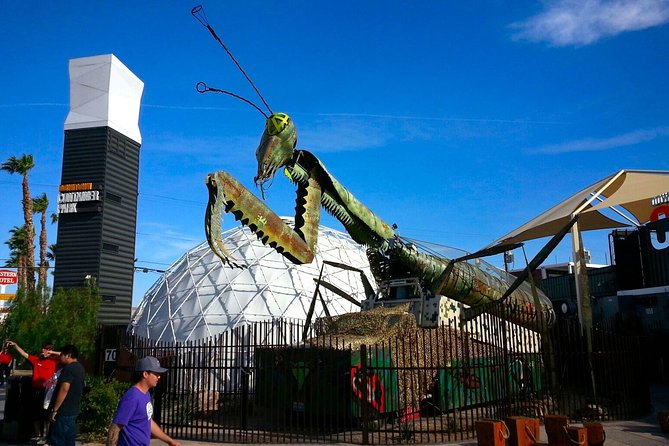
The tour ends at Downtown Container Park on East Fremont Street. This open-air attraction uses recycled shipping containers for shops, dining, and entertainment spaces. It is a fitting final stop because the tour has moved from early railroad-era Las Vegas through casino history and into urban renewal.
You will not spend a long time inside Container Park as part of the formal route. The stop lasts about five minutes, but you finish with enough background to explore it on your own.
That is a smart ending. You are not dropped beside a casino with no idea where to go next. You can look around the shops, consider a meal, and use the restaurant tip sheet and coupons supplied with the tour.
The practical value here is real. One recommendation led a visitor to Carson Kitchen, where the food and drinks were less expensive than comparable places on the Strip. I would treat the tip sheet as a starting point, not a guarantee, but it can save you from making every dining decision by trial and error.
The Pawn Stars add-on and Toy Shack stop
The optional Pawn Stop changes the ending. Instead of finishing at Container Park, you continue to Gold and Silver Pawn at 713 South Las Vegas Boulevard. The add-on includes a visit to the pawn shop associated with the History Channel show Pawn Stars and adds roughly 30 minutes.
The regular route also includes information about Toy Shack, the shop connected with Johnny Jimenez, a toy appraiser known from the show. You may learn about his vintage toy collection and possibly see him for a quick hello or photograph, but that personal encounter is not guaranteed.
The pawn add-on is best for fans of the program or anyone who wants a pop-culture stop. It is not the best choice if you want the tour to finish in the heart of Fremont East. One person found the walk to the pawn shop lengthy after the regular route, so pay attention to the final location and plan your ride afterward.
The standard tour does not return to its starting point. If you drive, you may need a rideshare back to your car. A useful parking tip is the valet at Golden Gate casino, where parking may be free with a tip, though you should confirm current conditions when you arrive.
The guides and the tour’s tone
The strongest part of this experience is the guide. Kelly receives repeated praise for his historical knowledge, storytelling, humor, and willingness to answer questions. Paul is also described as clear and well prepared, and James is praised for making the walk informative and enjoyable.
The tone is not quiet or academic. Guides may use drama and humor to keep children and mixed-age groups interested. That works for most people, especially if you like a guide who performs a little. If you prefer a restrained lecture, the presentation may feel too theatrical.
The guide also shares old photos and small stories that you would not get from a quick online search. One useful strength is the link between facts and places. You hear a story, then see the casino, address, sign, or street where it belongs.
Wireless headsets are included, and each unit is cleaned before the tour. The equipment is helpful in noisy casino areas and under the Fremont canopy. Service animals are allowed, public transportation is nearby, and the group size is capped at 20.
Is $37 a fair price?
At $37 per person, I think the value is good if you want history and orientation rather than a paid attraction with a large admission fee. The tour includes the guide, headset, taxes, tip sheet, and walking route. You are paying for someone to connect the pieces of downtown, not simply to show you a street you could visit for free.
The price is easier to justify if this is your first visit to Fremont Street or your first time seeing downtown beyond the canopy. It can also help solo visitors who want a structured group for part of the day.
The value is weaker if you only want photos, gambling, or the light show. You can see much of Fremont Street independently. The fee makes sense when you care about the stories behind the casinos and the renewal of Fremont East.
Book early if your dates are fixed. This experience is often reserved several weeks ahead, with an average lead time of about 27 days.
Should you book the Fremont Street walking tour?
I would book it if you want to understand Las Vegas beyond the Strip, especially near the beginning of your stay. The tour gives you a useful map of downtown, introduces the major casinos, explains the Fremont canopy, and shows why Fremont East matters.
Choose the standard route if you want a clean two-hour walk ending at Container Park. Add the Gold and Silver Pawn stop if Pawn Stars is a major reason you are interested, and make a plan for the separate ending location.
Skip it if you dislike guided storytelling, cannot manage two hours on foot, or already know downtown Las Vegas well. For most first-time visitors, though, the combination of old casino tales, mob-era lore, neon spectacle, and urban renewal makes this a smart $37 introduction to the city’s original center.
FAQ
How long is the Las Vegas Downtown and Fremont Street walking tour?
The main walking tour lasts approximately two hours. The optional Gold and Silver Pawn stop adds about 30 minutes.
Where does the tour begin?
The tour begins at the Carousel Bar, 1 South Main Street, Las Vegas, near the Plaza Hotel and Casino.
Where does the regular tour end?
The regular tour ends at Downtown Container Park, 707 East Fremont Street, Las Vegas.
Where does the Pawn Stop version end?
The Pawn Stop version ends at Gold and Silver Pawn, 713 South Las Vegas Boulevard, Las Vegas.
Is the Gold and Silver Pawn visit included?
It is included only when you select the Pawn Stop option. It is not part of the regular tour.
Is the tour offered in languages other than English?
No. The tour is offered in English, and conversational English is recommended.
What should I bring?
Wear comfortable walking shoes and bring bottled water and sun protection. A safety waiver must be signed before the tour. Free cancellation is available up to 24 hours before the scheduled start time.
New routes in the USA
- Baltimore Walking Foodie Tour in Fells Point★ 5.0 · 182 reviews
- The Madam’s Curse Walking Ghost Tour★ 4.5 · 103 reviews
- Austin Small Group Morning Walk★ 5.0 · 412 reviews
- Austin Haunted Pub Crawl Walking Tour★ 4.5 · 232 reviews
- Austin Downtown Private Walking Food Tour With Secret Food Tours★ 5.0 · 71 reviews
- Austin Murder Walk★ 5.0 · 310 reviews
- The Ghosts of Austin Walking Tour★ 4.5 · 72 reviews
- Martin Luther King Jr. History Walking Tour★ 5.0 · 687 reviews
Las Vegas Walking Tours, compared.

The Strip’s Celebrity Chefs Tour or Downtown Food Tour
Read our review →
Downtown Las Vegas Food Tour of 6 Iconic Dishes & Hidden Gems
Read our review →
Hoover Dam with Walk On Top Tour and Seven Magic Mountains Stop
Read our review →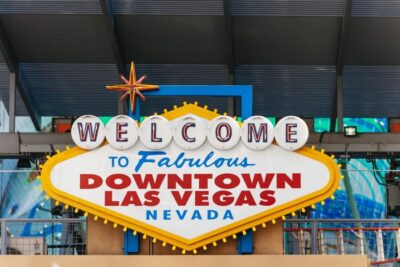
Explore Must-See Spots: Las Vegas Strip Walking Tour
Read our review →
Browse the lists this tour appears in