

Review · USA
French Quarter Walking and Storytelling Tour
The best part of this French Quarter walking tour is its storytelling. You move from the jazz fountain toward Jackson Square while your guide connects grand landmarks, old courtyards, slavery, architecture, music, and the colorful people who shaped New Orleans. I like the small-group format, which lets guides such as Scott, Tim, Libby, and Lesley adjust the pace and answer questions. I also like that the tour looks beyond ghost tales and party streets to the real past of the neighborhood.
The main drawback is the pavement. French Quarter sidewalks are uneven, and two hours on foot can be tiring in New Orleans heat. Bring water, wear sturdy shoes, and expect a historical walk rather than a sightseeing bus ride.
Key points at a glance
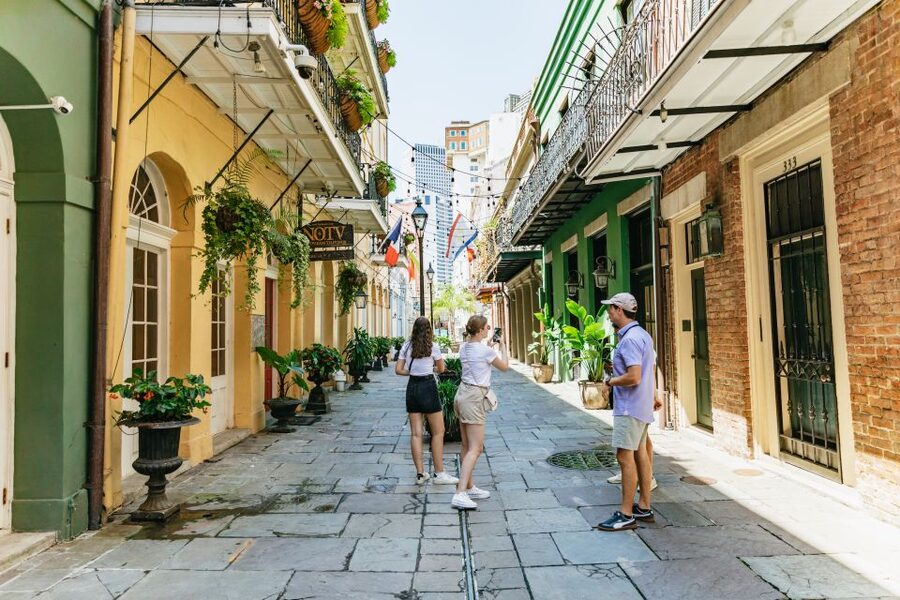
- Starts at the jazz fountain: Meet at Decatur and Dumaine Streets in the French Market district.
- Covers the French Quarter’s essential sights: See St. Louis Cathedral, Jackson Square, the French Market, and the Mississippi River.
- Small groups make a difference: Guides can slow down, answer questions, and shape the talk around your interests.
- Stories go beyond spooky folklore: Expect discussion of slavery, architecture, Creole culture, music, and the city’s complicated past.
- Ends by Jackson Square: You finish in a useful central spot, with suggestions for restaurants, music venues, attractions, and further exploring.
- Good value at $35: Two hours of local interpretation can give your first days in New Orleans much more shape.
Meeting the guide at the French Market
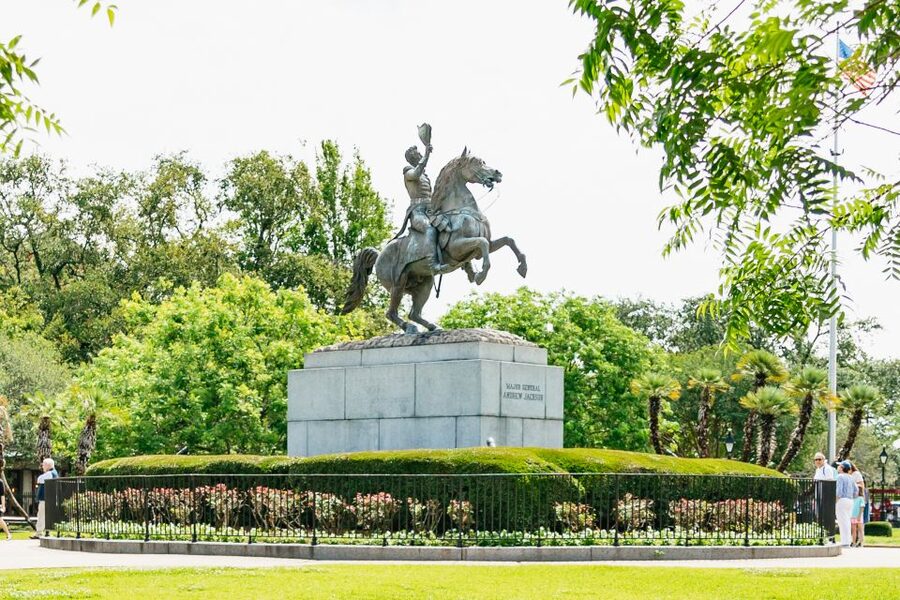
Your tour begins at the jazz fountain at the corner of Decatur and Dumaine Streets. This is a handy starting point in the historic French Market district, close to the river and within easy reach of Jackson Square.
The guide sends a message the night before with a photo, contact details, and directions. That small step matters in the French Quarter, where similar-looking streets, crowds, music, and busy corners can make a first meeting less simple than expected.
Look for a walking tour, not a formal attraction entrance. You will be outdoors for the full two hours, so sun protection and water are practical necessities, especially from April through October. The company recommends bringing water, and I would take that advice seriously.
The tour is offered in English with a live guide. Pets, smoking, luggage, and large bags are not allowed, so this works best when you arrive with a light day bag or no bag at all.
More Walking Tours in the USA:
- History and Hauntings of Salem Guided Walking Tour
★ 5.0 · 14,564 reviews - New Orleans Premier Ghost, Voodoo and Vampire Walking Tour
★ 4.5 · 12,856 reviews - Little Havana Food and Walking Tour in Miami
★ 5.0 · 8,882 reviews
Why the small group improves the walk
The small-group design is one of the tour’s strongest features. A guide can hear your questions, pause when the group needs a closer look, and avoid the stiff, one-size-fits-all rhythm that can make a city walk feel like a lecture.
That flexibility comes through in the guide team. Scott is often praised for tailoring the route and conversation to each group’s interests. Tim is noted for keeping an easy pace while explaining the city clearly. Libby brings humor and energy to the past, while Lesley is valued for her local detail and ability to adapt when construction changes the route. Yvonne and Casey have also led tours praised for strong storytelling and a clear grasp of New Orleans culture.
Group size can vary, but the experience is designed around a more personal outing. One particularly small group had only three people, while another had seven. That matters when you want to ask about a building, stop for photographs, or spend more time on a subject such as music, slavery, architecture, or food.
The tradeoff is simple: a small-group tour may cost more than a free walk or a large public group. At $35 per person, I think the price is fair if you want context rather than just a route between famous landmarks.
From colonial outpost to Creole neighborhood
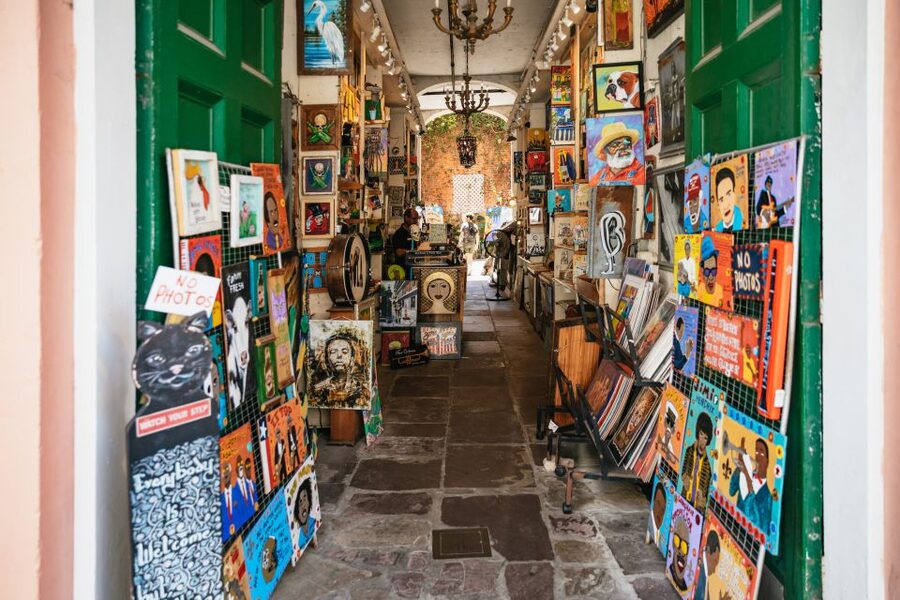
The opening history lesson sets the tone. New Orleans was established as a French colonial outpost in 1718, and the French Quarter grew from that early settlement. Your guide uses the streets and buildings as a timeline, showing how French, Spanish, African, Caribbean, and other cultural influences helped shape the city.
The word gumbo works here in more than one sense. New Orleans culture did not come from a single tradition. The food, language, music, architecture, and social customs of the city formed through contact among many groups, often under harsh and unequal conditions.
A strong part of this tour is its willingness to discuss difficult subjects. You can expect attention to slavery and the people whose labor helped build New Orleans, along with the city’s shifting political and cultural identity. That gives the landmarks more meaning. A pretty balcony is not just a pretty balcony when you understand who lived behind it, who worked there, and how the neighborhood changed.
You will also hear about the characters who made the Quarter famous, both admirable and disreputable. The stories include triumphant figures, eccentric residents, and tawdry personalities. This human scale keeps the tour from becoming a list of dates and architectural labels.
The French Quarter’s 18th and 19th century streets
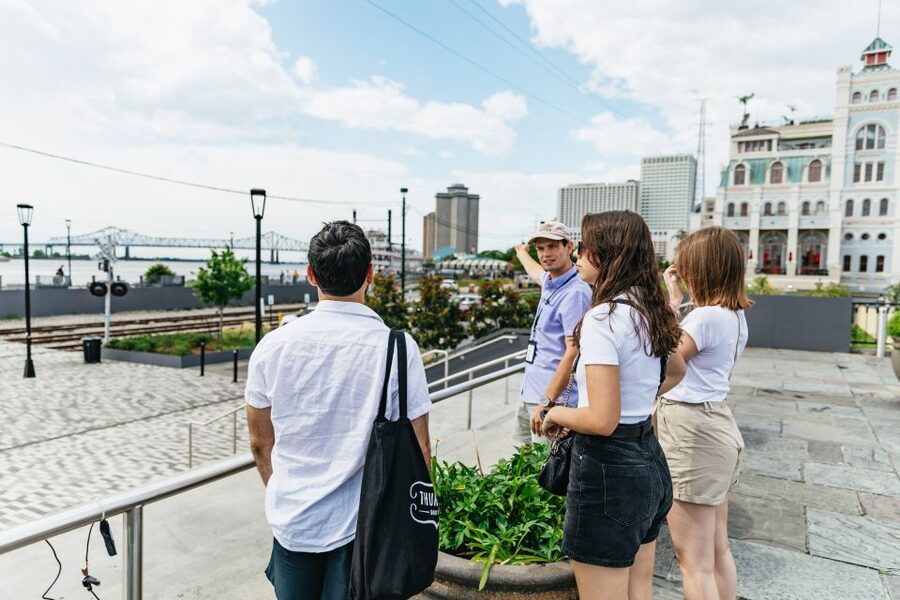
Walking through the Quarter gives you the setting that no indoor history talk can match. You pass old buildings, narrow passages, balconies, courtyards, and streets where music often spills into the air. The tour points out details you might otherwise pass without noticing.
Many visitors arrive knowing the French Quarter as a nightlife district. This walk adds the older, quieter layers. You will spend time among 18th and 19th century buildings where the Creole character of New Orleans remains visible in the street plan, façades, courtyards, and mix of public and private spaces.
The hidden courtyards are especially useful to see with a guide. From the street, the Quarter can look like a solid wall of doors and balconies. Behind those walls are interior spaces that help explain how these buildings worked and why the neighborhood feels different from a typical American city block.
The tour does not promise entry into every building or courtyard. The value is in learning where these features are, how they fit into the neighborhood, and what to look for when you continue exploring on your own.
Same streets, a different guide:
- Chicago: Gangsters and Ghosts Walking Tour
★ 5.0 · 7,155 reviews - Boston: Freedom Trail History Small Group Walking Tour
★ 5.0 · 6,450 reviews - Historic Charleston Guided Sightseeing Walking Tour
★ 5.0 · 6,216 reviews - New Orleans Food Walking Tour of the French Quarter with Small-Group Option
★ 5.0 · 6,118 reviews
The French Market and the Mississippi River
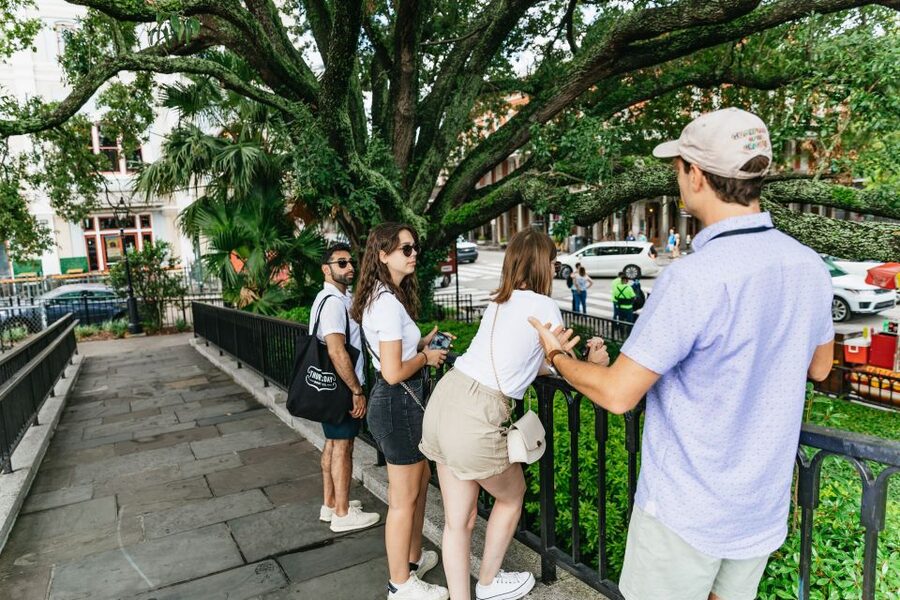
The French Market is one of the key early stops or reference points near the meeting area. Its age, nearly 300 years, gives you a useful link between the colonial settlement and today’s commercial Quarter.
A guide can help you separate the market’s historical importance from its modern role. You are not simply looking at stalls or passing through on the way to Jackson Square. You are seeing a place tied to the daily life and trade of the city across several centuries.
The Mississippi River is another important anchor. New Orleans makes more sense when you understand its relationship with the river, trade, movement, and the wider Gulf region. The river view also gives the walk a breathing space after the tighter streets of the Quarter.
You will not spend the entire tour at the river, and this is not a cruise or waterfront excursion. Think of the stop as part of a wider explanation of why the city grew where it did and how the river helped make New Orleans a major place of exchange.
St. Louis Cathedral and Jackson Square
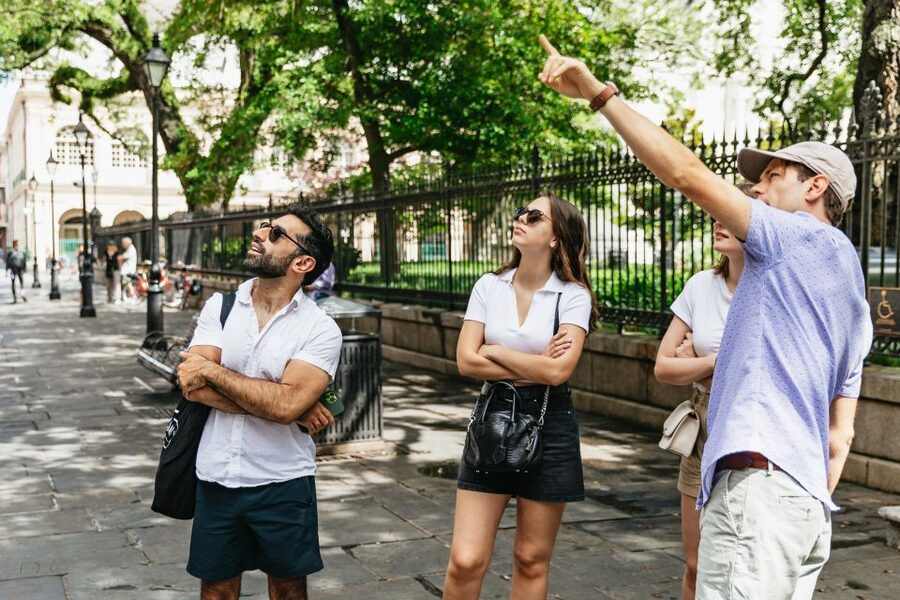
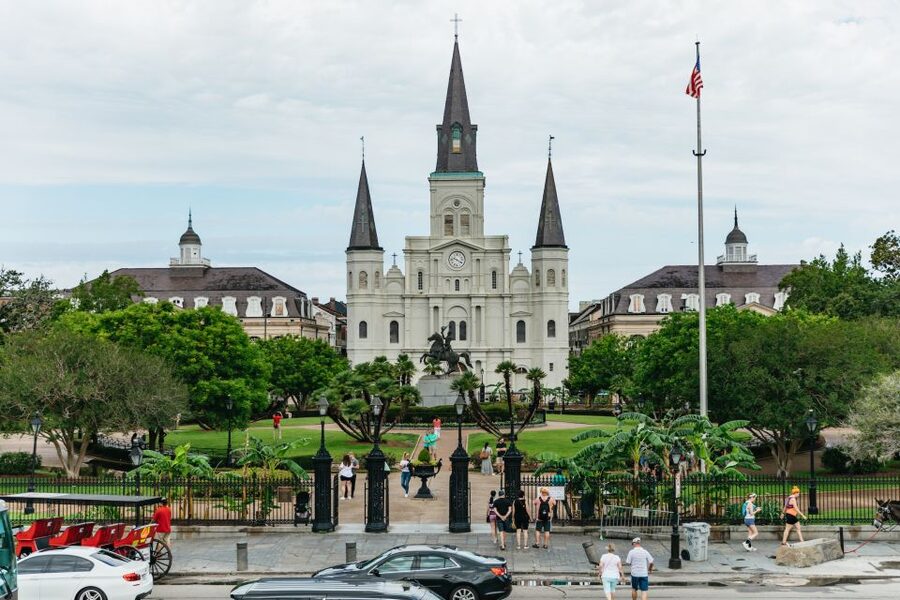
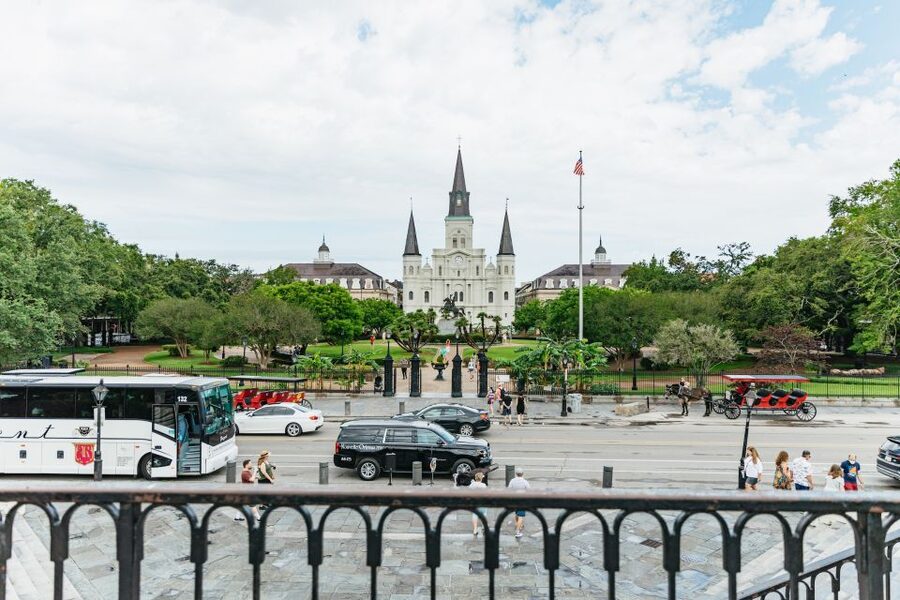
St. Louis Cathedral and Jackson Square provide the tour’s most recognizable views. The cathedral is the visual centerpiece of the square, and the surrounding buildings give you one of the clearest snapshots of the Quarter’s public face.
Your guide explains the setting rather than simply pointing and moving on. That is where the tour’s storytelling style pays off. You get a sense of how religion, government, public gatherings, art, tourism, and daily life overlap in this part of New Orleans.
Jackson Square is also a strong ending point because it leaves you in the middle of the action. From here, you can continue walking through the Quarter, seek out music, find a meal, or use your guide’s suggestions to plan the rest of the day.
The square can be busy, and the streets around it are not always calm or easy underfoot. Still, the location gives the tour a satisfying finish. You have seen major sights, learned how they connect, and received advice for making better use of your remaining time.
Storytelling that keeps two hours moving

A city walk can fail when facts pile up without a human thread. This tour aims for the opposite. The guide uses characters and unusual episodes to make the neighborhood easier to remember.
Scott has been praised for telling stories with warmth and care for the city. Libby is often singled out for turning historical material into something funny, clear, and lively. Lesley brings archaeological, cultural, and geographical detail. Tim’s steady pace suits people who want plenty of information without being hurried from corner to corner.
The stories are not limited to supernatural legends. That will appeal to you if you want the actual development of the French Quarter rather than a parade of haunted-house claims. The tour can still be entertaining, but its focus is on people, place, culture, and the forces that shaped New Orleans.
The result is a useful introduction for first-time visitors. You learn enough to recognize the Quarter’s major themes, then you can return to particular streets with better questions and a sharper eye.
Heat, pavement, and accessibility
The French Quarter is compact, but compact does not mean easy walking. Sidewalks can be uneven, and some stretches are difficult to navigate. Comfortable walking shoes are essential.
The tour is listed as wheelchair accessible, but the practical warning about the pavement should not be ignored. A sturdy wheelchair is recommended. If you use a wheelchair or have limited mobility, consider contacting the provider before booking so you can discuss the current route and street conditions.
Weather changes the feel of the walk. Summer heat can be intense, and one guide made a point of stopping in the shade during a particularly hot outing. That kind of adjustment is useful, but it does not replace water, suitable clothing, and realistic expectations.
The two-hour length is well judged for many people. It is long enough to cover the major sights and themes, but short enough to leave room for lunch, a museum, music, or independent exploring. If you tire easily, remember that the tour is still a continuous outdoor walk even when the guide pauses for stories.
What $35 gets you
At $35 per person, this is not the cheapest way to walk through the French Quarter. You can explore the streets for free, read signs, and take in the architecture on your own.
The fee pays for interpretation, structure, and local judgment. You get a planned route, a live English-speaking guide, stories connected to the places around you, and recommendations for the rest of your stay. For a first visit, that can save time and help you avoid treating the Quarter as only a party district.
The value is strongest when you ask questions. Small groups give you a better chance to ask about food, music, buildings, slavery, culture, or the broader city. The guides also offer suggestions for restaurants, attractions, and jazz venues at the end.
One practical improvement would be a written list of recommendations. A guide can provide many ideas in a short conversation, but you may not have time to note them all. Bring your phone or a small notebook if you want to keep track.
A 4.7 rating from 1,251 reviews suggests a consistently strong experience, and the most repeated praise centers on the guides, the small groups, the clear pacing, and the quality of the stories. Those are the parts that make the price easier to justify.
Who should book this French Quarter tour
I would choose this tour early in a New Orleans visit. It gives you a useful framework before you spend several days wandering, eating, listening to music, and returning to the places that catch your interest.
It suits you best if you:
- Want history connected to actual streets and buildings
- Prefer a small group to a large guided crowd
- Enjoy stories about people as much as dates
- Want to ask questions and shape the discussion
- Need an easy introduction to the French Quarter
- Appreciate restaurant, music, and sightseeing suggestions
It may not suit you if you dislike walking on uneven pavement, want extensive indoor access, or prefer a fast list of landmarks with little conversation. It also is not designed as a food tour, a ghost tour, or a nightlife tour.
Free cancellation up to 24 hours ahead and the option to reserve now and pay later make planning easier. The tour is offered in English, and a contact message arrives the night before with the meeting details.
Should you book it?
Yes, if you want the French Quarter to become more than a backdrop for photographs and drinks. The strongest reason to book is the guide quality. Scott, Tim, Libby, Lesley, Yvonne, and Casey are praised for clear explanations, humor, patience, and a real connection to New Orleans.
Book it near the start of your stay, wear sturdy shoes, and bring water. If you want a short, personal introduction to the Quarter’s buildings, music, cultures, conflicts, and characters, $35 is a sensible investment.
FAQ
Where does the French Quarter walking tour meet?
The meeting point is the jazz fountain at the intersection of Decatur and Dumaine Streets in the French Market district of New Orleans.
How long does the tour last?
The walking tour lasts two hours.
Which sights are included?
The route includes views of St. Louis Cathedral, Jackson Square, the French Market, and the Mississippi River. It also includes old courtyards, an almost 300-year-old convent, and other notable buildings in the French Quarter.
What language is the tour offered in?
The tour is conducted in English with a live guide.
Is the tour wheelchair accessible?
The activity is listed as wheelchair accessible, but the French Quarter has uneven sidewalks. A sturdy wheelchair is recommended.
What should I bring?
Bring water, especially from April through October, and wear comfortable walking shoes suitable for uneven pavement.
Can I cancel the booking?
You can cancel up to 24 hours in advance for a full refund. The tour also offers a reserve-now-and-pay-later option.
New routes in the USA
- Baltimore Walking Foodie Tour in Fells Point★ 5.0 · 182 reviews
- The Madam’s Curse Walking Ghost Tour★ 4.5 · 103 reviews
- Austin Small Group Morning Walk★ 5.0 · 412 reviews
- Austin Downtown Private Walking Food Tour With Secret Food Tours★ 5.0 · 71 reviews
- Austin Murder Walk★ 5.0 · 310 reviews
- Austin Haunted Pub Crawl Walking Tour★ 4.5 · 232 reviews
- The Ghosts of Austin Walking Tour★ 4.5 · 72 reviews
- Martin Luther King Jr. History Walking Tour★ 5.0 · 687 reviews
USA Walking Tours, compared.
History and Hauntings of Salem Guided Walking Tour
Read our review →
New Orleans Premier Ghost, Voodoo and Vampire Walking Tour
Read our review →
Freedom Trail History Small Group Walking Tour
Read our review →
Historic Charleston Guided Sightseeing Walking Tour
Read our review →
New Orleans Food Walking Tour of the French Quarter with Small-Group Option
Read our review →
St. Louis Cemetery No. 1 Official Walking Tour
Read our review →Browse the lists this tour appears in