
Review · DRESDEN
Dresden: Shared Small Group Walking Tour in English
Dresden’s Old Town is a compact stage set of grand churches, royal buildings, opera houses, and river views, but the real interest lies in how much of it had to be rebuilt. This two-hour walk connects those pieces through stories of rulers, war, music, destruction, and renewal. The Frauenkirche and Royal Palace are not just pretty façades here; they become clues to Dresden’s complicated past.
I like the route’s tight focus and its finish at Neumarkt, where you can sit down for coffee and cake while the information is still fresh. I also like the guides’ practical approach. Laura, Wolfgang, Karen, Marion, and others are praised for clear explanations, humor, old photographs, and useful advice about what to see next. The main drawback is equally clear: you do not enter ticketed attractions, and the tour stays within the historic center rather than covering Neustadt or more distant parts of Dresden.
Key points to know before you book
- A compact route with major sights: Schlossplatz, Brühl’s Terrace, Theaterplatz, the Zwinger, Dresden Castle, Fürstenzug, and Neumarkt all fit into two hours.
- The city’s destruction and rebuilding are central themes: The guide links Dresden’s Baroque glory with its wartime devastation and later reconstruction.
- Semper Opera adds a strong music focus: Theaterplatz is more than a photo stop, especially if Dresden’s musical tradition interests you.
- The tour is exterior-based: Buildings are viewed from outside, with possible access to open courtyards at the Royal Palace and Zwinger when open.
- Neumarkt is a useful finish: You get time to pause, eat, enjoy traditional coffee and cake, and plan the rest of your day.
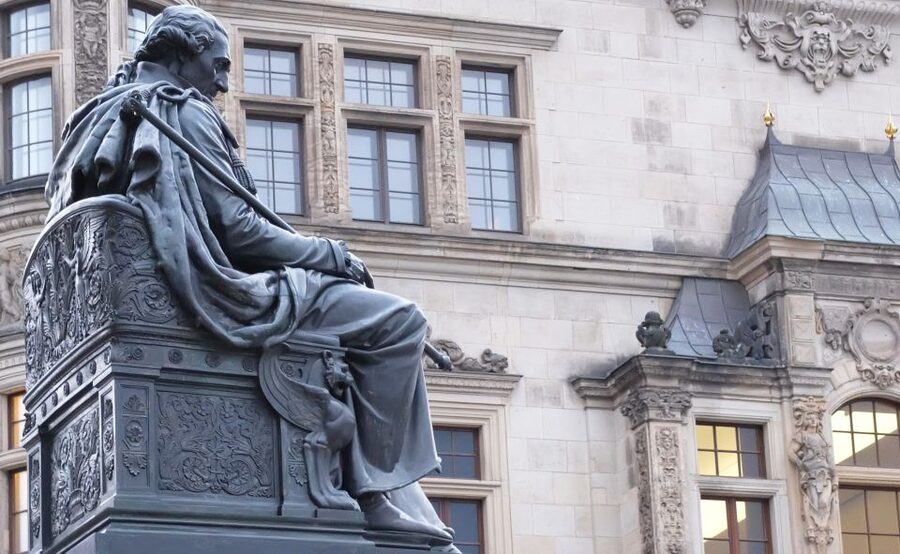
- The meeting point needs care: Look for the seated statue of King Friedrich August at Schlossplatz, not a standing figure or an equestrian statue.
A strong first look at Dresden’s Old Town
At $29 per person, this is a sensible way to get your bearings before paying for museums or palace rooms. You are buying two hours of live guidance, not admission tickets, so the value depends on how much you want context and orientation. I find that useful in Dresden, where grand buildings can blur together until someone explains who built them, why they mattered, and what happened to them.
The small-group format should make it easier to hear the guide and ask questions than on a large coach tour. The guides are English-speaking, and the feedback on Laura, Wolfgang, Karen, Marion, and other members of the team points to a consistent strength: they explain the past in a lively, personal way rather than simply reciting dates.
Still, keep your expectations in the right place. This is a walking introduction to the center, not a full city tour and not a museum visit. You will see the main sights from the outside, and the route does not include Neustadt.
More Small-Group Walking Tours in Germany:
- Discover Munich 2-Hour Small Group Walking Tour
★ 4.6 · 491 reviews - Hamburg Reeperbahn Small-Group Walking Tour
★ 4.0 · 269 reviews - Small Group Walking Tour: “Wild Kreuzberg”
★ 4.8 · 199 reviews
Schlossplatz, where Dresden’s story begins
The meeting point is Schlossplatz, the broad square near the Elbe and Augustus Bridge. Find the statue of King Friedrich August seated on his throne. The instruction is worth taking seriously: look for a seated king, not a ruler standing up and not a king on horseback.
This is a good starting point because several layers of Dresden meet here. The Elbe is close by, the Royal Palace rises around the square, and church towers and ceremonial buildings frame the view. The guide begins by explaining how Dresden grew from a small fishing village into a court city shaped by rulers and royal ambition.
Expect about ten minutes here. That may sound brief, but it is enough to establish the basic story before the walk moves into the denser group of monuments. I especially like this kind of opening because it gives you a reason to care about the buildings ahead. Dresden was not simply decorated with palaces and churches. Its rulers used architecture to display money, authority, taste, and political importance.
Brühl’s Terrace and the Elbe views

The route includes Brühl’s Terrace, set high above the Elbe. It is one of the best places on this walk to pause and look outward rather than upward. You get a photo stop and a short explanation of the terrace and its position beside the river.
The views help put the Old Town in context. Dresden’s historic center is not an isolated cluster of monuments. The river, bridge, and broad open space explain why this area has long been important to the city’s appearance and movement.
The stop lasts about ten minutes, so do not expect a long riverside stroll. If you want your own quiet time with the view, return later. The tour’s purpose here is to connect the setting with the city’s story and keep the route moving.
Theaterplatz and the musical side of Dresden
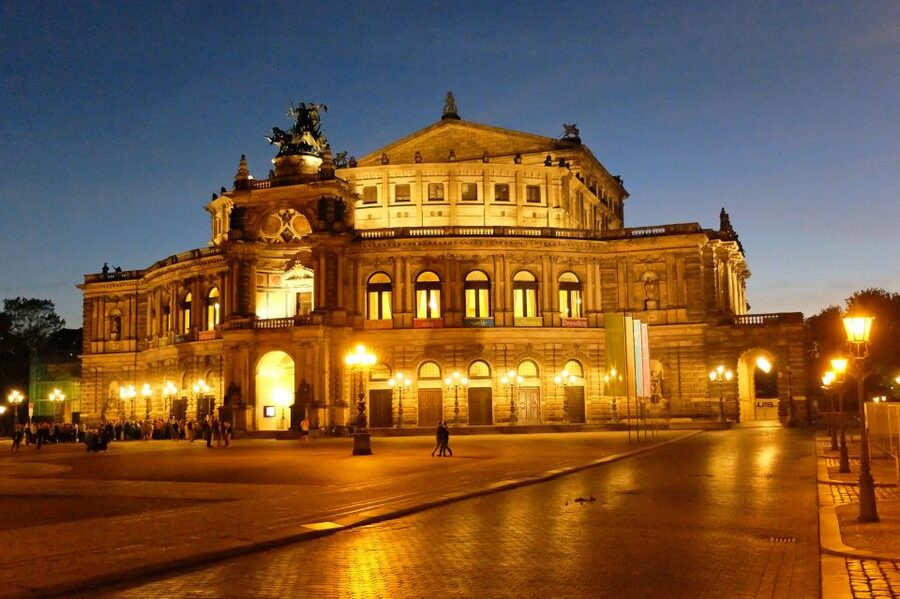
From the riverfront, the walk continues toward Theaterplatz, dominated by the Semper Opera. This is one of the route’s most rewarding stops for anyone interested in music, architecture, or court life.
The guide brings out Dresden’s musical identity through the opera house and the people connected with it. You will hear about the building’s place in the city, as well as the ruler and royal culture behind Dresden’s grand public spaces. The result is more useful than simply being told that the opera is famous. You begin to see Theaterplatz as a carefully made expression of power and taste.
The stop includes sightseeing, a photo opportunity, and guided commentary. Since the tour does not include entry, you will need a separate visit if you want to see the opera’s interior or attend a performance. That is not a fault, but it matters when comparing this walk with a ticketed music or architecture tour.
More Walking Tours in Germany:
- Discover Berlin Half-Day Walking Tour
★ 5.0 · 9,624 reviews - Berlin City walk Government District and Places of Democracy
★ 4.7 · 8,467 reviews - Berlin: Third Reich & Cold War Guided Walking Tour
★ 4.9 · 8,378 reviews - Munich: Third Reich & WWII Walking Tour
★ 4.6 · 6,181 reviews
The Zwinger, Dresden’s display of wealth
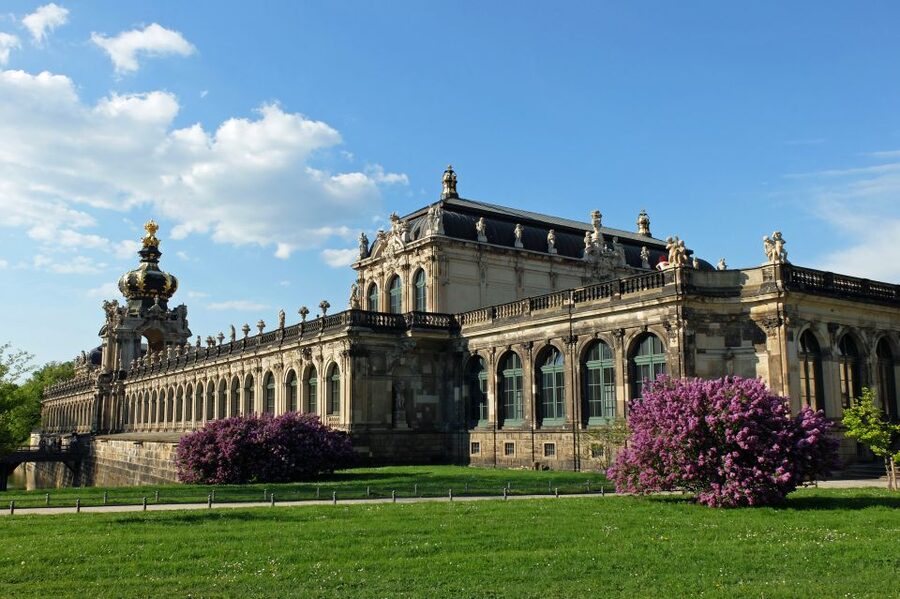
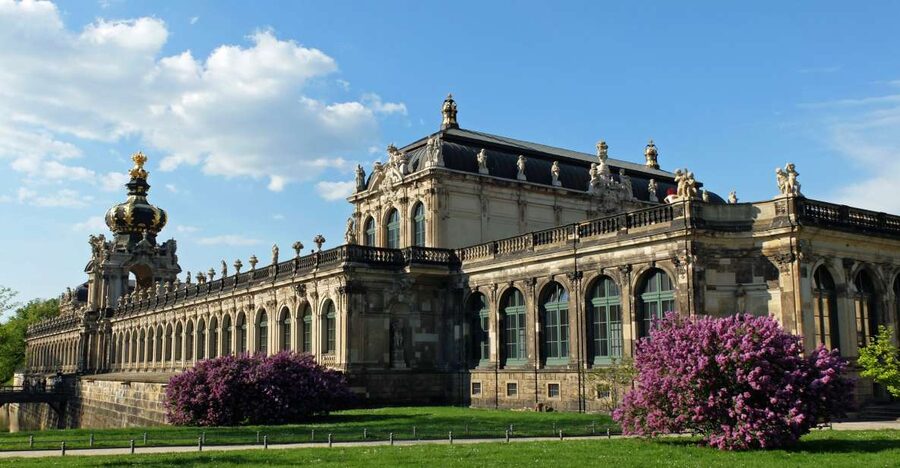
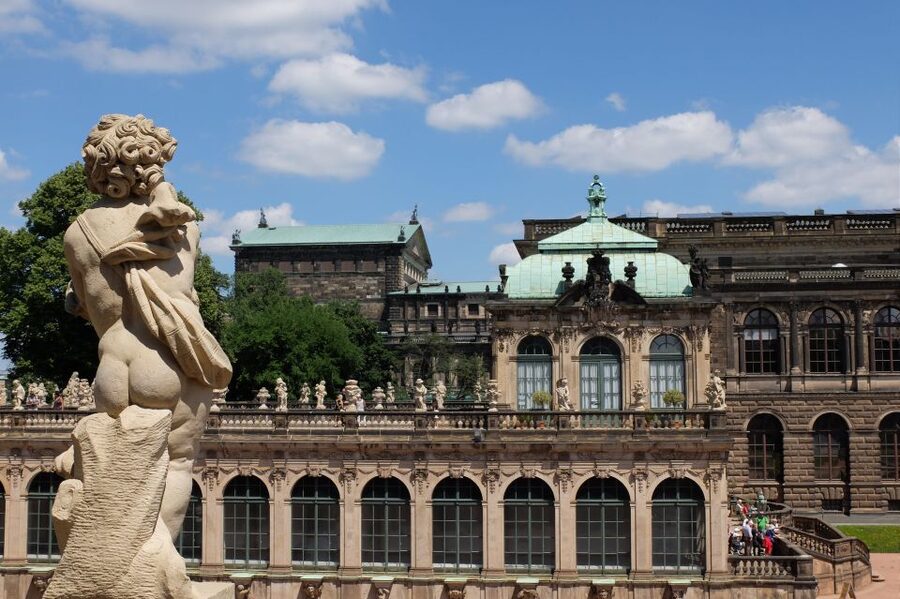
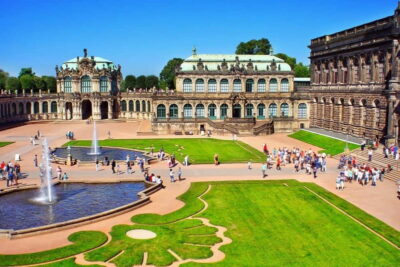
The Zwinger is one of the walk’s big visual rewards. Its ornate Baroque forms and open courtyards make it easy to understand why a ruler would use the complex as a public display of wealth and power.
The guide explains the ruler who commissioned it and the ambitions behind the design. You get around fifteen minutes here, including a photo stop and sightseeing. If the courtyard areas are open, the group may enter them, but ticketed interiors are not part of the experience.
I like the way this stop works in a short tour. You receive enough background to recognize the Zwinger’s purpose, then you can return later for more time. The complex contains more than you can absorb in a few minutes, and anyone interested in art or palace architecture should plan a separate visit rather than expect the walking tour to cover it all.
Dresden Castle and the Royal Palace courtyards
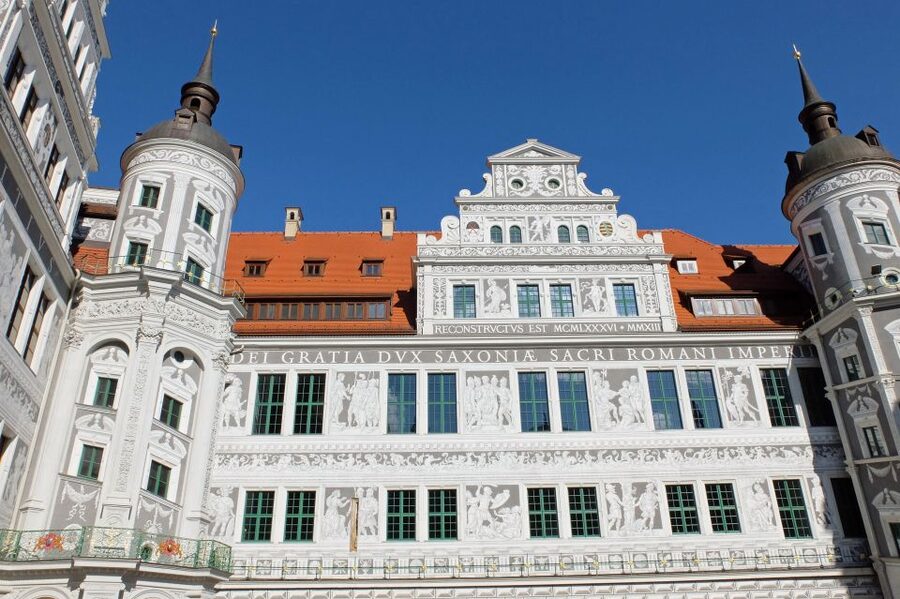
The route then passes through the area of Dresden Castle, also called the Royal Palace. The castle connects the city’s royal past with its rebuilt present, and the open spaces provide a chance to see the architecture without stopping for a museum admission.
The tour description allows for the open-access courtyards of the Royal Palace when they are open, but it does not promise entry into ticketed rooms. That distinction is important. Dresden Castle contains major collections, but this walk gives you the outside structure, the courtyards when available, and the guide’s explanation.
You will spend about fifteen minutes in this part of the route. The guide may use photographs of earlier Dresden to show how the city looked before wartime destruction and reconstruction. Several guides, including Marion and Karen, are praised for using historic images to make the changes easier to understand.
Fürstenzug and the footsteps of dukes
The walk continues through the former royal quarter toward the Royal Stables and the Fürstenzug. This section feels less like a single grand square and more like a sequence of connected spaces, which is useful because it shows how the court operated within the city.
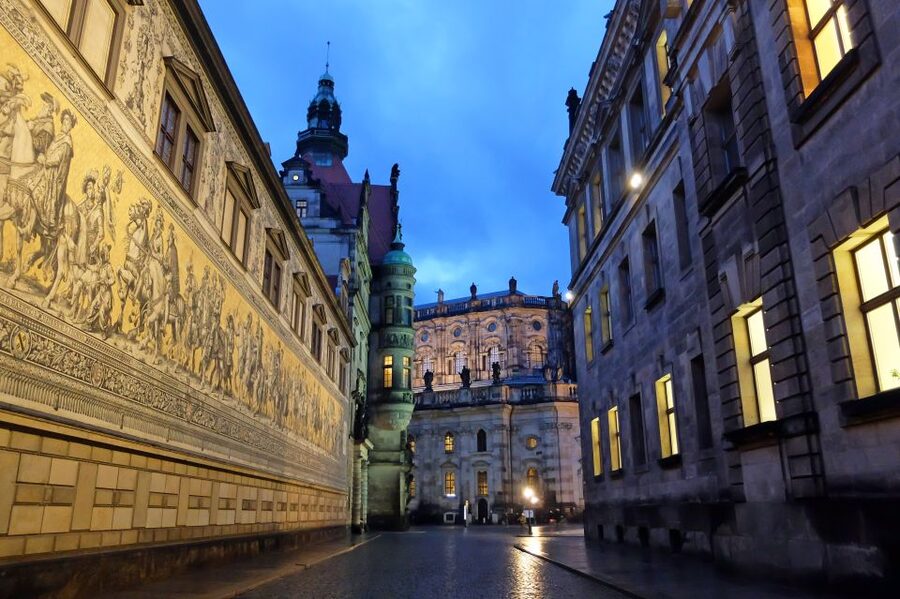
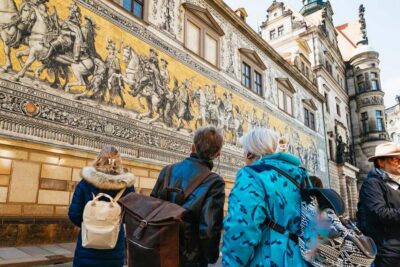
The Fürstenzug, or Procession of Princes, is a key visual stop. The guide discusses the rulers shown there and the role of the royal line in Dresden’s identity. You will have about ten minutes for the mural and nearby sights.
This is also where the storytelling approach matters most. Dresden’s past includes ambition, family politics, love, betrayal, and war. The guide uses those human details to keep the royal names from becoming a list of difficult German words.
Frauenkirche and the meaning of rebuilding
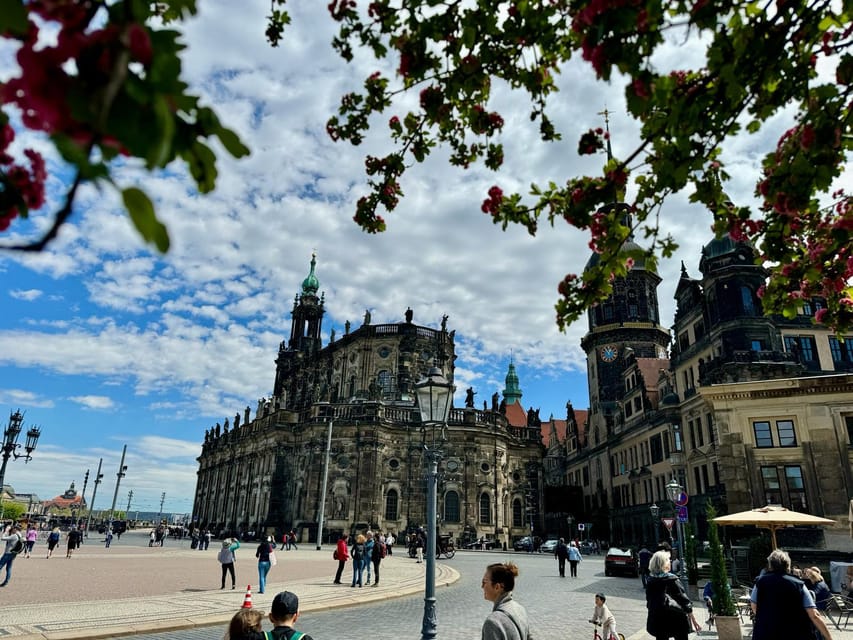
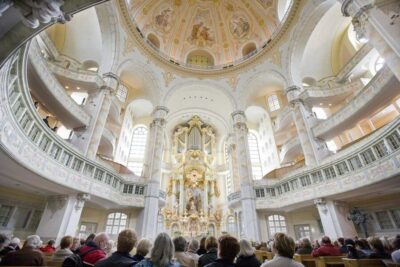
The Baroque Frauenkirche is one of Dresden’s essential sights, and the route reaches it near the end. Its great dome and carefully restored appearance can make it seem untouched, so the guide’s explanation of destruction and reconstruction adds necessary depth.
You see the church from outside. The tour does not include entry, and it does not promise time for interior viewing. If you want to go inside, plan that separately and check opening arrangements for your visit.
The church is especially important because it represents both Dresden’s former beauty and its postwar rebuilding. The walk treats the building as part of a larger story rather than as a single postcard image. That approach is one of the tour’s strongest features. Guides are praised for explaining Dresden from its medieval and Slavic beginnings through the modern era, helping you understand why reconstruction matters so much here.
Neumarkt, coffee, cake, and useful advice
The tour ends at Neumarkt, a square that represents both Dresden’s original city center and its new beginning. You receive about fifteen minutes for a photo stop, sightseeing, and free time.
This is a practical place to finish. You can sit down for lunch, order traditional coffee and cake, or continue exploring on your own. Your guide can point out places to eat and suggest what to do next, which is often more useful than a generic list handed over at the start.
There is also a 10 percent discount at Restaurant Anna im Schloss, located in one of the oldest rooms of the Dresden Royal Palace. To use it, show your mobile ticket and identify See My Dresden to the restaurant. Ask the guide to point out the location and suggest a local cake or delicacy.
Neumarkt also puts you close to the Frauenkirche and Brühl’s Terrace, so you can easily revisit the sights that caught your attention. I would schedule this tour early in your Dresden stay, then use the rest of the day for the museum or palace interiors that you decide are worth the admission fee.
What the guide experience is like
The quality of this tour depends heavily on the person leading it, but the available guide feedback is unusually consistent. Laura is praised for her warmth, humor, and ability to answer questions. Wolfgang is described as friendly and strong at explaining Dresden’s story in chronological order. Karen receives repeated praise for her energy, clear presentation, and affection for the city.
Marion is noted for detailed background and historic photographs, while other guides such as Doris, Seema, Anke, and Leo are praised for making the walk engaging and easy to follow. That range suggests a team with different personalities, but a shared interest in Dresden.
A useful detail is the guide’s ability to adjust. One guide slowed down for a participant who needed English spoken more slowly and paid attention to a person with special needs. Another extended the tour beyond two hours. You should not assume every departure will run long, but the experience appears to allow room for questions when time and group size permit.
How much walking and time should you expect?
The route lasts two hours and covers the historic center on foot. You should wear comfortable shoes and dress for the weather. The route includes narrow cobbled streets, open squares, and a terrace above the Elbe, so this is not a sit-down sightseeing experience.
The stops are close together, which makes the tour efficient. One consideration is that the compact route can feel limited if you want a broad survey of Dresden. You will not visit Neustadt, and the walk does not range through the city beyond the main Old Town sights.
The tour is listed as wheelchair accessible. If you have particular mobility concerns, it is still sensible to ask about the conditions on your chosen departure, especially because the route includes cobbled streets and historic public spaces.
Who should book this Dresden walk?
I would recommend it to first-time visitors who want a clear introduction before choosing which interiors to visit. It is also a good fit for anyone who enjoys history told through people and events rather than architecture alone.
The tour suits English-speaking visitors who want a live guide, a small-group setting, and a practical finish near cafés and restaurants. Families and mixed-age groups may appreciate the short stops and visual variety, though the subject matter includes war, political power, and destruction.
I would choose a different format if your main aim is to enter museums, tour the Semper Opera, or explore both sides of the Elbe. This walk shows the main Old Town sights, but it is not a substitute for ticketed visits or a full citywide tour.
At $29, the price is fair because it combines the major monuments with a guide who can explain their connections. The 10 percent restaurant discount is a modest extra, not the reason to book. The real value is the time you save sorting out Dresden’s story on your own.
Should you book it?
Book this tour if you want a well-paced introduction to Dresden’s historic center, especially if you plan to return to the palace, Zwinger, Frauenkirche, or museums afterward. The praised guides add the most value, turning a procession of handsome buildings into a story about ambition, loss, music, and rebuilding.
Skip it if you want extensive walking beyond the center or guaranteed entry to historic interiors. For most first visits, though, this is a practical two-hour start, with a useful ending at Neumarkt and enough local advice to shape the rest of your day.
FAQ
Where does the Dresden walking tour begin?
It begins at Schlossplatz, the square near the Elbe and Augustus Bridge. Look for the statue of King Friedrich August seated on his throne.
Where does the tour end?
The tour ends at Neumarkt, close to the Frauenkirche and Brühl’s Terrace.
How long does the tour last?
The scheduled duration is two hours.
What language is the tour in?
The live tour guide speaks English.
Does the tour include entry to the buildings?
No. Ticketed areas are not included, and buildings are generally viewed from the outside. The open courtyards of the Royal Palace and Zwinger may be visited if they are open.
Is Neustadt included?
No. The route focuses on Dresden’s historic Old Town, or Altstadt.
Is the tour wheelchair accessible?
Yes, the activity is listed as wheelchair accessible.
What should I bring?
Bring comfortable shoes and clothing suitable for the weather. You will be walking outdoors for two hours.
Can I use the restaurant discount after the tour?
Yes. The ticket includes a 10 percent discount at Restaurant Anna im Schloss. Show your mobile ticket and identify See My Dresden when you visit.
New routes in Germany
- Munich: Walking Tour Old Town and Viktualienmarkt★ 4.7 · 839 reviews
- Stuttgart: Guided Ghost Walking Tour★ 4.5 · 867 reviews
- Stuttgart: Private Guided Circular City Walk★ 4.7 · 129 reviews
- Stuttgart: Old Town Highlights Guided Walking Tour★ 4.2 · 101 reviews
- Stuttgart: City Highlights – Guided Walking Tour★ 4.7 · 189 reviews
- Hamburg: Private Tour Red Light District Walking Tour★ 4.7 · 227 reviews
- Small Group Walking Tour: “Wild Kreuzberg”★ 4.8 · 199 reviews
- Sachsenhausen Memorial: Walking Tour from Berlin★ 4.7 · 132 reviews
Dresden Walking Tours, compared.
Walking Tour with a Night Watchman including a Meal
Read our review →
Guided Walking Tour and Chocolate Museum Ticket
Read our review →

Neustadt District Street Art Guided Walking Tour
Read our review →
Browse the lists this tour appears in