
Review · DRESDEN
Dresden Old Town – Guided Walking Tour in English
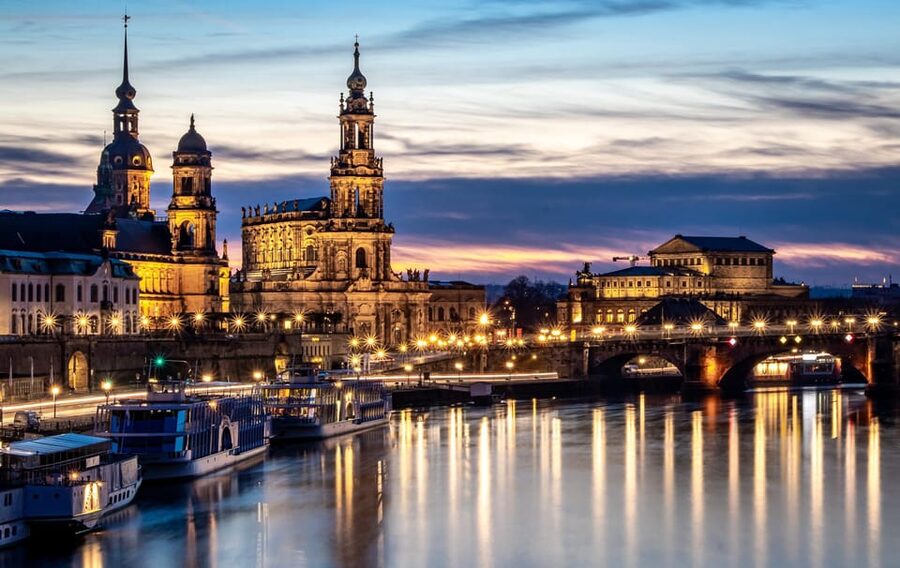
Dresden’s Old Town is a lesson in how a city can be destroyed, rebuilt, and still feel tied to its past. This 2.5-hour walk connects the baroque monuments with the harder story of Nazi rule, World War II, and the careful reconstruction that followed. I especially like the way the tour links Dresden’s Germanic and Slavic roots, and how guides such as Nicolo, Nikolai, and Dominica use humor to keep a long history moving.
I also like the route’s strong opening and finish. You begin at Neumarkt and Frauenkirche, then pass royal buildings, grand churches, public squares, and the Elbe-side Brühl’s Terrace before ending near the Zwinger. The main drawback is simple: it is a fairly long walk with no transport and, according to one useful piece of feedback, no planned toilet stop. Arrive ready to stay on your feet.
Key points to know before booking
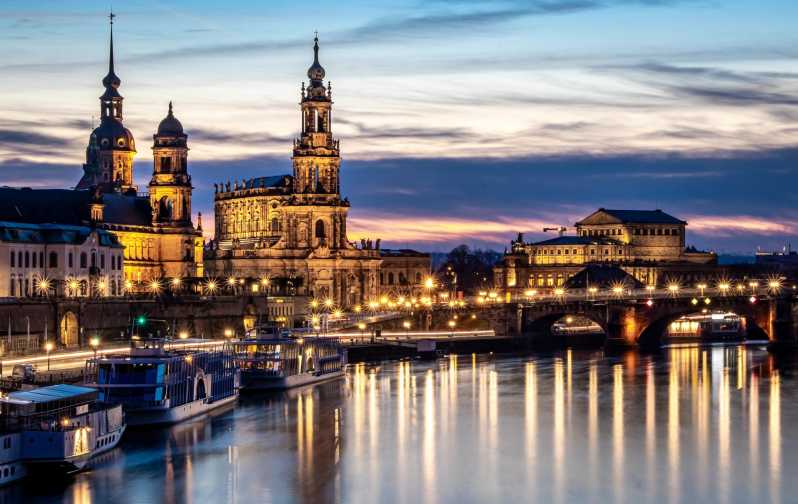
- Dresden’s rebuilt center is the central story: You see monuments that look centuries old but were reconstructed after the city’s wartime destruction.
- The route covers the major Old Town sights: Frauenkirche, Fürstenzug, Dresden Castle, Hofkirche, Semperoper, Brühl’s Terrace, and Zwinger Palace all feature.
- The history reaches beyond Dresden: Your guide connects the city to Bohemian, Polish, Sorbian, Saxon, and wider European history.
- The guides are a major strength: Nicolo, Nikolai, Dominica, James, and others are praised for clear storytelling, humor, and strong command of the subject.
- Plan for more than two hours on foot: The listed duration is 2.5 hours, but some tours have run closer to three hours.
- The $35 price covers the reservation and guide payment: This is a scheduled English tour rather than a truly free walk, despite the pay-as-you-wish format.
Why Dresden needs a walking tour
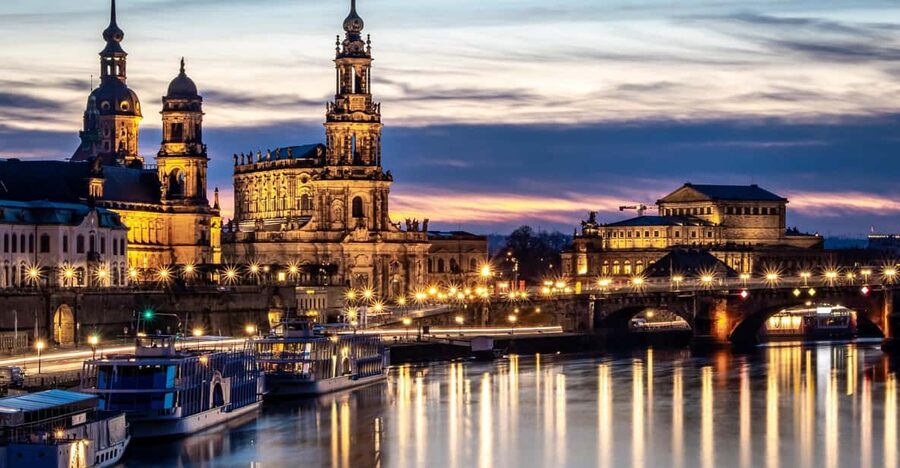
Dresden can look easy at first glance. The grand buildings gather close together, the streets are manageable, and many sights sit around a few broad squares. But the city’s appearance raises a basic question: how much of this is old, and how much was rebuilt?
That question gives this walk its purpose. Dresden began as a small Slavic settlement and grew around a castle in the 13th century. Its position near the Elbe helped it become a trading center, while silver and lead from the nearby Rudavy Mountains added to its wealth.
By the late 15th century, Dresden had become the seat of Saxony’s prince-electors. Its biggest transformation came in the early 18th century, when the Wettin rulers also became Kings of Poland and Grand Dukes of Lithuania. Dresden then took on a grand courtly character, with palaces, churches, formal squares, and elaborate public buildings.
Your guide uses the buildings to make that timeline clear. Instead of treating each monument as an isolated photo stop, the tour explains why Dresden became so ornate and why its rulers wanted the city to look powerful.
The Elbe also gives the story a useful regional angle. It is often described as a dividing line between Germanic and Slavic cultures, but Dresden’s history is better understood as a meeting point. The city’s name has links that sound familiar in Czech, Slovak, Polish, and Sorbian, and the tour uses that background to place Dresden in Central Europe rather than viewing it only as a German city.
More Old Town Walking Tours in Germany
- Nuremberg: Old Town Guided Walking Tour
★ 4.6 · 2,416 reviews - Munich: Old Town & Viktualienmarkt City Walk in German
★ 4.7 · 2,304 reviews - Heidelberg: Walking Tour of the Old Town
★ 4.6 · 1,742 reviews
Starting at Neumarkt and Frauenkirche
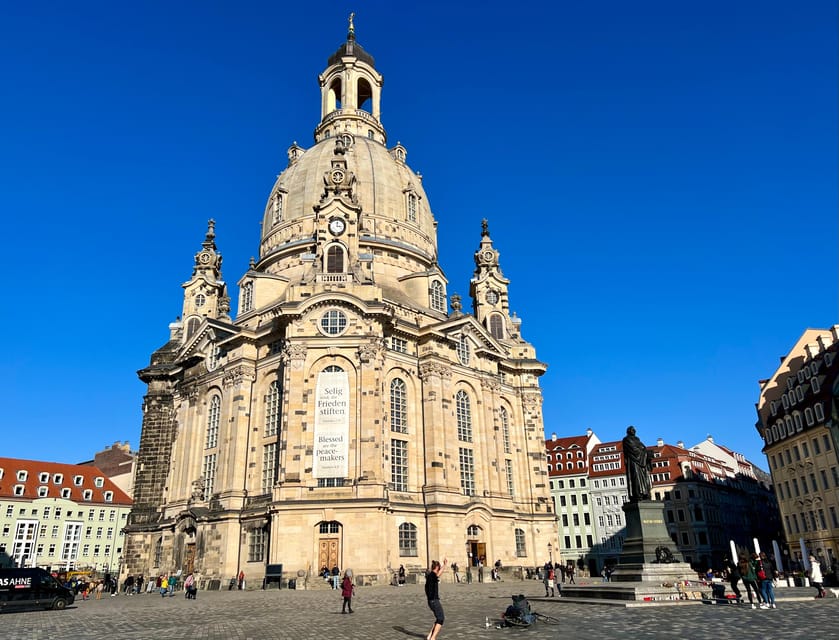
The meeting point is beside the Martin Luther statue at Neumarkt, next to Frauenkirche. Look for the guide with the yellow umbrella and arrive about 10 minutes early. This is a busy and important square, so the bright umbrella matters.
Frauenkirche is the natural starting point. Its great stone dome is one of Dresden’s most recognizable sights, but its present form also tells the story of destruction and repair. The church was destroyed during the bombing of Dresden in World War II and later rebuilt from surviving stones and careful records.
I like beginning here because the church immediately puts the city’s reconstruction story in front of you. You are not simply looking at an old baroque church. You are looking at a building that carries the marks of war, division, memory, and renewal.
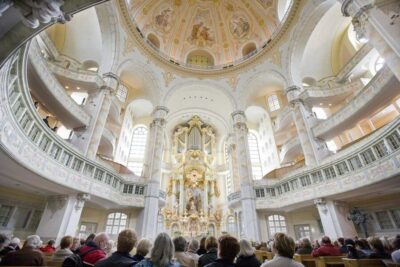
The tour focuses on the exterior and surrounding square. One family specifically wished it had arranged a separate Frauenkirche visit, so keep that in mind. This walking tour gives you context, but it does not replace a dedicated interior visit.
Fürstenzug and the story of Saxon power
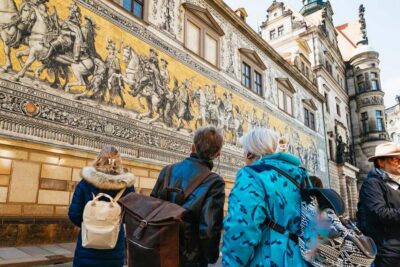
From Neumarkt, the route continues toward the Fürstenzug, the long gallery showing Saxony’s rulers. It is one of Dresden’s most enjoyable outdoor history lessons because the artwork stretches along a wall and can be viewed without entering a museum.
The guide explains the sequence of rulers and places them in the broader story of Saxony. This is where the city’s links to the Wettin dynasty, Poland, Lithuania, and the Holy Roman Empire become easier to follow.
For you, the value is practical. Dresden has many statues, coats of arms, and royal references that can blur together if you walk alone. A guide gives you a simple thread: local rulers gained power, the court grew more ambitious, and Dresden was reshaped to match its new status.
The Fürstenzug also works well as a visual break from the larger monuments. You can study individual figures while your guide explains what the wall represents. It is less overwhelming than trying to absorb a whole palace facade at once.
Dresden Castle and the royal center
Dresden Castle is another key stop. The complex reflects the city’s long role as the seat of Saxon rulers, and its varied architecture shows how it changed over time.
The castle is not presented as a single-period building. Instead, it helps you see Dresden as a place that grew in layers. The medieval settlement, the princely court, and the later baroque city all left their mark.
This is also a good point to notice how close Dresden’s main monuments are to one another. You are not spending the day crossing the city by tram. The route links the castle, Fürstenzug, Hofkirche, Semperoper, Zwinger, and central squares on foot.
That convenience comes with a tradeoff. You cover plenty of ground in a short period, so the walk favors orientation and broad understanding over long stops inside each sight. If you want museum interiors or detailed architectural study, use this tour as your framework and return later.
Same streets, a different guide:
- Discover Berlin Half-Day Walking Tour
★ 5.0 · 9,624 reviews - Berlin City walk Government District and Places of Democracy
★ 4.7 · 8,467 reviews - Berlin: Third Reich & Cold War Guided Walking Tour
★ 4.9 · 8,378 reviews - Munich: Third Reich & WWII Walking Tour
★ 4.6 · 6,181 reviews
Altmarkt, Kreuzkirche, and the 20th century
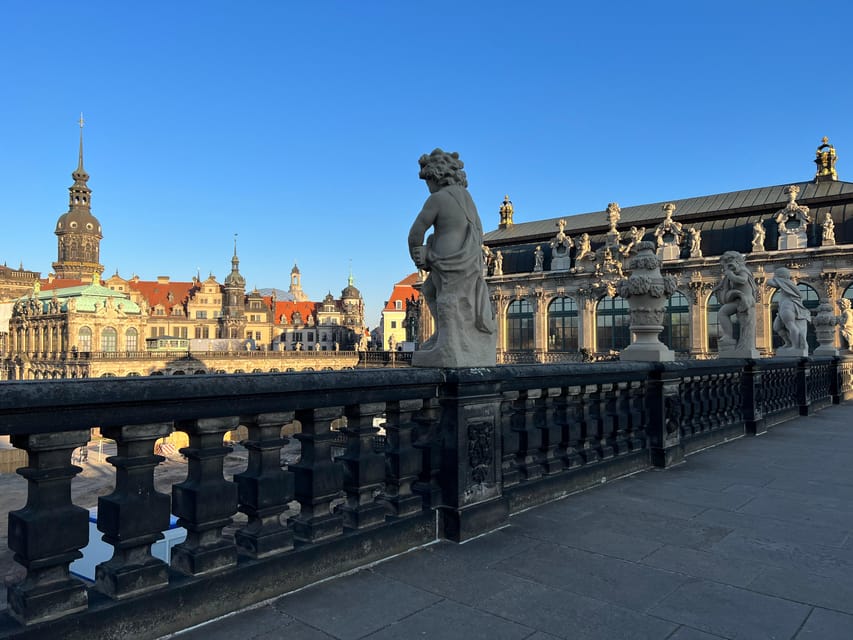
The route includes Altmarkt, Kreuzkirche, and the Palace of Culture. This section shifts the mood from royal display to the working and public life of the city.
Altmarkt is especially important for understanding Dresden’s wartime history. The city center was bombed so heavily in World War II that much of it was left beyond recognition. The tour does not treat the destruction as a brief footnote. It explains how the modern center relates to that loss.
Kreuzkirche adds another layer. Dresden’s history is not only about palaces and rulers. Churches, civic buildings, music, public squares, and daily urban life all helped shape the city.
The Palace of Culture brings the postwar period into view. Dresden was rebuilt under very different political conditions, and the modern city did not simply recreate the baroque one immediately. Seeing the older churches beside later public architecture helps you understand the changes rather than viewing the city as one uninterrupted historical scene.
This is one of the strongest parts of the walk for anyone who wants more than pretty buildings. The route gives you a sense of what Dresden lost, what survived, and why reconstruction remains such a central part of its identity.
Hofkirche and the royal Catholic presence
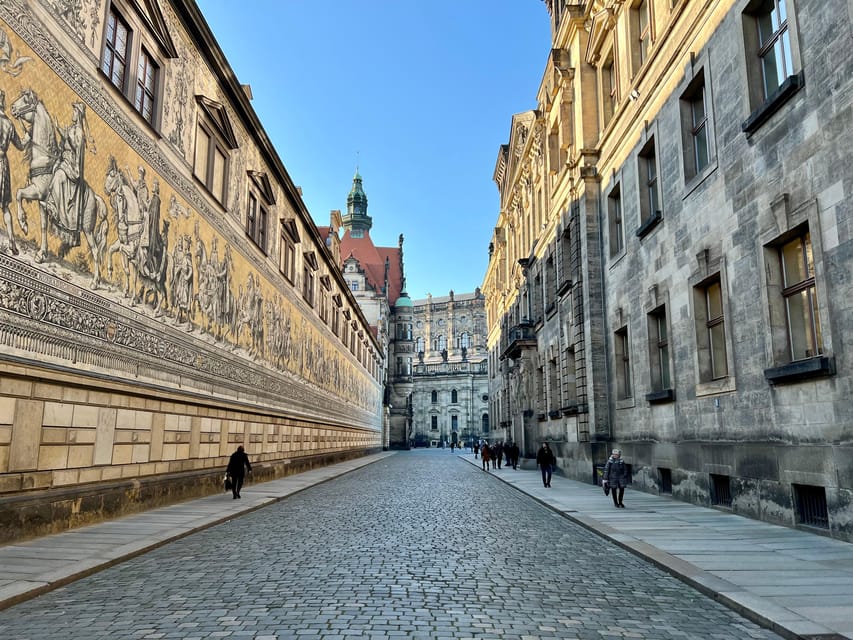
Hofkirche adds a striking religious and political contrast. Dresden’s rulers were connected to Protestant Saxony, yet the Wettin dynasty’s wider ambitions and links to Poland brought Catholic elements into the royal story.
Your guide uses the church to explain how religion and politics overlapped at court. The building also helps you see the close relationship between Dresden’s royal residence and its religious institutions.
Because the main sights stand near one another, you can compare Hofkirche with Frauenkirche rather than treating either church in isolation. Their forms, settings, and roles reveal different sides of Dresden’s history.
The guide’s skill matters here. Names, dynasties, and religious changes can become a blur. The strongest guides on this tour, including Nicolo and Nikolai, have been praised for explaining complicated subjects in conversational English and adding a well-timed joke or small fact.
Semperoper and Dresden’s artistic identity
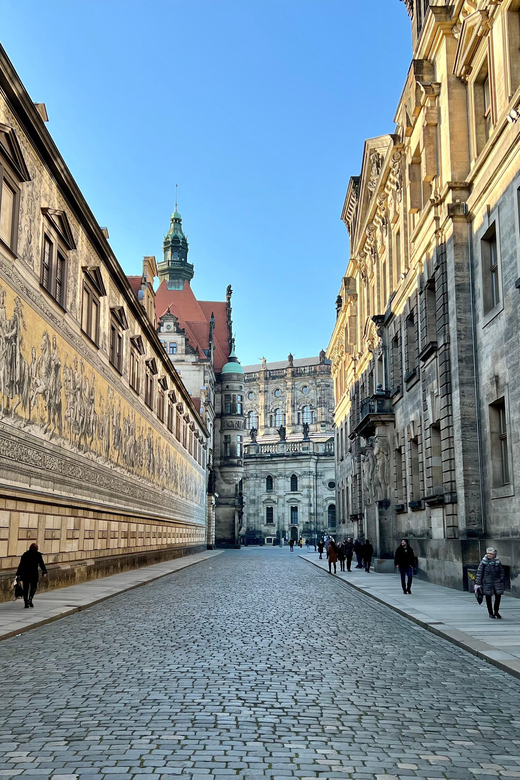
The Semperoper brings music and performance into the route. Dresden was not only a political center. It also became a place where rulers used art, architecture, and court culture to display status.
The opera house sits within a group of major monuments, so this is a good place to understand the city’s visual ambition. The Zwinger, palace buildings, churches, and opera house together show how the court shaped Dresden’s public image.
I find this kind of stop useful even if you do not plan to attend a performance. The guide can explain why the building matters, while you decide later if an interior visit belongs on your schedule.
Do not expect the walking tour to provide a performance or extended indoor visit. Its job is to explain the building and place it in the wider city story. You will get more from it if you listen for the connection between art, royal power, and Dresden’s later reputation as a cultural center.
Brühl’s Terrace and the Elbe connection
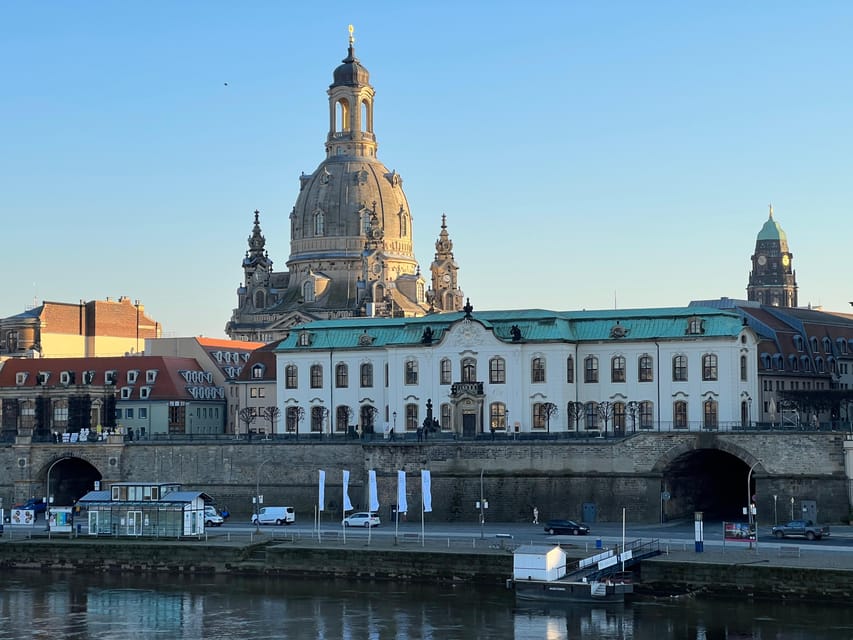
Brühl’s Terrace gives the route a welcome change of pace. Known as a terrace above the Elbe, it offers a different way to read Dresden. Instead of standing in a square surrounded by monuments, you get a sense of the river’s role in the city.
The Elbe helped connect Dresden to trade routes and neighboring regions. That makes the river more than a pleasant view. It explains why a settlement grew here and why Dresden could become an important regional center.
This is also the place where the tour’s Germanic and Slavic theme makes the most sense. The river did not simply divide cultures. It carried people, goods, ideas, and power across Central Europe.
You may appreciate the breathing room here, but remember that the walk continues. Comfortable shoes are sensible, and you should arrange a toilet stop before the tour if needed. One participant found the full stretch from meeting point to finish too long without one.
Zwinger Palace and the baroque finish
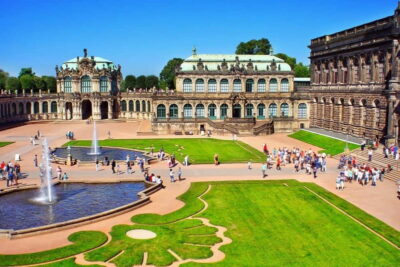
The tour ends near Zwinger Palace, close to the Elbe bridge. This is an appropriate finish because the Zwinger captures Dresden’s baroque ambition in one grand setting.
Its courtyards and decorated facades reflect the period when Saxony’s rulers wanted Dresden to match the importance of their court. After hearing about the city’s rise, the building feels less like decoration and more like a statement of power.
The Zwinger is also a useful final orientation point. You have moved from the religious center at Frauenkirche through royal and civic Dresden, then toward one of the city’s best-known palace complexes.
As with the other stops, the walking tour is mainly an outdoor introduction. You should not assume that the $35 includes museum admission or extended time inside the palace. No transportation is included either, though the central route means you do not need a vehicle during the walk.
The guides make or break the experience
The strongest pattern in the feedback is the quality of the guides. Nicolo is repeatedly praised for detailed explanations, European context, humor, and an ability to keep the group interested for more than two hours. Nikolai receives similar praise for his command of Dresden’s story and his clear English.
Dominica is singled out as a strong storyteller, while James is described as offering a useful historical orientation. These names do not guarantee who will lead your particular departure, but they show the range of guide styles attached to the tour.
You should expect a live guide rather than an audio recording or fixed script. The best version of this walk will feel conversational, with room for questions and small facts that do not appear on a standard city map.
English ability has been a strength overall. One piece of feedback noted that a guide spoke quickly, so if you have trouble following a fast speaker, stand near the guide and say so early. A good position helps in crowded squares and makes the explanation easier to hear.
Is $35 a fair price?
At $35 per person, this is not an inexpensive free walk, but the price can be fair if you want a structured introduction to Dresden. The amount covers the reservation fee and guide payment, even though the experience is described as a general pay-as-you-wish tour.
The value comes from the route and the amount of context packed into 2.5 hours. You see nearly all the major Old Town landmarks without arranging separate transport, and you get an explanation of the city’s rise, royal period, destruction, and reconstruction.
The price is less attractive if you want museum entry, interior tours, or a slow architectural study. Those are not the main purpose here. Think of this as a strong first orientation, then choose which buildings deserve more of your time afterward.
The tour has received a 4.8 rating from 135 reviews, with repeated praise for clear storytelling and historical detail. That high score fits the tour’s design, but you should still account for the long walking time and the lack of included transportation.
Who should book this Dresden walk?
I would recommend it to a first-time visitor who wants the major sights explained in one continuous route. It also suits anyone interested in how cities recover after war, since Dresden’s reconstruction is not treated as a side note.
Families can benefit from the lively storytelling, especially when the guide uses humor to break up names and dates. The walk also works for repeat visitors. One returning visitor who already knew Dresden well still found the European context and extra detail useful.
You may want a different plan if you have limited mobility, although the activity is listed as wheelchair accessible. You should also think carefully about the 2.5-hour length, possible extension toward three hours, and the lack of a planned toilet stop.
Book it early in your Dresden visit if you can. The route gives you a map of the historic center, and the guide’s explanations will help you decide where to spend the rest of your time.
FAQ
How long does the Dresden Old Town walking tour last?
The listed duration is 2.5 hours. Some departures have lasted closer to three hours, so allow extra time if your schedule is tight.
What language is the tour conducted in?
The tour is conducted in English with a live English-speaking guide.
Where does the tour meet?
Meet beside the Martin Luther statue at Neumarkt, next to Frauenkirche. Look for the guide carrying a yellow umbrella.
Which Dresden sights are included?
The route includes Neumarkt and Frauenkirche, the Martin Luther statue, Fürstenzug, Dresden Castle, Altmarkt, Kreuzkirche, the Palace of Culture, Brühl’s Terrace, Hofkirche, Semperoper, and Zwinger Palace near the Elbe bridge.
Is transportation included?
No. This is a walking tour, and transportation is not included.
Is the tour wheelchair accessible?
Yes, the activity is listed as wheelchair accessible.
What happens if I need to cancel?
You can cancel up to 24 hours before the activity for a full refund. You can also reserve now and pay later.
Should you book it?
Book this tour if you want Dresden’s Old Town to make sense as more than a collection of beautiful buildings. The route explains how a Slavic settlement became a royal center, how baroque Dresden took shape, and how the city rebuilt after near-total wartime destruction.
I would skip it only if you prefer to explore entirely at your own pace or need frequent breaks. For most visitors, the $35 cost buys a useful historical framework, a solid first look at the major sights, and a guide-led walk that turns Dresden’s rebuilt center into a readable story.
New routes in Germany
- Munich: Walking Tour Old Town and Viktualienmarkt★ 4.7 · 839 reviews
- Stuttgart: Guided Ghost Walking Tour★ 4.5 · 867 reviews
- Stuttgart: Private Guided Circular City Walk★ 4.7 · 129 reviews
- Stuttgart: Old Town Highlights Guided Walking Tour★ 4.2 · 101 reviews
- Stuttgart: City Highlights – Guided Walking Tour★ 4.7 · 189 reviews
- Hamburg: Private Tour Red Light District Walking Tour★ 4.7 · 227 reviews
- Small Group Walking Tour: “Wild Kreuzberg”★ 4.8 · 199 reviews
- Sachsenhausen Memorial: Walking Tour from Berlin★ 4.7 · 132 reviews
Dresden Walking Tours, compared.
Walking Tour with a Night Watchman including a Meal
Read our review →
Guided Walking Tour and Chocolate Museum Ticket
Read our review →

Neustadt District Street Art Guided Walking Tour
Read our review →
Browse the lists this tour appears in