
Review · ITALY
Catania: Street Food Guided Walking Tour
Catania’s best introduction may come in small paper cones, flaky pastries, and ricotta-filled cannoli. This three-hour walk links the Fish Market and central squares with five generous food stops, giving you a taste of everyday Catania rather than a formal restaurant meal. I especially like the mix of food and city stories, plus the chance to try dishes you might otherwise pass by.
I also like that guides such as Luca, Allegra, Giuseppe, and Kate bring a strong local connection to the walk. The main thing to plan for is the amount of food: portions can be large, so arrive genuinely hungry and pace yourself. Comfortable shoes matter, and large bags are not allowed.
The essential details at a glance
- Five food stops in three hours: The pace allows time to eat, walk, and hear about Catania without racing from one tasting to the next.
- A proper Sicilian spread: Expect some combination of arancini, caponata, fried fish, cipollina, cartocciata, cannoli, and granita.
- A walk through central Catania: The route begins and ends at the Fountain of the Elephant, passing the Cathedral, Roman Theater, Piazza dell’Università, and Roman Amphitheater.
- Local guides make the difference: Luca, Allegra, Giuseppe, Kate, and other guides are noted for their warmth, English skills, and stories about local food and customs.
- One drink is included: Food tastings, water, one alcoholic beverage, and gelato or granita are part of the price.
- Good for dietary needs: Vegetarian and other dietary options are available when requested during booking.
Why this food walk works so well in Catania
Catania’s street food makes sense when you look at the city’s setting. The sea supplies fish and seafood, while the slopes of Mount Etna support produce, citrus, olives, and other ingredients used across Sicilian cooking. The city’s food also reflects centuries of contact among Greeks, Romans, Arabs, Spanish, Jews, and other peoples.
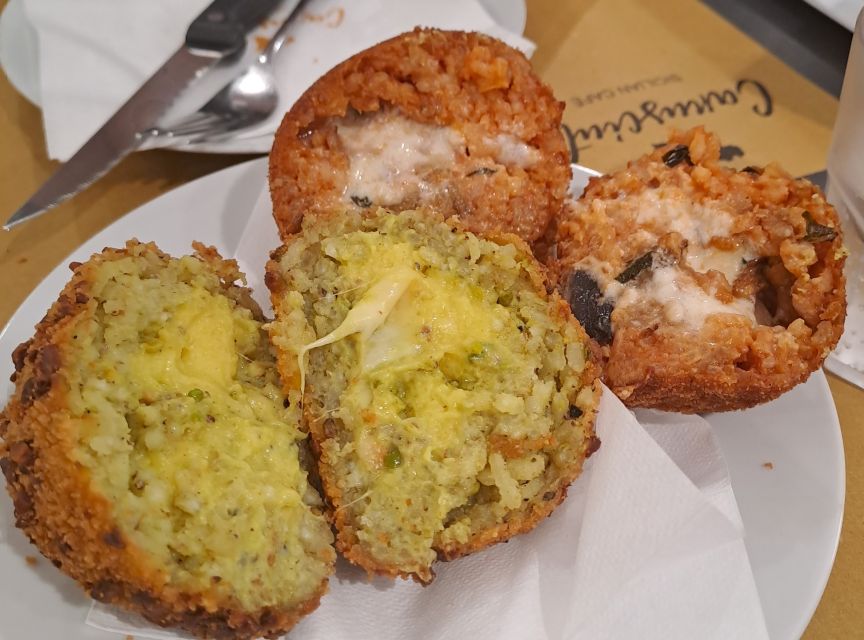
You will not simply sample isolated snacks. The guide connects each bite with daily life in Catania. Take arancini, for example. These fried rice balls can be filled with meat, ham, spinach, pistachios, aubergine, or other ingredients. They are filling, portable, and practical, which helps explain why they became such a familiar part of Sicilian food culture.
The walk also shows how Catania eats in public. Food is often prepared in full view, and the route takes you through streets where takeaway cooking is part of the city’s rhythm. That makes this feel different from a standard tasting menu. You are sampling food in the places where people actually buy it.
The price is $56 per person. I consider that fair if you treat this as both lunch or dinner and a guided introduction to central Catania. Five stops, a three-hour city walk, food, water, a drink, and a guide add up quickly if purchased separately. The value is strongest at the start of your stay, when the guide can help you understand what to order later.
More Food Walking Tours in Italy
- Naples: Street Food Walking Tour with Local Guide
★ 4.9 · 4,976 reviews - Eat Like a Local: Venice 3-Hour Small-Group Food Tasting Tour
★ 5.0 · 3,137 reviews - Rome: Guided Food Walking Tour with Wine in Trastevere
★ 4.9 · 3,105 reviews
Starting at the Fountain of the Elephant
The tour begins at Catania’s Fountain of the Elephant, an easy central meeting point near several major sights. From there, you are already in the middle of the old city, so the tour gets going on foot rather than spending time on transport.
This is a useful place to begin because Catania’s center can feel confusing at first. Dark volcanic stone, grand Baroque buildings, open squares, busy streets, and market lanes all appear close together. Your guide gives the route some order while introducing the city’s food traditions.
The walk returns to the Fountain of the Elephant at the end. Hotel pickup and drop-off are not included, so plan to reach the starting point on your own and arrange your own way back afterward.
Catania Cathedral and the first tastes
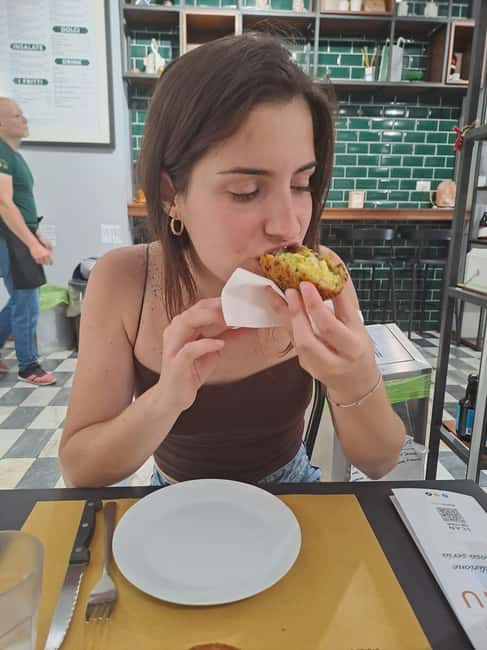
The first scheduled stop is near Catania Cathedral, with about 30 minutes set aside for street food. This early tasting helps you learn the tour’s pattern: take a bite, hear what it is, ask questions, and move through the center to the next stop.
Catania Cathedral anchors the city’s main square, and the surrounding area gives you a strong first look at Catania’s architecture and public life. The tour is not designed as a full cathedral visit, so do not expect a long interior sightseeing stop. The food remains the focus.
Your guide may introduce caponata here or at another point along the route. This Sicilian preparation combines fried aubergine with tomato, celery, onion, olives, capers, sugar, and vinegar. The sweet and sour balance is the important idea. It can be a side dish or starter today, but it was once served as a main course.
Caponata is a good early lesson in Sicilian cooking because it is not just about one ingredient. It combines inexpensive vegetables with sharp, sweet, salty, and savory flavors. If you usually prefer simple food, give it a fair try. It may be one of the more distinctive tastes of the tour.
The Roman Theater and the city beneath the city
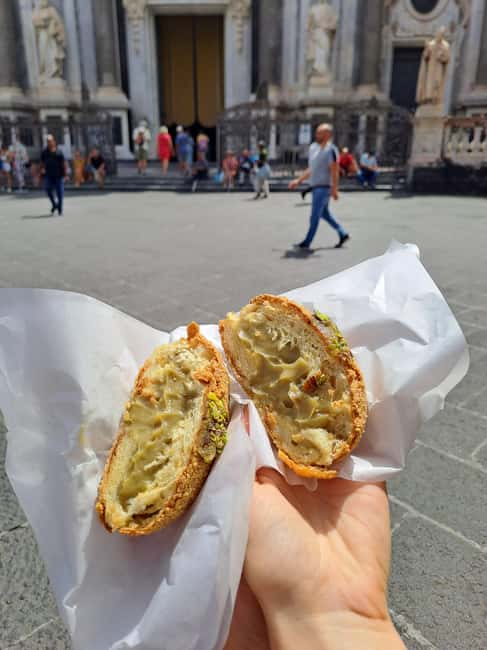
The route continues toward the Roman Theater, with another 30-minute food stop. Catania has been rebuilt and reshaped many times, and Roman remains sit within the modern city. Even a short pause near the theater adds useful context to the walk.
This is where the tour’s food-and-place format earns its keep. You are not spending three hours indoors at a single table. You move through streets and monuments, then stop to eat. The transitions help you understand how compact the historic center is.
A likely tasting in this part of the route is arancino, one of Sicily’s most famous snacks. It is a rice ball filled with ingredients such as meat, ham, vegetables, or pistachios, then coated and fried. Some are round, while others are shaped more like a cone or pyramid. The filling and shape can vary by shop.
Arancini are substantial. This is one reason I would not eat a full meal before the tour. Several food stops follow, and the portions are often more than a single bite. You can enjoy the food more if you treat the tour as a meal spread over three hours.
More Street Food Walking Tours in Italy:
- Rome: Trastevere & Campo de Fiori Street Food Walking Tour
★ 4.9 · 2,768 reviews - Palermo Original Street Food Walking Tour by Streaty
★ 5.0 · 2,105 reviews - Rome: Trastevere Street Food Walking Tour with Local Expert
★ 4.8 · 1,784 reviews - Palermo: Street Food and History Walking Tour
★ 4.9 · 1,486 reviews
Piazza dell’Università and Catanese bakery specialties
Piazza dell’Università is another central stop, again allowing around 30 minutes for food. The square is one of Catania’s major public spaces, and it gives the walking route a more open pause between narrower streets and market areas.
Here or at another stop, you may try Catanese rotisserie specialties such as cipollina and cartocciata. Cipollina is a flaky pastry filled with fried onion, cooked ham, and stringy cheese. The outside is crisp, while the filling is soft, warm, sweet, and savory.
Cartocciata is also a baked, stuffed pastry. It resembles a small calzone, but the dough is higher and softer. These foods show a different side of Catania’s street eating. Not every local snack is fried rice or seafood. Pastries are part of the city’s practical food culture, especially when you want something hot and filling.
This part of the tour may be especially useful if you are unsure how to order from a Sicilian bakery or rotisserie counter. A guide can explain what you are eating and point out the differences between similar-looking items. You also get a chance to ask which specialties are worth seeking later.
The Roman Amphitheater and a serious food stop
The route includes the Roman Amphitheater, with another 30-minute tasting period. Like the Roman Theater, the amphitheater shows how ancient remains are woven into modern Catania rather than isolated far outside town.
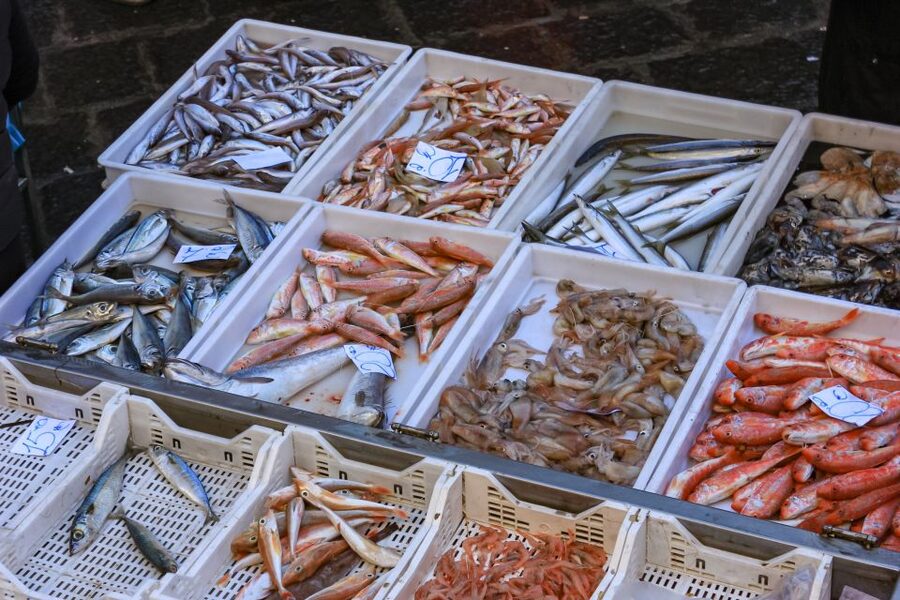
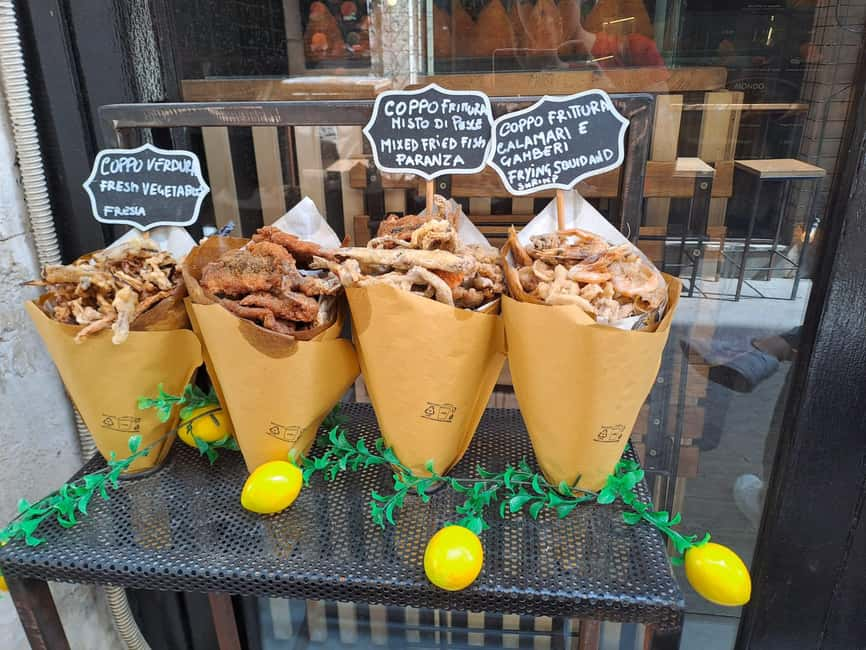
The food around this section may include a fried fish cone. This is a simple but memorable street-food format: fish and seafood caught that day are fried and served in a cone. It is best eaten fresh, and the contrast with the heavier pastries and rice-based snacks gives the tour a welcome change of texture.
Several people who have taken the tour particularly enjoyed this stop. I can see why. Fried seafood gives you a direct taste of Catania’s connection to the Mediterranean, and eating it while walking near the old center feels more tied to place than sampling a generic seafood dish in a restaurant.
You may also receive an alcoholic drink with the food, depending on the stop and the day. One alcoholic beverage is included, along with water. If you do not drink alcohol, check your preferred alternative with the provider when booking.
The Fish Market and the final sweet course
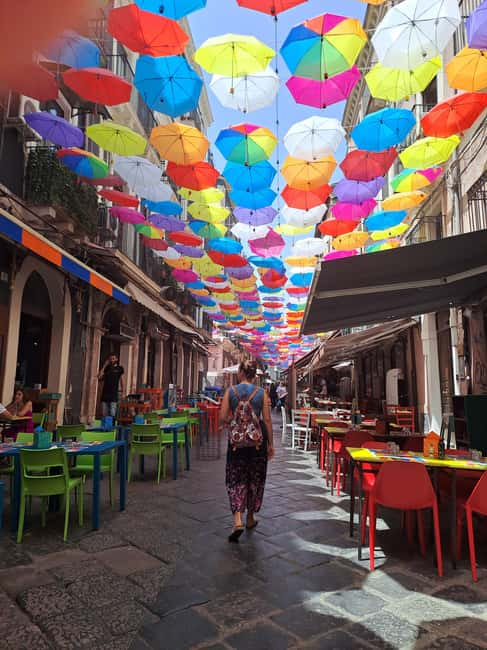
The Fish Market and nearby streets are among the most useful parts of the route for understanding Catania’s food culture. The market area is noisy, colorful, and closely tied to the city’s seafood trade. The tour does not turn you into a market shopper in three hours, but it gives you a guided look at the area and its role in local eating.
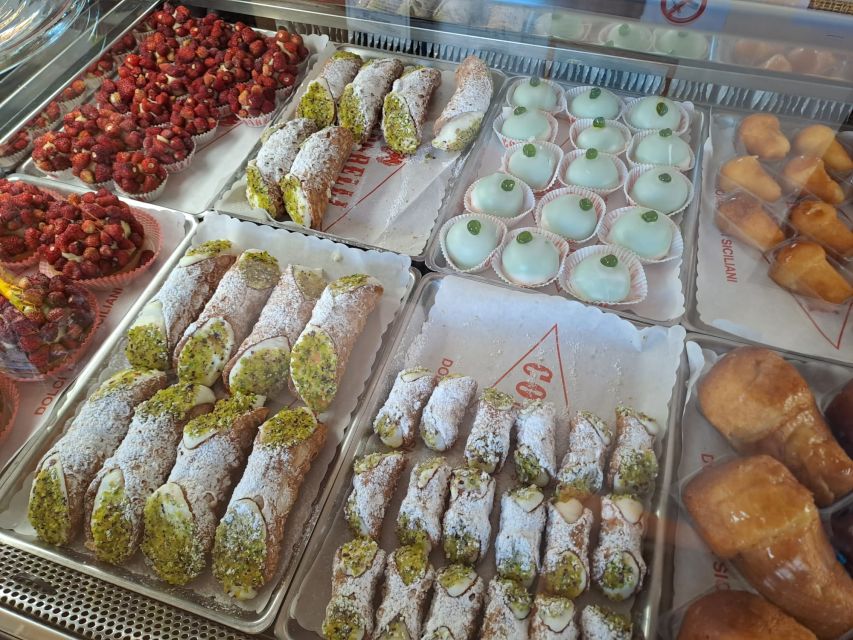
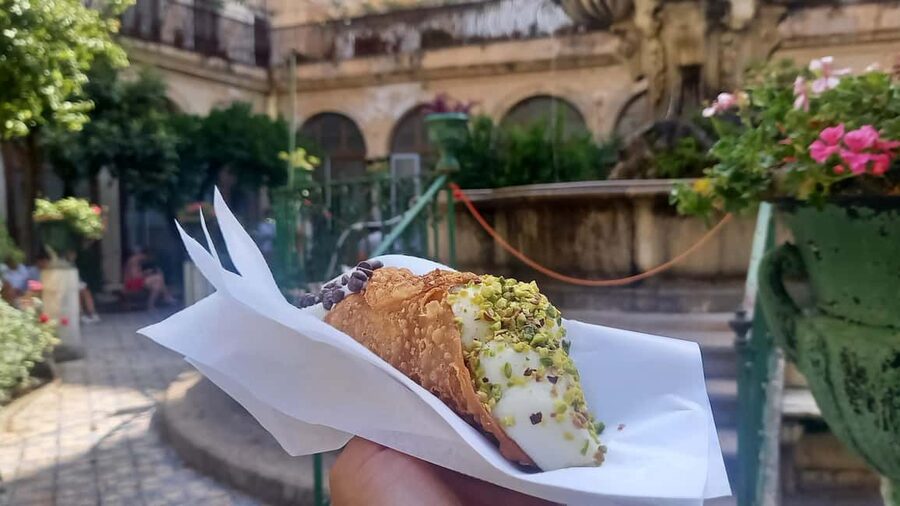
The final tastes are likely to be the sweets: cannolo and granita. A Sicilian cannolo has a crisp fried shell filled with sweet ricotta, often finished with candied fruit, pistachios, or dark chocolate chips. The shell and filling work best together, so eat it soon after it is filled if possible.
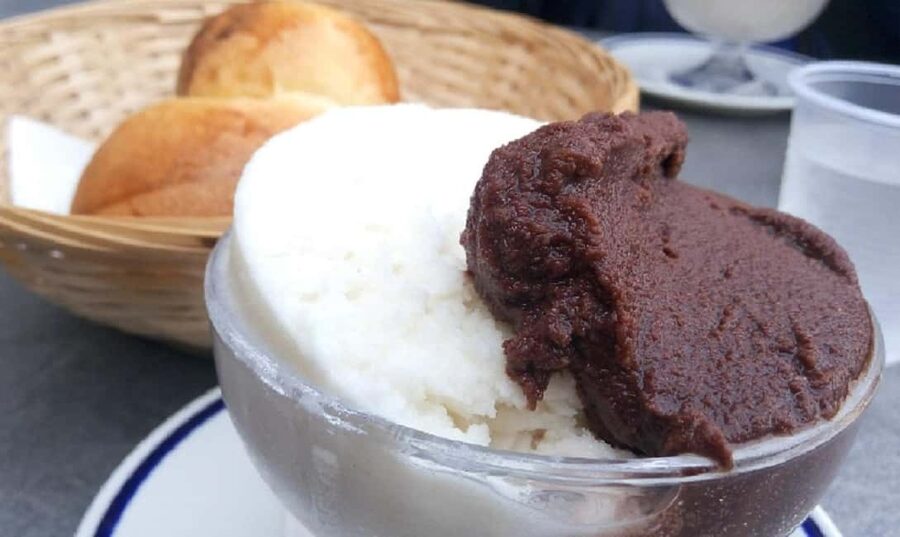
Granita is a cooler, lighter finish. It is made with fruit, sugar, and ice, then served in a glass. Almond granita is a popular flavor mentioned during this experience, though flavors can vary. On a warm day, granita may be the most welcome stop of the entire walk.
Some tastings can be packed to take away if you have reached your limit. That is useful, because the tour can be a lot of food even when you arrive without eating first. Do not feel obliged to force down every portion immediately.
The guides are a major part of the value
The food matters, but the guide shapes the experience. Luca is repeatedly praised for his warm manner, strong English, and enthusiasm for Catania. He has led tours where solo visitors felt included, and he is described as someone who explains both the dishes and the city’s customs without rushing the group.
Allegra is another frequently named guide. She is noted for clear English, friendliness, and lively explanations of Catania’s food and past. Giuseppe is praised for being personable, enthusiastic, and deeply familiar with Sicilian cuisine. Kate is described as warm, welcoming, and good at making the group feel comfortable.
Guide assignments can change, so you should not book on the assumption that one particular person will lead your walk. Still, the pattern is clear: the guide is expected to do more than point out food. You get stories about local life, differences between parts of Sicily, and the background behind the dishes.
The guide may speak both English and Italian during the tour. If you need every explanation in English, keep that in mind. The English-speaking guides are widely praised, but the activity is bilingual.
How much food should you expect?
Plan this as a meal, not as five tiny samples. The tastings may include arancino, caponata, fried fish, cipollina, cartocciata, cannolo, and granita, although the exact selection can depend on the food stops and the day.
The sequence moves between savory and sweet foods, but you still need to pace yourself. Start slowly, drink water, and avoid filling up at the first stop. Several hours of walking help, but they do not cancel out fried rice, pastry, seafood, ricotta, and dessert.
Vegetarian and other dietary options are available if you tell the provider when booking. Do not wait until you are standing at the first food stop. The more clearly you explain your needs in advance, the easier it is for the guide to manage the tastings.
Practical advice before you book
Wear comfortable shoes. The tour lasts three hours and moves through central streets, so footwear matters more than dressing up for dinner.
Bring only what you need. Large bags and luggage are not allowed, and there is no hotel pickup or drop-off. A small personal bag is the sensible choice, but follow the provider’s current instructions.
The tour offers free cancellation up to 24 hours before the start time, and you can reserve now and pay later. Those terms are useful if your Catania schedule is still shifting, but check the exact conditions when booking.
This walk suits first-time visitors, solo visitors, couples, and anyone who wants an easy way to get oriented. It is also a good choice for people who normally avoid food tours because they want some sightseeing included. It may be less suitable if you prefer a quiet sit-down meal, have difficulty walking for three hours, or want precise control over every dish.
Is the $56 price fair?
At $56, this is not the cheapest way to eat in Catania. You could buy individual snacks for less, especially if you know the city and can find the right shops yourself.
The point is the combination. You get five stops, a local guide, a route through important central sights, a drink, water, and a dessert or granita. You also reduce the risk of ordering blindly or missing local specialties because a menu is unclear.
I think the value is strongest when taken early in your visit. You get a practical food map, learn what arancini and caponata should taste like, and receive suggestions for the rest of your stay. If you already know Catania well, the guided element may feel less necessary.
Should you book it?
I would book this tour if you are new to Catania and want food to lead you through the historic center. The combination of seafood, fried snacks, pastries, cannoli, granita, and local stories gives you a broad first taste of the city.
Book it hungry, wear good shoes, and leave room for the final sweet stop. If you want a small, quiet tasting with delicate portions, choose another experience. If you want a generous introduction to Catania’s everyday food, this is a strong value at $56.
FAQ
How long does the Catania street food tour last?
The tour lasts three hours.
Where does the tour start and finish?
It starts and ends at the Fountain of the Elephant in Catania.
Which foods can I expect to taste?
Possible tastings include arancini, Sicilian caponata, fried fish, Catanese cipollina, cartocciata, Sicilian cannoli, and granita.
Is a drink included?
Yes. The activity includes one alcoholic beverage and water. Gelato or granita is also included.
Are vegetarian dietary options available?
Yes. Vegetarian and other dietary options are supported. Tell the activity provider about your needs when booking.
Which languages are spoken on the tour?
The tour is offered in English and Italian. The guide may speak both languages during the walk.
Do I need to bring anything special?
Bring comfortable shoes. Luggage and large bags are not allowed, and pets are not allowed.
Can I cancel the booking?
You can cancel up to 24 hours in advance for a full refund. The activity also offers a reserve-now, pay-later option.
New routes in Italy
- Private St. Francis Basilica of Assisi and City Walking Tour★ 5.0 · 114 reviews
- Assisi Private Walking Tour including St. Francis Basilica★ 5.0 · 124 reviews
- Milan: City Highlights Walking Tour with The Last Supper★ 4.9 · 195 reviews
- Florence: Heart of Florence Guided Walking Tour★ 4.0 · 81 reviews
- Milan: Private or Shared Essential Walking Tour★ 4.7 · 84 reviews
- Taormina: Shared or Private Food & Wine Walking Tour★ 4.6 · 167 reviews
- Syracuse: Ortigia Private Walking Tour★ 4.8 · 181 reviews
- Syracuse: Highlights of Ortigia Guided Walking Tour★ 4.2 · 136 reviews
Italy Walking Tours, compared.
Doge’s Palace and St Mark’s Basilica Walking Tour
Read our review →
Guided Walking Tour & Last Supper Visit with Ticket
Read our review →
San Marco to Rialto Walk & Spritz Like a Local
Read our review →
Uffizi & Accademia Timed Entry: Small Group Duomo Walking Tour
Read our review →
Browse the lists this tour appears in