
Review · ITALY
Asti Historic Town Walking Tour
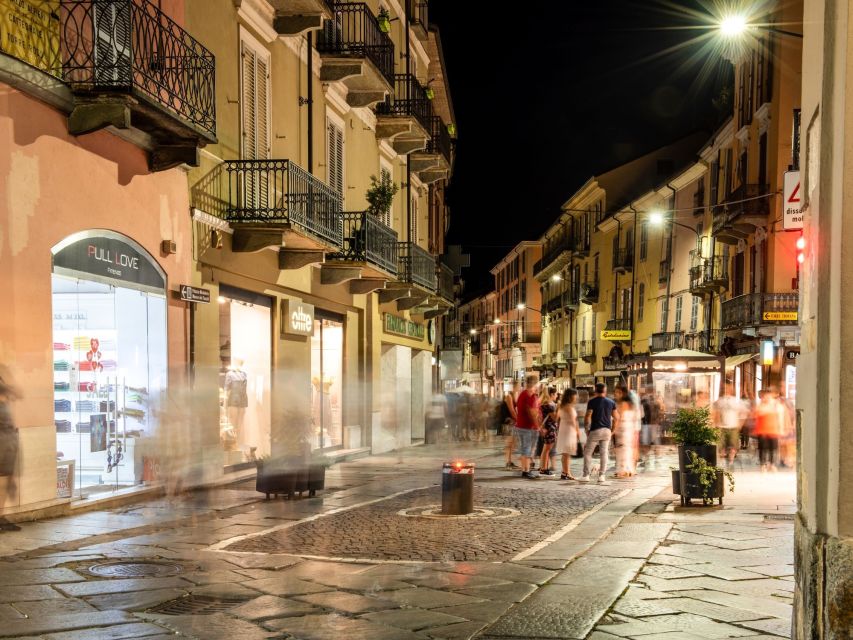
Asti’s best feature is the way its Baroque palaces, 19th-century squares, and Liberty storefronts share the same town center without fighting for attention. This guided walk gives you a quick introduction to the Piedmont city known as the capital of the Monferrato hills, with its churches, porticos, markets, Palio tradition, and food shops.
I like the low $11 price and the simple route, which begins and ends at Piazza Vittorio Alfieri. I also like having an Italian- and English-speaking local guide to explain how Asti’s elegant buildings connect to its commercial and festival life. The main caution is time: although the tour is scheduled for two hours, one account found the actual walk closer to an hour and a half, so the many sights may receive only a brief explanation.
Key points to know before you book
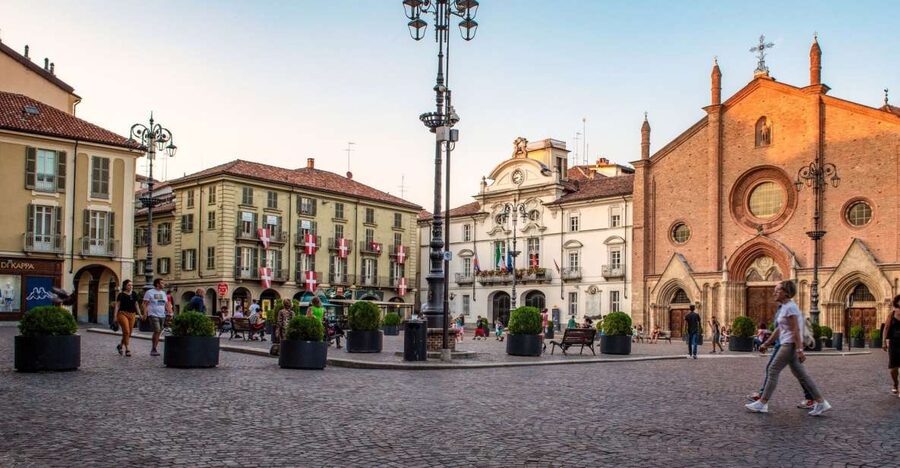
- Piazza Vittorio Alfieri start: You meet at number 34, then return to the same spot.
- A compact introduction: The two-hour route covers Asti’s historic center on foot.
- Architecture from several eras: Expect churches, porticos, Baroque aristocratic palaces, 19th-century squares, and Liberty-style shops.
- Asti beyond monuments: The guide connects the town with its Palio, weekly markets, cultural events, and local food traditions.
- Good value at $11: The price is modest for a live guided introduction, though the tour may feel fast.
- Practical access: The walk is wheelchair accessible, and comfortable shoes are recommended.
Why Asti rewards a walking tour

Asti is easy to place on a map, but its character is easier to understand on foot. The town’s center brings together grand buildings, useful arcades, shops, public squares, and everyday market life. You are not simply checking off one famous monument. You are seeing how the old city still works.
That makes this tour useful at the start of a Piedmont trip. A guide can point out the architectural shifts that are easy to miss when you wander alone. One street may show the formal style of an aristocratic palace, while the next offers a graceful 19th-century square or a Liberty-era shopfront. The appeal comes from the mixture.
I also like the scale of the outing. At two hours, it is long enough to give you a sense of Asti without taking over your day. You can use it as an orientation walk, then return later to the places that caught your eye. At $11 per person, it costs less than many larger city tours, so the value is especially good if the guide keeps the pace lively and the information clear.
The tradeoff is coverage. Asti has many things to point out, and a short tour cannot spend much time at every church, palace, square, or shop. If you want detailed architectural history or extended interior visits, you may find this introduction too brisk. Think of it as a well-priced first look rather than a specialist study.
More History Walking Tours in Italy:
- Venice: City Center Historical Guided Walking Tour
★ 4.2 · 1,873 reviews - Palermo: Street Food and History Walking Tour
★ 4.9 · 1,486 reviews - Verona: History and Hidden Gems Guided Walking Tour
★ 5.0 · 1,379 reviews
Beginning at Piazza Vittorio Alfieri
Your meeting point is Piazza Vittorio Alfieri, 34, and the tour returns here at the end. Starting and finishing in the same place makes the outing easy to fit around other plans. You do not need to arrange transport between the meeting point and the historic center, since the experience is conducted on foot.
The square is also a sensible place to begin because it gives you an immediate feel for Asti as a city of public spaces. Rather than starting at a remote attraction, you meet in a central setting connected to the town’s streets and buildings. From here, the guide can place the historic center in context before leading you onward.
You should arrive ready to walk at a steady pace. Comfortable shoes are the only item specifically recommended, but they matter. Even a short city walk feels less pleasant if you are focused on sore feet instead of the architecture.
The tour is wheelchair accessible, which makes it a practical option for many visitors. Still, the description does not provide details about every surface, doorway, or interior stop, so anyone with specific mobility needs should confirm those points when booking.
Churches, porticos, and the shape of old Asti
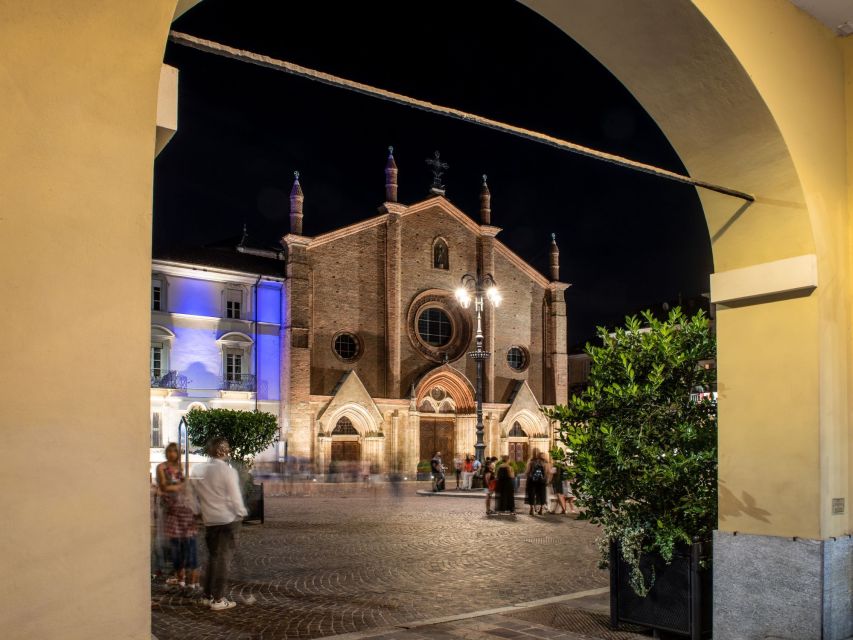
The heart of the walk is Asti’s historic town. You will see churches, squares, porticos, and other highlights while the guide explains the city’s past. The value here is not just the number of sights. It is the connection between them.
Porticos are especially useful in a walking city. They give streets a covered edge and add rhythm to the facades. As you move beneath or alongside them, you get a better sense of how Asti’s public spaces were designed for daily use, not only for grand occasions.
The churches add another layer. Even when a visit is brief, church exteriors can reveal the period and taste of a neighborhood. A guide helps you notice the difference between a building meant to impress from a square and one that fits more quietly into the surrounding street.
You should expect explanation rather than a long stop at every sight. The available details do not promise interior access, special entry, or extended time inside individual churches. That is worth keeping in mind if you are hoping for a full church-by-church tour.
A good guide can make this format work by selecting the strongest examples and keeping the story moving. The tour has received a 4.5 rating from 82 ratings, and the most praised quality is the guide’s engaging presentation. That matters here because the walk depends on explanation. The buildings are pleasant to look at, but the context turns them into a readable town rather than a string of facades.
Baroque palaces and Liberty-era storefronts
Asti’s architecture gives the walk much of its character. The aristocratic palaces are described as Baroque, with a formal style linked to the town’s prosperous past. Their presence helps explain why Asti can feel grand even when you are simply moving through an ordinary commercial street.
You will also see the elegance of the 19th century in Asti’s squares. This later style does not clash with the older Baroque buildings. Instead, the town presents several eras in one compact center. I find that mix more rewarding than a district built in one period, because you can watch the city change without leaving the route.
The Liberty houses and storefronts bring the story closer to modern life. Liberty is the Italian version of the Art Nouveau style, known for decorative lines and an ornamental look. Here, the style appears not only in grand houses but also in elegant store windows. That detail is important. It shows that Asti’s design tradition belongs to shops and streets as much as to palaces.
The tour’s highlight is likely this visual comparison. You can look from a Baroque facade to a later square, then notice how a Liberty shop fits into the same urban setting. A guide can point out these changes in a way that is difficult to manage while you are busy navigating streets and checking a map.
Do not expect every building to receive a full architectural lecture. The route covers a lot in a short period, and one useful caution is that the presentation can feel broad rather than deep. If you prefer fewer stops with more detail, ask at the start how much time the guide plans to spend at the main highlights.
More Walking Tours in Italy:
- Venice: Doge’s Palace and St Mark’s Basilica Walking Tour
★ 4.4 · 6,291 reviews - Milan: Guided Walking Tour & Last Supper Visit with Ticket
★ 4.7 · 5,409 reviews - Naples: Street Food Walking Tour with Local Guide
★ 4.9 · 4,976 reviews - Florence: Highlights Walking Tour with Expert Guide
★ 4.6 · 4,662 reviews
Asti’s Palio and its living traditions
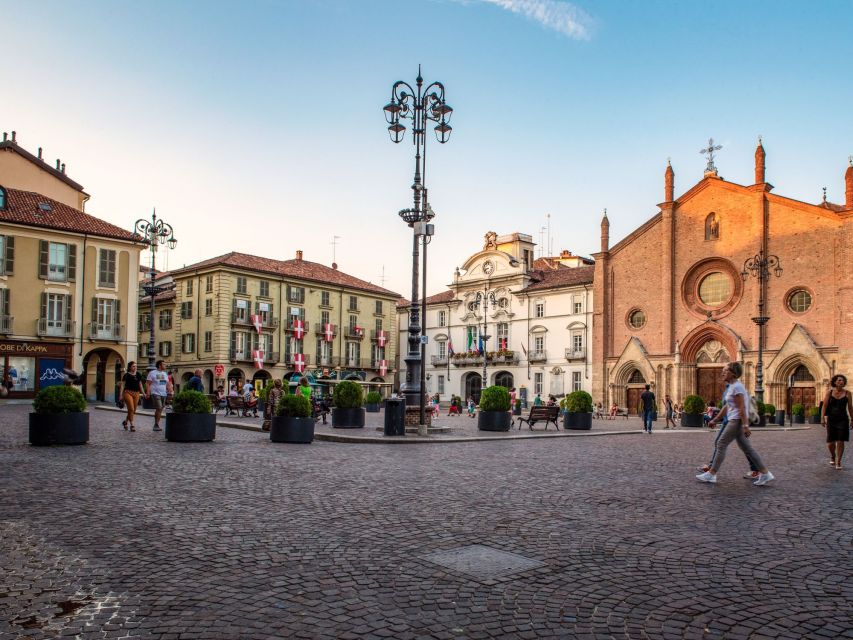
Asti is tied to its Palio, a historic horse race that returns each year. The event gives the town’s past a public life rather than leaving it locked in museums or old buildings. Even if your visit does not coincide with the Palio, the tradition helps explain Asti’s local identity.
The tour also places the city within its weekly markets and cultural events. This is one of the better reasons to choose a local guide. You can learn that Asti is not only a collection of old streets. It is also a commercial town where residents shop, meet, and take part in recurring celebrations.
The information provided does not promise that the tour visits a market or takes place during the Palio. Instead, these themes form part of the wider story the guide can tell as you walk. If you are interested in the city’s present-day life, listen for how the guide connects the buildings to those traditions.
This approach suits you if you want more than an architectural checklist. It gives the old center a human scale. The palaces show status, the shops show commerce, the squares show public life, and the Palio keeps the past visible in the present.
Food shops and the Monferrato setting
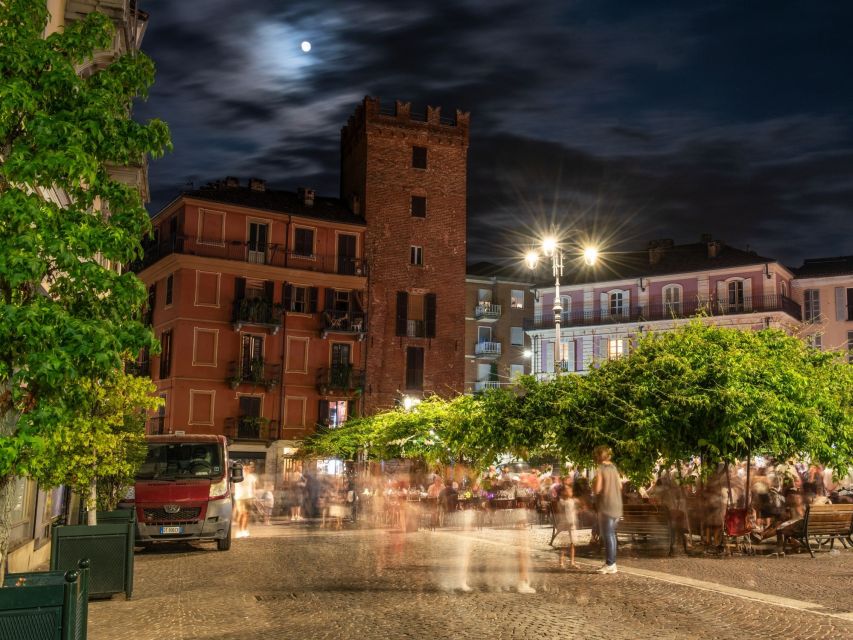
The tour also draws attention to Asti’s typical products boutiques and the scents associated with local food. The description does not promise a tasting, so you should not book this expecting included samples. Instead, think of the food shops as part of the walking experience and as useful clues for what to explore afterward.
I like this element because a town is often easiest to remember through its markets and food stores. Elegant storefronts, local products, and the smell of something being prepared can tell you as much about daily life as a monument can. The guide can help you recognize the enogastronomic side of Asti, meaning its food and wine culture, even within a short city walk.
The Monferrato hills provide the regional setting, and Asti is presented as their capital. The tour itself stays in town and does not include transport into the hills. That distinction matters if you are planning a broader countryside visit. This experience introduces the area through Asti’s streets, shops, and cultural traditions rather than through a rural excursion.
If a food-focused visit is your main goal, treat this walk as a starting point. You will learn what kinds of local products to look for, but the supplied details do not include a dedicated tasting, meal, or market stop.
The two-hour pace and what you may actually see
The scheduled duration is two hours, with starting times available when you check the date. The route begins and ends at Piazza Vittorio Alfieri, so you can plan around it without a transfer. Transportation is not included, but none is needed during the walking portion.
A two-hour city walk sounds generous until you count the subjects involved. Churches, squares, porticos, Baroque palaces, Liberty houses, shops, markets, the Palio, and food traditions could fill a full day. One account described the actual tour as about an hour and a half and felt that many sights were covered only briefly.
That is the key decision point. I would choose this tour if you want a clear introduction and a guide to get you oriented. I would hesitate if you want to inspect each monument at length or take a long series of photographs without feeling hurried.
The guide’s engaging approach is the strongest reason to accept the brisk format. A short tour with a clear story can be more useful than a longer walk that simply lists dates and building names. Still, it is reasonable to ask whether the route will include time for questions and which stops are considered the main highlights.
Because the walk is in English and Italian, you can book it even if you are not comfortable with Italian. The bilingual format also means the pace may vary depending on the group. Keep your expectations practical: you are paying for a local introduction, not a private architectural seminar.
Who will get the most from this Asti walk
I would recommend this tour to first-time visitors who want an affordable orientation to Asti. It is also a good fit if you are making a short stop in Piedmont and want to understand the town before choosing where to spend the rest of your time.
It suits you especially well if you enjoy:
- Architectural contrasts rather than one single period
- Short guided walks with a local perspective
- Public squares, covered porticos, and shopfronts
- Food culture presented as part of daily city life
- A clear starting point and no transport arrangements
- English or Italian guiding
Families and older visitors may appreciate the two-hour length and wheelchair-accessible format. You should still wear comfortable shoes and confirm any specific access needs before booking.
I would look for a longer or more focused experience if your priority is detailed religious art, interior visits, a food tasting, or a deep look at the Palio. Those subjects are part of Asti’s story here, but they are not presented as separate, extended activities.
Is $11 good value?
At $11 per person, this is an easy tour to justify if you want a live guide. The price is low enough that you are not taking a major financial risk, and the route covers several sides of Asti: architecture, public life, commerce, festivals, and local products.
The value depends on the guide and the pace. The strongest feedback centers on an engaging guide who explains the city well. That is exactly what makes a compact walk worthwhile. If the presentation is lively, you leave with a useful map in your head and a better sense of where to return.
The main limit is the amount of ground covered in two hours. You may hear about more places than you actually stop to study. For many visitors, that is a fair exchange at this price. For specialists, photographers, or anyone hoping for long visits inside monuments, it may feel too general.
Free cancellation up to 24 hours before the start and the option to reserve now and pay later make the booking less rigid. Those terms are useful when your Piedmont schedule is still changing, but they do not change the basic nature of the experience: this is a short walking introduction.
Should you book the Asti Historic Town Walking Tour?
Book it if you want a budget-friendly first look at Asti led by an Italian- and English-speaking local guide. The mix of Baroque palaces, Liberty storefronts, churches, porticos, squares, food shops, markets, and Palio traditions gives the walk more range than a simple monument tour.
Go in expecting an overview, not a detailed study. The route may run closer to an hour and a half in practice, and the guide may need to move quickly between many sights. At $11, that is a reasonable trade if your goal is orientation and local context.
I would choose this experience early in an Asti visit, then use the rest of your day to revisit the buildings, squares, or shops that caught your attention. Bring comfortable shoes, meet at Piazza Vittorio Alfieri 34, and let the guide help you decide what deserves a second look.
FAQ
Where does the Asti walking tour begin?
The tour begins at Piazza Vittorio Alfieri, 34, in Asti.
Where does the tour end?
The walking tour returns to Piazza Vittorio Alfieri, 34.
How long does the tour last?
The scheduled duration is two hours. Starting times depend on availability. One account found the actual walking time closer to an hour and a half, so the pace may be brisk.
What languages are available?
The live local guide speaks Italian and English.
Is transportation included?
No. Transportation is not included. The experience is a guided walking tour of Asti’s historic town.
Is the tour wheelchair accessible?
Yes, the activity is listed as wheelchair accessible. Comfortable shoes are recommended.
New routes in Italy
- Private St. Francis Basilica of Assisi and City Walking Tour★ 5.0 · 114 reviews
- Assisi Private Walking Tour including St. Francis Basilica★ 5.0 · 124 reviews
- Milan: City Highlights Walking Tour with The Last Supper★ 4.9 · 195 reviews
- Florence: Heart of Florence Guided Walking Tour★ 4.0 · 81 reviews
- Milan: Private or Shared Essential Walking Tour★ 4.7 · 84 reviews
- Taormina: Shared or Private Food & Wine Walking Tour★ 4.6 · 167 reviews
- Syracuse: Ortigia Private Walking Tour★ 4.8 · 181 reviews
- Syracuse: Ortigia and Neapolis Guided Walking Tour★ 4.7 · 205 reviews
Italy Walking Tours, compared.
Doge’s Palace and St Mark’s Basilica Walking Tour
Read our review →
Guided Walking Tour & Last Supper Visit with Ticket
Read our review →

San Marco to Rialto Walk & Spritz Like a Local
Read our review →
Uffizi & Accademia Timed Entry: Small Group Duomo Walking Tour
Read our review →

Browse the lists this tour appears in