
Review · ITALY
Alberobello: Walking Tour among Trulli Houses with a Local
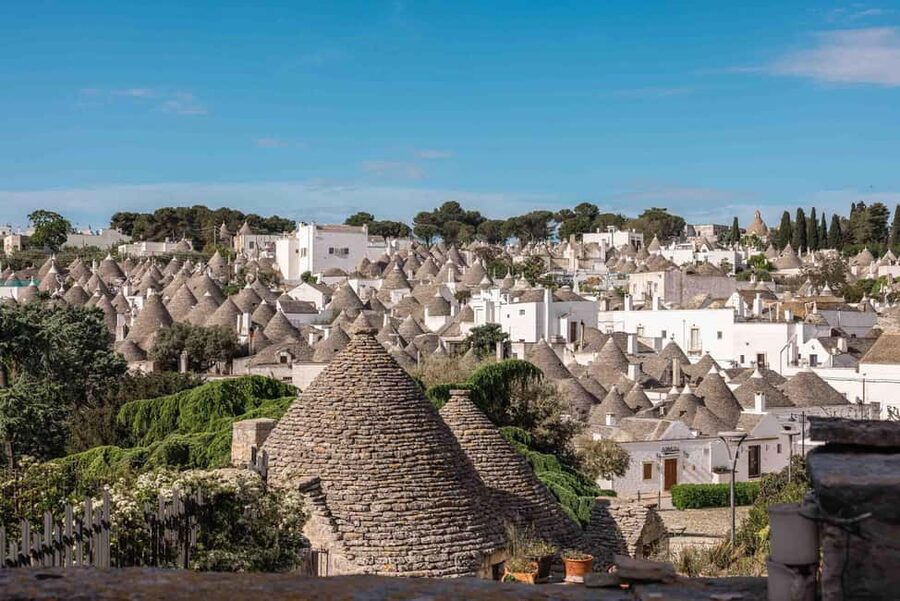
Alberobello makes its first impression with whitewashed trulli and pointed stone roofs, but the buildings become far more interesting once you understand why they were built that way. This two-hour walk links the town’s best-known sights with quieter residential lanes and local stories that are easy to miss on your own.
I like the focus on dry-stone construction and the chance to hear from guides such as Guido, who was born and raised in Alberobello. I also like that the walk ends in the center, leaving you free to shop or eat. The main drawback is that some groups can be larger than ideal, and a fast-speaking guide may be harder to follow.
Key things to know before you book
- Trulli architecture explained: Learn how cone roofs and stacked stone walls were made without mortar.
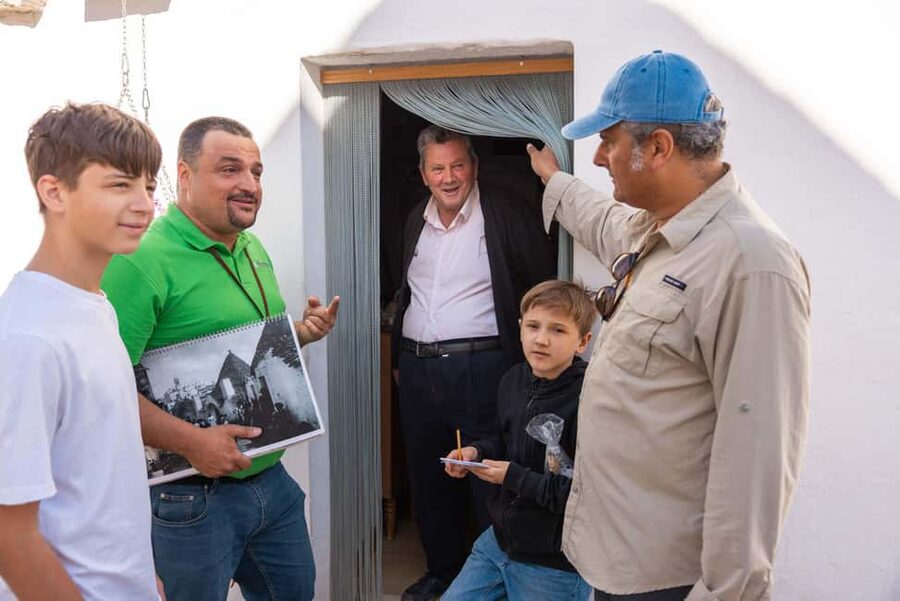
- A genuinely local view: Guido and Ksenia have been praised for explaining both Alberobello’s past and daily life today.
- Northern Alberobello focus: The route includes Aia Piccola, a quieter area with residential trulli rather than only souvenir shops.
- Built-in photo time: The guide pauses at scenic viewpoints and can help take photos.
- Useful after-tour advice: Guides often suggest restaurants and other places to visit in Apulia.
- Simple two-hour format: There is no hotel pickup, and museum entry is not included, so you pay mainly for guiding and local context.
Why Alberobello is more than a pretty photo stop
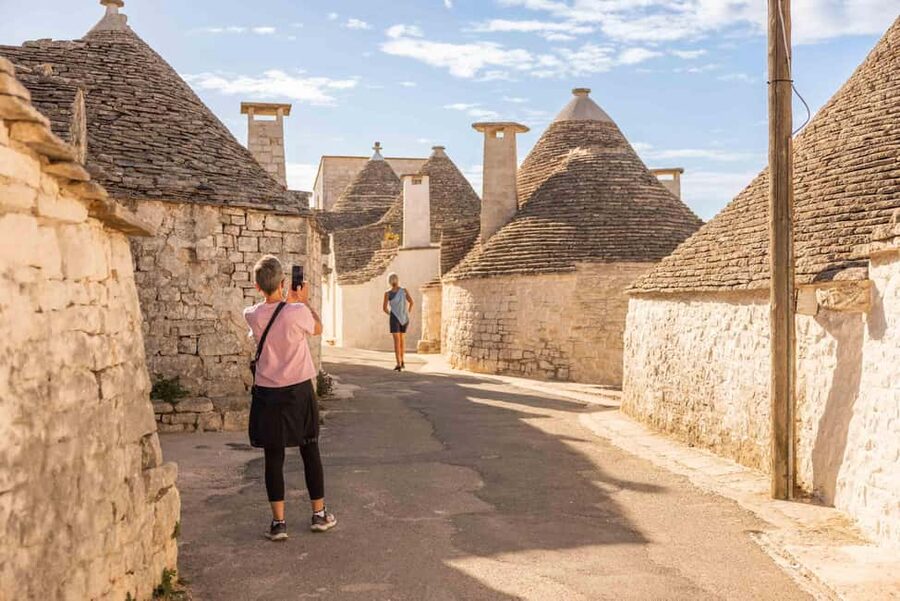
Alberobello is famous for its trulli, the small stone houses topped with cone-shaped roofs. At first glance, the town can feel like a storybook set, with white walls, dark roof stones, symbols painted above doorways, and narrow lanes climbing through the old districts.
A walk with a local gives those details a purpose. You learn about the dry-stone tradition, a building method that uses carefully fitted stones rather than mortar. The technique reaches back several thousand years in the region, so the trulli are not simply charming holiday cottages. They belong to a long building tradition shaped by local stone, climate, land use, and practical needs.
I like this tour because it explains the buildings before the town turns into a backdrop for photographs. You still get plenty of picture stops, but the cone roofs and thick stone walls begin to look like clever construction rather than decoration.
The UNESCO designation, granted in 1996, adds another layer. Alberobello is recognized for the trulli themselves and for the way they form historic neighborhoods. The tour helps you see those neighborhoods as living parts of town, not just a collection of shops.
More Walking Tours in Italy:
- Venice: Doge’s Palace and St Mark’s Basilica Walking Tour
★ 4.4 · 6,291 reviews - Milan: Guided Walking Tour & Last Supper Visit with Ticket
★ 4.7 · 5,409 reviews - Naples: Street Food Walking Tour with Local Guide
★ 4.9 · 4,976 reviews
Starting at Piazza Sacramento
The meeting point is Piazza Sacramento, a useful place to begin because the walk quickly moves into Alberobello’s central historic area. You should arrive ready to walk on narrow streets and uneven stone surfaces, even though the activity is listed as wheelchair accessible.
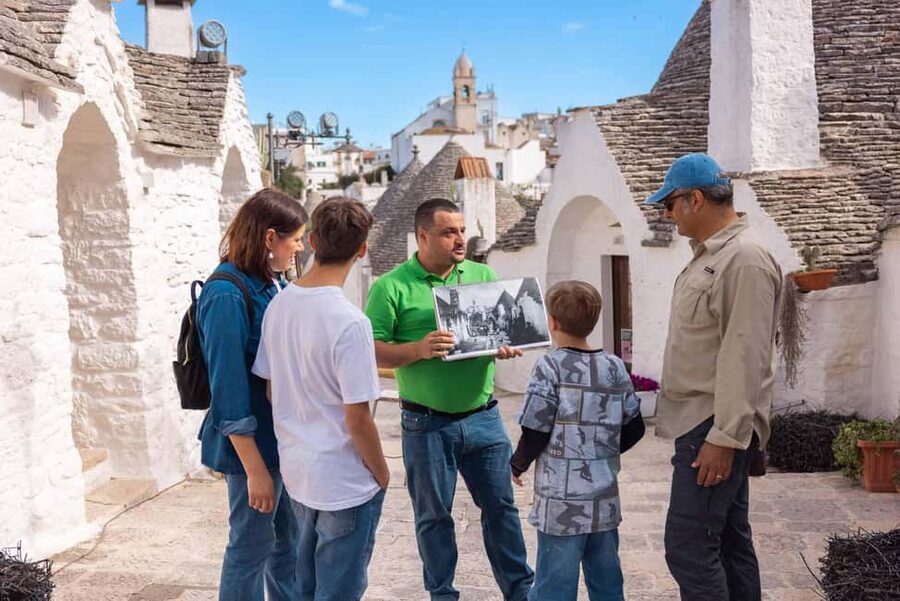
This is not a bus tour with a view through a window. You move at street level, looking up at roof shapes, checking the layers of stone, and stopping while the guide explains what you are seeing. The guide may use stories, old photographs, maps, or local anecdotes to make the town’s past easier to picture.
That personal approach is a major part of the value. Guido has been praised for bringing visual material to the explanation, while Ksenia has been praised for adapting the pace, answering questions, and helping with photographs. The exact guide can vary, but the experience is built around a live English-speaking local guide.
Trullo Sovrano: a useful first look
The first listed stop is Trullo Sovrano, with about 15 minutes set aside for it. It is one of the most important trulli in Alberobello and gives you a clear introduction to the form before the walk moves into clusters of smaller buildings.
You should pay attention to how the roof is made, how the stone courses narrow as they rise, and how the building combines several spaces beneath its distinctive cones. The guide’s explanation is useful here because casual sightseeing can make all trulli seem alike.
Museum admission is not included, so do not assume the tour price covers entry inside. The scheduled visit may focus on the exterior and its place in the town’s story, with any paid museum access handled separately.
Chiesa dei Santi Medici Cosma e Damiano
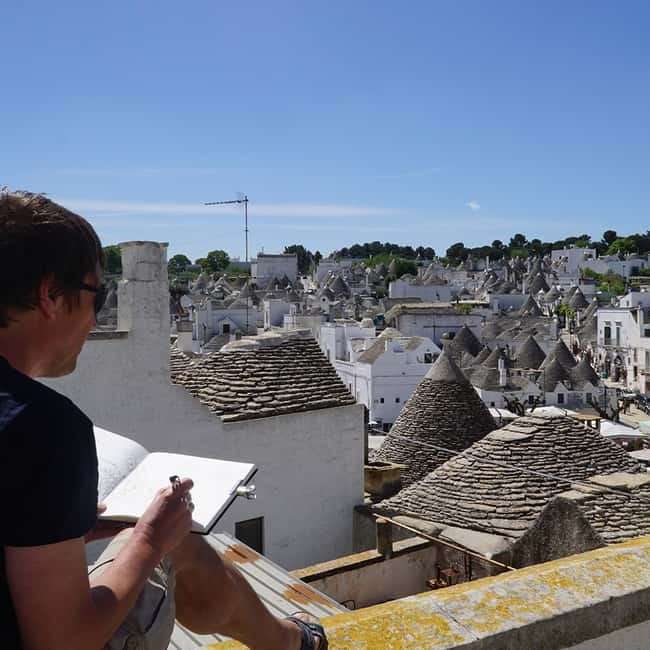
The walk then reaches the Church of Saints Cosmas and Damian, where the guide provides around 10 minutes of explanation. This stop broadens the tour beyond architecture and connects Alberobello’s built environment with local religious life.
The church is also a useful visual contrast. After several small white trulli, you encounter a larger religious building with a different scale and purpose. The guide can help place it within the town rather than treating it as an isolated monument.
Ten minutes is enough for an overview, not a full church history. If you want a long interior visit, this tour is not designed for that. Its strength is the steady link between several places, with each stop adding another piece to the picture.
Same streets, a different guide:
- Florence: Highlights Walking Tour with Expert Guide
★ 4.6 · 4,662 reviews - Venice: San Marco to Rialto Walk & Spritz Like a Local
★ 4.2 · 3,651 reviews - Uffizi & Accademia Timed Entry: Small Group Duomo Walking Tour
★ 4.5 · 3,630 reviews - Venice Walking Tour and Gondola Ride
★ 3.5 · 3,630 reviews
Casa D’Amore and the story of town life
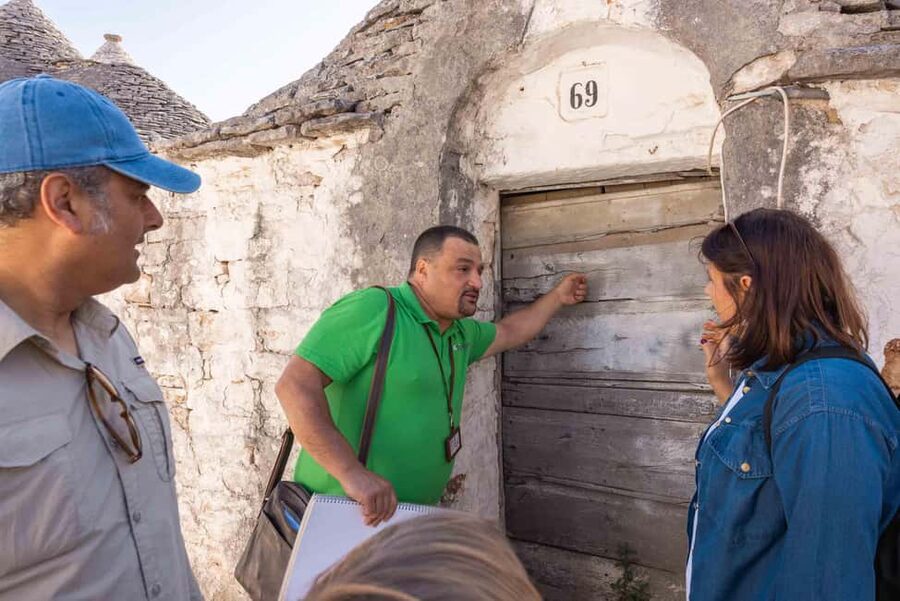
Casa D’Amore receives another 10-minute guided stop. This is one of the places where the tour’s historical storytelling matters most, because a building can tell you about local power, housing, and the way Alberobello developed.
The guide’s anecdotes are intended to bring the past down to human scale. Instead of hearing only dates and architectural terms, you hear about the people who built, owned, used, and lived among these structures.
I especially like this kind of stop for first-time visitors. You do not need a background in Apulian architecture to follow along. The explanation gives you a framework you can use later as you wander through the alleys alone.
The panoramic view and the best photo pause
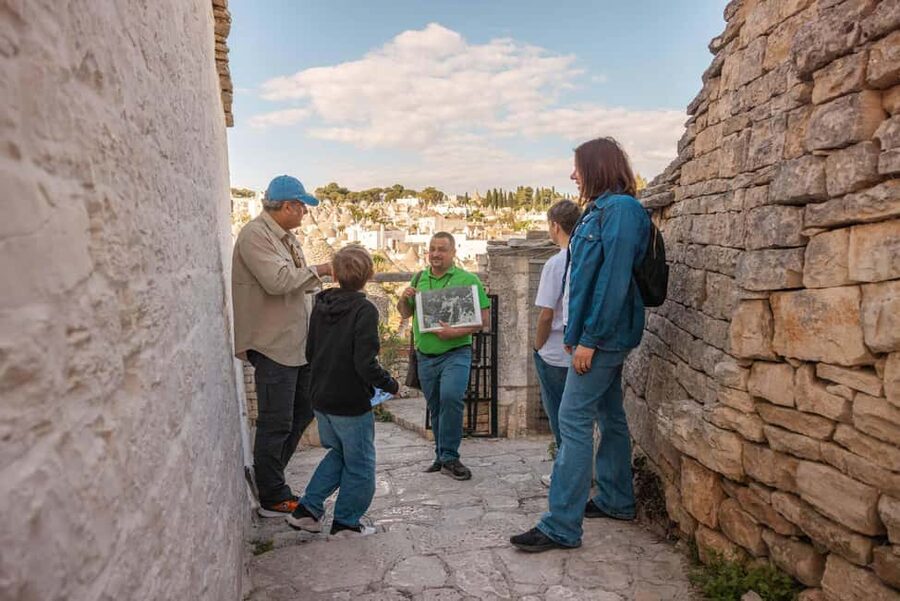
A trulli panoramic viewpoint follows, with about 10 minutes for the guide to point out the shape of the town. This is one of the tour’s clearest photo opportunities, since the repeated cones and white walls are easier to understand from above or from a wider angle.
Bring a phone or camera, but also listen before rushing to take pictures. The guide may explain why certain clusters look different, which areas are aimed more at visitors, and which still function as homes.
Several people have especially valued guides who take photos for the group. That can be a small but welcome service when you are traveling as a couple or alone. It also means you can spend a little more time looking at the town instead of managing your camera.
Aia Piccola, where the trulli feel more lived in
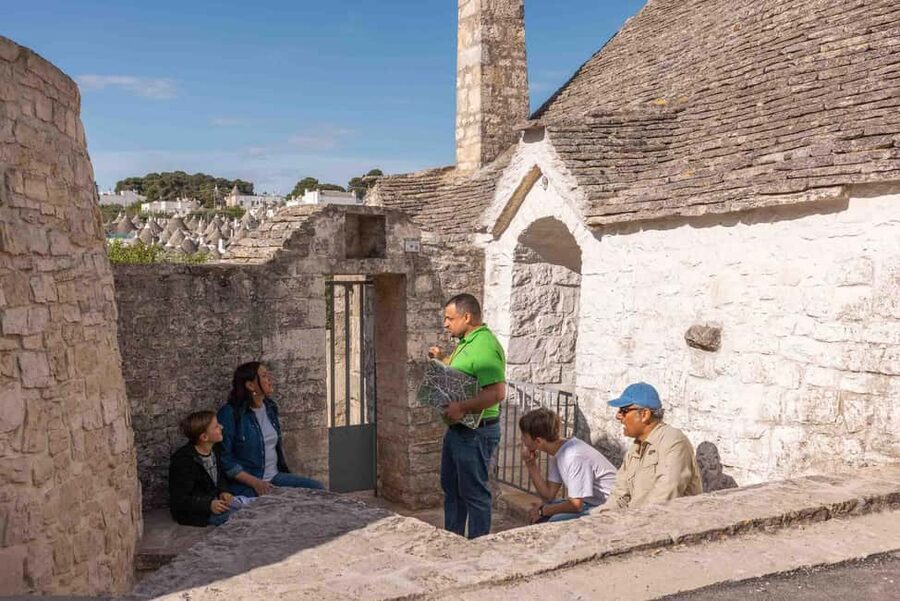
The longest stop is Aia Piccola, with around 20 minutes of guided walking. This is likely the most valuable part of the route for anyone who wants more than the standard shopping streets.
Aia Piccola is associated with residential trulli, so the area offers a different feel from lanes lined mainly with souvenir stores. You see how the houses fit together as a neighborhood, not just as individual curiosities.
The distinction matters. Alberobello’s tourist center is photogenic and easy to explore, but it can also feel crowded, especially when several groups arrive at once. Aia Piccola gives the guide more room to discuss how people live among these old structures and why the district matters.
Guides have also been praised for seeking shade during hot weather and keeping the pace comfortable. That is important in summer, when a short distance can feel tiring under the Apulian sun. Some walks include a practical toilet stop as well, depending on the guide and group needs.
The wider trulli area and a central finish
The route includes another visit to the trulli of Alberobello, allowing the guide to pull together the architectural themes from earlier stops. By this stage, you should be able to spot details such as the cone construction, whitewashed walls, symbolic markings, and different ways the homes are arranged.
The final point is Largo Martellotta, right in the center. This is a good ending rather than a rushed return to the starting point. You can continue exploring on your own, stop at a café, browse shops, or use the guide’s restaurant suggestions.
That practical handoff is one of the tour’s best features. Guides such as Guido have helped people choose places to eat and plan their next stop in Apulia. You should still make your own choice, but a local recommendation can save time after a morning or afternoon of sightseeing.
What the guide adds to the experience
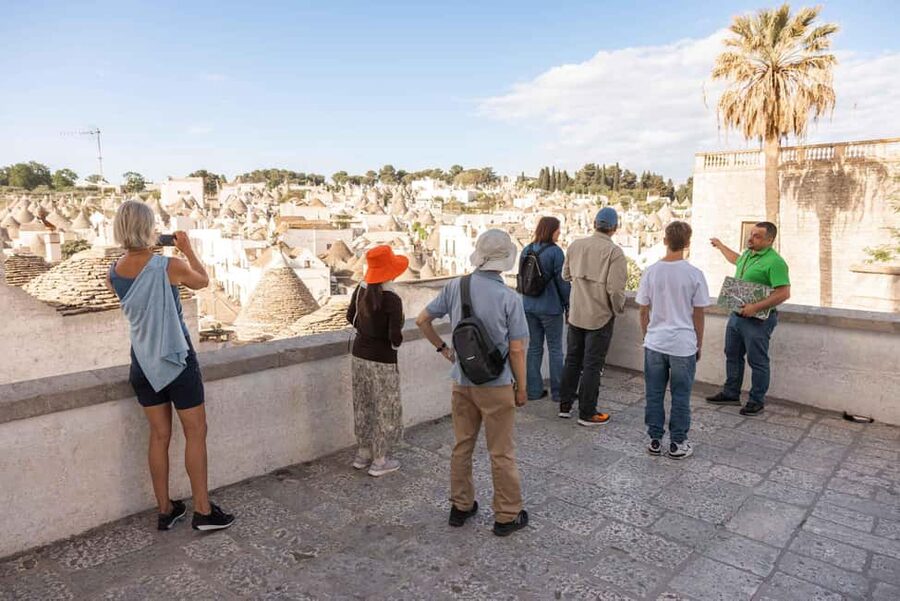
The guide is the central reason to book this walk. Alberobello is easy to photograph without help, but much harder to understand in a meaningful way without context.
Guido has been praised for his humor, visual aids, local background, and detailed answers. Ksenia has been praised for her patience, clear communication, thoughtful pacing, and willingness to tailor the walk to the group. These details suggest a tour that can feel personal rather than rehearsed, although the experience may vary with the guide assigned that day.
English is the stated tour language. One consideration is listening comfort. A few comments indicate that a fast pace of speech or a strong accent can make parts of the explanation harder to catch. If that happens, ask the guide to repeat key points. Most of the reported praise centers on guides who welcome questions and make an effort to keep everyone involved.
Group size also matters. Smaller groups make it easier to hear, ask questions, and stop without blocking a narrow lane. One person felt a group of 10 was larger than ideal, while other experiences were described as small and pleasant. If you strongly prefer a private or very small tour, confirm the group arrangement before booking.
Is $44 a fair price?
At $44 per person, this is not the cheapest way to walk through Alberobello. You can enter the town’s streets for free and see the trulli without a ticket.
The price makes more sense if you value explanation. You are paying for two hours of local guiding, historical context, architectural interpretation, photo help, and practical advice about food and nearby places. The tour also saves you from piecing together the meaning of each building while trying to navigate unfamiliar lanes.
The fact that museum entry is excluded keeps the comparison clear. This is a walking and interpretation service, not an all-inclusive attraction ticket. If you plan to visit Trullo Sovrano or another museum separately, add that cost to your day.
I consider the tour good value for a first visit, especially if Alberobello is one stop on a wider Apulia trip. It is less useful for someone who has already studied the trulli, prefers silent wandering, or only wants a quick photo session.
Timing, weather, and physical comfort
The walk lasts two hours, which is about right for the subject. A shorter tour could cover the main photo spots but would have less time for stories. A much longer walk could become tiring, especially in the heat.
The afternoon can work well because the town may be quieter than during the busiest morning period, though conditions change by day. Several guides have made a point of stopping in shade and moving at a relaxed pace. Still, wear comfortable shoes, bring water, and plan for sun exposure.
The activity is listed as wheelchair accessible, but Alberobello’s historic lanes and old stone surfaces can present practical challenges. If you use a wheelchair or have limited mobility, confirm the exact route and surface conditions with the provider before arrival. The guide may be able to adjust the pace and route, but that detail is not guaranteed in the tour information.
There is no pickup or drop-off. You need to reach Piazza Sacramento yourself, and the walk finishes at Largo Martellotta. That is simple if you are already in Alberobello, but you should allow time to find the meeting point if arriving by public transport or car.
Who will get the most from this walk?
I would choose this tour for a first-time visitor who wants to understand why Alberobello looks the way it does. It suits couples, families, solo visitors, and anyone who prefers a short guided walk over a formal museum visit.
Children can take part, and the changing streets, odd-shaped roofs, and local legends give younger visitors something to watch for. The two-hour length also keeps the outing manageable.
It is a good fit for photographers who want help finding viewpoints, as well as food-minded visitors who appreciate restaurant suggestions at the end. It also suits people curious about present-day life, since the route includes residential trulli rather than only commercial streets.
I would skip it if you want a completely independent visit or if you already know the architecture well. In that case, spend the $44 on food or a separate entry ticket and explore at your own pace.
Should you book it?
Book this walking tour if you want the trulli to become understandable, not just attractive. The strongest reasons are the local guides, the dry-stone building explanation, the Aia Piccola visit, and the useful finish in the center.
Go with realistic expectations. The group may not be tiny, the English delivery may vary by guide, and museum tickets are extra. But for a first look at Alberobello, two hours with someone who can explain the homes, legends, neighborhoods, and current town life is a practical use of your time.
FAQ
How long does the Alberobello trulli walking tour last?
The tour lasts two hours.
Where does the tour begin?
It begins at Piazza Sacramento in Alberobello.
Where does the tour finish?
The walk finishes at Largo Martellotta, 70011 Alberobello BA, Italy.
Is museum admission included?
No. Museum entry tickets are not included in the $44 tour price.
What language is the tour conducted in?
The live tour guide speaks English. English is the listed tour language.
Is the tour wheelchair accessible?
The activity is listed as wheelchair accessible. Because the route passes through historic streets and stone lanes, you may want to confirm the exact route with the provider before booking.
New routes in Italy
- Private St. Francis Basilica of Assisi and City Walking Tour★ 5.0 · 114 reviews
- Assisi Private Walking Tour including St. Francis Basilica★ 5.0 · 124 reviews
- Milan: City Highlights Walking Tour with The Last Supper★ 4.9 · 195 reviews
- Florence: Heart of Florence Guided Walking Tour★ 4.0 · 81 reviews
- Milan: Private or Shared Essential Walking Tour★ 4.7 · 84 reviews
- Taormina: Shared or Private Food & Wine Walking Tour★ 4.6 · 167 reviews
- Syracuse: Ortigia Private Walking Tour★ 4.8 · 181 reviews
- Syracuse: Ortigia and Neapolis Guided Walking Tour★ 4.7 · 205 reviews
Italy Walking Tours, compared.
Doge’s Palace and St Mark’s Basilica Walking Tour
Read our review →
Guided Walking Tour & Last Supper Visit with Ticket
Read our review →
San Marco to Rialto Walk & Spritz Like a Local
Read our review →
Uffizi & Accademia Timed Entry: Small Group Duomo Walking Tour
Read our review →
Browse the lists this tour appears in