
Review · AMSTERDAM
Amsterdam: Anne Frank Guided Walking Tour in DE/EN/IT/ES
Amsterdam’s Jewish Quarter is best understood on foot, where ordinary streets carry stories of Jewish life, wartime courage, and terrible loss. This two-hour walk links places such as the Portuguese Synagogue, the Dokwerker, and the National Holocaust Names Monument with readings from Anne Frank’s diary.
I like the way the tour places Anne’s story inside the wider history of Amsterdam’s Jewish community. I also like its modest price, $28, and the strong personal approach of guides such as Lilly, Josh, Valentina, Zoe, and Francesco. The main drawback is important: you do not visit or see the Anne Frank House, and most sights are viewed from outside.
Key points
- Anne Frank’s diary is read along the route, giving the walk a personal voice rather than relying only on dates and facts.
- The route covers about 2 to 3 kilometers, from Waag at Nieuwmarkt to the National Holocaust Names Monument.
- You see major Jewish landmarks and memorials, including the Portuguese Synagogue, Auschwitz Monument, and the Dokwerker.
- The focus extends beyond Anne Frank, covering Jewish life before the war, resistance, deportation, and the community today.
- You must choose one language, English, German, Italian, or Spanish. The tour is not bilingual.
- The experience works well as a small-group walk, with a private option available and no admission fees during the route.
A serious history walk that begins at Waag
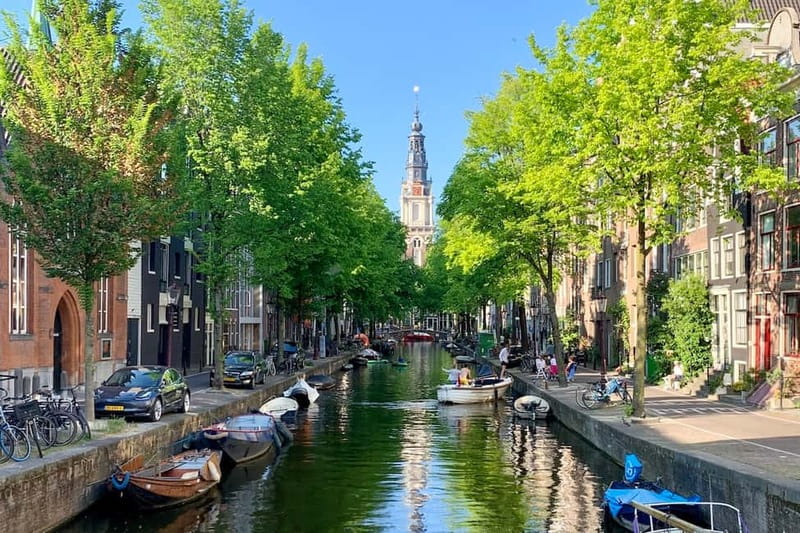
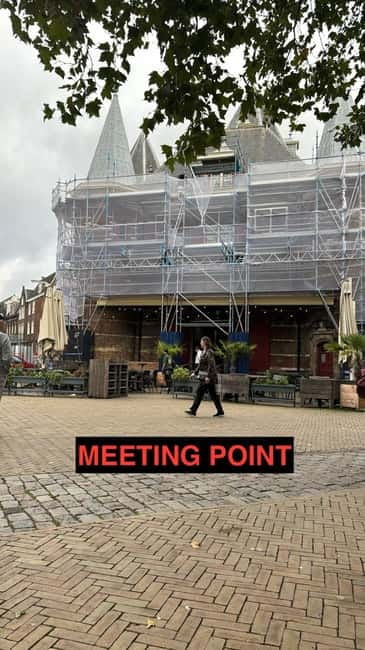
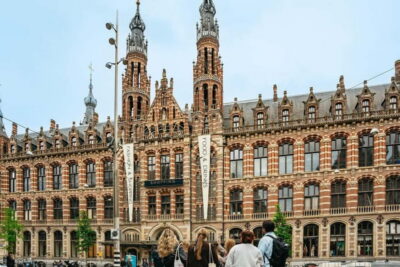
Meet your guide at the entrance to De Waag, the castle-like building in the middle of Nieuwmarkt. Look for the red name tag around the guide’s neck. This is a busy part of Amsterdam, so arrive with enough time to find the building and gather before the walk begins.
Waag gives the tour a useful starting point. It is an old Amsterdam landmark, but the real subject quickly becomes the Jewish Quarter around it. You are not being led from one famous photo stop to another. The guide builds a story about how Jewish families came to Amsterdam, shaped its trade and city life, and later faced persecution under Nazi rule.
The first part explains the arrival of Jews who had been expelled by the Spanish Inquisition. Amsterdam offered a place to rebuild, and Jewish merchants helped turn the city into one of Europe’s major commercial centers. That background matters because it shows Jewish history here as more than a wartime story. There was faith, work, family life, art, scholarship, and business long before the Holocaust.
The walk is serious from the start, but the best guides keep it human and clear. Guides including Lilly, Zoe, Valentina, Josh, and Francesco have been especially praised for warmth, careful storytelling, and a willingness to answer questions. Your experience will depend partly on who leads your group, but the format gives a good guide room to connect the locations rather than recite a script.
More Jewish Heritage Walking Tours in Amsterdam
- Amsterdam Anne Frank: Small-Group Walking Tour & Local Guide
★ 4.8 · 12,789 reviews - Anne Frank’s Story – Guided Walking Tour through Amsterdam
★ 5.0 · 11,619 reviews - Amsterdam: Anne Frank Guided Small Group Walking Tour
★ 4.8 · 2,722 reviews
Nieuwmarkt and Zuiderkerk: seeing the Jewish Quarter take shape

From Waag, the group spends about 10 minutes around Nieuwmarkt Square. The square helps you get your bearings, but it is also a useful place to consider how central this district was to Amsterdam’s Jewish population.
The guide explains why Jewish families settled in this part of the city and how the Jewish Quarter developed around the Jewish Triangle. Amsterdam’s Jewish community was not separate from the rest of city life. Its residents worked, worshipped, traded, raised children, and lived beside non-Jewish neighbors.
The next stop is Zuiderkerk, where the guided explanation lasts about 10 minutes. You learn more about the built environment and the people who lived around it. The church is a reminder that the district was shared by different communities, not an isolated Jewish enclave.
This is also where the tour begins to show how much can be missed if you only visit major museums. You are looking at streets, buildings, and corners that still form part of daily Amsterdam. The drawback is that this is a walking interpretation rather than an indoor museum visit. If you want display cases, long documents, and preserved rooms, you will need to visit the Jewish Cultural Quarter museums separately.
Huis de Pinto and Rembrandt’s Amsterdam
Huis de Pinto receives a shorter explanation of about five minutes. It is one of the stops that gives the route texture. The guide uses the building and its surroundings to discuss Jewish residents and the social world of the quarter.
The route then reaches the Rembrandt House, with about 15 minutes of guided commentary. Rembrandt lived in the middle of the Jewish Quarter, and his connection to the area helps break down the idea that Jewish and non-Jewish Amsterdam existed in entirely separate worlds.
I find this part useful because it connects art and neighborhood history. You see how a famous Dutch painter’s address can help explain the people and streets around him. The tour does not include entry to the Rembrandt House, so do not expect to walk through the museum. You see the location and hear its role in the story.
At several points, guides may use photographs or visual material to show people and places as they looked during the war. That can make a street corner easier to understand, especially when the present-day buildings give little clue to what happened there.
Sint Antoniesluis and the story of resistance

The walk continues to Sint Antoniesluis for about 10 minutes. This section shifts more firmly toward the occupation and the choices faced by Amsterdam’s residents.
The history here is not presented as a simple division between victims and villains. You hear about Jewish and non-Jewish resistance, people who helped others hide, and the personal danger involved in opposing the Nazi authorities. The tour also covers the February Strike of 1941, when Amsterdam workers protested the persecution of Jews.
That event is important because it shows that resistance was not only a private act carried out behind closed doors. Public opposition happened too, even when the consequences could be severe. The guide places such events within the larger story of deportation, loss, and the fact that very few deported people returned.
This is one reason the tour works better as a walk than as a short biography of Anne Frank. Anne’s diary gives you the voice of one young person, but the route keeps widening the frame. You learn about a whole community and about the people who risked their own safety to help others.
More Jewish Heritage Walking Tours in the Netherlands
- Anne Frank Walking Tour Amsterdam Including Jewish Cultural Quarter
★ 5.0 · 1,879 reviews - Anne Frank’s Last Walk & See Anne Frank House in Virtual Reality
★ 5.0 · 957 reviews - Anne Frank and Jewish Quarter Amsterdam Private Walking Tour
★ 5.0 · 684 reviews - Amsterdam: Anne Frank’s Last Walk & Visit Anne’s House in VR
★ 4.9 · 614 reviews
Portuguese Synagogue and the Jewish Cultural Quarter
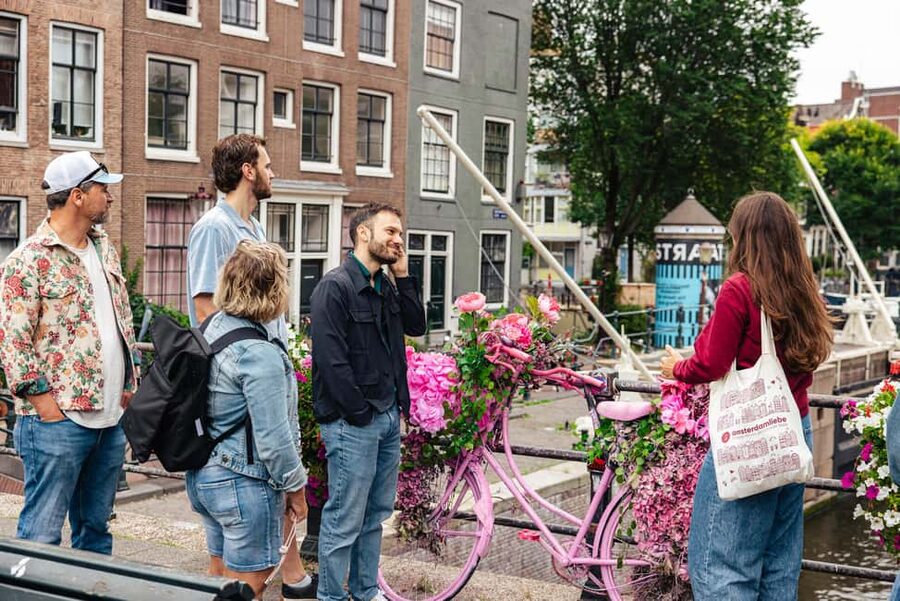
The Portuguese Synagogue is one of the most striking stops. You have about 10 minutes for a photo stop and explanation. Its presence recalls the wealth and confidence of Amsterdam’s Sephardic Jewish community before the war.
The guide explains why the synagogue matters, but you should be clear about what is included. This tour does not provide admission to the synagogue. You see it from the route and hear its story. The same applies to the Jewish Historical Museum, which receives about five minutes of outside commentary rather than an indoor visit.
That limitation is worth spelling out because the wording of a walking tour can make a place-by-place stop sound like entry is included. Here, the value comes from the guide’s connections between the sites. You are not paying museum admission, and no entry fees are required during the walk, but you also will not examine the interiors or collections.
The Jewish Cultural Quarter is a useful area to return to after the tour. If the walk gives you the outline, the museums can provide more detail through objects, images, and personal accounts. I would use this tour to understand the district first, then decide which indoor sites deserve more of your time.
Auschwitz Monument and the Dokwerker

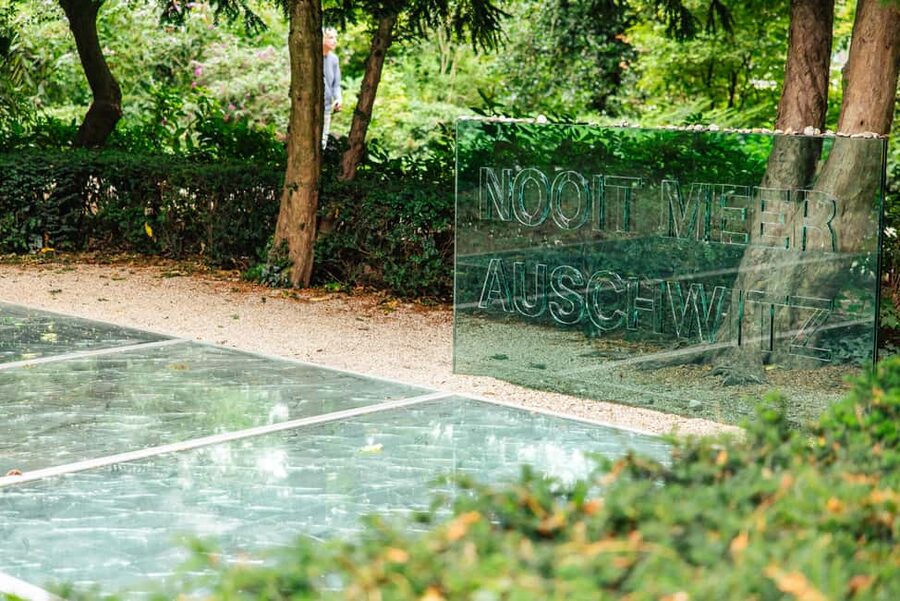
The Auschwitz Monument receives about 10 minutes of guided attention. This is one of the heaviest moments of the route. It connects the local story of Amsterdam’s Jewish population with the extermination camps and the immense scale of the Holocaust.
The guide may read passages from Anne Frank’s diary during the walk. That approach has been one of the strongest features of the experience. The words are not used as decoration. They give you a young person’s observations, fears, and hopes while the guide explains the forces closing in around Jewish families.
You should expect an emotional tour. Some guides, including Josh, Marie, Valentina, and Bianca, have been praised for treating the subject with care and restraint. The tone is moving, but the best presentation avoids turning suffering into spectacle.
The Dokwerker is a shorter, roughly five-minute stop. This monument commemorates the February Strike and gives the resistance story a clear public symbol. It also reminds you that Amsterdam’s wartime history includes acts of opposition, not only persecution and silence.
These stops are not about collecting photographs. They are places to pause, listen, and think. The group may be standing outdoors, sometimes in rain or wind, so proper clothing matters.
National Holocaust Names Monument: a powerful ending
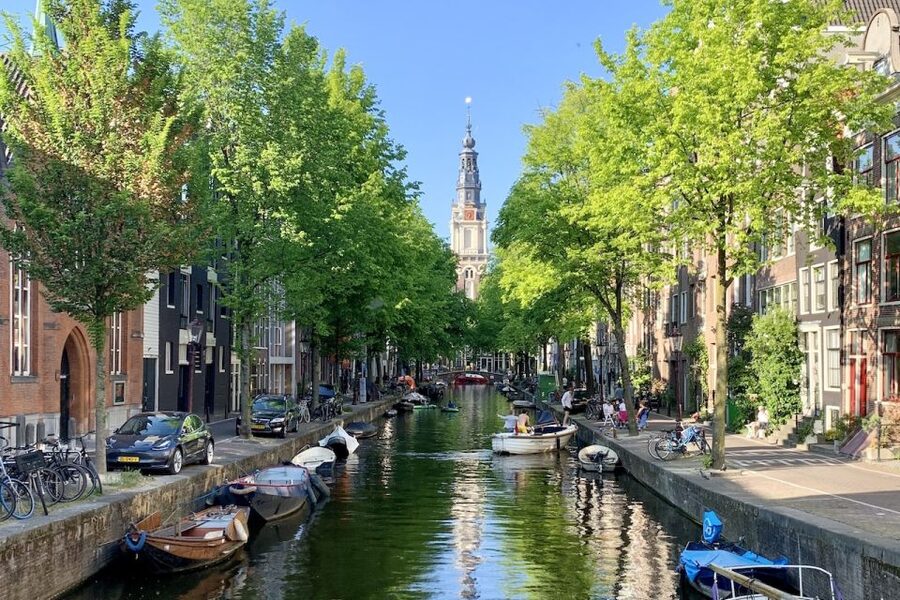
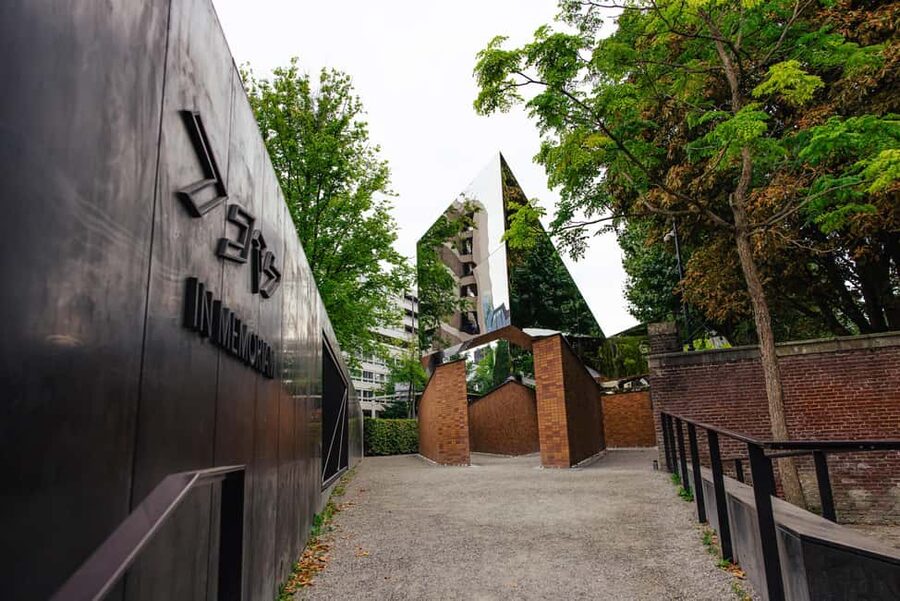
The route ends at the National Holocaust Names Monument, where the guide spends about 15 minutes. This is a fitting final stop because the monument gives individual names to people murdered during the Holocaust.
Ending here keeps the focus on people rather than statistics. Dates and totals are necessary, but names make the loss more personal. After two hours of walking through the old quarter, you have seen how Jewish life was woven into Amsterdam, learned about resistance, and then arrived at a place devoted to remembrance.
The route is about 2 to 3 kilometers. That is not a difficult distance for most people, but Amsterdam’s pavement, weather, and frequent stops can make it feel longer than a casual city stroll. Wear comfortable shoes and bring water. The tour runs in all weather, so pack an umbrella or rain jacket.
The ending is also practical. You finish at the monument, not at the Anne Frank House. If you plan to visit the Anne Frank House separately, book that experience on its own and do not assume this walk includes access or even a view of the building.
What the guides add to the experience
The guide is the heart of this tour. A good presentation must handle several subjects at once: the growth of Amsterdam’s Jewish community, the Nazi occupation, resistance, Anne Frank’s family, deportation, and Jewish life today.
The strongest guide accounts point to a consistent approach. Lilly used diary passages to give the walk emotional force. Zoe was praised for making difficult material clear and approachable. Josh was noted for patience, personal insight, and a willingness to answer questions. Valentina brought strong subject knowledge and energy to Anne’s story. Spanish-speaking guide Simone was described as clear, engaging, and easy to follow, while Francesco brought warmth and care to the history.
Names and styles vary by departure, so you cannot choose the exact guide from the information provided. You can choose the language, however. English, German, Italian, and Spanish departures are available, and the tour is conducted in one language only.
That point matters for couples or families with mixed language needs. You should select the language that lets you follow a serious historical discussion without strain. The guide may invite questions and discussion, so fluent understanding will make the walk far more worthwhile.
Price, pace, and who should book
At $28 per person, I consider this a good-value introduction to Amsterdam’s Jewish Quarter. You receive two hours with a live guide, a coherent route, diary readings, and interpretation at several memorials and historic buildings. There are no museum admission costs hidden in the tour because the walk does not enter the sights.
The price is less attractive if you expect a museum tour or the Anne Frank House. Those are separate experiences, and you should compare the cost with your actual goal. If you mainly want to get inside historic buildings, this is not the right product.
I would choose this walk if you want context before exploring the Jewish Cultural Quarter on your own. It also suits anyone who has read Anne Frank’s diary and wants to understand the Amsterdam streets and community around her story.
The tour is wheelchair accessible, and a private group option is available. The route is still outdoors and covers several kilometers, so ask yourself how comfortable you are with a two-hour walk in changing weather. Comfortable shoes are not a minor suggestion here.
Free cancellation is available up to 24 hours before the start, and you can reserve now and pay later. Those terms are useful when your Amsterdam schedule is still shifting, but the bigger booking decision is language and expectation: choose the right language, and understand that this is an outdoor history walk, not an Anne Frank House ticket.
Should you book this Amsterdam Jewish Quarter walk?
Book it if you want a thoughtful introduction to Jewish Amsterdam, especially if diary readings help you connect with historical events. The route gives you more than an Anne Frank biography by showing the community, buildings, resistance movements, and memorials around her story.
Skip it if you mainly want to enter museums, see the Anne Frank House, or spend two hours indoors. For everyone else, $28 buys a well-paced route with strong emotional and historical value. Bring water, wear good shoes, choose your language carefully, and leave room in your schedule for a quiet visit to one of the Jewish Quarter museums afterward.
FAQ
Does the tour visit the Anne Frank House?
No. The Anne Frank House is not visited or seen during this walking tour. Entry to the house is not included.
How long is the walking route?
The tour lasts two hours and covers about 2 to 3 kilometers.
Which languages are available?
You can book the tour in English, German, Italian, or Spanish. It is conducted in one language and is not bilingual.
Where does the tour begin?
Meet your guide at the entrance to De Waag restaurant, a historic building in the middle of Nieuwmarkt Square. The guide wears a red name tag around their neck.
Where does the tour finish?
The walk ends at the National Holocaust Names Monument.
Are museum or monument admission fees included?
The tour does not require admission fees because the sights are visited from outside. Entry to places such as the Anne Frank House, Jewish Historical Museum, and Portuguese Synagogue is not included.
New routes in Amsterdam
- Small Group Walking Tour in Amsterdam with Friendly and Fun Guide★ 5.0 · 281 reviews
- Humans of Amsterdam: Cultural Walking Tour incl. meeting 2 locals★ 5.0 · 320 reviews
- Private Tour: Amsterdam City Walking Tour and Canal Cruise★ 4.5 · 142 reviews
- Amsterdam: Private Introduction Walking Tour (TOP RATED)★ 5.0 · 223 reviews
- Amsterdam: Anne Frank and World War II Walking Tour (TOP RATED)★ 4.5 · 72 reviews
- Anne Frank and Jewish Quarter Amsterdam Private Walking Tour★ 5.0 · 684 reviews
- Amsterdam Private Historical Walking Tour★ 5.0 · 75 reviews
- Small Group Walking Tour – Hello Amsterdam★ 5.0 · 505 reviews
Amsterdam Walking Tours, compared.

Amsterdam Anne Frank: Small-Group Walking Tour & Local Guide
Read our review →
Absolutely Amsterdam – the Essential Introductory Walking Tour
Read our review →

Anne Frank Walking Tour Amsterdam Including Jewish Cultural Quarter
Read our review →
Amsterdam Highlights Walking Tour: Small Group Experience
Read our review →