Review · AMSTERDAM
Small Group Walking Tour – Hello Amsterdam
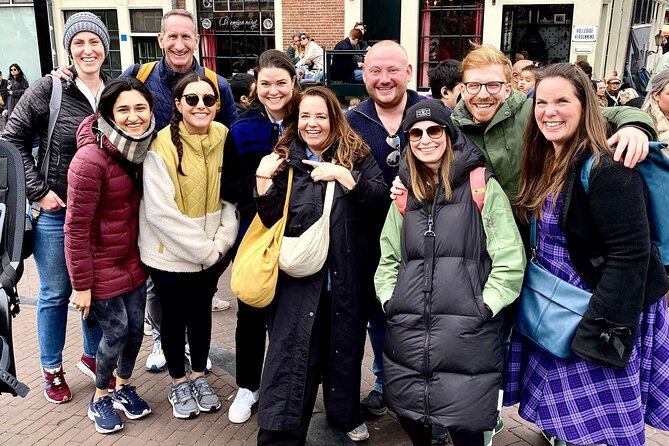
Amsterdam reveals itself best on foot, and this two-hour walk gives you a quick, useful introduction to the city’s center. You’ll move from Dam Square and the Royal Palace to the canals near the Anne Frank House, with stops for Dutch history, bike culture, social customs, and the city’s complicated past. The small group limit of 15 keeps the walk more personal than a large city tour.
I like the tour’s playful teaching style, especially the true-or-false game at Damrak, and I like that guides such as Dani, Danni, Jonas, and Adam have added personal tips about food, shopping, and places to see. The main drawback is the short length. You cover plenty of ground in about two hours, but one person wished the walk lasted three or four hours.
Key points to know before booking
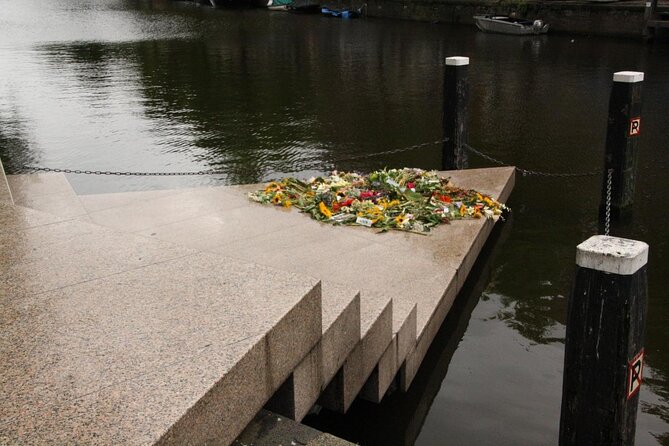
- Eight central stops: The route links Dam Square, the canal belt, Torensluis, Keizersgracht, Westerkerk, and the Homomonument.
- A useful first-day orientation: You get your bearings before choosing which museums, restaurants, and neighborhoods to explore on your own.
- History with some lightness: Games and stories balance serious subjects such as slavery, tolerance, and Amsterdam’s wartime and social legacy.
- A walking route, not a sightseeing bus: The tour is about moving through the city, with free admission at every stop.
- Small-group setting: A maximum of 15 people makes it easier to hear the guide and ask questions.
- Simple logistics: The tour starts at 10:00 am at the National Monument on Dam Square and finishes near the Anne Frank House.
Why this two-hour Amsterdam walk works well
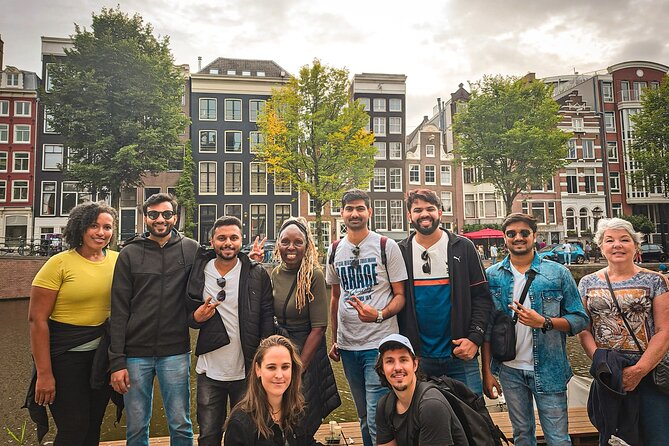
The strongest feature here is its focus. In two hours, you get the basic shape of central Amsterdam without spending half the morning inside one museum or waiting for a large group to gather. The route is built around short stops, clear stories, and views you can enjoy while walking.
That makes it especially useful on your first day. You’ll see several key areas, learn how they connect, and collect practical ideas for the rest of your stay. A local guide can also point you toward places to eat and shop, which is often more useful than another list of famous sights.
The walk is offered in English and uses a mobile ticket. It costs $35.07 per person. That is a reasonable price if you want a guided orientation and some local context, though it is not a substitute for paid museum entry or a longer historical tour. The admission at each listed stop is free, so your payment is for the guide, route, and interpretation.
The group size matters. With no more than 15 people, you should have a fair chance of hearing the guide on busy streets and asking a question without holding up a crowd of 40. Still, central Amsterdam can be noisy and crowded, so staying close to the guide will matter.
More Small-Group Walking Tours in Amsterdam
- Amsterdam Anne Frank: Small-Group Walking Tour & Local Guide
★ 4.8 · 12,789 reviews - Amsterdam: Anne Frank Guided Small Group Walking Tour
★ 4.8 · 2,722 reviews - Amsterdam Highlights Walking Tour: Small Group Experience
★ 5.0 · 1,132 reviews
Dam Square begins with Amsterdam’s public face
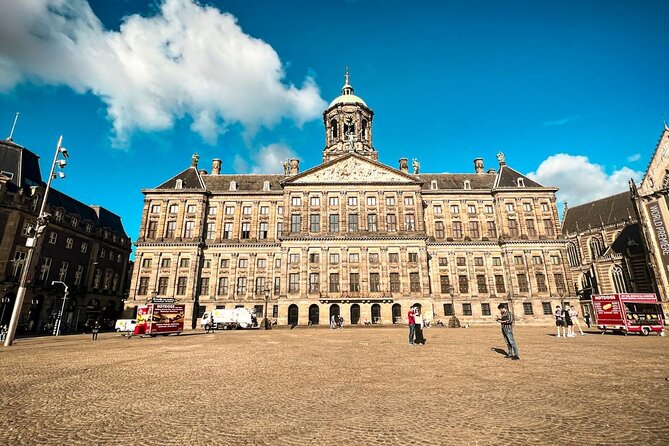
The meeting point is the National Monument on Dam Square at 10:00 am. This is a practical place to start because the square is one of the city’s main reference points, and the Royal Palace, New Church, and monument are all close by.
The first ten minutes introduce Amsterdam through its most recognizable civic space. You’ll hear how the square functions as the city’s center while taking in several major buildings at once. It is a brief opening rather than a full tour of the palace or church, so keep your expectations in check.
Damstraat follows as the route moves into one of the oldest central corridors. The value here is orientation. You begin to see how Amsterdam’s grand public spaces connect with narrow streets, shops, canals, and older neighborhoods.
Beurs van Berlage explains Amsterdam’s financial power
The next stop is the Beurs van Berlage, where the guide explains Amsterdam’s role in the development of the stock exchange and its rise as a major trading power in the 17th century.
This is one of the tour’s more useful history stops because it connects architecture with the city’s economic story. Amsterdam’s canals and handsome buildings did not appear by accident. Trade, banking, shipping, and finance helped shape the city you see today.
You spend about 15 minutes here. That is enough time for a focused explanation, but not a detailed architectural tour. If your main interest is art or building design, this stop may feel short. If you want a simple explanation of why Amsterdam became so influential, it earns its place on the route.
Damrak mixes canal views with a playful quiz
At Damrak, the tour shifts from formal history to a faster, more interactive format. The guide uses a true-or-false game to explore subjects such as tolerance, coffeeshops, and Dutch culture.
You do not need prior knowledge. That is the point. The game gives you a way to test common assumptions about Amsterdam and hear the facts behind them without sitting through a lecture.
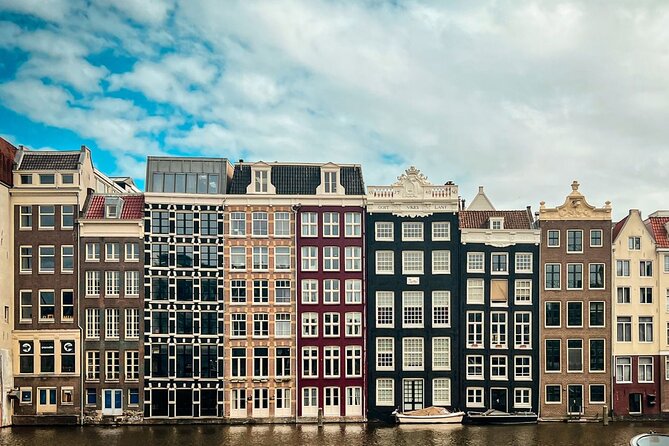
Damrak also provides one of the city’s classic photo scenes: the tall, narrow dancing houses along the water. The area is close to the Red Light District, so the guide can place that part of the city within a wider conversation about Amsterdam’s social policies and public image.
This stop is a good example of the tour’s tone. It aims to make serious information easy to remember. If you prefer a formal academic presentation, the quiz may feel a little light. If you want a lively introduction that keeps you moving, it works well.
More Small-Group Walking Tours in the Netherlands
- Amsterdam Small-Group Walking Tour
★ 4.7 · 995 reviews - Amsterdam: Guided Anne Frank Small-Group Walking Tour
★ 4.2 · 485 reviews - Amsterdam: Small-group Guided Walking Tour (French/English)
★ 5.0 · 289 reviews - Small Group Walking Tour in Amsterdam with Friendly and Fun Guide
★ 5.0 · 281 reviews
Haarlemmersluis puts Amsterdam on two wheels
At Haarlemmersluis, the subject turns to cycling. You’ll learn why bikes are such a central part of daily life in Amsterdam and hear the oft-repeated comparison that the city has more bikes than people.
This stop helps you read the streets more safely. Even if you are only walking, you need to understand that bike lanes are active traffic routes, not casual pavement. The guide’s explanation gives you cultural context as well as a practical warning.
The view here also opens the door to the canal belt. You are not simply collecting landmarks. You are learning how water, streets, bridges, and bicycles fit together in the city’s daily rhythm.
The stop lasts about ten minutes. That is enough for the main facts, though it will not cover every cycling rule or explain how to rent a bike. Think of it as a short cultural briefing before you continue on foot.
Singel brings out Amsterdam’s tilted houses
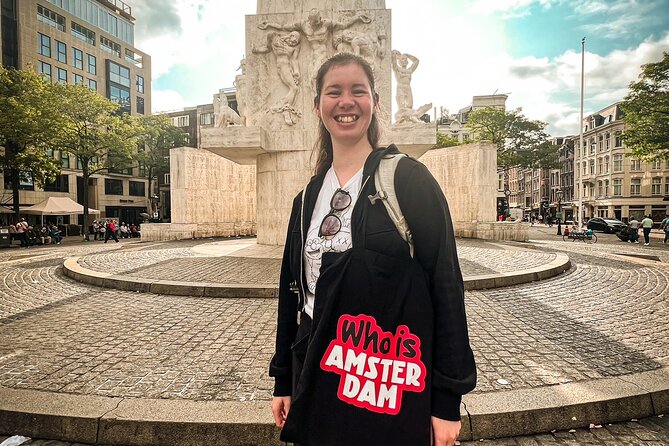
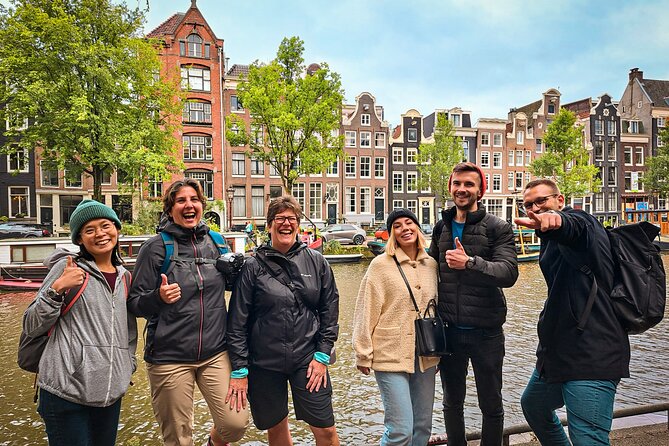
The walk continues along Singel, one of the canals that helps define central Amsterdam. Here you’ll see the famous dancing houses, many of which lean or appear to tilt toward the water.
The guide explains the stories behind these unusual buildings and why canal-side architecture has such a distinctive look. This is one of the most visually pleasing parts of the walk, and you’ll have a natural chance to take photographs.
The appeal is not only the view. The houses remind you that Amsterdam was built on difficult ground and shaped by narrow plots, water, trade, and practical building limits. The guide keeps the explanation short and accessible, which suits a walking tour.
If you want extended time for photos, you may need to take them quickly. The route keeps moving, and the stop is planned for about ten minutes.
Torensluis adds the canal belt and its harder history
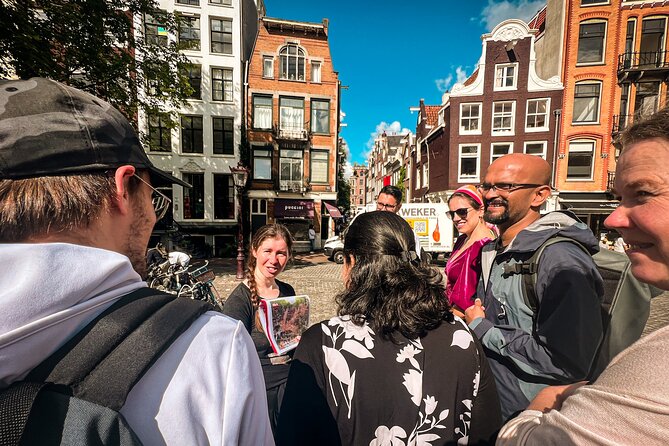
Torensluis is where the tour gives more attention to Amsterdam’s UNESCO canal belt. The guide explains how the canals were planned and created, along with some of the unusual buildings and landmarks connected to them.
This is also an important point in the route because the story becomes more honest. Amsterdam’s beauty and prosperity are linked to a past that includes slavery. The tour does not treat the city as a pretty postcard only. It asks you to consider how wealth and power were built, and whose lives were affected.
That balance is valuable. A short city walk cannot cover every aspect of Dutch colonial history, but it can make sure the subject is not ignored. You get a fuller picture of Amsterdam, one that includes both its admired design and its painful legacy.
The stop takes about ten minutes. If this subject matters greatly to you, you may want to seek out a longer museum or history program later in your visit.
Keizersgracht looks at Dutch family life
At Keizersgracht, the guide turns from buildings and trade to Dutch social habits, with a focus on family life. You’ll hear about the factors connected to Dutch children being named the happiest in the world by UNICEF in 2017.
This is a different kind of city history. Instead of asking how Amsterdam was built, it asks how people live. The goal is to help you understand Dutch attitudes and feel more comfortable with local customs.
The topic can be useful because cultural habits are often easier to notice than to explain. A local guide can offer context that you would not get from simply looking at canals and monuments. Still, the stop is brief, and it should be treated as an introduction rather than a complete portrait of every Dutch family.
Westerkerk, Anne Frank House, and the Homomonument
The final area brings together three major Amsterdam reference points: Westerkerk, the Anne Frank House, and the Homomonument. The tour ends at Westermarkt, beside the Westerkerk and about a two-minute walk from the Anne Frank House.
The guide uses this final stop to discuss Amsterdam’s ideals of acceptance, difference, and live-and-let-live culture. The Homomonument gives that discussion a clear physical focus, while the nearby church and Anne Frank House place it within the city’s wider story of faith, persecution, memory, and human rights.
This is a thoughtful way to finish. You leave with more than a collection of pretty canal photographs. You have also considered the values Amsterdam tries to express, along with the tensions between those ideals and the city’s past.
The tour does not include admission to the Anne Frank House or Westerkerk. You see the area from outside and finish nearby. If you plan to visit the Anne Frank House, arrange that separately.
What the guide style is like
The strongest guide quality is energy. Dani and Danni have used games and storytelling to make facts stick, while Jonas and Adam have been praised for clear information, enthusiasm, and useful personal suggestions. Since guide assignments can vary, you should not book expecting one specific person unless the operator confirms it.
The personal recommendations are a real benefit. A good guide can help you decide where to eat or shop after the tour, especially when you are still learning the city’s layout. Ask questions during the walk if you want more than the scheduled stories.
One practical issue is finding the guide at Dam Square. The National Monument is a clear landmark, but the square is open and busy. Have the mobile ticket ready and check the meeting instructions carefully. A past visitor had trouble identifying the guide because the local company name was not clear on the ticket. That issue was addressed by the operator, but it remains sensible to confirm the exact meeting details before leaving your hotel.
Walking level, timing, and weather
The route involves a moderate amount of walking through central Amsterdam. The listed stops total about 75 minutes, with the rest of the two-hour session used for walking between them and getting into position.
Most people can participate, and service animals are allowed. The tour is near public transportation, which makes the 10:00 am start fairly easy to reach from other parts of the city.
Weather matters. The experience requires good weather, and poor conditions can lead to a new date or a full refund. You can also cancel for a full refund up to 24 hours before the start time. Changes or cancellations made inside that window are not accepted.
Who should book this walking tour
I would choose this for a first visit, especially if you want a quick map of central Amsterdam before visiting museums or exploring on your own. It also suits solo visitors and couples who like meeting a few other people without joining a huge group.
The tour works well for anyone who enjoys a mix of history, local customs, architecture, and light interaction. The true-or-false game gives the walk some character, while the stops at Torensluis and the Homomonument keep the content from becoming a simple list of famous buildings.
You may want something else if you want long visits inside attractions, a highly specialized history lesson, or a full-day walk. Two hours goes quickly, and the tour only introduces subjects that could fill much longer programs.
Should you book Hello Amsterdam?
Book it if you want a friendly central-city orientation at a moderate price, with a small group, practical local suggestions, and more substance than a simple photo walk. The route covers the key sights between Dam Square and Westermarkt, and the guide style adds games and personal stories.
Skip it if you already know central Amsterdam well or want extended time at museums and monuments. For a first morning in the city, though, this is a useful way to get your bearings, learn how the canals and streets fit together, and leave with better ideas for the rest of your visit.
FAQ
Where does the tour start?
The tour starts at the National Monument on Dam Square in Amsterdam.
What time does the tour begin?
The start time is 10:00 am.
Where does the tour finish?
It finishes at the Homomonument at Westermarkt, beside Westerkerk and about a two-minute walk from the Anne Frank House.
How long does the walking tour last?
The tour lasts approximately two hours.
What language is the tour offered in?
The tour is offered in English.
How many people can join the tour?
The maximum group size is 15 people.
Are admission tickets included for the stops?
The listed stops have free admission. The tour does not provide entry to paid attractions such as the Anne Frank House.
Can I cancel for a full refund?
Yes. You can cancel at least 24 hours before the local start time for a full refund. Poor weather or failure to meet the minimum number of participants can also lead to a new date or a full refund.
New routes in Amsterdam
- Small Group Walking Tour in Amsterdam with Friendly and Fun Guide★ 5.0 · 281 reviews
- Humans of Amsterdam: Cultural Walking Tour incl. meeting 2 locals★ 5.0 · 320 reviews
- Private Tour: Amsterdam City Walking Tour and Canal Cruise★ 4.5 · 142 reviews
- Amsterdam: Private Introduction Walking Tour (TOP RATED)★ 5.0 · 223 reviews
- Amsterdam: Anne Frank and World War II Walking Tour (TOP RATED)★ 4.5 · 72 reviews
- Anne Frank and Jewish Quarter Amsterdam Private Walking Tour★ 5.0 · 684 reviews
- Secrets of Amsterdam Walking Tour plus Dutch Sweets Tasting★ 5.0 · 111 reviews
- Amsterdam Private Historical Walking Tour★ 5.0 · 75 reviews
Amsterdam Walking Tours, compared.

Amsterdam Anne Frank: Small-Group Walking Tour & Local Guide
Read our review →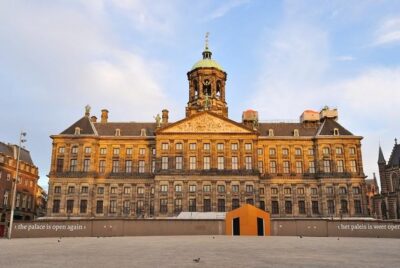
Absolutely Amsterdam – the Essential Introductory Walking Tour
Read our review →
Anne Frank Guided Walking Tour in DE/EN/IT/ES
Read our review →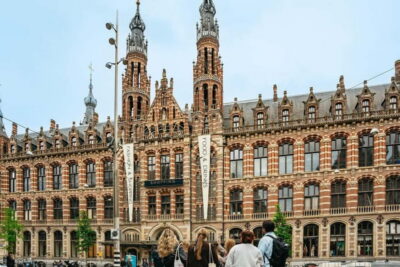

Anne Frank Walking Tour Amsterdam Including Jewish Cultural Quarter
Read our review →
Amsterdam Highlights Walking Tour: Small Group Experience
Read our review →