
Review · IRELAND
Cork: Guided Historical Walking Tour
Cork’s most surprising story is under your feet: parts of the city centre were built over old channels of the River Lee. This 75-minute guided walk follows those hidden waterways while explaining how Cork grew into a transatlantic and European trading port.
I like the mix of big sights and small clues, especially the former boathouse entrances on South Mall and the way the route links streets, bridges, churches, and trade. I also like the local storytelling. Guides including Noel, Mary, Gerard, Jarrod, Catherine, and Aiden are praised for adding personal Cork stories to the dates and facts.
The main drawback is pace. You cover a lot in a short time, and most stops are viewing points rather than long visits inside monuments. Bring weatherproof clothing, since the walk goes ahead in rain or shine.
Key points to know before you book
- Old waterways beneath the city: Follow the line of the river under Cork’s curved main street and learn why the street plan looks the way it does.
- A compact route through central Cork: The walk includes Shandon, Grand Parade, South Mall, Elizabeth Fort, St Fin Barre’s Cathedral, and the English Market.
- Maritime clues in ordinary streets: Former boat entrances and old trading links give Cork’s business quarter a surprising connection to the river.
- Story-led local guiding: Noel, Mary, Gerard, Jarrod, Catherine, and Aiden are among the named guides praised for clear, warm, personal presentations.
- A useful first-day orientation: The route helps you identify places to revisit, including the English Market and St Anne’s Church in Shandon.
- Good value for a short city tour: At $26 per person, it is priced as an affordable introduction rather than a full museum tour or architectural deep study.
Why Cork’s hidden river makes this walk different
Many city tours point out churches and civic buildings, then move on. This one gives you a useful idea to carry through the whole walk: Cork’s centre was shaped by water, trade, and reclaimed ground.
You follow the curve of the main street while your guide explains the waterways that once ran beneath it. That detail changes how you read the city. A street is no longer just a shopping route. It becomes part of an older river system, with boats, warehouses, bridges, and merchants shaping the layout.
Cork’s maritime past also appears in less obvious places. On South Mall, the former boathouse entrances are easy to miss if you are walking alone. The tour points out these remnants in the city’s main business quarter, showing how close commercial life once was to the water.
I like this approach because it connects history to things you can actually see. You are not asked to remember a list of dates. You are shown why a street bends, why a building faces a certain way, and how Cork’s role in European and transatlantic trade left marks on the modern centre.
More History Walking Tours in Ireland
- Dublin Historical Centre Food Tour with 8 Food Tastings & Drinks
★ 5.0 · 1,718 reviews - 2-Hour Historical Walking Tour from Dublin
★ 5.0 · 875 reviews - Historical 2-Hour Guided Walking Tour of Dublin
★ 4.7 · 865 reviews
From the Tourist Information Centre to Cork’s main street
Meet at the Cork Tourist Information Centre and arrive 10 minutes before the start. The tour begins in the centre, so you do not spend the first part of your time reaching the sights by bus or taxi.
Your guide leads you along the curved main street, using the route of the river below as the starting point for Cork’s story. This opening is useful if you have just arrived. It gives you a mental map of the centre and helps you understand how the main streets relate to the River Lee.
The setting is urban, so expect traffic, city noise, and occasional interruptions. Some guides use a headset microphone, which can make a real difference when the group is near busy roads. Clear speech matters on a walking tour, and several guides, including Mary, are praised for projecting their voices well.
The route is described as wheelchair accessible. Still, a city-centre walk can involve ordinary street conditions, bridge crossings, and changing surfaces, so it is sensible to ask about the day’s exact route if you need very specific access information.
Cork Opera House and the view toward Shandon
One early highlight is Cork Opera House. The tour uses the building and its surroundings to introduce the city’s cultural life and changing architecture.
From across the river, you can see the shape of Shandon Church, officially St Anne’s Church, with its red and white brick bell tower and four clock faces. The tower is one of Cork’s most recognisable sights, and its unusual design gives the guide an easy way to talk about the city’s character.
A useful tip is to remember Shandon for later. One person on the tour used the walk as a first look at Cork, then returned to St Anne’s Church and climbed the tower, ringing the bells along the way for an additional fee of €6 per person. That bell and tower visit is not part of this walking tour, but the walk can help you decide if you want to return.
This is one reason the tour works well at the start of a Cork stay. You see several places from the outside, then choose which ones deserve more of your own time.
Careys Lane and Cork’s Huguenot cemetery
The walk continues down Careys Lane to the Huguenot cemetery. This smaller stop adds social history to the route and keeps the tour from becoming a parade of grand buildings.
The cemetery reflects Cork’s connections with people who arrived from elsewhere in Europe. It is a quiet change from the main streets, and it gives your guide a chance to explain how migration helped shape the city.
I appreciate stops like this because they broaden the story beyond kings, churches, and merchants. The tour also touches on refugees and people connected with the history of slavery, according to the route’s local storytelling. The point is not simply that Cork traded across the sea, but that people from different places passed through, settled, worked, and changed the city.
You should not expect a long cemetery visit. The walk has a fixed route and a short duration, so this is a concise introduction rather than a detailed study of Huguenot history.
Same streets, a different guide:
- Dublin Highlights and Hidden Gems Guided Walking Tour
★ 5.0 · 6,020 reviews - Dublin: Highlights and Hidden Gems Walking Tour
★ 4.9 · 2,140 reviews - 1916 Rebellion Walking Tour
★ 5.0 · 1,605 reviews - 90 Minute Dublin Walking tour and Sightseeing tips
★ 5.0 · 916 reviews
Coal Quay, Cornmarket Street, and the width of Grand Parade
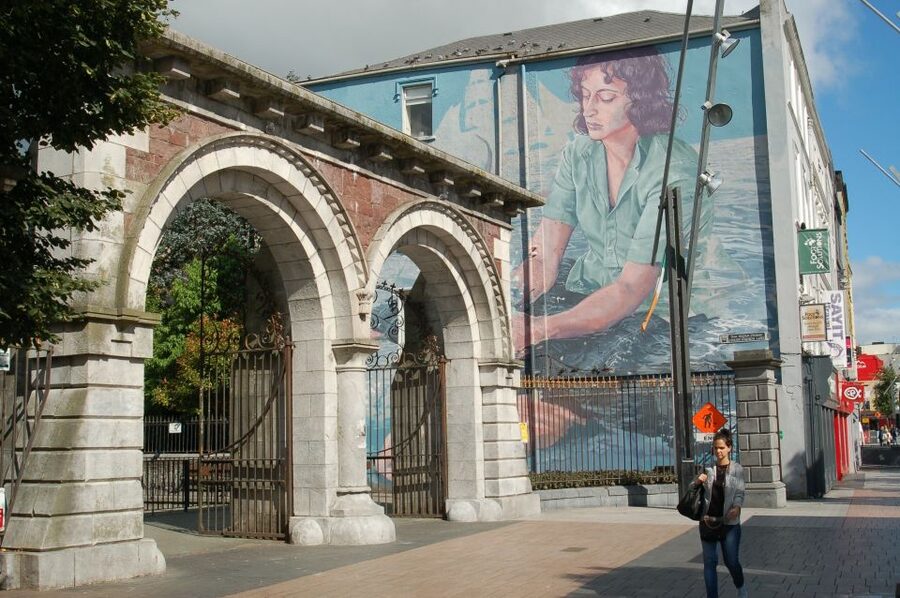
From Careys Lane, the route moves toward the Coal Quay and Cornmarket Street. These names preserve links to Cork’s working and commercial past, even as the surrounding city has changed.
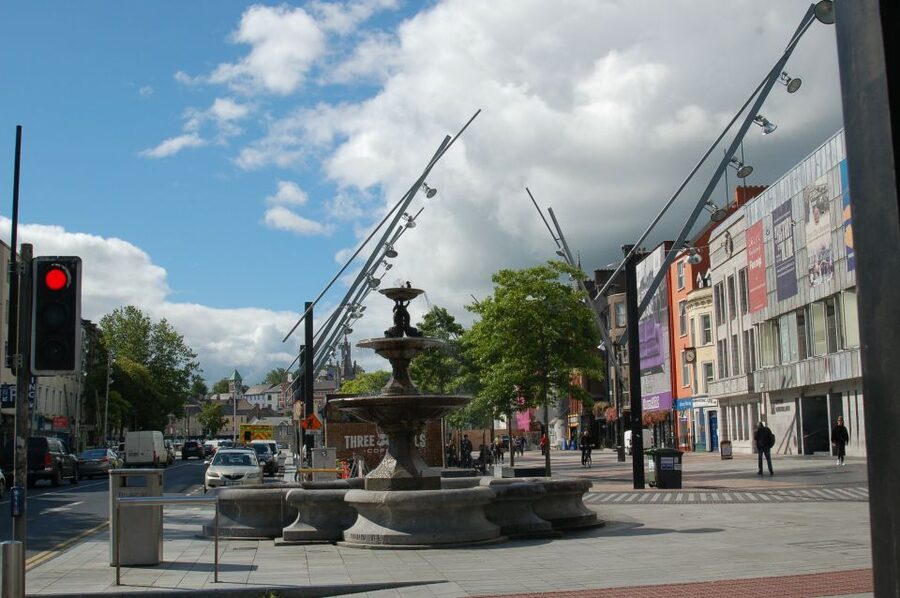
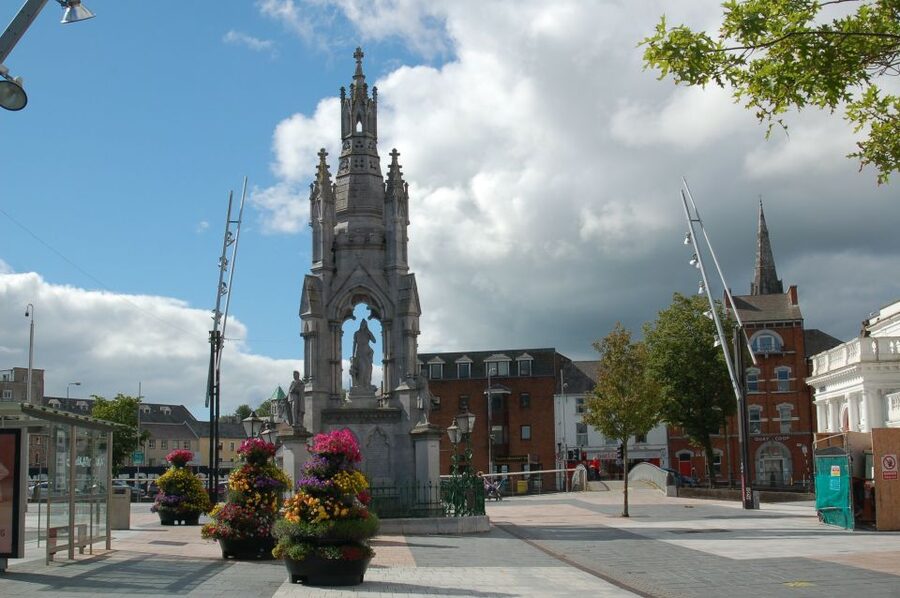
Grand Parade provides one of the clearest stretches of the walk. It is described as the widest street in Cork, and the route takes in Bishop Lucy Park, the Berwick Fountain, and the National Memorial.
These places work well together because they show different sides of the city. Bishop Lucy Park gives you a small open space in the centre. The Berwick Fountain adds a piece of civic street furniture with its own visual character. The National Memorial brings the city’s political memory into the walk.
Your guide may pause here to explain how the city has changed over time. This is also a practical place to get your bearings. Once you know Grand Parade, you can more easily find your way between the river, the shopping streets, and the southern part of the centre.
The route does not promise long stops at each monument. If you want detailed architectural notes or time for photographs, you may need to return after the tour.
Nano Nagle and the footbridge named for her
One of the more human parts of the walk concerns Nano Nagle and her work bringing education to poor communities. You hear about her while standing on a footbridge named in her honour.
This stop adds a strong social theme to the tour. Cork’s past is not only about shipping, trade, and buildings. It is also about people who worked to improve life for those left out of education and public opportunity.
The bridge setting makes the story easy to place. You are not hearing about Nano Nagle in an isolated lecture room. You are standing in the city and looking at the streets, water, and buildings around you.
This is also where the quality of the guide matters most. Facts about a church or fountain can be read from a sign. A story about humanitarian work benefits from a guide who can explain why the person mattered and connect the past to the place beneath your feet.
St Fin Barre’s Cathedral, South Gate Bridge, and Elizabeth Fort
The tour then reaches St Fin Barre’s Cathedral, South Gate Bridge, and Elizabeth Fort. Together, these landmarks show Cork’s religious, defensive, and civic sides.
St Fin Barre’s Cathedral is one of the major architectural sights on the route. You see it as part of the city rather than as a separate attraction reached by transport. That makes the walk feel connected, although the tour does not include a long interior visit.
South Gate Bridge helps return the story to Cork’s waterways. Bridges are central to understanding a city built around a river, and this stop reinforces the link between movement, trade, and urban growth.
Elizabeth Fort brings the military side of Cork into view. From the route, you learn about its place in the city’s past, but you should treat it as an exterior or brief stop unless your guide says otherwise. If the fort is high on your list, leave time to visit it separately.
This section has a lot packed into it. You move between major attractions quickly, which is efficient for orientation but less suitable for anyone who wants a slow architectural inspection.
South Mall’s former boathouse entrances
South Mall is now known as Cork’s leading business quarter, but the old boathouse entrances reveal a different past. These details are among my favourite parts of the tour because they are easy to overlook.
The entrances help you picture a time when the water came closer to commercial buildings and boats were part of daily business. A modern office street can hide its older function, and your guide’s explanation gives those doorways a second life.
This is a good example of what you are paying for. The value is not only reaching a famous monument. It is having someone point out the evidence that an ordinary passerby might miss.
The stop also reinforces the tour’s main idea: Cork’s maritime story is not confined to a harbour viewpoint. It runs through the centre, beneath streets and beside buildings that now serve very different purposes.
Ending at the English Market on Princes Street
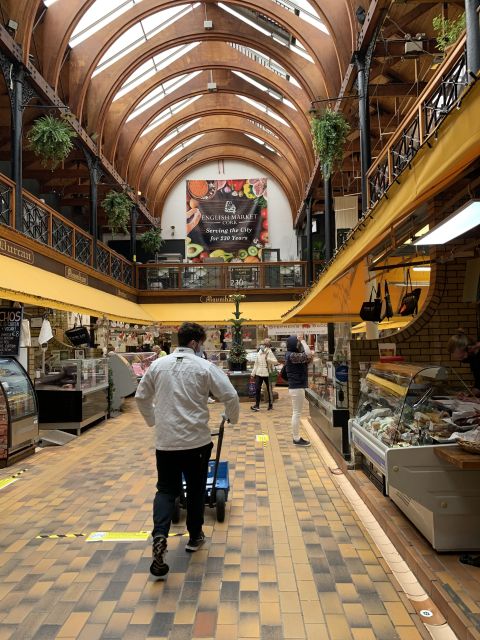
The walk finishes on Princes Street at the main entrance to the English Market. This is a smart ending because the market is one of Cork’s best-known food and shopping stops, and you can continue exploring immediately after the guide leaves.
Food and drinks are not included, so plan to pay for anything you buy inside. The tour does not build in a meal, which keeps the price and timing simple, but you may want to arrange lunch around the finish.
The English Market also gives the walk a practical final point. You can return later, use it as a meeting place, or continue into the central shopping streets. One group used the final stop to carry on with Cork sightseeing, which is exactly how I would use it.
Because the activity ends back at the meeting point, you are not left at an unfamiliar edge of town. The route forms a compact loop through the centre.
What the guides add to the experience
The strongest part of this tour is the human delivery. Guides named in the feedback include Noel, Mary O’Sullivan, Gerard, Jarrod or Jared, Catherine, and Aiden. Names may vary by date, but the pattern is clear: the experience depends on a local guide who can tell Cork’s story in a natural way.
Noel is repeatedly described as a strong storyteller who mixes personal experience with historical facts. Mary is praised for local detail, clear speaking, and a friendly manner. Gerard is described as engaging and easy to listen to, while Jarrod is remembered for humour and energy.
That local connection matters in Cork. A guide who grew up in the city can explain not just what a building is, but how people see it, how streets are used, and which details deserve a second look.
Group size can vary. One group had about 20 people, with a headset microphone making the guide easy to hear. Another group was small, which made listening easier. If you prefer a private or very quiet tour, this is not advertised as one, so group conditions may depend on the date.
Is $26 good value for 75 minutes?
At $26 per person, this is fair value if you want a clear introduction to Cork rather than a full-day history course. You are paying for a local guide, a compact route, and access to stories that would be difficult to assemble on your own in 75 minutes.
The value is strongest for a first visit. You see enough of the centre to plan later stops, including Shandon Church, the cathedral, Elizabeth Fort, the English Market, and places along the river.
The value is weaker if you already know central Cork well or want extended interior visits. Food, drinks, hotel pickup, and drop-off are not included. You also need to pay separately if you choose to return to attractions such as the Shandon tower.
The walk is short enough to fit before lunch or another booking. It is also long enough to give you a proper overview, though the advertised duration is 75 minutes and the route covers many places. Wear comfortable shoes and weather-appropriate clothing. The tour runs rain or shine.
Booking information gives two different cancellation messages: one says you can cancel up to 24 hours before the start for a full refund, while another describes the tour as non-refundable. Check the exact terms shown when you book before relying on a refund.
Who should book this Cork walking tour?
I would choose this tour if you are visiting Cork for the first time, have a limited schedule, or want local context before exploring alone. It suits adults, families with older children, and anyone who likes history presented through streets and buildings rather than a long indoor talk.
It is especially useful for visitors arriving by cruise or passing through Cork for a short stay. The route covers a lot of central ground without requiring transport, and the finish at the English Market gives you an easy next stop.
You may want something else if you dislike walking in poor weather, need long pauses at each attraction, or want a specialist tour focused only on architecture, food, or military history. This is a broad city introduction, not a deep examination of one subject.
Should you book it?
Book this Cork guided walking tour if you want to understand how the river, trading past, churches, bridges, and civic streets fit together. The hidden waterways and boathouse entrances give it more character than a standard monument checklist, while the local guides add the personal detail that makes a short walk memorable.
I would book it early in a Cork visit, then use the route to choose where to spend more time. Just keep expectations sensible: you will see many landmarks from the outside, walk in all weather, and move at a steady pace. At $26, it is a practical way to get oriented and hear the city told by someone who knows it from the inside.
FAQ
How long does the Cork historical walking tour last?
The tour lasts 75 minutes. Check availability for the current starting times.
Where does the tour begin?
Meet at the Cork Tourist Information Centre. You should arrive 10 minutes before the activity starts.
Where does the tour finish?
The walk ends back at the meeting point, at the main entrance to the English Market on Princes Street.
What language is the tour conducted in?
The live tour guide speaks English.
Is the tour wheelchair accessible?
Yes, the activity is listed as wheelchair accessible.
Does the tour run in bad weather?
Yes. The walk takes place rain or shine, so bring clothing suitable for the forecast.
Are food, drinks, and hotel transfers included?
No. Food, drinks, hotel pickup, and hotel drop-off are not included.
New routes in Ireland
- Galway: Food and Culture Walking Tour with Tastings★ 4.7 · 127 reviews
- The Titanic Trail: 1-Hour Guided Walking Tour of Cobh★ 4.8 · 78 reviews
- Galway: Dark History Guided City Walking Tour★ 4.8 · 236 reviews
- Dublin: North Quay Guided Ghost Walk★ 4.2 · 144 reviews
- Kilkenny: Historical Highlights Walking Tour★ 4.9 · 90 reviews
- Killarney: Gap of Dunloe Walking and Boat Tour★ 4.4 · 72 reviews
- Kilkenny: Historical and Hysterical Guided City Walking Tour★ 5.0 · 126 reviews
- Galway City: Guided 1.5-Hour Walking Tour★ 4.9 · 115 reviews
Ireland Walking Tours, compared.
Dublin Highlights and Hidden Gems Guided Walking Tour
Read our review →
Dublin Historical Centre Food Tour with 8 Food Tastings & Drinks
Read our review →
90 Minute Dublin Walking tour and Sightseeing tips
Read our review →
Dublin Highlights: 2.45-Hour Walking Tour in Italian
Read our review →
Browse the lists this tour appears in