
Review · VIENNA
Private Hidden Vienna Walk — Stories Behind Quiet Corners
Vienna’s best stories often hide behind grand façades. This private walk connects the city’s famous sights with quiet lanes, old courtyards, a basilisk legend, Mozart’s former rooms, and a rooftop viewpoint that most first-time visitors would miss. I especially like the mix of major landmarks and overlooked corners, plus the chance to shape the walk around your interests.
I also like the personal start. Your guide can meet you at a hotel, restaurant, train station, or cruise pier, then build the route from there. Guides including Walter, Brigitte, Sabine, Hannes, and Daniela bring different personalities and interests to the experience. The main caution is simple: this is a real walking tour, averaging about 8,000 steps, so it is a poor match for anyone who needs frequent sitting, has serious mobility limits, or wants a slow, short introduction.
Key points at a glance
- Vienna’s eastern wall at Stubentor: Begin with a look at the defensive edge that once enclosed the city.
- A rooftop with a view: The route includes access to a secret rooftop, weather and local access permitting.
- Stories behind familiar sights: See St. Stephen’s Cathedral and the Jesuit Church through their symbols, legends, and architecture.
- Mozart and Beethoven in context: Learn how music, aristocratic homes, churches, and Vienna’s streets shaped their lives.
- Judenplatz and the Holocaust Memorial: Consider seven centuries of Jewish life in Vienna in one atmospheric square.
- A flexible private format: Your group alone takes part, with morning or afternoon departures and pickup options.
Why this private Vienna walk feels different
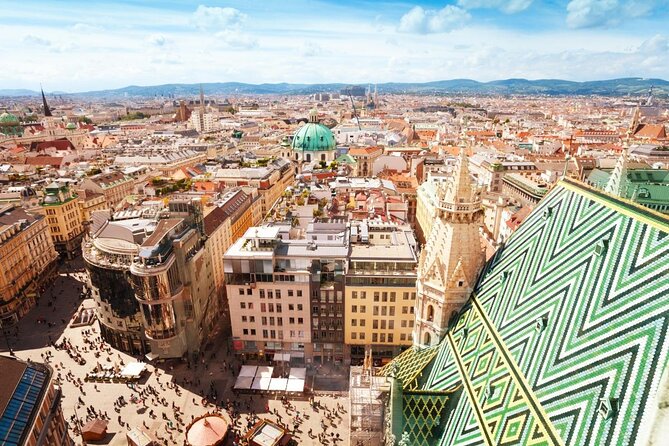
A standard city tour tends to move from one famous building to the next. This one tries to explain what lies between them.
You begin at Stubentor U, one of Vienna’s old eastern gates. The modern subway stop makes a practical meeting point, but the subject is medieval and imperial Vienna. Your guide explains the scale of the old city walls and helps you picture how tightly the historic center once was enclosed. It is a smart place to start because you gain a sense of Vienna’s size before entering its compact old core.
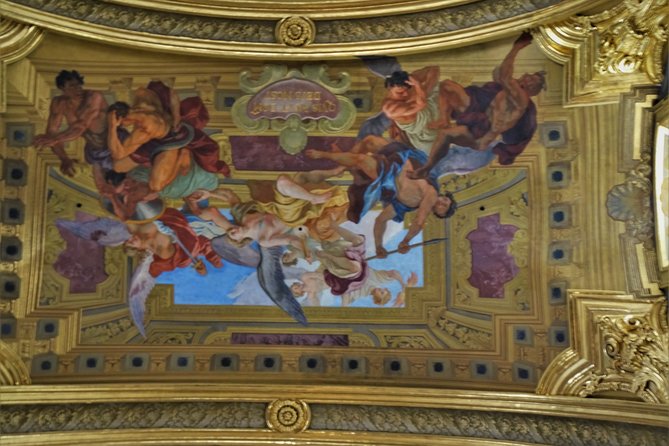
From there, the walk turns toward the Church of the Jesuits. The stop is brief, about ten minutes, but the point is not simply to admire another Baroque interior. You are asked to read the building’s decoration and architectural design as a statement of faith. That approach gives you something useful to carry into later churches and palaces: look for the message behind the ornament, not just the ornament itself.
The guide team is part of the appeal. Walter is described as warm, funny, and especially good at connecting architecture, politics, and everyday life. Brigitte is often praised for adapting the route and making room for families or changing interests. Sabine brings long experience living in Vienna, while Daniela guides in English, German, and Spanish. Your exact guide is not guaranteed in the information provided, but the private format allows for a more personal conversation than a large group can offer.
More Private Walking Tours in Austria
- Vienna: Private Walking Tour with a Local
★ 4.6 · 1,446 reviews - Vienna: Private Walking Tour with a Guide
★ 4.7 · 962 reviews - Vienna Private Walking Tour with a Local
★ 4.5 · 131 reviews
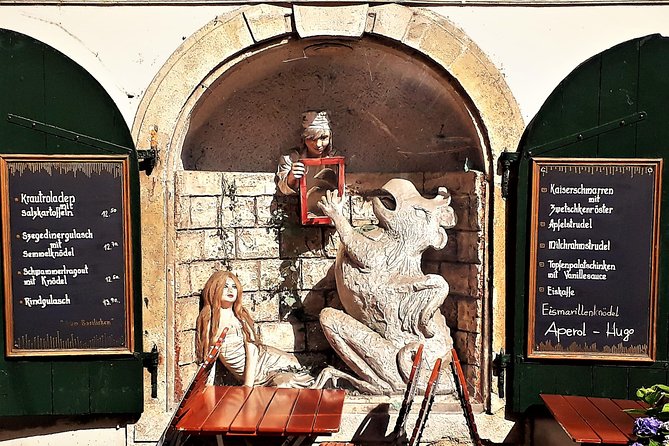
The basilisk on Schönlaterngasse
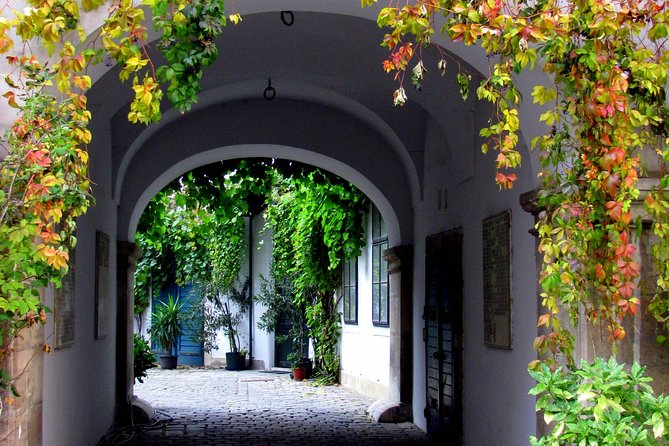
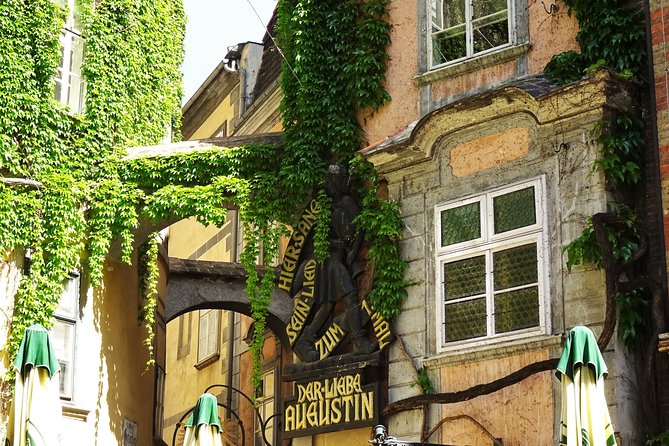
One of the most memorable short stops is on Schönlaterngasse, where a mural illustrates the legend of the Vienna basilisk.
This is the kind of story that gives an old street its character. You are not just looking at a painted wall or an attractive lane. You are hearing how local folklore was attached to a particular place and preserved through an image. The stop also breaks up the formal parade of churches and palaces with something stranger and more playful.
The route also passes a restaurant associated with Vienna’s famous schnitzel since 1905. That detail is useful if you want to connect the walk with lunch or dinner plans, though the tour does not include a meal. Ask your guide for practical food suggestions. Restaurant recommendations, coffee shops, bread shops, and other local stops have been a recurring part of the tour experience, and they can help you turn a sightseeing route into a better day in Vienna.
Mozart, the Teutonic Order, and a room with music
At the Sala Terrena in the Deutschordenshaus, you learn about Mozart’s connection with the house of the Teutonic Order in 1781. The stop lasts roughly ten minutes and admission is listed as free.
A sala terrena is a ground-level reception or garden room, often designed for conversation, music, and display. Here, the setting gives Mozart’s Vienna a physical address. Instead of treating him as a distant name on a concert program, the guide connects him with a building, a religious order, and the social world in which he worked.
The tour also includes stories about Beethoven’s life in Vienna. The details supplied for the walk do not promise a specific Beethoven residence or museum entry, so think of this as cultural context rather than a dedicated Beethoven tour. If you are especially interested in music, tell the guide before starting. The private setup makes it easier to give Mozart and Beethoven more time, or to shift the focus toward architecture, Jewish Vienna, imperial politics, or cafés.
St. Stephen’s Cathedral from the outside in
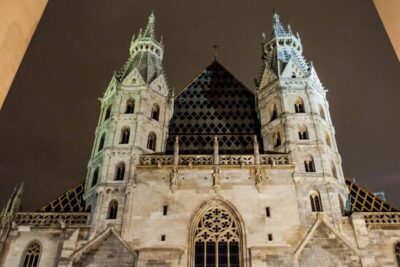
St. Stephen’s Cathedral is the largest and most famous stop on the route. You spend about fifteen minutes understanding its exterior details, with time for a look inside.
That time is enough for orientation, but not for a long cathedral visit. The guide can point out features you might otherwise pass without noticing, then give you a chance to enter. If the interior matters greatly to you, say so at the start and be clear about how long you want to remain there. The itinerary is broad, and a short visit here is balanced against several smaller stops.
This is one of the tour’s strengths and one of its trade-offs. You see the city’s essential symbol, but you do not spend the entire morning inside it. The walk is designed to place major sights within a wider story, not to provide a detailed architectural lecture at every stop.
You should also expect the pace to be steady. Even though Vienna’s center is compact, connecting Stubentor, the cathedral, Judenplatz, the palaces, cafés, and Rathausplatz takes effort. Comfortable shoes matter. The average of 8,000 steps is a useful planning figure, not a vague promise of a gentle stroll.
More Private Walking Tours in Vienna:
- Beijing: Forbidden City Tour(Group/Private)-Tickets Included
★ 4.8 · 7,974 reviews - Private Walking Grand Tour of Copenhagen
★ 5.0 · 3,953 reviews - Private 3 hrs Venice Tour: St Mark’s, Walking tour & Boat tour
★ 4.0 · 3,372 reviews - Private Street Food Evening Walking Tour in Ho Chi Minh City
★ 5.0 · 3,175 reviews
Judenplatz and seven centuries of Jewish Vienna

Judenplatz is one of the most serious and affecting parts of the walk. The square contains Vienna’s Holocaust Memorial and recalls seven centuries of Jewish life in the city.
The setting matters. This is not an isolated monument placed in a modern memorial park. It sits in an old neighborhood, surrounded by the layers of central Vienna. The guide can help you connect the memorial to the people and community who lived here, rather than treating the site as a quick photo stop.
Expect the tone to change here. The walk includes music, folklore, cafés, palaces, and rooftop views, but it also addresses persecution and loss. That variety is valuable because Vienna cannot be understood through imperial glamour alone. A good guide should give this stop the attention it deserves without turning it into a rushed list of dates.
If you want more time at the memorial, say so before the walk begins. The listed stop is about ten minutes, and private tours work best when your priorities are clear.
Café Central, Ferstel Passage, and the café city
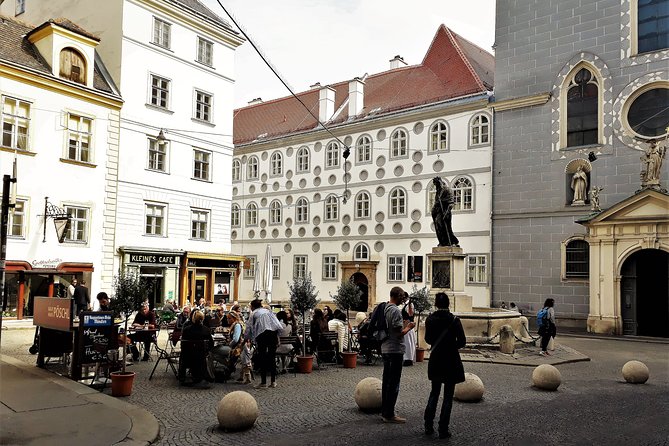
The route continues through Café Central and Ferstel Passage, two places that show how Vienna’s public life moved through coffeehouses, arcades, and elegant interior passages.
The guide also points out where Trotsky and Stalin were in Vienna without becoming friends. It is an amusing footnote with a serious edge, showing how the city once served as a meeting place for artists, political exiles, intellectuals, and ambitious young men who later shaped Europe in very different ways.
You should not assume that a table, coffee, or pastry is included. The experience is a walking tour, not a café tasting. Still, this is an excellent place to ask your guide where to return later. Café advice is one of the practical benefits of a private local-led walk, especially when you want somewhere beyond the most obvious tourist choices.
Palais Daun-Kinsky and Vienna’s grand addresses
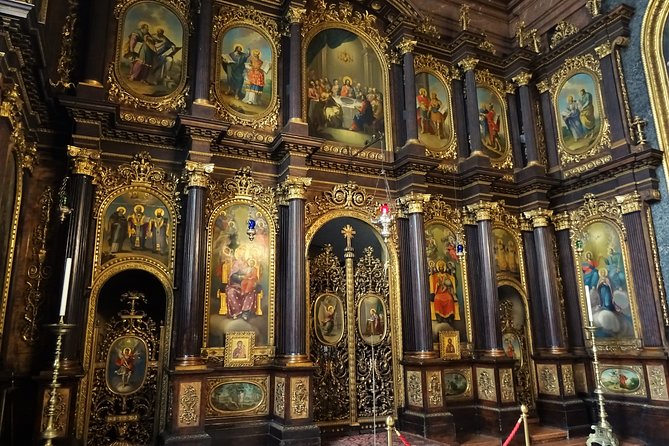
Palais Daun-Kinsky adds aristocratic Vienna to the route. Construction began in 1713 under Johann Lucas von Hildebrandt for Count Wirich Philipp von Daun. The palace also has a connection to Prince Józef Poniatowski, who was born there in 1763 and later became a Polish general and Marshal of France.
The value of this stop is not only the façade. It shows how Vienna’s central streets were shaped by powerful families, military figures, and imperial networks. The palace helps explain why the old center feels so formal: these were working addresses for people with money, rank, and political reach.
The visit is listed as a ten-minute exterior stop, so do not book this expecting a full palace tour. Your guide’s explanation is the main feature. If you prefer grand interiors and museum time, tell the provider before booking so expectations are clear.
Rathausplatz and Freud’s favorite café
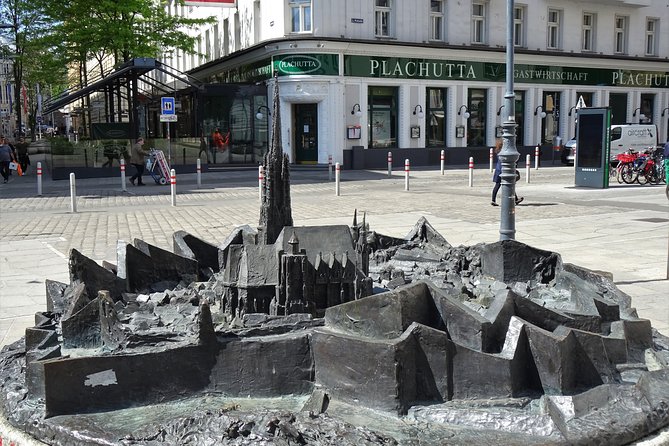
The walk finishes near Rathausplatz, with Café Landtmann nearby. The café is associated with Sigmund Freud, and the square gives you a final look at Vienna’s civic and architectural identity.
Rathausplatz can be busy and event-filled at certain times, but the information provided does not promise a particular festival, market, or seasonal program. The reliable part is the setting: the grand city hall area and a famous coffeehouse address. This makes a useful end point for continuing on your own.
The tour does not include transportation between attractions. In practice, that means your legs do the work. Pickup can be arranged from a hotel, restaurant, train station, or another location within Vienna. For A-Rosa cruise passengers, the stated meeting point is the pier at Handelskai 265 in the second district. The guide can also meet at a different point, which may be wise for an afternoon start in the center.
What the $344.80 group price buys you
The price is $344.80 per group of up to ten people, not per person. For two people, that is a substantial private-tour cost. For six to ten people, the arithmetic becomes much better, especially if you value a private guide and flexible route.
The fee includes a licensed Austria Guide from your doorstep, pier, or train station. It does not include transport, food, or paid admission. The listed stops themselves are presented with free admission, but the practical value is the guide’s time and attention, not ticket savings.
I see the strongest value for:
- A family or group of friends who can divide the cost.
- Repeat visitors who have already seen the major museums and want quieter streets.
- First-time visitors who dislike large groups and want to ask many questions.
- Cruise passengers who need a private pickup and a focused three-hour introduction.
- People who want restaurant, café, and later-sightseeing suggestions from a local guide.
For a solo visitor or couple on a tight budget, the price may feel high. A small group tour or self-guided walk will cost less. You are paying for privacy, route changes, and conversation, so the value depends on using those features.
Pace, mobility, and planning details
This walk requires a moderate level of fitness. The route involves extended walking, and the average is about 8,000 steps. Stairs or difficult access may occur in places visited, including a rooftop or café facilities, and pets are not permitted in certain areas. Service animals are allowed.
Be direct before the tour about stairs, rest breaks, and how long you can walk. One difficult experience arose when a group with serious mobility limits joined a walking tour without a clear match between their needs and the route. The guide and group disagreed about the planned tour, pace, cathedral time, and ending point. The lesson is practical: private does not mean automatically accessible, and flexibility works best when you explain your limits in writing before the day.
Morning and afternoon departures are available. Morning is likely the calmer choice if you want cooler temperatures and a fresh start, while an afternoon walk may fit better after a museum or cruise schedule. The supplied details do not promise crowd levels or weather conditions, so regard those as possible benefits rather than guarantees.
Confirmation is sent within 48 hours, subject to availability. Free cancellation is available up to 24 hours before the start time. Changes or cancellations inside that window are not accepted for a refund.
Who should book this Vienna experience
Book it if you want Vienna explained through stories, not just photographed from the sidewalk. The combination of Stubentor, the Jesuit Church, Schönlaterngasse, Mozart’s former setting, St. Stephen’s, Judenplatz, Café Central, Palais Daun-Kinsky, and Rathausplatz gives you a wide sample of the city in three hours.
It works particularly well on a second day in Vienna. You can see famous sights from a different angle while adding lanes, legends, memorials, and cafés that may not fit a standard first-glance tour.
First-time visitors can also enjoy it, but be clear about your priorities. If you need a full visit inside St. Stephen’s Cathedral, a museum entry, or a detailed introduction to all of Vienna’s main sights, this route may spread your attention too widely. Ask the guide to adjust the balance before you begin.
The public score is 4.9 out of 5 from 137 ratings, with 98 percent recommending the experience. The strongest praise centers on flexible routing, clear English, humor, local suggestions, and the guides’ ability to show places people would not find alone. Those benefits are most likely when you communicate well and arrive ready to walk.
Should you book it?
I would book this private walk if you have at least three hours, can manage a steady pace, and want a local guide to connect Vienna’s famous center with its quieter stories. It is especially good for a small group that can share the $344.80 cost.
I would choose another option if you have limited mobility, want a slow café morning, or need long interior visits at the cathedral and palaces. For everyone else, this is a thoughtful way to get your bearings, learn what makes Vienna more than imperial buildings, and leave with a short list of places worth revisiting on your own.
FAQ
How long does the Vienna walk last?
The walk lasts approximately three hours.
How many people can join the private tour?
The price covers one private group of up to ten people.
What language is the tour offered in?
The tour is offered in English.
Can the guide pick me up?
Yes. Pickup can be arranged from a hotel, restaurant, train station, or another location within Vienna. A-Rosa cruise passengers can meet at the Handelskai pier listed for the tour.
Does the tour include transportation between sights?
No. Transport to and from attractions is not included. The experience is a walking tour.
Which major Vienna sights are included?
The route includes the Jesuit Church, St. Stephen’s Cathedral, Judenplatz and its Holocaust Memorial, Palais Daun-Kinsky, and Rathausplatz.
Is there a rooftop visit?
Yes. The highlights include access to a secret rooftop for city views. The supplied details do not specify weather or access conditions.
Can I cancel for a full refund?
Yes, if you cancel at least 24 hours before the experience begins. Cancellations or changes made less than 24 hours in advance are not accepted for a refund.
New routes in Vienna
- The unknown Vienna City- a guided walking tour in 3 hours★ 4.7 · 137 reviews
- Hungry in Vienna? A Food Lover’s Coffee & Market Walk★ 4.9 · 276 reviews
- 3-Hour Walking Tour of Vienna Central Cemetery★ 4.7 · 71 reviews
- Vienna: City Center Guided Walking Tour★ 4.8 · 99 reviews
- Vienna Private Walking Tour with a Local★ 4.5 · 131 reviews
- Historical Hitler Walking Tour of Vienna★ 5.0 · 887 reviews
- Vienna: Essential History Walking Tour★ 4.9 · 633 reviews
- Vienna: Small Group Guided Walking Tour of City Highlights★ 5.0 · 540 reviews
Vienna Walking Tours, compared.
Guided Walking Tour of City Center Highlights
Read our review →
Vienna Historic Center Small Group Walking Tour
Read our review →
Ghosts and Legends Guided Nighttime Walking Tour
Read our review →Browse the lists this tour appears in