
Review · CHICAGO
Chicago: Secret Interiors Architecture Walking Tour
Chicago’s best architecture is not always the part you see from the street. This two-hour Loop walking tour takes you through grand lobbies, domes, mosaics, and decorative details that are easy to miss when you are hurrying between landmarks. The buildings tell stories of ambition, commerce, engineering, and a city determined to reshape the modern world.
I like the range of buildings, from early skyscraper-era design to later modern work. I also like the guides’ personal touch. Grant, Talia, Annie, Angel, Matthew, Avery, and others have been praised for clear explanations, humor, and useful local suggestions. The main drawback is practical: much of the tour is outdoors, and some buildings involve stairs, so winter weather and tired legs can affect the experience.
Key points to know before you book
- Grand interiors you might miss alone: See domes, mosaics, carved details, and ornate public spaces inside major Loop buildings.
- A strong guide makes the difference: Grant, Talia, Annie, Angel, and Matthew have all led lively tours with plenty of room for questions.
- The walk covers a lot of ground: The pace is generally manageable, but it is brisk enough to connect several important buildings in two hours.
- Most of the tour is outside: Bring comfortable shoes and dress for the weather, especially in winter.
- Sunday plans may change: The Rookery is closed on Sundays, so the guide uses an alternative stop.
- Good value at $35: You get a focused introduction to architecture, history, and several interiors for less than many larger sightseeing experiences.
Why Chicago’s interiors are worth your time
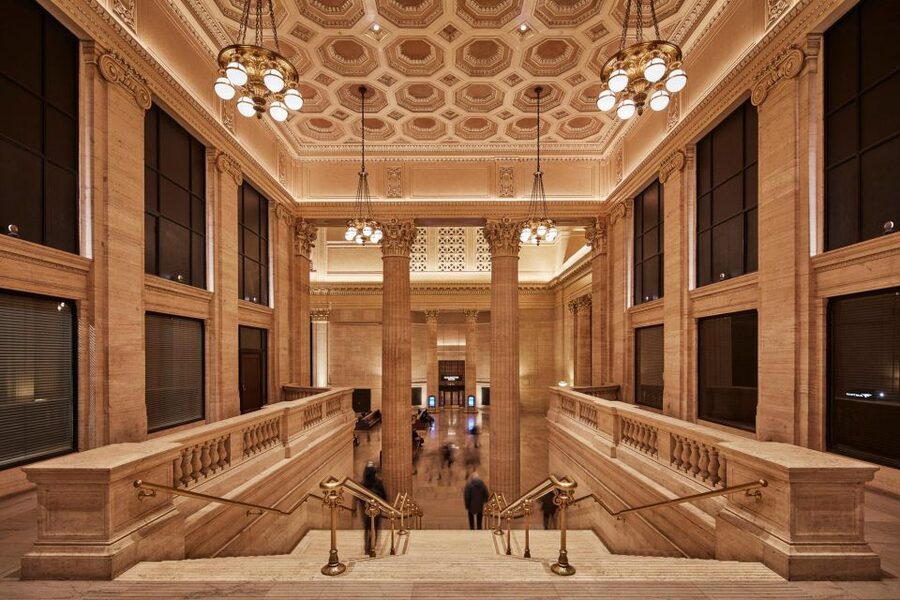
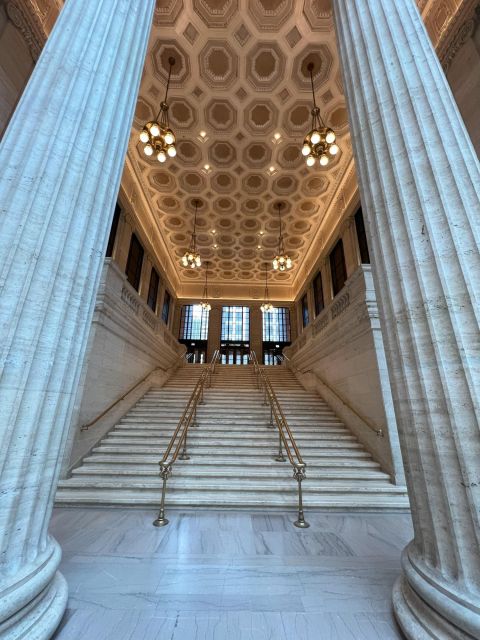
From the sidewalk, Chicago’s Loop can look like a wall of stone, steel, and glass. The secret is to look through the doors. Inside, office buildings and hotels reveal stained glass, polished surfaces, grand stairways, elaborate metalwork, and ceiling decorations that reflect the wealth and confidence of earlier generations.
I find this tour most useful because it explains why these details exist. You are not simply shown a pretty ceiling. You learn how architects dealt with limited daylight, heavy structures, crowded city blocks, and the need to impress clients and visitors.
The tour also links buildings to the people who used them. Industrial leaders, public figures, celebrated guests, and notorious characters passed through these lobbies during the Gilded Age and the Roaring Twenties. That human side keeps the discussion from becoming a list of dates and architectural labels.
The approach is especially helpful if you already plan to take a Chicago river architecture cruise. A boat tour gives you the city’s famous exterior views. This walk takes you indoors and explains what those buildings feel like at ground level.
More Hidden Gems Walking Tours in Chicago:
- Chicago: Underground Pedway & Downtown Secrets Walking Tour
★ 4.7 · 268 reviews - Dublin Highlights and Hidden Gems Guided Walking Tour
★ 5.0 · 6,020 reviews - Explore Berlin: See All The Iconic Sights & Some Hidden Gems
★ 5.0 · 4,429 reviews
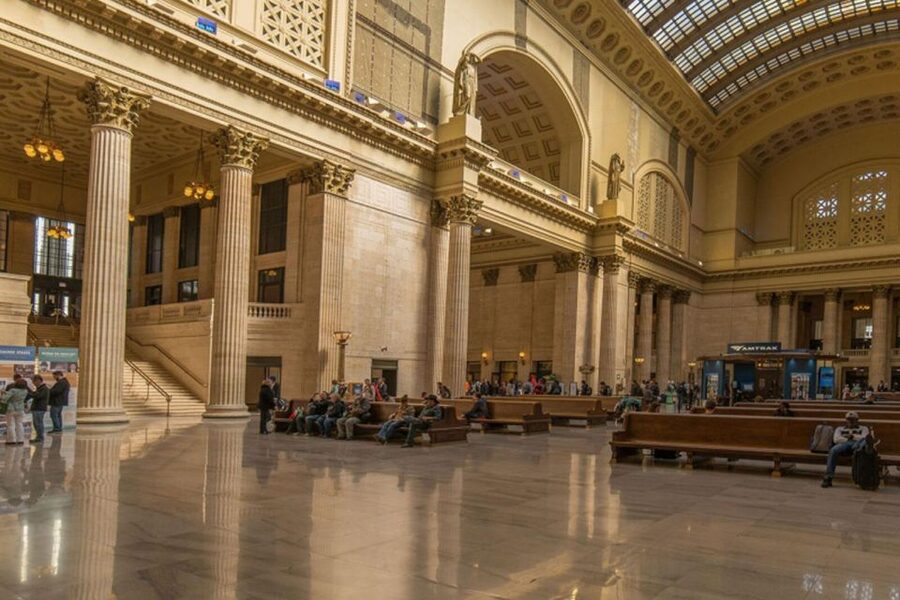
Starting at Union Station’s Great Hall
Meet your guide inside Union Station’s Great Hall, beneath the Clinton Street sign. This is a practical starting point because the station itself is one of Chicago’s grand public spaces, and it gives the group a clear place to gather away from traffic and bad weather.
The tour then heads into the Chicago Loop. You will spend part of the time walking between buildings and part of the time inside public areas. Exact access can vary by day, building hours, or special events, so do not assume every interior will look identical on every departure.
The group size can be small. Some departures have had only two or four people, which gives you more time to ask questions and hear the guide clearly. Larger groups are possible, but the walking format still allows the guide to stop and explain details along the route.
South LaSalle Street and Chicago’s early skyscraper story
South LaSalle Street gives the tour its urban setting. Here, tall commercial buildings line a canyon of stone facades, columns, windows, and ornament. The street helps you understand the pressure that shaped Chicago architecture: valuable downtown land, limited room, and a demand for more office space.
This is where the story of Chicago’s architectural influence begins to make sense. The city became a testing ground for new ways to build upward while keeping interiors usable and reasonably well lit.
Your guide discusses the practical problems behind the beauty. How could a tall structure support its own weight? How could an office building receive daylight? How could architects make a new type of building look important and trustworthy?
The answers are part engineering and part theater. Steel, masonry, windows, light courts, decorative surfaces, and carefully planned public spaces all played a role.
The Rookery Building and its luminous center
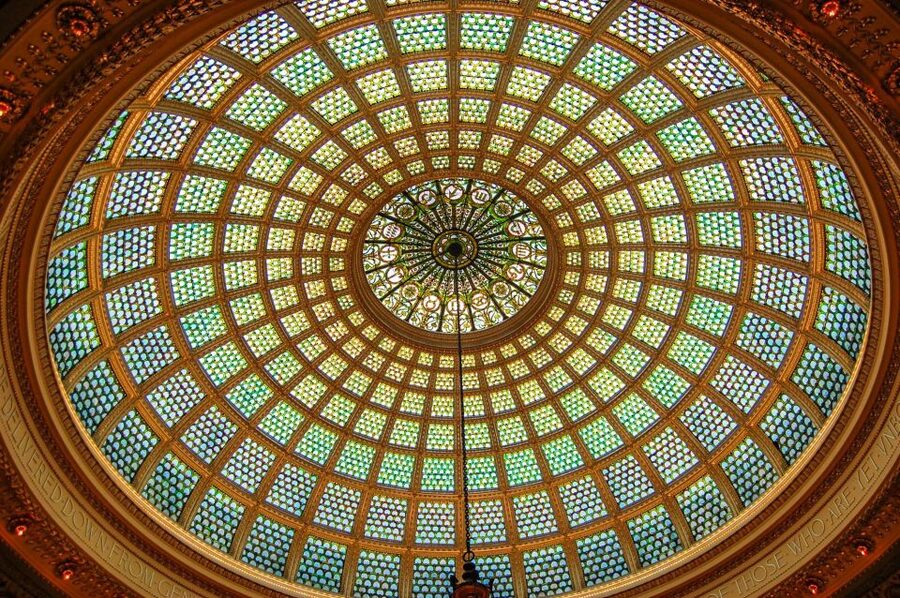
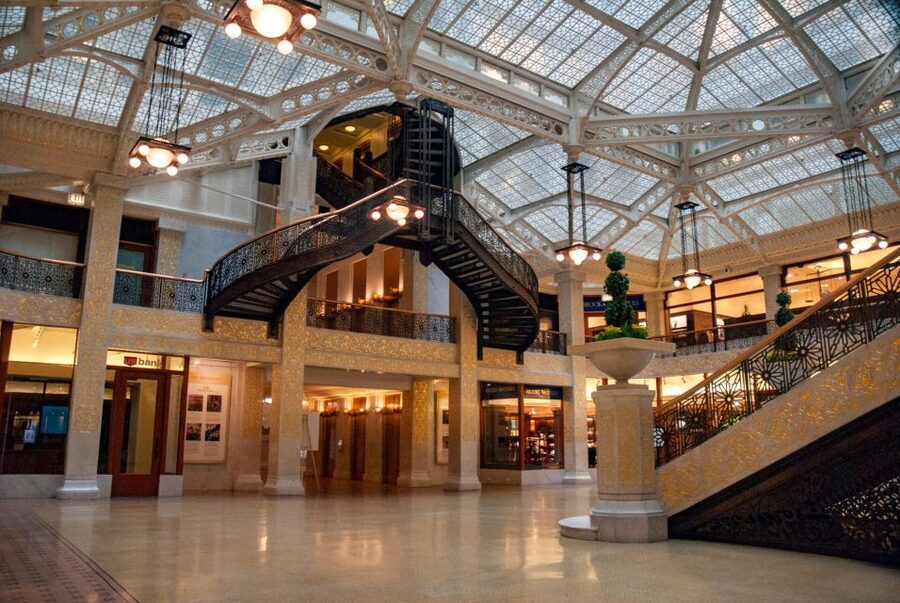
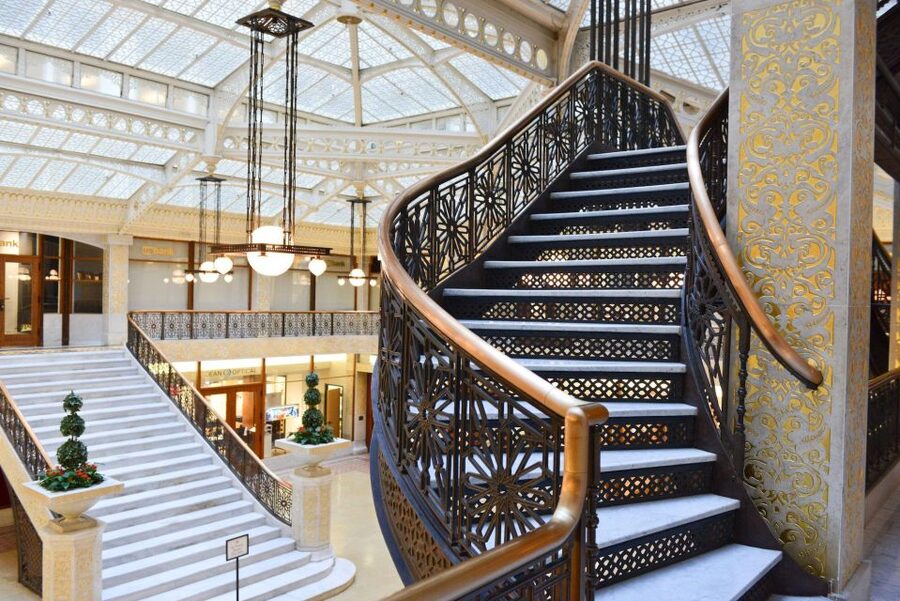
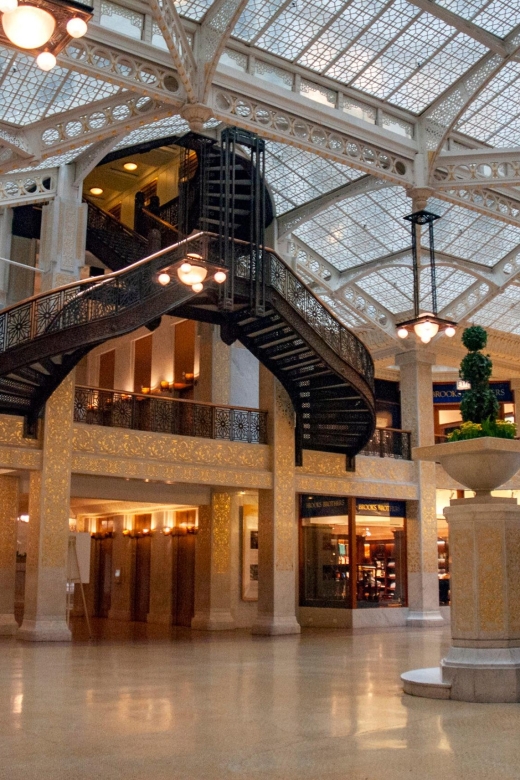
The Rookery is one of the most rewarding stops on the route. Its interior is known for a bright central space and intricate decoration, offering a sharp contrast to the darker stone and crowded streets outside.
Look up as you enter. The building’s interior design uses light, glass, metal, and ornament to make the central area feel open. The point is not decoration alone. The design shows how architects tried to bring daylight into a deep urban building while creating an impressive entrance for tenants and visitors.
The Rookery also connects Chicago’s early commercial architecture with later design changes. Its interior includes work associated with a major modernization, making it useful for understanding how buildings can evolve instead of being replaced.
This is often the stop people most want to photograph, but pay attention before reaching for your phone. The guide’s explanation gives the space more meaning. You begin to see the balance between structural needs, practical office use, and civic display.
The Rookery is closed on Sundays, so the itinerary changes that day. If this building is your main reason for booking, choose another day when possible. The alternative stop still keeps the tour focused on Chicago architecture, but it will not be the same interior.
More Walking Tours in Chicago:
- Chicago: Gangsters and Ghosts Walking Tour
★ 5.0 · 7,155 reviews - Chicago Favorites Ultimate Food and Walking Tour
★ 5.0 · 1,962 reviews - Chicago: Gangsters and Ghosts Guided Walking Tour
★ 4.7 · 1,697 reviews - Chicago Loop District Food Tour with Deep Dish & Beef Sandwich
★ 5.0 · 870 reviews
Field Building and the value of looking upward
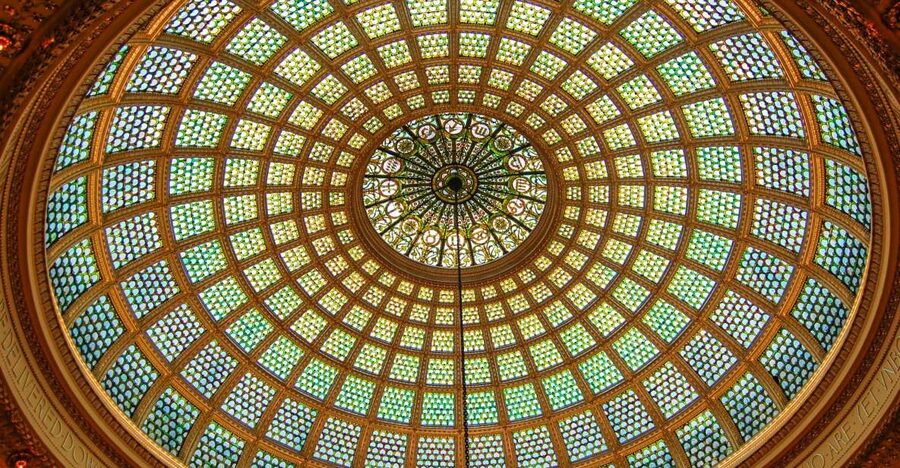
The Field Building offers another lesson in the changing face of downtown architecture. Its exterior and interior help show how Chicago moved from early skyscraper forms toward more polished commercial design.
The useful habit here is to look beyond eye level. Doorways, ceilings, elevator areas, trim, and upper wall sections may carry the details that a quick visit misses. One guide has been praised for answering questions about decorations and doorways when prompted, so ask if a particular feature catches your attention.
The Field Building is not simply another stop on a checklist. It helps show how commercial buildings were designed to project stability and success. The architecture had to serve businesses, but it also had to persuade people that the building belonged to a confident, modern city.
Marquette Building and decorative storytelling
The Marquette Building brings art and architecture closer together. Decorative elements help tell a story about Chicago, its industries, and its place in American development.
This is a good stop for anyone who likes details more than broad skyline views. You may find yourself studying mosaics, colored surfaces, carved figures, and small design choices around entrances and public areas. The guide explains how decoration can carry meaning rather than simply fill empty space.
I also like the way this building expands the tour beyond engineering. Chicago architecture is often reduced to steel frames and tall towers. The Marquette shows that artists, craftspeople, designers, and builders all shaped the city’s identity.
The guide’s storytelling matters here. Annie, Talia, Grant, and others have been praised for mixing historical facts with personal stories and humor. That balance keeps the stop lively, especially for people who are curious about architecture but do not normally spend an afternoon studying building styles.
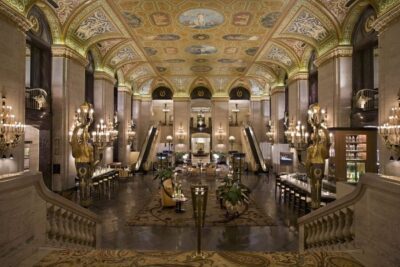
Palmer House and the hotel as public theater
The Palmer House adds a different kind of interior to the route. This is a hotel, so its spaces were designed not only for residents but also for arrival, ceremony, business, and display.
Hotels offer a useful window into the social life of the city. Their public rooms had to make a strong first impression. Grand ceilings, polished finishes, decorative patterns, and carefully arranged circulation all helped turn a functional building into a stage for city life.
The guide places the building in the setting of Chicago’s Gilded Age and Roaring Twenties. You hear about the ambitious business figures and famous personalities who moved through these spaces, as well as the changing expectations of luxury and public life.
This stop also gives the tour a change of pace. You are not looking only at office architecture or early skyscraper technology. You are considering how design shaped a visitor’s experience, from the first step through the entrance to the movement through the public rooms.
Chicago Cultural Center and a spectacular public interior
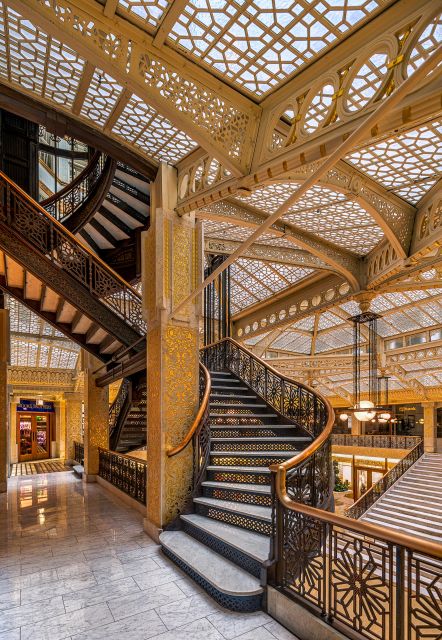
The Chicago Cultural Center is one of the strongest stops for visual impact. Its interior decoration shows how a public building can use color, pattern, glass, and scale to make an everyday civic visit feel special.
The building is also useful for understanding Chicago’s wider architectural story. The tour does not stop with the first generation of skyscrapers. It shows how the city continued to experiment with styles and materials as its public buildings changed.
Take time to look at the ceiling and upper walls. The best details are often above the normal line of sight, and the guide will point out features that are easy to overlook while walking through.
Because this is a public cultural space, it can feel more open and accessible than a private office lobby. It is a good place to pause, take photographs where permitted, and compare the building’s artistic treatment with the commercial spaces earlier in the route.
Marshall Field and Company Building, the final stop
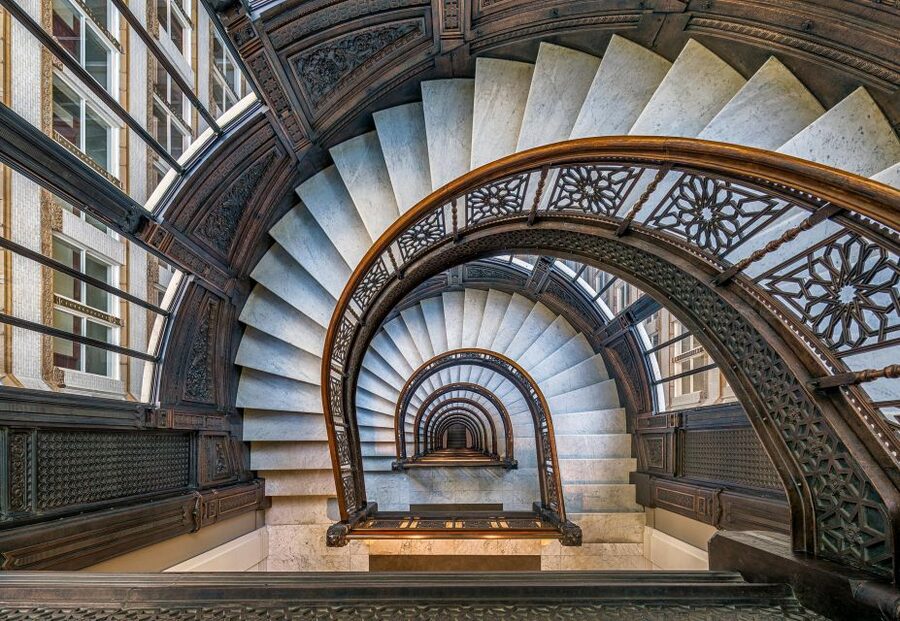
The tour finishes at the Marshall Field and Company Building, a fitting end because department stores were major public institutions in their day. They were places to shop, meet, see new products, and take part in the social life of downtown.
The architecture had to handle large crowds while creating a sense of occasion. Wide public areas, elaborate finishes, and careful visual displays helped make shopping feel like an outing.
This final stop also reinforces a major idea from the tour: Chicago’s architecture was built for people, not just for the skyline. The grand interiors helped companies sell trust, quality, modernity, and status.
The finish is convenient if you want to continue exploring the Loop afterward. The tour does not return to Union Station, so plan your next stop from the Marshall Field building rather than assuming you will end where you began.
How much walking and time you should expect
The official duration is two hours. That is enough time to see several important buildings, but not enough for a slow architectural study of every room and facade.
The pace is usually described as comfortable or leisurely, but one person found it brisk and noted that the route included many stairs in and out of buildings. I would treat this as an active city walk, not a seated lecture.
You will spend a substantial part of the experience outdoors. A winter departure requires a warm coat, gloves, and sensible shoes. In warmer weather, comfortable footwear still matters because the route covers a large part of the Loop.
The tour is listed as wheelchair accessible, but building access can vary by interior and day. If you use a wheelchair or have difficulty with stairs, ask about the specific departure before booking, especially since one departure included more stairs than expected.
The guides are a major part of the value
The subject is strong, but the guide determines how much you take away. Grant has been praised for his historical background, clear speaking voice, enthusiasm, and practical recommendations. Talia is known for a friendly manner, patience, and colorful stories about the buildings and people connected with them.
Annie has been praised for engaging explanations, restaurant suggestions, and an ability to answer questions in detail. Angel brings energy and broad knowledge of design and city history. Matthew has been described as friendly, funny, and well prepared. Avery has also led an enjoyable, well informed tour.
Guide assignments can change, so you cannot book a particular person from the information provided. The useful point is that the company has several guides who bring personality to a subject that could otherwise become dry.
Ask questions. If you want more detail about a doorway, mosaic, ceiling, or decorative figure, say so. The guides are happy to expand when prompted, and the small-group format can make that easy.
Is $35 a good price?
At $35 per person, the tour is fairly priced for a two-hour guided walk that includes several major interiors and a focused explanation of Chicago architecture.
You are paying for access, but also for interpretation. You could walk past some of these buildings alone, yet you might not know which doors to enter, what details to notice, or how the spaces connect to the city’s development.
The value is strongest for first-time visitors, architecture fans, history students, and local residents who have lived near Chicago but never looked inside these buildings. It is also a good companion to a river architecture cruise.
If your main goal is a broad view of the skyline, a boat tour may give you more dramatic exterior scenery. If your goal is to understand interiors and small architectural details, this walk offers something a boat cannot.
Who should book this Chicago architecture walk?
I recommend it for anyone who likes buildings, city history, design, art, or stories about ambitious people. It suits families, couples, solo visitors, and Chicago residents looking for a fresh way to see the Loop.
It is especially useful early in your stay. The guide can help you identify buildings and areas worth revisiting, and several guides have offered suggestions for food, drinks, and further sightseeing.
I would think twice if you dislike walking outdoors, have difficulty with stairs, or want a slow photography session. The route is efficient and covers a lot, so you may need to keep moving.
Should you book it?
Book this tour if you want Chicago’s architecture explained from the inside. The Rookery, Marquette Building, Palmer House, Cultural Center, and Marshall Field building give you a good mix of engineering, decoration, commerce, and public life.
Choose a weekday or non-Sunday departure if seeing the Rookery matters to you. Dress for the forecast, wear comfortable shoes, and allow time for questions. For $35, this is a strong introduction to the Loop and a useful partner to a river architecture tour.
FAQ
Where does the tour begin?
Meet your English-speaking guide inside Union Station’s Great Hall, under the Clinton Street sign.
Where does the tour finish?
The tour finishes at the Marshall Field and Company Building.
How long does the tour last?
The walking tour lasts two hours.
How much does the tour cost?
The listed price is $35 per person.
Is the tour offered in English?
Yes. The live tour guide and commentary are provided in English.
Is the tour wheelchair accessible?
The activity is listed as wheelchair accessible. Some departures may include stairs in and out of buildings, so confirm details if stairs are a concern.
Can I see the Rookery on a Sunday?
The Rookery is closed on Sundays. An alternative stop is included on Sunday departures.
What should I bring?
Bring comfortable shoes. Since much of the tour takes place outdoors, dress appropriately for the weather.
Can I cancel the booking?
You can cancel up to 24 hours in advance for a full refund. You can also reserve now and pay later.
New routes in Chicago
- Chicago: Treasures of the Golden Age Walking Tour★ 4.8 · 206 reviews
- Chicago: Underground Pedway & Downtown Secrets Walking Tour★ 4.7 · 268 reviews
- Chicago: The Ultimate Foodie Walking Tour with Tasty Stops★ 4.6 · 92 reviews
- Chicago: Prohibition Speakeasies Bus Tour or Walking Tour★ 4.8 · 168 reviews
- Chicago: Classic Food & Walking Tour with Free Bike or Kayak★ 4.9 · 145 reviews
- Chicago: Must See Chicago 90 minute Walking Tour★ 4.7 · 73 reviews
- Chicago: Gangsters and Food Tasting Walking Tour★ 4.6 · 228 reviews
- Chicago: Taste of Chinatown Food and Cultural Walking Tour★ 4.9 · 97 reviews
Chicago Walking Tours, compared.

Chicago Favorites Ultimate Food and Walking Tour
Read our review →
Chicago Loop District Food Tour with Deep Dish & Beef Sandwich
Read our review →
Underground Pedway & Downtown Secrets Walking Tour
Read our review →

Prohibition Speakeasies Bus Tour or Walking Tour
Read our review →
Classic Food & Walking Tour with Free Bike or Kayak
Read our review →Browse the lists this tour appears in