

Review · CHICAGO
Chicago: Underground Pedway & Downtown Secrets Walking Tour
Chicago’s Pedway is not one neat underground hallway. It is a patchwork of tunnels, stairs, building connections, and public corridors beneath downtown. This tour helps you make sense of it while revealing stained-glass halls, underground swimming pools, and surprising architectural interiors that are easy to miss from street level.
I like two things here. First, the route gives you a useful way to get around in bad weather, not just a string of facts. Second, the guides bring real enthusiasm to Chicago’s buildings and public art. Heath, Kayley, Adam, Colleen, Henry, and Jess are among the guides praised for clear explanations, humor, and a strong feel for the city.
The main drawback is physical and mental: you walk about 1.5 miles and use a handful of staircases, while the Pedway itself can feel confusing and enclosed. This is not a good choice for wheelchair users, people with mobility limits, or anyone uncomfortable in tight underground spaces.
Key points before you book
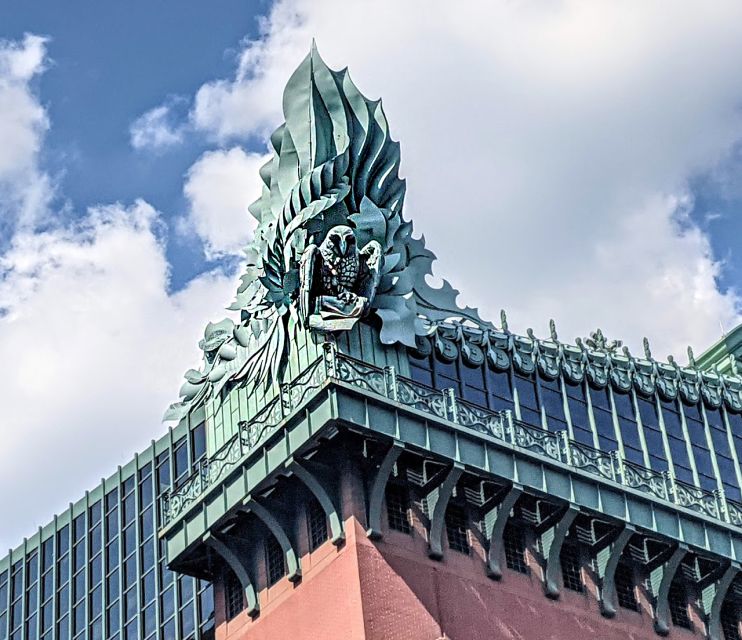
- The Pedway is a working city shortcut: You learn how downtown’s underground connections function, rather than simply passing through a tunnel.
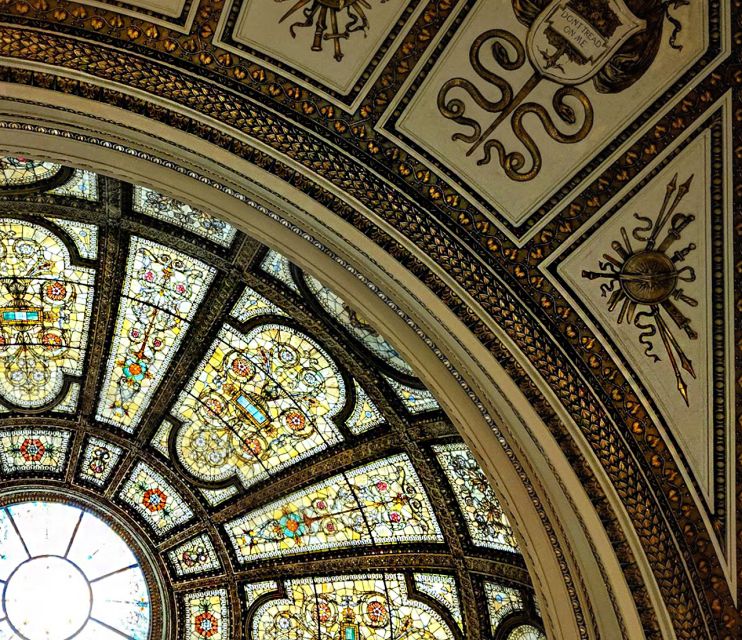
- The route reaches unusual interiors: Expect stained glass, architectural details, public art, and a look at underground swimming pools.
- The second half gets more complicated: After learning the basic system, you enter a newer section that many Chicago locals have never explored.
- The tour ends near Millennium Park: You finish in a central location, ready to continue sightseeing, eat, or use downtown transport.
- It is mostly indoors in all weather: The route offers shelter from rain, cold, and heat, though you still need comfortable walking shoes.
- The guide makes the difference: The strongest part of the experience is the live storytelling, with guides such as Heath, Kayley, Adam, Colleen, and Henry praised for their city and architecture knowledge.
What the Chicago Pedway really is
The word Pedway can make you picture a single underground walkway with clear signs and a simple map. Chicago’s version is less tidy. It runs beneath full blocks and connects sections of downtown through stairs, corridors, buildings, and passageways.
That confusion is part of the reason to take this tour. On your own, you might find a stairwell or corridor and wonder where it leads. The tour gives those disconnected pieces a purpose. You learn how to move through the system and how it relates to the buildings above.
I like this practical angle. You are not only looking at an unusual piece of urban design. You are learning a route that can help you stay warm and dry in winter, avoid a hard rain, or keep cool during hot weather.
Still, do not expect a polished attraction with signs at every turn. The Pedway can feel plain in places, and its usefulness is tied to downtown buildings and access points. That mix of ordinary corridors and unexpected interiors is exactly what gives the walk its character.
More Hidden Gems Walking Tours in Chicago:
- Chicago: Secret Interiors Architecture Walking Tour
★ 4.9 · 498 reviews - Dublin Highlights and Hidden Gems Guided Walking Tour
★ 5.0 · 6,020 reviews - Explore Berlin: See All The Iconic Sights & Some Hidden Gems
★ 5.0 · 4,429 reviews
Starting at the LaSalle Street mosaic
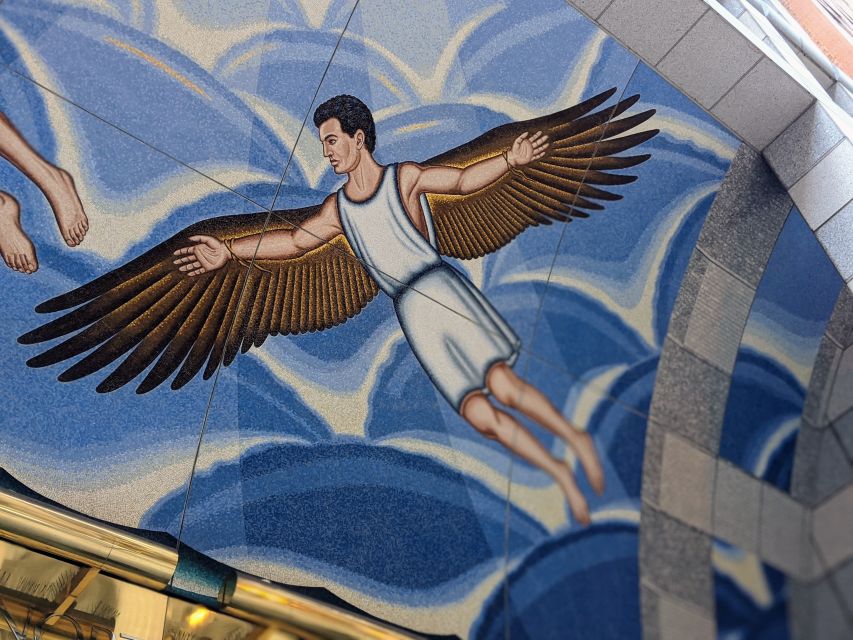
The meeting point is in front of 120 N. LaSalle Street, marked by a giant mosaic mural over the front door. Give yourself time to find it. The tour begins promptly, so arriving at the last moment is a poor plan in a part of downtown where entrances can be easy to overlook.
The opening section explains what the Pedway is and how to use it. This orientation matters because the system is not always intuitive. You begin by learning the basic logic of the route, then put that information to work as the walk continues.
Your guide is also an important part of the opening. The group may be led by Heath, Kayley, Adam, Colleen, Henry, Jess, or another member of the Inside Chicago Walking Tours team. The guides praised most often bring a mix of architecture, city history, humor, and practical advice. Several are also willing to suggest places to eat or things to do after the walk.
The tone appears friendly rather than formal. That suits the Pedway, which is more interesting when someone explains why a plain passage exists and what it tells you about Chicago.
The first section: stairs, corridors, and unexpected interiors
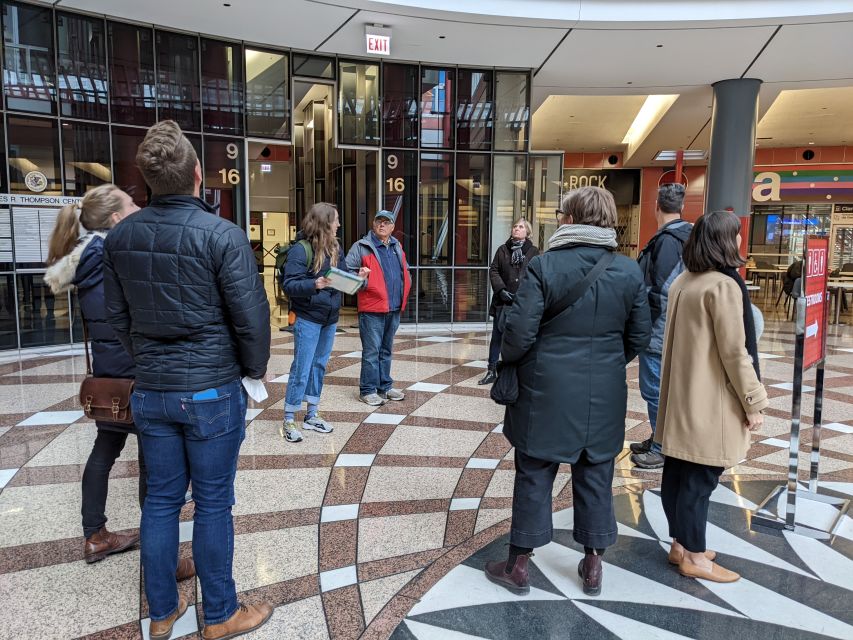
The first half is about getting your bearings. You walk under full blocks, use staircases, and pass through building interiors connected to the underground network.
Some of the most unusual sights are architectural rather than grand. A hallway of stained glass can appear where you might expect a standard office passage. An underground swimming pool adds another layer of surprise. These details help explain why the Pedway is worth seeing with a guide: the most interesting parts are not always obvious from the street or from a quick walk between two addresses.
The route also brings in public art. You learn about the meaning behind famous pieces and about details that can be easy to overlook when you pass them during a normal downtown day. One especially memorable detail from the tour’s storytelling involves the search for the Y connected with Wolf Point, a small piece of Chicago lore that may send you looking more closely at the city afterward.
This portion is not just a parade of sights. It shows how architecture, commerce, public space, and weather protection overlap downtown. You get a clearer sense of how buildings can work together below street level, even when the system does not feel like a single planned corridor.
The tradeoff is that some parts may feel less glamorous than the description suggests. The Pedway is a real utility, not a museum. Between the stained glass and art, you may walk through plain hallways or less attractive sections. A good guide turns those stretches into useful context, but visitors looking for nonstop visual drama should set their expectations properly.
The second section: Chicago’s less familiar underground network
Once you understand the basic route, the tour moves into a newer and more complicated section of the Pedway. This is where the guide becomes especially valuable.
The attraction here is not simply being underground. It is seeing how a city grows in layers. Older connections and newer corridors do not always line up in an obvious way, and the route shows why even people who live in Chicago may not know the whole system.
You should pay attention to turns, staircases, and changes in the surroundings. The point is to learn enough to recognize the Pedway as a usable network, not just to follow the guide for two hours and forget the way out.
That said, do not count on reproducing every turn perfectly. The walk gives you a working introduction, but the Pedway remains complicated. You will leave with a better sense of how it operates, not necessarily with a flawless mental map of every downtown connection.
This is also the portion most likely to appeal to repeat visitors and Chicago residents. If you have already seen the river, the major museums, and the standard architecture stops, the Pedway offers a different view of the center of the city.
More Walking Tours in Chicago:
- Chicago: Gangsters and Ghosts Walking Tour
★ 5.0 · 7,155 reviews - Chicago Favorites Ultimate Food and Walking Tour
★ 5.0 · 1,962 reviews - Chicago: Gangsters and Ghosts Guided Walking Tour
★ 4.7 · 1,697 reviews - Chicago Loop District Food Tour with Deep Dish & Beef Sandwich
★ 5.0 · 870 reviews
Architecture and public art below street level
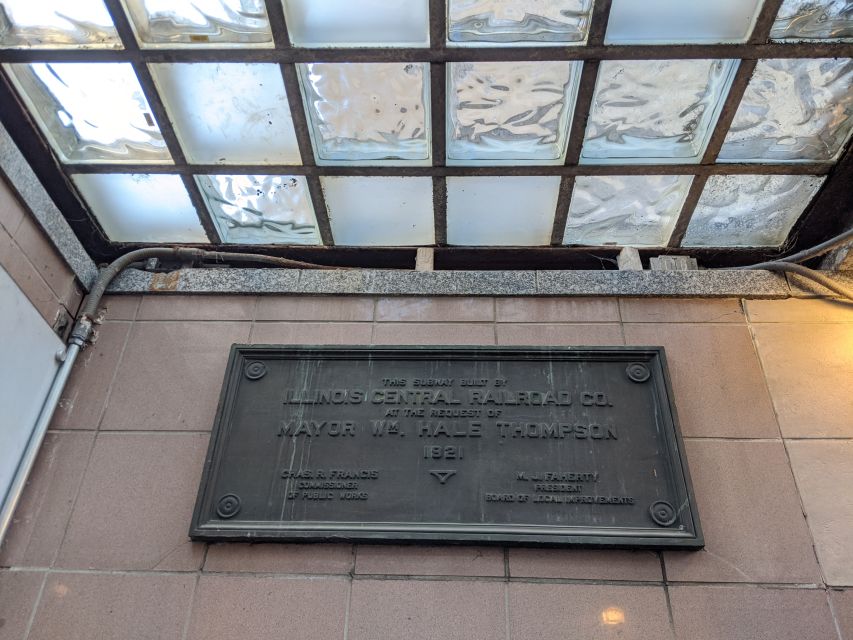
Chicago is famous for its architecture, but you usually see it from sidewalks, river cruises, or observation decks. This walk shifts your attention to interiors and transitions.
A doorway, hallway, mosaic, or staircase can tell a different story from a building’s exterior. You may notice how materials guide people through a space, how public art changes an otherwise functional passage, or how a building connects its private and public areas.
The guides add historical context and explain the meanings behind well-known public art. Several guides are described as having backgrounds or strong interests in architecture, which is useful here. You get more than a list of names and dates. You get help reading the city’s design choices.
I also like that the tour does not present Chicago as perfect. One guide was praised for discussing the good, bad, and ugly sides of the underground system. That balance makes the experience more useful. You understand why the Pedway exists, but you also see its limitations, uneven appearance, and confusing layout.
For families, the subject can work well if children can handle the walking and stairs. A six-year-old was able to take part in one group, and another family with ages ranging from 14 to 77 enjoyed the pace. Still, the tour is not designed as a children’s attraction, so younger children may tire during the less dramatic stretches.
The ending near Millennium Park
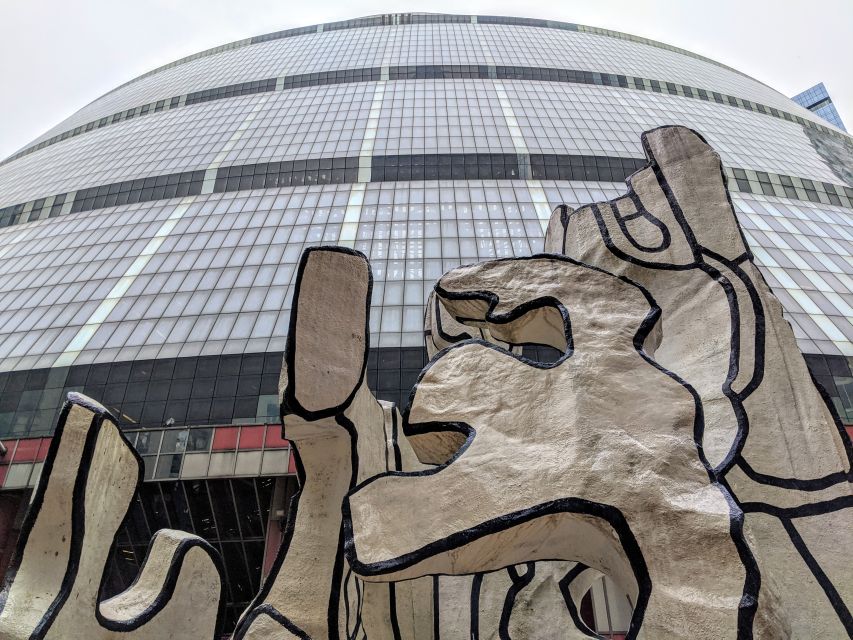
The walk finishes near Millennium Park in a striking interior, described as one of the country’s more unusual architectural designs. The exact appeal is best discovered in person, but the location is practical even beyond the final sight.
You are left in a central part of downtown with plenty of options for the rest of the day. You can continue toward Millennium Park, plan another architectural stop, find a meal, or simply use the surrounding city connections.
This ending also makes the tour easy to pair with other Chicago activities. One particularly useful combination is a Pedway walk followed by a river architecture tour, since the two experiences show the city from very different levels. The Pedway explains what happens below the streets, while the river gives you the large-scale view of the buildings above them.
Because the tour ends in a useful central location, it works well early in a Chicago visit. You can apply what you have learned for the rest of the day. It also works on a rainy or cold afternoon when you want a sheltered activity without spending two hours inside a traditional museum.
How much walking and stair climbing should you expect
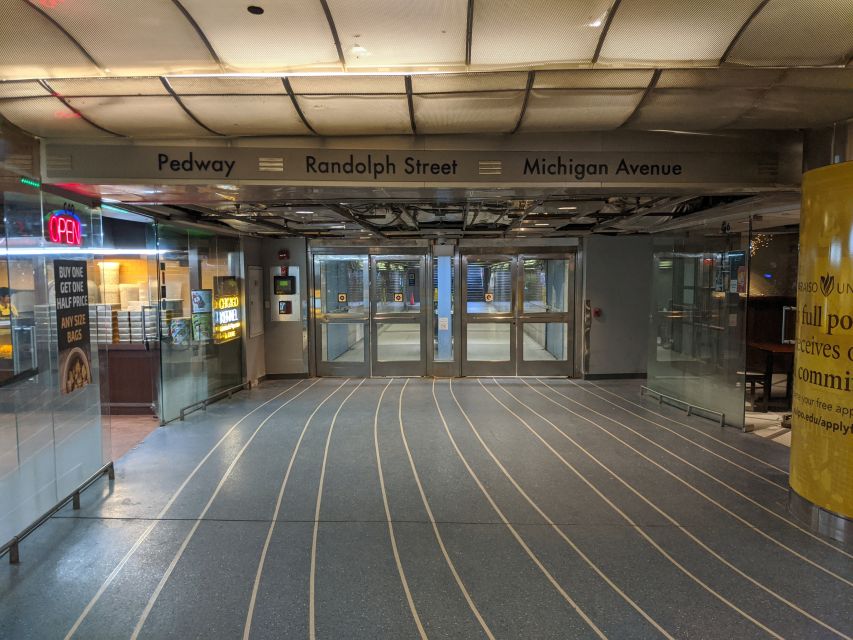
The tour lasts two hours and covers about 1.5 miles. That is not a long distance for many visitors, but the route includes a handful of staircases and repeated changes between corridors, buildings, and levels.
Wear comfortable shoes. The setting is mostly indoors, but this is still a walking tour, not a seated presentation. You should be comfortable standing, walking, and using stairs at a moderate pace.
The activity is not suitable for wheelchair users or people with mobility impairments. It is also a poor fit if you have a low level of fitness or claustrophobia. The underground setting is generally used for shelter, but some people may find the enclosed corridors uncomfortable.
The weather protection is a real advantage. The tour runs rain or shine and stays mostly indoors, offering relief from cold, wet, or hot conditions. You may still encounter outdoor transitions, so dress for the day rather than assuming you will never step outside.
Is $35 a fair price?
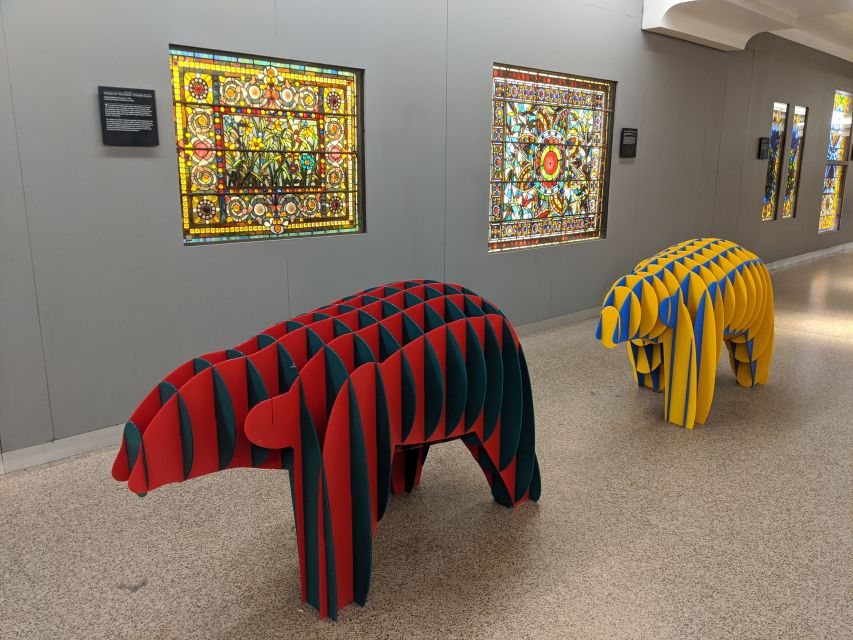
At $35 per person, the tour is priced reasonably for a two-hour guided city walk, especially because the main value is access and orientation rather than a ticketed landmark.
You could try to find parts of the Pedway on your own for free. The problem is that the system is difficult to understand, and you may miss the interiors, art, and architectural details that give the route its appeal. You would also spend time guessing which corridors connect and which entrances are open or useful.
The guide saves that trial and error. You are paying for a planned route, live explanations, and a practical introduction to a part of Chicago that is easy to overlook. I consider that good value for first-time visitors, architecture fans, repeat visitors, and anyone traveling during rough weather.
The value is weaker if you dislike urban infrastructure, prefer outdoor scenery, or want a grand tour of Chicago’s most famous buildings. This experience is specific. Its reward comes from curiosity about how the city works.
Free cancellation up to 24 hours ahead and the option to reserve now and pay later make planning easier, particularly if your Chicago schedule is still changing.
The guide is central to the experience
The Pedway itself cannot carry the full two hours. The guide has to supply the connections between corridors, buildings, art, and city history.
The strongest guide names attached to the experience include Heath, Kayley, Adam, Colleen, Henry, Jess, and Kaitlyn. You may not receive a particular person, but the pattern is clear: the guides bring personality as well as information.
Heath is described as entertaining and candid about the system. Kayley is praised for passion and clarity. Adam is noted for humor and a good walking pace. Colleen has helped visitors with onward transport and offered suggestions for the rest of their time in Chicago. Henry’s background in architecture made the tour especially informative for one recent participant.
That variety is useful. You are not getting a recorded script. You are getting a person who can answer questions, adjust the pace, and explain why a detail matters.
English is the only language listed for the tour. One participant noted that some jokes were harder to follow as a non-American visitor, so international visitors should expect an English-speaking tour with local humor mixed into the storytelling.
Who should book this Chicago Pedway tour?
I would choose this tour if you want to see Chicago from an angle most city tours skip. It is especially good for:
- First-time visitors who want practical downtown orientation
- Repeat visitors who have already covered the major sights
- Architecture and public art enthusiasts
- People visiting during rain, cold, or hot weather
- Chicago residents who want to understand the Pedway
- Families and mixed-age groups comfortable with stairs and walking
I would skip it if you need step-free access, dislike enclosed spaces, or want a tour centered on grand exterior views. The route is also less suitable if your fitness level makes 1.5 miles and stairs difficult.
Should you book it?
Book the Chicago Underground Pedway and Downtown Secrets Walking Tour if you want a useful, unusual introduction to downtown Chicago. For $35, you get two hours of guided access to corridors, interiors, public art, and architectural details that are difficult to connect on your own.
I especially recommend it near the start of your visit, when the Pedway can help you move around downtown afterward. Just arrive early at the mosaic entrance on LaSalle Street, wear good shoes, and expect a working urban network rather than a polished attraction.
FAQ
How long is the Chicago Pedway tour?
The tour lasts two hours and covers about 1.5 miles of walking.
Where does the tour meet?
Meet your guide in front of 120 N. LaSalle Street. Look for the giant mosaic mural above the front door.
Where does the tour finish?
The tour finishes near Millennium Park, in a notable architectural interior and a convenient central location for continuing your Chicago sightseeing.
What will I see on the tour?
You can expect underground and interior corridors, stained glass, underground swimming pools, public art, architectural details, and sections of Chicago’s Pedway that are difficult to find without guidance.
Does the tour run in bad weather?
Yes. The tour runs rain or shine and stays mostly indoors, helping you stay warmer in cold weather, drier in rain, and cooler during hot weather.
Is the tour accessible for wheelchair users?
No. The tour is not suitable for wheelchair users or people with mobility impairments because it includes staircases and about 1.5 miles of walking.
What should I bring?
Bring comfortable shoes. The tour is conducted in English and involves moderate physical activity, including walking and stairs.
New routes in Chicago
- Chicago: Treasures of the Golden Age Walking Tour★ 4.8 · 206 reviews
- Chicago: The Ultimate Foodie Walking Tour with Tasty Stops★ 4.6 · 92 reviews
- Chicago: Secret Interiors Architecture Walking Tour★ 4.9 · 498 reviews
- Chicago: Prohibition Speakeasies Bus Tour or Walking Tour★ 4.8 · 168 reviews
- Chicago: Classic Food & Walking Tour with Free Bike or Kayak★ 4.9 · 145 reviews
- Chicago: Must See Chicago 90 minute Walking Tour★ 4.7 · 73 reviews
- Chicago: Gangsters and Food Tasting Walking Tour★ 4.6 · 228 reviews
- Chicago: Taste of Chinatown Food and Cultural Walking Tour★ 4.9 · 97 reviews
Chicago Walking Tours, compared.


Chicago Favorites Ultimate Food and Walking Tour
Read our review →
Chicago Loop District Food Tour with Deep Dish & Beef Sandwich
Read our review →



Prohibition Speakeasies Bus Tour or Walking Tour
Read our review →
Classic Food & Walking Tour with Free Bike or Kayak
Read our review →Browse the lists this tour appears in