
Review · SALEM
Salem Voodoo, Vampires, and Ghosts Guided Walking Tour
Salem’s darker past comes alive on this 90-minute evening walk, where the witch trials share the stage with vampire folklore, voodoo stories, haunted cemeteries, and modern ghost-hunting claims. The guides are historians and paranormal investigators, not costumed actors, so the tone mixes documented events with local legends and first-hand investigation stories.
I like the way the tour connects famous places to specific people, from accused witch Giles Corey to enslaved woman Tituba and trial judge John Hathorne. I also like the practical ghost-hunting angle: you can bring your own photos for examination and see images gathered at Salem’s most talked-about sites. The main consideration is that some material is grim, including torture, executions, murder, and blood-drinking folklore.
Key details to know before you book
- The 1692 witch trials remain the backbone: You visit sites linked to the accused, the judges, the jail, and the cemetery where Salem’s painful past is still visible.
- The guides bring research and field experience: Guides including Dr. Vitka, Mike, and Vin are praised for clear storytelling, strong group management, and personal paranormal investigation stories.
- The route covers more than witchcraft: Expect voodoo history, vampire lore, ghost photographs, Hocus Pocus filming locations, Harry Houdini, and notorious crimes.
- Night adds atmosphere: Daily evening departures use Salem’s dark streets and old graveyards to good effect, while weekend afternoon tours suit those who prefer daylight.
- The walk is easy but content can be hard: The route is manageable for most people, yet stories of pressing, torture, murder, and death are told plainly.
- You get more than a standard ghost story: The guide explains how investigators assess orbs, ectoplasm, and apparitions, while also helping separate evidence from wishful thinking.
Why this Salem ghost tour feels different
Salem has no shortage of witch-themed tours. This one earns its place by putting the historic record first, then showing how legends grew around it. You do not simply hear that a building is haunted. You hear who lived there, what happened on the site, and why later generations connected it to spirits or strange events.
That distinction matters. The Salem Witch Trials were not a spooky stage show. They were a real legal and social disaster in 1692, driven by fear, religious pressure, accusations, and a justice system willing to accept weak evidence. The tour gives that story room before moving into tales of ghosts, voodoo, and vampires.
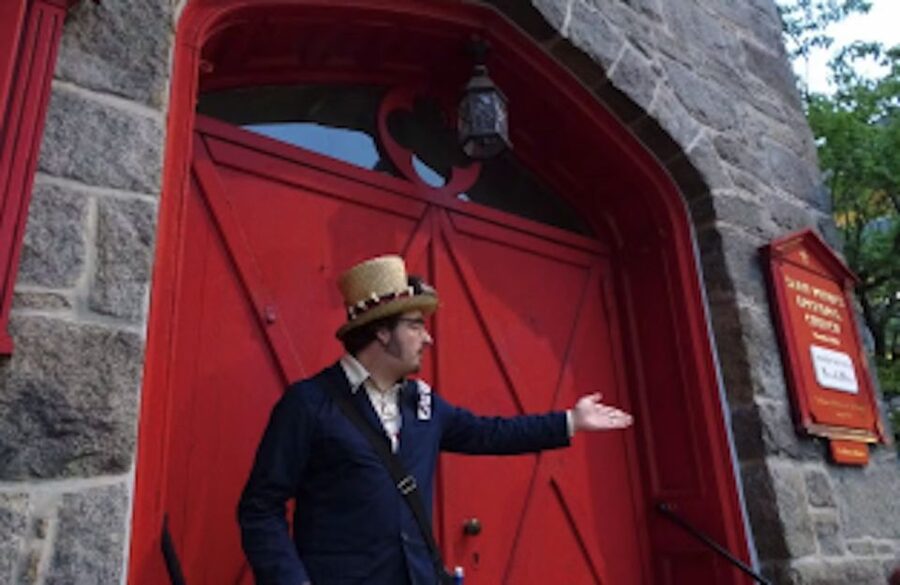
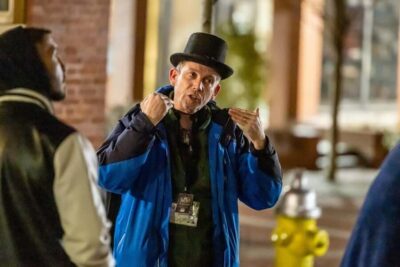
I also like that the guides do not appear in period costumes. Guides such as Dr. Vitka, Mike, and Vin are described as historians or paranormal investigators, and their approach seems to depend on speaking directly to the group rather than acting out a character. Mike is especially praised for linking historical information with lesser-known details, while Dr. Vitka is noted for his passion and depth of knowledge.
The experience is not a skeptical lecture, either. If you enjoy paranormal stories, you get plenty of them. The useful difference is that the guide explains the methods used by ghost hunters today and encourages you to look carefully at photographs rather than accept every bright spot as proof.
More Ghost Walking Tours in the USA
- New Orleans Premier Ghost, Voodoo and Vampire Walking Tour
★ 4.5 · 12,856 reviews - Chicago: Gangsters and Ghosts Walking Tour
★ 5.0 · 7,155 reviews - Savannah History and Haunts Candlelit Ghost Walking Tour
★ 5.0 · 3,235 reviews
Starting at the Revere Bell on New Liberty Street
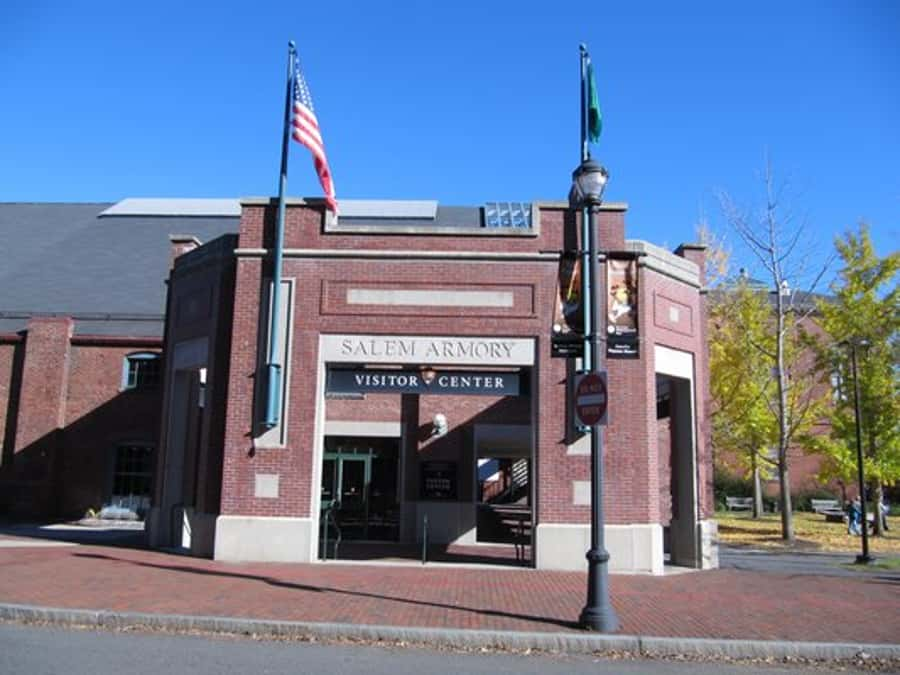
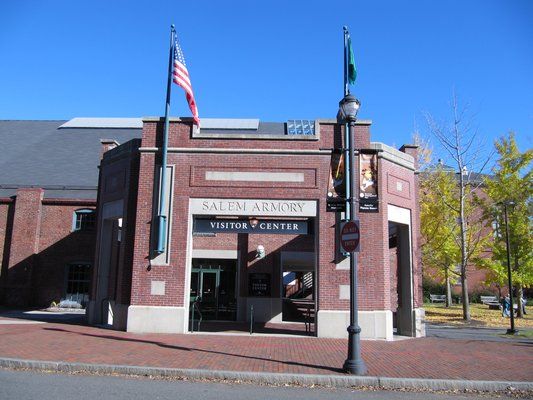
Meet at the Revere Bell in front of the Salem Visitor Center area at 2 New Liberty Street. The tour returns to this same meeting point, which makes it easy to plan around dinner, a hotel, or another Salem activity.
The group size can reach 40 people. That is large enough to create a lively night out, but it may also mean standing toward the back at popular stops. Several comments praise the guides for keeping the group together and making sure people could hear and stay involved, an important skill on Salem’s crowded streets.
The walking is described as easy, and most people can participate. Still, wear comfortable shoes. You will stop often, but you will also move through the historic center, cross streets, and stand outside at cemeteries and building fronts.
The evening departure is the best match for the tour’s mood. Weekend afternoon departures are useful if you want the same subject matter without walking in the dark. Children must be with an adult, and the content may suit older children better than very young ones because the tour includes execution, torture, murder, and disturbing folklore.
Giles Corey and the physical cost of the witch trials
The first stops put Salem’s witch-trial story in a human frame. At 15 Federal Street, the guide discusses Giles Corey, who was pressed to death after refusing to enter a plea. Heavy stones were placed on him in an attempt to force a response, making this one of the tour’s most brutal episodes.
The stop lasts only about eight minutes, but the story has weight. It shows how the legal process could become physical punishment and why Salem’s witch trials still trouble historians. The guide also tells the local curse story connected with Corey’s final breath, bringing the historical event into the realm of legend.
At 24 St. Peter Street, you pause at a church graveyard with old markers tied to the witch-trial period. This is a short stop, about five minutes, and a good chance to take photographs of antique gravestones. The cemetery setting provides atmosphere without requiring a long detour.
At 10 Federal Street, the tour turns to the former dungeon site. Accused people were held there while awaiting trial and execution, and the guide explains the beliefs of the Puritans that helped fuel the hysteria. This is also where Tituba becomes central.
Tituba, voodoo stories, and the danger of simple labels
Tituba was an enslaved woman whose testimony helped set the witch accusations in motion. She was herself accused and became linked in popular retellings with voodoo or secret magical practice. The tour uses her story to discuss how fear, coercion, race, slavery, and religious belief shaped the crisis.
I find this one of the more valuable parts of the walk because it keeps the supernatural label from floating free of its human setting. Tituba was not simply a spooky character. She was an enslaved person caught in a dangerous system, and her story shows how quickly authorities and neighbors could turn suspicion into a formal accusation.
The former dungeon site is also presented as one of Salem’s more active haunted locations. You can take photographs and hear about images interpreted as orbs, ectoplasm, or apparitions. The guide also shows photographs from investigations and explains how ghost hunters assess possible activity.
Keep your expectations sensible here. A photograph with a light streak or bright orb may be intriguing, but the tour does not turn every image into certain proof. That balance is useful if you enjoy paranormal subjects but still want room for questions.
Same streets, a different guide:
- History and Hauntings of Salem Guided Walking Tour
★ 5.0 · 14,564 reviews - Little Havana Food and Walking Tour in Miami
★ 5.0 · 8,882 reviews - Boston: Freedom Trail History Small Group Walking Tour
★ 5.0 · 6,450 reviews - Historic Charleston Guided Sightseeing Walking Tour
★ 5.0 · 6,216 reviews
Bridget Bishop’s land and Salem’s many layers
At Turner’s Seafood at Lyceum Hall, the tour reaches land associated with Bridget Bishop, the first person executed during the witch trials. The location is familiar to people who watch ghost-hunting programs, and it carries a reputation for unexplained physical sensations and unusual photographs.
This stop also adds an unexpected piece of American communications history. Alexander Graham Bell demonstrated the telephone before a large audience here. That detail is a reminder that Salem is not only a town of witches and ghosts. Its old buildings have hosted science, business, entertainment, and tragedy across several centuries.
The tour then pauses at Old Town Hall, a popular photo stop for fans of Hocus Pocus. This is where the film’s I Put a Spell On You ball scene was shot. The stop is brief, about five minutes, but it gives movie fans a concrete place to connect with the film.
I appreciate that the tour does not force every location into the same category. One stop is tied to an execution, another to a scientific demonstration, and another to a movie. Together, they show how Salem’s identity has been built from history, folklore, pop culture, and tourism.
Derby Square brings out the vampires
At Derby Square, the subject changes from witch trials to vampire lore. The guide discusses New England stories about vampirism and documented cases involving blood drinking. This is among the more graphic portions of the tour, and the language is intended to unsettle rather than simply amuse.
The value here is context. Vampire legends in New England were not only imported European tales. They also grew from local fears about illness, death, burial, and unexplained suffering. The tour connects older folklore with modern accounts of people who have actually practiced blood drinking, creating a darker and stranger chapter in Salem’s story.
If you prefer gentle ghost stories, this section may be too gruesome. If you enjoy folklore with a true-crime edge, it is likely to be one of the tour’s most memorable stops.
Houdini, notorious crimes, and a haunted bar
Houdini Way offers a lighter change of pace. Harry Houdini performed a dramatic escape in Salem, giving the tour a moment of stage magic rather than alleged supernatural activity. The stop also fits Salem’s long relationship with illusion, performance, and public spectacle.
On Central Street, the mood turns grim again. The guide discusses crimes connected with the Boston Strangler and Carl Panzram, including murders carried out in Salem. This material broadens the tour beyond the 1692 trials, but it also makes clear that the town’s dark reputation comes from more than witchcraft.
At 300 Derby Street, you stop briefly at a haunted bar. The visit lasts only about three minutes, so do not expect a long investigation or time inside for a drink. It is a quick atmospheric point on the route rather than a major attraction.
The Burying Point and Salem’s oldest stories
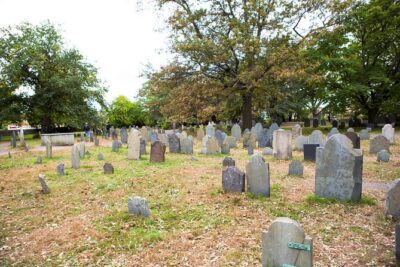
The Burying Point is one of the tour’s strongest settings. Dating to 1636, it is among the oldest cemeteries in the United States and the resting place of people connected with the witch trials, including judges and townsfolk who lived through the crisis.
Judge John Hathorne’s tombstone is an important sight. Hathorne was involved in the witch-trial proceedings, and seeing his grave gives the story a physical anchor. You are no longer hearing about an abstract figure in a textbook. You are standing beside the marker of a man whose decisions affected the lives and deaths of the accused.
The cemetery is also associated with Nathaniel Hawthorne, who spent time there during his life. The guide suggests that Hawthorne may still be present in spirit, a claim firmly in the tour’s folklore section rather than its documented history.
Modern magical practitioners also use the cemetery as a ritual location. That detail shows how old sites continue to gather new meanings. You may find the mix of colonial history, literary association, ghost lore, and present-day ritual more interesting than a cemetery stop focused only on famous graves.
Please treat the cemetery with respect. It is a functioning historic burial ground, not merely a backdrop for dramatic photos.
The Peabody Essex Museum and the final ghost photographs
The tour passes the Peabody Essex Museum, a respected art museum that also holds objects tied to Salem’s darker stories. Admission is not included, and the walk does not turn into a museum visit. You see the building and hear about the shadowy artifacts connected with it.
The final stop is Axelrod Walkway Park, where the guide shares ghost photographs gathered during investigations. This is a fitting close because it returns the tour to its central question: what counts as evidence?
You may show personal photographs for the guide to examine for possible signs of paranormal activity. The guide can point out features that ghost hunters label as orbs, ectoplasm, or apparitions. Take this as an informed conversation, not a guarantee that your camera will capture a spirit.
That hands-on element makes the experience more engaging than a simple talk. You leave with a way to look at your own photographs, even if your conclusion remains uncertain.
Guide style, group size, and the best time to go
The strongest part of this experience is the guiding. The available guide names include Dr. Vitka, Mike, and Vin, but your guide will depend on the departure. Their shared role is to present Salem’s history clearly, hold the group’s attention, and add personal experience from paranormal investigations.
Several comments praise dramatic storytelling, thoughtful answers, and careful group control. One particularly useful detail is that the guide may add relevant information when you mention a family connection to one of the accused. That suggests a flexible presentation rather than a speech delivered without regard for the people listening.
The group limit is 40. That is not an intimate private walk, so you should not expect every person to have a long personal conversation with the guide. The benefit is a social atmosphere and a chance to compare reactions during the spooky sections.
For mood, choose the evening. Salem’s cemeteries and old streets carry more atmosphere after dark, and the tour’s ghost material feels better matched to nighttime. Choose the weekend afternoon option if visibility, family comfort, or cooler evening temperatures matter more than mood.
Is the tour good value?
The listed stops do not charge separate admission, and the tour is mostly an outdoor walking route. The Peabody Essex Museum is the exception, with admission not included. Since the exact tour price is not provided here, I would judge value by what you want from a 90-minute Salem experience.
You get a guided route through major historic sites, a focused explanation of the witch trials, vampire and voodoo folklore, crime stories, movie locations, and a chance to discuss ghost photographs. That is strong value if you would otherwise book a separate history walk and ghost tour.
The route is less suitable if you want entry into historic buildings, a formal museum tour, or a long paranormal investigation at one location. Much of the experience takes place outdoors, and some stops are only a few minutes long.
Free cancellation is available when you cancel at least 24 hours before the local start time. Changes or cancellations inside that window are not refundable, so keep your plans firm once the cutoff approaches.
Who should book this Salem walking tour?
I would choose this tour if you want history with a supernatural edge, rather than a pure ghost-story performance. It suits first-time visitors who want to get their bearings in Salem while learning why the witch trials still matter.
It is also a good match for fans of ghost-hunting programs, Hocus Pocus, New England folklore, and old cemeteries. Families can attend with an adult, but I would consider the age and temperament of younger children before booking because the material includes executions, torture, murder, and blood drinking.
The tour welcomes service animals, and well-behaved pets are allowed. Most people can take part, though you should be comfortable walking and standing outdoors for about an hour and a half.
Should you book it?
Book it if you want a lively Salem introduction that treats the 1692 trials as real history while still giving you voodoo stories, vampire lore, haunted places, ghost photographs, and a few pop-culture surprises. The guides’ storytelling and paranormal field experience are the main reasons to choose it.
Skip it if you want a quiet cemetery visit, a strictly academic history lecture, or a private investigation with lots of time at each site. For most curious visitors, especially on an October evening, this is a well-paced way to see Salem’s best-known dark places without reducing the town to costumes and cheap scares.
FAQ
How long is the Salem Voodoo, Vampires, and Ghosts Guided Walking Tour?
The tour lasts approximately 1 hour and 30 minutes.
Where does the tour begin?
It begins at the Revere Bell at 2 New Liberty Street, Salem, Massachusetts, near the Salem Visitor Center.
Where does the tour end?
The tour ends back at the meeting point.
Is the tour offered in English?
Yes. An English-speaking guide leads the experience.
Is the tour offered during the day?
A daily evening tour is available, and an afternoon option is offered on weekends.
Does the tour enter the Peabody Essex Museum?
No. The tour passes the museum, but admission is not included.
Can I bring my own photographs for paranormal examination?
Yes. The guide can examine personal photographs for possible signs such as orbs, ectoplasm, and apparitions.
Are children and pets allowed?
Children must be accompanied by an adult. Service animals are allowed, and well-behaved pets are welcome.
What is the cancellation policy?
You can cancel at least 24 hours before the local start time for a full refund. Cancellations or changes made less than 24 hours before the start time are not accepted for a refund.
New routes in the USA
- Baltimore Walking Foodie Tour in Fells Point★ 5.0 · 182 reviews
- The Madam’s Curse Walking Ghost Tour★ 4.5 · 103 reviews
- Austin Small Group Morning Walk★ 5.0 · 412 reviews
- Austin Haunted Pub Crawl Walking Tour★ 4.5 · 232 reviews
- Austin Downtown Private Walking Food Tour With Secret Food Tours★ 5.0 · 71 reviews
- Austin Murder Walk★ 5.0 · 310 reviews
- The Ghosts of Austin Walking Tour★ 4.5 · 72 reviews
- Martin Luther King Jr. History Walking Tour★ 5.0 · 687 reviews
Salem Walking Tours, compared.
History and Hauntings of Salem Guided Walking Tour
Read our review →
Mysteries and Murders of Salem Guided Night-Time Walking Tour
Read our review →
Salem: Ghosts, Witches, & Warlocks Guided Walking Tour
Read our review →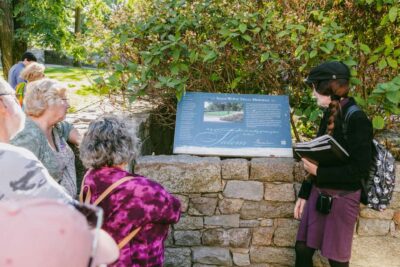
Salem, MA: Hocus Pocus Movie Guided Walking Tour
Read our review →Browse the lists this tour appears in