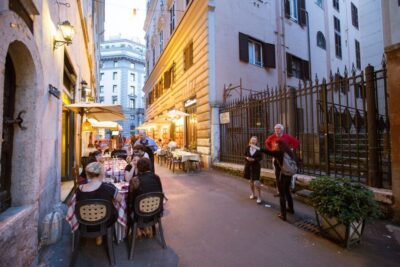
Review · ROME
Rome Food Tour in the Historic Centre with 8+ Food Tastings
Rome is a city where a short walk can take you past an ancient temple, a Baroque fountain, and a plate of pasta cooked in a tiny neighborhood shop. This three-hour food walk makes that connection clear, moving from Piazza Navona to the former Jewish Ghetto while serving a full meal in tasting portions.
I like the generous spread, especially the two kinds of homemade pizza, two Roman pastas, and excellent finish of cannoli and artisanal gelato. I also like the small-group limit of 12, which gives guides such as Massimiliano, Rocio, Luda, Federico, and Eduardo room to answer questions and adjust for children or vegetarians. The main drawback is simple: you need to arrive hungry, and the walking, especially in hot weather, may feel like work after several food stops.
Key points to know before booking
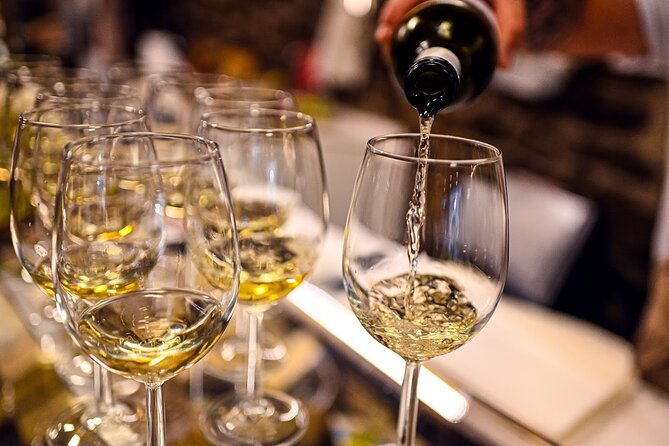
- Eight or more tastings form a full meal: Pizza, supplì, cured meats, cheeses, two pastas, cannoli, gelato, and a secret dish are included.
- Piazza Navona begins the food-and-history lesson: You start beside one of Rome’s great fountains and an ancient Roman stadium site.
- The route reaches the old Jewish Ghetto: This adds a strong cultural layer to what could otherwise be just a restaurant crawl.
- The group can have no more than 12 people: That is a useful size for a walking tour with several food stops.
- The end point is Largo di Torre Argentina: You finish near Roman Republican temples and the remains of Pompey’s Theatre, not back at Piazza Navona.
- The menu can change: Restaurant availability, weather, and other conditions may alter the stops or dishes.
Why this Rome food tour works
The best food walks do two jobs at once. They feed you, then explain why the food belongs to that place. This one uses central Rome as its classroom, connecting pizza and pasta with fountains, temples, palaces, and the old Jewish quarter.
The price is $118.51 per person, which is not cheap for three hours. Still, the value improves when you consider the amount of food: the advertised menu covers a series of substantial tastings rather than a few decorative bites. You get two types of homemade pizza, supplì, Italian cold cuts and cheeses, two Roman pastas, cannoli, artisanal gelato, and a secret dish.
That is enough to replace lunch for most people. Some sessions also include wine, coffee, or other drinks, though you should not treat those as guaranteed menu items. The supplied food list is the safer guide when deciding what is included.
The tour is offered in English and uses mobile tickets. It is often booked well ahead, with an average booking window of 73 days, so last-minute availability may be limited. Confirmation is sent within 48 hours, subject to availability.
More Food Walking Tours in Italy
- Rome: Guided Food Walking Tour with Wine in Trastevere
★ 4.9 · 3,105 reviews - Rome: Trastevere & Campo de Fiori Street Food Walking Tour
★ 4.9 · 2,768 reviews - Rome: Trastevere Street Food Walking Tour with Local Expert
★ 4.8 · 1,784 reviews
Piazza Navona starts with fountains and food
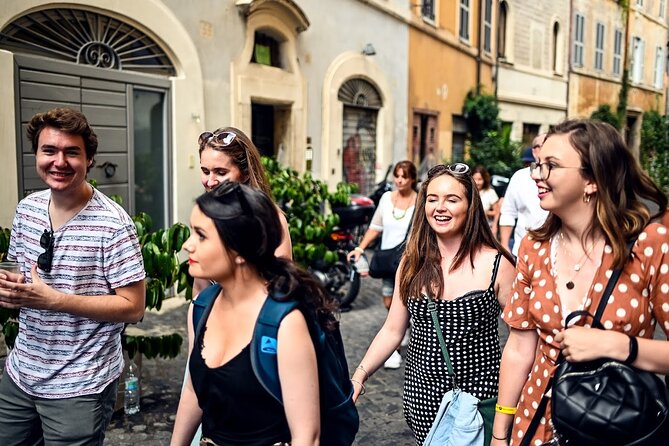
The meeting point is Sant’Agnese in Agone, at Piazza Navona. This is a smart place to begin because the square gives you Rome in one frame: ancient foundations below, Baroque architecture above, and cafés and food shops around the edges.
Piazza Navona occupies the site of an ancient stadium. Today, its main visual prize is the Fountain of the Four Rivers, a 17th-century work featuring four river figures, a Roman obelisk, and a dove at the top. The fountain gives your guide a natural way to explain how Rome repeatedly built its present over its past.
The square is also linked with everyday Roman eating. You may hear about pizza bianca, supplì, gelato, espresso, and other familiar staples before the formal tasting route gets moving. The official stop here lasts about 20 minutes, with no separate admission charge.
Do not expect to sit down for a long meal at this first stop. The point is to set the scene, introduce the group, and begin the walk. The square can be busy with pedestrians, so stay alert for the guide and arrive early enough to find Sant’Agnese in Agone without a scramble.
A Renaissance palace and Rome’s layered center
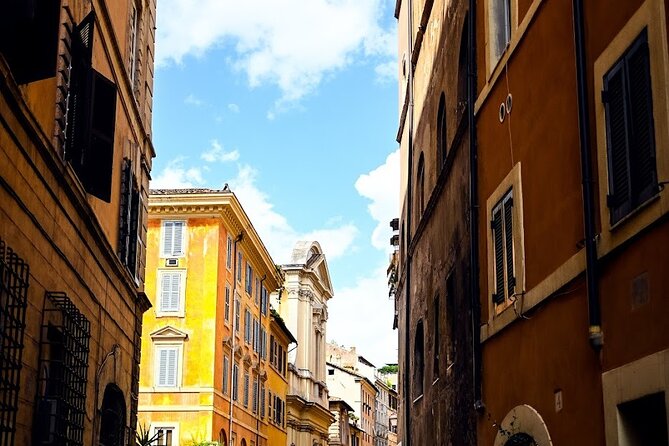
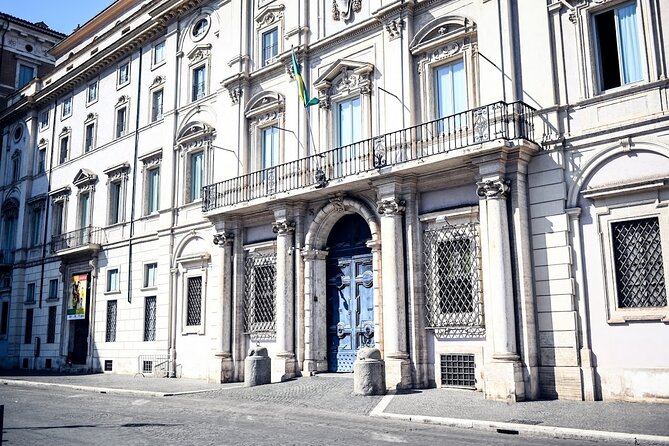
The route includes one of Rome’s major High Renaissance palaces, now used as the French embassy in Italy. The palace is not presented as a separate paid visit, and you should not expect to enter. Its value is in the street-level context: you see how political power, art, and foreign influence have long shared the center of Rome.
The walk also passes a classical 17th-century fountain honoring four rivers. This may be the Fountain of the Four Rivers in Piazza Navona, though the supplied route lists the fountain separately from the square. Either way, the stop gives the guide a chance to explain the symbols and the Roman habit of turning public spaces into theater.
Another point of interest is the remains of an ancient walkway built in the second century B.C. to connect two Roman temples. It is a small but telling detail. Rome is not only about grand monuments such as the Colosseum. Fragments of old streets and connecting paths are often what help you understand how the city functioned.
I like this part of the experience because the food is not isolated from the streets around it. You are given reasons to look up between bites.
The former Jewish Ghetto adds depth
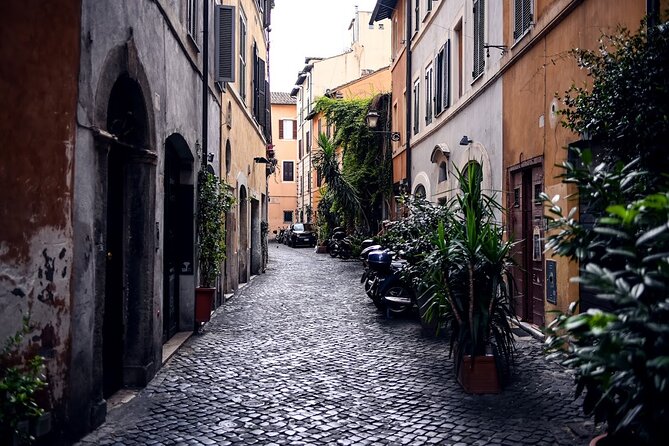
The route reaches the Jewish Ghetto in Rione Sant’Angelo, a Jewish quarter established in 1555. This is one of the most important cultural sections of the tour because it changes the frame from general Roman sightseeing to a specific community and its place in the city.
Food here carries memory. The former ghetto is known for its history, culture, and places to eat, and the tour uses that setting to show that Roman cuisine is not one single tradition. The dishes you taste sit within a city shaped by many neighborhoods and communities.
Keep in mind that a three-hour food walk cannot explain every part of the quarter in detail. The guide can give useful background, but this is not a dedicated Jewish Ghetto history tour. If that subject matters greatly to you, use the walk as an introduction and return later for a slower look.
The route’s small-group format helps here. Guides including Massimiliano, Rocio, Luda, and Federico are praised for combining Roman history with food explanations, and the smaller group makes it easier to hear on narrow streets.
More Food Walking Tours in Rome
- Rome Trastevere Walking Food Tour
★ 4.8 · 97 reviews - Rome: Trastevere Food Walking Tour with Beer and Wine
★ 4.9 · 71 reviews
Pizza, supplì, meats, and cheeses
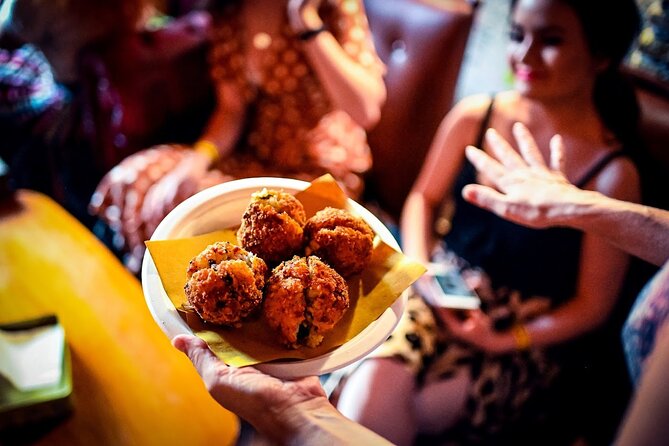
The early food stops build a Roman snack plate. You receive two different kinds of homemade pizza, along with supplì, the fried rice croquette often filled with tomato and mozzarella. These are practical foods: easy to share, easy to eat while walking or standing, and closely tied to Roman daily life.
The cold cuts and cheeses broaden the tasting. Instead of focusing only on famous dishes, the tour gives you a sense of how Italians assemble a simple meal from good ingredients. Pay attention to texture and seasoning, not just the names. Your guide may explain what makes one cheese different from another or how a particular cured meat fits into local eating habits.
This is also where the tour’s value becomes clearer. A single restaurant meal might give you one pasta and one dessert. Here, you sample across several food categories before the main pasta course arrives.
The amount can be substantial. Several people describe leaving very full, so do not eat a large lunch before joining. A light breakfast or early snack is the sensible plan.
Two Roman pastas make the meal worthwhile
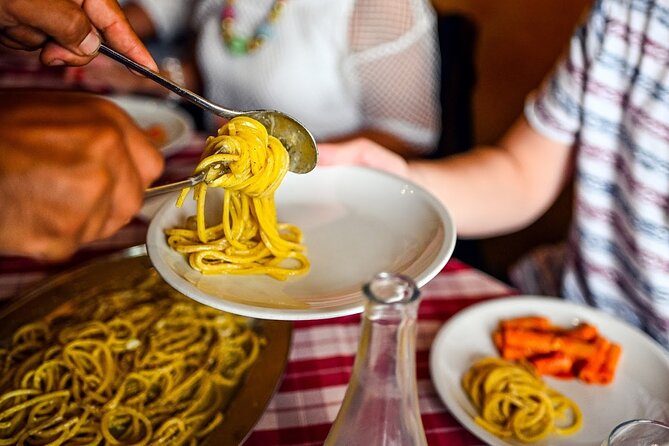
The two Roman pasta tastings are likely to be the heart of the food portion. The supplied menu does not promise specific pasta recipes, so you should not book this expecting a particular dish such as carbonara or cacio e pepe. You will receive two Roman pastas, with the exact selection subject to change.
That flexibility is practical. Restaurants may have different availability, and the provider notes that the menu can change because of location, weather, or other circumstances. The tradeoff is that you get a broad Roman introduction rather than a fixed tasting menu.
The pasta stops also give the guide space to discuss how Roman dishes are made and why the ingredients matter. Several guides are praised for explaining the origins of the food, not just pointing at a plate and naming it. That distinction matters if you want to recognize Roman cooking later in your trip.
Vegetarians are not forgotten. One experience included vegetarian pasta and other alternatives at different stops. Still, dietary needs are not fully detailed in the supplied information, so you should confirm your requirements when booking rather than assume every substitution is available.
Campo de’ Fiori and Largo di Torre Argentina
The route includes Campo de’ Fiori, the rectangular square south of Piazza Navona. Its name means field of flowers, a reminder that Rome’s public spaces have changed purpose over time. The square provides another open setting between the tighter streets of the historic center.
The final area is Largo di Torre Argentina, where the tour ends. Here you see four Roman Republican temples and remains connected with Pompey’s Theatre, in the ancient Campus Martius. The end point gives the tour a strong archaeological finish, even though the experience is mainly about food.
This ending is useful when planning the rest of your day. You do not return to Piazza Navona, so allow for that when meeting family or arranging another activity. Largo di Torre Argentina is near public transportation, and the central location makes it practical for continuing on foot or by transit.
Cannoli and gelato finish the walk
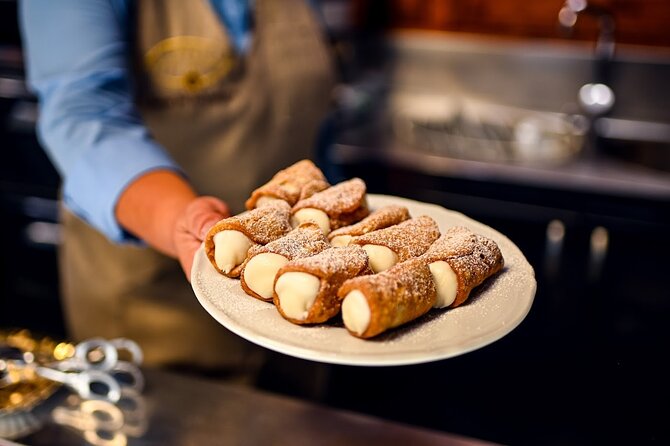
Dessert arrives in two forms: cannoli and artisanal gelato. The cannoli has earned particular praise from people who normally do not choose it, which tells you the stop may be more memorable than the standard tourist version.
Gelato is the final reward and a good way to close a warm walk. One guide was especially praised for finding excellent gelato even on a day above 90 degrees Fahrenheit. Your exact shop and flavor selection can change, but the dessert course is clearly meant to be a full stop, not an afterthought.
Coffee also appears in some accounts of the experience, and wine is included in some sessions. The formal included list does not promise either, so consider them possible additions rather than guaranteed parts of the $118.51 price. The minimum drinking age is 18.
Guides make the difference
The food is important, but the guide shapes the day. Massimiliano is repeatedly singled out for his Roman history, humor, energy, and ability to answer questions about the rest of a visit. Rocio is described as funny and engaging, while Luda is praised for being friendly and informative.
Federico handled vegetarian substitutions and included wine on one Sunday lunch tour. Eduardo connected local history with each food stop. Robbie was appreciated for restaurant suggestions that could help you plan later meals.
Names and guide assignments can change. The useful point is that this experience depends on a personal guide rather than a recorded audio track. A strong guide keeps the group moving, explains the food, and makes Rome’s layers easier to read.
Families can do it. A group with children aged four and six completed the walk, and a nine-year-old was kept involved with suitable drink alternatives while adults had coffee and wine. Still, it remains a three-hour walking activity with a great deal of food, so very young children may need patience and breaks.
Who should book, and who should skip it
I would choose this tour for a first or second day in Rome, when you want a quick orientation to the old center and a meal that covers several Roman specialties. It also suits anyone who likes meeting other people, since the small group creates a social meal without the cost of a private tour.
It is a good match for families, curious eaters, and people who prefer history in manageable pieces. The English-language format and maximum group size of 12 are helpful advantages.
I would skip it if you want a slow, formal restaurant lunch, a fixed menu, or a tour focused only on the Jewish Ghetto. You should also think twice if walking in heat is difficult or if you prefer light tastings. This is a filling experience.
Free cancellation is available up to 24 hours before the start time. Changes or cancellations inside that window are not accepted for a refund. Hotel pickup and drop-off are not included, pets are not permitted, and gratuity is separate.
Should you book this Rome food tour?
For most food-minded visitors, yes. The $118.51 price is high, but the quantity of food, number of stops, central sights, and guide-led context make it reasonable when you treat it as both lunch and a walking tour.
Book it if you want to taste pizza, pasta, supplì, cured meats, cheeses, cannoli, and gelato in one outing while learning how the old center fits together. Arrive hungry, wear comfortable shoes, and keep the rest of your schedule light after the tour. You will likely finish full, better oriented, and ready to decide which Roman dishes deserve a second meal.
FAQ
How long does the Rome food tour last?
The tour lasts approximately three hours.
Where does the tour begin?
It begins at Sant’Agnese in Agone, Piazza Navona 14, Rome.
Where does the tour end?
The tour ends at Largo di Torre Argentina in Rome.
What food is included?
The included food is two types of homemade pizza, supplì, Italian cold cuts and cheeses, two Roman pastas, cannoli, artisanal gelato, and a secret dish.
How many people can join the tour?
The tour has a maximum of 12 participants.
Is the tour offered in English?
Yes, the tour is offered in English.
Can I cancel for a full refund?
Yes. You can cancel at least 24 hours before the experience start time for a full refund. Cancellations or changes made less than 24 hours before the start time are not refunded or accepted.
More Old Town Walking Tours in Rome
- Underground Vaults Walking Tour in Edinburgh Old Town
★ 4.5 · 8,506 reviews - Prague: 3-Hour Walking Tour of Old Town & Prague Castle
★ 4.7 · 5,696 reviews - Dubrovnik: Old Town Walking Tour
★ 4.8 · 5,174 reviews - Split: Old Town and Diocletian Palace Walking Tour
★ 4.9 · 4,727 reviews
More History Walking Tours in Rome
- Rome: Forbidden History Walking Tour & Pub Crawl with Drinks
★ 4.9 · 688 reviews - Ancient Rome Guided Walking Tour: Colosseum, Forum and Palatine
★ 4.5 · 455 reviews - Colosseum & Ancient Rome Guided Walking Tour
★ 5.0 · 332 reviews - Rome: Colosseum and Ancient Rome Guided Walking Tour
★ 4.8 · 237 reviews
New routes in Rome
- Rome: Colosseum and Ancient Rome Guided Walking Tour★ 4.5 · 95 reviews
- Rome Walking Tour: Pantheon, Trevi, Navona & Hidden Gems★ 4.8 · 501 reviews
- Rome: Guided Walking Tour and Pantheon Priority Entry Ticket★ 4.3 · 317 reviews
- Rome: Trastevere Food Walking Tour with Beer and Wine★ 4.9 · 71 reviews
- Rome: Trevi Fountain, Spanish Steps & Pantheon Walking Tour★ 4.6 · 336 reviews
- Rome: Underground Trastevere Guided Walking Tour★ 4.8 · 87 reviews
- Rome: Relics from the Passion of the Christ Walking Tour★ 4.9 · 84 reviews
- Rome: Trastevere and Roman Ghetto Guided Walking Tour★ 4.7 · 79 reviews
Rome Walking Tours, compared.
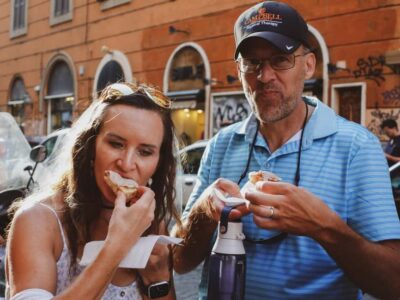
Guided Food Walking Tour with Wine in Trastevere
Read our review →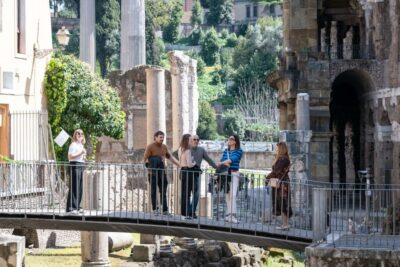
Trastevere & Campo de Fiori Street Food Walking Tour
Read our review →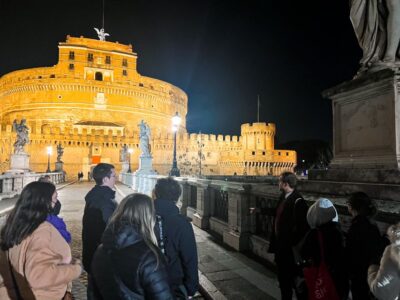
Paranormal Night Walking Tour & Secret Backstreets
Read our review →
Colosseum Arena, Roman Forum & Palatine Hill Tour
Read our review →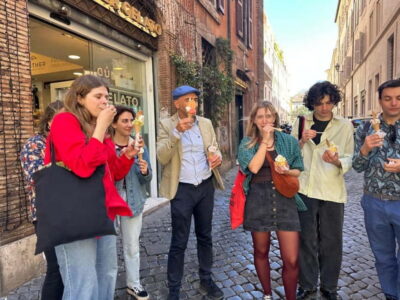
Trastevere Street Food Walking Tour with Local Expert
Read our review →
Rome by Night Walking Tour – Legends & Criminal Stories
Read our review →