
Review · NEW YORK CITY
Tribeca Architecture And History Walking Tour
Tribeca’s big surprise is how much of New York’s story fits into a few blocks. This was once farmland, then a working waterfront and warehouse district, and now one of Manhattan’s most expensive addresses. The cast-iron facades are only the beginning. Look closer and you’ll find clues about trade, industry, film, architecture, and changing city life.
I like the way this walk connects grand buildings to ordinary details you could easily miss, and I like the mix of serious history with pop culture, including the Ghostbusters firehouse. Guide Meghan Sara is often praised for her energy, humor, and ability to adjust the conversation to the group. The main drawback is simple: you’ll be outside and on your feet for two and a half hours, so poor weather can make the experience less comfortable.
Key points to know before you book
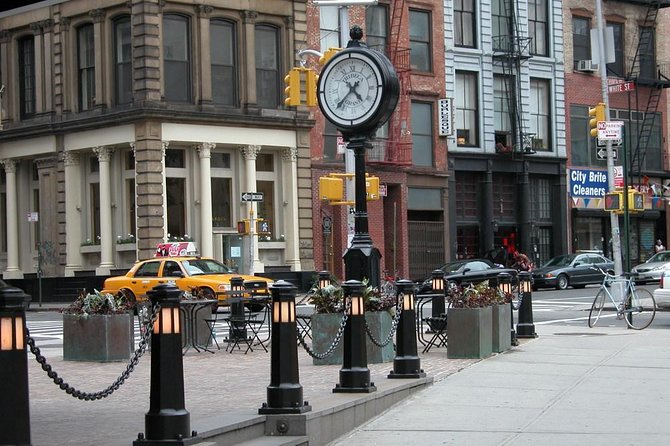
- More than 15 Tribeca locations: The walk gives you a broad look at the neighborhood rather than focusing on one landmark.
- A strong architecture focus: Cast-iron buildings, handsome facades, and modern architectural feats all fit into the route.
- History with a light touch: Expect stories about Tribeca’s name, farmland past, working buildings, wealthy residents, and movie connections.
- A genuine pop culture stop: Firehouse Company 8 is the famous Ghostbusters location, but the tour also explains its real purpose.
- Small group format: The maximum is 15 people, which helps the guide point out details and answer questions.
- Useful neighborhood advice: The walk can include suggestions for cafés, bakeries, restaurants, and places for a meal after the tour.
Starting beneath the Tweed Courthouse
The tour begins at 11 a.m. near the Tweed Courthouse at 52 Chambers Street. This is a useful starting point because you are already in the civic heart of Lower Manhattan, close to major subway connections and the older streets around City Hall.
From here, the walk moves toward Tribeca and uses the neighborhood itself as the main exhibit. There is no need to arrive with a background in architecture. The guide explains what you are seeing in plain language, so you can enjoy the buildings without memorizing architectural terms.
That matters because city architecture can be easy to skim past. You may notice a row of handsome buildings, but not understand why their materials, windows, loading areas, or proportions matter. A good guide turns those details into evidence of how the district worked.
The opening section also gives you a useful sense of scale. Tribeca is not presented as a frozen historic district. It is a neighborhood shaped by several different eras, with older commercial buildings beside later renovations and newer architectural work. The pleasure comes from seeing those layers together.
More History Walking Tours in New York City
- #1 Rated NYC Chinatown Food and History Walking Tour with FNYT
★ 5.0 · 171 reviews - Lower Manhattan Secrets And History Walking Tour
★ 5.0 · 96 reviews - Pride Tours NYC’s LGBTQ Historical Walking Tour
★ 5.0 · 89 reviews
How farmland became a wealthy Manhattan address
The central story is Tribeca’s transformation. Its name refers to the Triangle Below Canal Street, but the tour goes beyond explaining the abbreviation. You’ll hear how this part of Manhattan changed from farmland into an urban district, then developed through commerce and industry before becoming a fashionable residential address.
That shift helps explain the neighborhood’s unusual character. Many buildings were designed for work rather than domestic life. Their broad fronts, sturdy construction, and practical layouts reflect a time when goods, businesses, and workers mattered more here than luxury apartments.
Later, the area changed again. Buildings once tied to trade and storage gained new value as homes, creative spaces, and fashionable addresses. The result is a neighborhood where expensive residences occupy structures that were never originally built for that purpose.
I find this kind of history more useful than a list of dates. It tells you why Tribeca looks the way it does. You’re not just seeing old buildings. You’re seeing a record of changing land values, industries, tastes, and ideas about how city space should be used.
Reading Tribeca’s cast-iron architecture
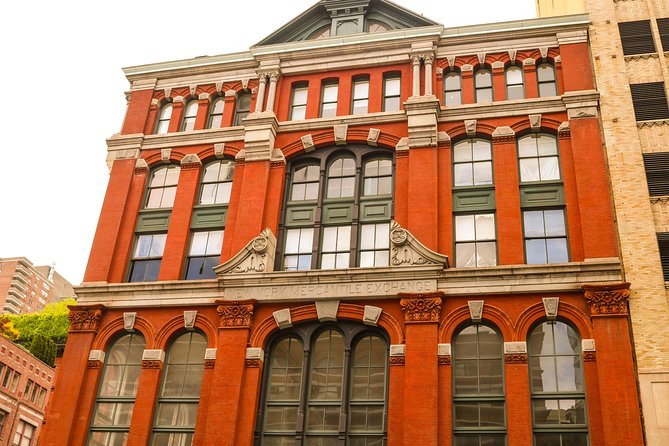
Architecture is the heart of this walk. Tribeca is especially rewarding if you like buildings but do not want a technical lecture. The guide points out features that give the streets their personality, including the older cast-iron structures that many people would otherwise pass without a second look.
Cast iron allowed builders to create decorative fronts with repeated shapes and substantial window openings. It could give a commercial building a polished appearance while still serving a practical purpose. On a walking tour, these details become easier to compare because you see several examples close together.
The guide also helps connect design to function. A building’s lower level, upper windows, entrance, and overall width can tell you something about the work that once took place inside. That is the sort of information you can carry with you through the rest of New York.
The route includes more than 15 locations, so the experience is not built around one grand showpiece. Instead, you get a succession of buildings, corners, and small observations. The pace allows for photographs and conversation, with enough variety to keep the walk from feeling like a single long lecture.
You should still keep your expectations realistic. This is an outdoor architecture walk, not an interior tour of private homes or a formal museum program. A few indoor or lobby glimpses may be possible, but the supplied details do not promise regular interior access.
The Ghostbusters firehouse and real city life
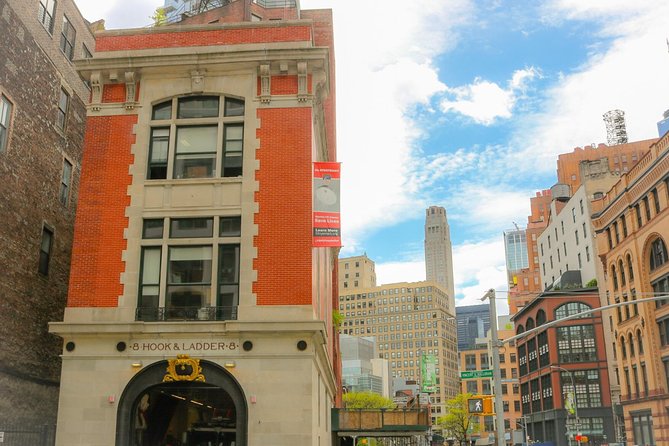
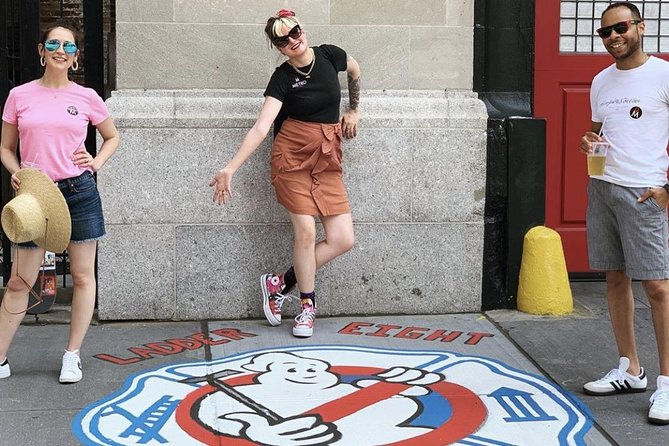
Firehouse Company 8 at North Moore Street is the tour’s most obvious movie stop. Fans of Ghostbusters will recognize the exterior and have time for a photo. That alone may be enough reason for some visitors to join, especially if you are exploring New York with a teenager or someone who loves film locations.
The better part is that the firehouse is not treated as a mere movie prop. The guide explains that it has a real civic role and a history beyond its screen appearance. That gives the stop more weight than a quick photo and move on.
The planned stop lasts about 10 minutes, which is enough for the photo opportunity and a short explanation without letting pop culture take over the entire walk. I like that balance. Tribeca has plenty of film associations, but the neighborhood is much more interesting when those connections sit beside its architecture and working history.
If you are not a Ghostbusters fan, you will still get something from the stop, but it may not be the highlight for you. The tour’s strongest material is the way it places the firehouse inside the larger story of Tribeca.
More History Walking Tours in the USA
- NYC: History of Slavery & Underground Railroad Walking Tour
★ 4.7 · 87 reviews - History and Hauntings of Salem Guided Walking Tour
★ 5.0 · 14,564 reviews - Boston: Freedom Trail History Small Group Walking Tour
★ 5.0 · 6,450 reviews - Historic Charleston Guided Sightseeing Walking Tour
★ 5.0 · 6,216 reviews
Stories, local tips, and a guide with personality
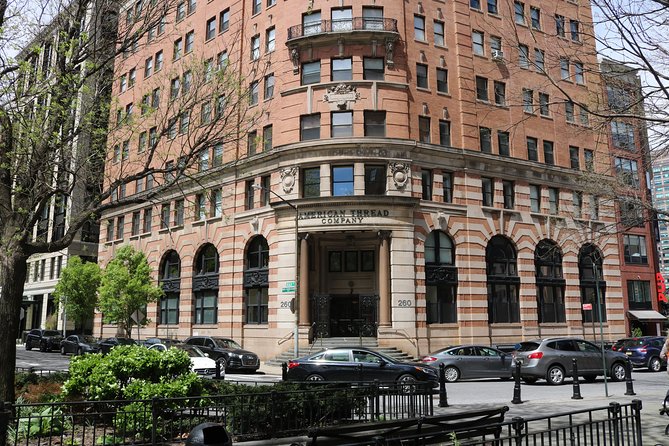
The guide can make or break a walking tour, and the strongest feedback centers on Meghan Sara. She is described as animated, funny, thoughtful, and able to make detailed material easy to follow. Her approach appears to combine architecture, history, art, pop culture, and odd local facts rather than treating each topic as a separate lecture.
That mix suits Tribeca. You might be looking at a facade one minute and hearing about the neighborhood’s name the next. Then the conversation may turn to a film location, an unusual detail in New York’s past, or a recommendation for lunch.
One especially memorable bit of local color concerns the beavers of New York. You do not need to know the details in advance, but it hints at the kind of unexpected fact that can make a city walk stick in your mind.
The guide may also point out cafés, bakeries, restaurants, and other places worth trying nearby. That makes the 11 a.m. start useful. You finish around lunchtime, and the advice can help you turn the end of the tour into a meal rather than another search on your phone.
The small group limit of 15 is another practical advantage. A group this size is not private, but it is easier to hear the guide and ask questions than it would be with a large crowd. It also gives the guide some room to respond to the group’s interests, a quality that is especially useful for local residents and repeat New York visitors.
A route that works for visitors and locals
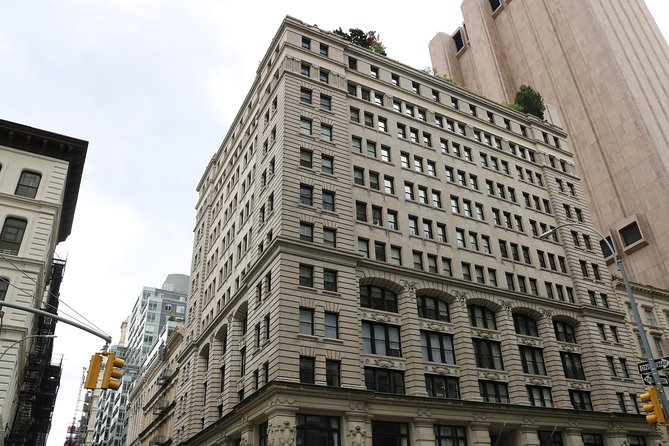
First-time visitors will get the most obvious benefit: Tribeca becomes easier to understand. It is a neighborhood many people cross without learning much about it, often because its polished appearance hides the working district it used to be.
The tour also works for New Yorkers. One participant who had lived in the city for 20 years still found new details and enjoyed the experience with a 14-year-old. That is a good sign for families and local residents who worry that a walking tour might be too basic.
The route is particularly well suited to you if you enjoy:
- Buildings and urban design
- New York history without a classroom tone
- Film and television locations
- Neighborhood food suggestions
- Small groups and a guide-led pace
- Seeing details you would likely miss alone
It may be less suitable if you want a fast list of famous sights, extensive indoor access, or a relaxed ride with little walking. The tour covers a lot of ground on foot, and the material rewards attention.
The walking pace appears to be manageable rather than rushed. Stops for photos and occasional breaks help, and the guide may identify places to warm up or use a restroom. Still, you should wear comfortable shoes and plan for changing conditions.
Timing, weather, and what to bring
The walk lasts about two hours and 30 minutes. At $50 per person, it is not the cheapest way to spend a morning in New York, but the value depends on how much use you make of the guide. If you would otherwise pass through Tribeca without noticing its buildings or understanding its history, the tour gives you a useful framework for the rest of your visit.
The group size also matters when judging the price. Up to 15 people is a fairly contained format, and a guide who answers questions and adapts to interests can make the experience feel more personal than a large sightseeing group.
Bring water and dress for the forecast. Snacks are not included, though food recommendations may help you find something after the walk. There is no reason to dress formally. Practical shoes are more important than stylish ones.
Weather deserves special attention. The experience requires good weather and may be canceled if conditions are poor. If that happens, you are offered another date or a full refund. You can also cancel for a full refund up to 24 hours before the start time. Changes or cancellations inside that window are not accepted, so keep the local cut-off time in mind.
The route is near public transportation, and service animals are allowed. Most people can take part, but remember that this remains a walking experience with a set duration. If you have mobility concerns, confirm that the route suits you before booking rather than assuming every city walking tour has the same demands.
Ending near Tribeca Park
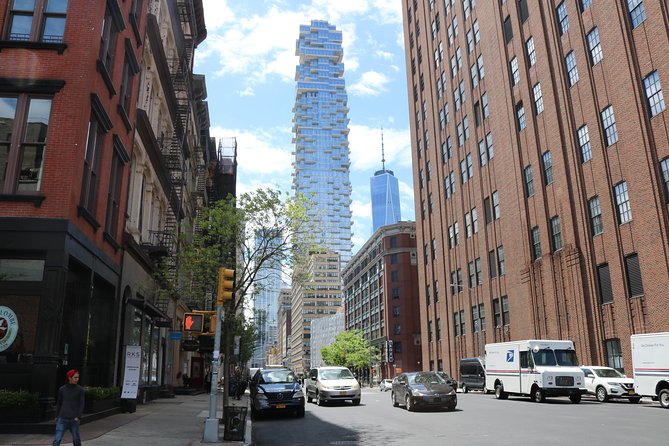
The listed end point is 8 Beach Street, in the area of Tribeca Park. The park has a history reaching back about 300 years, which gives the walk a fitting finish. You begin near the civic center of Lower Manhattan and end in a part of Tribeca that helps tie the neighborhood’s past to its present.
The ending is also practical. You can continue exploring on your own, stop for food, or use the guide’s neighborhood suggestions. Since the tour is not built around a return to the starting point, plan your day with the final location in mind.
This is one reason I would book it early in a New York visit. The route can help you decide where to eat and which parts of Tribeca deserve another look. You may also want to leave room afterward rather than scheduling a far-off attraction immediately after the tour.
Is the $50 price fair?
For a self-guided walk, $50 is a lot. You can wander Tribeca for free, photograph the firehouse from outside, and read about the neighborhood on your phone.
The fee makes more sense if you value interpretation. You are paying for the connection between the buildings, the city’s development, the neighborhood’s industries, and its current reputation. You are also paying for the chance to notice details that are difficult to identify alone.
The 4.9 rating from 141 reviews and 99 percent recommendation rate point to a consistently strong experience, especially around the guide’s presentation. The repeated praise is not just for facts. It focuses on enthusiasm, humor, storytelling, thoughtful pacing, and the ability to make architecture enjoyable.
That distinction matters. A dull guide can make beautiful buildings feel like homework. A lively guide can make an ordinary street corner memorable. The strongest evidence here suggests that the human side of the tour is a major part of its value.
Who should book the Tribeca walk?
Book it if you want to understand why Tribeca looks the way it does, not just take a few photos of expensive buildings. It is a good fit for architecture fans, New York history enthusiasts, film fans, curious locals, and visitors who prefer a small group to a large bus or crowded attraction.
I would also recommend it for families with older children and teenagers who need more than dates and names to stay interested. The Ghostbusters connection, unusual facts, and changing subject matter give the walk several entry points.
Skip it if you dislike walking, need a fully indoor activity, or want a tour focused only on movie locations. The firehouse is one part of the experience, not its whole purpose.
For most people who enjoy city streets and good storytelling, this is a smart way to spend a morning. You get architecture, history, local advice, and a better sense of how one small Manhattan neighborhood changed over three centuries.
FAQ
How long does the Tribeca Architecture and History Walking Tour last?
The tour lasts approximately two hours and 30 minutes.
Where does the tour start?
It starts at the Tweed Courthouse, 52 Chambers Street, New York, NY 10007.
What time does the tour begin?
The scheduled start time is 11 a.m.
Does the tour visit the Ghostbusters firehouse?
Yes. The route includes Firehouse Company 8, the famous Ghostbusters location, with about 10 minutes for the stop.
How large is the tour group?
The maximum group size is 15 people.
What happens if the tour is canceled because of bad weather?
You will be offered a different date or a full refund.
New routes in New York City
- New York City: Superheroes of NYC Guided Walking Tour★ 4.5 · 271 reviews
- West Harlem: Gospel Church Service and Sunday Walking Tour★ 4.3 · 411 reviews
- SoHo, Little Italy, and Chinatown 2-Hour Guided Walk★ 4.6 · 566 reviews
- New York City: Food Walking Tour of Chinatown & Little Italy★ 4.8 · 195 reviews
- NYC: Brooklyn Graffiti & Street Art Walking Tour in Bushwick★ 4.8 · 492 reviews
- NYC: Brooklyn Bridge and Dumbo Guided Walking Tour★ 4.5 · 186 reviews
- NYC: Walking Tour with Local Guide and 30+ Top NYC Sights★ 4.5 · 248 reviews
- NYC: History of Slavery & Underground Railroad Walking Tour★ 4.7 · 87 reviews
New York City Walking Tours, compared.
SoHo, Little Italy, and Chinatown Walking Tour in New York
Read our review →
Secrets of Grand Central Station Walking Tour New York City
Read our review →
Greenwich Village Walking and Food Tasting Tour
Read our review →
Artistic, Alternative Greenwich Village Walking Tour
Read our review →
True Crime NYC: Mafia Walk w/Ret. NYPD Detective and Local Food
Read our review →


NYC Greenwich Village Italian Food Guided Walking Tour
Read our review →Browse the lists this tour appears in