

Review · BUCHAREST
Bucharest: Communism and History Guided City Walking Tour
Bucharest’s Communist past is easiest to understand on foot, where grand boulevards, demolished neighborhoods, moved churches, and a former torture center sit within the same city blocks. This tour links those places into one clear story, ending where the regime fell in 1989.
I like the way the tour connects big political events with ordinary life, including food shortages, nationalisation, religion, and the influence of the Secret Police. I also like the personal touch from guides such as Andreea, Daniela, Octavian, Mihai, and Ion, who use family memories, photographs, and everyday examples to make recent history easier to grasp.
The main drawback is that three hours on foot can be tiring, especially in bad weather or for anyone with back problems. Parliament is viewed from outside only, and the tour runs rain or shine unless conditions become unsafe.
Key points to know before you book
- Parliament from the outside: You get a clear view of the House of the People and hear how Ceaușescu’s grand project reshaped Bucharest, but this is not an interior visit.
- A city told through ordinary lives: The tour explains rationing, nationalisation, housing, religion, and daily pressure, not just dates and dictators.
- About 15 stops: Churches, boulevards, old shops, moved buildings, cafés, and Revolution Square each mark a different part of the Communist period.
- Personal stories help: Guides including Andreea, Daniela, Octavian, Mihai, and Ion add family experiences and visual aids to the historical account.
- A useful first-day tour: The route gives you context for Bucharest’s architecture, street plan, and lingering social effects before you explore on your own.
- A short break is included: You stop at a local café for about 15 minutes, though drinks and food cost extra.
Why Bucharest needs a Communist history walk
Bucharest can look confusing at first. Orthodox churches sit beside monumental government buildings. Elegant older streets meet wide avenues built for parades and power. A café may occupy a building that once served a very different purpose.
That mixture is the point. The Communist era did not simply add a few gray apartment blocks to the city. It changed property ownership, neighborhoods, religious life, food supply, public speech, and the shape of central Bucharest. It also left behind buildings and symbols that still influence how the city feels today.
This tour gives you a way to read those clues. Instead of treating the House of the People as a giant photo stop, you learn why it was built, what had to be destroyed for it, and how its construction reflected Nicolae Ceaușescu’s power and megalomania.
The tour is especially helpful if you know little about Romanian history. The route follows a fairly simple timeline: the rise of Communist rule, the changes imposed on the city and its people, the role of the Secret Police, and the events that brought the regime down in December 1989.
More History Walking Tours in the world:
- History and Hauntings of Salem Guided Walking Tour
★ 5.0 · 14,564 reviews - Lisbon: History, Stories and Lifestyle Walking Tour
★ 4.8 · 10,902 reviews - Boston: Freedom Trail History Small Group Walking Tour
★ 5.0 · 6,450 reviews
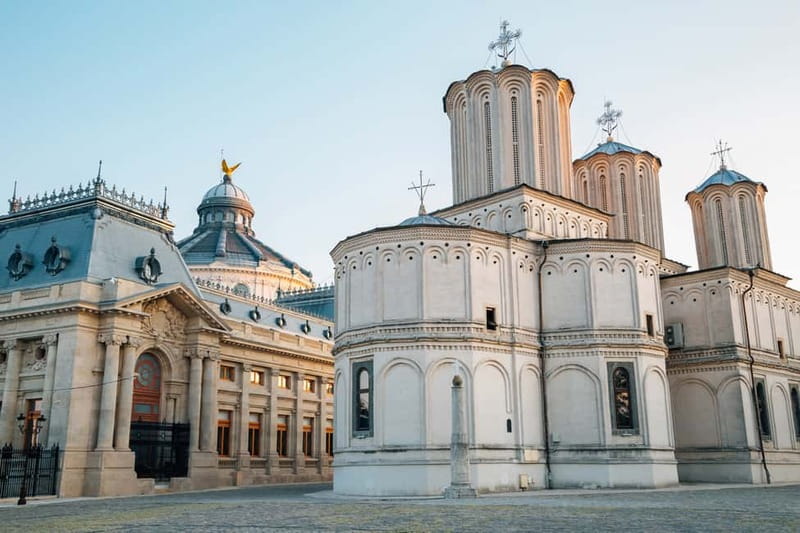
Starting at the Patriarchal Cathedral
The meeting point is in front of the Patriarchal Cathedral, reached by climbing the hill from Piata Unirii metro station. Give yourself time for that uphill walk, particularly if you are carrying luggage or arriving in a hurry.
The cathedral is a smart starting point because it brings religion into the story from the beginning. You will hear about the historical conditions that helped Communist rule take hold in Romania, as well as the place of religion under the regime.
This stop also shows why a city walk works better than a lecture room for this subject. You are standing at a religious site while learning how the state dealt with faith, institutions, and public authority. The setting gives the opening discussion some weight without turning the tour into a formal museum lesson.
Guides have different personalities, but the strongest part of their approach is the ability to explain difficult ideas in plain English. Daniela is described as especially clear and good at handling questions, while Andreea often brings in personal stories and examples from Romanian life.
Nationalisation and the first neighborhood stops
From the cathedral, the group moves through a nearby neighborhood where you see the results of nationalisation. This is one of the less flashy parts of the route, but it may be one of the most useful.
Nationalisation changed who owned homes, businesses, and property. A building can look ordinary today, yet its ownership history tells you something about how the Communist state took control of private life. Your guide explains those changes on the street rather than presenting them as a dry legal definition.
The tour also uses several lesser-known locations that are not always part of a standard Bucharest sightseeing route. That helps explain why the experience feels different from a general city tour. You are not simply moving from one famous monument to the next. You are learning how political decisions affected real addresses and real residents.
Ask questions here if you want more detail. The guides are used to discussing subjects beyond the basic route, and several participants specifically valued the time given to questions and wider discussions about Romania.
The House of the People and Ceaușescu’s vision
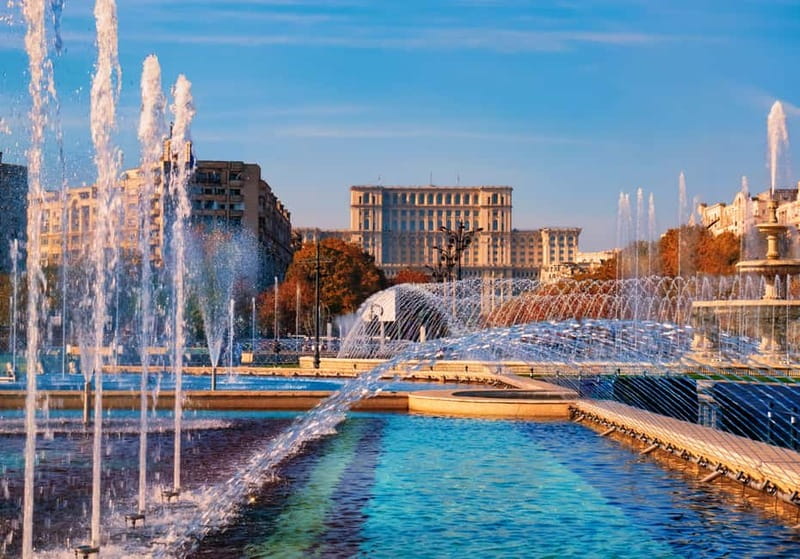
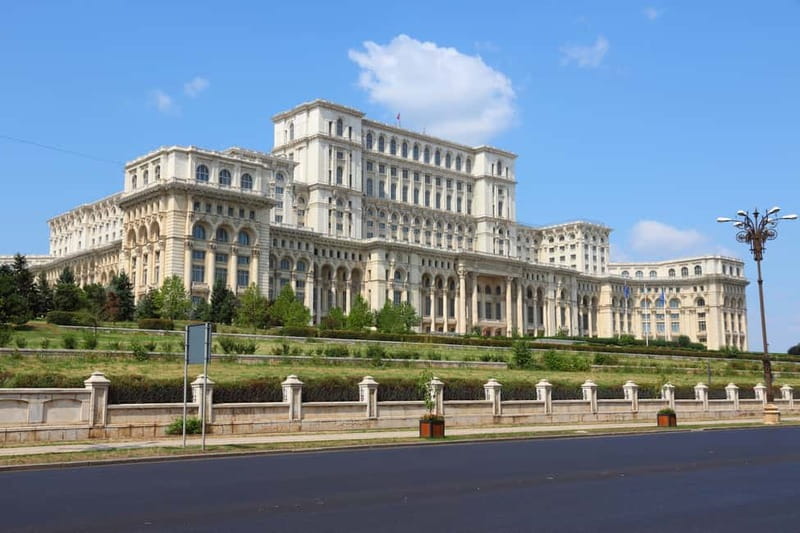
The Palace of the Parliament, commonly called the House of the People, is the tour’s largest visual moment. You stop for photographs and receive an explanation of its construction, purpose, and symbolism.
You will see the building from outside only. That matters when you compare this experience with Parliament interior tours. If you want grand rooms, chandeliers, and an inside visit, you will need a separate activity. If you want to understand the political thinking behind the building and its effect on Bucharest, this tour gives you the more important context.
The building represents Ceaușescu’s taste for scale and control. Its size is not treated as an isolated architectural curiosity. Your guide connects it to demolitions, the reshaping of the city, and the use of monumental construction to display state power.
This is also where the tour addresses the destruction of large areas of Bucharest during peacetime. The subject can sound abstract until you understand that streets, homes, religious buildings, and established neighborhoods were affected to make room for a new political center.
You get a strong view from the route, but remember that outdoor viewing means you depend on the weather. On a clear day, photographs should be easy. In rain or strong wind, the stop may feel less comfortable, although the guide still provides the historical explanation.
More Guided Walks in the world:
- Magical London: Harry Potter Guided Walking Tour
★ 4.7 · 22,044 reviews - Amsterdam Anne Frank: Small-Group Walking Tour & Local Guide
★ 4.8 · 12,789 reviews - Edinburgh: Harry Potter Magical Guided Walking Tour
★ 4.8 · 11,944 reviews - Edinburgh Castle: Guided Walking Tour with Entry Ticket
★ 4.7 · 11,699 reviews
Antim Monastery and buildings that escaped destruction
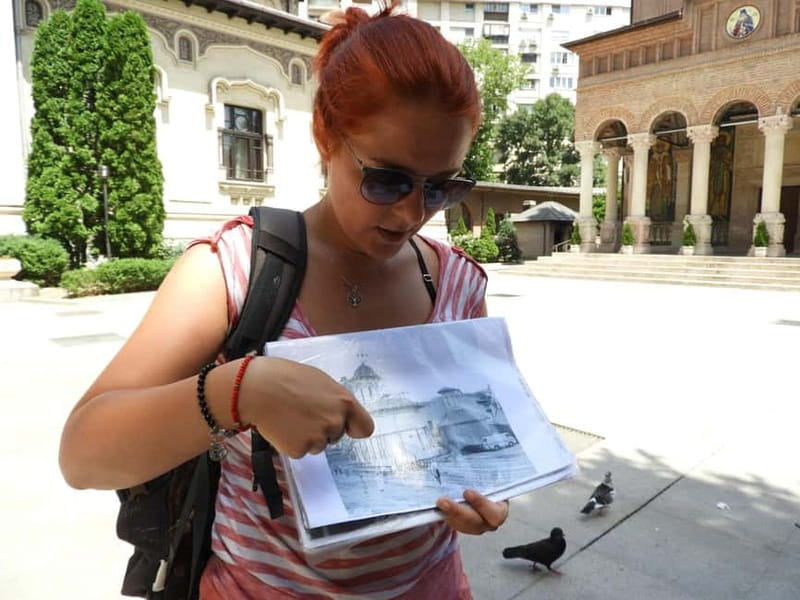
One of the more unusual parts of the tour is the discussion of buildings that were moved to save them from demolition. Antim Monastery is a key example.
Moving a building sounds almost impossible until you hear how it fit into the city’s forced redesign. The monastery gives you a direct way to understand the conflict between historic and religious structures on one side, and the state’s construction plans on the other.
This stop adds balance to the Parliament discussion. Instead of seeing only what was destroyed, you also learn about the buildings that survived through relocation. It is a reminder that Bucharest’s present appearance is partly the result of compromise, concealment, and extraordinary efforts to preserve places the authorities wanted out of the way.
The stop is brief, around 20 minutes, so do not expect a long interior visit or a full architectural lecture. Its value is in the connection to the larger story of demolition and urban control.
The café break and the taste of daily life
About halfway through the walk, you get a 15-minute break at a local café. You pay for anything you order, but the pause gives your feet a rest and lets you absorb the first half of the tour.
The experience also includes a Communist-type snack. One guide has used a rum-flavored biscuit from the period to show how a small food item can carry memories of shortages and rationing. This is a simple detail, but it makes the discussion of food supply more concrete.
After the break, the group discusses life in front of an old Alimentara, or grocery store. The subject is not only what people bought. It is how they managed family meals, dealt with limited supplies, and adjusted to a system where everyday shopping could be a source of stress.
This section is one reason the tour works for people who want more than political history. You learn about the state, but you also learn how the state reached into kitchens, shopping habits, family routines, and personal choices.
Calea Victoriei, Caru’ cu Bere, and the city’s mixed identity
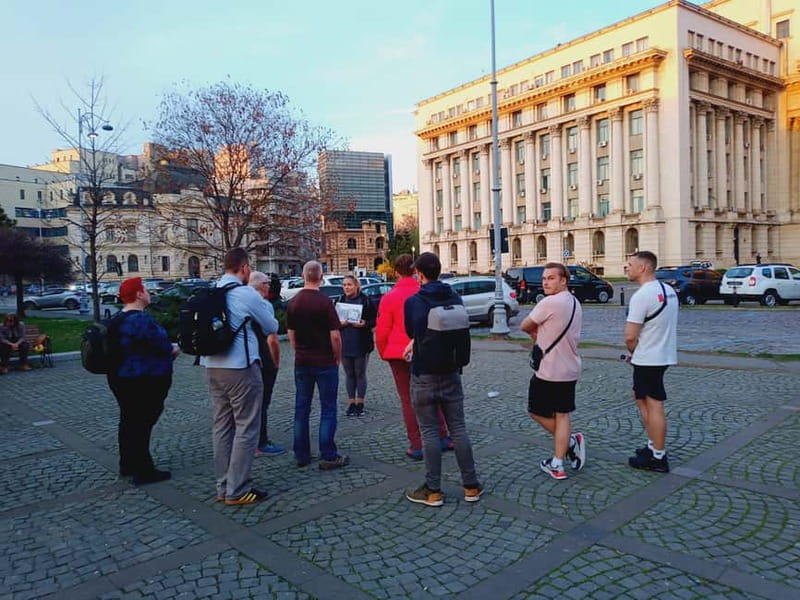
The final part moves along Calea Victoriei at a normal walking pace. This is one of Bucharest’s most attractive streets, and the setting changes the mood after the heavier discussion of demolition and scarcity.
The boulevard lets you see how older city life and Communist-era symbols coexist. You will pass Caru’ cu Bere, a well-known historic restaurant, and hear how places along the route connect to the period being discussed.
This section is a pleasant chance to look around while keeping the historical thread. You are not walking through a preserved Communist zone. You are seeing a living city where older buildings, later political marks, businesses, and public spaces occupy the same streets.
The walking pace is generally comfortable, according to the details provided by the guides and participants. Still, you should wear supportive shoes. The route lasts three hours, includes several walking sections, and is not suitable for wheelchair users or people with back problems according to the tour information.
The Secret Police and the cost of silence
One of the tour’s most serious subjects is the Secret Police. Along Calea Victoriei, you see a building that was used as a center connected with the torture of people.
The guide explains the institution’s influence and the fear it created. This is not presented as a theatrical horror stop. Its force comes from placing the subject in an ordinary city setting, where the building is part of the street rather than isolated behind a museum display.
The tour also discusses how political control affected speech, trust, and private relationships. These are harder ideas to see than a demolished building, so personal examples are useful. Mihai, for instance, has been praised for explaining the period through childhood memories and family experience, while Ion has shared details from his family’s life during the Cold War.
The exact stories depend on the guide leading your departure. Guides named in the activity feedback include Andreea, Daniela, Octavian, Mihai, Ion, and others. Their common strength is connecting public history to personal experience without losing the wider context.
Revolution Square and the end of the regime
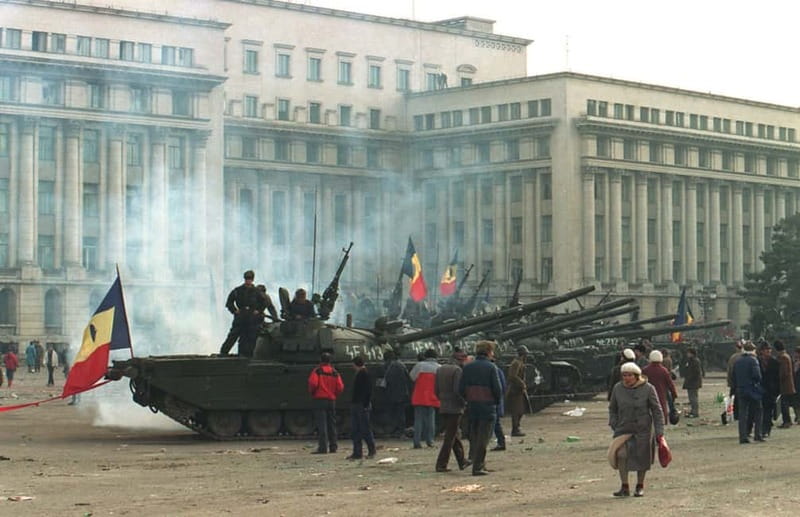
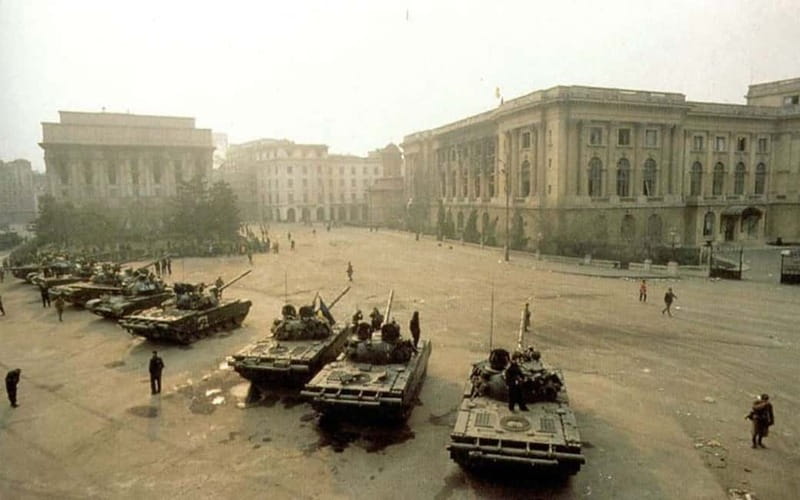
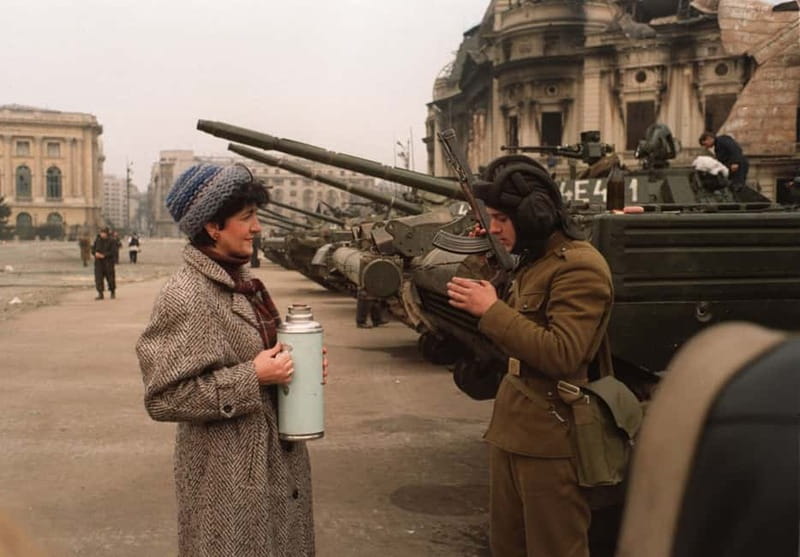
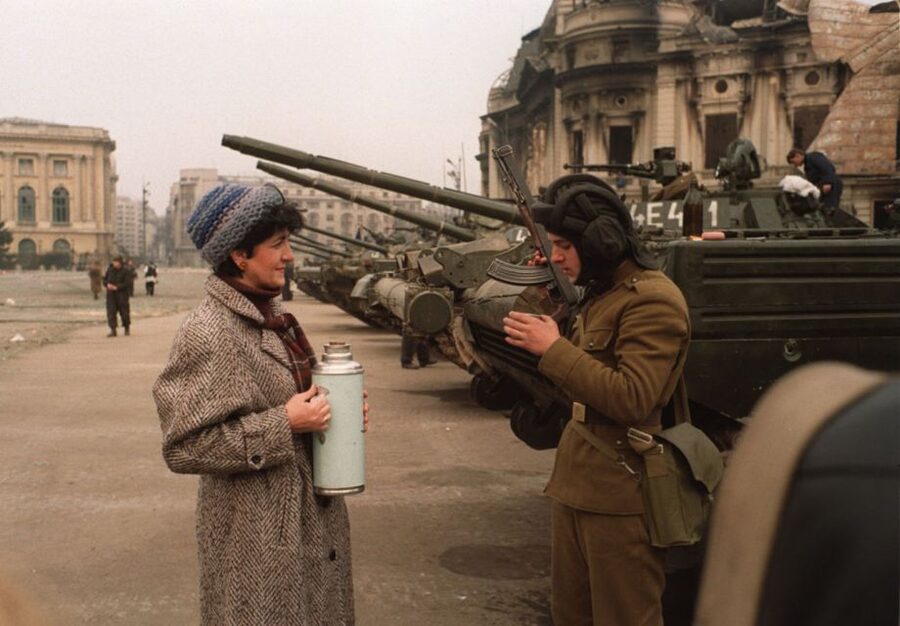
The tour ends at Revolution Square, where you hear the story of the 1989 Revolution and the beginning of democracy. This is the natural place to finish because the square is tied to the collapse of Communist rule.
The final discussion brings together the earlier stops. The huge government project, the changes to private property, the pressure of the Secret Police, shortages, and public anger all become part of one political story.
You should not expect a simple good-versus-bad account with every question neatly settled. The better guides present the period with care and allow time for questions. Several guide descriptions emphasize that they avoid one-sided explanations and connect the Romanian experience to the broader dangers of dictatorship and political extremism.
Ending here also gives you a useful point from which to continue exploring central Bucharest. You finish with a clearer sense of why the city looks as it does and why the 1989 transition still matters.
How much value do you get for $31?
At $31 per person, this is a fair price for a three-hour guided walk with about 15 historical objectives, an English-speaking guide, a café pause, and a Communist-era snack.
The value depends on what you want from Bucharest. If your main aim is to enter Parliament, this is not the right choice because the building is viewed from outside. If you want a structured explanation of how Communism changed the city and ordinary life, the price compares well with booking several separate attractions or trying to build the same route from scattered information.
You are paying mainly for interpretation. The buildings and streets are free to see, but the connections between them are not obvious. A guide helps you understand why a church was moved, why a neighborhood changed, and how a grocery store can illustrate political policy.
Free cancellation up to 24 hours before the start and reserve-now, pay-later booking make the plan easier to fit into a changing schedule. The tour can run in normal rain, but extreme weather such as heavy rain, blizzards, extreme wind, or extreme heat can lead to cancellation or rescheduling.
Who should book this Bucharest walk?
I would choose this tour early in a Bucharest visit if you care about modern European history, architecture, politics, or local life. Families with older teenagers may also find it useful, since the route gives a clear explanation of events that can otherwise feel distant.
It suits you particularly well if:
- You want history tied to actual streets and buildings.
- You are visiting Bucharest for the first time.
- You prefer personal stories and discussion to a museum audio guide.
- You want to understand the city’s Communist-era scars without reducing Bucharest to them.
- You are comfortable walking for three hours in changing weather.
I would think twice if you need step-free access, have back problems, dislike outdoor tours, or want to see Parliament’s interior. You should also bring comfortable shoes and arrive ready for the uphill walk to the cathedral.
Should you book it?
Book it if you want Bucharest to make more sense. The tour’s strongest feature is its connection between grand events and ordinary decisions: where people lived, what they could buy, what they feared, and how the city was rebuilt around a dictator’s vision.
The 4.9 rating from 918 reviews reflects consistently strong feedback about the guides’ clarity, warmth, storytelling, and willingness to answer questions. Names and styles vary, but Andreea, Daniela, Octavian, Mihai, and Ion are repeatedly associated with personal examples, visual aids, and careful explanations.
Skip it only if you are looking for an interior Parliament visit or a short, mostly photographic sightseeing walk. For everyone else, this is one of the better ways to understand why Bucharest looks, feels, and remembers as it does.
FAQ
Where does the tour begin?
The tour begins in front of the Patriarchal Cathedral. The closest metro station is Piata Unirii, also called Union Square. From there, you need to climb the hill to the cathedral.
Where does the tour finish?
The tour finishes at Revolution Square in Bucharest.
How long is the walking tour?
The tour lasts three hours. It includes walking between historical sites, guided explanations, sightseeing stops, and a 15-minute café break.
Can I go inside the Palace of the Parliament?
No. The House of the People, now the Parliament building, is viewed from outside only. You receive a guided explanation and have time for photographs.
Is food or drink included during the café break?
The break is included, but anything you choose to eat or drink at the café is at your own expense. You also receive a Communist-type snack as part of the tour.
Is the tour suitable for wheelchair users or people with back problems?
The tour is not suitable for wheelchair users or people with back problems. You should also bring comfortable shoes because the experience takes place on foot and runs in all normal weather conditions.
New routes in the world
- Baltimore Walking Foodie Tour in Fells Point★ 5.0 · 182 reviews
- Baku Oil Heritage & Old Town Walking Tour★ 5.0 · 232 reviews
- Baku Walking Tour (Old City)★ 5.0 · 127 reviews
- The Madam’s Curse Walking Ghost Tour★ 4.5 · 103 reviews
- Austin Small Group Morning Walk★ 5.0 · 412 reviews
- Austin Haunted Pub Crawl Walking Tour★ 4.5 · 232 reviews
- Austin Downtown Private Walking Food Tour With Secret Food Tours★ 5.0 · 71 reviews
- Austin Murder Walk★ 5.0 · 310 reviews
Bucharest Walking Tours, compared.
Bucharest: City Highlights Guided Walking Tour
Read our review →
Bucharest: Hidden Markets Walking Tour with Tastings
Read our review →
Bucharest: Ghost Stories & Romanian Mythology Walking Tour
Read our review →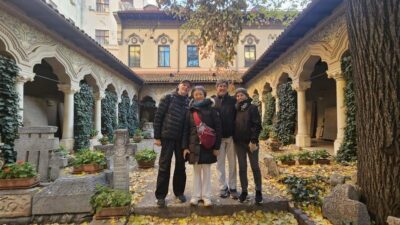
Bucharest: Guided Walking Tour with Romanian Snack
Read our review →
Browse the lists this tour appears in