
Review · BUCHAREST
Bucharest: Hidden Markets Walking Tour with Tastings
Bucharest’s best introduction may come with a tram ticket in one hand and a small glass of tuica in the other. This five-hour food and history walk moves from the National Theatre through the Armenian Quarter and along Calea Moșilor to Obor Market, giving you a look at everyday Bucharest beyond the polished center.
I like the mix of public transport and walking, which lets you cover more ground without turning the day into a long march. I also like the generous food stops: mici with mustard, local cheeses, sausages, seasonal produce, beer, and a warm Wallachian doughnut. The main consideration is simple: come hungry, because a breakfast roll is probably more food than you need.
I also like the small-group limit of 12 people. Guides such as Angelica, Michaela, Alex, Daniel, Bogdan, and Elena have been singled out for their friendly manner, clear explanations, and personal stories about Romania. The one drawback is that the experience depends partly on the day’s food selections and weather, since some market produce is chosen seasonally and much of the time is outdoors.
Key points at a glance
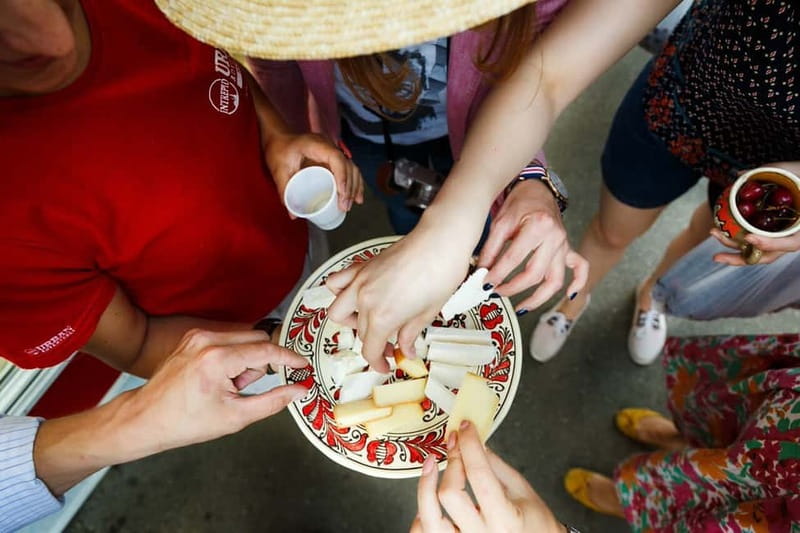
- Obor Market is the culinary center of the day: Expect Romanian cheeses, meats, vegetables, homemade bread, mici, beer, and a sweet finish.
- The tram ride adds real local texture: You see Bucharest as a working city rather than only as a collection of monuments.
- The Armenian Quarter brings architectural variety: European and Ottoman influences appear around the Armenian Church.
- The food is substantial, not token sampling: Plan for a full meal spread rather than a few tiny bites.
- The tour reaches beyond Old Town: Strada Batiștei, Calea Moșilor, and Obor show parts of the city you may miss on a standard center-only walk.
- Small groups make questions easy: The maximum of 12 participants allows time for conversation and individual dietary requests.
Starting at the National Theatre
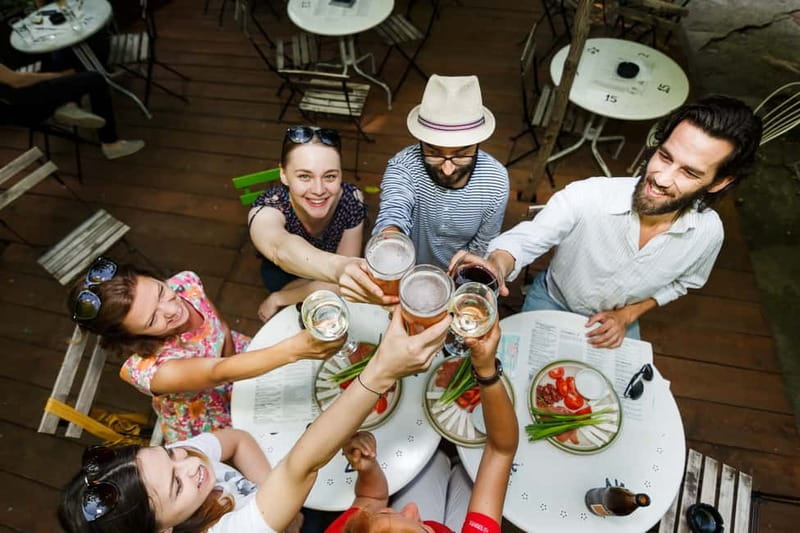
The tour begins on the stairs in front of the National Theatre, at Nicolae Bălcescu 2. This is a useful meeting point in central Bucharest, and the large theater gives you an easy landmark to spot. If you use Uber, enter Bd. Nicolae Bălcescu 2 rather than relying on the words National Theatre alone.
The opening section sets up Bucharest’s past and present. You get a short walking introduction to the city before moving into streets that are less familiar than the main visitor routes. I like this approach because the tour does not rush straight to food. You first get a sense of how neighborhoods, architecture, and political change fit together.
The English-speaking guide is an important part of the experience. Names associated with the tour include Angelica, Michaela, Alex, Daniel, Bogdan, and Elena. Their styles will differ, but the common thread is local explanation: architecture, Romanian customs, city history, and present-day life are all part of the conversation.
More Food Walking Tours in the world:
- Reykjavik Food Walk – Local Foodie Adventure in Iceland
★ 5.0 · 18,952 reviews - Ho Chi Minh City Street Food Tour & Sightseeing By Motorbike
★ 5.0 · 9,413 reviews - Little Havana Food and Walking Tour in Miami
★ 5.0 · 8,882 reviews
Strada Batiștei and a forgotten embassy
A short walk brings you to Strada Batiștei, a street once compared with Paris’s St. Germain. That description hints at an older Bucharest with a more cosmopolitan social life, though you should not expect a preserved Parisian quarter. The appeal is in seeing traces of the city’s earlier ambitions beside more ordinary modern streets.
One stop is the former American embassy, now a largely forgotten landmark. It is the kind of detail that can disappear if you explore Bucharest only by headline attractions. A guide gives the building a place in the city’s story and helps you notice how political history can linger in quiet corners.
This is also where the tour’s balance becomes clear. You are not simply walking from restaurant to restaurant. You pause for buildings, streets, and small pieces of context, then return to the food and transport that make the day feel active rather than lecture-like.
The Armenian Church and Bucharest’s mixed architecture
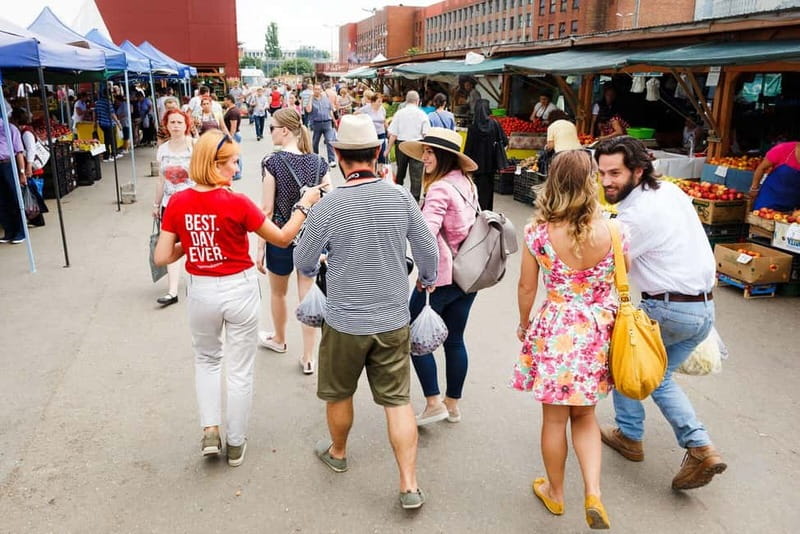
The Armenian Church is one of the more distinctive stops. Around it, you see a mixture of European and Ottoman architectural influences, a useful reminder that Bucharest sits at a meeting point of cultures and historical routes.
The guided visit here is not presented as a long formal museum tour. Instead, it works as part of a neighborhood walk, with the guide explaining what you are seeing and answering questions. That makes the stop particularly useful if you want architecture explained in plain language rather than left as a collection of unfamiliar façades.
I would pay attention to the contrast between styles. The value is not just one attractive church, but the way the surrounding area shows Bucharest’s layered identity. This section also gives the tour more depth than a standard food outing, especially for anyone interested in how Romania connects European and Ottoman traditions.
Riding through Bucharest on the tram
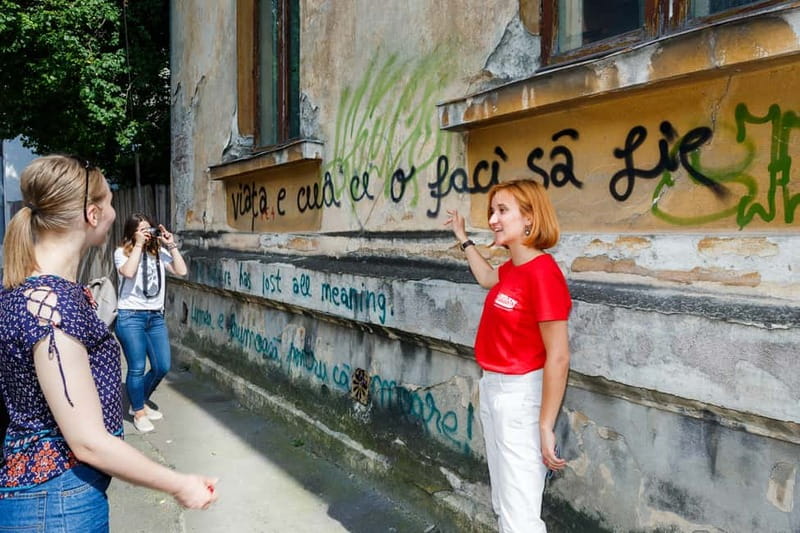
The tram ride is one of the tour’s best ideas. It gives you a break from walking while carrying you from the central streets toward Obor Market. More importantly, it lets you see Bucharest through ordinary public transport, alongside the city’s daily rhythm.
The ride links the historic sections to the market in a practical way. You are not being moved in a private vehicle behind tinted glass. You are crossing the city as residents do, watching the scenery shift and getting a better sense of Bucharest’s scale.
The tour includes tram tickets, so you do not need to arrange that part yourself. Some past outings have also included additional public transport, but the confirmed experience centers on the tram connection and ends at Piața Unirii. Ask your guide on the day if you want to clarify the exact transport sequence.
The tram may be less comfortable than a private transfer, and it can be affected by normal city traffic. I see that as part of the point. If you want a polished sightseeing circuit, this is not it. If you want a more grounded view of the city, it adds a useful layer.
More Market Walking Tours in the world:
- Bangkok: City Highlights Temple and Market Walking Tour
★ 4.5 · 3,990 reviews - Tokyo Tsukiji Fish Market Food and Culture Walking Tour
★ 5.0 · 3,184 reviews - London Bridge & Borough Market Food Tour with 7 Authentic Dishes
★ 5.0 · 1,972 reviews - Air Raid Shelter + St. Nicholas Market Walking Tour
★ 5.0 · 1,950 reviews
Calea Moșilor on the way to Obor
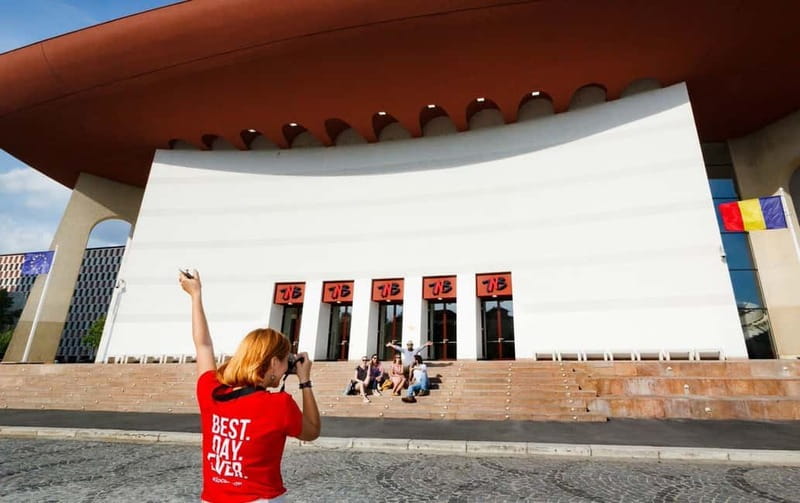
Calea Moșilor connects the walk with the market section. This route gives you more of Bucharest’s everyday streets instead of keeping you inside the compact historic center.
The guide’s commentary matters here because the scenery may not always announce its importance. Architecture, local habits, and the changes brought by Romania’s political past are easier to understand when someone points out the details. Several guides, including Angelica and Alex, have been praised for giving enough background without turning each stop into a long speech.
This part of the tour is also a reminder to pace yourself. The route lasts five to five and a half hours, and it combines standing, walking, transit, and several meals. The walking is generally described as flat and manageable, but you will want comfortable shoes and room in your schedule.
Obor Market: where the food takes over
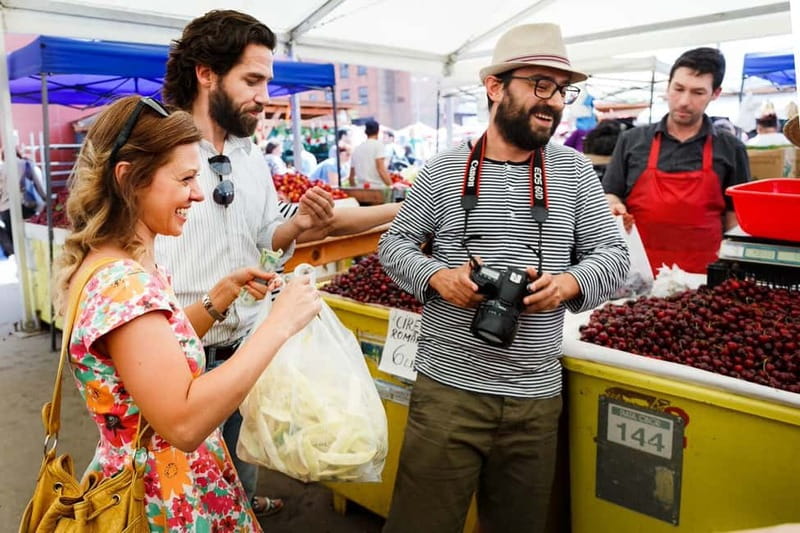
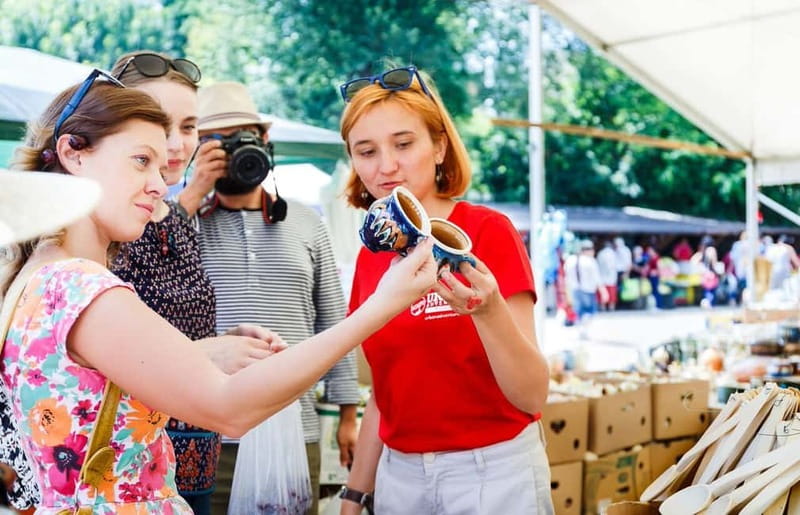
Obor Market is Bucharest’s largest peasant market and the main food destination. It is not just a quick photo stop. You have time to see produce and local goods, then taste the foods that make Romanian eating traditions easier to understand.
The first substantial tasting includes a shot of tuica, the Romanian fruit brandy, followed by a peasant platter. Expect dips, sausages, local cheeses, seasonal vegetables, and homemade bread. Tuica can be strong, so take the small serving seriously, especially if you are not used to spirits.
The market setting adds value. You are not only tasting dishes in a restaurant with a generic menu. You are seeing the kind of produce and foods connected to Romanian home cooking and local shopping. Seasonal choices mean the exact vegetables or cheeses may vary, which is a benefit for freshness but means the menu is not fixed in every detail.
The tour includes non-alcoholic options, including soft drinks, coffee, and tea. Dietary needs such as vegetarian, vegan, and gluten-free requests can be accommodated when you give at least 24 hours’ notice. That makes the experience more flexible, though you should still state allergies clearly before the tour.
Mici, mustard, cheese, and cold beer
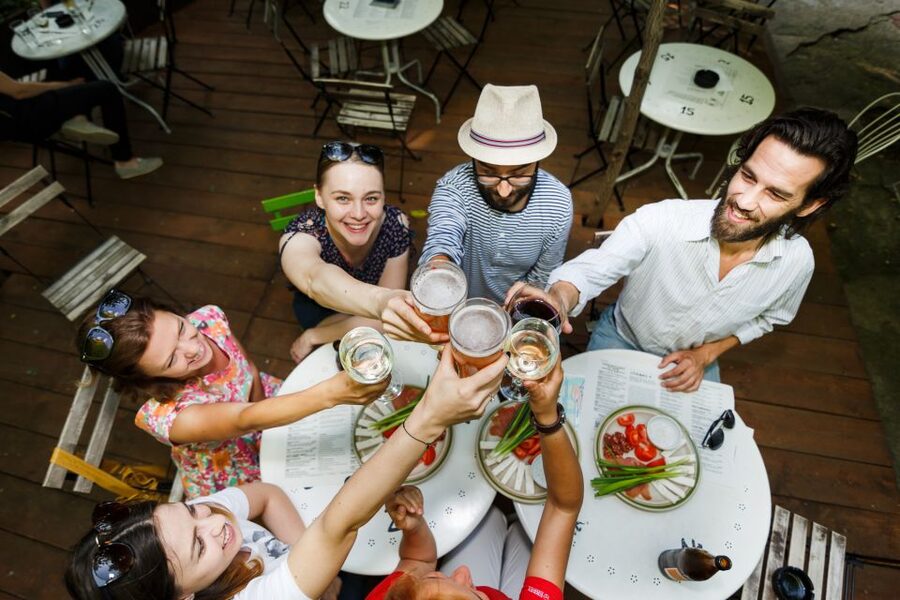
The second savory part focuses on mici, a Romanian grilled sausage traditionally served with bread and mustard. Two mici are included, along with a selection of local cheeses and produce. If you want a quick way to understand why Romanian food culture is often tied to casual outdoor eating, this is it.
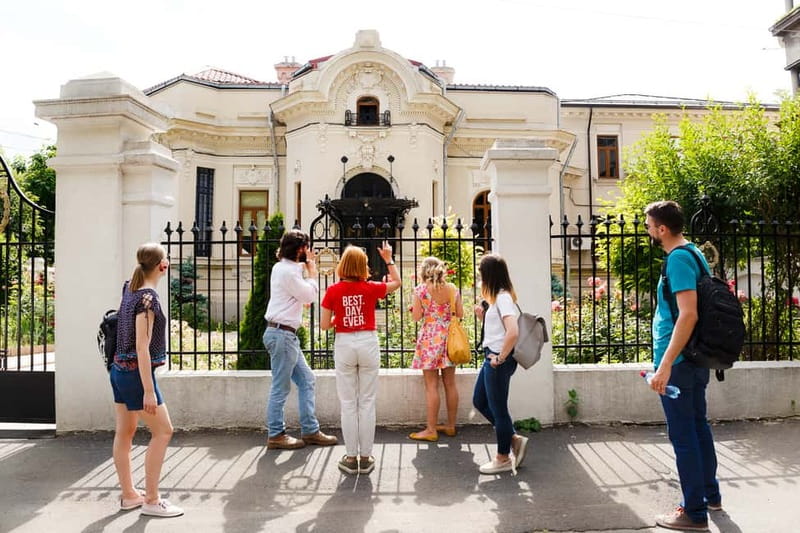
The cold beer pairing makes sense, but three beers are included across the tour, not just one. You can choose soft drinks, coffee, or tea instead if you do not drink alcohol. Since the food portions are generous, avoid planning a major lunch afterward.
Several guides have made the food feel like part of the conversation rather than a set of disconnected samples. You can ask what you are eating, how it is normally served, and how the foods fit into local life. That human element is a major reason this tour works better than simply ordering Romanian dishes from a menu.
One point to keep in mind is that the tour is designed around traditional Romanian foods, not a carefully controlled fine-dining menu. If you dislike sausages, strong spirits, or mustard, some of the signature tastings will be less appealing. The vegetarian and non-alcoholic alternatives help, but they do not change the tour’s basic food focus.
Ending with a Wallachian doughnut
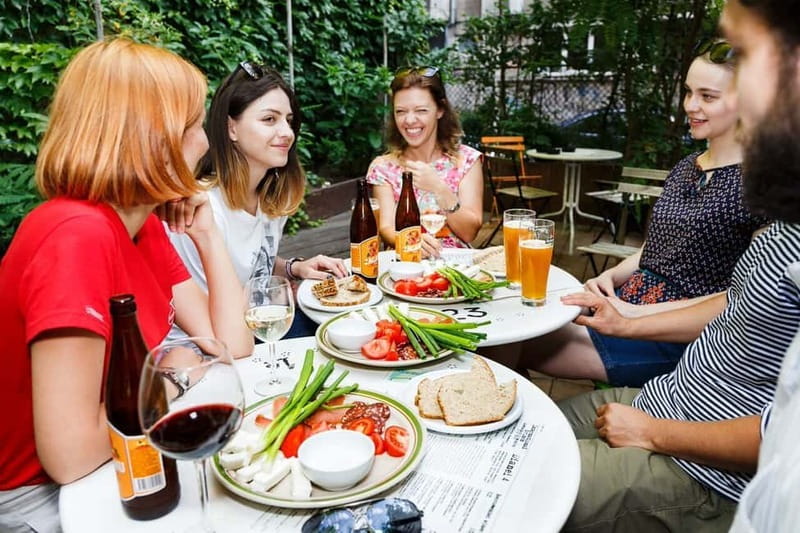
The final food stop is a warm Wallachian doughnut. It is a small but well-chosen ending after the salty foods, beer, and cheese. The sweet snack gives the meal a clear finish and is one of the reasons you should arrive with an appetite rather than a full stomach.
Food quantities are one of the strongest practical features here. This is not a tour where you pay for a few crumbs and then hunt for lunch. A breakfast roll at the meeting point may leave you uncomfortably full, so a light breakfast is the wiser plan.
The finish is at Piața Unirii, giving you a useful central location for the rest of your day. You can continue sightseeing from there, although the tour itself does not include extra food or drinks beyond the listed tastings.
Is $100 a fair price?
At $100 per person, the tour is not the cheapest way to walk around Bucharest. But the price includes five to five and a half hours with a guide, tram tickets, a full spread of food, three beers or non-alcoholic drinks, tuica, and the doughnut.
The value improves if you would otherwise book a separate history walk, pay for public transport, and visit several food venues on your own. You also receive help ordering and understanding foods that may be unfamiliar. That reduces guesswork and gives the market visit more meaning.
The small group matters. A maximum of 12 participants is more personal than a large coach-style outing, and private groups are available if you want a more controlled format. Some departures may be smaller, even down to just a few people, but you should not assume that will happen every time.
I consider the price fair for visitors who want food and city context in one half-day. It is less appealing if your main goal is a formal architectural tour, a cheap market snack, or a tightly scheduled sightseeing circuit.
Who should book this Bucharest tour?
I would recommend it to first-time visitors who want to get outside the Old Town and understand more of Bucharest’s neighborhoods. It also suits solo visitors, since the small group gives you an easy way to meet people while the guide handles the route and food stops.
Food-focused visitors will find plenty to enjoy, but you do not need to be an expert in Romanian cuisine. The tour explains the dishes as you go, and the tastings are broad enough to give you a useful first look at local flavors.
It is also a good choice for anyone who likes public transport and ordinary city life. The tram is not a decorative sightseeing ride. It is part of the experience, and that makes the day feel more connected to Bucharest as it is lived.
I would be more cautious if you have limited mobility, since the day includes walking, standing, boarding public transport, and moving through a market. The route is generally flat, but the information provided does not promise step-free access throughout. Children under six cannot join.
Practical tips before you go
- Eat a light breakfast. The food is generous and spread across several stops.
- Wear comfortable shoes for the walking sections and market surfaces.
- Bring an appetite for savory foods, cheese, sausages, beer, and sweets.
- Tell the operator about vegetarian, vegan, gluten-free, or allergy needs at least 24 hours ahead.
- Choose a day with reasonable weather if possible, since much of the experience takes place outdoors.
- Use Bd. Nicolae Bălcescu 2 for a rideshare pickup or drop-off at the National Theatre.
- Keep the afternoon flexible, since the tour lasts up to five and a half hours.
- If you want a more private experience, ask about the private-group option.
Should you book it?
Book this tour if you want Bucharest explained through its streets, public transport, markets, and food rather than through a list of major monuments. The strongest combination is the Armenian Quarter’s architecture, the tram ride, and the generous Obor Market tastings.
The tour is especially good near the start of your stay, when the guide’s local advice and neighborhood context can shape the rest of your visit. If you prefer a very short tasting or a formal museum-style history tour, choose something else. For most visitors who want a filling, social, and practical introduction to Bucharest, this is a well-priced half-day.
FAQ
Where does the Bucharest Hidden Markets Walking Tour start?
It starts on the stairs of the National Theatre in front of the main entrance at Nicolae Bălcescu 2, Bucharest. For Uber, use Bd. Nicolae Bălcescu 2.
Where does the tour finish?
The tour finishes at Piața Unirii.
How long does the tour last?
It lasts approximately five to five and a half hours.
What language is the tour conducted in?
The live tour guide speaks English.
How many people can join the group?
The standard small group has a maximum of 12 participants. A private group option is also available.
Is public transport included?
Yes. Tram tickets are included in the tour price.
What food is included?
You receive a platter with local cheeses, meats, seasonal vegetables, dips, and homemade bread, plus two mici with bread and mustard, local cheeses and produce, a street snack, and one Wallachian doughnut.
What drinks are included?
The experience includes three beers, or soft drinks, coffee, and tea for non-alcoholic participants. It also includes one shot of tuica, Romanian brandy.
Can dietary requirements be accommodated?
The operator can cater to vegetarian, vegan, and gluten-free needs. Notify the operator at least 24 hours before the tour about allergies or sensitivities.
Are young children allowed to join?
Children under six are not permitted on this tour.
New routes in the world
- Baltimore Walking Foodie Tour in Fells Point★ 5.0 · 182 reviews
- Baku Oil Heritage & Old Town Walking Tour★ 5.0 · 232 reviews
- Baku Walking Tour (Old City)★ 5.0 · 127 reviews
- The Madam’s Curse Walking Ghost Tour★ 4.5 · 103 reviews
- Austin Small Group Morning Walk★ 5.0 · 412 reviews
- Austin Haunted Pub Crawl Walking Tour★ 4.5 · 232 reviews
- Austin Downtown Private Walking Food Tour With Secret Food Tours★ 5.0 · 71 reviews
- Austin Murder Walk★ 5.0 · 310 reviews
Bucharest Walking Tours, compared.
Bucharest: City Highlights Guided Walking Tour
Read our review →
Bucharest: Ghost Stories & Romanian Mythology Walking Tour
Read our review →
Bucharest: Guided Walking Tour with Romanian Snack
Read our review →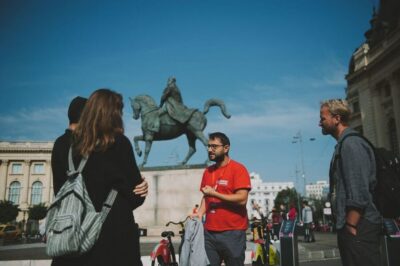
Browse the lists this tour appears in